

Memory Foam Mattress Density: What It Means for You

You're lying on two memory foam mattresses in a showroom, and both seem to welcome the body in almost the same way. Then the price tags show a wide gap, leaving one question: what's different inside? Comfort is important, but the first few minutes on a bed don't reveal how much foam material each layer contains or how that material may respond after repeated use.
That hidden specification is memory foam mattress density. It won't tell a shopper everything about a mattress, but it gives a useful starting point for understanding material content, durability, contouring, movement, and heat. For residents in Ruidoso, Alto, and across Lincoln County, the right choice also has to fit the local mountain climate, the sleeper's body, and the way the room will be used.
Why Two Beds That Feel the Same Can Be Very Different
At Mattress Pro by Miller Waldrop on Sudderth Drive, a shopper might test two all-foam beds and decide they feel identical. Both may cushion the shoulders, reduce pressure around the hips, and limit the sensation of a partner moving. Yet the layers underneath can contain different amounts of polyurethane material.
A hand can judge surface softness. It can't reliably reveal the density of the foam below the cover, the thickness of each layer, or the strength of the support core. That's why a mattress can feel excellent in a showroom while still raising important questions about how it will perform with regular use.
The hidden number behind the feel
Density measures material content. A denser foam generally has more polymer in the same volume, while a lower-density foam contains less material. This difference can affect resistance to permanent compression, response speed, motion absorption, and warmth.
The two mattresses aren't necessarily competing on a simple good-versus-bad scale. One may be designed for deep contouring and long-term compression resistance. Another may be lighter, quicker to respond, or more suitable for a guest room. The useful question is whether the construction matches the sleeper.
Practical rule: A showroom feel is only the beginning. Ask what each foam layer contains before comparing prices.
A shopper comparing memory foam with coils can also benefit from this guide to innerspring and memory foam mattresses. The same principle applies across mattress types: the visible cover and first impression don't tell the entire construction story.
Mattress Pro by Miller Waldrop has served the Ruidoso community through a 70-year family legacy, with care centered on sleep rather than a quick transaction. That local, family-owned approach gives shoppers room to ask detailed questions instead of trying to decode a product page alone.
What Memory Foam Density Actually Measures
A shopper may lie on two mattresses with similar showroom comfort, then find that one keeps its shape longer or feels warmer at home. Memory foam density is the amount of polyurethane material occupying a specific volume of foam. Manufacturers report it in pounds per cubic foot, abbreviated as pcf, or kilograms per cubic meter, written as kg/m³. Household and healthcare viscoelastic foams commonly span 2 to 6 pcf, or about 32 to 96 kg/m³, according to technical guidance from the Polyurethane Foam Association.
A kitchen sponge shows why the number matters. Two sponges can share the same outside dimensions while one contains more material and less open space. Press them, and their resistance, rebound, and overall response may differ even though they look alike.
Density is about mass, not hardness
A one-inch comfort layer can have the same length, width, and visible profile as another layer while containing a different amount of foam. Density describes that mass within the volume. It does not directly identify whether the layer feels soft, medium, or firm.
Use this short process when reading a specification sheet:
- Find the unit. Look for pcf or kg/m³.
- Identify the layer. Check whether the figure applies to the memory foam comfort layer, transition layer, or support core.
- Check thickness. A thin dense layer produces a different feel from a thick dense layer.
- Ask for firmness separately. Density and firmness describe different properties.
Overall mattress weight can confuse the comparison because it includes the cover, foundation, support materials, and every foam layer. A mattress with a dense top layer over a lower-density base has a different construction from one using consistently dense foams.
For a plain-language explanation of the material, shoppers can read what a memory foam mattress is. Treat density as one construction specification on a longer spec sheet, alongside firmness, thickness, and layering.
Why layer-by-layer details matter
Memory foam works within a complete sleep system. A mattress may include:
- A comfort layer that creates initial contouring and pressure relief.
- A transition layer that limits excessive sinking.
- A support core that supplies deeper stability.
These layers work together, yet their densities may differ. Ask for each foam layer's density, then consider how the layers combine with the sleeper's preferred feel, body weight, and sleep position. Mattress Pro by Miller Waldrop's layer-by-layer consultations can make that matching question easier to discuss.
Common Density Ranges and What They Feel Like
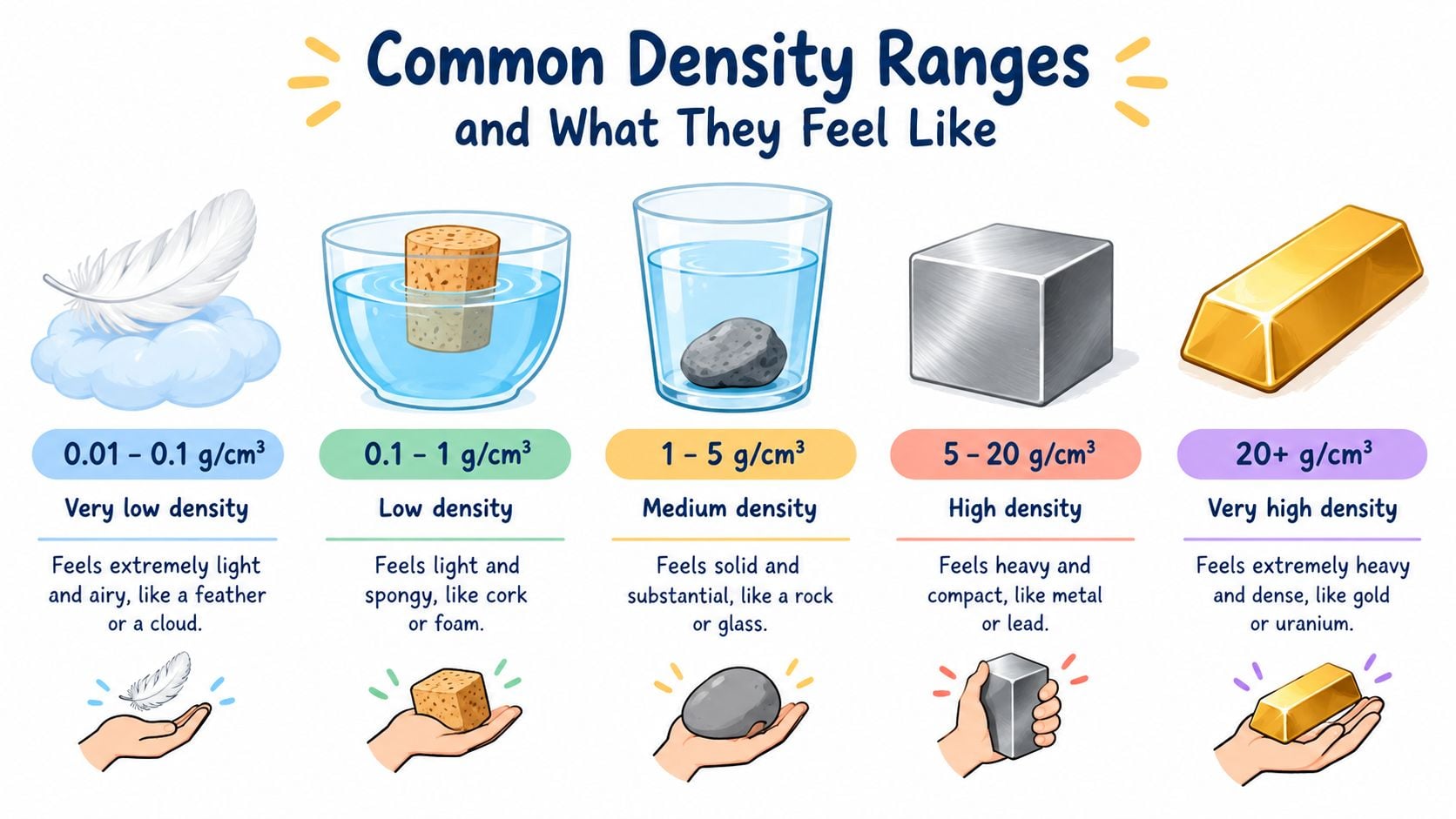
Density ranges help organize choices, but they are not a ranking system. Technical guidance spans the market from below 24 kg/m³, or 1.5 pcf, to about 128 kg/m³, or 8 pcf. Standard memory foam is commonly described across 16 to 80 kg/m³, or 1 to 5 pcf. Mattress comfort layers and toppers often fall near 48 to 72 kg/m³, or 3 to 4.5 pcf, according to published foam density guidance.
Lower-density construction
Lower-density foam usually feels lighter and more buoyant. It also tends to let sleepers change positions more easily, which can suit combination sleepers or anyone who dislikes the sensation of sinking into foam.
The tradeoff involves both feel and longevity. With less material in the same volume, a lower-density comfort layer may handle repeated compression less effectively. It can still work well in a lightly used room, for a sleeper who prefers quicker recovery, or for someone placing feel ahead of maximum durability.
Middle-range construction
A middle range, often around 3 to 5 pcf, can balance contouring with recovery. Many comfort layers and toppers sit near 3 to 4.5 pcf, making this a useful reference point rather than a universal recommendation.
This construction may suit sleepers who want pressure relief without an especially slow response. Couples may also prefer it when they want some motion control without the deepest cradle.
Higher-density construction
Higher-density foam contains more material in the same volume. It often gives deeper contouring and greater resistance to permanent compression, while its slower response can retain more heat and make repositioning feel less immediate.
Density is therefore a matching question. A higher number may support durability, but it can also change contouring, movement, and temperature. Firmness, thickness, ventilation, cover materials, and the density of lower layers all influence the finished feel.
Match density to the sleeper's body and habits, then check that the choice does not create unwanted heat or movement problems.
How Density Differs from Firmness and ILD
Density and firmness answer different questions. Density asks how much foam material occupies a given volume. Firmness asks how much force is needed to compress that foam.
Indentation-load-deflection, or ILD/IFD, describes firmness rather than density. A standardized foam sample is compressed to a specified percentage of its original thickness, and the required force is recorded, often at 25 percent and 65 percent deflection, according to the Polyurethane Foam Association's technical explanation.
A dense foam can still feel soft
Consider two objects with similar surface firmness. A dense foam may feel soft at first because its formulation allows the body to sink gradually, while a lighter foam may feel firm at the surface because it pushes back quickly. The first object contains more material, but the second may create more immediate resistance.
That's why a “firm” label doesn't automatically indicate durability. It describes a feel or response, not necessarily the amount of polymer in the comfort layer.
Compare the specifications together
A helpful showroom question is, “What are the density and ILD or IFD for this specific layer?” The answer should identify the layer, its thickness, and how it contributes to the finished mattress.
| Specification | What it describes | What it helps explain |
|---|---|---|
| Density | Material mass within a volume | Material content and potential compression resistance |
| ILD or IFD | Force required to compress foam | Initial firmness and resistance |
| Thickness | Depth of a foam layer | How far the sleeper can contour into it |
| Construction | How layers work together | Support, alignment, movement, and overall feel |
A shopper who wants to understand surface feel in more depth can also review this guide to mattress comfort levels. The practical lesson remains consistent: density and firmness belong on the same comparison sheet, but they should never be treated as the same measurement.
Matching Density to Body Weight and Sleep Position
The right density depends on how a sleeper loads the mattress. Body weight, sleep position, movement, and the thickness of the comfort layer all affect whether the bed feels supportive or allows too much sink.
Published consumer guidance commonly suggests at least 3 pcf for memory foam layers and around 4 pcf for sleepers over 200 pounds. Those figures are durability benchmarks, not guarantees, as explained in consumer durability guidance.
Side sleepers
Side sleepers concentrate pressure at the shoulders and hips. A comfort layer with enough depth and contouring can cushion those areas while allowing the waist to remain supported.
A mid- to higher-density comfort layer may offer durable contouring, but the surface firmness still matters. A dense layer that is too firm can create pressure instead of relieving it.
Back sleepers
Back sleepers generally need a more even balance between cushioning and support. A range of densities can work, provided the mattress keeps the hips from sinking too much and supports the natural curve of the lower back.
The transition layer becomes especially important here. It can prevent the sleeper from feeling as though the body has settled through the comfort material into the firmer layers below.
Stomach and combination sleepers
Stomach sleepers usually need enough resistance to keep the midsection from dropping too far. Density can contribute to compression resistance, but the firmness and overall support design still determine whether the surface feels stable.
Combination sleepers need easier movement between positions. An extremely slow, contouring layer may feel comfortable when still but inconvenient during turns.
Body weight as a matching factor
Heavier sleepers place more load on the same area of foam. Denser layers may reduce the likelihood of early bottoming out, particularly when paired with suitable thickness and a supportive core. Lighter sleepers may prefer less resistance and faster response.
| Sleeper profile | Suggested density band | Why it tends to fit |
|---|---|---|
| Lighter sleeper seeking easy movement | Around 2 to 3 pcf | A lighter construction may feel more responsive and less enveloping. |
| Average-weight side or back sleeper | Around 3 to 5 pcf | This range can balance contouring, recovery, and pressure relief. |
| Sleeper over 200 pounds | Around 4 pcf or higher | More material may help the comfort layer resist repeated compression. |
| Stomach sleeper needing surface stability | Mid to higher range | Added compression resistance can complement a suitable firmness level. |
These are starting points, not final answers. Couples with different body weights may need different comfort compromises, which is why a mattress for plus-size side sleepers should be evaluated by the actual sleeper rather than selected from a number alone.
The Tradeoff Higher Density Does Not Solve
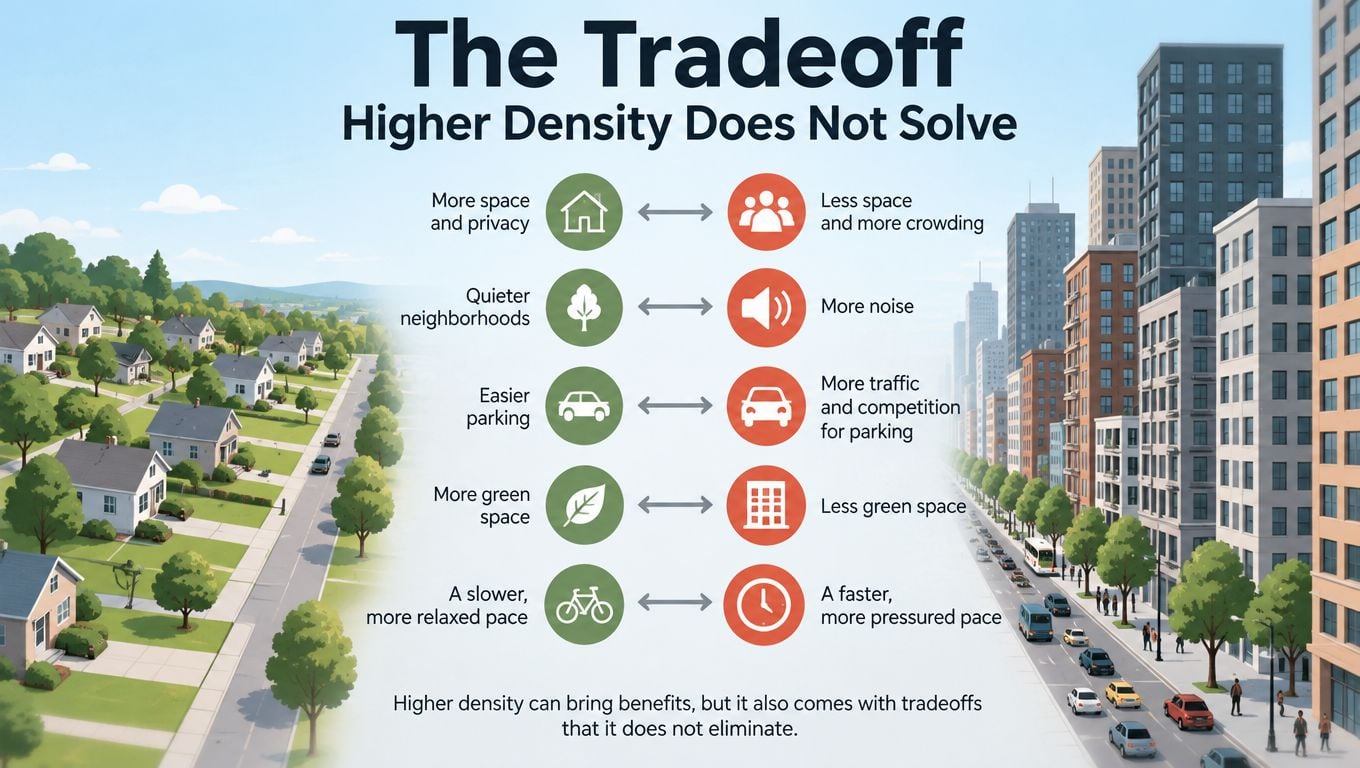
A dense memory foam layer can last longer and provide closer contouring, yet it does not automatically create a cooler or easier-to-use bed. Like a thick blanket, more material can hold warmth. Slow recovery may also make turning harder and reduce how much movement partners feel.
Ruidoso's dry mountain air may support nighttime cooling, but bedroom conditions still matter. A second-floor room, a cabin warmed by afternoon sun, or a vacation rental with limited airflow can become uncomfortable. Partners who sleep at different temperatures may need a construction that balances pressure relief with ventilation rather than just choosing the highest density.
Durability isn't a promise
Density offers a useful clue about durability, not a guarantee of long service. Independent polyurethane foam testing reported that 2 pcf foam may still lose roughly 15 to 20 percent of its firmness after 75,000 constant-force pounding cycles, under specified test conditions, as detailed in the published foam testing report.
Foam chemistry, layer thickness, support-core design, humidity, temperature, and sleeper load can all affect how a mattress changes over time.
A three-part decision
A better match comes from three questions:
- Material content: Is the density suited to the expected use?
- Initial feel: Do the firmness and ILD/IFD fit the sleeper?
- Sleep climate: Does the construction offer enough airflow or cooling for the room?
Someone concerned about warmth can review memory foam mattress cooling instead of assuming lower density will fix it. Ventilation, the cover, cooling materials, and layer arrangement all matter. Density works best as one part of a layer-by-layer match, not as a score to rank mattresses.
What to Ask in the Showroom and How a Sleep Pro Helps
A good mattress conversation doesn't require technical training. It requires specific questions and a willingness to test the answers against the sleeper's body.
Five questions worth asking
- What is the density of every foam layer? A single overall number may hide a lower-density support layer.
- What is the ILD or IFD? This helps explain firmness separately from material content.
- How thick is each comfort layer? Thickness changes how far the body can settle.
- What is in the support core? The base affects stability, alignment, and bottoming-out risk.
- What cooling design is included? Ask about ventilation, breathable materials, and other temperature features.
Memory foam's modern history helps explain why these questions matter. NASA's Ames Research Center funded development of temperature-sensitive, slow-recovery polyurethane foam in 1966, originally called slow spring-back foam or temper foam, according to the Polyurethane Foam Association's historical overview.
Turning specifications into a real choice
A Sleep Pro can translate those specifications into a test that makes sense. At Mattress Pro by Miller Waldrop, shoppers can compare Tempur-Pedic, Sealy, Stearns & Foster, and Sherwood mattresses according to body type, sleeping position, comfort preference, and budget.
The Comfort Promise helps reduce the fear of choosing the wrong bed. The Low Price Promise and flexible financing address the practical side of the purchase, while Full-Service Delivery with Professional Setup can simplify delivery to a second-floor bedroom, vacation cabin, or rental property in the Ruidoso area.
The value of a local consultation is the conversation itself. A Sleep Pro can ask what happens after the first hour in bed, whether the sleeper wakes warm, whether turning feels difficult, and whether a partner needs a different response.
Sleeping Better Starts with the Right Match
The two beds from the opening aren't just different versions of the same answer. They may solve different problems. One may provide a denser comfort layer for durable contouring, while the other may offer quicker movement and a cooler response.
The shopper's job isn't to select the largest density number. It's to match the construction to the person:
- Density describes material content.
- Firmness describes the force and feel of compression.
- ILD or IFD helps quantify that firmness.
- Thickness and layering determine how the body interacts with the foam.
- Climate design affects whether the bed feels comfortable through the night.
A side sleeper may prioritize cushioning at the shoulders and hips. A stomach sleeper may need more resistance beneath the midsection. A couple may need a compromise between motion control, movement, and temperature.
Local help makes the choice easier
Ruidoso shoppers don't have to make that decision from a product label alone. Mattress Pro by Miller Waldrop serves local residents, Alto homeowners, Lincoln County families, and cabin owners with a consultative approach centered on sleep.
The Comfort Promise provides a safety net for the fear of picking the wrong bed. Full-Service Delivery with Professional Setup adds convenience after the decision, so the mattress arrives ready for its intended room rather than becoming another delivery problem.
Mattress Pro by Miller Waldrop can help shoppers compare memory foam mattress density, firmness, layer thickness, cooling features, and support across Tempur-Pedic, Sealy, Stearns & Foster, and Sherwood. Visit Mattress Pro by Miller Waldrop at 2801 Sudderth Drive, Suite F, in Ruidoso, or browse online and stop by Monday through Saturday to find a mattress that fits the sleeper, the bedroom climate, and the way the bed will be used.