

Best Sleep Position for Shoulder Pain: The Local Guide


Sleeping on the opposite side or on your back is usually the most practical starting point, but the best sleep position for shoulder pain is the one that supports the painful arm and prevents the shoulder from rolling forward. In a small study, 67% of people with shoulder pain slept on the same side as their symptoms, yet research doesn't establish one position that works for everyone.
Waking with a stiff shoulder after a full night in bed is frustrating, especially when the soreness seems worse than it was at bedtime. Many people assume the answer is just to stop sleeping on the painful side. That helps some sleepers, but the larger issue is whether the arm, shoulder, spine, and mattress work together in a stable position.
For families around Ruidoso, Alto, and Lincoln County, nighttime comfort also has a local dimension. Dry mountain air and changing temperatures can make cooling and pressure relief feel different from one home to another. A thoughtful mattress trial, supported arm, and properly chosen pillow usually matter more than a rigid rule about sleeping on the back or side.
Finding Relief Through Better Sleep Support
The first practical step is to reduce direct pressure on the painful shoulder. A small study of people seeking care for shoulder pain found that 67% slept on the same side as their symptoms according to the reported clinical observation. That number describes an association, not proof that side sleeping caused the pain. Inflammation, habit, mattress comfort, and difficulty changing positions may all influence the result.
A better approach is to test a position that keeps the painful shoulder free while supporting the arm.

Start with the arm, not just the side
Back sleeping often removes direct pressure from the shoulder. Place a low pillow or folded blanket under the elbow and forearm so the arm doesn't drop toward the mattress. That downward pull can leave the shoulder unsupported for hours.
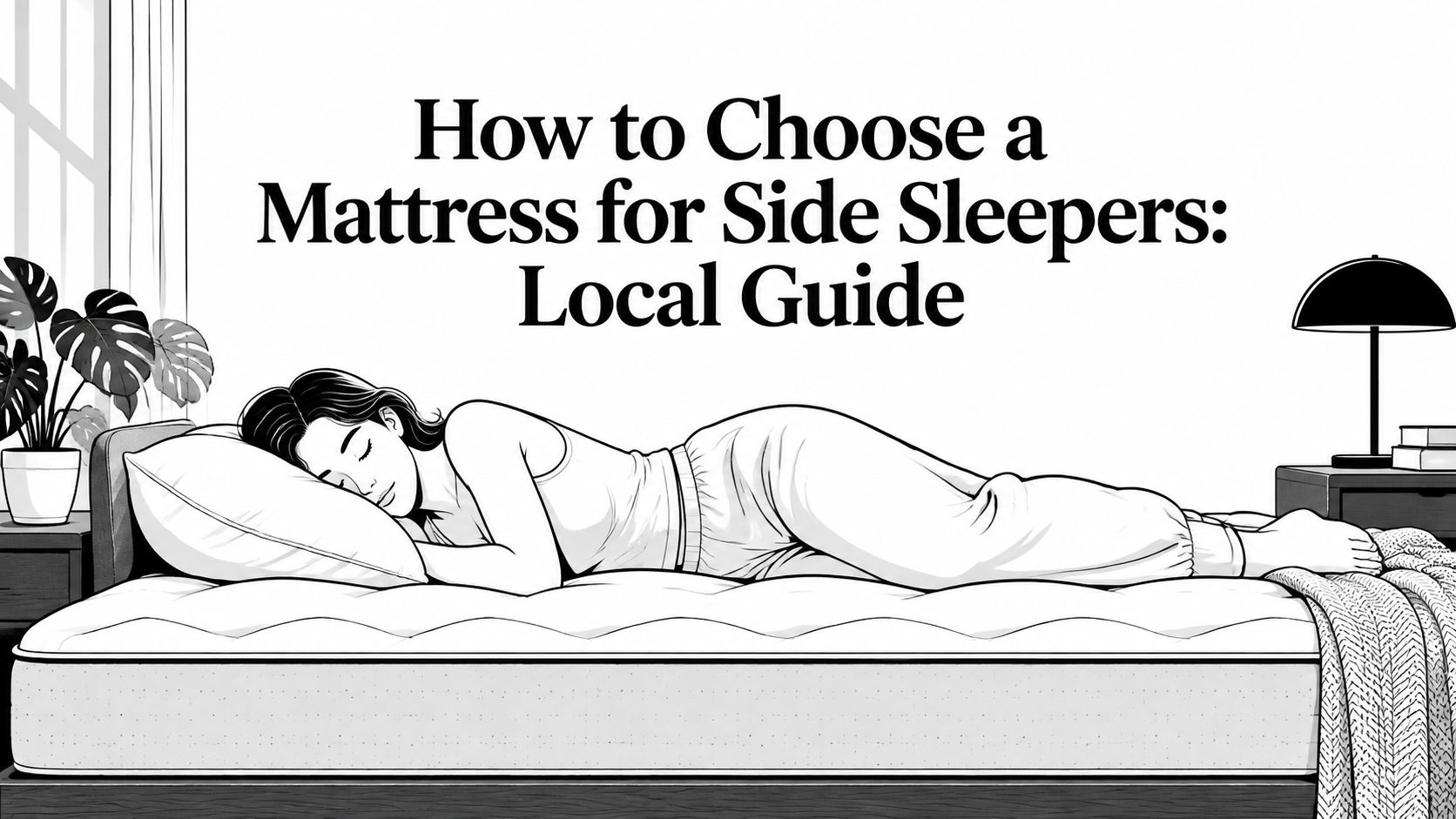
If side sleeping feels more natural, lie on the nonpainful side and place a pillow in front of the chest. Hugging that pillow supports the painful arm and helps stop the shoulder from collapsing forward. A second pillow beneath the forearm can keep the arm from hanging behind or in front of the body.
Practical rule: A position only works if the painful arm remains supported after the body relaxes.
Let the mattress carry its share
Pillows can correct arm placement, but they can't fix a mattress that creates concentrated pressure at the shoulder. The surface should let the shoulder settle comfortably without allowing the torso to sag or the spine to twist.
That balance is the heart of pressure-point relief. Mattress Pro by Miller Waldrop helps local shoppers compare sleep surfaces by body type, sleep position, and budget, including options from Tempur-Pedic, Sealy, Stearns & Foster, and Sherwood. A useful starting point for mattress shoppers is this guide to pressure-point relief.
Understanding Sleep Positions and Shoulder Pain
If shoulder pain wakes you after a night in Ruidoso's dry mountain air, changing sides may help, but position alone is not a universal fix. Sleep posture changes how the joint is loaded, while the mattress, arm support, and spinal alignment determine whether that load stays comfortable.
A 2018 cross-sectional study of 762 workers reported that 277 participants, or 36.4%, had glenohumeral shoulder pain in one or both shoulders during the previous 30 days. 137, or 18.0%, met the study's definition for rotator-cuff-related findings in the published research.
Researchers found no statistically significant overall association between a primary sleep position and either glenohumeral pain or rotator cuff tendinopathy. The position expected to create the greatest risk even showed a trend toward a protective relationship. That result argues against promising one posture as a cure. A better test is whether your arrangement reduces pressure, keeps the arm supported, and limits morning stiffness.
Side sleeping
Direct pressure on the painful shoulder can irritate an already sensitive area. The upper arm may press into the mattress while the torso rotates, producing a pulling sensation around the joint.
The opposite side is often a reasonable trial. In the same worker study, people with left-shoulder pain were 2.06 times as likely to sleep on the right side, with a 95% confidence interval of 1.07 to 3.96. The corresponding estimate for right-shoulder pain and sleeping on the left was 0.64, with a 95% confidence interval of 0.35 to 1.20. These findings describe sleeping patterns, not a prescription for every person.
A side sleeper still needs proper alignment. Keep the neck level, support the painful arm on a pillow, and avoid letting the upper shoulder roll forward. A mattress that cushions the shoulder without allowing the torso to sag matters as much as the position itself.
Back sleeping
Supine, or back, sleeping removes direct compression from both shoulders. It may also produce lower subacromial pressure than prone or side sleeping, which can reduce compression around irritated rotator-cuff structures as described in the clinical evidence.
The arrangement becomes less comfortable when the arm drops unsupported. A low, stable surface beneath the elbow and forearm can keep the arm slightly raised without forcing it overhead. The mattress should support the torso while allowing gentle cushioning beneath the shoulder.
Stomach sleeping
If you sleep on your stomach, your neck has to rotate so you can breathe. The arm may also settle in a rotated or overhead position, increasing tension around a sensitive shoulder.
Some stomach sleepers have no shoulder symptoms. During a painful flare, however, this position is a poor first experiment, especially if the arm becomes trapped beneath the body or pillow. Test changes gradually and keep the setup that leaves you comfortable through the night.
For a broader guide to alignment and posture, see this explanation of the best sleep position. Judge the setup by its results, not its label: less pain and fewer awakenings, with no numbness, weakness, or worsening morning stiffness.
Strategic Pillow Placement for Pain Relief
Pillow placement should create support beneath the arm, not merely lift the head. A back sleeper often feels shoulder strain when the elbow falls toward the mattress and the shoulder dips downward. A folded blanket or low pillow beneath the forearm keeps the arm closer to the body's midline and reduces that pull, as described in clinical guidance on sleep positions for pain.
Build a back-sleeping shelf
Set up the affected arm before trying to fall asleep. The support should feel steady, low, and relaxed rather than like a wedge forcing the shoulder upward.
- Lie on the back. Keep the shoulder relaxed and avoid placing the elbow high above the body.
- Support the elbow and forearm. Use a low pillow or folded blanket to stop the arm from dropping.
- Check the hand. The hand should rest comfortably, without tingling or a feeling that the arm is stretched.
- Recheck after several minutes. If the shoulder feels pulled upward, the support is too thick or too far toward the elbow.
The aim is a small pillow shelf that prevents downward movement. It shouldn't immobilize the entire arm unless a clinician has prescribed that arrangement.
Create a side-sleeper pillow shelf
For side sleeping, place the painful shoulder on top. Hug a pillow in front of the chest and allow the upper arm to rest fully on it. One or more pillows can keep the arm straighter and closer to a neutral position, rather than letting it fall forward.
Side sleepers also need a head pillow that fills the space between the mattress and the neck. Too little loft can tilt the head toward the mattress, while excessive loft can push the neck upward. The shoulder should stay relaxed, and the arm shouldn't be tucked beneath the head pillow or held overhead.
Make room for couples
Partners don't always need the same sleep arrangement. One person may need mild elevation or a supported arm while the other prefers a flatter surface.
A body pillow can create a boundary that helps the shoulder remain supported without requiring a partner to hold the arm in place. Couples comparing mattresses should also test whether each person can maintain a neutral position without rolling into the other sleeper's space. For pillow ideas that address upper-body alignment, explore pillows for neck pain.
How Your Mattress Affects Shoulder Comfort
A shoulder can ache before the night is over when the mattress concentrates pressure in one spot. The right surface supports the shoulder and keeps the torso aligned, while the pillow handles smaller adjustments around the arm and neck.
A surface that is too firm may resist the shoulder's natural shape and create a concentrated pressure point. A surface that is too soft may let the shoulder and torso sink unevenly, rotating the spine. In Ruidoso's dry mountain climate, heat also matters, especially for sleepers who warm up on contouring materials.
Memory foam can contour around the shoulder and spread pressure across a broader area. Some designs add cooling gel within the comfort layers. A hybrid mattress pairs contouring material with supportive coils, cushioning the shoulder while limiting sink around the midsection.
Neither design fits every painful shoulder. Body shape, sleeping position, firmness preference, and the underlying condition all change the result.

Test the whole support system
For nonoperative shoulder pain, a sensible trial begins on the back with the symptomatic arm supported. Compare pain intensity and awakenings over several nights while keeping the same mattress and pillow arrangement.
Judge the whole setup rather than relying on a marketing label:
- Shoulder response: The shoulder should settle without sharp pressure or pinching.
- Spinal alignment: The torso should feel supported instead of bowed or twisted.
- Arm position: The forearm should remain supported as the body relaxes.
- Temperature: Cooling may matter for sleepers who feel warm on contouring materials.
- Movement: Couples should be able to change position without sharply disturbing each other.
A local showroom lets Sleep Pros observe how the shoulder, neck, and torso align in the position a sleeper uses. That hands-on check can reveal problems that are easy to miss during a compressed online purchase.
Choose reassurance, not guesswork
Choosing a mattress feels harder when shoulder pain already interrupts sleep. The Comfort Promise can reduce the risk of the decision, while the Low Price Promise addresses concerns about local service costing more than an anonymous online purchase.
Mattress Pro by Miller Waldrop carries Tempur-Pedic, Sealy, Stearns & Foster, and Sherwood sleep systems. Full-Service Delivery and Professional Setup are available for local customers. Before visiting the showroom, review this guide to choosing a mattress for neck and shoulder pain to clarify which support features deserve attention.
When to Seek Professional Help or Medical Advice
A new sleep position is a comfort experiment, not a diagnosis. Persistent nighttime pain, weakness, numbness, or difficulty lifting the arm deserves medical evaluation, particularly when symptoms worsen instead of settling.
Seek prompt assessment after new trauma or when the shoulder shows marked weakness, deformity, fever, drainage, or sudden loss of function. A mattress can't repair an injury, and repeated experimentation shouldn't delay care for symptoms that suggest more than ordinary pressure sensitivity.
Postoperative restrictions come first
Shoulder surgery changes the rules. After rotator-cuff repair, the surgeon's sling, immobilization instructions, and range-of-motion restrictions override general advice about back or side sleeping.
Research on rotator-cuff repair found that back sleeping increased from 39.2% before surgery to 85% at two weeks, while side sleeping fell from 64.7% to 27.5% during that early period in prospective follow-up. Positions partially normalized by six weeks and generally resembled baseline by 24 weeks. Those figures describe one follow-up pattern, not permission to change a prescribed recovery position.
A reclined setup may be more comfortable when lying flat causes rolling or strain. The arm still needs support, and an improving pain level doesn't justify abandoning a sling or prescribed restriction.
Use a measured comfort trial
For nonsurgical pain, compare a few carefully supported arrangements rather than changing everything at once:
- Back-supported setup: Support the elbow and forearm with a low pillow.
- Opposite-side setup: Hug a pillow and keep the painful arm fully supported.
- Mildly reclined setup: Use an adjustable base or reclined arrangement if flat sleeping is uncomfortable.
Record morning pain and nighttime awakenings in simple terms. If the shoulder develops numbness, increased weakness, persistent elevation, or worsening pain, stop the experiment and seek professional advice. A local sleep consultation can help with mattress and pillow fit, but medical providers should evaluate symptoms and injuries.
Ready to make shoulder-friendly sleep easier in Ruidoso? Visit the Sleep Pros at Mattress Pro by Miller Waldrop at 2801 Sudderth Drive, Suite F, to test Tempur-Pedic, Sealy, Stearns & Foster, and Sherwood options with the Comfort Promise, Low Price Promise, and Full-Service Delivery with Professional Setup. Stop by Monday through Saturday to compare support and pressure relief in person, and find a setup that helps you wake up loving your mornings.