

How to Sleep Better with Neck Pain: A Practical Guide

A cabin guest in Ruidoso wakes at 3 a.m. with the neck locked to one side. The heater is humming, the mountain air feels dry, and every attempt to turn over sends a sharp reminder through the shoulders. By morning, the pain has shortened sleep, triggered a headache, and made an ordinary drive down Sudderth Drive feel harder than it should.
That pattern is familiar to residents, vacation-rental owners, and weekend visitors across Lincoln County. Learning how to sleep better with neck pain requires more than grabbing the firmest pillow on a shelf. The mattress, pillow, sleep position, bedroom climate, and daytime posture all work together. After 70 years of helping New Mexico families sleep, Miller Waldrop's Sleep Pros approach the problem as a fit issue, not a one-size-fits-all purchase. A useful starting point is this guide to sleep health and recovery.
Why Neck Pain Steals a Good Night's Sleep
The neck, or cervical spine, contains a stack of seven vertebrae that needs steady support while the body rests. When the head falls too far forward, backward, or to one side, the surrounding muscles stay active instead of settling down. A rough position repeated through the night can leave the sleeper waking with stiffness, pressure at the base of the skull, or pain that travels into the shoulders.
Ruidoso adds its own complications. A cabin bed may have a worn center, a guest-room mattress may be unfamiliar, and a rental pillow may be either flat or overstuffed. Dry mountain air can also make an already-irritated sleeper feel tighter by morning, especially when a furnace runs through a cold night.
Sleep is a system
The mistake is treating neck pain as a pillow problem alone. A pillow can support the cervical curve, but it can't correct a mattress that lets the hips sink or a surface that forces the shoulders upward. Daytime habits matter, too. Long periods looking down at a phone or working at a poorly arranged desk can send the neck into bed already fatigued.
A 2006 blinded study involving people with non-specific neck pain found that 40 of 52 patients reported a positive effect on neck pain, while 24 of 31, or 77%, reported better sleep, and 19 of 31, or 61%, reported less headache (study details). The practical lesson is straightforward. The sleep setup can influence both nighttime comfort and morning symptoms.
Practical rule: The right sleep system keeps the head supported without asking the neck muscles to work all night.
A cold room, a sagging rental mattress, or a mismatched pillow can turn a peaceful mountain night into a cycle of waking, guarding, and morning soreness. The fix starts by checking alignment from the head through the hips, then adjusting the surface and accessories around the sleeper's body.
The Science of Spinal Alignment and Mattress Support
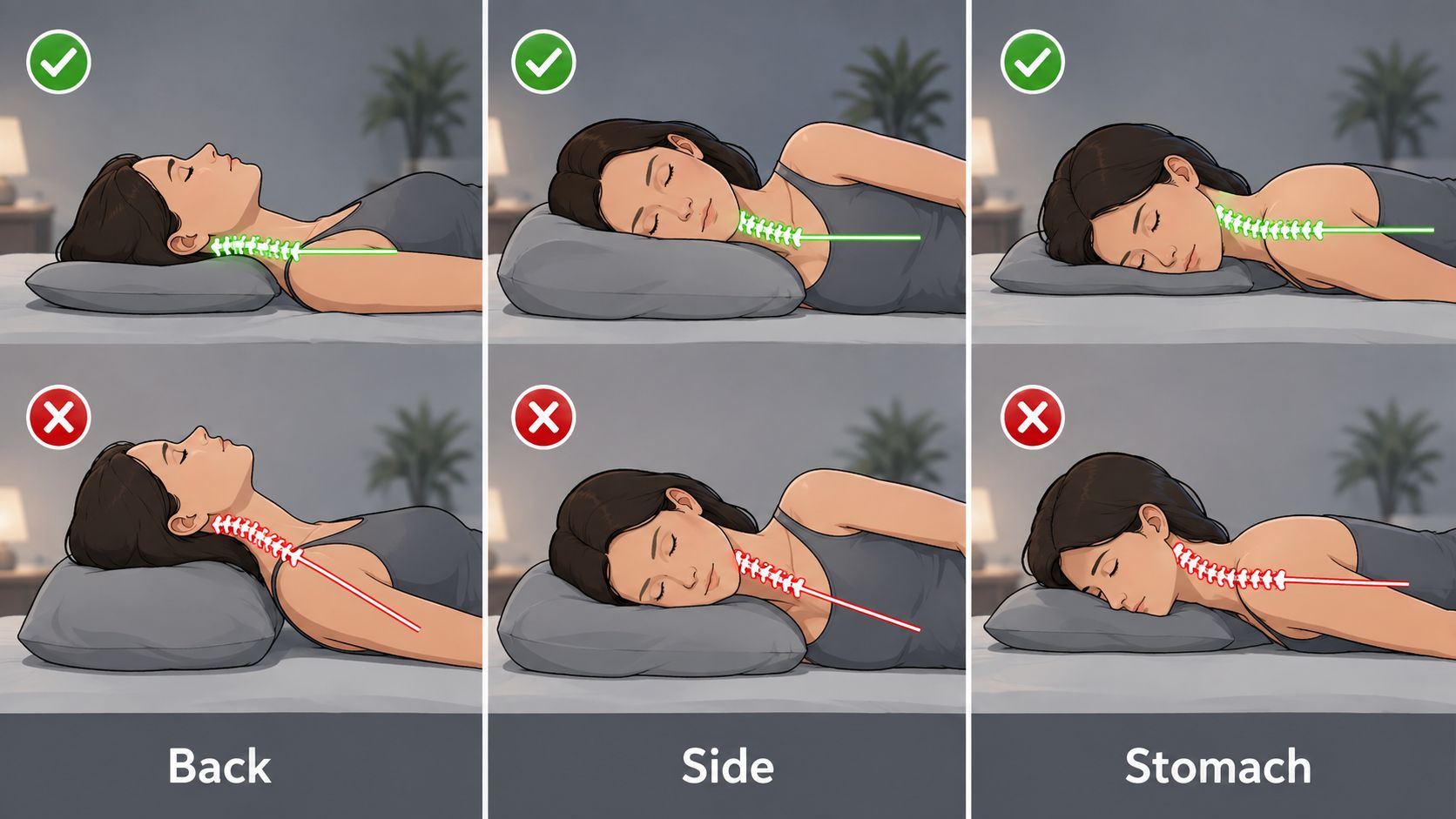
Neutral alignment means the head stays balanced over the shoulders rather than drifting forward or tilting sideways. On the back, the chin should remain level. On the side, the ear should stay over the shoulder, with the head neither dropping toward the mattress nor lifting away from it.
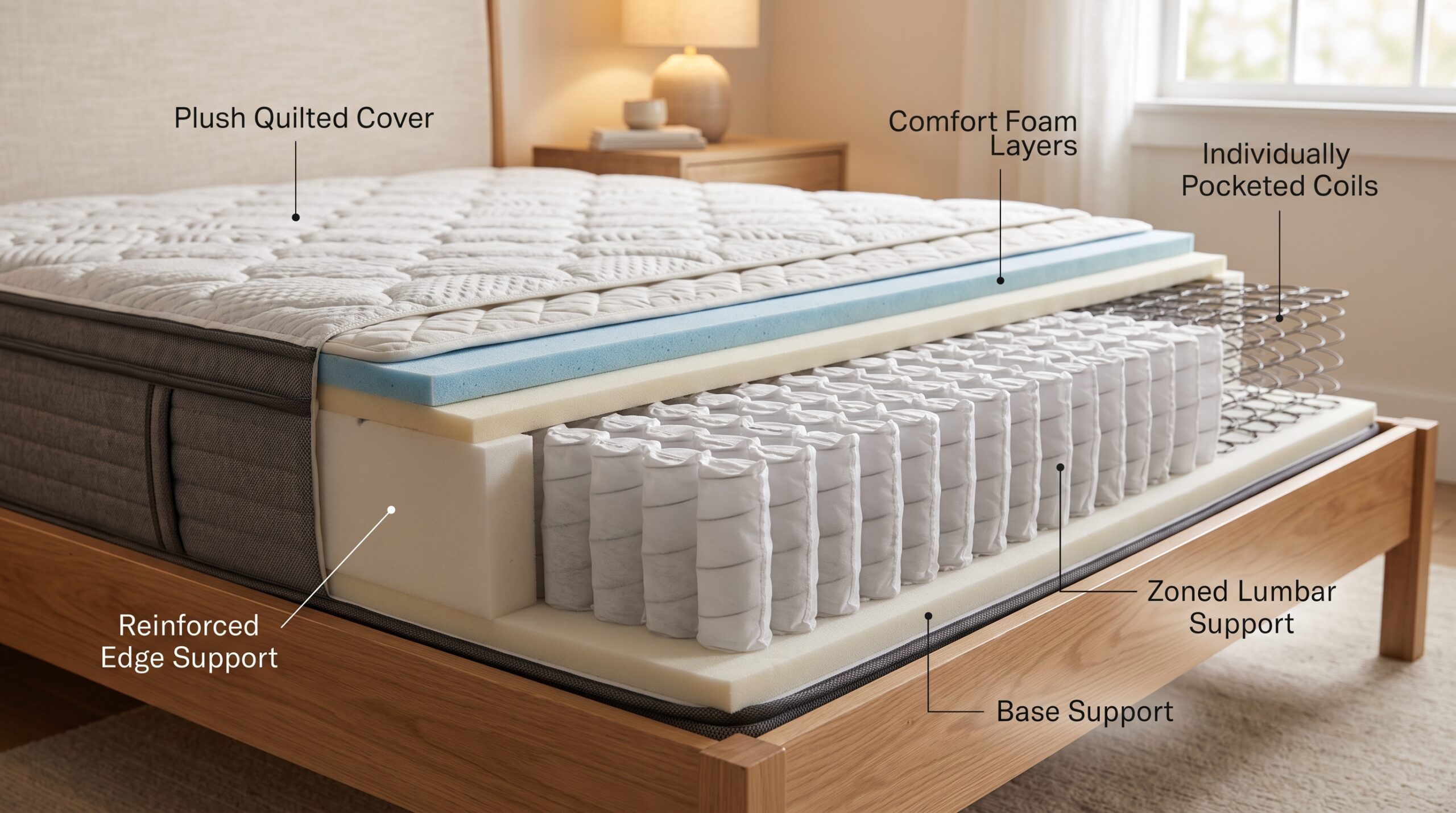
A mattress changes that geometry. If the surface is too soft, the hips can sink and rotate the trunk, which forces the neck to compensate. If it's too firm, the shoulder may not settle enough for side sleeping, leaving the head angled upward. Memory foam often helps by contouring around shoulders and hips, reducing pressure points. A hybrid can provide more buoyant support through coils while still using comfort layers to cushion the body.
Match the feel to the sleeper
Tempur-Pedic, Sealy, Stearns & Foster, and Sherwood models can feel very different even when they share a broad category. The important question isn't which label sounds most impressive. It's whether the sleeper's shoulders, hips, and neck remain supported in the position used most often.
| Mattress Feel | Neck Alignment Effect | Best For | Watch Out For |
|---|---|---|---|
| Contouring memory foam | Cradles shoulders and hips, which can reduce twisting | Sleepers who want close pressure relief | Deep sink can make repositioning harder |
| Responsive hybrid | Supports the body with lift while cushioning pressure areas | Combination sleepers and people who dislike a trapped feel | Too much pushback can bother sensitive shoulders |
| Plush comfort feel | Allows more shoulder and hip immersion | Side sleepers needing pressure relief | Excessive sink can rotate the spine |
| Firm comfort feel | Limits body compression and provides a stable surface | Some back sleepers and people who prefer strong support | May create shoulder pressure for side sleepers |
A 2021 systematic review and meta-analysis found that specific pillow designs can help with neck pain, waking symptoms, disability, sleep quality, and spinal misalignment, but it didn't identify one pillow type that works best for every patient (review summary). That same individualized logic applies to mattress selection.
A simple showroom self-test
Lie in the usual sleep position and relax for several minutes. Ask whether the shoulders can settle, whether the hips feel supported, and whether the chin stays level. A partner can look from the side and check whether the head appears to continue the line of the spine. More guidance is available in this explanation of spine alignment while sleeping.
Best Sleep Positions to Reduce Neck Pain
For individuals with neck pain, back sleeping is the cleanest starting point. It allows the head, neck, and spine to remain neutral when the pillow supports the natural cervical curve without pushing the head forward (position guidance). Keep the chin level, not tucked toward the chest and not tipped toward the ceiling.
Side sleeping can work just as well when the pillow fills the space between the ear and mattress. The head should stay level with the spine, and the line from the head through the neck to the upper back should remain straight. A mattress with enough shoulder cushioning helps prevent the sleeper from bending the neck to compensate.
Back sleeping
A small pillow under the knees can reduce lower-body tension and help the back settle. The neck pillow should support under the cervical curve rather than lift the shoulders. If the chin moves toward the chest, the pillow is too tall or too firm.
Side sleeping
Side sleepers should place a thin pillow between the knees to keep the pelvis from rolling forward. A hug pillow can stop the upper shoulder from collapsing inward, which helps the upper spine remain more stable. During a cabin stay, a folded towel can fill a temporary gap, but a properly fitted pillow is a better long-term solution.
Stomach sleeping
Stomach sleeping is the hardest position for a sore neck because the head must turn to breathe. It should be treated as a habit to reduce, not the preferred correction. If the sleeper can't change immediately, the lowest practical pillow loft creates less lift, while a stable mattress limits additional sinking.
A complete position guide is available through the best sleep position resource. The best position is the one that preserves a level head and relaxed shoulders without forcing the sleeper to hold still.
Choosing the Right Pillow for Neck Pain
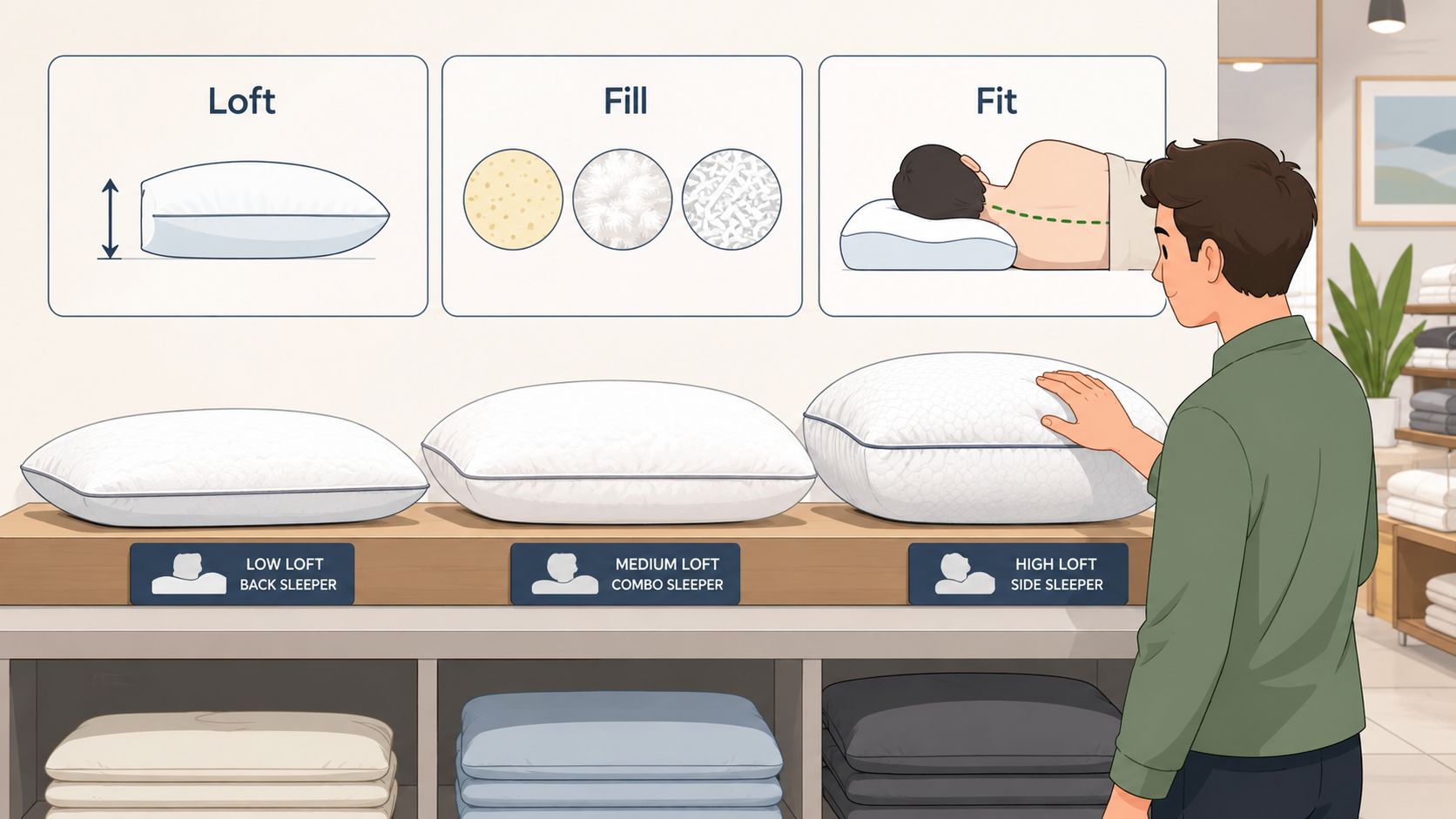
Pillow shopping becomes easier when the decision is split into loft, fill, and fit. Loft is the pillow's height under load, fill determines how it responds, and fit describes whether the neck stays supported after the sleeper settles.
A practical height range depends on position. One guide summarizes research indicating approximately 7 to 11 centimeters for back sleepers and 10 to 15 centimeters for side sleepers (height guidance). The same source material also describes support commonly falling within a 4 to 6 inch range, depending on body size and position. Those ranges are starting points, not guarantees.
Choose the loft first
- Side sleepers: Usually need more loft to fill the shoulder-to-ear gap and keep the chin neutral.
- Back sleepers: Usually need less height, with enough contour to support the neck without pushing the head forward.
- Stomach sleepers: Need very low support, or no pillow beneath the head, while working toward a different position.
Fill changes the feel. Solid memory foam provides stable contouring, shredded foam allows more adjustment, latex feels springier, down compresses easily, and cooling gel layers can change the surface sensation for sleepers who dislike heat. A contour pillow can cradle the cervical curve, but restless sleepers may find its fixed shape awkward.
Test the pillow under a mattress
A pillow that feels comfortable in a chair may fail once the shoulder sinks into a mattress. In a showroom, the sleeper should:
- Lie in the usual sleep position.
- Spend at least 3 minutes per pillow.
- Ask a partner or Sleep Pro to check whether the nose, chin, and breastbone form a straight line.
- Test the pillow on the mattress being considered.
The mattress and pillow must be selected together. A soft pillow on a firm mattress can under-fill the neck space, while a lofty pillow on a plush mattress can push the head too far sideways. A focused guide to pillow support for the neck can help organize the decision before a showroom visit.
Bedroom Setup and Bedtime Routine for Sore Necks
Ruidoso's dry mountain air can leave a sore neck feeling tighter by morning. Set up the bedroom for recovery, especially in a cabin or vacation rental where the furnace, humidifier, and mattress may be unfamiliar. Use a cool-mist humidifier when the air feels uncomfortable, and keep the room cool rather than overheated. Check the room's comfort before bed, not after pain wakes you.
Release tension before lying down
A brief routine helps keep daytime tension out of bed. Move slowly, stay within a comfortable range, and stop if pain increases.
- Chin tucks: Perform 10 repetitions, holding each for 5 seconds.
- Neck rotations: Turn slowly from side to side without forcing the range.
- Doorway chest stretch: Open the chest to ease rounded-shoulder tension.
- Child's pose: Reach the arms forward gradually to lengthen the upper back.
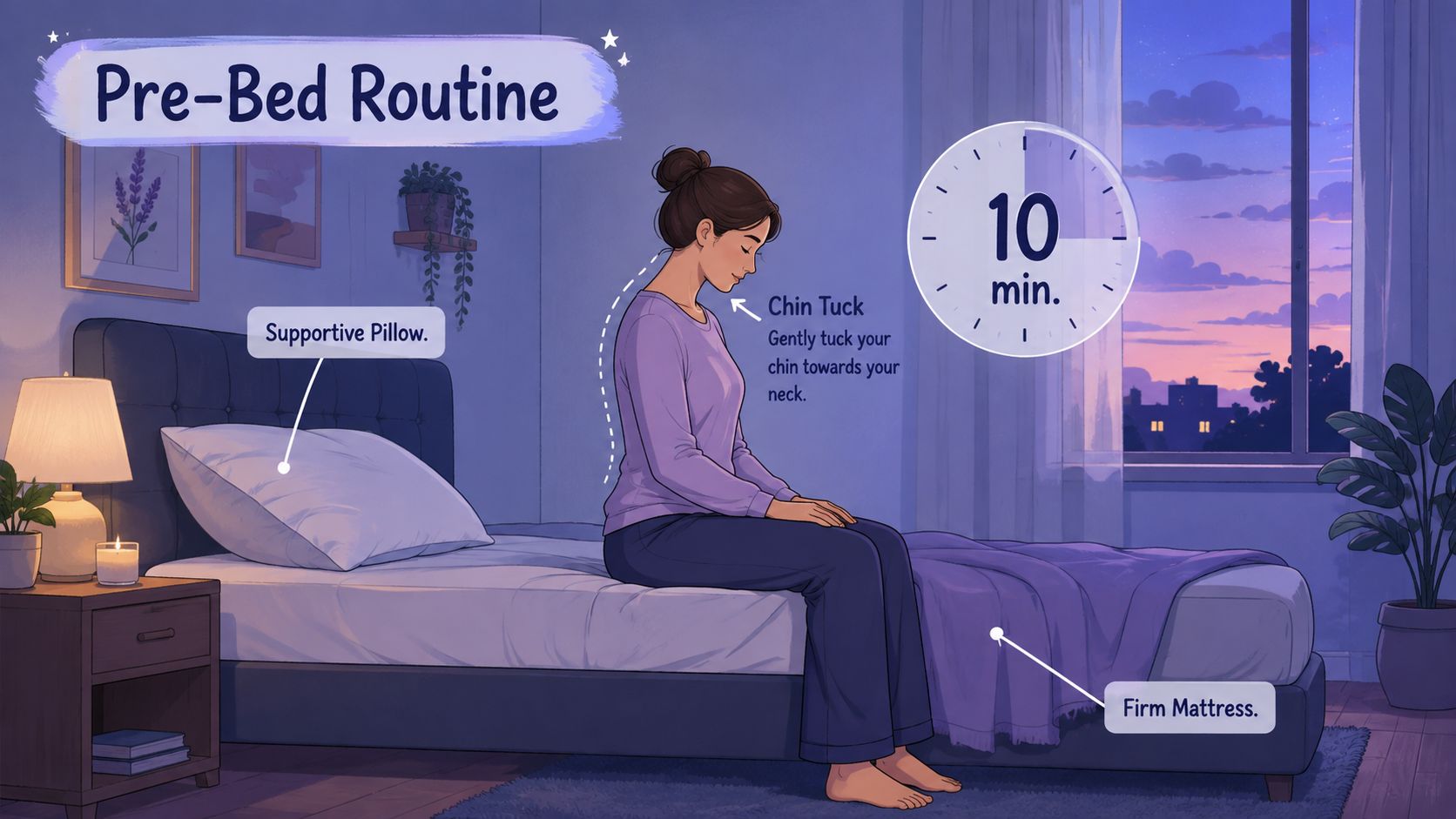
Place a medium-firm support pillow under the neck, not under the shoulders. Side sleepers can use a thin pillow between the knees. Keep the phone out of bed so the neck is not repeatedly bent toward a bright screen.
Finish with a calmer transition
Use the 4-7-8 breathing pattern to slow the pace before sleep. Then scan from the jaw to the shoulders and release any clenching you notice. This routine will not correct a sagging mattress, so address the bed itself if the surface leaves your neck unsupported.
For Ruidoso stays, test the mattress and pillow together when possible. Tempur-Pedic, Sealy, Stearns & Foster, and Sherwood beds can feel very different, and the right fit depends on your body, position, and preference for contouring or easier movement. A local Sleep Pro can help match that setup before your next night in the mountains.
Why a Local Sleep Pro Beats an Online Mattress Order
Buying a mattress sight unseen is risky when neck pain is involved. The problem may not be the mattress category itself. It may be the relationship between body shape, sleep position, pillow height, surface response, and temperature preference. Repeatedly ordering boxes can leave a shopper changing too many variables at once.
A local consultation lets a sleeper test those variables together. A Sleep Pro can observe shoulder width, body proportions, preferred position, pressure sensitivity, and the need for a cooler or more conforming feel. That process narrows the field to a few realistic choices instead of leaving the shopper to interpret specifications alone.
What showroom testing reveals
Side-by-side testing on floor models shows details an online description can't capture:
- Pressure relief: Whether the shoulder and hip settle without strain.
- Support response: Whether the hips stay lifted rather than sinking too far.
- Movement: Whether turning remains easy for combination sleepers.
- Temperature feel: Whether the surface feels breathable enough for a dry, heated bedroom.
- Adjustable positioning: Whether changes in elevation help the sleeper find a more comfortable posture.
Tempur-Pedic, Sealy, Stearns & Foster, and Sherwood each offer different combinations of contouring, responsiveness, and support. Adjustable bases can also change how the head and upper body are positioned, but the setup still needs to be tested with the sleeper's actual pillow.
Local protection matters
The Comfort Promise addresses the fear of choosing the wrong bed by providing a local path to reassess the fit. The Low Price Promise helps budget-minded shoppers compare value locally, while Full-Service Delivery with Professional Setup removes the burden of moving and assembling a heavy sleep system in a home or vacation rental.
Mattress Pro by Miller Waldrop offers those mattress consultations and services in Ruidoso. A local sleep consultation gives residents and cabin owners a chance to test support before committing.
When Neck Pain Needs a Doctor
A better mattress and pillow can support recovery, but they can't diagnose a medical problem. Neck pain deserves clinical attention when it remains severe, continually disrupts sleep and daily activities, or appears with symptoms that bedding changes can't explain.
Seek prompt medical attention for warning signs
Contact a healthcare professional when neck pain includes:
- Numbness, tingling, or weakness: Especially when symptoms affect an arm, hand, or grip.
- Radiating pain: Pain that travels down the arm or into the fingers needs assessment.
- Recent trauma: A fall, collision, or other major injury shouldn't be treated as a pillow issue.
- Systemic symptoms: Fever or chills alongside neck stiffness require medical advice.
- Unusual headaches: A headache that feels different from the normal pattern deserves attention.
- Persistent symptoms: Pain that doesn't improve after consistent changes to position, pillow, and routine should be evaluated.
A hospital guideline advises seeking GP attention when neck pain continually affects sleep and daily activities, and urgent help after major injury or with neurological symptoms such as dizziness, double vision, slurred speech, swallowing difficulty, or limb numbness or weakness (neck pain guidance).
For residents in Ruidoso and Lincoln County, a primary care physician or urgent care clinic can provide the first evaluation. Depending on the findings, a chiropractor, physical therapist, or orthopedic specialist may be appropriate. Before the appointment, record the pain pattern, sleep position, symptom duration, and any changes in strength or sensation. A supportive mattress can improve the recovery environment, but it isn't a substitute for medical evaluation when the body raises a red flag.
Mattress Pro by Miller Waldrop helps Ruidoso sleepers test Tempur-Pedic, Sealy, Stearns & Foster, and Sherwood sleep systems with pillow and position fit in mind, backed by the Comfort Promise, Low Price Promise, and Full-Service Delivery with Professional Setup. Visit Mattress Pro by Miller Waldrop at 2801 Sudderth Drive, Suite F, in Ruidoso, Monday through Saturday, and let a local Sleep Pro help build a setup that supports better mornings.