

Memory Foam Mattress Pros and Cons for Better Sleep

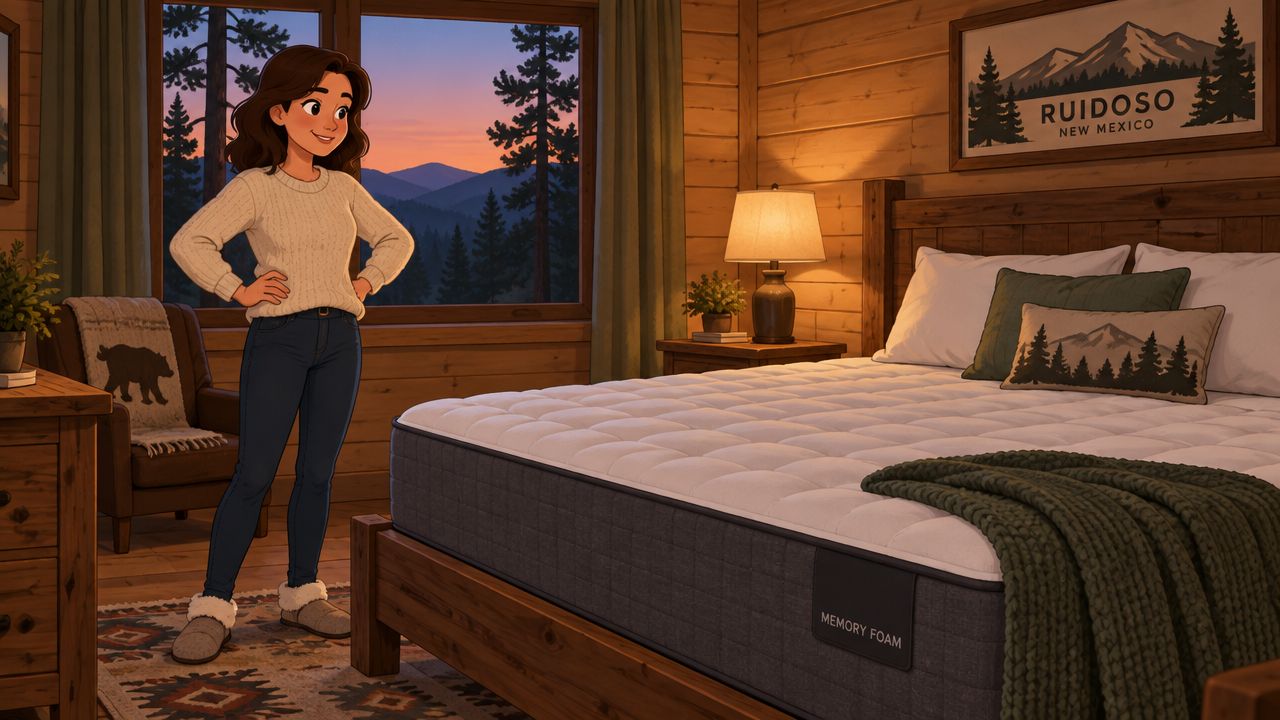
You're waking with a sore hip, a numb shoulder, or the familiar feeling that a partner's movement has traveled straight across the bed. In Ruidoso, the choice can feel even more complicated. A mattress that cushions pressure may also hold warmth during a cool mountain night, and a cabin bed used only on weekends has different needs from the primary bed used every night.
That's why the memory foam mattress pros and cons deserve a balanced look. Memory foam can bring deep contouring, pressure redistribution, and excellent motion isolation, but it can also feel slow to move on, retain heat, and offer less edge support than some alternatives. The right choice depends on sleep position, body type, temperature preference, and how the mattress will be used.
For neighbors in Ruidoso, Alto, and Lincoln County, local testing adds an important layer of confidence. A hands-on visit along Sudderth Drive lets a sleeper compare the feel of a foam surface with a hybrid or innerspring build instead of guessing from a screen. Miller Waldrop has served local families for 70 years, with a sleep-focused approach built around the Comfort Promise, the Low Price Promise, and Full-Service Delivery with Professional Setup.
Introduction to Memory Foam Comfort in Ruidoso
A familiar mountain-sleep dilemma
A Ruidoso sleeper may love the dry mountain air during the day and still wake warm after sinking into a dense all-foam bed. Another sleeper may appreciate how the mattress cushions an aching hip but dislike the effort required to turn over. Couples often face a separate question: is uninterrupted comfort worth choosing a surface that feels less lively?
Those aren't failures of memory foam. They're signs that the material has a distinct feel, and that feel needs to match the person using it. The same close contouring that eases pressure around the shoulders and hips can make repositioning feel slower. The same dense structure that quiets a partner's movement can reduce airflow.
Why local testing matters
Online descriptions can explain construction, but they can't show how a mattress supports a particular shoulder, hip, or lower back. A Sleep Pro can help a customer compare Tempur-Pedic, Sealy, Stearns & Foster, and Sherwood options by firmness, construction, and cooling features, then connect those choices to a real sleep position.
A useful starting point is the local mattress store guide, especially for shoppers furnishing a primary bedroom, guest room, or Ruidoso cabin. The aim isn't to push the most expensive model. It's to remove uncertainty before the purchase.
What the material can and can't do
Memory foam was created to absorb and redistribute pressure, which explains its reputation for contouring and pressure relief. It isn't a medical treatment, and a mattress that's too soft or too firm can still leave a sleeper uncomfortable.
The Comfort Promise helps address the fear of choosing the wrong bed. A customer can test the feel in person, discuss likely trade-offs, and have a local path for support rather than relying only on a bed-in-a-box return process. That combination of education and hands-on care matters when sleep needs to work in the conditions of a mountain home.
How Memory Foam Works and Why It Feels Different
The simple version of viscoelastic foam
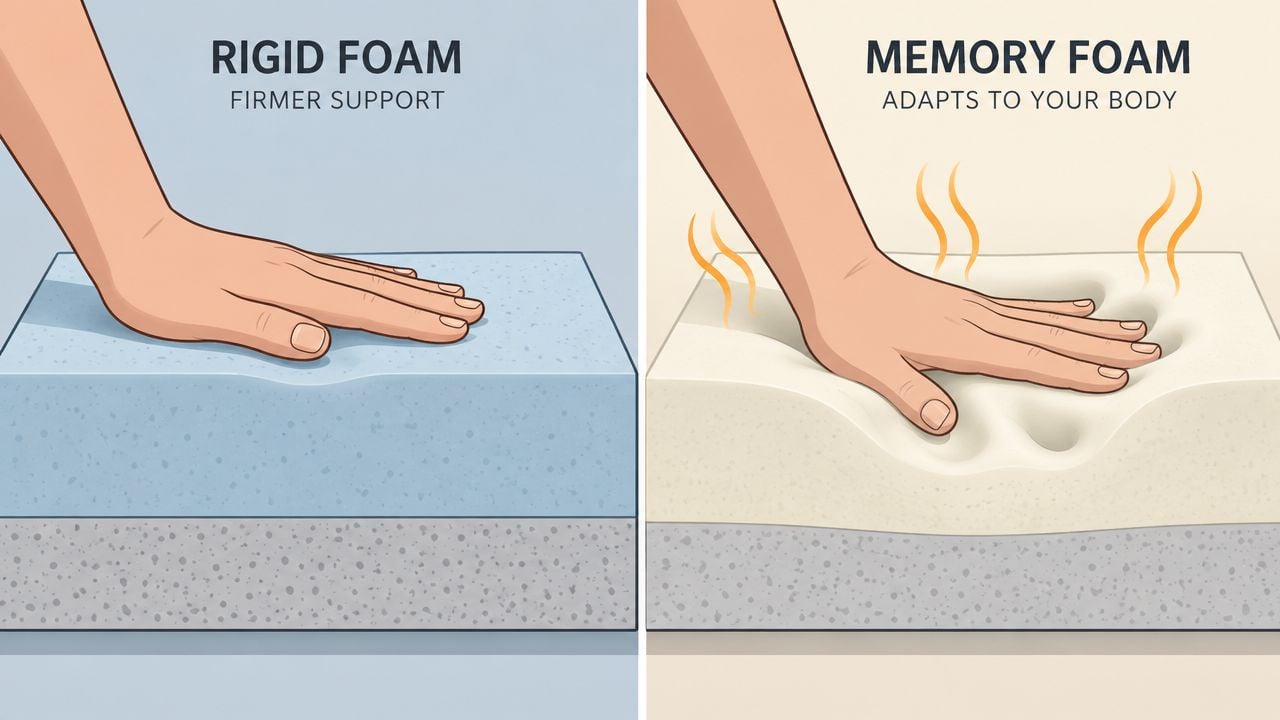
Memory foam is a form of viscoelastic polyurethane foam. Body heat and pressure soften the comfort material, allowing it to mold around the body. Once the pressure is removed, the foam slowly recovers its original shape.
A simple analogy is soft clay that responds gradually rather than immediately. A hand leaves a shape in the surface, but the material slowly smooths itself after the hand moves away. A traditional spring surface pushes back more quickly, while memory foam conforms before recovering.
For a fuller explanation of the material and its behavior, the memory foam mattress guide offers a useful foundation.
Why pressure redistribution feels comfortable
When a sleeper lies on a flat surface, the shoulders and hips can carry more concentrated pressure. Memory foam allows those areas to sink while supporting the surrounding body, spreading contact across a broader area. That pressure redistribution is the central reason side sleepers often enjoy the material.
The foam can also help maintain a more neutral spinal path when its firmness and depth suit the sleeper. A side sleeper generally needs enough give for the shoulder and hip, while a back sleeper needs enough resistance to keep the pelvis from sinking.
Practical rule: Contouring is useful only when it supports the sleeper's alignment. More sink isn't automatically better.
Why movement feels slower
Slow recovery creates the familiar “hugged” sensation. The sleeper may feel held in a shallow cradle rather than resting on top of the mattress. That can reduce motion transfer across the surface, which helps when one partner turns or gets out of bed.
The trade-off appears when the sleeper changes position. A combination sleeper may need more effort to move through the foam because the surface doesn't rebound immediately. Anyone who dislikes a sinking sensation should spend enough time testing the mattress in a normal sleep position, not just pressing a hand into the top.
Key Benefits You Will Feel Night After Night
Pressure relief for shoulders and hips
Does memory foam help with pressure points? It often can, particularly for side sleepers who feel discomfort at the shoulder or hip. The foam softens under heat and pressure, then redistributes loading across a larger contact area, as described by the Sleep Foundation explanation of memory foam.
A side sleeper in an active mountain household may notice the benefit after a day of hiking, skiing, or outdoor work. The mattress doesn't remove an injury or treat a health condition, but a better match between body shape and surface cushioning can reduce the sharp pressure that interrupts rest.
Motion isolation for couples
Dense foam absorbs movement instead of allowing it to travel freely through the mattress. That makes memory foam a strong candidate for couples with different schedules or different movement patterns during sleep.
The advantage is practical. If one person turns over, the other may feel less of the disturbance than on a more responsive spring surface. Motion isolation can matter just as much in a vacation cabin, where guests may share a room and expect quiet sleep after a day outside.
Consistent contouring and alignment
A quality memory foam construction can provide a stable, even feel across the sleeping surface. The goal is to let heavier areas settle while supporting the body around them. Firmness still matters, because a mattress that allows excessive sink can work against alignment.
The material also works naturally with adjustable bases because foam flexes as the base changes position. Shoppers should still confirm that the selected mattress and foundation are compatible with the manufacturer's requirements.
Cooling features can improve the experience
Traditional dense foam tends to retain more heat than a construction with an airy spring core. Manufacturers address that issue with features such as gel-infused foam, graphite, open-cell formulations, and cooling covers. Those additions can help, but they don't completely change the underlying behavior of a dense all-foam mattress.
Tempur-Pedic, Sealy, Stearns & Foster, and Sherwood may use different combinations of foam layers, covers, and support systems. The useful question isn't whether a label says “cooling.” It's whether the complete construction feels comfortable to the person who sleeps on it.
Durability depends on materials and use
Major mattress overviews commonly describe memory foam mattresses as lasting about 7 to 10 years, although softening and support loss can develop with age. The Sleep Foundation memory foam overview explains that the category's deep conforming comfort comes with a slower response and possible heat retention.
For a cabin or guest room, lighter and less frequent use may feel different from daily use by two adults. A local Sleep Pro can help compare the intended use, support needs, and budget before a shopper chooses a construction.

Common Drawbacks and How to Manage Them
Heat retention is a construction issue
The most common memory foam complaint is warmth. Dense foam has less open space for air movement than a coil-based support core, so body heat can build around the sleeper. That matters in Ruidoso even when outdoor temperatures feel comfortable, especially for sleepers who naturally run warm or use a heavily insulated bedding setup.
Cooling covers, breathable sheets, lower-density comfort layers, and hybrid designs can reduce the problem. The memory foam cooling guide can help shoppers identify practical features rather than relying on a broad cooling claim.
The slow sink can frustrate active sleepers
A combination sleeper may feel delayed when rolling from the side to the back. The foam has to recover before it can provide the same pushback in the new position, creating the “quicksand” sensation some shoppers dislike.
That isn't a defect. It's a preference and a response characteristic. A hybrid or more responsive foam construction may suit someone who wants pressure relief without feeling surrounded by the mattress.
Edge support varies
All-foam edges can compress when a sleeper sits down, ties shoes, or uses the full width of a shared bed. Edge performance depends on the design, so it shouldn't be judged from the center of the mattress alone.
During a showroom visit, a customer should sit on the edge and lie near the perimeter in a normal position. Couples, older adults, and anyone who needs easier entry or exit should treat edge support as a primary buying criterion.
Off-gassing needs a more precise explanation
A new foam mattress may have a noticeable odor after opening. Consumer guidance commonly describes airing the mattress for 24 to 72 hours, with an odor-release period of about 1 to 3 days, as outlined by the foam versus spring mattress guidance.
Odor fading doesn't necessarily mean every emission has ended. Chamber-test reporting describes emissions peaking on day one, declining over the following weeks, and remaining measurable at low levels months later. One modeled study-year average total VOC concentration at 2.7 and 4.2 µg/m³ for two memory foam mattresses, both below available health benchmarks, according to this off-gassing evidence review.
Airing the mattress in a ventilated room is a sensible step. People with strong chemical sensitivities, children, or limited apartment airflow may want to discuss certification and ventilation before sleeping on a new foam bed.
Memory Foam Compared to Hybrid and Innerspring Options
Comfort alone doesn't settle the choice. A sleeper also needs to consider airflow, response, edge stability, and how much the surface should move under the body.
Mattress Type Comparison for Ruidoso Sleepers
| Feature | Memory Foam | Hybrid | Innerspring |
|---|---|---|---|
| Contouring | Deep, close body contouring | Foam comfort layers over a structured core | Usually shallower surface cushioning |
| Cooling and airflow | More likely to retain heat, especially in dense builds | Coil core generally improves airflow | Coil construction generally allows strong airflow |
| Responsiveness | Slow recovery and minimal bounce | More responsive, with some spring feel | Quick response and noticeable bounce |
| Edge support | Varies by design and may feel softer | Often more structured | Often firm and stable, depending on construction |
| Price | Available across a wide range | Available across a wide range | Available across a wide range |
The innerspring versus memory foam comparison gives shoppers another way to examine those differences.
When memory foam makes sense
A Tempur-Pedic memory foam model may suit a sleeper who prioritizes deep contouring, pressure relief, and strong motion isolation. The best fit is usually someone who likes a settled, cradled surface and doesn't need a lot of bounce when turning.
A side sleeper with a restless partner may value those traits more than a cooler, livelier feel. A guest-room owner may also prefer the quiet, stable surface for visitors with different sleep habits.
When a hybrid deserves attention
A Sealy or Stearns & Foster hybrid may be a better direction for a hot sleeper, combination sleeper, stomach sleeper, or someone who wants more pushback. The coil core increases airflow and gives the surface quicker recovery, while the comfort layers can still cushion pressure points.
Sherwood options can also enter the discussion when a shopper wants to compare support systems, surface feel, and budget. The important distinction is not that one category always wins. Each construction solves a different sleep problem.
Decision shortcut: Choose memory foam for deeper contouring and movement control. Start with a hybrid or innerspring when airflow, bounce, or firmer edge support carries more weight.
Choosing the Right Fit for Your Sleep Position and Body Type
Side sleepers
Side sleeping concentrates pressure at the shoulder and hip. Memory foam can be a good match when it cushions those areas without allowing the torso to twist.
A side sleeper should check whether the spine feels level and whether the shoulder can settle without pushing the neck upward. The mattress firmness guide can help frame that decision, but in-person testing remains more reliable than a generic firmness label.
Back and stomach sleepers
Back sleepers need contouring around the lower back with enough support beneath the pelvis. A surface that's too soft may permit excessive sink, while one that's too firm may fail to cushion the hips and shoulders.
Stomach sleepers usually need especially careful testing. If the hips sink below the rest of the body, the sleeper may feel strain through the lower back. A firmer memory foam model or a responsive hybrid may be a more sensible starting point.
Combination sleepers and body type
Combination sleepers often benefit from quicker recovery because they change positions during the night. Heavier sleepers may also need stronger underlying support and more careful attention to edge stability, while lighter sleepers may experience a firm mattress as less forgiving.
A practical self-check includes:
- Pressure relief: Do the shoulder and hip feel cushioned without numbness?
- Alignment: Does the body feel level in its usual sleep position?
- Movement: Can the sleeper roll over without fighting the surface?
- Temperature: Does the construction feel comfortable after lying on it for several minutes?
- Budget and use: Is the mattress for daily sleep, a guest room, or a mountain cabin?
Sleep Pros serving Ruidoso, Alto, and Lincoln County can use those observations to narrow choices by body type, position, and budget. That local conversation is more useful than choosing a mattress solely because an online quiz recommends it.
Caring for Your Mattress and Shopping Local With Confidence
Simple care habits
A memory foam mattress doesn't need complicated maintenance, but it does need consistent support and protection.
- Use a breathable protector: Protect the cover from moisture without adding unnecessary heat.
- Keep the base supportive: Follow the manufacturer's foundation requirements to reduce uneven wear.
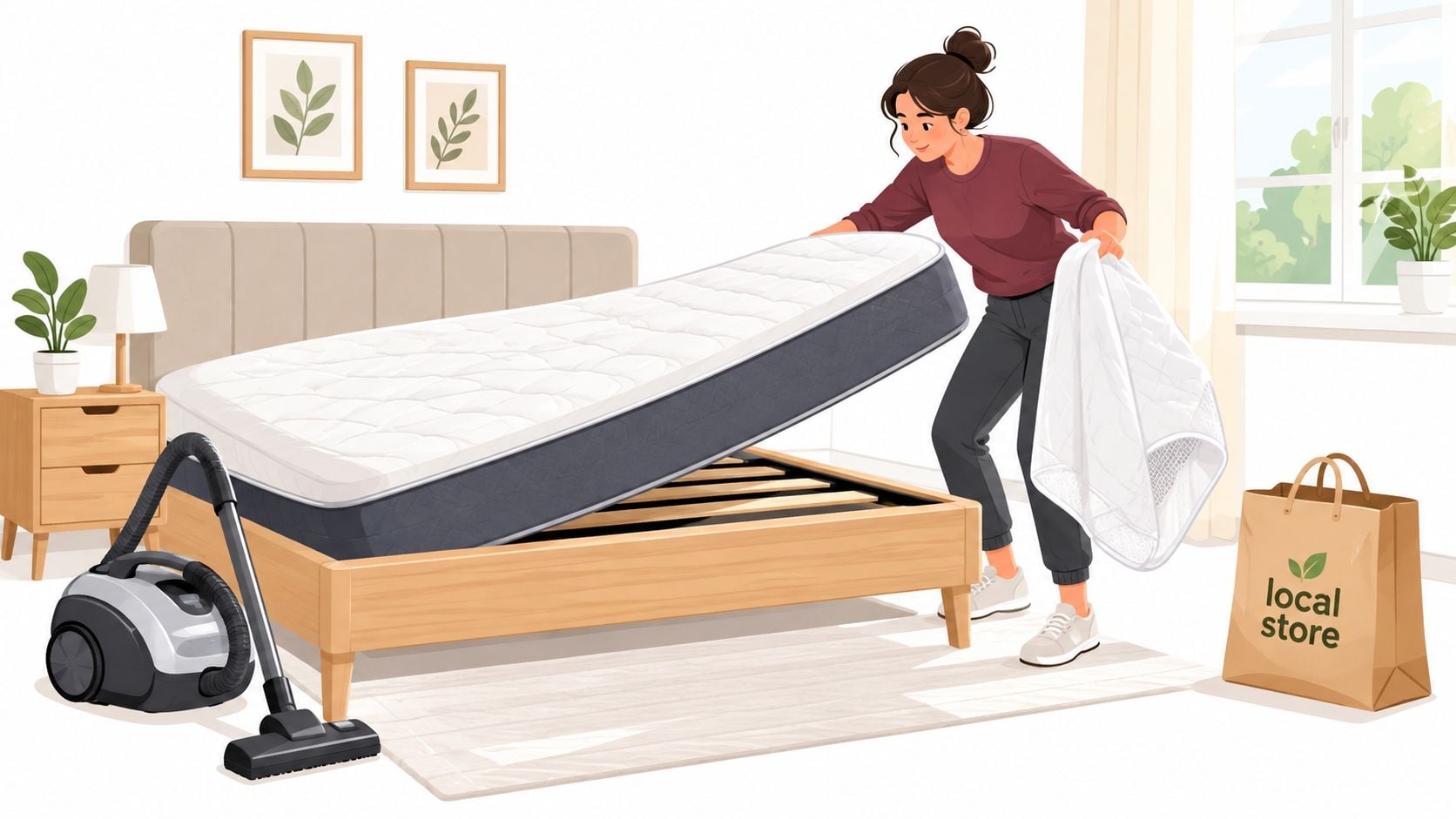
- Clean gently: Vacuum seams and spot-clean the cover according to its care instructions.
- Rotate when appropriate: Follow the brand's guidance to distribute wear.
- Air a new mattress: Allow 24 to 72 hours of ventilation before use when possible, following the guidance linked earlier.
These habits can help a mattress reach its commonly described 7 to 10 year service range, although construction, materials, and use all affect longevity. Warranty terms should be reviewed before purchase.
A lower-risk local purchase
A showroom visit lets a sleeper test contouring, edge support, movement, and warmth before committing. Miller Waldrop's Low Price Promise, flexible financing, Comfort Promise, and Full-Service Delivery with Professional Setup add practical support that a bed-in-a-box website can't provide in the same personal way.
For a primary bedroom, guest room, or Ruidoso cabin, local service keeps the decision connected to the home and the people sleeping in it.
Mattress Pro by Miller Waldrop helps Ruidoso sleepers compare memory foam, hybrid, and innerspring options from Tempur-Pedic, Sealy, Stearns & Foster, and Sherwood with guidance based on position, body type, and budget. Visit Mattress Pro by Miller Waldrop at 2801 Sudderth Drive, Suite F, in Ruidoso, Monday through Saturday, and use the Comfort Promise, Low Price Promise, and Full-Service Delivery with Professional Setup to make the next mattress decision with confidence.