

Hybrid Mattress Buying Guide: Coils, Foam and Firmness

Morning arrives in Ruidoso, and getting out of bed takes more stretching than it should. The mattress feels soft under the hips, a partner's movements interrupt sleep, and the bedroom somehow feels warm despite the cool mountain night. Shopping brings another problem: every mattress description seems to promise support, cooling, and pressure relief.
A useful hybrid mattress buying guide separates those promises into things a shopper can test. The right choice isn't the firmest bed or the thickest pillow top. It's a mattress that balances pressure, movement, temperature, and support, with local help if the first choice doesn't work out.
What a Hybrid Mattress Is and How It Compares
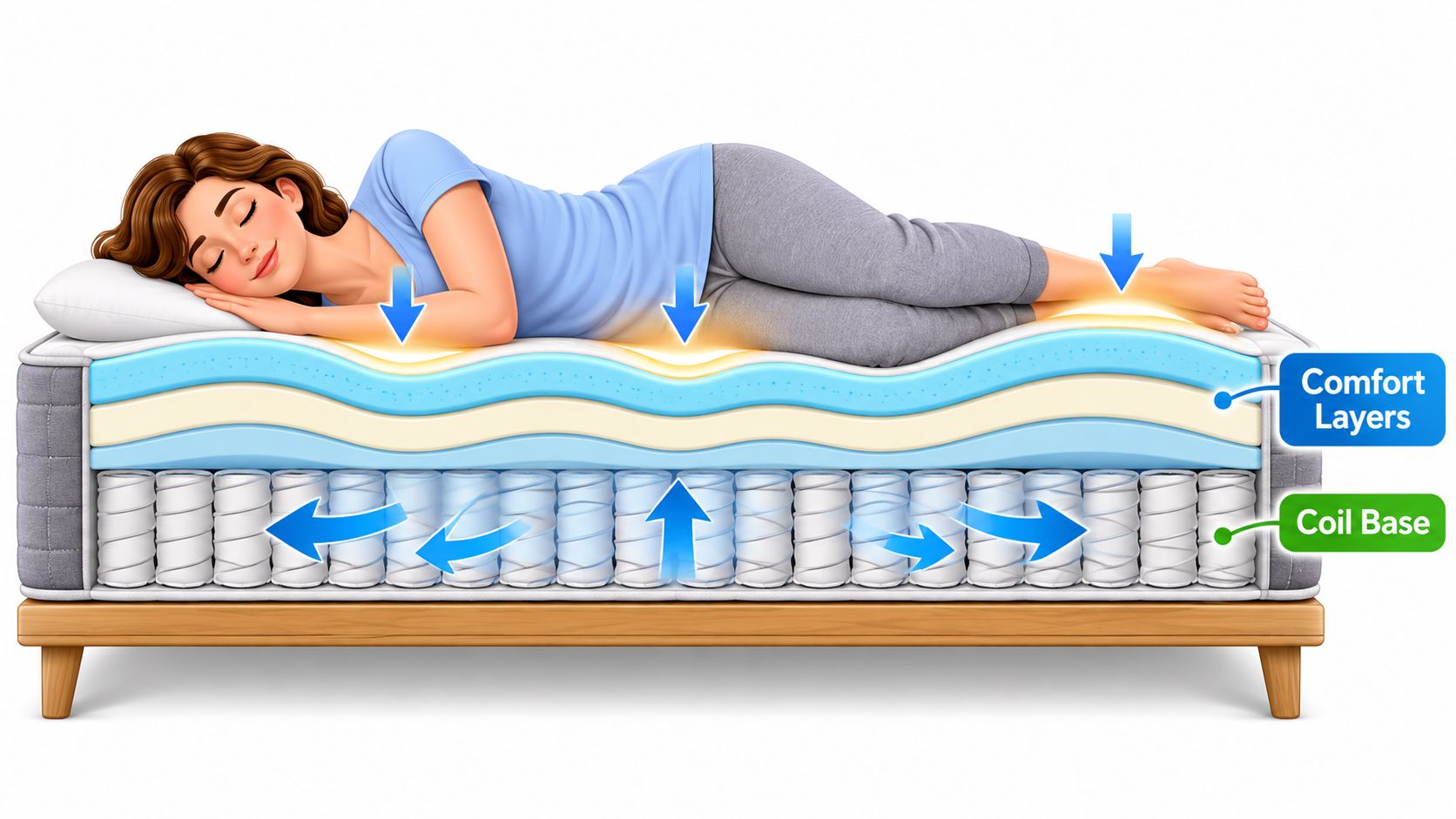
A hybrid mattress pairs a coil support core with comfort layers of memory foam or latex. The springs provide responsiveness and space for airflow, while the upper layers cushion the body and relieve pressure.
Think of the coils as a car's suspension and the comfort layers as its seat cushion. Both affect comfort, but they have different jobs. A luxurious cushion can't compensate for inadequate support underneath, and sturdy springs won't make a thin, uncomfortable surface feel welcoming.
Hybrid compared with innerspring, all-foam and latex
The lifespan ranges below are averages from the Sleep Foundation's durability guidance, which places hybrids at 6.5–7.5 years, traditional innersprings at 5.5–6.5 years, foam mattresses at 6–7 years, and latex mattresses at 7.5–8.5 years.
| Type | Construction | Typical lifespan | Motion isolation | Best for |
|---|---|---|---|---|
| Hybrid | Pocketed coil core with memory foam or latex comfort layers | 6.5–7.5 years | Good to very good with pocketed coils | Couples and mixed-position sleepers |
| Innerspring | Traditional interconnected steel coils with thin padding | 5.5–6.5 years | Low to moderate | Budget buyers wanting a firm, springy feel |
| All-foam | Solid foam layers without a coil core | 6–7 years | Good to very good, according to foam response and softness | Pressure relief and motion-sensitive sleepers |
| Latex | Natural or synthetic latex layers over a support base | 7.5–8.5 years | Good | Longevity-minded buyers, with natural latex available for material preferences |
Those categories describe starting points, not guarantees. A hybrid with substantial, slow-response memory foam can feel quite different from a latex hybrid with a buoyant surface. Body weight, construction quality, maintenance, and the supporting base also affect useful life.
Mattress Pro by Miller Waldrop carries Tempur-Pedic, Sealy, Stearns & Foster, and Sherwood, along with memory foam, hybrid, and latex choices. Comparing the actual construction makes more sense than choosing by brand name alone.
Questions to settle before shopping
- The problem to fix: Morning stiffness, shoulder pressure, overheating, and partner disturbance call for different comparisons.
- The people sharing the bed: Different body weights and movement habits can expose weaknesses that a solo test misses.
- The usual sleeping habits: Starting position matters, but so do rolling, sitting at the edge, and changing positions overnight.
The word hybrid doesn't establish quality. Comfort-layer thickness, material density, and the way the layers interact matter more than the category printed on the label.
How Coils and Comfort Layers Work Together
The comfort layer spreads body weight across a broader area, reducing concentrated loading at the shoulders, hips, and heels. Underneath, the transition layers and coils resist excessive sinking beneath the heavier pelvis and torso.
A biomechanical review of mattress design describes how regional elasticity can affect spinal geometry and reports evidence associating intermediate contact pressure with better sleep quality. That supports a practical distinction: pressure relief isn't the same as unrestricted softness.
Coil types and how they feel
These are useful shopping tendencies, not performance ratings for every mattress. Perimeter reinforcement and the layers above the coils can change the result substantially.
| Coil type | How it works | Motion transfer | Edge support | Best for |
|---|---|---|---|---|
| Pocketed, individually wrapped | Each coil sits in its own fabric pocket | Low, with independent coil movement | Good to strong with edge reinforcement | Couples and active sleepers |
| Interconnected, Bonnell or hourglass | Coils connect through a wire helix | Higher, because movement travels through connections | Strong when reinforced | Budget-friendly support with a firm feel |
| Continuous wire | A continuous wire forms connected rows | Moderate, with connected movement | Moderate without added reinforcement | Entry-level innerspring support |
| Zoned or offset | Zoned designs change support by region; offset designs use shaped, linked coils | Low to moderate for pocketed zoning; greater with linked designs | Strong with reinforced perimeter construction | Targeted support or contoured resistance |
Zoning and offset construction aren't interchangeable. A shopper should confirm whether targeted support comes from different coil gauges, coil placement, or another construction feature rather than assuming the label explains it.
The pocket coil mattress guide provides a closer look at independently wrapped springs.
Foam specifications worth checking
Higher-density memory foam generally holds its shape better than comparable lower-density foam, but density isn't a firmness rating. A dense foam can still feel soft.
Open-cell structures encourage airflow, while gel infusions are designed to help manage heat transfer. Neither guarantees an all-night cool surface, especially beneath a heat-retaining protector or heavy bedding.
Buying rule: A high coil count can't establish comfort without knowing what surrounds those coils.
An in-store construction check
- Confirm comfort-layer thickness from the specification sheet rather than estimating through the cover.
- Identify coil gauge or zoning, including where firmer support sits.
- Press and sit along the edges to evaluate reinforcement.
- Lie near the perimeter to check the usable sleeping surface.
- Run the hammock test on the back and side, watching for midsection sagging or a collapsing edge.
An orthopedic label doesn't replace these checks or clearly explained comfort-exchange terms.
How Firm Should a Hybrid Mattress Be?
Medium-firm is a sensible starting point for most back sleepers and many people with back pain, but it isn't a universal setting. Firmness should describe the sleeper's experience, not dictate it.
Too much sink can let the pelvis drop disproportionately. Too little give can concentrate pressure at the shoulders, hips, and sacrum. The useful middle ground supports the body without making it fight the surface.
What the firmness evidence actually supports
A randomized, double-blind trial published in The Lancet followed 313 adults with chronic, nonspecific low-back pain for 90 days and found better outcomes with medium-firm than firm mattresses, with reported odds ratios of 2.36 for pain in bed, 1.93 for pain on rising, and 2.10 for disability.
Those odds ratios aren't percentages of pain reduction. The finding challenges the assumption that the hardest mattress is best, rather than proving that every medium-firm hybrid will relieve pain.
Firmness bands by feel and sleeper
| Firmness band | Typical feel | Often suits | Watch for |
|---|---|---|---|
| Plush or soft | Deep sink and cradling | Side sleepers seeking generous pressure relief | Excessive hip sink, especially under greater body weight |
| Medium-soft | Cushioning with moderate sink | Some combination sleepers and lighter-bodied sleepers | Shoulder pressure during extended side sleeping, or inadequate pelvic support |
| Medium-firm | Supportive surface with limited sink | Most back sleepers and many with chronic back-pain concerns | A hard feel for very light side sleepers |
| Firm | Little give and a more resistant surface | Heavier sleepers and some stomach sleepers | Concentrated shoulder and hip pressure when side sleeping |
Body size changes how these bands feel. A lighter sleeper may barely compress a comfort layer that a heavier sleeper moves through readily.
Mattress Pro by Miller Waldrop's mattress comfort-level guide helps translate showroom terminology into useful comparisons.
A firmness test that goes beyond sitting down
A systematic review of mattress firmness and sleep supports perceived medium firmness as a useful starting point; a practical assessment allows 10–15 minutes in the usual sleeping position.
- Settle into the normal position, with a pillow that keeps the neck comfortable.
- Check alignment, looking for a relatively neutral spine rather than a dropped pelvis.
- Notice pressure, particularly numbness or concentrated discomfort at the shoulders and hips.
- Roll over naturally and assess whether the surface requires excessive effort.
Couples should test together, especially with different body weights or firmness preferences. A comfort choice supports sleep; it doesn't replace medical advice.
How a Hybrid Ages and Feels in Ruidoso's Dry Air
A hybrid commonly shows wear through body impressions and sagging in heavily used areas. A compatible, supportive base and manufacturer-approved rotation help distribute use, but they can't restore damaged materials.
Flipping requires special care. Most hybrids have a designated sleeping surface, so flipping a one-sided mattress puts the support structure against the body. Only a mattress specifically designed for two-sided use should be flipped.
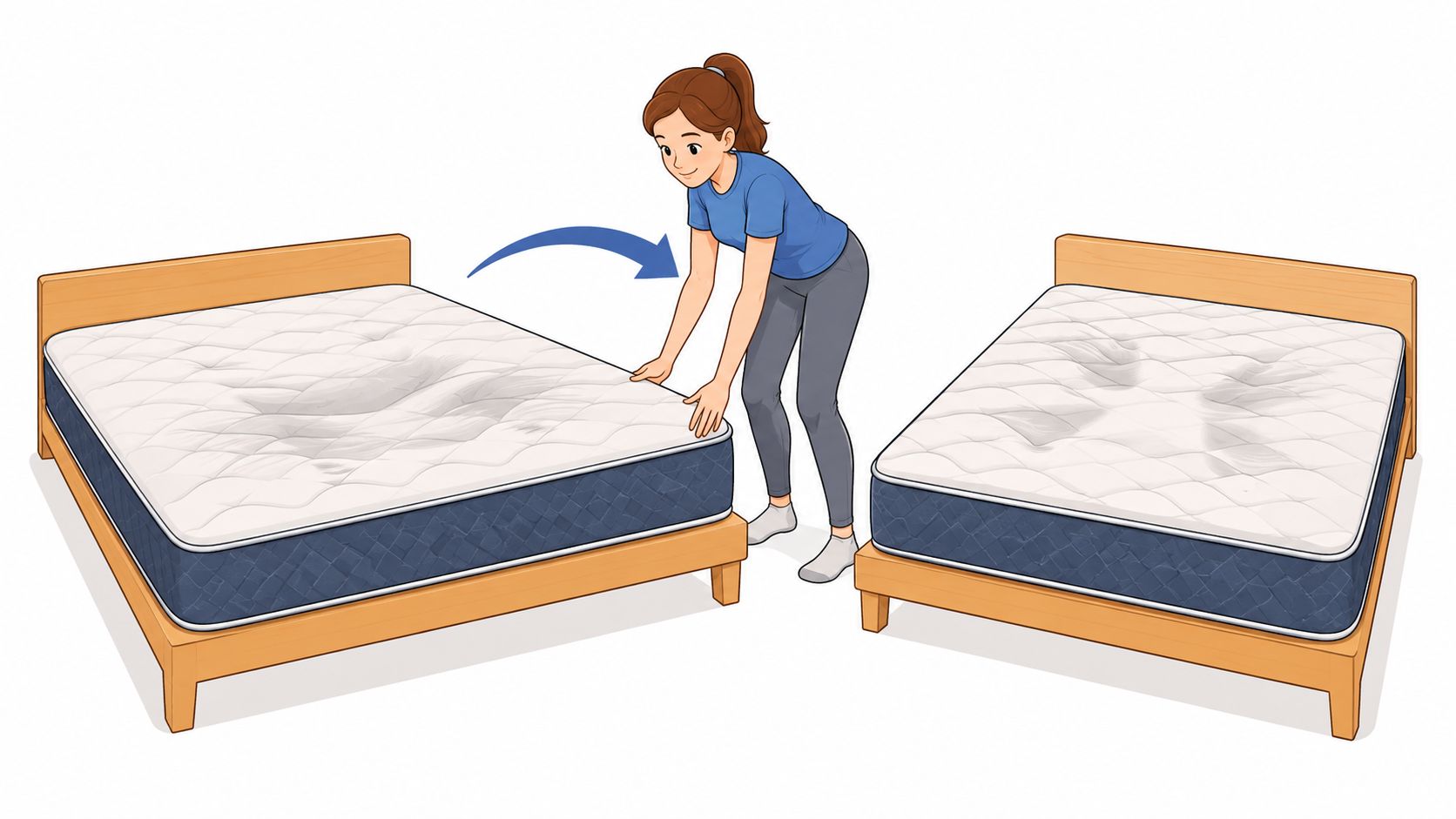
Wear signs that deserve attention
- A hip-level dip: The pelvis settles into a persistent low area rather than receiving even support.
- A shoulder hollow: The surface no longer recovers evenly after normal use.
- A pull toward the middle: Partners roll inward despite starting on separate sides.
- A changed feel: Turning becomes harder or familiar positions stop feeling supported.
Inspecting the uncovered mattress helps distinguish a visible impression from a problem in the foundation underneath. Photographs and the product's measurement instructions can also help when discussing a warranty concern.
Mountain air doesn't guarantee cool sleep
Ruidoso's dry mountain air and cool nights don't prevent daytime sun from warming a bedroom. Neighbors in Alto and across Lincoln County face the same practical question: how does the complete sleep setup feel after the room and bedding have warmed?
Dry air may make bedding feel crisp, but that sensation doesn't establish a mattress's cooling performance. Breathable covers, open-cell foams, and coil airflow deserve consideration, especially when dense comfort layers feel warm.
The cooling mattress guide offers a useful starting point for separating surface cooling features from the whole sleep environment.
Allow adjustment without ignoring discomfort
A study of new medium-firm bedding systems reported approximately 48% lower measured back pain and 55% better sleep-quality scores from the pre-use period to the assessment across four weeks. It evaluated bedding systems, not a guarantee for any particular hybrid.
A showroom impression starts the decision. Comfortable mornings at home finish it.
A sensible home check follows morning stiffness, pressure, warmth, and nighttime disruption through the permitted adjustment period. Persistent pain shouldn't be dismissed as necessary breaking-in, and the Comfort Promise should be discussed before any applicable deadline approaches.
Who Gets the Most From a Hybrid Mattress
Hybrids often suit sleepers who want cushioning without giving up responsive support. That includes combination sleepers, couples with different body weights, and people who find deep foam difficult to move through.
Consider a couple choosing between a cradling surface and a firmer, springier one. The useful compromise isn't automatically the mattress halfway between them. Both partners need to lie down together, assess their own pressure points, and notice what happens when the other person turns.
A mountain sleeper returning from hiking, skiing, or outdoor work may prioritize something different: easy repositioning and an edge that stays stable while getting into bed. Extra softness isn't necessarily the answer to tired muscles.
Evaluate pressure, movement and warmth together
A peer-reviewed study in Sleep Science and Practice found that sleep position wasn't significantly associated with pain scores, while pain on waking was associated with nighttime movement and higher skin temperature was associated with less pain while lying down.
That finding doesn't mean a warmer mattress is always better. It means thermal comfort is personal, and a sleep-position label alone is too narrow a buying tool.
Strong candidates for a hybrid
- Back or neck concerns: Look for even support, tolerable pressure, and uncomplicated movement rather than a therapeutic label.
- Couples: Test disturbance from turning and getting out of bed, not just the bounce felt while sitting.
- Active mountain sleepers: Check rolling effort and stable access at the perimeter.
- Heavier sleepers: Compare resistant support cores and suitable zoning without sacrificing surface cushioning.
- Cabin and vacation-rental owners: Favor transparent construction specifications and broadly comfortable support over an unusually extreme feel.
A hybrid may be less suitable for someone seeking a very deep, enveloping foam feel or the consistently buoyant response of an all-latex mattress. Those shoppers should compare categories directly rather than force a hybrid to fit.
Size is part of the comfort decision
Queen was the leading hybrid size by revenue, accounting for 44.30% of the global market in 2025, according to Mordor Intelligence's hybrid mattress market analysis. Popularity doesn't establish the right size for a particular couple.
Room measurements, access paths, and each partner's turning space should guide a queen-versus-king comparison. Mattress selection can support comfort, but it cannot diagnose or treat back pain; persistent symptoms belong with a clinician.
Budget, Warranty and Trial Terms to Check
According to Dataintelo's hybrid mattress market report, queen-size hybrids accounted for 41.2% of global hybrid-mattress revenue in 2025, at an average retail price of $2,950. Treat those figures as a market benchmark; the right spending level for a particular household is a separate question.
The useful budget question is what the purchase buys in construction, comfort, and support after delivery. Alignment comes from how a mattress is built and how its materials match the sleeper, so the price tag alone settles very little.
Cost per year for an average $2,950 hybrid
Pairing that benchmark with the lifespan range from the comparison table produces some grounding arithmetic.
| Expected lifespan | Annual cost on a $2,950 hybrid |
|---|---|
| 6.5 years | approximately $454 |
| 7 years | approximately $421 |
| 7.5 years | approximately $393 |
The calculation is purchase price divided by expected years of use. Delivery, a replacement base, and financing charges sit outside it, so the actual yearly figure runs higher.
Check what the price includes
- Comfort materials: Ask for layer thickness and material specifications, since an unexplained premium label buys nothing measurable.
- Support construction: Compare coil design, edge reinforcement, and base compatibility.
- Warranty coverage: Read the sagging threshold, the measurement method, exclusions, and claim requirements.
- Home evaluation: Confirm the adjustment requirements, eligibility window, deadlines, and any return or exchange costs.
Mattress Pro by Miller Waldrop's mattresses carry warranties covering manufacturing defects, with specific details listed for each product. A warranty handles faults in how the mattress was made; comfort dissatisfaction is handled through the trial and exchange terms instead.
Remove uncertainty before checkout
The Comfort Promise exists for the fear of picking the wrong bed, and its terms deserve a careful read before purchase. The mattress trial-period guide lays out the questions worth asking, including how long the adjustment period runs and what an exchange involves.
Mattress Pro by Miller Waldrop's Low Price Promise matches the prices of local competitors, which keeps the comparison focused on construction and fit. Full-service delivery with professional assembly belongs in the same conversation, since the checkout figure only makes sense once setup is accounted for.
A return starts with the customer service team, which guides the customer through each step. Knowing that path in advance keeps a bad fit from turning into a long, uncomfortable wait.
Test Your Shortlist With a Sleep Pro in Ruidoso
A shortlist of two or three hybrids with the right firmness and construction is enough to take into a fitting with a Sleep Pro. Bring the comfort problems, not a spreadsheet. The consultation works best when it starts with sleep habits, discomfort patterns, partner preferences, and budget rather than whichever mattress sits nearest the entrance.
Mattress Pro by Miller Waldrop's sleep-specialist consultations focus on the customer's habits and desires before a mattress is selected. That changes the conversation from chasing an impressive specification to finding a workable personal fit.
A practical fitting sequence
- Bring the useful details. Describe where discomfort occurs, whether it appears overnight or on rising, and what feels wrong with the current mattress. A partner's priorities belong in the same conversation.
- Compare the shortlist consistently. Apply the firmness test with the same pillow arrangement and normal sleeping positions. A quick hand press is not an equivalent comparison.
- Test shared-bed behavior. One partner can turn or get up while the other stays still and notes how much movement travels. Both should check edge stability and how much effort rolling over takes.
- Read warmth, not just support. Ruidoso's dry air already pulls heat and moisture away from sleepers at night, so pay attention to whether a candidate feels neutral or warm after ten minutes of lying still. A hybrid that feels fine in the first minute can run warmer once the comfort layers settle around the body.
- Resolve setup questions before deciding. Confirm the supporting base, the delivery choice, and who to contact for help afterward.
The in-store mattress-testing guide helps shoppers prepare for a purposeful visit. There is no need to memorize every foam specification before arriving.
Local care beyond the screen
Mattress Pro by Miller Waldrop is a family-owned Ruidoso business backed by the 70-year Miller Waldrop legacy, with this showroom focused on sleep. The team serves neighbors across Lincoln County, where mountain bedrooms, seasonal temperature swings, and individual comfort needs deserve a conversation rather than an automated recommendation.
A bed-in-a-box website can describe a feel. It cannot put two candidates side by side or watch how a shopper's shoulders settle into each one. Pressure relief, motion transfer, and surface warmth all read differently on a body than they do on a product page, and a local Sleep Pro can explain those trade-offs while the difference is still under the shopper.
Customers can choose pickup or full-service delivery with professional assembly. The personalized setup service has experts position the mattress for optimal comfort according to the customer's preferences. The warranty, guarantee, and price terms covered in the previous section still apply here, and a Sleep Pro can walk through how each one affects the final decision during the fitting itself.
Ready to transform your sleep? Visit our Sleep Pros at the Mattress Pro showroom at 2801 Sudderth Drive in Ruidoso. From luxury brands to budget-friendly solutions, we're here to help you wake up loving your mornings. Browse the collection online, then come compare your shortlist in person.
Mattress Pro by Miller Waldrop offers personalized hybrid mattress guidance, hands-on comfort testing, and delivery with professional setup. Visit the Ruidoso showroom to compare pressure relief, movement, and support with a Sleep Pro before choosing the mattress for home.