

Best Mattress for Cooling: How to Choose in Ruidoso


The bedroom feels comfortable at bedtime, but the sheets are warm again before morning. A blanket gets kicked aside, a pillow gets flipped, and the mattress that felt cool in the showroom suddenly seems less convincing. For Ruidoso households, that frustration calls for a closer look at the entire bed, not another cooling label.
The best mattress for cooling manages heat without sacrificing pressure relief or support. Surface materials matter, but so do the layers underneath, the bedding above, and the air moving through the bedroom. A practical comparison starts with how each design handles heat, then narrows the choices around the sleeper.
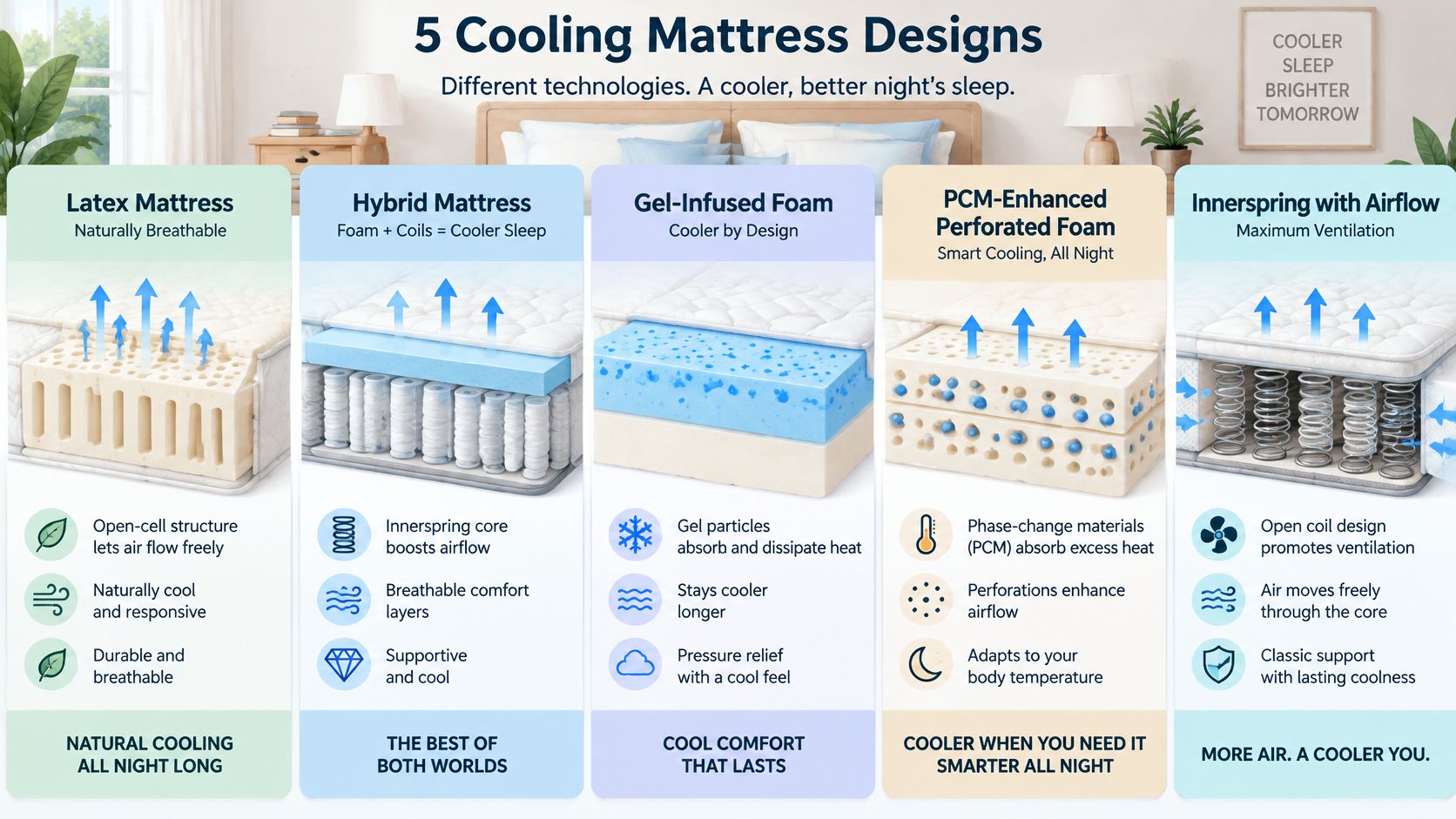
How Cooling Mattress Designs Compare
Cooling mattress designs compared
| Design | How it moves heat | Main strength | Main trade-off | Best fit |
|---|---|---|---|---|
| Latex | Open-cell structure lets air pass through the comfort layer | Breathable, responsive feel | Heavier and often higher priced | Hot sleepers who want a responsive surface |
| Hybrid | Pocketed coils provide open space beneath foam or latex layers | Balanced airflow with contouring | Heavier build with more layers to compare | Couples and combination sleepers |
| Gel-infused foam | Higher heat capacity absorbs body heat at the surface | Immediate cool-feeling comfort | Buffers heat rather than refrigerating; dense versions can retain warmth | Hot sleepers who prefer a cool initial surface |
| PCM-enhanced perforated foam | Phase-change material absorbs heat while perforations provide ventilation pathways | Measurable thermal effects in laboratory tests | Lab results don't predict bedroom performance | Warm bedrooms with good airflow |
| Innerspring with airflow | Open space around coils permits air movement through the core | Ventilation and usually lower cost | Less contouring for pressure relief | Back sleepers and budget shoppers |
Phase-change material, or PCM, absorbs heat during a warming period. A controlled laboratory experiment published in Heat Transfer tested foam configurations with PCM and perforations using simulated body heat, illustrating the separate roles of heat absorption and ventilation.
The experiment used an insulated box and artificial heat sources, rather than sleepers in mountain bedrooms. Its practical lesson is that heat storage and heat escape are separate jobs. In Ruidoso and Lincoln County, a mattress may absorb heat at its surface, but bedding, room temperature, and airflow also affect whether that heat can leave the bed.
Match the material to the comfort requirement
Latex suits sleepers who dislike sinking into a mattress. Its responsive surface makes repositioning straightforward, but the mattress can be cumbersome to move. Consider its price alongside comfort, especially if you prefer a buoyant feel over close contouring.
Hybrids pair a coil support system with cushioning above it. The open core permits air movement, but coils aren't fans. Thick, dense comfort layers can still slow heat release near the sleeper, so look at the complete construction rather than assuming the coils solve every heat problem.
Gel-infused foam combines close contouring with heat-storage capacity. The initial cool sensation can be appealing, but it does not provide unlimited cooling. Insulating sheets and protectors may also affect how quickly heat moves away from the surface.
Compare construction rather than category names
PCM-enhanced perforated foam combines a thermal material with openings through the foam. Ask whether those openings connect to a breathable construction or end against another restrictive layer. The material and airflow path need to work together.
Innerspring mattresses can provide a more open, buoyant feel with less enveloping cushioning. That may suit a back sleeper, while a side sleeper may need more accommodation at the shoulders and hips. The innerspring versus memory foam comparison can help clarify the difference between support feel and surface contouring. Neither category has an automatic cooling advantage; compare the finished mattress.
Tempur-Pedic, Sealy, Stearns & Foster, and Sherwood offer different constructions within their collections. Compare individual models within the same design family instead of assuming every mattress from one brand behaves alike.
Finish the comparison with two practical questions:
- Where does the cooling material sit? A feature buried below the sleeper may serve a different purpose than a surface treatment.
- Where does heat leave the mattress? Look for a clear exit path, not just a branded ingredient.
Cooling Mattress Picks by Sleep Scenario
Cooling design priorities by sleep scenario
| Sleeper scenario | Cooling design to prioritize | What to test first |
|---|---|---|
| Hot back sleeper | Breathable hybrid with coil airflow | A full night on familiar sheets during the permitted home trial |
| Side sleeper who runs hot | Open-cell or perforated comfort layer over a supportive core | Shoulder and hip pressure in side position |
| Couple with different temperatures | Edge-to-edge hybrid with motion isolation and separate firmness options | Each partner's heat balance and comfort on their own side |
| Active mountain sleeper | Stable support with a heat-buffering top layer such as gel or phase-change foam | Comfort after a full day outdoors |
| Cabin or vacation rental owner | Durable, breathable design with straightforward care | Performance without ideal room climate control |
| Budget-minded shopper | Breathable foam or innerspring with open coil space | Trial conditions and Low Price Promise terms |
These are shopping priorities for matching a design to a sleeper. A Sleep Pro can narrow the choices to suitable Tempur-Pedic, Sealy, Stearns & Foster, or Sherwood models after discussing body type, sleep position, and budget.
Match the first test to the actual complaint
A hot back sleeper should check whether the pelvis stays supported without feeling surrounded by thick cushioning. Use familiar sheets during a home trial so the surface is closer to the usual sleep setup.
A side sleeper needs enough give beneath the shoulder and hip. If a surface feels cool but creates pressure in either area, it is not a good match.
For couples, test together in usual positions. Pay attention to edge comfort, movement transfer, and whether one side feels warmer than the other. A shared comfort score can hide different needs.
Account for mountain routines and guest bedrooms
An active mountain sleeper should assess ease of movement and alignment after an ordinary day outdoors. Cooling language alone does not establish a recovery benefit, and a dense mattress is not automatically supportive.
For a cabin or vacation rental, check whether the mattress works with the intended protector, how it should be cared for, and whether bedding is easy to change. A forgiving comfort profile and manageable upkeep may matter more than a delicate specialty cover, particularly when room conditions are hard to control.
A budget-minded shopper should compare the full purchase, including required accessories and delivery arrangements. A simpler mattress that fits properly is a better choice than premium cooling features on an uncomfortable bed.
Practical rule: Start with the sleeper's biggest complaint, then test whether the mattress addresses it under familiar bedding and room conditions.
During the home trial, keep the sheets and protector consistent and note surface warmth, pressure, and comfort in the usual sleep position. For mountain bedrooms in Ruidoso and Lincoln County, judge the mattress in the room where it will be used, since bedding and room conditions affect how the whole sleep setup feels.
Why Heat Management Changes Deep Sleep
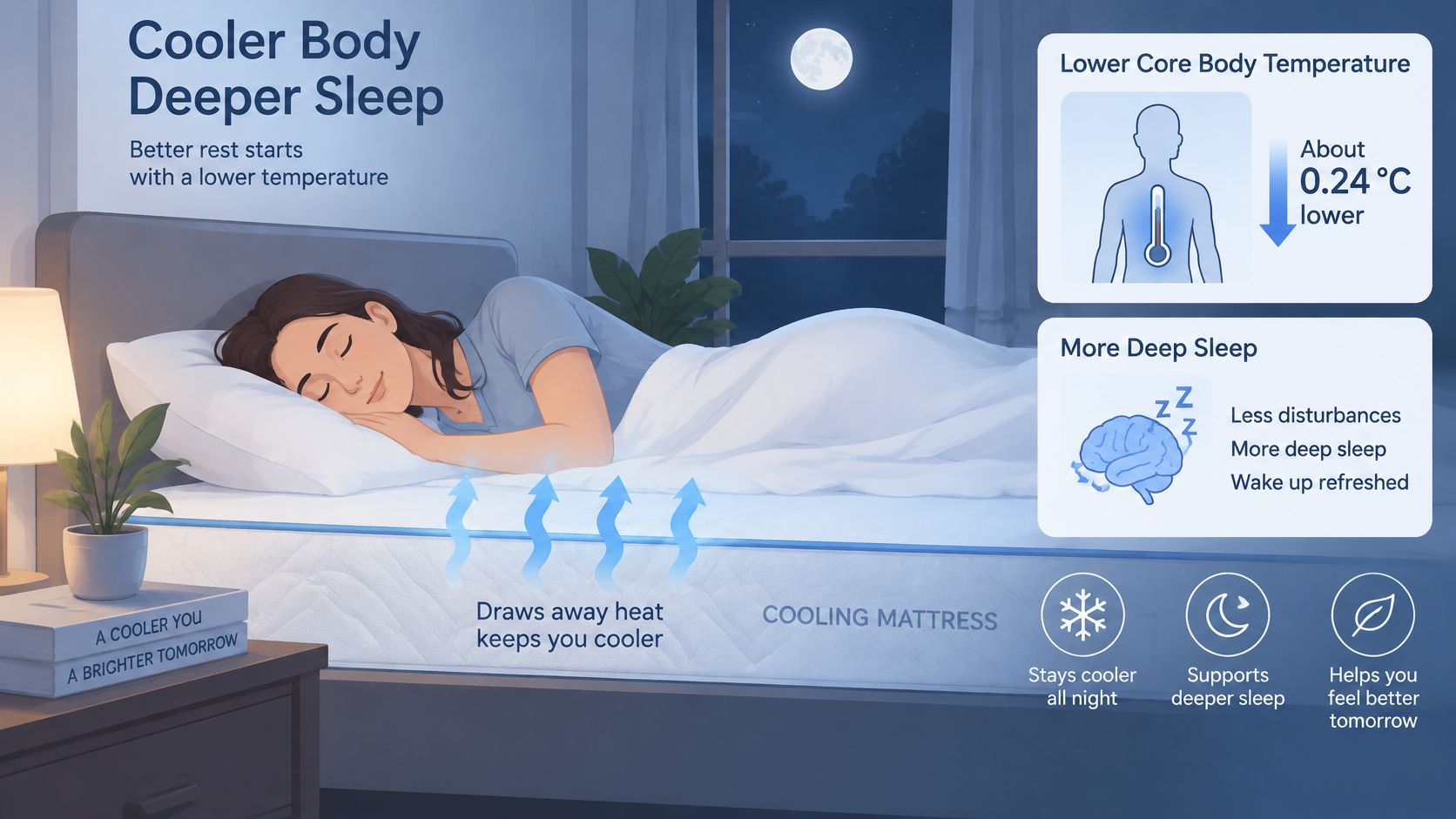
Cooling matters because the body naturally sheds heat as sleep begins. A mattress surface can influence that process where the sleeper touches the bed, even though the contact area is limited.
In a 2024 peer-reviewed Scientific Reports study, a high-heat-capacity mattress reduced core body temperature by approximately 0.24°C without disturbing sleep and added an average of 7.5 minutes of stage N3 deep sleep during a 7.5-hour sleep period, although only about 20% of the body's skin contacted the surface.
Those findings concern a particular experimental mattress, not every product with a cooling cover. They nevertheless show why mattress temperature management deserves more attention than a quick hand-on-fabric test.
Separate passive materials from active temperature control
A passive mattress receives heat through its materials and releases it according to its construction and surroundings. An active temperature-controlled system uses additional equipment to regulate the sleep surface.
A home study of an active temperature-controlled mattress cover found that cooling during the first half of the night increased deep sleep in men by 14 minutes, or 22% on average, and REM sleep in women by 9 minutes, or 25% on average. Those results belong to the tested active cover and shouldn't become promises for ordinary cooling foam.
The design at the body–mattress interface matters more than the label on the cover.
For shoppers, the distinction changes the questions worth asking. Does the mattress feel cool initially, manage ongoing heat transfer, or work with an active accessory?
Comfort remains the practical starting point, but sleep-stage findings give a sound reason to investigate heat handling. They don't justify guaranteeing deeper sleep from a particular showroom model, and a cooling surface still can't compensate fully for a hot bedroom.
Ruidoso Climate and Your Bedroom Temperature
Bedroom temperature bands and what they mean for sleep
| Bedroom temperature | Sleep effect or guidance | Practical response |
|---|---|---|
| About 65°F | Common starting target in Sleep Foundation's temperature guidance, which also reports the National Sleep Foundation recommendation of 60–67°F | Establish a room baseline before evaluating the mattress |
| Below 68°F or above 77°F | Sleep quality worsened in a study of 50 older adults summarized by Sleep Foundation's bedding report; at 86°F, sleep efficiency declined 5–10%, while thinner-duvet comfort was around 62–72°F | Adjust bedding to the sleeper; in a very warm room, add airflow and address room cooling |
| 63–72°F (17–22°C) | Strongest perceived sleep quality in a 2025 study of adults over age 45 | Treat the range as an individual-comfort reference, not a universal prescription |
These ranges don't identify a single correct thermostat setting. General guidance and observations in particular groups answer different questions, and bedding changes the conditions a sleeper experiences.
Measure the bedroom rather than guessing
Ruidoso's dry mountain air can feel refreshingly cool after sunset while a bedroom remains warm. Daytime sun on rooflines and windows can leave upstairs rooms and cabins holding heat well into bedtime.
That distinction matters in Alto, along Sudderth Drive, and across Lincoln County vacation properties. An outdoor forecast isn't a measurement of the air beside the bed.
Place a room thermometer near sleeping height, away from direct sunlight and supply vents. Note the reading at bedtime and after an uncomfortable awakening, alongside the bedding used.
Make the response fit the room
- Comfortably cool room, warm bed: Try a lighter blanket and a breathable protector before replacing the mattress.
- Warm, still bedroom: Use a fan for air movement and address heat entering through sun-facing windows.
- Cool room, chilled sleeper: Add adjustable bedding rather than forcing a colder sleep surface.
- Variable cabin conditions: Keep lighter and warmer bedding options available instead of relying on a heavy duvet year-round.
Heavier duvets can shift or widen the comfortable room-temperature range, but that doesn't mean more insulation helps a hot sleeper. The useful question is whether bedding matches that particular night's conditions.
Mountain-bedroom check: A cool evening outside doesn't guarantee a cool sleeping space under a sun-warmed roof.
The adult sleep hygiene guide offers additional context for building a sleep-supportive bedroom. Local Sleep Pros understand these mountain-home differences because they live in the same community, where the room and the mattress both deserve attention.
Testing Cooling Claims Before You Buy
A cooling claim should lead to an explanation of materials and test conditions. A cool palm sensation alone doesn't establish how a mattress will behave beneath a sleeping body.
In a controlled study of 32 healthy men, a gel-coated high-heat-capacity mattress had approximately 47 kJ/°C of heat capacity in its upper 2 cm, compared with 5.4 kJ/°C for the low-heat-capacity all-foam comparison across 23–35°C.
That is heat buffering, not continuous refrigeration. The surface can absorb more heat before warming, but the benefit can diminish as materials approach thermal equilibrium.
Use a construction and care checklist
- Locate the thermal material. Ask for a layer diagram showing whether gel or another dense material is close enough to interact meaningfully with the sleeper.
- Inspect the comfort layer's openness. Look for a clear explanation of open-cell foam, perforations, or other ventilation pathways.
- Request test conditions. Duration, temperature range, humidity, bedding, and heat source help establish what a cooling claim measures.
- Evaluate the entire sleeping surface. Couples should check center comfort and edges rather than testing only a showroom's easiest spot.
- Test motion isolation separately. A partner's turn shouldn't be confused with a temperature problem when comparing sleep interruptions.
- Check cover care. Confirm whether the cover is removable and washable, and follow its laundering instructions.
- Read home-trial conditions. Clarify required protectors, exchange procedures, applicable charges, and exclusions before committing.
The experimental heat-capacity values aren't specifications for retail gel mattresses. A model needs its own evidence, and a manufacturer that doesn't publish a comparable measurement shouldn't be assigned those results.
Make the showroom visit a controlled comparison
Keep the pillow and sleeping position consistent while moving between finalists. Lie in the normal position long enough to notice pressure and ease of movement, rather than repeatedly pressing the surface with a hand.
The in-store mattress testing guide can help organize that visit. A short written shortlist should record construction, comfort, care requirements, and unresolved questions.
At the Ruidoso showroom on Sudderth Drive, the Comfort Promise should be discussed alongside the Low Price Promise. Neither replaces careful testing, but clear terms make the decision less uncertain and the final comparison more useful.
Sleep Position, Body Type and Health Factors
A Health report on a 2025 observational study of 47 adults aged 65 and older describes 40% higher odds of clinically relevant heart-rate-variability reductions at bedroom temperatures of 24–26°C (75–79°F), and nearly three times the odds at 28–32°C (82–90°F) compared with rooms below 24°C. The study doesn't establish that mattresses caused those changes.
That distinction matters for health-conscious shoppers. A cooler-feeling mattress isn't a medical treatment, and thermal comfort shouldn't be considered separately from age, symptoms, and support needs.
Preserve alignment and pressure relief
- Side sleepers with shoulder or hip discomfort: Prioritize enough cushioning to distribute pressure without allowing the waist to sag. An extremely firm surface can exchange one sleep complaint for another.
- Stomach sleepers: Look for stable, relatively flat support that limits excessive pelvic sinking. An appealing plush cooling layer still needs to work with spinal alignment.
- Larger-bodied sleepers: Evaluate how far the comfort layers compress and whether changing positions remains easy. The plus-size side-sleeper mattress guide addresses the pressure-relief and support balance.
- Couples with different temperatures: Consider separate blankets, breathable protectors, and split firmness where available. Matching both partners doesn't require identical bedding.
- Persistent night sweats or heat intolerance: Seek clinical advice, particularly when symptoms may relate to menopause, medication, illness, or another health concern.
Judge the sleeper, not the firmness label
Body type changes how a mattress feels under load. The same surface may feel shallow and firm to one sleeper but highly conforming to another.
Back-sleeper and couple priorities are summarized in the scenario table, but a personal fitting still matters. A one-on-one Sleep Pro consultation can translate body type, sleep position, pressure concerns, and budget into a manageable model shortlist.
How Long Does a Cooling Mattress Last?
Most mattresses last approximately 7 to 10 years before losing supportive and pressure-relieving capability, according to Sleep Foundation's mattress-care guidance, which gives the construction-specific averages below.
Typical mattress lifespan by construction
| Construction | Typical lifespan |
|---|---|
| Latex | 7.5 to 8.5 years |
| Hybrid | 6.5 to 7.5 years |
| Foam | 6 to 7 years |
| Innerspring | 5 to 6 years |
These are averages, not deadlines or guarantees. Material quality, design, body type, sleep position, and maintenance affect the useful life of an individual mattress.
Look for changes in performance
An older bed may feel warmer as worn comfort layers allow deeper sinking or alter surface contact. Age alone doesn't establish that a cooling replacement will solve overheating.
Useful reasons to investigate replacement include:
- Uneven impressions: A sleeping area remains visibly lower than the surrounding surface.
- Changing morning comfort: Aches improve after sleeping on another suitable mattress.
- New heat complaints: Increased warmth appears alongside compressed cushioning or deeper sinking.
- Repeated bedding workarounds: Extra toppers or changing blanket combinations no longer produce consistent comfort.
These signs call for an inspection of the whole setup, including the foundation. A damaged or unsuitable base can undermine an otherwise serviceable mattress.
Maintain the construction correctly
Vacuum the surface with an appropriate upholstery attachment and keep the protector clean. Rotation should follow the manufacturer's schedule; flipping is suitable only for a mattress explicitly designed for use on both sides.
The mattress lifespan guide helps distinguish normal wear from a premature replacement decision. Full-Service Delivery with Professional Setup also gives a new mattress the right start by checking placement and the intended support arrangement.
Choose Your Cooling Mattress With the Comfort Promise
The best cooling mattress fits the sleeper's pressure needs and the bedroom's real conditions. A surface that feels cool in the showroom still needs to support comfortable sleep with the bedding and room setup used at home.
Make the final choice in a clear sequence
- Choose the appropriate design. Match the construction to the sleeper's position, heat complaint, and movement preferences.
- Ask how it handles heat. Request details about the layers and any testing behind a cooling claim.
- Plan the setup. Choose bedding that suits the season and the sleeper, and keep the room comfortable.
- Try the complete bed at home. Use familiar sheets, the intended protector, and ordinary sleep routines within the Comfort Promise terms.
If the bed needs an exchange, confirm the applicable Comfort Promise terms before purchase, then contact the store and follow its instructions for arranging the exchange. Ask how the replacement is selected and delivered, and whether any conditions apply. Clear expectations make the home trial more useful.
The Low Price Promise and flexible financing also come with applicable terms, so ask for a straightforward explanation before deciding.
Choose local guidance without sales pressure
Mattress Pro by Miller Waldrop is a family-owned Ruidoso showroom backed by the Miller Waldrop family's 70-year legacy. A one-on-one consultation with a Sleep Pro lets shoppers discuss pressure points, compare mattress constructions, and ask questions suited to their needs and budget.
For households in Alto, near Sudderth Drive, or elsewhere in Lincoln County, seasonal bedding and cabin use can shape how a mattress feels. Share how the bedroom is used and what comfort problem you want to solve; that context can help narrow the choices.
A useful showroom visit ends with clear options and realistic expectations. Cooling materials can help manage surface heat, while support, bedding, and bedroom conditions all affect comfort.
Bring your bedroom temperature readings to the Ruidoso showroom and compare two finalists side by side. Visit the Sleep Pros at Mattress Pro by Miller Waldrop, at 2801 Sudderth Drive, Suite F, in Ruidoso, to discuss the Comfort Promise and arrange Full-Service Delivery with Professional Setup. The showroom offers luxury brands and budget-friendly solutions, with help choosing a bed that supports more comfortable mornings.