

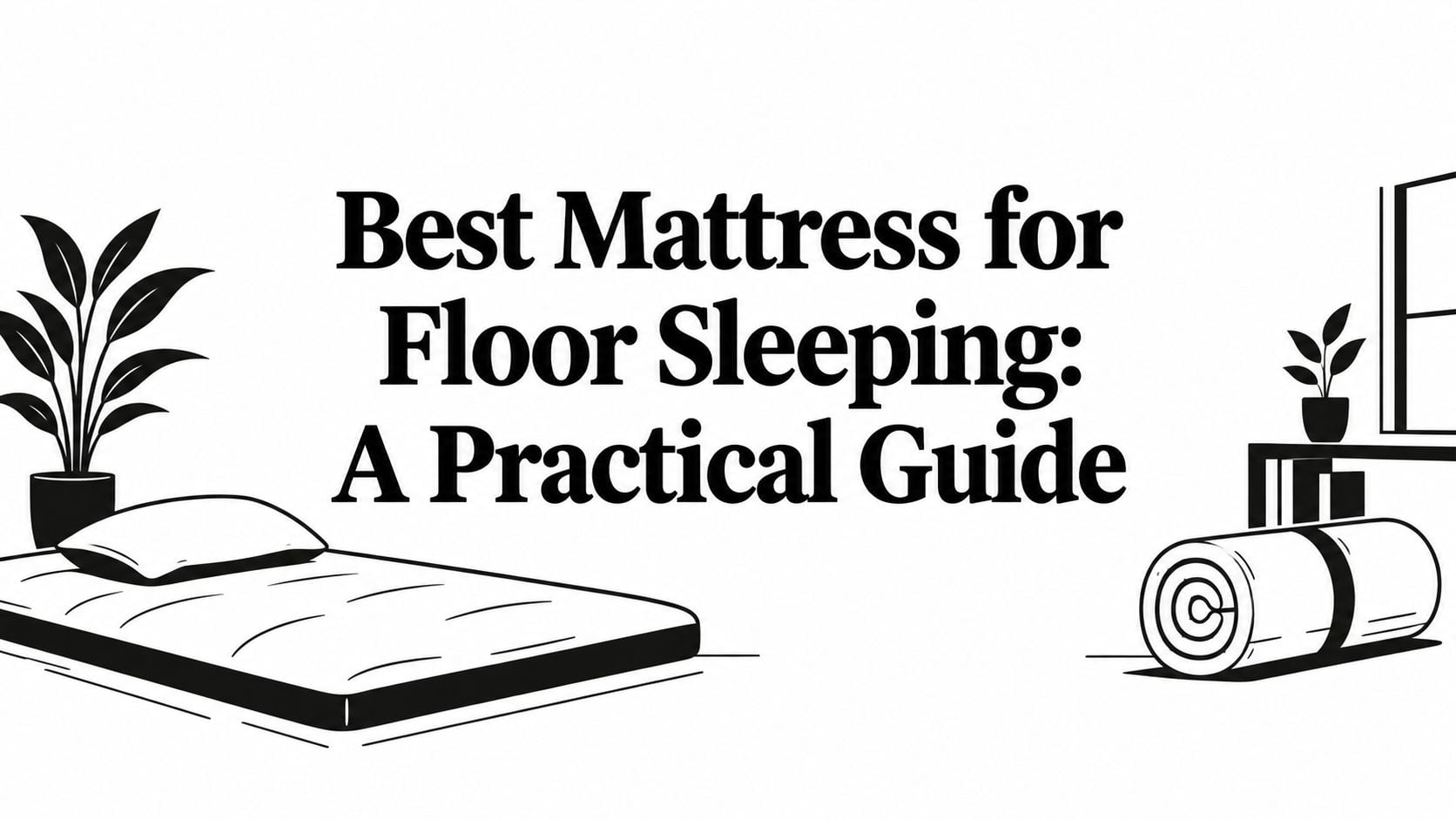
Best Mattress for Floor Sleeping: A Practical Guide

The cabin bed squeaks every time someone turns over. A guest mattress gets dragged onto the pine floor, a child settles beside a parent, and the setup seems fine for one night. By morning, the floor feels colder than expected, shoulders feel tender, and nobody has considered what happens beneath the mattress when mountain air meets trapped moisture.
That's the practical question behind choosing the best mattress for floor sleeping. The floor may provide steady support, but it also changes how a mattress handles pressure, temperature, dust, and ventilation. A suitable setup can work well in a Ruidoso cabin, guest room, tiny home, or minimalist bedroom. The wrong mattress can become uncomfortable and difficult to care for.
Why Floor Sleeping Is Back on the Radar
A vacation rental owner in Ruidoso needs an extra sleeping option without storing a full bed frame. A family may want a low surface for a toddler, while a homeowner in Alto is furnishing a compact room or seasonal space in Lincoln County. In each case, floor sleeping begins with a practical constraint, not a lifestyle statement.
The appeal is easy to understand. A mattress on the floor keeps the room visually open, uses less vertical space, and provides a steady surface underneath. Those advantages do not show that floor sleeping is healthier than using a mattress on a properly supported bed base. There is very little direct scientific evidence that floor sleeping is better than mattress sleeping, and claimed benefits remain largely anecdotal in this overview of sleeping on the floor.
The floor changes the assignment
A raised, ventilated frame lets air move beneath the mattress. Hardwood, tile, concrete, and slab floors do not. That difference affects moisture management, temperature, cleaning, and how the mattress feels over time.
Continuous support also changes pressure. The same mattress usually feels firmer on the floor because the base does not flex beneath it. Side sleepers often notice the change around the hips and shoulders first, especially if the comfort layers are thin or the mattress has little contour.
A floor setup isn't automatically a firm-bed solution. The mattress still needs enough support to hold the spine in position and enough cushioning to protect pressure-sensitive areas.
Start with medium-firm support, rather than choosing the hardest surface available. A systematic review found that medium-firm mattresses promote comfort, sleep quality, and spinal alignment. A very hard surface can concentrate pressure and leave some sleepers with more pain, even when it feels stable at first.
That trade-off matters in a mountain home. Ruidoso's dry air can make a room feel comfortable, but winter heating, closed rooms, summer monsoon humidity, and cold flooring still affect the space beneath a mattress. Check the floor regularly, allow the mattress to air out, and choose construction that balances pressure relief with support.
The best mattress for floor sleeping is the one that works with the entire room, the sleeper's position, and the local climate, not merely the one that feels firmest in a showroom.
What Floor Sleeping Means for Your Mattress
If your mattress sits on a cold bedroom floor through a mountain winter, the surface beneath it becomes part of the sleep system. Floor sleeping means placing the mattress directly on the floor or on a very low surface without meaningful ventilation. It is not merely a shorter bed. The setup must handle limited airflow, direct pressure from below, and greater exposure to floor temperature and dust.
A hard floor provides consistent support and can reduce sagging, but it also reflects more of the mattress's surface feel. A plush mattress may compress until you feel the floor underneath. A thin model may leave too little cushioning at the hips and shoulders. This tension between support and ventilation decides whether floor placement works, especially in rooms affected by heating, cold flooring, or seasonal moisture.
Start with support, not hardness
Firmness describes the surface feel. Support describes how well the mattress holds the spine in alignment and spreads body weight. They are different qualities. A mattress can feel hard while still creating pressure points.
For most adults, a medium-firm to firm mattress is the right starting point for floor use. Choose a construction that limits excessive sinkage while providing enough contouring for heavier areas of the body. The mattress thickness guide helps connect mattress profile with comfort and support, rather than treating thickness as a guarantee of performance.
A completely firm surface can increase pressure at bony contact points by about 30% to 50% compared with medium-firm surfaces, according to this review of mattress firmness and floor sleeping. Side sleepers, people with prominent shoulders or hips, and sleepers with pressure-sensitive joints should take that trade-off seriously. Stability matters, but cushioning still has a job.
Use the evidence carefully
Floor sleeping is not a proven long-term treatment for back pain. A clinical review described a small study in which floor sleeping increased pain scores compared with sleeping on a mattress. Judge the setup by its results for your body, not by the idea that a harder surface must be healthier.
Use this baseline:
- Medium-firm feel: Resists excessive sinkage without creating unnecessary pressure.
- Supportive core: Maintains alignment instead of collapsing against the floor.
- Comfort layer: Cushions the shoulders, hips, and lower back.
- Breathable construction: Reduces heat and moisture buildup beneath the mattress.
- A care plan: Regular airing and cleaning keep direct floor placement workable.
A mattress that performs well on the floor must suit the sleeper, the room, and the climate. Firmness alone is not enough.
Five Mattress Features That Matter Most on the Floor
The best mattress for floor sleeping is defined by how its parts work together. Thickness alone doesn't solve pressure. Firmness alone doesn't solve alignment. A breathable cover won't compensate for a weak core.
Thickness gives pressure relief room
A floor mattress needs enough material between the sleeper and the hard surface. A low-profile design can look appealing, but an overly thin mattress may compress quickly beneath the shoulders, hips, or lower back.
For most adults, a supportive profile in the eight-to-twelve-inch range is a practical target. The final choice depends on body type, sleep position, and construction. A thin futon can work for some sleepers who prefer a traditional firm surface, but it won't offer the same pressure relief as a thicker medium-firm mattress.
Firmness should control sinkage
The floor already supplies a firm base. A plush mattress may feel comfortable at first, then allow the pelvis to settle excessively while the upper body remains higher. That hammock effect can disturb spinal alignment and create morning stiffness.
A medium-firm construction usually gives a better balance. Shoppers can use this mattress comfort level guide to translate showroom feel into a floor-use decision rather than choosing the hardest option by instinct.
Materials affect heat and handling
Memory foam can relieve pressure by contouring around the body, and some designs use open-cell structures or cooling gel technology to improve heat management. Dense, less-ventilated foam can still feel warm when air can't circulate underneath.
Hybrids use pocketed coils to create more internal air movement and responsive support. Latex generally feels buoyant and durable, while cotton and wool futon constructions offer a simpler, more traditional feel. Each material has a place, but floor placement makes airflow more important than it would be on a ventilated base.
Breathability is a floor requirement
The main downside of putting a mattress on the floor is ventilation. Without airflow beneath it, moisture can collect and increase the risk of mold or mildew, especially in warm or humid rooms, as noted in this floor mattress ventilation guidance.
A breathable cover helps, but it doesn't create air beneath the mattress. A removable, washable cover is useful for surface cleanliness. Periodic lifting, a breathable layer underneath, and room ventilation address the larger problem.
Durability matters under constant compression
A floor mattress doesn't flex over a foundation in the same way as a raised setup. That makes the quality of the support core important. Natural latex, quality pocketed coils, and well-built high-density foam are sensible options for regular use.
Manufacturers use different density standards and construction methods, so shoppers shouldn't rely on a single specification without understanding the warranty and intended base. The mattress also needs to be rotated according to the maker's guidance, particularly when one person sleeps in the same position each night.
| Feature | Target for Floor Use | Why It Matters |
|---|---|---|
| Thickness | Supportive eight-to-twelve-inch profile for many adults | Adds room for cushioning before the floor is felt |
| Firmness | Medium-firm to firm | Controls sinkage without creating unnecessary harshness |
| Materials | Ventilated foam, latex, or a breathable hybrid | Helps manage heat and moisture |
| Breathability | Air-permeable cover and airflow plan underneath | Reduces trapped moisture |
| Durability | Strong foam, latex, or quality coil support | Handles direct, continuous compression |
How Mattress Types Perform at Floor Level
No single construction wins for every floor sleeper. The right choice depends on sleep position, heat sensitivity, mobility needs, and whether the mattress will stay on the floor permanently or move between guests and seasons.
Memory foam
Medium-firm memory foam is the closest all-rounder for many floor sleepers. It contours around pressure points, reduces motion transfer between partners, and can support spinal alignment when the core is strong enough to prevent deep sinkage.
The trade-off is airflow. Foam doesn't automatically become unsuitable on the floor, but a dense design may retain more heat and moisture than a coil-based mattress. In Ruidoso's cooler nights, that insulating feel can be welcome. During warmer weather, sleepers should favor ventilated foam, cooling gel layers, and a breathable cover.
Hybrid mattresses
A hybrid combines foam or latex comfort layers with pocketed coils. The coils add responsiveness, internal airflow, and easier movement, which can help sleepers who don't like the slow response of memory foam.
Hybrids are often the highest-ventilation option among mainstream constructions, but they're heavier and harder to lift for regular airing. Edge support varies by design. A reinforced perimeter helps when a sleeper sits on the edge, though a mattress placed directly on the floor still requires careful handling.
Latex mattresses
Latex offers a springy, buoyant feel. It relieves pressure without allowing the body to sink as much as it may in memory foam, making it a strong option for combination sleepers who turn often.
Latex is also a durable choice for a floor setup, but it can be heavy. Natural latex models may cost more than basic foam or futon options, and their resilient feel isn't right for every sleeper. Testing the surface in normal sleeping positions remains essential.
Futon-style mattresses
Traditional futons are compact, simple, and often easier to roll or store. They can suit a guest room, child's room, or temporary cabin arrangement, especially when the household is willing to air and fold the mattress regularly.
The drawback is maintenance. A futon-style mattress typically offers less contouring than a thicker mattress, and its performance depends heavily on airing, folding, and keeping the floor beneath it clean and dry.
| Mattress Type | Airflow | Edge Support | Durability | Best Floor Use Case |
|---|---|---|---|---|
| Memory foam | Variable, depends on ventilation and foam design | Moderate to strong in a supportive core | Good when well constructed | Pressure relief and motion isolation |
| Hybrid | Generally strong through coil airflow | Often strong with reinforced perimeter | Strong in quality builds | Hot sleepers and partners needing responsiveness |
| Latex | Good internal resilience | Moderate to strong | Strong | Durable, buoyant support for active sleepers |
| Futon-style | Depends heavily on airing and floor barrier | Limited | Variable | Flexible guest use and compact rooms |
Shoppers comparing construction details can use this innerspring and memory foam comparison before testing mattresses in person. Tempur-Pedic, Sealy, Stearns & Foster, and Sherwood each represent different approaches to comfort and support, so the label alone shouldn't decide whether a model belongs on the floor.
Setting Up and Caring for a Mattress on the Floor
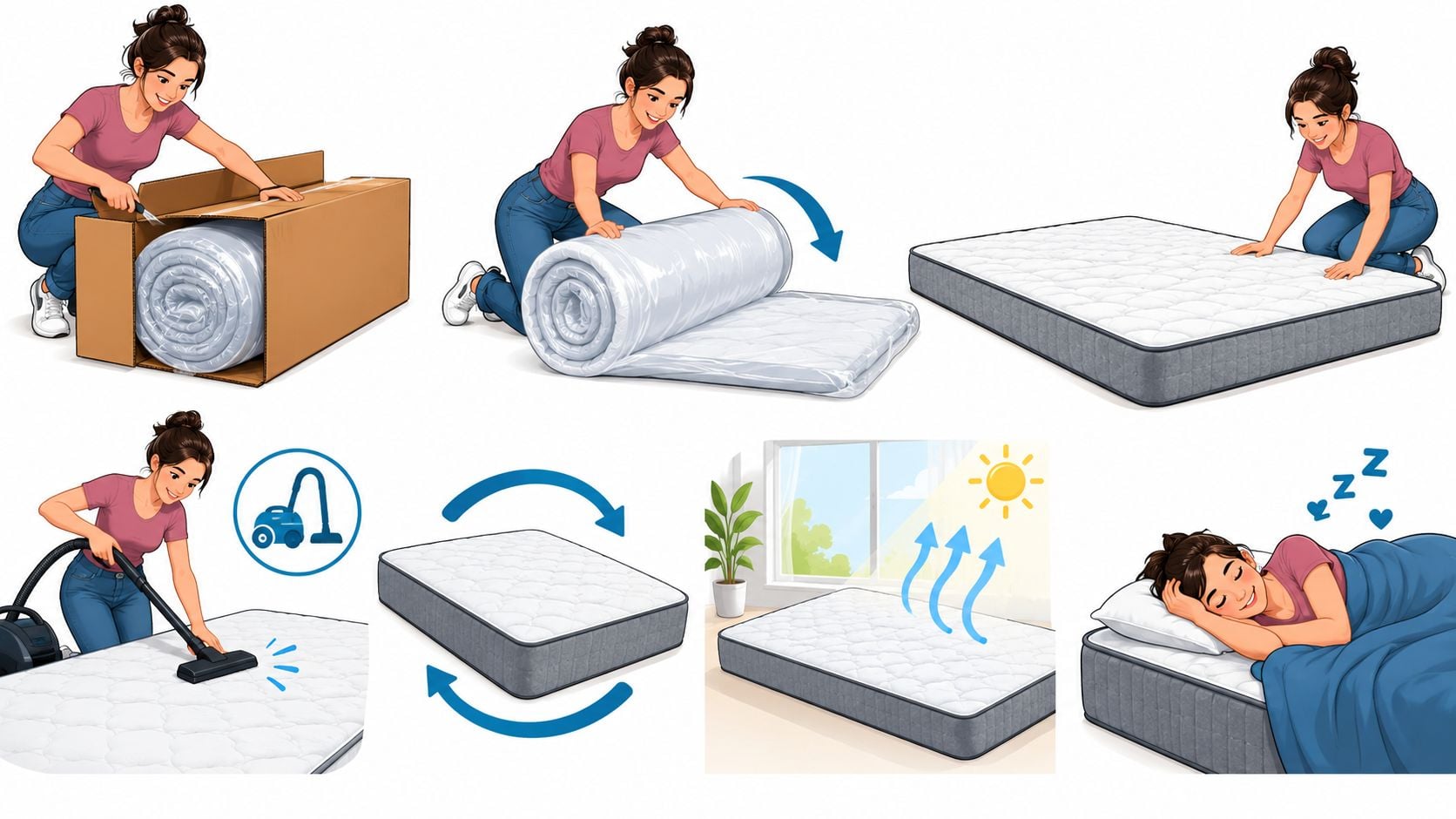
A floor mattress needs an airflow strategy from the first night. Direct placement on a sealed surface creates the greatest moisture concern, so a low, breathable foundation or barrier is usually a smarter choice than placing the mattress on bare concrete or tile.
Build airflow into the base
A low slatted platform, breathable platform base, or similar ventilated support lets air reach the underside while preserving the floor-level look. A simple floor barrier can also reduce dust transfer and help prevent sliding, but a non-breathable sheet shouldn't seal moisture beneath the mattress.
Use this setup sequence:
- Inspect the floor: Remove dust, pine debris, spills, and any sign of dampness before placing the mattress.
- Add a breathable layer: Choose a support surface that allows air movement rather than trapping condensation.
- Allow clearance where possible: Even modest space beneath the mattress improves access for cleaning and airing.
- Check the manufacturer's base requirements: Direct floor placement may affect warranty coverage for some mattresses.
- Confirm stable placement: A non-slip layer can keep the mattress from shifting on smooth flooring.
A mattress protector guide can help households choose protection that blocks spills and dust without creating a hot, impermeable shell.
Match care to mountain conditions
Ruidoso homes deal with dry mountain air, pine pollen, seasonal dust, and periods of higher humidity during summer monsoon weather. Cabins may also remain closed between visits, which makes ventilation especially important.
A practical routine includes:
- Lift and air the mattress: Prop it on its side regularly so the underside can dry and the floor can be cleaned.
- Rotate as directed: Rotation helps distribute wear when the mattress receives direct, even support from below.
- Vacuum the surrounding area: Keep dust and pollen from collecting along the mattress edge.
- Use a washable protector: Choose one that resists spills but doesn't trap excessive heat.
- Ventilate the room: Open doors or windows when conditions allow, and use a dehumidifier in a damp cabin.
- Inspect after storms: Check the floor and underside after humid weather or any spill.
Make seasonal storage manageable
A floor mattress should be moved carefully, not dragged across the floor. Two people can carry a heavier hybrid or latex mattress through tight cabin doorways and staircases without bending the core unnecessarily.
Before storage, clean the cover, air the mattress completely, and keep it raised off the floor in a dry space. Futon-style designs can be folded according to their care instructions. Larger mattresses should remain flat or in the position recommended by the manufacturer, with no heavy objects stacked on top.
Health and Safety Risks Most Floor Sleepers Overlook
The floor isn't automatically a healthier sleeping surface. It places the mattress closer to dust, makes entry and exit harder, and removes the ventilation that protects the underside from moisture.
Moisture and allergens need active control
Mold and mildew are the most obvious concerns because moisture can collect where the mattress meets the floor. Dust and allergens also sit closer to the sleeping surface, particularly when a bedroom isn't vacuumed regularly.
Protect the setup by:
- Cleaning beneath the mattress: Dust the floor and inspect corners where debris gathers.
- Using an encasement or protector: Choose protection that covers the mattress thoroughly without blocking all breathability.
- Airing the underside: Treat lifting as regular maintenance, not an emergency response.
- Managing room humidity: Use ventilation or a dehumidifier when a cabin or bedroom feels damp.
A compressed comfort layer can create a separate problem. If the mattress allows the hips to sink too far, the sleeper may wake with stiffness or pain. The guide to mattresses and back pain can help shoppers separate a supportive feel from simple hardness.
Temperature and mobility deserve attention
Concrete, tile, and slab floors can transfer cold during winter. Foam may feel different in a cold room, while limited airflow can make the same mattress feel warmer during summer. Ruidoso's changing mountain conditions make breathable materials and room control practical priorities.
Low sleeping surfaces can also be difficult for older adults, anyone with limited mobility, or sleepers managing joint pain. Children may benefit from a lower fall distance, but adults still need a clear path around the mattress to prevent trips.
Fire and pest safety are part of the decision
Foam and bedding should stay clear of heaters, fireplaces, and other heat sources. A cabin or rental property also needs routine inspection for insects and pests before a mattress is placed directly on the floor.
The Comfort Promise helps reduce the fear of choosing the wrong bed. A floor setup behaves differently at home than it does on a showroom base, so a local exchange option gives the shopper a practical way to test comfort and support in the actual room. The exact terms should be reviewed before purchase, but the principle is straightforward: the mattress needs to work for the sleeper and the environment.

Finding the Right Match at Mattress Pro by Miller Waldrop
A useful showroom visit starts with information, not a brand preference. A shopper considering a floor setup should bring the details that affect pressure and support.
Bring the real sleeping conditions
The Sleep Pros at Mattress Pro by Miller Waldrop can narrow the field more effectively when shoppers explain:
- Sleep position: Side, back, stomach, or a changing combination.
- Body considerations: Shoulder width, hip sensitivity, mobility concerns, and preferred firmness.
- Room conditions: Wood, tile, or concrete floor, plus whether the room runs cold or humid.
- Usage pattern: Permanent bedroom, guest room, child's room, or vacation rental.
- Space limitations: Floor dimensions, doorway width, stair access, and storage needs.
A phone photo of the room or a simple floor-space sketch can make the conversation more concrete. It also helps the delivery team anticipate narrow hallways, cabin doorways, tight staircases, and second-floor landings common around Ruidoso and Alto.
Test support in normal positions
The showroom is on Sudderth Drive, where shoppers can compare a medium-firm memory foam feel with a responsive hybrid or buoyant latex construction. Testing should include the positions used at home, not just sitting on the edge or lying still for a moment.
The useful test questions are direct:
- Does the spine feel supported when lying on the back?
- Do the hips and shoulders feel cushioned on the side?
- Can the sleeper turn without fighting the mattress?
- Does the surface feel stable without creating sharp pressure?
- Does the mattress seem manageable to lift for airing?
Mattress Pro by Miller Waldrop offers products from Tempur-Pedic, Sealy, Stearns & Foster, and Sherwood, along with consultative guidance based on body type, sleep position, comfort, and budget. The Comfort Promise connects the showroom decision to the first nights at home, while the Low Price Promise addresses price comparison with a local point of contact. Full-Service Delivery with Professional Setup completes the purchase for shoppers who don't want to move a heavy mattress through a mountain home alone.
That local service is the genuine advantage over bed-in-a-box websites. Online descriptions can't inspect a Ruidoso room, judge a tight landing, or help a shopper compare floor comfort in person. A local family-owned business with a 70-year Miller Waldrop legacy can make the decision more practical, personal, and accountable.
Your Next Step Toward a Better Floor-Sleep Setup
The best mattress for floor sleeping should begin with a medium-firm baseline, not the hardest surface available. Look for controlled sinkage, breathable materials, and a supportive profile generally suited to the sleeper, often within the eight-to-twelve-inch range for adults.
The setup matters just as much as the mattress. Use a breathable low platform or barrier, keep air moving beneath the mattress, lift it for inspection, and manage dust and humidity through every season. A floor arrangement can work well when the mattress matches the sleeper and the room. It fails quickly when pressure relief, ventilation, or mobility gets ignored.
Before buying, shoppers in Ruidoso, Alto, or elsewhere in Lincoln County can bring room details and sleep concerns to the Mattress Pro by Miller Waldrop showroom. The Sleep Pros can compare Tempur-Pedic, Sealy, Stearns & Foster, and Sherwood options, explain the trade-offs between foam, hybrid, latex, and futon-style designs, and review the Comfort Promise before the mattress goes home.
A better floor setup starts with one conversation, not another hour of online comparison.
At Mattress Pro by Miller Waldrop, local Sleep Pros can help match a breathable, supportive mattress to a Ruidoso floor setup, sleep position, and budget. Visit the showroom at 2801 Sudderth Drive, Suite F, for the Comfort Promise, Low Price Promise, and Full-Service Delivery with Professional Setup.