

What Is the Best Mattress for Back Pain and Sciatica


A supportive medium-firm mattress is the best starting point for nonspecific low-back pain: in a trial of 313 adults followed for 90 days, it outperformed a firm mattress. For sciatica, the right bed should cushion the shoulders and hips, maintain comfortable spinal alignment, and allow easy turning, but it can't replace diagnosis of the underlying nerve problem.
The familiar morning routine can make mattress shopping feel urgent: sitting carefully on the edge, waiting for stiffness to settle, then wondering whether another uncomfortable night has made everything worse. The sensible purchase isn't necessarily the hardest bed or the most expensive model. It's the mattress that passes a practical comfort test, fits the sleeper's needs, and comes with a clear path forward if the first choice doesn't work.
Why Mornings Feel Like the Hardest Part of Your Day
The alarm sounds, but getting out of bed takes preparation. A sleeper rolls cautiously, braces against the mattress, and waits before standing. Sometimes the complaint is an ache across the lower back; sometimes it's pain traveling into the leg.
Those experiences deserve attention, not a sales pitch. A mattress is a manageable part of the sleep environment, but morning pain alone doesn't establish that the bed caused the problem.
Back pain and sciatica aren't interchangeable
Nonspecific low-back pain and sciatica shouldn't be treated as the same shopping problem. Sciatica involves radiating leg pain or nerve-related symptoms, while the strongest mattress trial examined nonspecific low-back pain and excluded referred pain.
That distinction changes the promise a mattress salesperson should make. Better comfort is a reasonable shopping objective. Fixing nerve compression isn't.
For persistent numbness, weakness, or severe radiating pain, medical evaluation belongs alongside mattress selection, not after repeated unsuccessful purchases. The broader evidence on low-back pain and its global burden00098-X/fulltext) supports treating mattress comfort as symptom management rather than a cure.
Turn morning discomfort into useful shopping information
Before browsing, a sleeper can describe what happens rather than requesting a firm bed:
- Location: Discomfort concentrated at the shoulder or hip calls for a different comparison than a general feeling of inadequate support.
- Movement: Difficulty rolling over makes ease of repositioning an important showroom test.
- Timing: Pain during the night, on rising, or throughout the day should be recorded separately.
- Existing condition: A clinician's diagnosis gives the Sleep Pro better context without asking the salesperson to provide medical advice.
The local guide to waking up with back pain every morning offers another starting point for evaluating the sleep setup.
Practical rule: Shop for a more comfortable night, not a mattress advertised as a medical treatment.
For Ruidoso residents, a face-to-face conversation makes that distinction easier. A useful consultation starts with the sleeper's symptoms, preferred positions, and budget, not a predetermined product recommendation.
What the Research Actually Says About Firmness and Pain
Harder isn't automatically healthier. The strongest direct comparison gives shoppers a good reason to test medium-firm before moving toward an extra-firm surface.
The trial that challenges the hardest-bed rule
The randomized, double-blind, multicenter mattress trial published in 2003 enrolled 313 adults with nonspecific low-back pain lasting at least 3 months. Participants received either a firm mattress rated 2.3 or a medium-firm mattress rated 5.6 on the European Committee for Standardization firmness scale, with outcomes evaluated after 90 days.
The medium-firm group had better outcomes for pain in bed, pain on rising, and disability. Both groups improved, so the findings support a starting point, not a universal winner.
The government evidence summary of beds and mattresses for back pain reports that 63.3% of the medium-firm group still experienced pain on rising, compared with 77.2% of the firm group. It also reports statistically significant differences in improvement in disability and pain on rising, with p=0.008 for both.
Those remaining symptoms matter. Even the better-performing surface didn't eliminate morning pain for everyone.
Quick-Reference Comparison of Mattress Types for Back Pain and Sciatica
These are shopping priorities, not clinical rankings. Each construction still needs an individual comfort test.
| Material | Best For | Pressure Relief | Spinal Support | Temperature |
|---|---|---|---|---|
| Memory foam | Comparing close contouring | Check shoulder and hip comfort | Reject excessive pelvic sink | Evaluate the complete cooling design |
| Hybrid | Comparing cushioning with easier movement | Assess comfort-layer depth | Check the coil and foam combination | Examine airflow features |
| Latex | Testing a more responsive surface | Confirm enough give at sensitive areas | Assess alignment in each position | Compare cover and ventilation |
| Innerspring | Seeking a familiar spring feel | Inspect cushioning above the springs | Test for uneven support | Consider padding and bedding |
| Adjustable air | Exploring adjustable firmness | Check comfort layers separately | Evaluate useful adjustment settings | Assess the entire construction |
A systematic review of mattress design and sleep outcomes associated subjectively medium-firm mattresses with improved comfort, sleep quality, and spinal alignment. It also found that self-adjusted air systems could help individual users optimize comfort and alignment, without establishing that specialized systems suit everyone.
Judge firmness by pressure distribution and morning comfort, not by the assumption that the firmest mattress provides the best support.
The practical implication is straightforward: firmness describes a feel; support describes a result. The guide to what mattress firmness labels don't explain helps shoppers approach those labels with better questions.
Comparing Mattress Materials for Spinal Support and Pressure Relief
The most useful comparison isn't foam against springs in isolation. It's how the complete mattress handles cushioning, alignment, movement, and temperature for the person lying on it.
The construction differences are easier to understand in cross-section:
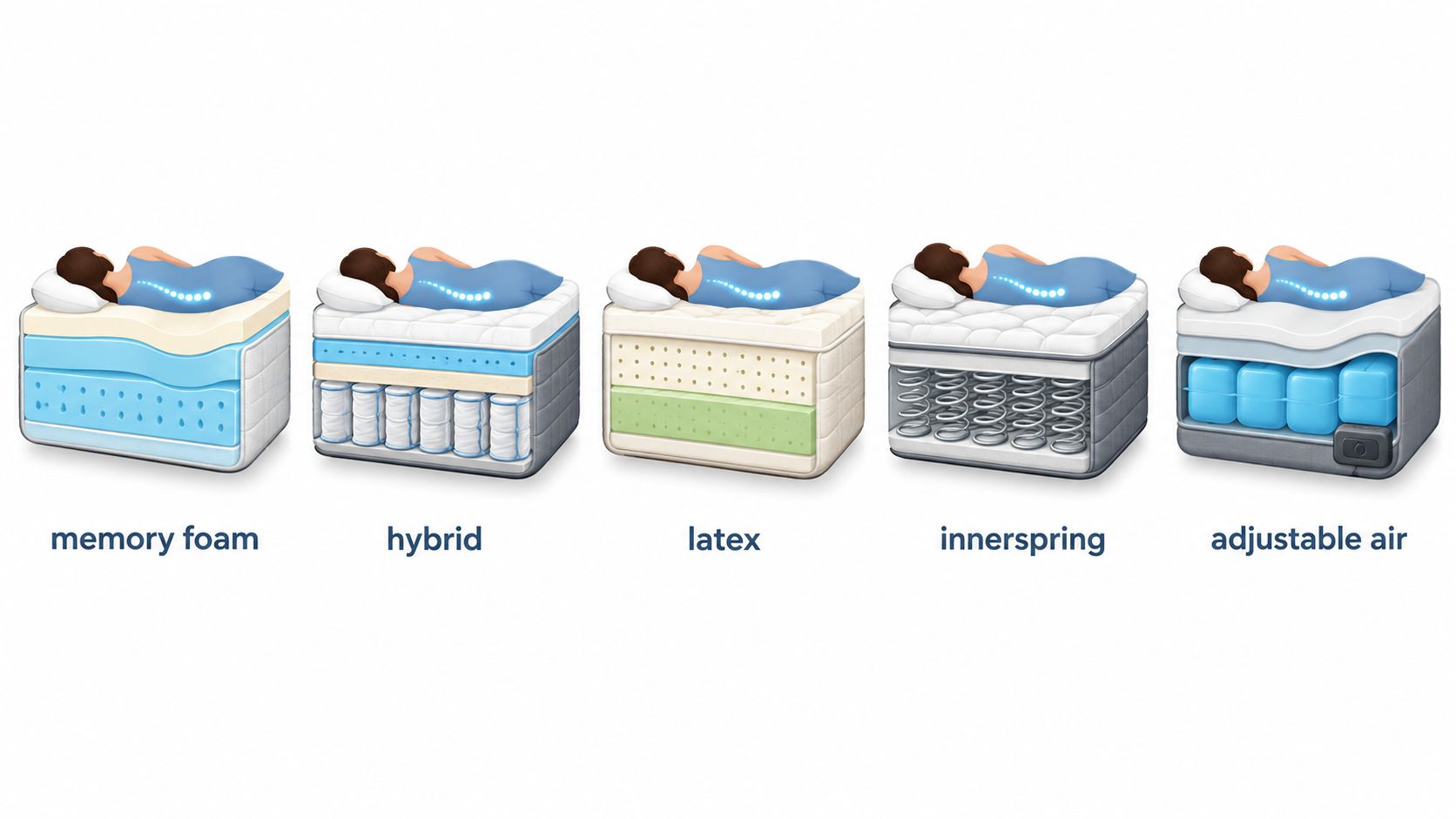
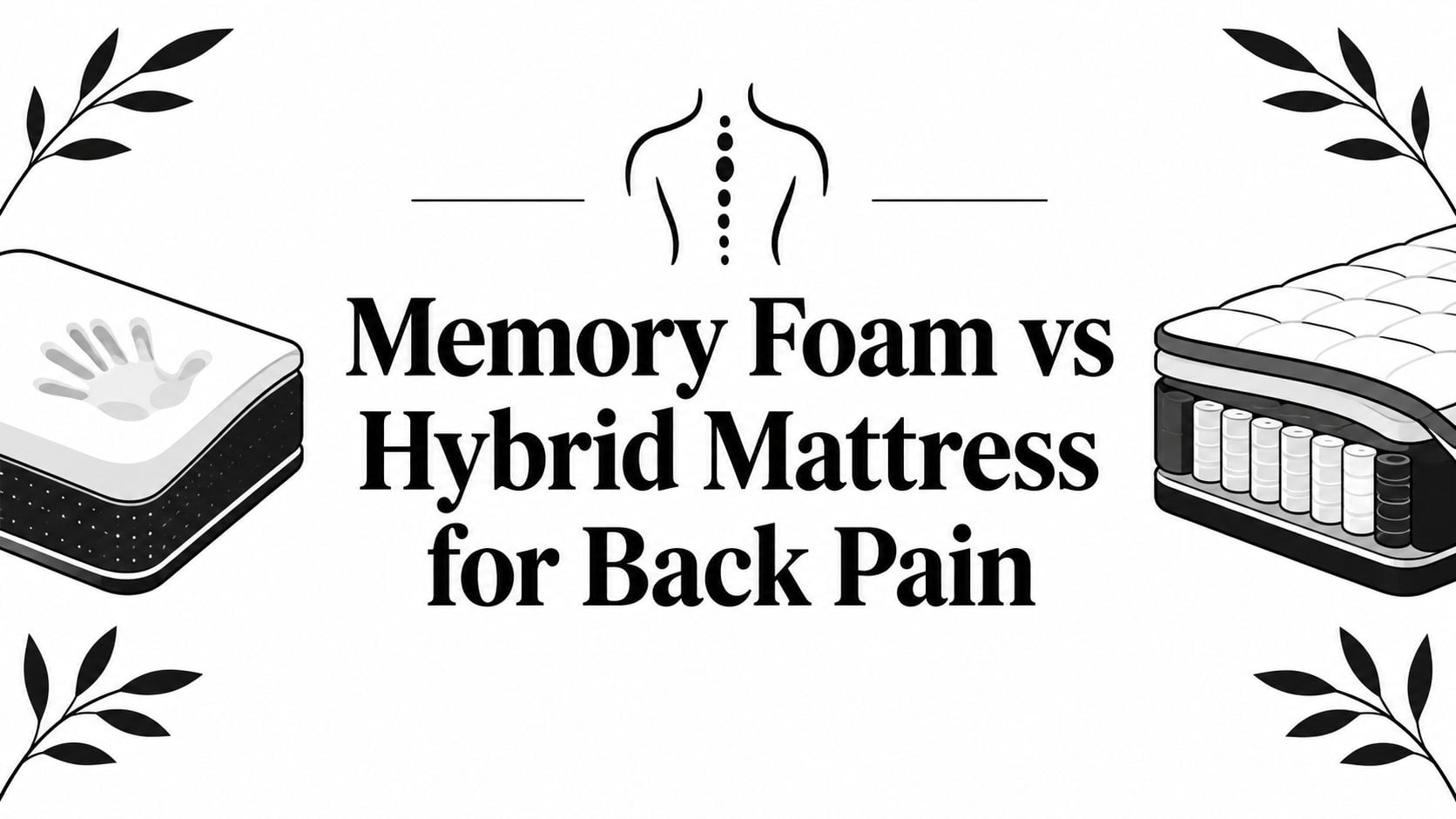
Memory foam and hybrids deserve a direct comparison
For shoppers considering memory foam, the key question is whether close contouring feels relieving or restrictive. Viscoelastic foam is intended to conform around the body; the useful outcome is broad, comfortable contact rather than concentrated pressure at a sensitive shoulder or hip.
That contouring shouldn't come at the expense of movement. A sleeper who has to push hard to roll over should compare a more responsive model, regardless of how comfortable the first impression feels.
A hybrid combines a spring support system with comfort layers. It's a sensible comparison for someone who wants cushioning but dislikes feeling enclosed.
Pocketed coils, foam thickness, and the overall construction deserve attention, but no component name guarantees the right result. The memory foam versus hybrid comparison for back pain can help narrow the showroom shortlist.
Latex, innerspring, and adjustable air fill different needs
- Latex: Compare it when a sleeper prefers responsive lift rather than a conforming sensation. Shoulder comfort still needs checking, especially for side sleeping.
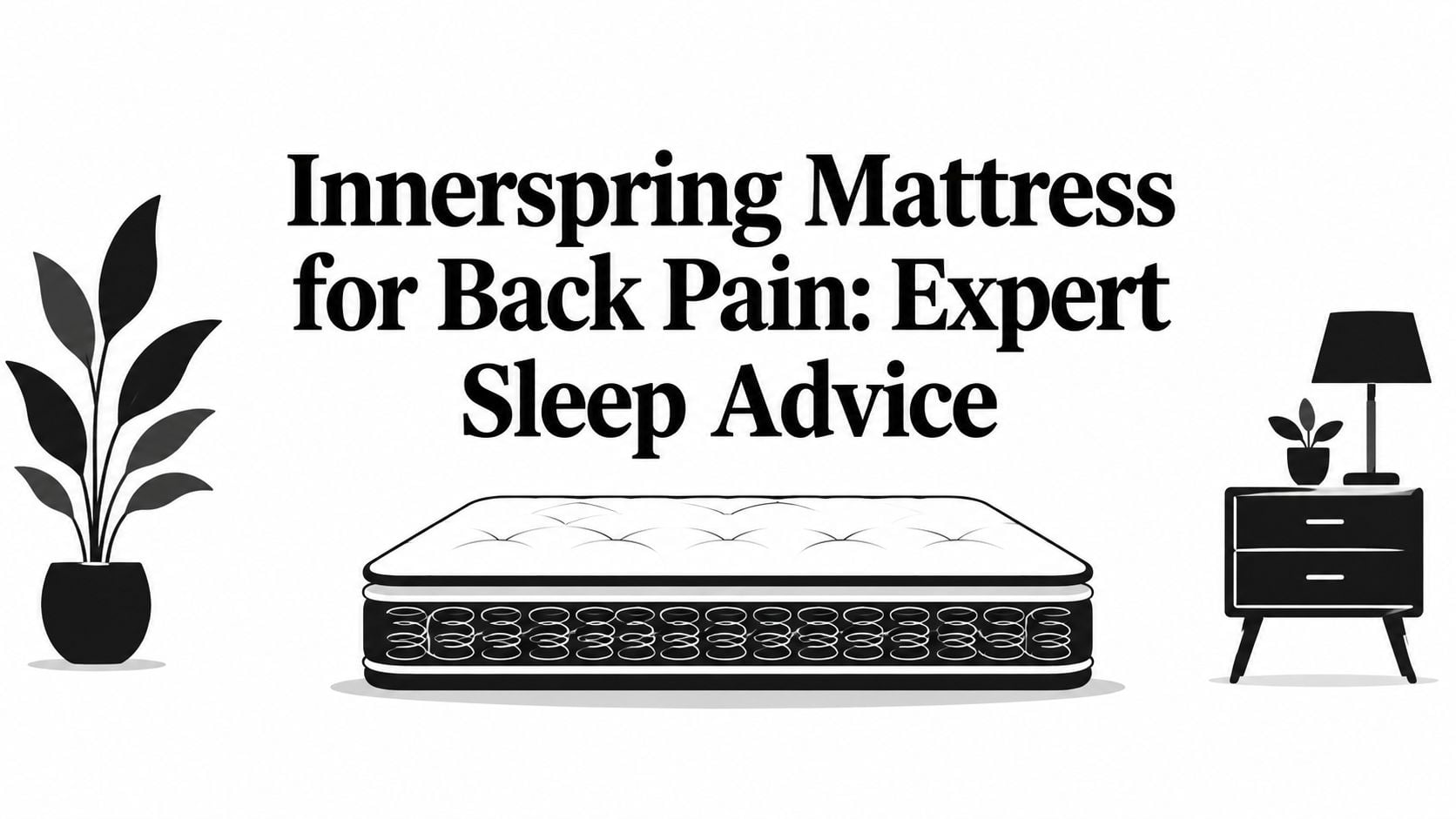
- Traditional innerspring: Consider it for a familiar spring feel, but inspect the comfort layers carefully. A supportive core doesn't excuse uncomfortable surface pressure.
- Adjustable air: Explore it when fixed firmness creates a persistent compromise. The important test is whether available settings produce a meaningful improvement without creating a new pressure problem.
For couples, motion isolation should be tested rather than assumed from a material label. For durability, shoppers should request construction details, foundation requirements, and warranty terms instead of relying on a premium price as proof.
| Shopping concern | Useful comparison |
|---|---|
| Turning feels difficult | Compare responsiveness across constructions |
| Partner movement is distracting | Test motion transfer together |
| Shoulder discomfort dominates | Compare cushioning without losing support |
| Long-term value matters | Review specifications, care requirements, and warranty exclusions |
Cooling needs a complete-system approach
In Ruidoso's dry mountain air, the most useful cooling conversation starts with the actual bedroom: thermostat setting, bedding, seasonal changes, and whether the sleeper regularly feels hot. Altitude alone isn't a reason to prescribe a particular material.
Cooling gel technology shouldn't settle the purchase. Shoppers should ask what the gel is intended to do, how the cover and ventilation contribute, and whether the model still feels comfortable after sustained contact.
The recommendation is simple: prioritize the right support and pressure relief first, then compare temperature features among mattresses that already pass those tests.
Matching Firmness and Construction to Your Sleep Position and Body Type
The answer to what is the best mattress for back pain and sciatica depends on the position in which the sleeper rests. A mattress that feels impressive while sitting on its edge can behave very differently once the body is fully supported.
Side and back sleepers need different checks
Side sleepers should begin by checking shoulder and hip compliance. Enough give allows these areas to settle without forcing the waist into an uncomfortable curve.
Back sleepers should pay close attention to the pelvis. A comfortable surface still needs sufficient support beneath the midsection rather than allowing it to settle excessively.
The Cambridge University Hospitals guidance on sciatica includes mattress and pillow considerations among sleep factors that can influence symptoms. Pillow support between the knees for side sleeping, or beneath bent knees for back sleeping, can help maintain a more comfortable posture without treating the underlying nerve irritation.
Alignment check: While the sleeper lies on the side, a partner or Sleep Pro can look from behind for an approximately straight spinal line. Visible bending calls for a closer support assessment; concentrated shoulder or hip pressure calls for a closer cushioning assessment.
That check is a screening tool, not a diagnosis. A mattress can look reasonable and still feel wrong, so the sleeper's comfort remains essential.
Stomach and combination sleepers should test movement
For a stomach sleeper, the practical concern is whether the midsection dips uncomfortably. A firmer comparison may help identify a more stable feel, but choosing the hardest surface without testing other positions isn't a useful shortcut.
Combination sleepers need to evaluate the transition between positions, not just the destination. A responsive hybrid is a sensible starting comparison when rolling feels laborious on a close-conforming surface.
A useful shortlist records:
- Primary position: The position used most often should lead the assessment.
- Secondary position: The mattress shouldn't become intolerable during a normal change.
- Movement effort: Turning should feel manageable without repeated pushing or bracing.
- Pressure response: Tingling, concentrated pressure, or increasing discomfort deserves attention, not dismissal.
Body size changes the comparison, not the rules
Lighter and heavier sleepers shouldn't be assigned a mattress solely by a weight cutoff. Instead, the Sleep Pro should compare how far the body settles, whether cushioning engages comfortably, and whether support remains consistent.
Couples may need different comfort approaches even when both describe a preference for medium-firm. The guide to matching a mattress to body type provides a useful framework for that discussion.
The strongest choice is the model that works under the actual sleeper, not the label that sounds most medically reassuring.
How a Sleep Pro Tests a Mattress in the Showroom
A showroom visit should produce a clear comparison, not a blur of mattresses that all felt pleasant for a moment. The Sleep Pro's job is to keep the process consistent enough that meaningful differences become obvious.
Begin with the current problem
A useful consultation starts before anyone lies down. The shopper describes the current mattress, usual sleep positions, pressure-sensitive areas, mobility concerns, and budget.
The Sleep Pro should also ask about the existing foundation and intended bedroom. A mattress recommendation is incomplete if setup compatibility and delivery access remain unresolved.
The local sleep consultation guide helps shoppers prepare for that conversation.
Use a repeatable testing sequence
- Pair the pillow first: Use a pillow suitable for the tested sleep position. An unsuitable pillow can make an otherwise promising mattress difficult to judge.
- Stay long enough to settle: A sustained lie-down is more informative than a quick sit or brief recline. The point is to notice developing pressure and movement difficulty.
- Check alignment: Have the Sleep Pro assess posture while the sleeper remains relaxed, rather than deliberately holding a straighter position.
- Turn normally: Roll, shift, and move toward the edge as at home. A mattress shouldn't be assessed only while lying perfectly still.
- Include the partner: One person changes position while the other assesses disturbance, then they switch roles.
A useful comparison changes as little as possible between models. Keeping the pillow, position, and testing sequence consistent helps separate mattress differences from testing differences.
Ask about the Comfort Promise before buying
The Comfort Promise addresses the fear of picking the wrong bed, but the written terms should guide expectations. Shoppers should ask about eligibility, required conditions, exchange procedures, timing, and any applicable costs before committing.
The Low Price Promise deserves the same practical attention. Understanding how comparisons are evaluated is more useful than assuming every price difference qualifies.
A clear explanation before purchase is more reassuring than a vague promise that everything can be sorted out later.
For mountain homes around Ruidoso, the consultation should also cover seasonal bedroom conditions and bedding. A showroom impression shouldn't be treated as a guarantee of identical comfort in every home environment.
Finally, Full-Service Delivery with Professional Setup should be discussed as part of the purchase. Foundation placement, access constraints, and setup details belong on the order, not in a last-minute delivery conversation.
Pairing the Right Brand to Your Specific Symptoms
Brand selection works best after the sleeper's comfort requirements are clear. Tempur-Pedic, Sealy, Stearns & Foster, and Sherwood should be compared as different routes to a suitable sleep surface, not as treatments for specific diagnoses.
Start with the problem the mattress must solve
For someone prioritizing close-conforming pressure relief, Tempur-Pedic belongs on the comparison list. The decisive question is whether the chosen model cushions sensitive areas while still allowing comfortable repositioning.
For someone seeking balanced support and a familiar feel, Sealy, including Posturepedic and hybrid options, provides a practical comparison. The sleeper should evaluate the actual model rather than assuming a collection name establishes the right firmness.
Stearns & Foster merits consideration when a shopper wants a more luxurious comfort experience alongside a spring-supported construction. Plushness should still be checked against pelvic support and ease of movement.
For a budget-conscious household, Sherwood belongs in the discussion of value-focused options. A lower spending target shouldn't remove alignment, pressure relief, or careful testing from the process.
| Shopper's priority | Brand comparison to begin with |
|---|---|
| Close-conforming comfort | Tempur-Pedic |
| Balanced, familiar support | Sealy |
| Luxury cushioning with spring support | Stearns & Foster |
| Budget-conscious mattress selection | Sherwood |
These are starting points for browsing, not claims that one brand produces better medical outcomes.
Put service behind the selection
The Comfort Promise matters most when a mattress feels promising in the showroom but raises concerns at home. Its role is to provide a defined next step, subject to the actual policy, rather than pressure a shopper into deciding quickly.
The Low Price Promise supports a separate concern: whether the purchase fits the household budget. Comfort and price should be discussed together, without presenting the most expensive model as the necessary choice for pain.
For cabins, vacation rentals, and homes around Alto and Lincoln County, Full-Service Delivery with Professional Setup can simplify the practical side of buying. Staircases, doorways, and foundation requirements should be checked in advance rather than treated as assumptions about every property.
Persistent nerve-related symptoms still require the medical attention described earlier. No brand name changes that boundary.
Visiting Mattress Pro by Miller Waldrop in Ruidoso
The Miller Waldrop family legacy provides the background for a locally owned sleep business focused on personal consultation. For Ruidoso and Lincoln County shoppers, the useful difference is the opportunity to compare mattresses with someone who can discuss body type, sleep position, budget, and setup together.
Make the visit practical
A productive visit starts with a short description of the current sleep problem and ends with clear purchase terms.
- Comfort protection: Request the current Comfort Promise details.
- Budget planning: Discuss the Low Price Promise and available financing terms.
- Home preparation: Confirm delivery access and Professional Setup needs, including properties around Alto.
The showroom is at 2801 Sudderth Drive, Suite F, in Ruidoso, with visits available Monday through Saturday. Browsing online first can help narrow preferences, while an in-person comparison provides the hands-on assessment a bed-in-a-box description can't provide.
Mattress Pro by Miller Waldrop offers personalized mattress comparisons, the Comfort Promise, and Full-Service Delivery with Professional Setup to help shoppers choose a supportive bed without relying on firmness labels alone. Visit the Sleep Pros at 2801 Sudderth Drive, Suite F, in Ruidoso, Monday through Saturday, or browse the collection online before stopping by.