


Sleep Position Neck Pain: Best Positions and Pillow Tips

38.2% of participants reported neck pain in a 2026 analysis of 6,969 people. Back sleeping was more common among those without neck pain, but the findings don't establish a universally protective position. The practical takeaway for anyone waking with that familiar ache is to check the fit of the entire bed, not just the direction the sleeper faces.
For Ruidoso mattress shoppers, that means evaluating pillow height, shoulder clearance, and mattress support together. A different sleeping position won't necessarily fix a pillow that holds the head at the wrong angle.
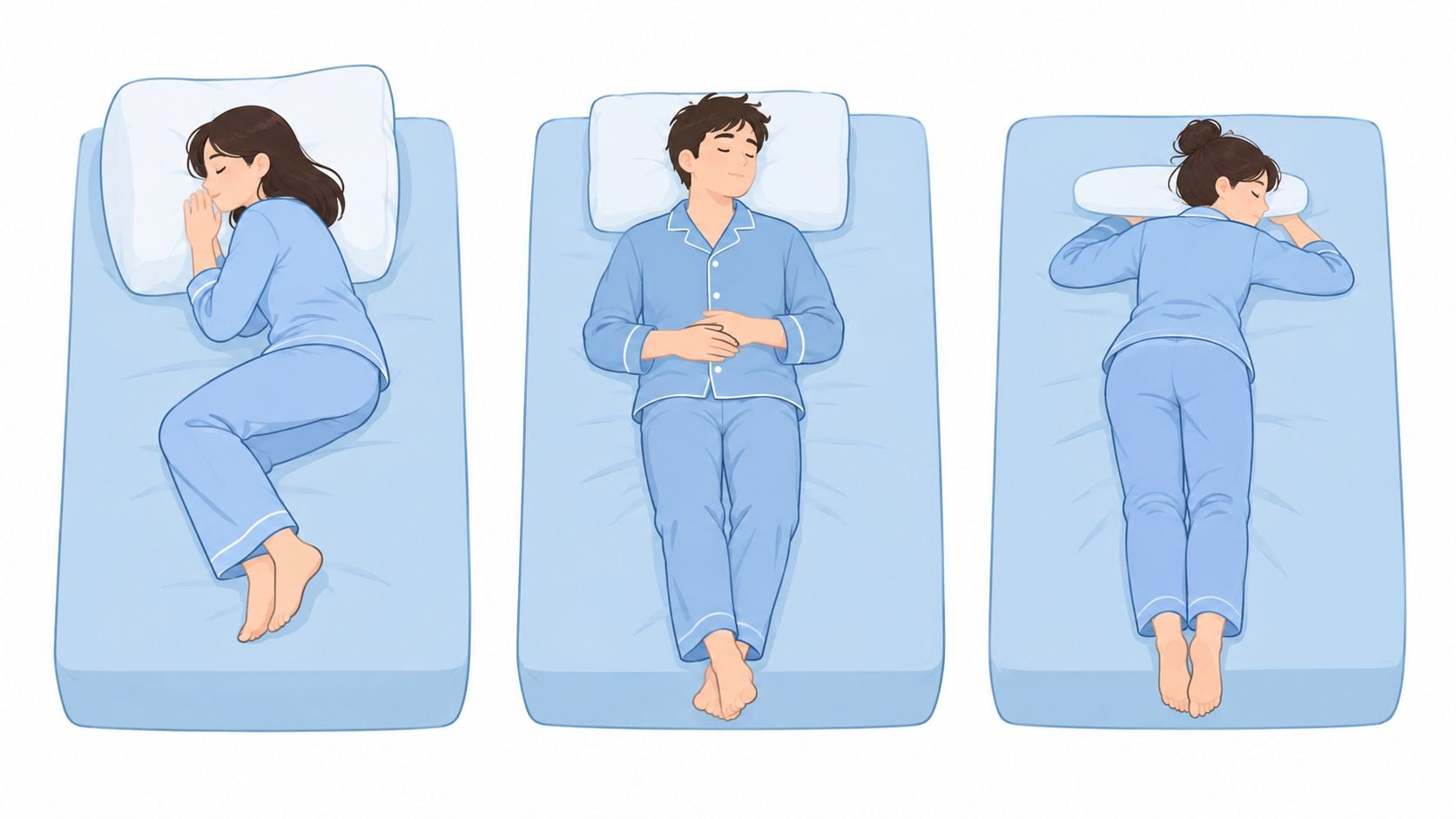
Which Sleep Position Is Best for Your Neck
Back or side sleeping is a sensible starting point, provided the mattress and pillow keep the neck comfortably aligned. Neither position earns an automatic recommendation for every body.
In the analysis introduced above, back sleeping occurred in 55.3% of participants with neck pain versus 63.8% without, with an odds ratio of 0.87. Right-side sleeping occurred in 50.9% versus 42.6%, respectively, while sleeping at least seven hours was associated with lower odds of neck pain, with an odds ratio of 0.79.
These are associations, not guarantees. The findings don't mean that switching to back sleeping will cure morning stiffness or that side sleeping is harmful by its very nature.
Compare the Whole Setup
The recommendations below are fitting starting points, not a clinical ranking. Firmness labels deserve particular caution because the useful question is how far an individual sleeper sinks, not what a mattress tag says.
Neck risk, pillow and mattress approach by sleep position
| Sleep position | Main neck risk | Pillow approach | Mattress approach |
|---|---|---|---|
| Back (supine) | A high pillow pushes the head forward; inadequate support lets it fall backward | Low to medium loft supporting the natural curve | Start with medium-firm support, then check shoulder and lower-back comfort |
| Side | The head tilts toward or away from the bed when the shoulder gap isn't filled | Medium loft matched to shoulder width and mattress compression | Start medium-firm to firm, but allow enough shoulder cushioning |
| Stomach (prone) | Greatest concern about prolonged sideways head rotation | Very thin pillow or none, without assuming this removes rotation | Try a firm surface that limits excessive hip sinking |
| Combination | Support requirements change with each turn | Adaptable medium loft that stays stable during movement | Try a medium feel that permits turning without excessive sinking |
Choose by Fit, Not Habit Alone
A side sleeper shouldn't have to tolerate shoulder pressure just to buy a supposedly supportive mattress. Likewise, a back sleeper shouldn't need to stack pillows to compensate for an unsuitable surface.
During mattress shopping, start in the position used most often, then test the other positions that occur overnight. Bring the usual pillow or ask for an appropriately fitted alternative rather than judging the mattress with whichever pillow happens to be nearby.
Practical rule: The best position is the one that allows comfortable support without holding the head noticeably forward, backward, or sideways.
The table is a starting point for testing, not a verdict. For sleep position neck concerns, the most useful recommendation is an individualized fit rather than a rule that everyone must become a back sleeper.
How High Your Pillow Should Be for Each Position
Side sleepers can begin around 9.7 to 11.8 cm with neck support; back sleepers can consider approximately 7 to 11 cm, then adjust. These ranges come from individualized side-sleeper testing and a review of pillow-design research, not a universal sizing standard.
Stomach sleepers should start with a very thin pillow or none. Combination sleepers need a compromise that works during movement, rather than a height that feels right in only one position.
Starting Height Isn't Finished Height
The side-sleeper study cited above tested nine healthy participants. Its medium individualized band produced the cervical curve closest to natural standing and the lowest modeled internal force, while a higher band received the highest average comfort score.
The following values summarize those findings and the pillow-design review. Uncompressed pillow thickness isn't the same as the support remaining beneath a sleeper's head.
Starting pillow height by sleeping position
| Sleeping position | Starting height | Adjustment rule |
|---|---|---|
| Side sleeping, medium individualized loft | Approximately 9.74 to 11.76 cm | Keep head and trunk parallel to the bed; fill the shoulder gap |
| Side sleeping, higher comfort band | Approximately 11.76 to 13.78 cm | Choose only if the neck stays straight without stiffness |
| Back sleeping | Approximately 7 to 11 cm | Support the cervical curve without pushing the head forward |
| Stomach sleeping | Very thin or none | Avoid added height; recognize that rotation remains |
| Combination sleeping | Approximately 7 to 11 cm as a trial range | Test stability while turning; don't treat the range as validated for everyone |
Make Small, Controlled Adjustments
A clinical pillow-fitting study involving 84 people used 5-millimeter adjustments, targeting approximately 15 degrees of cervical inclination on the back, a symmetrical face-to-neck centerline on the side, and smooth turning.
A practical fitting sequence follows that approach:
- Check the back position: Avoid a chin pushed toward the chest or a head tipped backward.
- Check the side position: Keep the face centered over the neck rather than tilted.
- Test movement: Turn naturally without repeatedly rebuilding the pillow.
Mattress compression changes the fit. A pillow that works on a firm bed may become too low on a softer surface, so any mattress change deserves a fresh check.
The pillow-design review also found rectangular shapes more comfortable during back sleeping and cylindrical shapes more comfortable during side sleeping in separate testing. Those preferences aren't universal; the guide to bed pillows for neck pain provides additional shopping considerations.
Why Neck Alignment Matters More Than Position
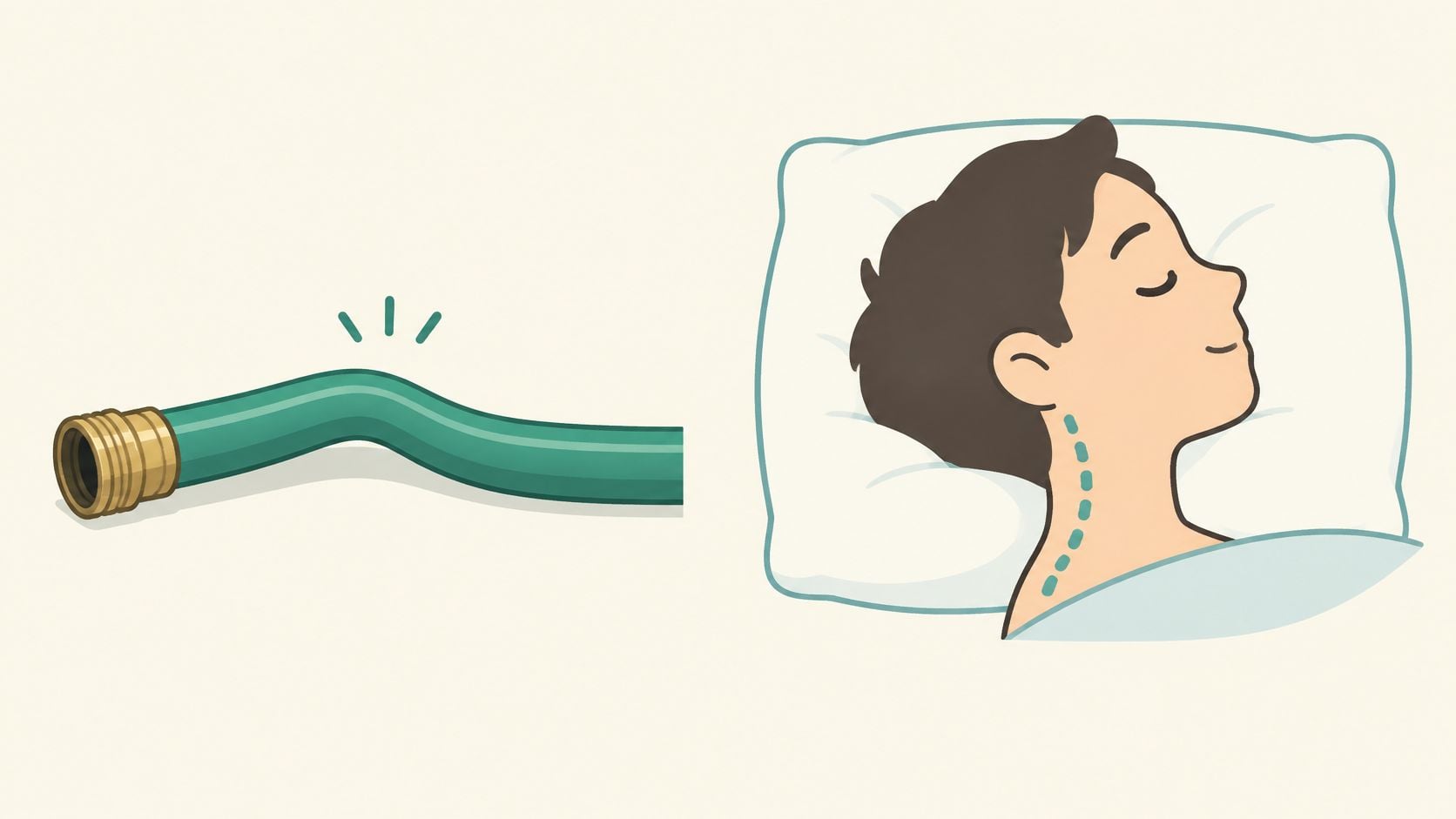
A garden hose kinks where it bends. The comparison isn't literal anatomy, but it illustrates why a head held at an awkward angle deserves attention, even when the sleeper is technically in a recommended position.
Neutral alignment means a continuous, comfortable line through the neck and upper spine. During a side-sleeping check, a helper can assess the head from behind for lateral bending, then check that the nose remains roughly centered over the sternum rather than rotated.
What the Evidence Actually Establishes
A 2021 observational study of sleep posture and spinal symptoms notes annual cervical-pain prevalence of approximately 30% to 50% in adults. Participants with cervical symptoms averaged 23.6 posture changes, compared with 18.3 in controls, and dominant stomach sleepers reported the highest percentage of waking cervical symptoms.
The study doesn't establish that sleep position caused those symptoms. More movement could accompany discomfort rather than explain its origin.
A systematic review covering 35 pillow studies found some benefits for pain or disability, but pillow designs didn't significantly improve sleep quality or side-lying spinal alignment in patients with chronic neck pain. An ergonomic label therefore isn't enough to justify a purchase.
Run a Simple Home Check
The most useful assessment combines appearance with the following morning's response:
- Neutral neck: Does the neck follow the upper spine without an obvious bend?
- Head tilt: Does the head drop toward the mattress or lift away from it?
- Morning response: Does a modest height adjustment reduce stiffness, leave it unchanged, or make it worse?
Comfortable support matters more than an impressive pillow shape.
Change one part of the setup at a time. Replacing the pillow, adding a topper, and changing sleeping position simultaneously makes it harder to identify which change helped.
The sleeping spinal-alignment guide offers a useful companion to this home assessment. Persistent symptoms still require more than a visual check.
Mattress Support That Keeps Your Neck Neutral
The mattress determines where the shoulders and hips settle before the pillow supports the head. That makes pillow shopping and mattress shopping connected decisions.
Memory foam contours around loaded areas to distribute pressure. A hybrid combines cushioning layers with a coil support unit, while a traditional innerspring emphasizes spring support and latex provides a more responsive surface.
Compare Materials Without Expecting a Cure
These are practical category-level trade-offs, not promises about every model. Layer thickness, construction, and individual body shape can change the feel considerably.
Mattress types and their neck support trade-offs
| Mattress type | How it supports the neck | Main trade-off | Best for |
|---|---|---|---|
| Memory foam | Contours around shoulders and the supported head area to ease concentrated pressure | Heat retention and excessive sinking can be concerns | Side sleepers seeking pressure relief |
| Hybrid (coil base with foam top) | Combines underlying support with cushioning above | Weight and price may be higher | Combination sleepers and couples testing different needs |
| Innerspring | Provides a relatively buoyant, even support surface | Limited contouring can feel firm at the shoulders | Back and stomach sleepers preferring a firmer feel |
| Latex | Responds readily as the sleeper moves | Cost and feel vary by construction and density | Frequent position changers seeking a responsive surface |
Test Firmness and Temperature Together
Cooling gel and breathable covers are intended to address heat retention, but a cooling label isn't a guarantee of comfortable temperature. Bedding, room conditions, and personal preferences belong in the decision.
Ruidoso's dry mountain air, cool nights, and day-to-night temperature changes make those preferences especially relevant. A sleeper in Alto may want breathable cushioning without an excessively cool-feeling bed during colder weather.
For side sleeping, use a straightforward fitting rule: the hips shouldn't sink below the supported line of the spine. The shoulders also need enough give to avoid being pushed upward.
When comparing Tempur-Pedic, Sealy, Stearns & Foster, and Sherwood, a Sleep Pro can help narrow the options by body type and sleeping position. The mattress guide for back pain and sciatica offers related considerations for shoppers evaluating whole-body support.
A showroom test should include settling into the bed, changing position, and checking the pillow again. A quick seated test won't answer those questions.
Stretches and Habits That Ease Neck Strain
Gentle movement can be part of a bedtime routine, but it shouldn't become a way to tolerate an unsuitable mattress indefinitely. Stretching isn't a substitute for checking overnight support, and a painful stretch isn't a productive one.
The following routine is a conservative starting suggestion, not a treatment prescription. Anyone with an injury, diagnosed neck condition, dizziness, or nerve symptoms should seek individualized guidance before trying it.

Keep the Routine Gentle
- Chin tucks: Sit tall and draw the chin straight backward without looking down. A suggested starting routine is a 5-second hold, repeated up to 10 times, only while comfortable.
- Upper trapezius stretch: Gently tilt an ear toward the shoulder without pulling on the head. A suggested hold is 20 to 30 seconds per side, stopping sooner if symptoms increase.
- Shoulder blade squeeze: Draw the shoulder blades together without shrugging. Try a comfortable 5-second hold, repeated up to 10 times.
- Gentle rotation: Slowly turn the head toward each side within an easy range. There's no benefit in forcing the last part of the movement.
The aim is relaxed movement, not a stronger stretch. Any increase in pain, tingling, or dizziness is a reason to stop.
Prepare the Bed Before Settling In
Small setup habits make a fitting easier to evaluate:
- Position the pillow first: Avoid beginning the night with the head resting on a folded edge or uneven stack.
- Favor back or side lying: Avoid stomach sleeping when sustained head rotation aggravates symptoms.
- Try knee support: A pillow between the knees may make side sleeping feel more balanced.
Daytime habits deserve attention too. Raise a frequently used screen toward eye level and consider a movement reminder every 30 minutes during desk work, treating that interval as a practical prompt rather than a medical threshold.
The natural sleep solutions guide can help connect these routines with the bedroom environment. Mattress shoppers should record whether discomfort appears mainly upon waking or persists throughout the day, then share that pattern during a fitting or clinical visit.
When Neck Pain Needs a Doctor
Neck pain that travels down an arm, comes with numbness or weakness, or persists despite several weeks of self-care deserves clinical assessment. Severe morning symptoms shouldn't be managed through repeated pillow purchases alone.
The clinical pillow-adjustment research supports individualized fitting, but it doesn't make a pillow a replacement for medical evaluation. Everyday stiffness and symptoms suggesting nerve involvement require different responses.
Warning Signs That Take Priority
Seek medical advice for the following symptoms, with urgent assessment for sudden, severe, or rapidly worsening problems:
- Traveling symptoms: Pain or tingling extending into the arm or hand.
- Loss of strength: Weakness in the grip or arm.
- Reduced sensation: New or persistent numbness.
- Recent injury: Neck pain after a fall, accident, or blow to the head.
- Illness symptoms: Fever or chills with a stiff neck.
- Sudden severe headache: Especially when accompanied by other new symptoms.
- Functional changes: Difficulty swallowing or new balance problems.
Keep the Roles Clear
A pillow fitting may help with everyday stiffness associated with an uncomfortable setup. It cannot diagnose or treat nerve involvement, assess an injury, or rule out another medical cause.
Safety first: A warning sign belongs with a clinician before it belongs in a mattress fitting conversation.
Mattress Pro's Sleep Pros can help assess the bed, pillow, and sleeping setup after appropriate medical guidance. A doctor should check warning signs first, rather than allowing a mattress purchase to delay needed care.
Book a Neck-Fit Check at Mattress Pro in Ruidoso
Mattress Pro carries the 70-year Miller Waldrop family legacy into a business focused entirely on sleep. The family-owned Ruidoso showroom offers an in-person alternative to choosing a bed from a website without anyone checking the sleeper's actual alignment.
The team serves neighbors in Ruidoso, Alto, and across Lincoln County. Local care means discussing the bedroom, mountain climate, budget, and recurring morning ache together, rather than reducing the decision to a firmness quiz.
What a Neck-Fit Check Covers
A one-on-one sleep consultation helps connect the mattress choice with the pillow fit:
- Sleeping position and movement: Review the preferred position and usual overnight changes.
- Body dimensions: Consider shoulder width and the gap the pillow needs to support.
- Comfort and budget: Compare suitable options without assuming the most expensive bed is necessary.
Tempur-Pedic, Sealy, Stearns & Foster, and Sherwood provide options to explore from luxury choices to budget-friendly solutions. The fitting should establish which combination feels appropriate, not merely which brand sounds familiar.
Reduce the Fear of Choosing Wrong
The Comfort Promise addresses the fear of picking the wrong bed. The Low Price Promise and Full-Service Delivery with Professional Setup add practical reassurance, with a Sleep Pro available to explain the applicable details before purchase.
Ready to transform your sleep? Visit our Sleep Pros at the Mattress Pro showroom located at 2801 Sudderth Drive, Suite F, in Ruidoso. From luxury brands to budget-friendly solutions, we're here to help you wake up loving your mornings. Browse our collection online or stop by Monday through Saturday.
A mattress and pillow should be evaluated together when morning neck discomfort keeps returning. Visit Mattress Pro by Miller Waldrop for a personalized neck-fit check, mattress comparisons, and help choosing support that matches the sleeper rather than a generic position rule.