

Expert Tips: How To Align Your Spine While Sleeping


You know the feeling. You wake up in Ruidoso after what should’ve been a full night’s rest, swing your legs over the side of the bed, and your lower back is already complaining. By breakfast, your neck feels tight, your hips feel off, and you’re wondering whether it was yard work, a long drive, or just “getting older.”
A lot of the time, it’s none of those things. It’s your sleep setup.
If you want to know how to align your spine while sleeping, think about one simple target. Your spine should rest in a neutral position, close to the same natural shape it has when you’re standing with good posture. That takes the right position, the right pillow height, and a mattress that supports your body instead of letting it sag or forcing it into pressure points.
Table of Contents
- Why Your Sleep Position Could Be Causing Your Back Pain
- Mastering Alignment for Your Specific Sleep Style
- How to Choose a Pillow That Actually Supports Your Spine
- Finding a Mattress That Works With You Not Against You
- Simple Routines and Stretches for a Healthier Spine
- When Pain Means It’s Time to See a Professional
Why Your Sleep Position Could Be Causing Your Back Pain
Individuals often don’t connect morning pain to the hours they spent lying still. They blame the wrong chair, the gym, or yesterday’s chores. But your body spends a long stretch in one position overnight, and if that position twists your neck, drops your hips, or flattens your lower back, you can wake up sore even after enough sleep.

That’s why neutral alignment matters so much. Your ears, shoulders, hips, and lower back should stay as balanced as possible instead of collapsing into a bend or twist. When they don’t, the small muscles around the spine stay busy all night trying to protect you.
In homes across Lincoln County, I’ve seen the same pattern again and again. Someone tells me, “My bed feels comfortable at first, but I wake up stiff every morning.” Comfort on contact and support through the night are not always the same thing.
Practical rule: If your pain is worst right when you get out of bed and eases as you move around, your sleep posture deserves a close look.
A good setup doesn’t have to be complicated. Usually, it comes down to a few basics:
- Your sleep position: Back and side sleeping are usually easier to support well than stomach sleeping.
- Your pillow height: Too high or too low puts your neck out of line fast.
- Your mattress response: If your hips sink too far or your shoulders can’t settle in, the spine compensates.
If you’re dealing with recurring soreness, a mattress built for alignment can make a meaningful difference. This guide on helping back pain with the right mattress is a smart next read if you suspect your bed is part of the problem.
Mastering Alignment for Your Specific Sleep Style
A lot of folks in Ruidoso do everything right during the day. They hike, they stay active, they stretch, they drink more water because of the dry mountain air. Then they spend seven or eight hours sleeping in a twisted position and wake up with a back that feels older than the rest of them.

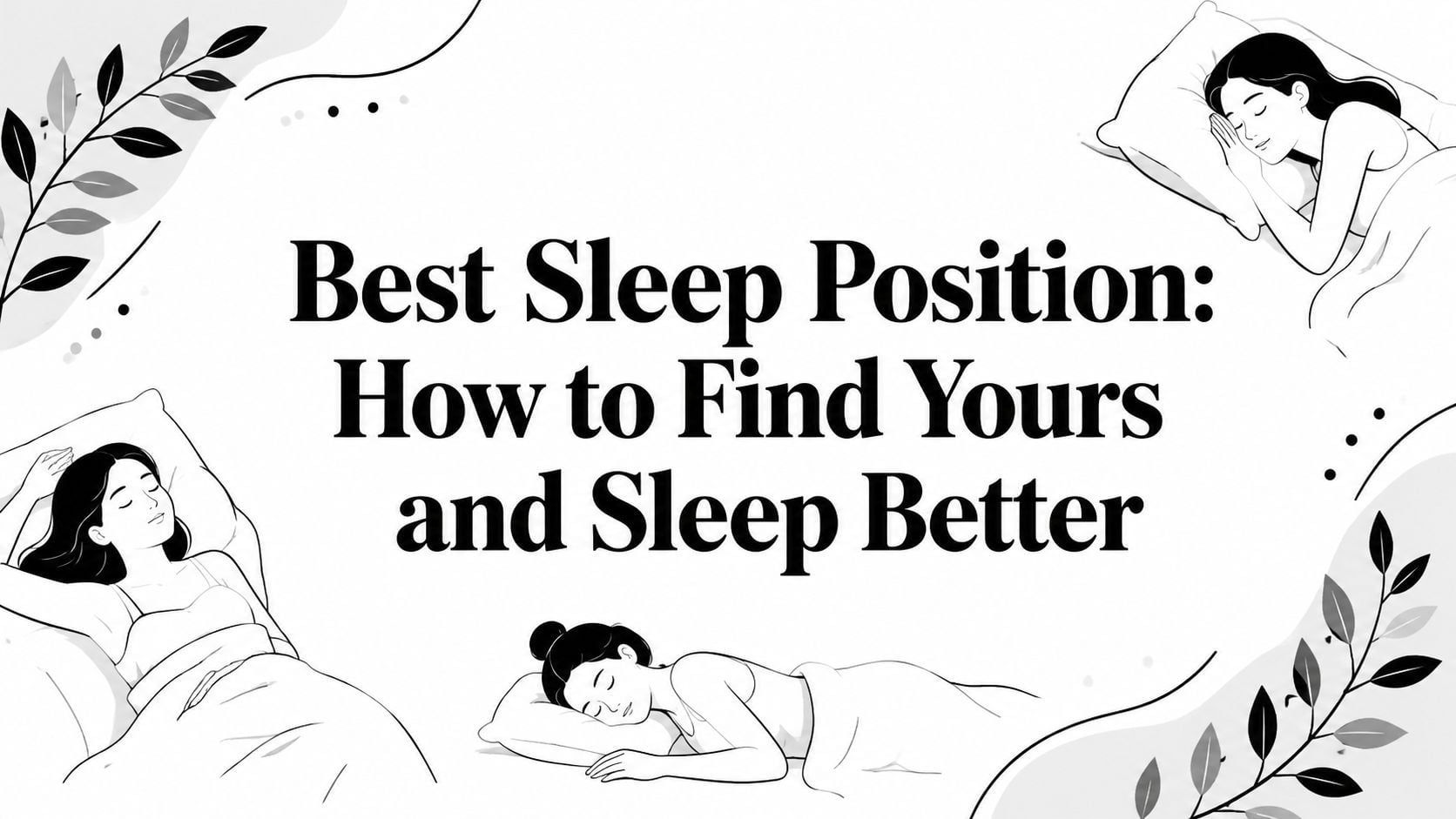
Your best sleep position is the one you can hold comfortably while keeping your neck, ribs, pelvis, and legs from pulling the spine out of line. At higher elevation, that matters even more. Dry air, mild overnight restlessness, and frequent position changes can turn a small alignment problem into morning stiffness fast.
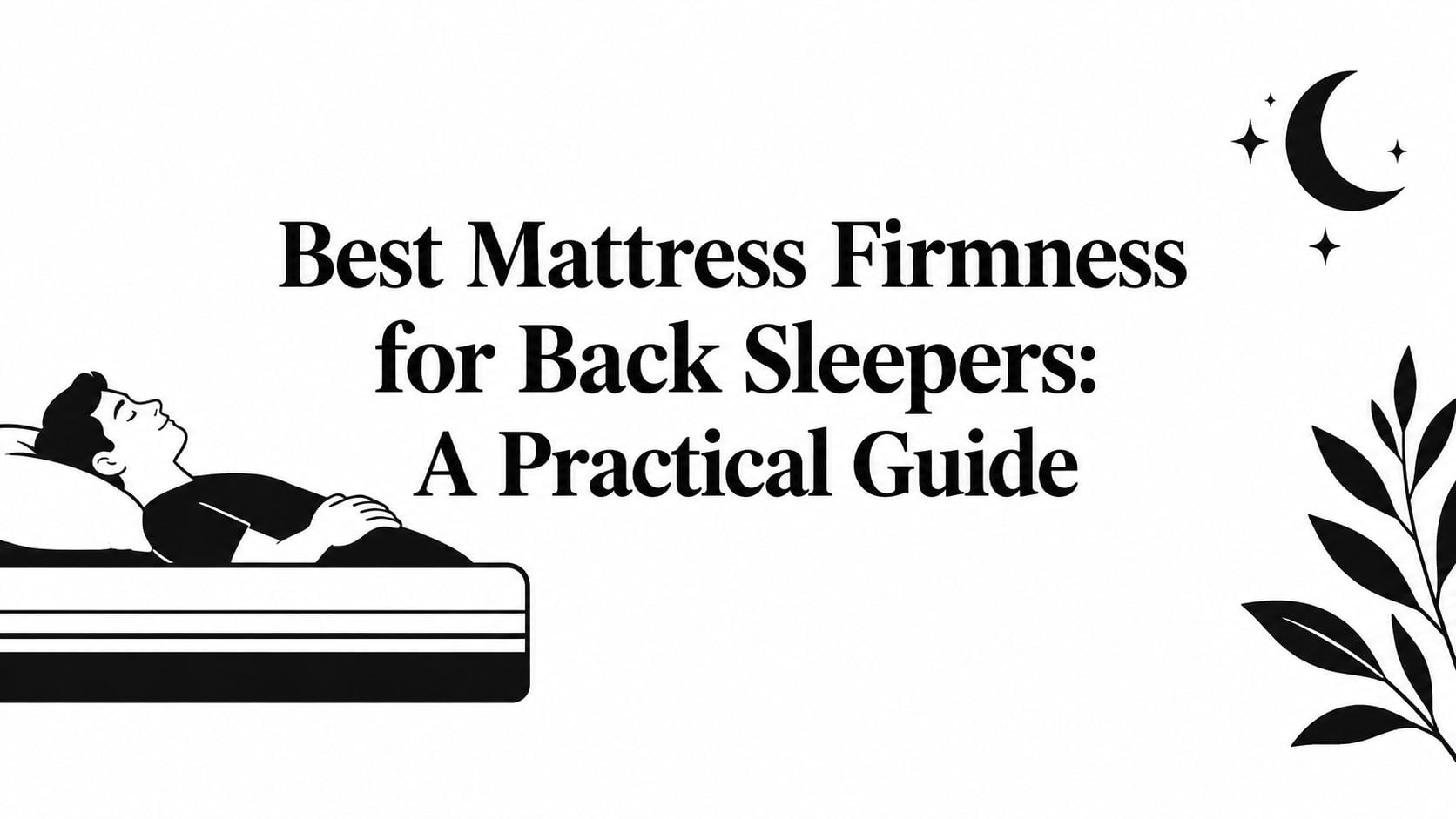
Back sleepers need support under the knees
Back sleeping is usually the easiest position to set up well because the mattress can support a larger, more even surface of the body. The common problem is a tipped pelvis and an overarched lower back, especially if the legs stay fully straight all night.
A small pillow or bolster under the knees often solves that. It softens the pull through the hip flexors and lets the lumbar area settle into a more neutral position.
Use this setup:
- Lie on your back with your head centered, not turned.
- Place a small pillow under your knees.
- Use a lower-loft head pillow that supports your neck without pushing your chin down.
- Pay attention to your lower back. You want less tension, not more pressure.
Back sleeping is not ideal for everyone. If you snore, feel air-hungry at altitude, or wake up on your back feeling restless, side sleeping is often the better fit.
Side sleepers need hips and shoulders stacked
Side sleeping works well for many adults because it can reduce strain through the lower back and keep the airway more open than flat back sleeping. It also goes wrong quickly if the top leg drifts forward and twists the pelvis.
The goal is simple. Keep your body in one long line from neck to tailbone.
That usually means four adjustments:
- Stack the shoulders and hips: Avoid rolling halfway onto your stomach.
- Put a pillow between the knees: This helps keep the pelvis from rotating.
- Keep the top leg from sliding forward: If it does, the low back often takes the strain.
- Use support in front of the chest if needed: A body pillow can steady the torso and reduce tossing.
For active sleepers here in the mountains, this matters more than people realize. If dry air or altitude has you shifting positions through the night, a knee pillow or body pillow gives your body a better chance of returning to the same aligned posture instead of a twisted one.
For a closer look at common setup mistakes, this guide on side sleeper support and results is worth reading.
Stomach sleepers need damage control
Stomach sleeping is the hardest position to set up for spinal alignment. It usually increases neck rotation and can flatten the natural curve of the lower back.
If this is the only way you fall asleep, start with damage control instead of forcing a complete change in one night.
- Use a very thin pillow under your head, or try no head pillow.
- Place a small pillow under the pelvis or lower abdomen.
- Try a partial side-sleep position with a body pillow against your chest and top knee.
- Work toward spending at least part of the night on your side instead of all of it on your stomach.
I tell people this all the time. The best position on paper is not always the best position for a real human at 6,900 feet who wakes up dry, shifts often, and needs a setup they will continue to use. Consistency beats perfection.
How to Choose a Pillow That Actually Supports Your Spine
A mattress supports your body. Your pillow finishes the job.
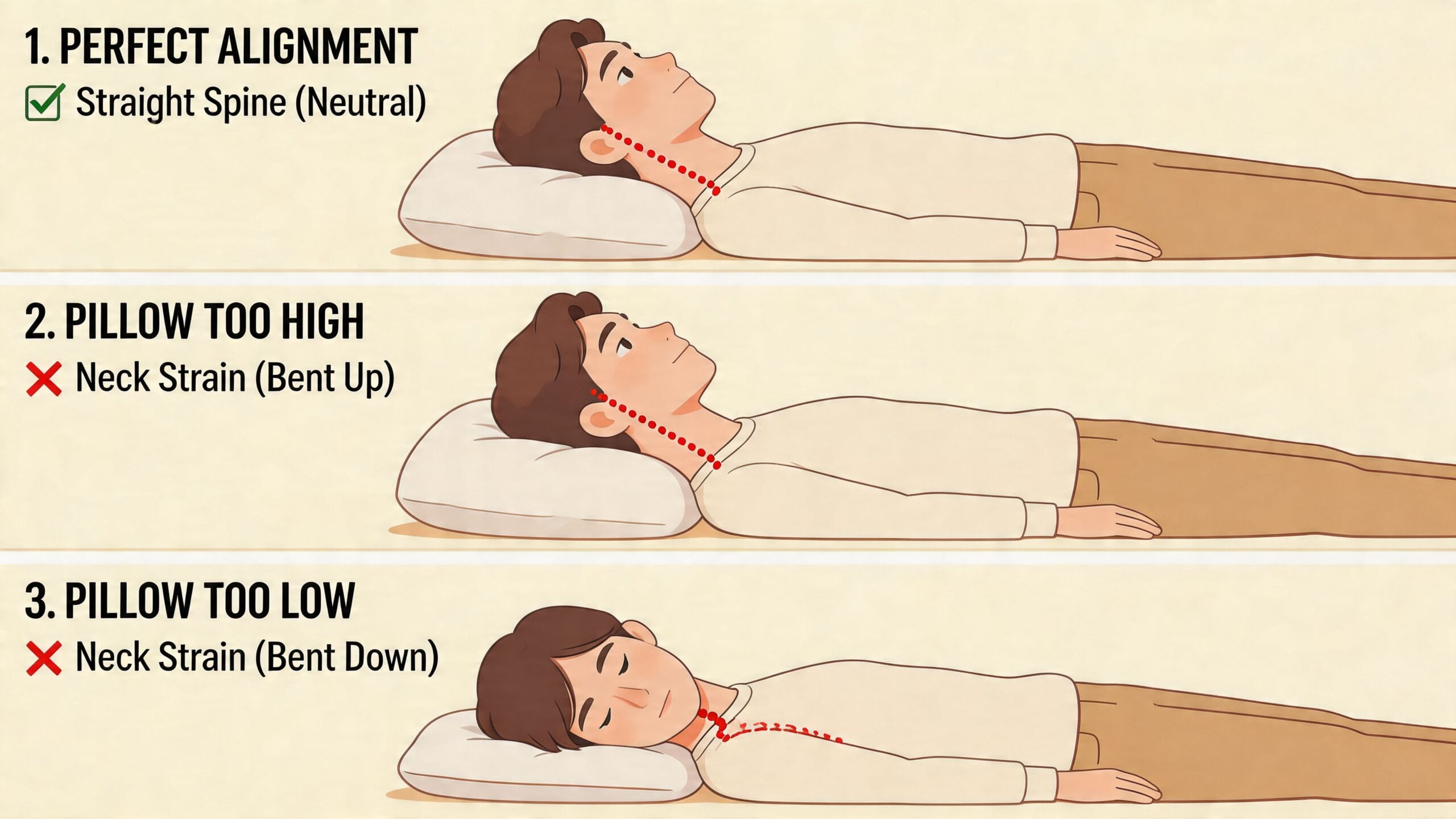
Your pillow loft decides your neck position
Loft means the pillow’s height. If it’s too tall, your neck bends upward. If it’s too flat, your head drops back or sideways. Either way, the top of your spine starts the night misaligned.
Your position should decide your pillow, not the other way around.
A simple guide works well for many:
| Sleep position | What usually works best | What goes wrong |
|---|---|---|
| Back | Lower-loft pillow that supports the neck without forcing the head forward | Thick pillows push the chin down |
| Side | Medium to firmer loft that fills the space between ear and mattress | Flat pillows let the head collapse sideways |
| Stomach | Very low loft or no head pillow | Tall pillows crank the neck backward |
Memory foam options can be helpful because they hold shape more consistently than loose-fill pillows. That’s one reason many sleepers do well with contouring designs from brands like Tempur-Pedic.
A quick pillow test you can do tonight
You don’t need fancy tools. You need a mirror, or someone honest enough to look at your posture while you lie down.
Use this quick check:
- Lie in your usual position: Don’t pose. Settle the way you normally would.
- Look at head angle: Your nose should stay roughly in line with the center of your body, not tipped sharply up or down.
- Check the neck gap: A good pillow fills space. It shouldn’t prop your head dramatically higher than your shoulders.
- Notice the morning pattern: If you wake with a stiff neck but your back feels fine, the pillow may be the main issue.
A supportive pillow should feel almost boring. If you’re constantly fluffing, folding, or punching it into shape, it probably isn’t holding your spine where it should be.
If you want help choosing a better match, this practical guide on how to choose the perfect pillow walks through the fit in more detail.
Finding a Mattress That Works With You Not Against You
A mattress should keep your spine steady through the whole night, not just feel good for the first 30 seconds in the showroom.
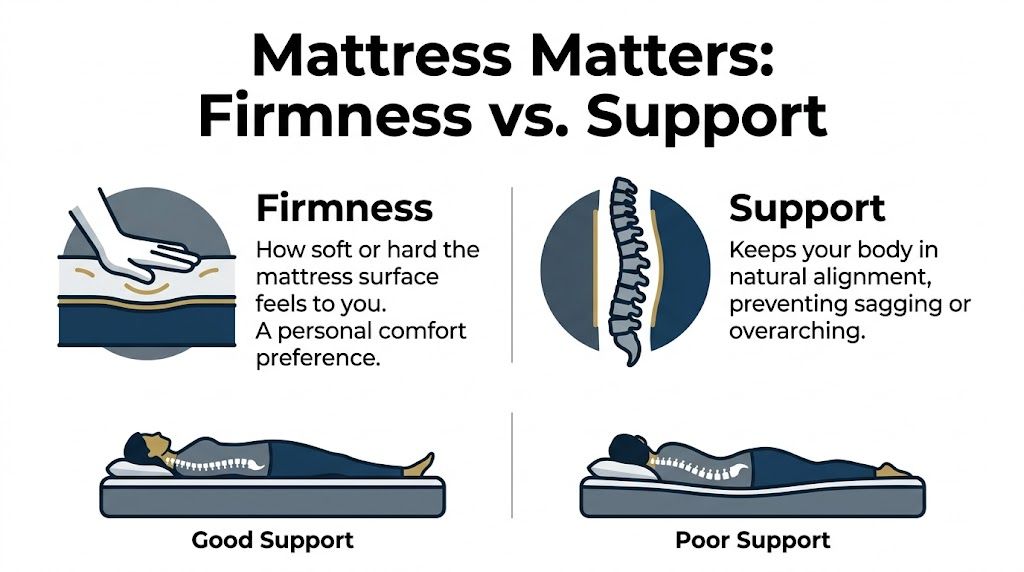
Firmness and support are not the same thing
Firmness is the surface feel. Support is what keeps your ribs, waist, hips, and shoulders from dropping out of line after you settle in.
That distinction matters because back pain often comes from what happens underneath the comfort layer. A mattress can feel soft at the top and still hold the spine well if the deeper layers keep the midsection from sagging. A mattress can also feel hard and still work against you if it shoves pressure into the shoulders or hips and makes you twist away from it.
Use these signs to read what your bed is doing:
| What you notice | What it usually means |
|---|---|
| Your hips sink lower than your chest | The mattress may be too soft or too worn out under your heavier areas |
| Your shoulder jams upward on your side | The surface may not be giving enough pressure relief |
| You wake up in a totally different position than you started | The mattress may be forcing frequent adjustments to escape pressure or sagging |
I see this a lot with active sleepers around Ruidoso. Someone hikes, bikes, works on their feet, or spends long days outside, then buys the firmest bed in the store because they assume firmer means better for a sore back. Sometimes that helps. Just as often, it creates a new problem. Tight hips and shoulders do not relax into a surface that feels like packed ground.
Why mountain sleepers need a little more from a mattress
Sleep at altitude is often lighter and more fragmented. At elevations like Ruidoso's, oxygen pressure is lower, so the body works harder to keep breathing steady during sleep. That can lead to brief arousals, faster breathing shifts, and more position changes, especially in the first part of the night or after hard training days. Research on sleep at altitude has repeatedly shown more disrupted sleep and more awakenings than at lower elevation, as summarized in this review of altitude and sleep in Frontiers in Physiology.
That restless pattern changes what a mattress needs to do.
If you live in dry mountain air and you already sleep a little keyed up, you are less likely to stay in one perfect posture for eight straight hours. You shift. You resettle. You rotate from your side toward your back and then back again. A good mattress for this environment needs to do two jobs at once. It needs enough pressure relief to keep joints from getting irritated, and enough responsive support to catch your spine in a good position every time you move.
That is why generic firmness labels miss the point for high-altitude sleepers.
Features that matter more in Ruidoso than they do at sea level
For restless mountain sleepers, these mattress traits tend to matter most:
- Responsive support under the hips and waist: This helps your lower back avoid that hammock shape after each position change.
- Pressure relief at the shoulders: Side sleepers who toss at night need a surface that lets the shoulder sink enough without dragging the whole torso down with it.
- Motion control: If one partner is waking, rolling, or adjusting because of lighter high-altitude sleep, motion isolation helps the other sleeper stay settled.
- Stable edge and center support: Beds that soften too much in the middle often feel fine in a quick test, then become a problem after hours of repeated shifting.
- Temperature and moisture management: Dry mountain air does not always mean cool, comfortable sleep. Overheating still fragments sleep, and poor temperature control can make all that repositioning worse.
Material choice shapes how those features show up in real life. A close-conforming memory foam bed such as Tempur-Pedic can work well for people who need strong pressure relief and low partner disturbance. A hybrid from Sealy or Stearns & Foster often suits sleepers who want more bounce and easier movement without losing support under the lower back. Sherwood can be a good fit for shoppers who want simple, steady support and fewer bells and whistles.
The trade-off is straightforward. More contouring usually means better pressure relief and less motion transfer, but it can also feel slower to move on. More bounce usually makes turning easier, but if the support layers are not dialed in, that extra movement can come with more sway through the hips.
The best mattress for spinal alignment does not just hold one good position. It helps you return to one every time sleep gets light and your body shifts.
That matters even more if you train hard or stay active outdoors. Recovery nights often go better on a bed that reduces pressure spikes and unnecessary movement. If that pattern sounds familiar, this guide on the connection between exercise and sleep quality adds helpful context.
Online bed-in-a-box shopping can still work, but broad labels like plush, firm, or orthopedic do not tell you enough. For active, high-altitude sleepers in places like Ruidoso, the better question is simple. Does this mattress keep my spine supported when I am still, and when I move?
Simple Routines and Stretches for a Healthier Spine
A good sleep setup works better when your body isn’t carrying the whole day’s tension into bed. You don’t need a long routine. You need a few movements that help your spine unwind before you lie still for the night.
A short pre-bed routine that helps
Try this sequence before bed:
Cat-cow on hands and knees
Move slowly between rounding and extending your back. Focus on easy motion, not a big stretch.Knee-to-chest pull
Lie on your back and gently bring one knee in, then the other. This can ease some lower-back tightness after a long day on your feet.Supine spinal twist
Let your knees fall gently to one side, then the other. The verified guidance above notes a pre-bed supine spinal twist stretch can help side sleepers by mobilizing the spine before lying down.
These habits support what your mattress and pillows are trying to do. If you stay active outdoors, spend hours driving, or work on your feet, that quick reset can make it easier to settle into a better position at night.
For more on the link between movement and rest, this article on the connection between exercise and sleep quality adds helpful context.
When Pain Means It’s Time to See a Professional
You wake up in Ruidoso after a long hike, a ski day, or a week of restless high-altitude sleep, and your back feels off before your feet hit the floor. Sometimes that points to pillow height, mattress support, or a position that lets your spine sag for hours. Sometimes it points to something bigger.
A simple rule helps. If the discomfort is mild, tied to how you slept, and eases once you start moving, your sleep setup is still the first place to look. If the pain is sharp, keeps returning, wakes you repeatedly, or starts coming with numbness, tingling, weakness, or pain that travels into the hip or leg, get it checked by a medical professional.
Those symptoms deserve more than mattress troubleshooting.
I also tell people to pay attention to timing. Pain that lingers well into the day, gets worse week after week, or shows up no matter which position you try usually means the problem is not just alignment at night. In our mountain climate, dry air and light sleep from altitude can make people toss more and tense up more, but those factors should not mask a pattern that needs clinical care.
There is also a gray area. Some sleepers do not have a clear medical red flag, yet their body keeps fighting the same bad setup every night. Back sleepers may need better support under the knees or neck. Side sleepers may need more precise pillow height to keep the head from dropping. Active sleepers in higher elevations often notice this sooner because recovery matters more when daytime strain is already high.
If your mattress looks fine but your body keeps saying otherwise, trust the pattern.
A sleep-focused evaluation can help sort out whether the issue is pressure, posture, pillow fit, mattress support, or a mix of all four. For a practical next step, review the guidance in our Sleep Health & Wellness Lab. If your symptoms sound medical, start with your doctor first.