

Best Mattress for Back Pain: A Ruidoso Buyer’s Guide


If you're waking up in Ruidoso with a stiff lower back, taking a few careful steps before you stand up, and wondering whether it's age, yesterday's hike, or the bed itself, you're not imagining it. We hear that story all the time from neighbors across Lincoln County, from Alto to families right here off Sudderth Drive.
Back pain at night is frustrating because sleep is supposed to be when your body recovers. Instead, you go to bed tired and wake up sore. For many people, the mattress under them is part of the problem, or part of the solution.
Our family has spent decades helping people sort through that problem in a practical, no-pressure way. After a long day in the mountains, working on your feet, or just trying to stay active, your body needs support that keeps your spine steady and your pressure points cushioned. That's what this guide is about.
Table of Contents
- Waking Up to Back Pain? Your Mattress Might Be the Cause
- How Your Mattress Supports Spinal Alignment
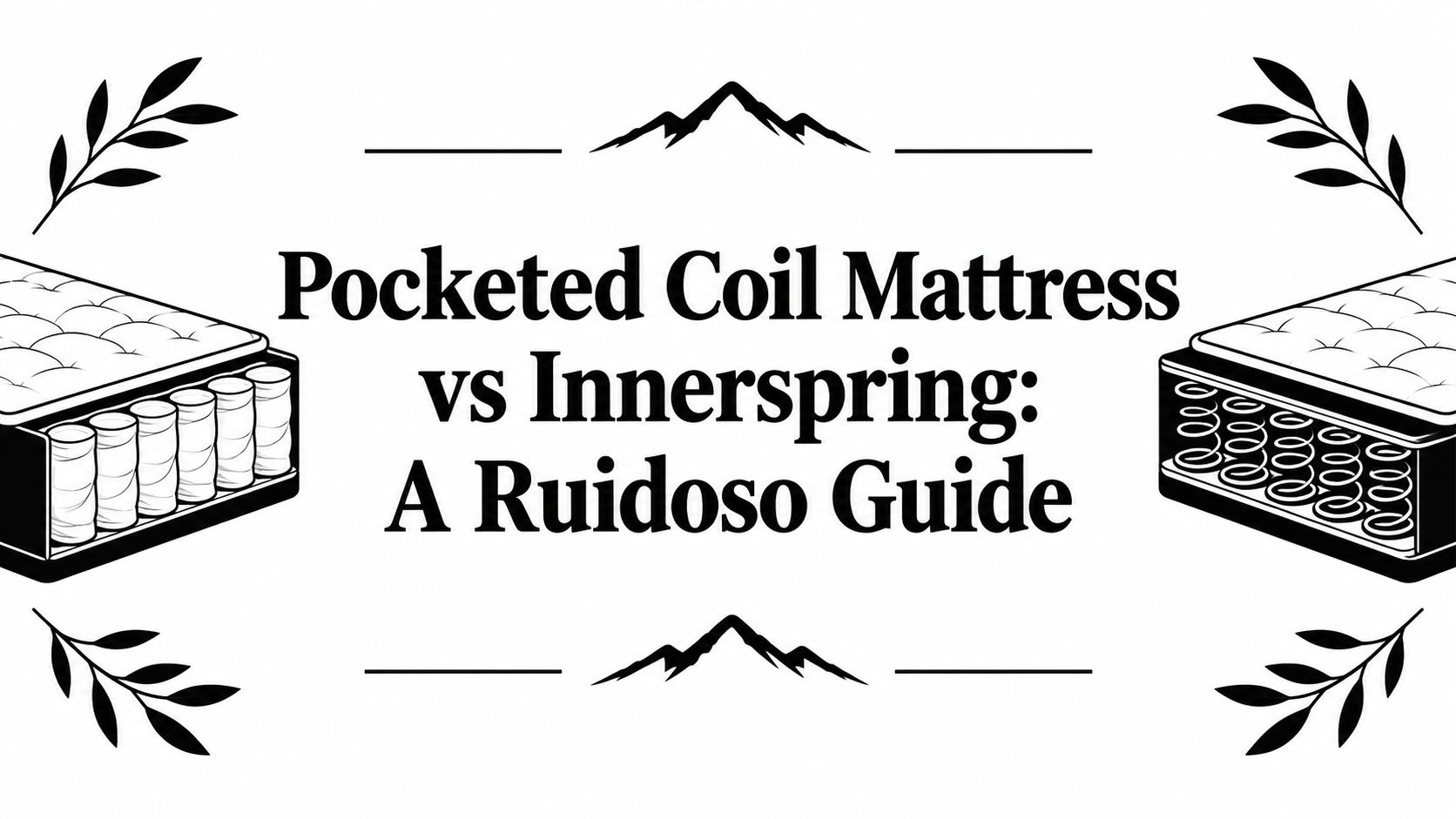
- Choosing Your Material Memory Foam vs Hybrid vs Innerspring
- The Right Firmness for Your Sleep Style and Body Type
- Why Testing a Mattress in Ruidoso Is Your Best Bet
- Beyond the Mattress Sleep Habits for a Healthy Back
Waking Up to Back Pain? Your Mattress Might Be the Cause
A lot of people blame their back pain on getting older, a hard week at work, or overdoing it outside. Sometimes that's true. But sometimes the actual issue is simpler. Your mattress isn't holding your body in a healthy position for hours at a time.
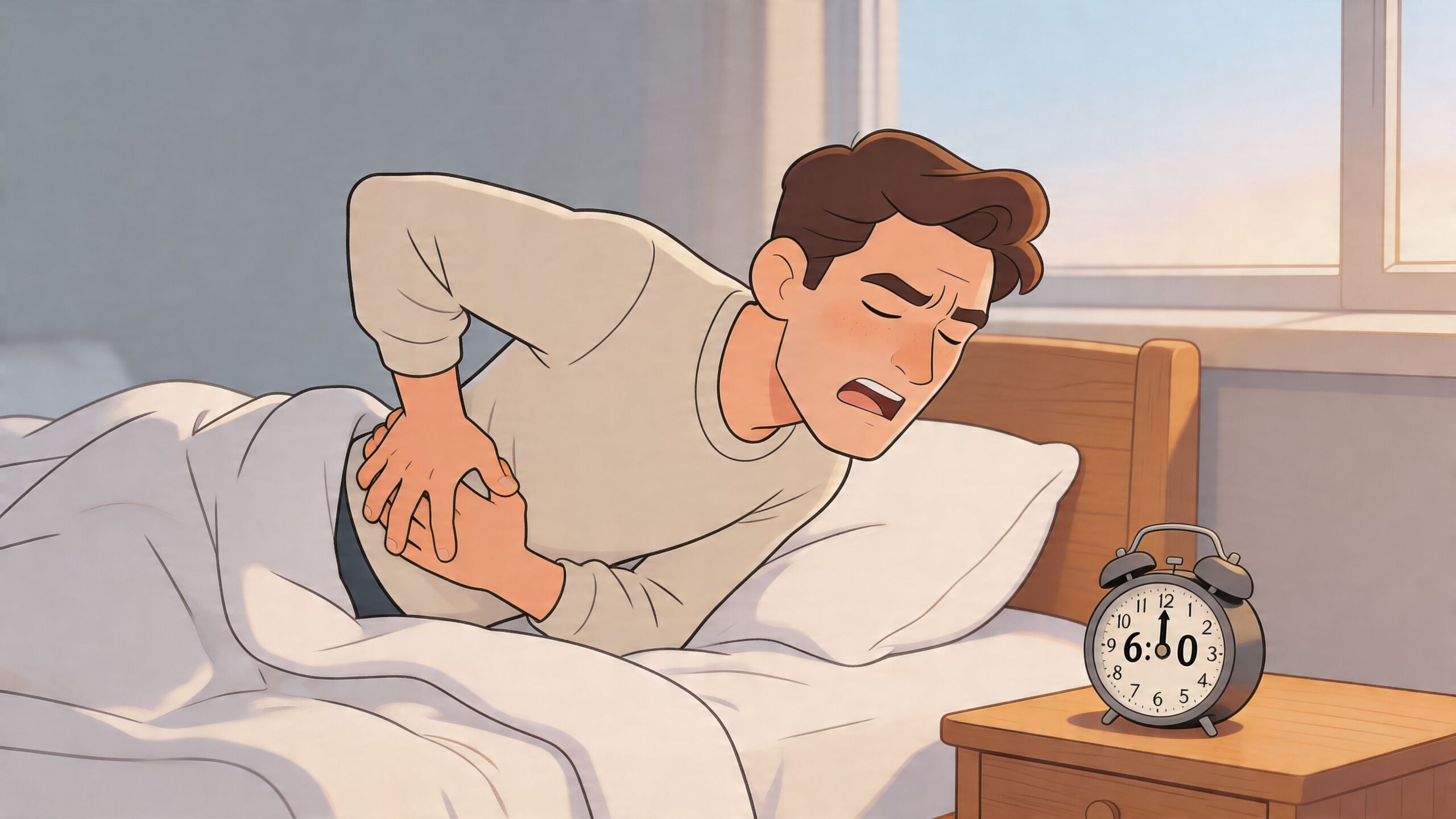
If your hips sink too far, your lower back twists. If the surface is too hard, your shoulders and hips take the pressure. If the bed has worn spots, your body spends the night compensating instead of resting.
That matters more than often recognized because you spend a big part of your life in bed. Consumer Reports, cited in a review on PMC about mattress firmness and back pain, notes that people spend one-third of life in bed, which helps explain why mattress support has such a big effect on comfort and recovery.
Common signs your mattress may be part of the problem
- You feel worse in the morning: If pain is strongest when you first get up and eases as you move around, your bed may not be supporting you well overnight.
- You can't find one comfortable position: That often points to a mismatch in firmness or pressure relief.
- You sleep better somewhere else: A hotel stay or guest bed that feels better is a useful clue.
- You notice sagging or uneven spots: Wear changes how your spine rests, even if the mattress still looks acceptable from across the room.
Your back doesn't need a mattress that feels impressive for two minutes. It needs one that keeps your body supported for the whole night.
In a mountain town like Ruidoso, plenty of people stay active, then ask their bodies to recover on an old bed that hasn't kept up. A better mattress can't fix every cause of back pain, but it can remove one of the most common nightly stressors.
How Your Mattress Supports Spinal Alignment
Your mattress has one main job. It should keep your spine in a neutral position, meaning it holds the natural curves of your neck, mid-back, and lower back without forcing them flatter or bending them out of shape.
A mattress is like the foundation under a house. If the foundation shifts, everything above it strains to compensate. Your mattress works the same way under your shoulders, waist, hips, and legs.
What neutral alignment actually means
When you lie down, your body isn't supposed to be rigid and straight like a board. A healthy sleep surface lets heavier areas settle in enough to stay level while still supporting your waist and lower back.
For a side sleeper, that means cushioning the shoulder and hip so the spine doesn't bow sideways. For a back sleeper, it means supporting the lower back without letting the pelvis drop. For a stomach sleeper, it means holding the hips up so the low back doesn't over-arch.
If you want a deeper visual explanation of posture in bed, our guide on how to align your spine while sleeping walks through what healthy alignment looks like in real-life positions.
Support and pressure relief are not the same thing
People often mix these up, and that leads to bad mattress choices.
| Term | What it does | What it feels like |
|---|---|---|
| Support | Holds your spine and midsection in a stable position | Lift, steadiness, less sagging |
| Pressure relief | Cushions sharper contact points like shoulders and hips | Less jammed, less numb, less soreness |
A mattress can feel soft on top and still be supportive underneath. It can also feel firm and still do a poor job of pressure relief. That's why firmness alone doesn't tell the whole story.
Why both matter for back pain
If support is missing, your lower back can collapse into an unhealthy curve. If pressure relief is missing, you may toss and turn because your joints and muscles can't relax.
Many shoppers get confused by showroom language. Terms like plush, luxury firm, or ultra support can sound helpful, but they don't tell you whether your body stays aligned.
Practical rule: The best mattress for back pain should let your shoulders and hips settle just enough while keeping your waist and lumbar area from dropping out of line.
That balance is what seasoned Sleep Pros look for when helping someone compare beds. It's also why two mattresses with the same advertised firmness can feel very different once you lie on them.
Choosing Your Material Memory Foam vs Hybrid vs Innerspring
A lot of Lincoln County shoppers walk into the store with one question: "Should I get foam, a hybrid, or springs?" That sounds simple, but material choice affects how your back is held up hour after hour, especially if you spend your days hiking, standing, riding, or doing physical work around Ruidoso.
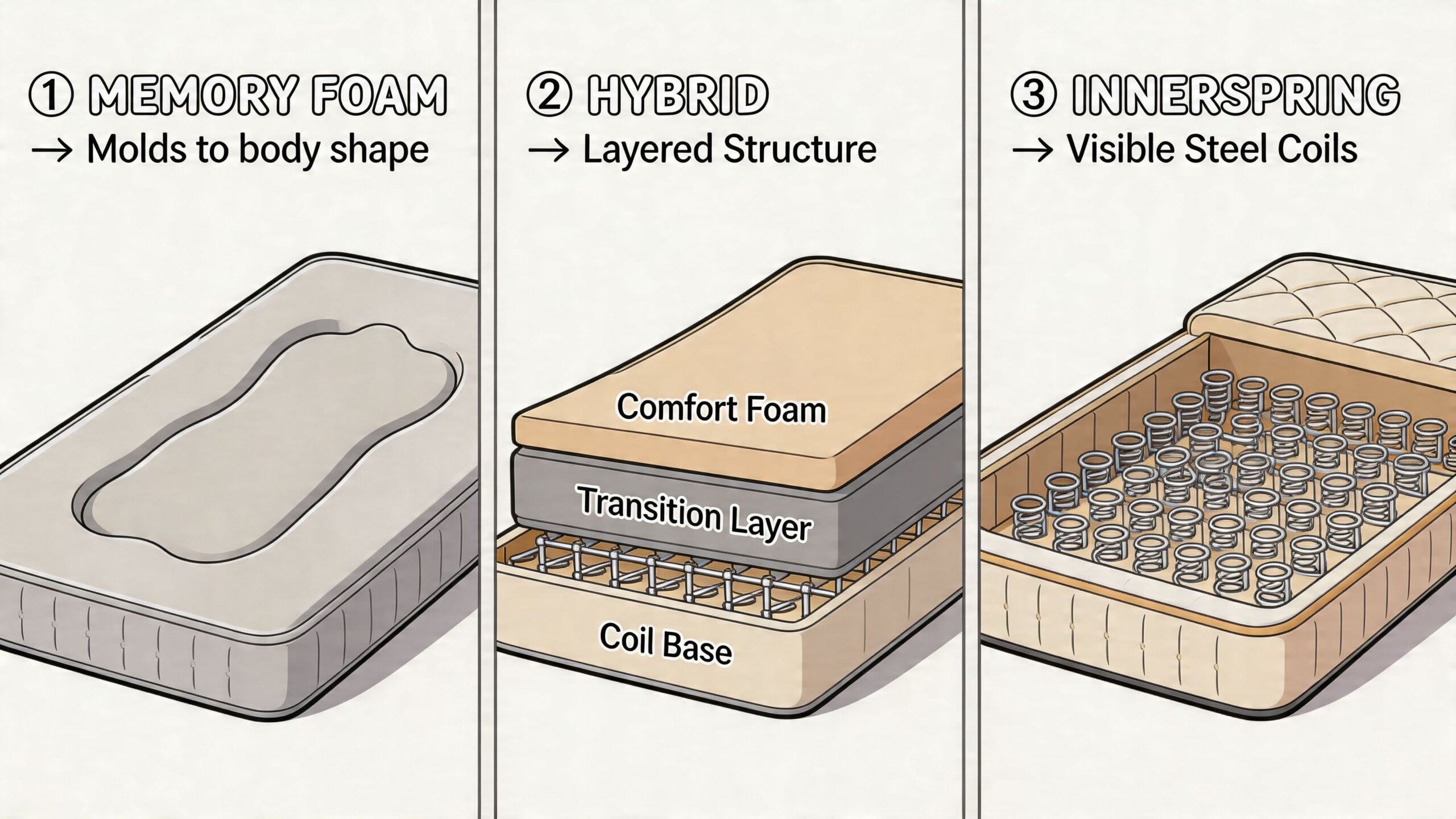
The easiest way to sort these materials is to ask how each one handles two jobs at once. Your mattress needs to cushion pressure points and hold your body in a steady position through the night. Different materials do those jobs in different ways, even when two beds feel similar for the first minute or two in a showroom.
Memory foam for close contouring
Memory foam molds more closely to the curves of your body. For people who wake up with soreness at the shoulders, hips, or along one side of the low back, that close contouring can spread weight more evenly and reduce that "one spot is taking all the load" feeling.
It also tends to absorb movement well. If your spouse turns over or gets up early, you are less likely to feel every shift.
Some Ruidoso shoppers still worry that foam will trap heat. Older foam beds earned that reputation. Many newer models use cooling covers, open-cell foams, or other temperature-control materials, which matters in our mountain homes where bedroom temperatures can change a lot from season to season.
Hybrid for balanced support
Hybrid mattresses pair coils underneath with foam or other comfort layers on top. For many people with back pain, this category feels more balanced because you get cushioning at the surface and a steadier pushback underneath.
A hybrid works a bit like good hiking boots. You still want padding, but you also want structure under you so your body does not roll or collapse with every step. That same idea helps on a mattress. The comfort layers soften pressure, and the coil system helps keep the heavier parts of your body from sinking too far.
Shoppers comparing constructions often benefit from a plain-language guide to what a hybrid mattress is, especially if they are trying to understand why one hybrid feels springier and another feels more cushioned.
Sealy and Stearns & Foster hybrids often appeal to sleepers who want stronger edge support, easier movement, and a more stable overall feel. Some hybrids also use zoned coil systems, which can give the midsection more support while allowing more give at the shoulders.
Innerspring for lift and airflow
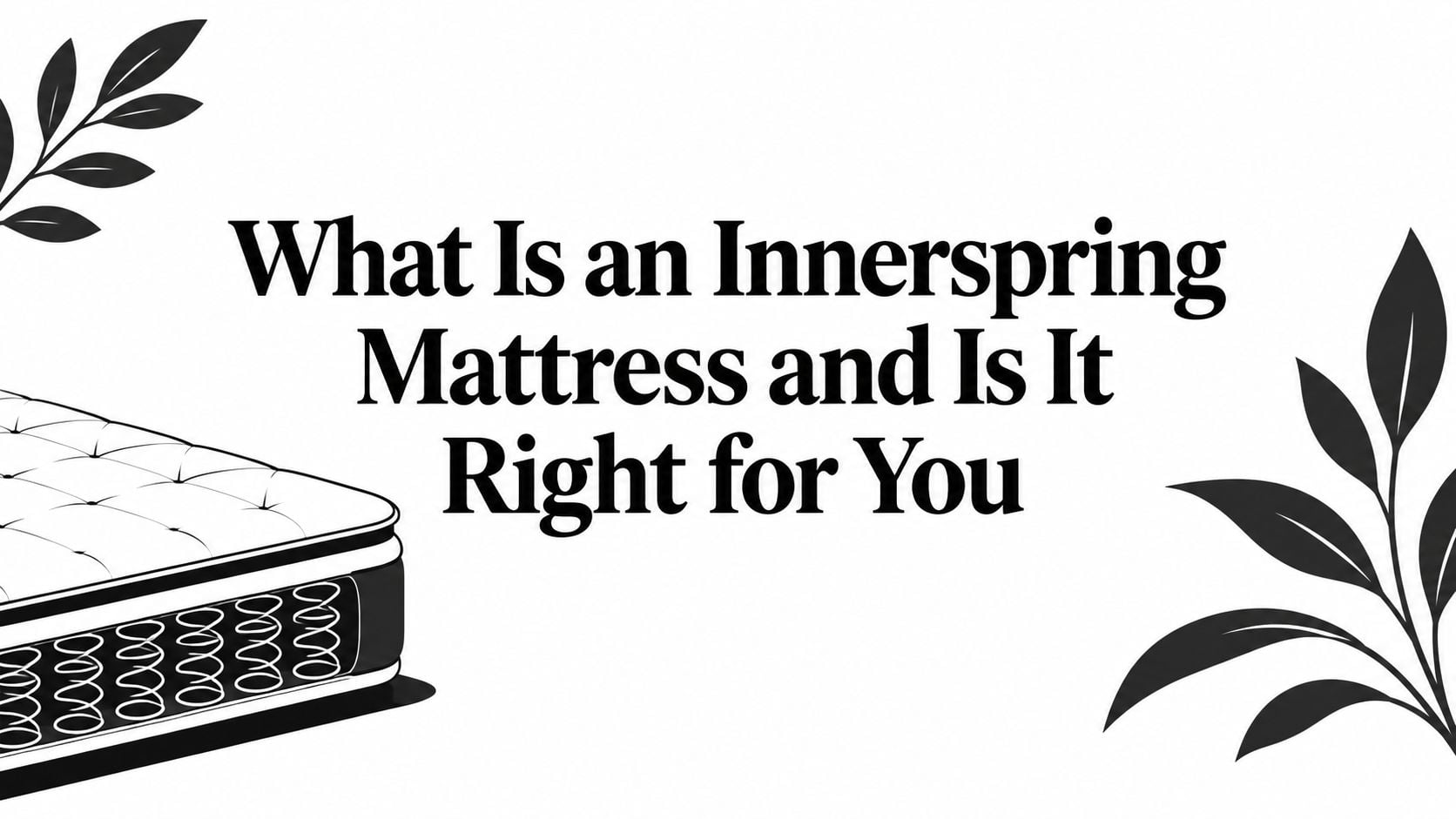
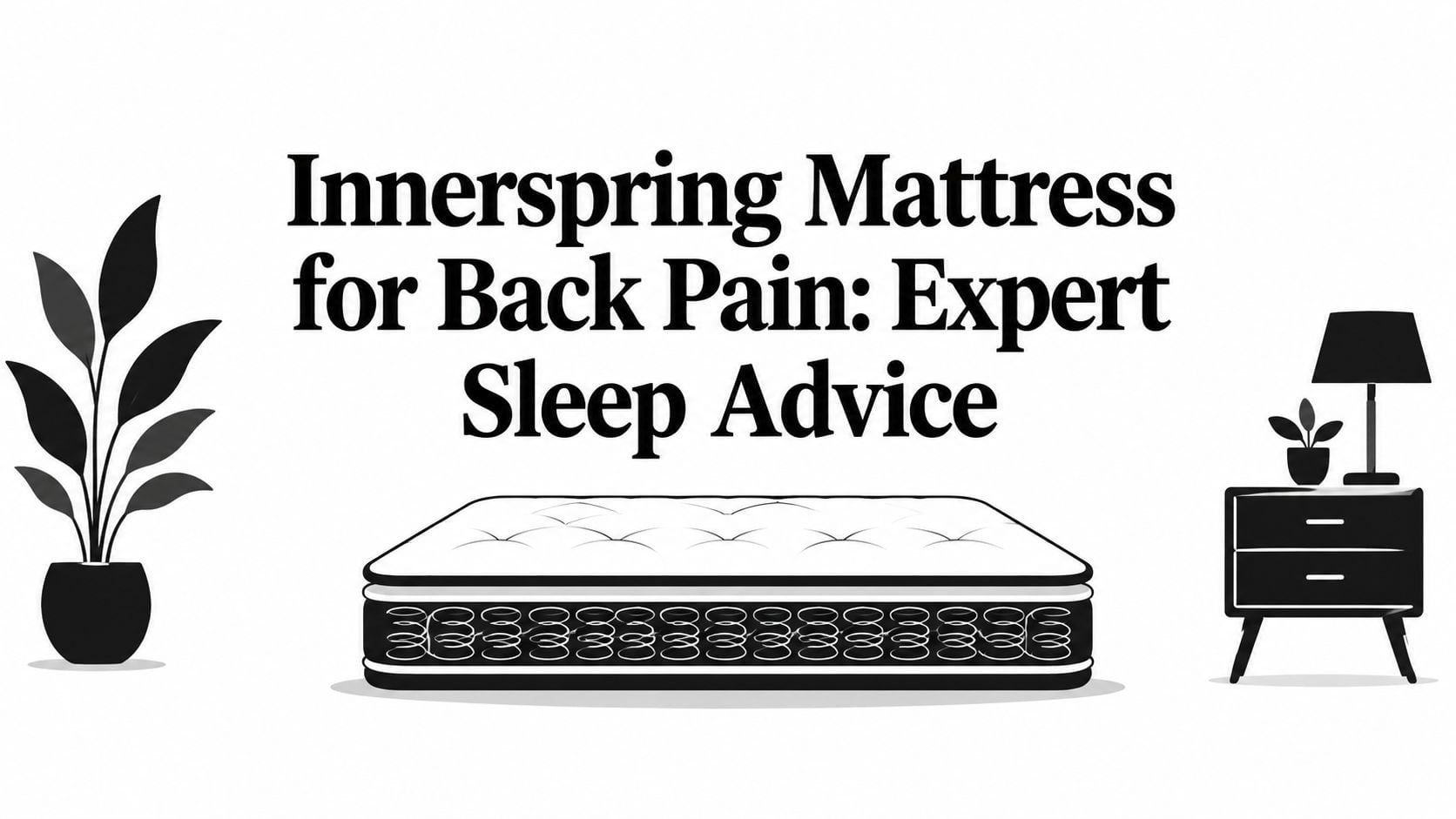
Modern innerspring mattresses are more refined than the old extra-bouncy beds many people remember. A well-made innerspring usually has a more lifted, on-the-bed feel rather than the deeper hug of memory foam.
That can work well for back sleepers and some stomach sleepers who prefer a flatter surface and easier movement. Innersprings also tend to allow good airflow, which some hot sleepers appreciate.
Sherwood innerspring models can make sense for shoppers who want a straightforward, familiar feel. The tradeoff is that many innersprings do not contour as closely as memory foam or hybrids, so side sleepers with sharper pressure at the shoulder or hip often need enough cushioning on top to avoid waking up sore.
A practical way to compare them
If you want the shortest version, start here:
- Choose memory foam if pressure relief is your top concern and you like a closer, more body-hugging feel.
- Choose a hybrid if you want a mix of cushioning and support, plus easier movement when changing positions.
- Choose an innerspring if you prefer a lifted surface, stronger airflow, and less sink.
Online descriptions only get you so far. One person's "supportive" is another person's "too hard," and that gap shows up all the time with back-pain shoppers.
That context highlights the value of testing these categories side by side at a local showroom such as Mattress Pro by Miller Waldrop, where Ruidoso and Lincoln County residents can compare Tempur-Pedic, Sealy, Stearns & Foster, and Sherwood models in person. For an active mountain community, that local trial matters. A mattress that feels fine for five minutes on a website review may feel very different after a day on the trails, a shift on your feet, or a weekend of yard work at altitude.
The Right Firmness for Your Sleep Style and Body Type
The best mattress for back pain isn't one firmness for everyone. Your sleep position changes where pressure builds, and your body type changes how far you sink into the bed.
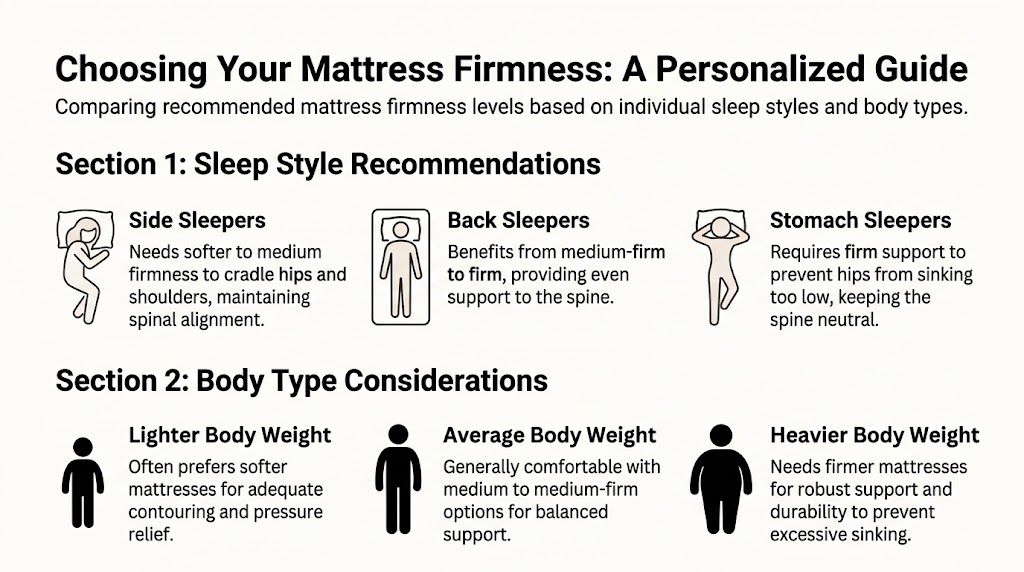
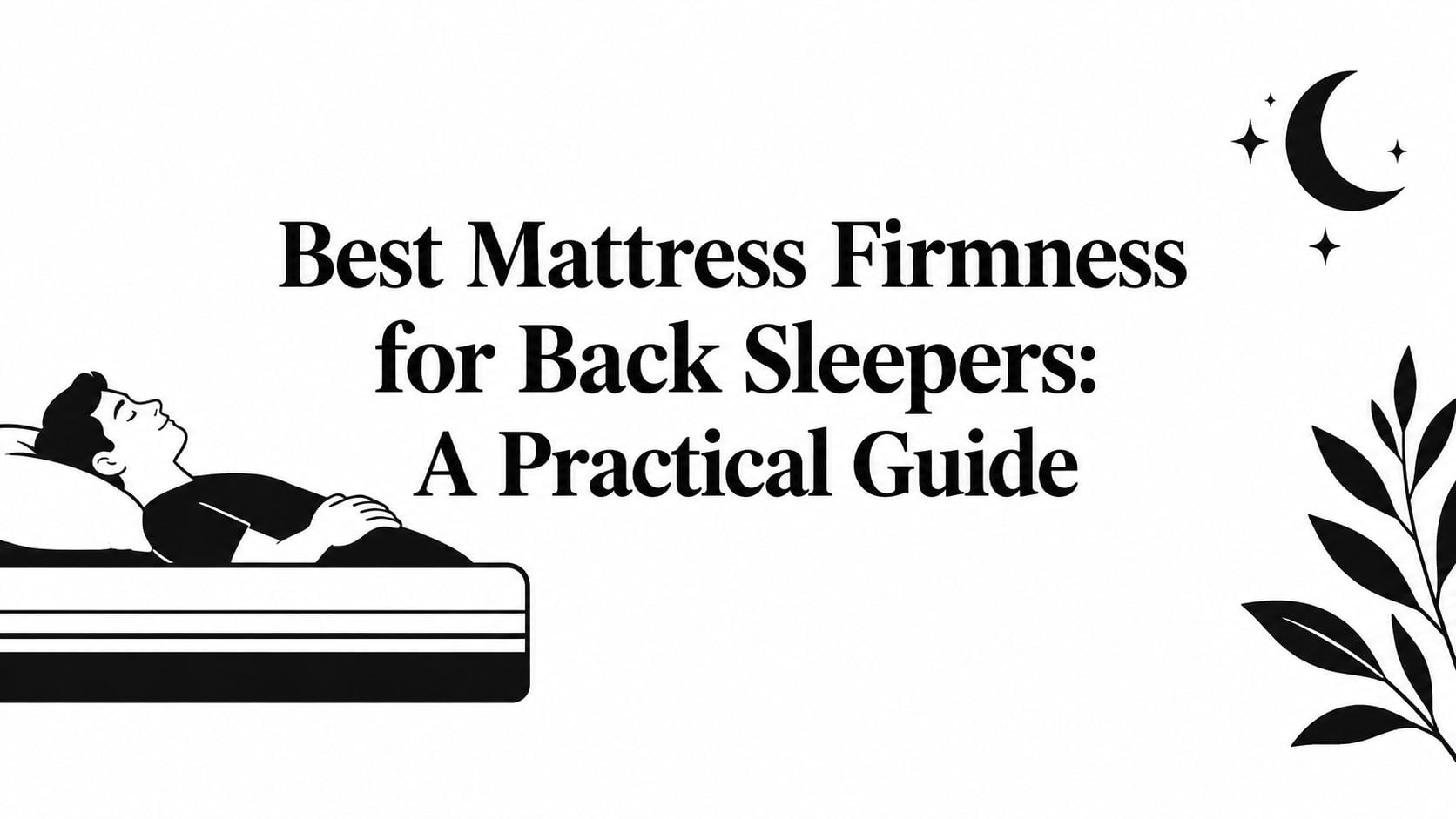
According to AARP's mattress testing and sleep-position guidance, side sleepers generally do best with 4 to 6.5 firmness, while back and stomach sleepers typically need 5 to 9 to keep the hips from sinking and misaligning the spine.
Sleep position changes what your back needs
Side sleepers usually need more give at the shoulder and hip. If the surface is too firm, those joints take the load and the spine can bend sideways. That's why soft-to-medium-firm often works better here.
Back sleepers usually need a flatter, more even support pattern. Too soft, and the pelvis dips. Too hard, and the lower back may not get enough contour. Most back sleepers land comfortably in the medium to medium-firm zone.
Stomach sleepers need the strongest pushback of the three. If the middle of the body sinks, the low back can arch all night. That's why they usually do better on medium-firm to firm surfaces.
Body type changes how a mattress feels
A mattress doesn't feel the same to every person. A lighter sleeper may not sink enough into a firmer model to get pressure relief. A heavier sleeper may sink farther into the same bed and need more support underneath.
Use this as a starting point when testing beds:
- Lighter body types: Softer surfaces often feel more comfortable because they allow enough contouring.
- Average body types: Medium to medium-firm is often the sweet spot.
- Heavier body types: Firmer support systems and sturdy hybrids often help prevent excess sink.
For a more personalized starting point, our article on which mattress is right for your body type can help you match feel and support more accurately.
A mattress should fit your body as it is today, not the body type printed on a generic buying guide.
A note for active mountain sleepers
This matters a lot in Lincoln County. Many of our neighbors aren't still sleepers. They hike, work outdoors, ski, ride, or carry soreness from active days, then shift positions through the night trying to get comfortable.
Generic online guides often focus on one sleep position and miss that kind of sleeper. A review from Sit 'n Sleep's back pain mattress guide notes that combination sleepers are often underserved by broad advice, especially when guidance skips features like zoned support and adaptive layers in hybrids.
For that kind of sleeper, responsiveness matters almost as much as firmness. You want enough cushioning to relieve pressure, but not so much that every turn feels like climbing out of a hole.
Why Testing a Mattress in Ruidoso Is Your Best Bet
Buying a mattress online can look easy until the bed arrives and your back tells you something different. A mattress is one of the few purchases you can't judge well from specs alone, especially when back pain is involved.
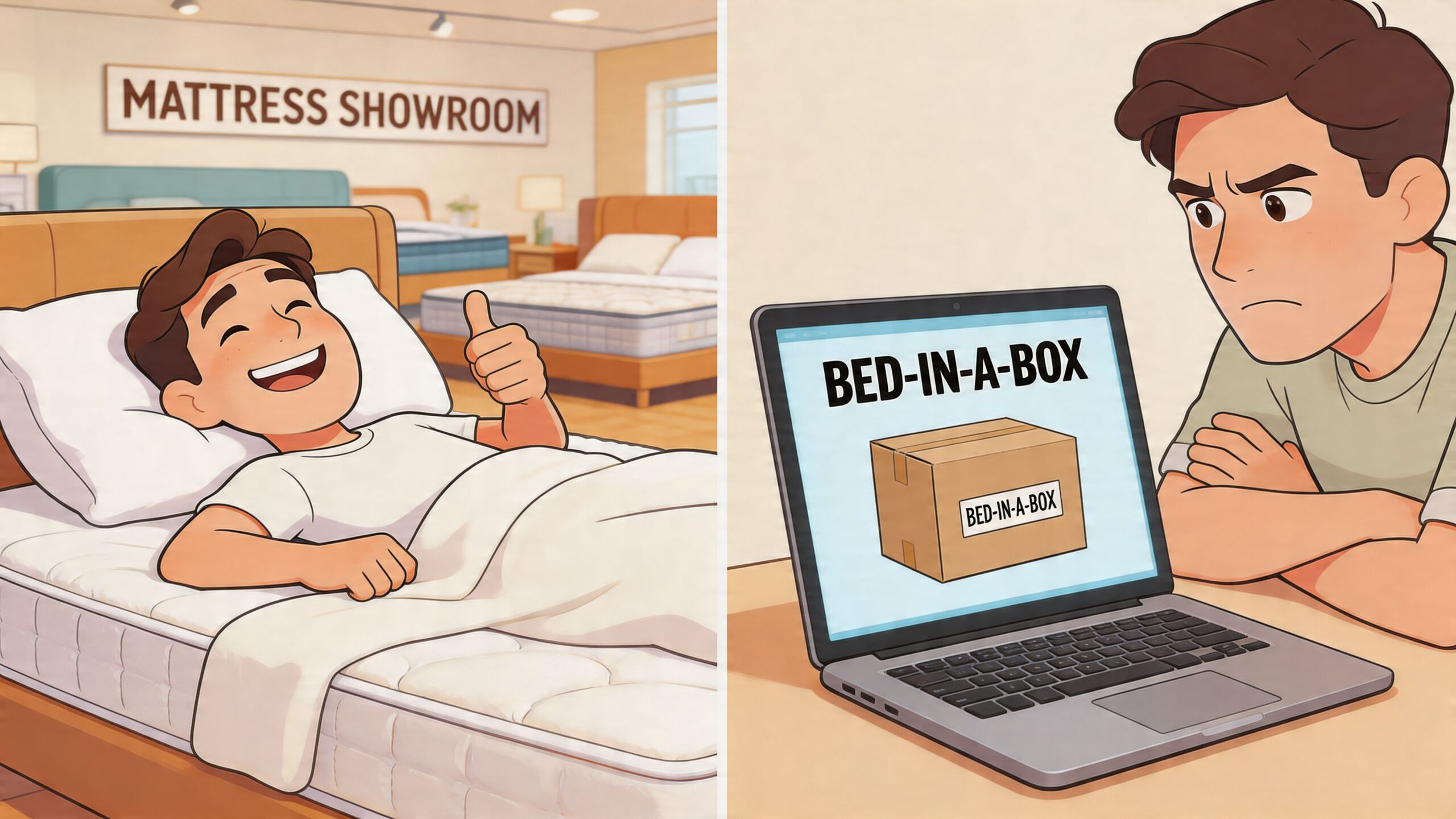
In person, you can tell whether your shoulders settle properly, whether your lower back feels held up, and whether turning from your side to your back feels smooth or awkward. That's hard to know from a product page.
You can feel the difference faster than you think
When you test a mattress in a showroom, don't just sit on the edge and bounce once. Lie down in your real sleep position and stay there long enough for your body to relax.
A simple in-store test looks like this:
- Start in your usual position: Side, back, stomach, or the one you fall asleep in most often.
- Stay there for several minutes: Your body needs a little time to settle into the support layers.
- Notice your hips and shoulders: Are they cushioned, or do they feel jammed?
- Check your lower back: Does it feel supported, or like it's collapsing?
- Roll and switch positions: Combination sleepers should pay close attention here.
- Bring your partner if you share a bed: Comfort and movement matter for both people.
If you want a practical checklist before you shop, these tips for buying a new mattress can help you compare beds more clearly.
Why local guidance lowers the risk
A local showroom gives you something bed-in-a-box sites can't. Real conversation about how you sleep, what hurts, what feels too firm, and whether you're a side sleeper in Alto or a combination sleeper coming in from an active week around Ruidoso.
That matters because many broad mattress guides still leave gaps for people who move around at night, need zoned support, or want a hybrid that feels stable without being stiff. Local guidance helps narrow the field faster.
If you're worried about choosing wrong, the answer isn't more scrolling. It's a better fitting process.
This is also where the Miller Waldrop Difference matters. The Comfort Promise helps address the fear of making the wrong choice. The Low Price Promise helps shoppers compare confidently. Full-Service Delivery with Professional Setup means you don't have to wrestle a heavy mattress into a mountain home or cabin and hope it works out.
Beyond the Mattress Sleep Habits for a Healthy Back
A supportive mattress gives your back a better foundation, but the rest of your sleep setup still matters. Small habits can reduce strain and help the mattress do its job.
Small habits that support your mattress
- Use your pillow strategically: A pillow between the knees can help side sleepers keep the hips more level. A pillow under the knees can help some back sleepers feel less pull in the lower back.
- Ease into bed positions: If your back is already irritated, twisting quickly into position can add more tension.
- Stretch gently before bed: Light movement can help tight hips and lower back muscles settle down before you lie still.
- Pay attention to your wake-up pattern: If one position always leaves you sore, that's useful information when choosing firmness and pillow support.
A good pillow can make a supportive mattress work even better. Our guide on how to choose the perfect pillow can help you line up your neck and shoulders with the rest of your spine.
Build a sleep setup that works together
Your mattress, pillow, sleep position, and bedtime habits should work as a system. If one piece is off, the others have to compensate.
That's why the best mattress for back pain isn't just about buying something firmer or more expensive. It's about finding the right support for your body, your sleep style, and the way people in Ruidoso live. Active days, cool nights, mountain homes, guest rooms, and long-term wellness all matter.
If you've been waking up sore, don't assume you have to live with it. Sometimes the fix starts with a better surface under you and a more thoughtful sleep setup around you.
Ready to transform your sleep? Visit our Sleep Pros at the Mattress Pro by Miller Waldrop showroom located at 2801 Sudderth Drive, Suite F, in Ruidoso. From luxury brands to budget-friendly solutions, we’re here to help you wake up loving your mornings. Browse our collection online or stop by Monday through Saturday.