

Latex Mattress Benefits: A Ruidoso Sleep Pro’s Guide

A lot of people in Ruidoso don't realize how much their mattress is affecting the rest of their life until they start waking up sore, sweaty, or strangely tired after what should've been a full night's sleep. The pattern is familiar across Lincoln County. A sleeper goes to bed exhausted, wakes up with pressure in the shoulders or hips, and spends the day assuming stress or age is the problem.
Sometimes the problem is simpler. The bed isn't supporting the body well, it's holding too much heat, or it has lost the comfort it used to provide. That's why more shoppers are looking closely at latex. It has moved far beyond a niche material. The global latex mattress market is estimated at USD 12.9 billion in 2025 and projected to reach USD 25.6 billion by 2035, according to Future Market Insights' latex mattress market outlook.
For a reader trying to sleep better in Ruidoso's mountain climate, that market growth matters less than the reason behind it. People want a mattress that sleeps cooler, supports better, and lasts longer. For anyone trying to sort through options, a practical starting point is learning how to improve sleep quality before making a mattress decision.
Table of Contents
- Tired of Waking Up Tired? Your Mattress Might Be the Problem
- What Exactly Is a Latex Mattress
- The Six Core Latex Mattress Benefits Explained
- Who a Latex Mattress Helps the Most
- Latex vs Memory Foam and Innerspring Mattresses
- Practical Tradeoffs and What to Expect
- Why Ruidoso Chooses Latex from a Local Sleep Pro
Tired of Waking Up Tired? Your Mattress Might Be the Problem
A person can get through a bad mattress for a while. Then the clues start stacking up. Tossing at night. Stiffness first thing in the morning. Kicking off blankets because the bed feels warm, then pulling them back up an hour later when the room cools down.
That cycle is common in a place like Ruidoso, where mountain weather can shift fast and indoor comfort isn't always steady from bedtime to sunrise. A mattress that traps heat or lets the body sink too far can turn an ordinary night into broken sleep.
The Problem Often Shows Up in Small Ways
Many sleepers don't describe the issue as “mattress support” at first. They say things like:
- “The shoulders ache by morning.” Pressure builds in the spots that carry the most weight.
- “The bed feels hotter than the room.” Heat lingers at the surface instead of moving away.
- “Rolling over takes effort.” The body feels stuck rather than supported.
- “The mattress used to feel better.” Comfort materials can lose their shape over time.
A mattress doesn't have to feel collapsed to stop helping. It only has to stop keeping the body comfortable and aligned through the night.
Why Latex Gets So Much Attention
Among the many latex mattress benefits, three keep coming up for shoppers who want a long-term bed: cooling, pressure relief, and durability. Those aren't abstract features. They affect whether someone wakes up rested enough to enjoy a hike, focus at work, or start the day without soreness.
Natural latex has become a serious option for people who want a premium mattress that feels responsive instead of overly soft or slow-moving. For readers in Alto, Ruidoso, and the rest of Lincoln County, that matters because mountain living often calls for comfort that works across changing temperatures, guest rooms, second homes, and everyday family use.
What Exactly Is a Latex Mattress
Latex is one of those mattress terms people hear often and understand only halfway. Some assume it means “rubbery.” Others confuse it with memory foam. In practice, a latex mattress is a foam mattress made from latex material, and its feel is usually more buoyant and responsive than slow-sinking foam.
For shoppers trying to compare comfort types, it also helps to understand what a memory foam mattress is so the difference in feel makes sense.

Where Latex Comes From
Natural latex is derived from the sap of rubber trees and processed into foam used in mattress layers. That simple origin is part of why many shoppers view it as a more natural-material option than some synthetic foams.
The feel is what usually surprises people most. Latex tends to contour to the body without creating the deep, hugging sink that many people associate with memory foam. Instead of feeling trapped in one spot, sleepers often describe it as sleeping more “on” the mattress than “in” it.
The Three Main Latex Types
Not every latex mattress is made the same way. That's where shoppers can get confused.
Natural latex
This is the version most often sought by buyers focused on premium materials, durability, and a more natural build.Synthetic latex
This is a manufactured version designed to mimic some of latex's qualities. It may appeal to shoppers looking at lower upfront cost.Blended latex
This combines natural and synthetic materials. It can land somewhere in the middle on feel, price, and long-term expectations.
Practical rule: When a shopper cares most about the classic latex advantages, the question isn't just “Is it latex?” It's “What kind of latex is actually inside?”
That question matters because the construction influences how the bed feels, how it handles pressure, and how well it holds up over time.
The Six Core Latex Mattress Benefits Explained
The strongest latex mattress benefits come from how the material behaves under weight, heat, and nightly movement. Latex compresses, responds, and springs back quickly. That combination creates a sleep surface that feels supportive without feeling stiff.
A reader exploring options for a cooler bed may also want to review what makes a temperature-regulating mattress different from one that only uses cooling language in marketing.
Why the Feel Is Different
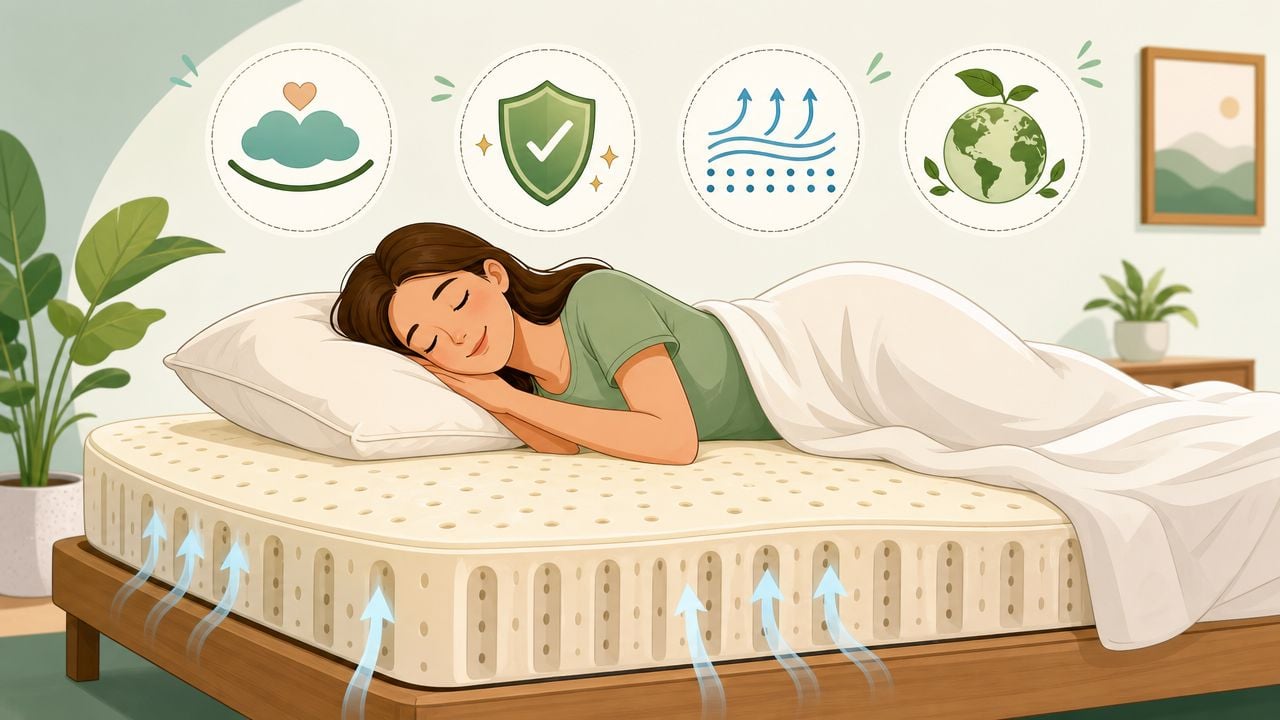
Natural latex mattresses are widely recognized for temperature regulation, pressure relief, and durability. Their open-cell structure allows more airflow than denser foams, and their buoyant elasticity helps them contour without the deep sink associated with memory foam. On lifespan, Saatva's latex mattress guide states that while other mattress types typically last about 7-10 years on average, natural latex mattresses often last at least 15 years.
That combination is unusual. Many mattresses feel soft at first but break down earlier than expected. Latex's structure helps it resist that pattern.
Six Benefits That Matter in Real Life
Cooler sleep for hot sleepers
Latex uses an open-cell structure and often includes pinholes that improve airflow through the foam. Heat and moisture are more likely to dissipate instead of collecting at the sleep surface, which can be helpful during warmer nights in the mountains.Pressure relief without a “stuck” feeling
Latex cushions shoulders and hips, but it usually does so with a buoyant response. That means the sleeper gets contouring support without the sensation of sinking into the bed.Long service life
Durability is one of the biggest reasons people consider latex in the first place. A mattress that holds its shape and support longer can be easier to justify as a household investment.Responsive movement
People who change positions often during the night usually notice this quickly. Latex rebounds fast, so turning from side to back or back to stomach tends to feel easier.Steadier support over time
High resilience helps the material spring back after compression. That can reduce the kind of body impressions that make a mattress feel uneven after years of use.A more balanced comfort profile
Some mattresses are plush but unstable. Others are supportive but feel flat or rigid. Latex often sits in the middle. It can feel cushioned and lifted at the same time.
For many sleepers, the appeal of latex isn't one dramatic feature. It's the way cooling, support, and resilience show up together night after night.
A practical detail matters here, too. Breathable covers such as cotton or wool can support the cooling performance of a latex core, while a less breathable cover can work against it.
Who a Latex Mattress Helps the Most
Not every mattress type fits every sleeper. Latex tends to work especially well for people who want support with some contouring, but not a deep cradle. That makes it easier to identify who's most likely to notice the difference.
Sleepers Who Usually Notice the Biggest Difference
Side sleepers with sore shoulders or hips often need pressure relief, but they also need enough pushback to keep the body from dipping too far. Latex's more progressive support can help create that balance. Shoppers comparing comfort options for joint pressure may find it useful to review mattress choices for pressure point relief.
Back sleepers often do well on a surface that helps maintain a more level posture. Latex's responsiveness can help keep the body supported without the feeling of sagging around the midsection.
Combination sleepers usually appreciate the ease of movement. A mattress that lets the body change positions naturally can reduce the effort of rolling over during the night.
Couples often look for a mattress that feels stable and comfortable for two different bodies. Latex can be a strong option when both sleepers want support, resilience, and a less restrictive feel.
Active mountain sleepers in places like Ruidoso and Alto often prefer a bed that doesn't fight movement. After long days on the trail, on the job, or taking care of a property, a responsive sleep surface can feel less taxing to settle into.
One Important Note About Allergy Claims
Latex is often described as hypoallergenic, but this topic needs careful wording. LatexMattress.org's medical benefits page notes that there are no definitive studies on latex mattresses themselves. It also notes that latex's natural resistance to mold and dust mites can help reduce allergen exposure, while the stronger health connection comes from improved support and better sleep.
A careful shopper shouldn't hear “latex” and assume it's a proven medical fix. It may help create a cleaner, more comfortable sleep environment, but that's different from making blanket health claims.
That nuance matters, especially for families dealing with asthma, eczema, or general sensitivity concerns.
Latex vs Memory Foam and Innerspring Mattresses
The easiest way to understand latex is to compare it with the mattress types most shoppers already know. The decision usually comes down to feel, movement, temperature, and how long the mattress is expected to maintain support.
How the Feel Changes by Mattress Type
Memory foam is known for a slower, deeper contour. Many shoppers like that close body-hug feel. Others find it warmer or harder to move around on.
Traditional innerspring models use coils to create support and bounce. They can feel familiar and easy to get in and out of, especially for sleepers who don't want a foam-heavy surface.
Latex sits in a different lane. It cushions pressure points, but it usually feels more buoyant than memory foam and more adaptive than a basic coil-only feel.
Premium 100% natural latex is also described as longer-lasting than memory foam. John Ryan by Design's technical guide to latex as a comfort layer states that a high-quality latex mattress can last over 20 years, while memory foam often begins losing supportive performance after about 5-7 years.
Latex vs Memory Foam vs Innerspring
| Feature | Latex | Memory Foam (e.g., Tempur-Pedic) | Innerspring (e.g., Sealy, Stearns & Foster) |
|---|---|---|---|
| Feel | Buoyant, responsive, gently contouring | Slow-moving, deeper contour | Lifted, springy, more traditional |
| Ease of movement | Usually easier to change positions on | Can feel more “in” the bed | Usually easy to move on |
| Cooling character | Often breathable and airy | Can feel warmer depending on build | Often allows airflow through coil structure |
| Pressure relief | Strong balance of cushion and support | Strong close-body contouring | Varies by comfort layers |
| Long-term resilience | Known for durability | Can lose performance sooner | Depends heavily on coil and comfort layer build |
| Best fit | Sleepers wanting contour plus bounce | Sleepers who like a hug-like feel | Sleepers who prefer a classic mattress response |
This isn't a winner-take-all decision. A shopper who loves deep contour may still prefer memory foam. A shopper who wants a familiar traditional feel may still lean innerspring. Latex tends to appeal most to people who want pressure relief and support without feeling swallowed by the bed.
Practical Tradeoffs and What to Expect
Latex has real strengths, but it isn't perfect for every home or every shopper. Honest mattress guidance means talking about the drawbacks before a purchase, not after it.
The Downsides Are Real
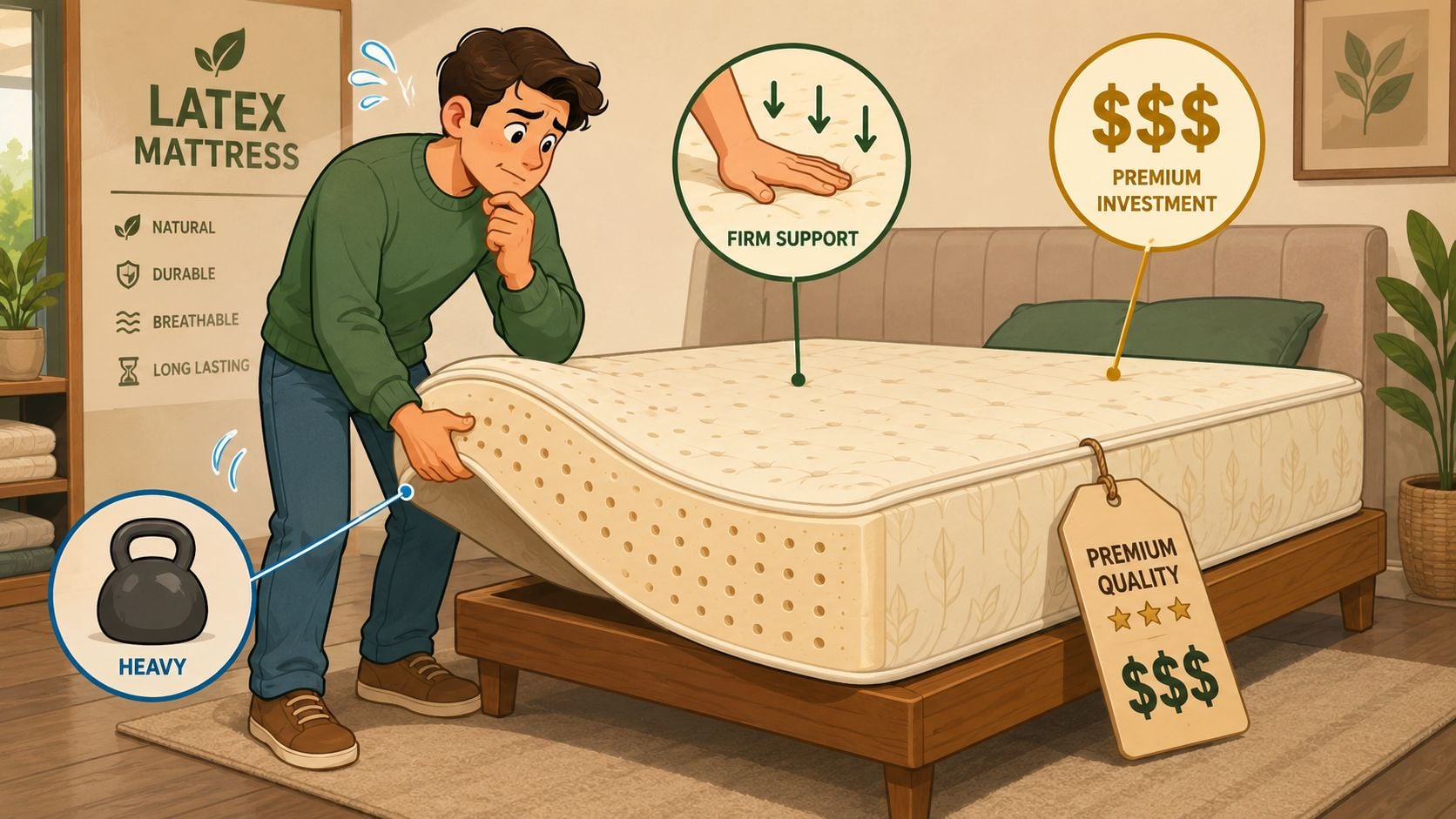
One practical issue is weight. Heveya's overview of latex mattress pros and cons notes that latex mattresses are typically heavier and more difficult to move or rotate than many other mattress types. That matters for renters, cabin owners, and anyone managing stairs, guest turnovers, or frequent room changes.
Another tradeoff is cost. Natural latex is usually positioned as a premium material, so the upfront price can be higher than simpler mattress constructions. Some shoppers are comfortable with that because they're buying for long-term use. Others may prefer a different category based on budget.
Why Trying One in Person Helps
Firmness can also be confusing with latex. Supportive doesn't always mean hard, but shoppers sometimes expect it to feel softer on first contact than it does. Latex often feels buoyant and lifted, which can be excellent for alignment while still feeling different from plush pillow-top comfort.
A local showroom can make that easier to judge because the sleeper can test movement, pressure relief, and overall feel in person. In a setting like Ruidoso, full-service delivery and professional setup also matter more when the mattress itself is heavier and harder to handle.
The “right” latex mattress isn't just about material quality. It's also about whether the sleeper likes the feel enough to live with it every night.
Why Ruidoso Chooses Latex from a Local Sleep Pro
Latex makes sense in mountain communities for reasons that go beyond general mattress trends. Climate, home layout, and lifestyle all shape how a bed performs in daily life.
Why Local Context Matters
Ruidoso sleepers deal with dry air, elevation, seasonal swings, and warm nights that can still show up in a mountain setting. Latex's open-cell structure and pinholes create convective airflow that helps dissipate heat and moisture, which makes it a strong fit for variable mountain conditions, according to Duroflex's explanation of latex airflow and cooling.
That kind of performance is easier to appreciate when the advice comes from people who understand local bedrooms, local homes, and local routines. A cabin in Alto, a family house in Ruidoso, and a guest room in Lincoln County don't all use mattresses the same way.
What a Local Showroom Changes
A local sleep consultation can reduce a lot of common mistakes. The shopper can compare responsive comfort against familiar options from Tempur-Pedic, Sealy, Stearns & Foster, and Sherwood, then decide whether latex is the right fit or whether another mattress category makes more sense.
Mattress Pro by Miller Waldrop offers that kind of in-person mattress matching in a showroom setting, along with the Comfort Promise, the Low Price Promise, and Full-Service Delivery with Professional Setup. For a heavier mattress category like latex, those details can matter just as much as the material itself. Shoppers who also want to explore broader regional mattress options can review the Southwest Mattress Company collection.
For many local buyers, the biggest benefit isn't just the mattress. It's removing the fear of choosing wrong, then being stuck with a bed that never felt right in the first place.
Ready to transform sleep? Visit the Sleep Pros at Mattress Pro by Miller Waldrop at 2801 Sudderth Drive, Suite F, in Ruidoso. From luxury brands to budget-friendly solutions, the team helps shoppers across Ruidoso, Alto, and Lincoln County find a mattress that fits their body, comfort preferences, and mountain lifestyle. Browse the collection online or stop by Monday through Saturday.