

How to Choose a Mattress for Back Pain: Expert Tips 2026

A lot of people in Ruidoso start the day the same frustrating way. They roll out of bed, stand up slowly, and wait for that first wave of tightness in the lower back to settle down. By lunchtime they feel better, but the next morning it happens again.
That pattern often sends people searching online for a mattress, then straight into confusion. One website says firm is the answer. Another says soft pressure relief matters more. Then a boxed mattress shows up at the door, and the back pain is still there.
For families across Ruidoso, Alto, and Lincoln County, the better approach is more personal. Sleep advice works better when it's tied to your body, your sleep position, and how you live in a mountain community where cool nights, dry air, and active days all shape what feels comfortable. That's why learning how to choose a mattress for back pain shouldn't feel like guessing from a screen. It should feel like getting clear guidance from people who understand the problem and stand behind the solution.
Table of Contents
- Your Guide to Waking Up Without Back Pain
- Is Your Mattress the Cause of Your Back Pain
- Decoding Mattress Features for Spinal Health
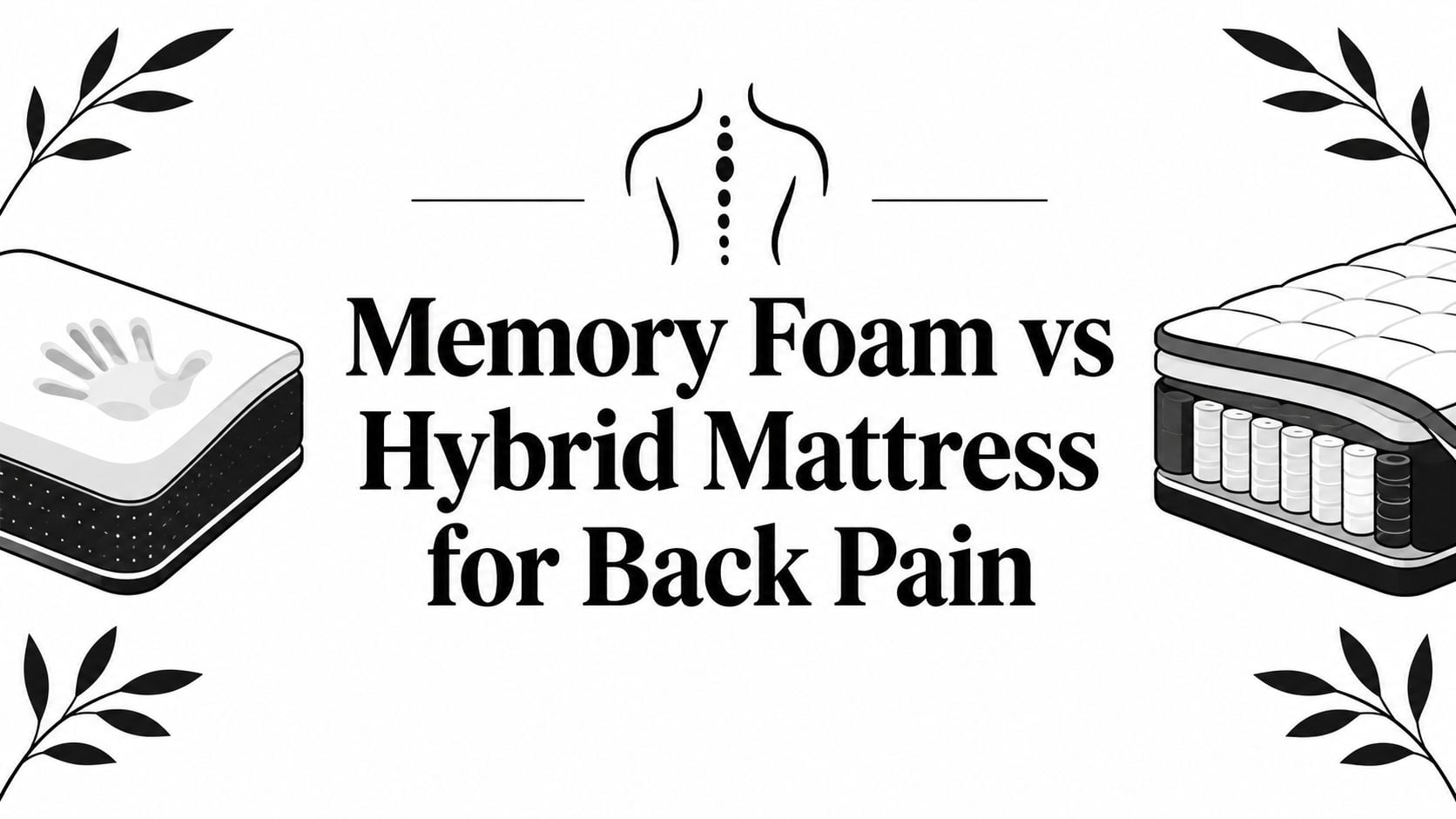
- Choosing Your Perfect Match Memory Foam vs Hybrid
- The Right Way to Test a Mattress in Ruidoso
- Beyond the Bed The Miller Waldrop Difference
Your Guide to Waking Up Without Back Pain
Back pain at bedtime is exhausting. Back pain first thing in the morning is even more discouraging, because it makes sleep feel like part of the problem instead of part of the recovery.
A mattress can absolutely influence that cycle. The wrong one lets the hips drop, pushes the shoulders up, or creates pressure that causes constant shifting through the night. The right one keeps the spine more level, cushions the joints that need relief, and gives the body a better chance to settle into deeper rest.
That's where shoppers often get tripped up. They focus on a label like “firm” or “plush” instead of asking a more useful question. Does this mattress keep the body in healthy alignment for this sleeper's shape and sleep position?
Practical rule: Back-pain shoppers usually do better when they stop chasing the firmest bed in the room and start chasing balanced support.
That shift matters in a place like Ruidoso, where people may spend long days on their feet, drive winding roads, work physically demanding jobs, or come home to recover after hiking, ranch work, or travel. A mattress has to do more than feel nice for five minutes. It has to support real overnight recovery.
This guide keeps the focus where it belongs. Signs that a mattress is causing the problem. The difference between support and feel. Whether memory foam or hybrid construction fits better. And how to test a mattress in a way that tells the truth.
Is Your Mattress the Cause of Your Back Pain
Yes, sometimes the mattress is the problem. Sometimes it isn't. The key is to look for a pattern instead of blaming the bed for every ache.
When morning pain points to the mattress
A mattress issue usually shows up in a very specific way. The back feels worse on waking, then eases as the body moves through the day. That can happen when the sleep surface no longer supports the body evenly.
Common signs include:
- Morning stiffness that fades later: If the back loosens up after walking, stretching, or a warm shower, the sleep surface may be part of the issue.
- Visible sagging or body impressions: Deep dips can pull the spine out of neutral overnight.
- Restless sleep: If a sleeper keeps shifting to escape pressure at the hips, shoulders, or lower back, the mattress may be creating strain instead of reducing it.
- A better night elsewhere: If the back feels noticeably better after sleeping in another bed, that's useful information.
Shoppers who want a deeper breakdown can review why waking up with back pain every morning often starts with sleep setup.
When it may be more than the bed
A new mattress isn't a cure for every kind of pain. Clinical guidance notes that an old mattress can worsen pain, but it also warns that if pain doesn't improve after a new mattress, or if symptoms are severe, a clinician should be consulted, as explained in guidance on choosing a mattress for back pain.
That matters because shoppers often wait too long to separate product problems from health problems.
Severe pain, pain that keeps escalating, or pain that doesn't change with a better sleep setup deserves medical attention, not more mattress shopping.
A practical way to think about it is this:
| Situation | More likely cause |
|---|---|
| Pain is worst on waking and improves as the day goes on | Mattress may be contributing |
| Bed has sagging, uneven support, or obvious wear | Mattress is a strong suspect |
| Pain stays intense all day regardless of sleep surface | Health issue may be involved |
| Pain doesn't improve after changing mattresses | Time to consult a clinician |
This kind of self-check saves people from two expensive mistakes. Replacing a mattress that isn't the actual problem, or ignoring a mattress that clearly stopped supporting the body properly.
Decoding Mattress Features for Spinal Health
Most mattress confusion starts with one mix-up. People use “support” and “firmness” as if they mean the same thing. They don't.
Support and firmness are not the same thing
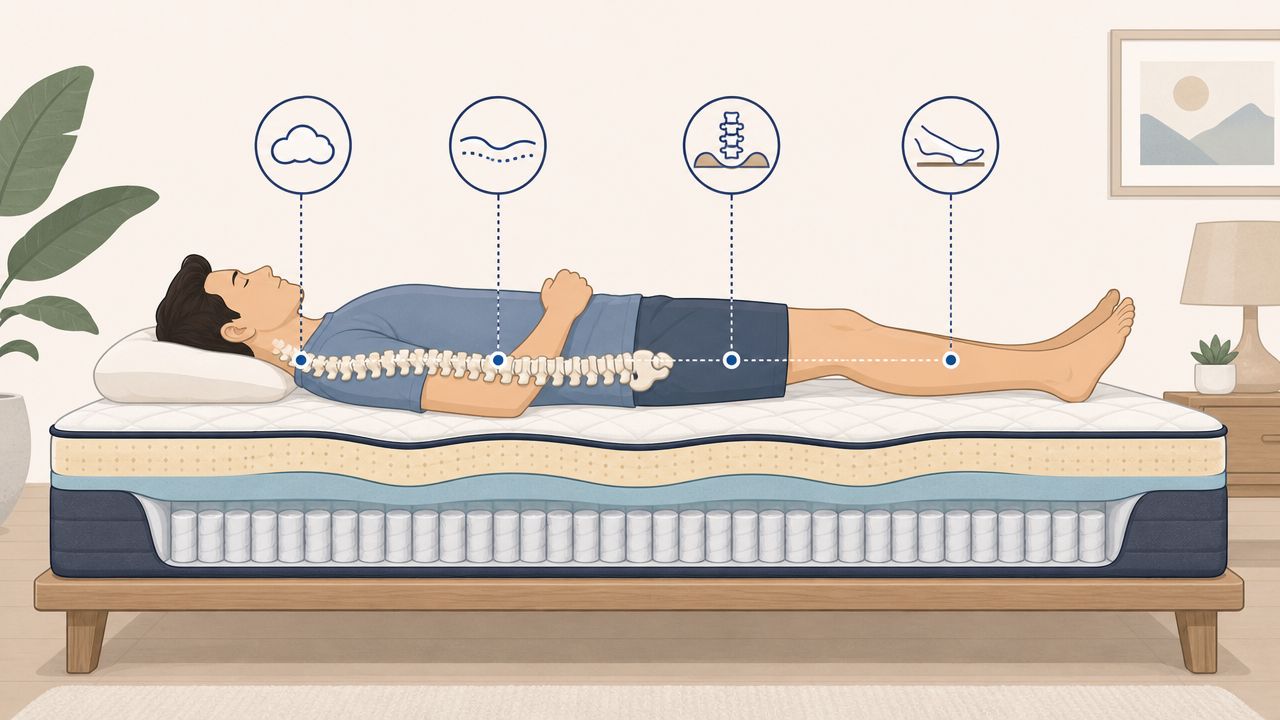
Support is what keeps the spine aligned. Firmness is how the mattress feels when a person first lies down.
A mattress can feel soft on top and still support the body well underneath. A mattress can also feel very firm at first touch and still do a poor job of keeping the spine level if it doesn't distribute weight correctly.
That's why the actual test isn't whether a bed feels hard or cushy. It's whether the shoulders, waist, hips, and lower back stay in a neutral position instead of sagging or bowing.
Consumer guidance included in the clinical review says the spine should remain neutral, not arched, when lying on the mattress. Shoppers who want to understand that concept more clearly can read how to align your spine while sleeping.
Why medium-firm is the starting point
For back pain, the most reliable starting point is medium-firm support, not the hardest mattress in the store. A systematic review found that medium-firm mattresses improved comfort, sleep quality, and spinal alignment. After 28 days, participants reported about a 48% decrease in pain and a 55% improvement in sleep quality, according to the systematic review in La Medicina del Lavoro.
That same review noted something shoppers often miss. Benefits built progressively from the first to the fourth week after switching mattresses. In plain terms, a mattress may not tell the full story on night one.
Here's what usually works better than chasing extremes:
- Enough give for pressure relief: The shoulders and hips need some cushioning.
- Enough pushback for alignment: The midsection can't be allowed to sink too far.
- A stable feel across positions: Back pain gets worse when a sleeper feels fine on the back but twisted on the side.
A mattress for back pain should keep the spine level while still being comfortable enough that the sleeper isn't fighting the bed all night.
That's why “firmer is better” often fails in practice. Excessive firmness can create pressure buildup. Too much softness can let the body hammock. The middle ground is where many adults find the best balance.
Choosing Your Perfect Match Memory Foam vs Hybrid
Material matters because different constructions solve different problems. Some sleepers need deeper pressure relief. Others need a more lifted, easier-to-move-on feel.

When memory foam makes more sense
Memory foam is a strong option for sleepers who need contouring around the shoulders, hips, and lower back. It responds to body shape, spreads weight more evenly, and can reduce the sharp pressure points that trigger tossing and turning.
That's why many back-pain shoppers gravitate toward advanced foam designs like Tempur-Pedic. The feel is more body-conforming, which can be especially helpful for side sleepers and anyone who describes their current bed as “too hard in the hip and shoulder.”
Modern foam models also address heat better than older generations did. That matters in Ruidoso's dry mountain climate, where some people want cozy comfort at night without feeling overheated or trapped.
For shoppers comparing materials in more depth, this guide to what a memory foam mattress is can help clarify the feel.
When a hybrid is the better fit
Hybrid mattresses combine a comfort layer on top with a coil support system underneath. That construction often feels more buoyant and easier to move on than an all-foam bed.
For back sleepers, stomach sleepers, and combination sleepers, that can be a major advantage. The coil system helps hold the body up, while the comfort layers soften impact at key joints. Many shoppers who want support without a “stuck in the bed” sensation do well on hybrids from lines such as Sealy, Stearns & Foster, and Sherwood.
Hybrids also tend to appeal to couples who need a balance of support, airflow, and easier repositioning through the night.
How body weight and sleep position change the feel
The same mattress won't feel the same to every person. Sleepers under 130 pounds often prefer a plush feel, those from 130 to 230 pounds typically need medium-firm, and those over 230 pounds usually need a firmer mattress for proper support, according to Mattress Clarity's guide to mattresses for back pain.
Sleep position matters too:
- Side sleepers: Usually need more cushioning so the shoulder and hip can sink in enough without twisting the spine.
- Back sleepers: Usually do better with steadier support under the midsection and lower back.
- Stomach sleepers: Often need a firmer feel to keep the pelvis from dipping too far.
- Combination sleepers: Usually benefit from a responsive surface that supports position changes.
Side sleepers often need softness in the comfort layer. Back and stomach sleepers usually need a more supportive feel overall.
Often, people get the wrong mattress for the right reason. They hear “medium-firm” and buy by label alone, even though their body weight or sleep position changes how that mattress will perform.
The Right Way to Test a Mattress in Ruidoso
A showroom test helps narrow choices, but it doesn't prove a mattress will help your back over time. That's why rushed decisions cause so much regret.

Why the showroom test is only step one
Harvard Health notes that brief showroom testing is unreliable, and that the best way to know whether a mattress will help back pain is to sleep on it in a normal environment, which is why extended home trials are so valuable, as explained in Harvard Health's mattress guidance for low back pain.
That advice lines up with what many shoppers discover the hard way. A mattress can feel great for seven minutes in a showroom and still feel wrong after several full nights at home.
Real testing happens where people sleep. In the bedroom. With the usual pillow. With the room temperature they live with. With the normal bedtime routine and wake-up pattern that reveals whether the back is improving or staying irritated.
Local shoppers who want one-on-one help sorting through those variables can schedule a sleep consultation near Ruidoso.
What to check during a real home trial
A useful home test is simple. Don't ask only, “Is this comfortable?” Ask whether the body feels more supported after a series of nights.
Look for these signs:
- Morning check: Is it easier to stand up, straighten out, or get moving?
- Position check: Does the mattress feel supportive on the back, side, and any position used through the night?
- Pressure check: Are the hips, shoulders, or lower back getting sore from surface pressure?
- Movement check: Is it easy to change positions without strain?
- Trend check: Is sleep getting better over time, not just on the first night?
That last point matters. The body may need time to adjust to a new support system, especially if the old mattress had obvious sagging or uneven wear.
This is also where a local comfort policy changes the buying experience. A Comfort Promise reduces the fear of making the wrong call because the shopper gets time to evaluate the mattress in a real bedroom in Ruidoso, Alto, or elsewhere in Lincoln County, instead of trying to force certainty out of a quick test on a sales floor.
Beyond the Bed The Miller Waldrop Difference
Buying a mattress for back pain isn't just about choosing foam or coils. It's about reducing the odds of a bad fit and getting help if the first choice needs adjustment.
What local service changes for the buyer
Online mattress shopping tends to flatten everyone into the same customer profile. Real sleep needs don't work that way.
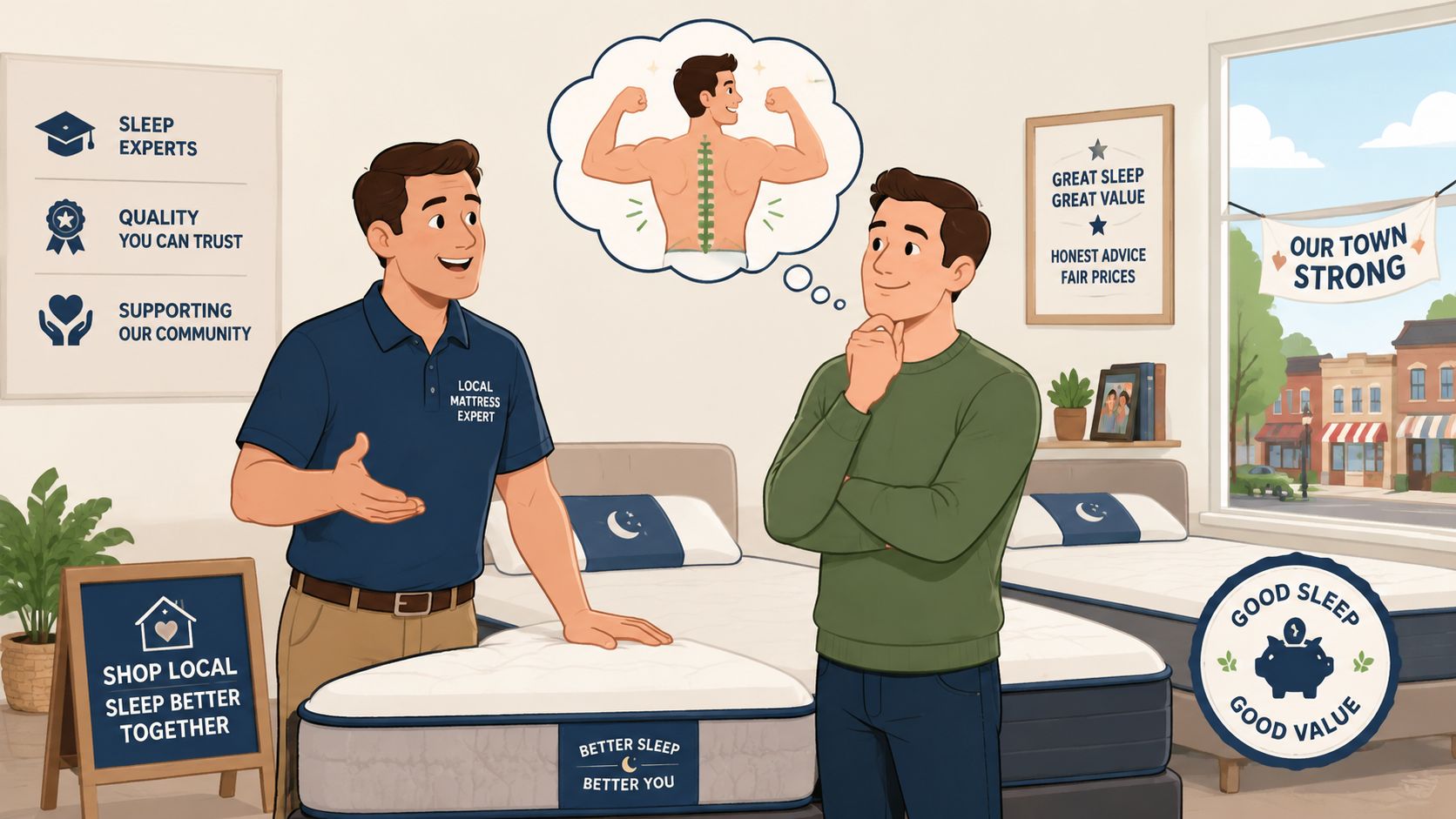
A local store can watch how a sleeper lies on the bed, ask what position causes pain, and talk through whether a Tempur-Pedic memory foam model, a Sealy or Stearns & Foster hybrid, or a Sherwood option makes more practical sense. Mattress Pro by Miller Waldrop also offers the Comfort Promise, the Low Price Promise, and Full-Service Delivery with Professional Setup, which helps remove some of the risk and hassle from the process.
For shoppers considering whether a sleep system should include a base as well as a mattress, adding an adjustable base is worth reviewing.
Why guidance matters more than generic advice
A review of 39 studies found that medium-firm beds generally improve sleep for people with low back pain, but also noted that the nuance of matching the mattress to a person's build and sleep position is often missed, as summarized by AARP's review of mattress guidance for back pain.
That's the main takeaway. Generic advice gets people part of the way there. Expert guidance helps them choose the version of support that fits their body.
In a mountain community, that local support matters even more. People want answers they can trust, delivery they don't have to wrestle with, setup done correctly, and a clear path if the first mattress doesn't feel right after sleeping on it for a while.
Ready to transform your sleep? Visit our Sleep Pros at the Mattress Pro by Miller Waldrop showroom located at 2801 Sudderth Drive, Suite F, in Ruidoso. From luxury brands to budget-friendly solutions, we're here to help you wake up loving your mornings. Browse our collection online or stop by Monday through Saturday.