

Antimicrobial Mattress: A Ruidoso Sleeper’s Guide

A lot of people in Ruidoso work hard to keep a clean home. Sheets get washed, floors get vacuumed, and guest rooms stay ready for family or weekend visitors. But the mattress often gets overlooked, even though it's the surface a person spends hours on every night.
That doesn't mean a home is dirty. It means a mattress naturally collects moisture, skin cells, and everyday buildup over time. For sleepers with allergies, sensitive airways, or a strong preference for a fresher bed, that hidden layer matters more than most shoppers realize.
Your Clean Home and the Mattress You Overlook
A mattress can look spotless on the outside and still hold the kind of buildup that affects how a bedroom feels night after night. That's one reason some people wake up congested, stuffy, or just feeling like the bed isn't as fresh as it should be.
In Ruidoso, cabins and homes often deal with shifting temperatures, dry air, and seasonal use patterns. A bed in a primary home gets one type of wear. A bed in a guest room or vacation rental in Lincoln County gets another. Either way, the mattress becomes a quiet storage place for what the sleeper leaves behind.
Why the mattress gets missed
Most cleaning routines focus on what can be seen. Shelves show dust. Countertops show fingerprints. Bedding goes into the wash.
A mattress is different because the surface is covered most of the time. The sleeper doesn't see what's happening underneath the sheets, so it's easy to assume the bed is staying clean on its own.
A tidy bedroom and a hygienic mattress aren't always the same thing.
That gap is where confusion starts. Many shoppers hear terms like antimicrobial, hypoallergenic, or protective cover and assume they all mean the same thing. They don't.
What matters in real life
The issue isn't perfection. The issue is whether the sleep surface is helping create a cleaner, more comfortable place to rest.
A healthier setup usually starts with a few simple habits:
- Wash the bedding regularly. Clean sheets remove some of the material that would otherwise settle into the bed.
- Protect the mattress itself. A proper barrier helps keep sweat, spills, and body oils from sinking deeper.
- Understand what the mattress materials do. Marketing language sounds reassuring, but buyers need to know what protection is built in and what isn't.
Shoppers who want practical upkeep can also review mattress maintenance and cleaning tips that help extend mattress life. Good maintenance won't turn any bed into a lab-clean surface, but it does help keep the sleep environment in better shape.
What Exactly Is an Antimicrobial Mattress
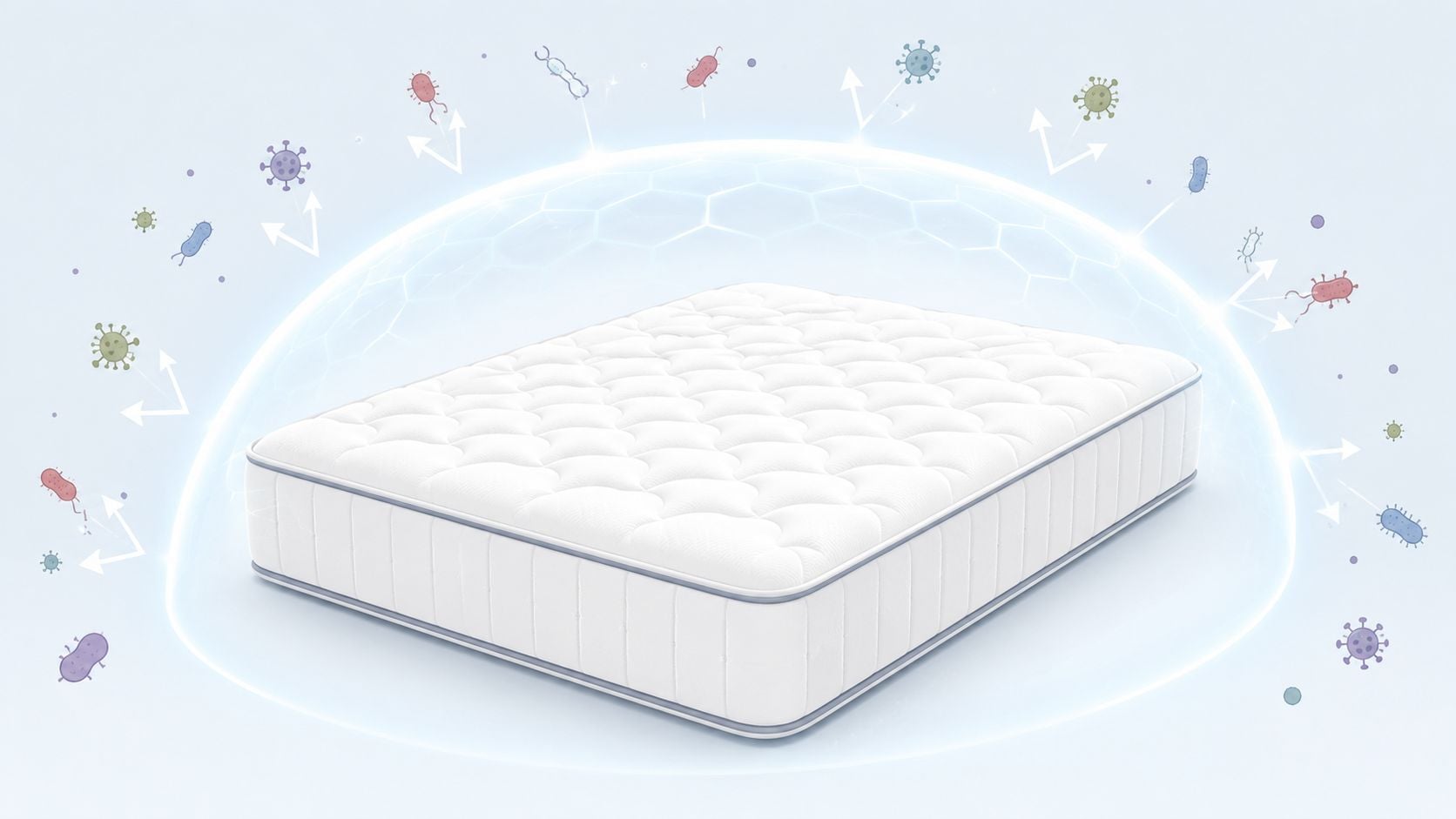
An antimicrobial mattress is a mattress designed to resist the growth of microorganisms on key sleep surfaces. In plain language, it's a bed built with materials that make it harder for certain bacteria, mold, and mildew to multiply.
That's where many shoppers get tripped up. Antimicrobial doesn't mean “never gets dirty.” It means the mattress includes a defense built to reduce microbial growth where the technology is present.
Think of it as built-in resistance
A standard mattress mostly acts like a passive surface. It supports the body, but it doesn't actively resist much once moisture, warmth, and daily use enter the picture.
An antimicrobial model is different. The cover, foam, or selected layers are made with materials intended to create a less friendly environment for microbes.
That's useful for people who care about:
- Odor control
- A fresher-feeling bed
- Reducing surface microbial buildup
- A cleaner sleep environment over time
How the science works in simple terms
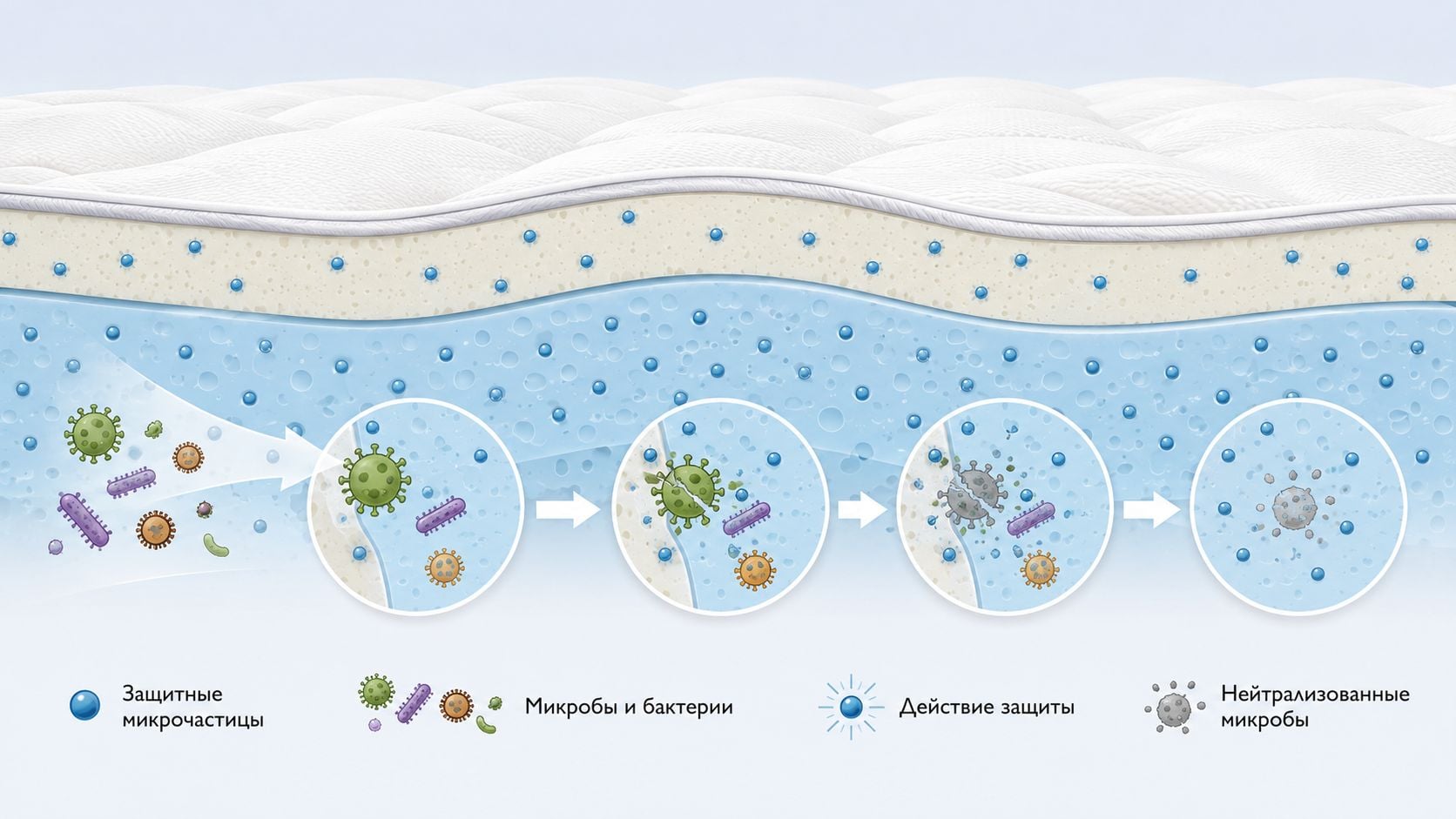
Some antimicrobial systems use silver-ion technology. According to testing details published for silver-ion mattress protection, silver ions disrupt bacterial metabolism by attaching to cell membranes and interfering with metabolic processes, achieving a 99.99% reduction in bacterial viability through a physical “popped balloon” mechanism.
That sounds technical, but the idea is straightforward. The treatment interferes with how bacteria function and survive on the material.
What it doesn't mean
This is the point that matters most for real-world shopping in Ruidoso. An antimicrobial mattress isn't a force field, and it isn't a substitute for normal care.
It also doesn't mean every inch of every mattress is protected in the same way. Some products only treat the cover. Others build the technology into specific foam layers. That difference affects performance, longevity, and value.
Practical rule: If a mattress claims antimicrobial benefits, the shopper should ask where the protection lives. In the cover, in the foam, or both.
For sleepers comparing Tempur-Pedic, Sealy, Stearns & Foster, and Sherwood, that question helps separate meaningful design from a label that only sounds impressive.
How the Technology Fights Back The Good and the Bad
Not all antimicrobial features work the same way. Consequently, marketing gets ahead of understanding.
Some mattresses use infused materials. Others use surface treatments applied to the outer fabric. Both may be labeled antimicrobial, but they don't age or perform the same way.
Infused materials usually make more sense
The most reliable approach is usually protection built into the material itself. That can include antimicrobial agents blended into foam or integrated into the textile during manufacturing.
The reason is simple. If the active component is part of the material, it's less dependent on a thin outer finish staying intact.
A helpful way to think about it is the difference between color mixed into paint and color dusted on top of a surface. One is built in. The other sits on the outside.
Surface treatments have limits
This is the part many product pages skip. Research on antimicrobial bedding materials notes a critical distinction between infused materials and treated covers. Surface treatments often degrade or wash away, while infused agents such as zinc pyrithione maintain longer-term efficacy and can meaningfully reduce microbial buildup without sterilizing the entire mattress.
That last point matters. Even a strong antimicrobial feature doesn't mean the whole mattress core is protected in the same way.
If the top cover wears down, cracks, or allows contamination to pass through, the deeper interior can still become a problem area.
What shoppers should ask before buying
Plain questions beat polished marketing. A shopper doesn't need a chemistry degree. A shopper just needs clarity.
Consider asking:
Where is the antimicrobial technology located
Is it only in the cover, or inside the comfort layers too?Is it infused or applied afterward
Built-in protection usually inspires more confidence than a light surface finish.Which part of the mattress gets the benefit
Some claims apply only to one layer, not the whole sleep system.How does the bed fit the sleeper's actual needs
A back sleeper with pressure-point pain may still need memory foam contouring. A hot sleeper in Alto may prefer a hybrid with stronger airflow.
Shoppers who want a broader education on these performance differences can explore sleep health education resources for mattress shopping and wellness.
Why this matters in the mountains
Ruidoso homes often need products that hold up through daily use, guest turnover, and changing indoor conditions. In that setting, a sprayed-on promise isn't the same as a thoughtfully built sleep surface.
That's one reason many people lean toward better-built options in Tempur-Pedic, Sealy, Stearns & Foster, and Sherwood lines. The discussion shouldn't start with a buzzword. It should start with how the mattress is made.
Who Benefits Most from an Antimicrobial Mattress
An antimicrobial mattress can help almost any sleeper who wants a fresher bed. But some people tend to notice the benefit faster than others.
For many households in Ruidoso, the first clue is comfort. The room looks clean, the sheets are fresh, yet the sleep space still doesn't feel as crisp as expected. That's often when shoppers start paying attention to what the mattress itself is contributing.
Allergy-sensitive sleepers in Ruidoso
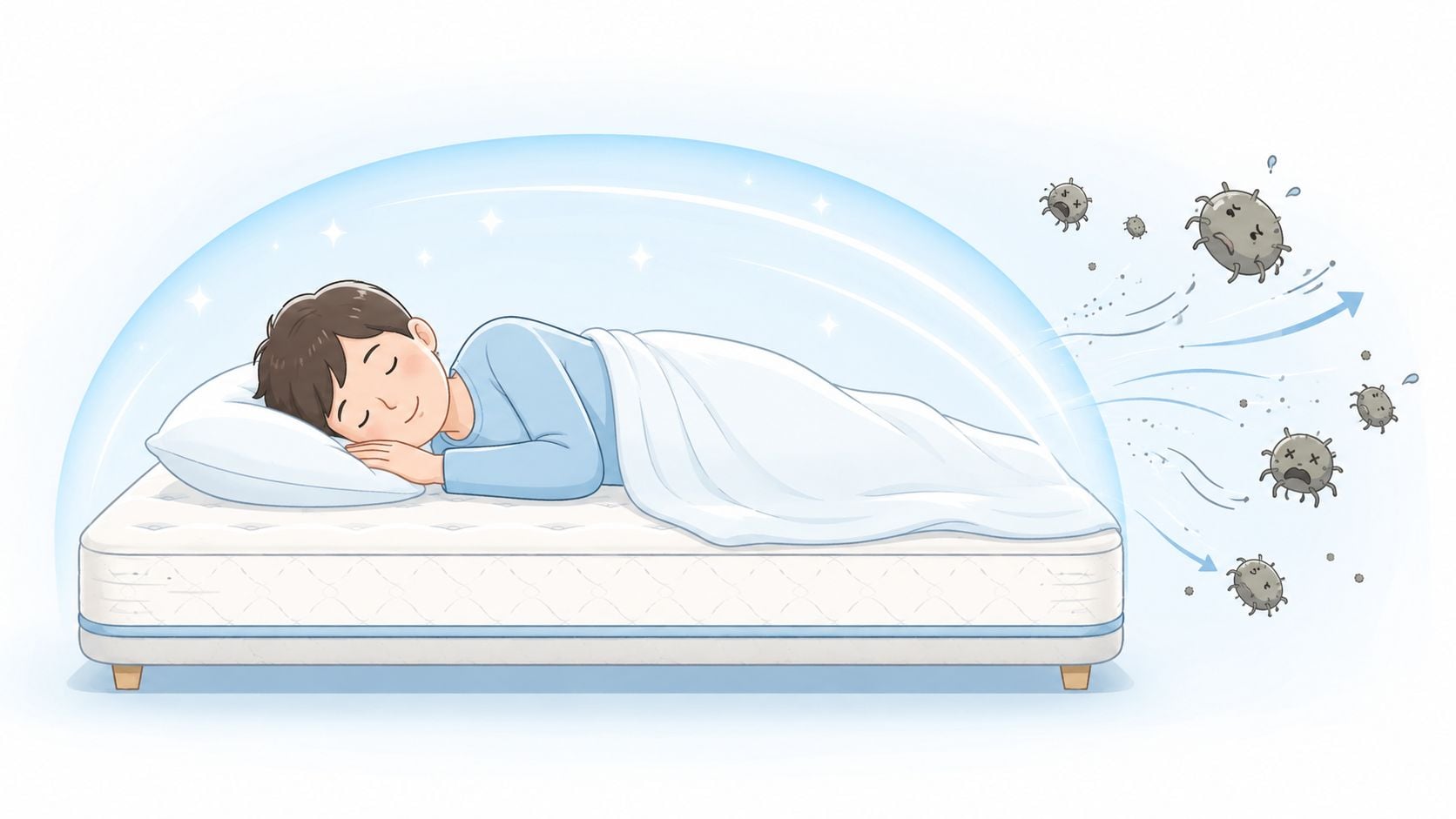
Dry mountain living has its own sleep challenges. According to local guidance discussing dust mite concerns in Ruidoso, low humidity can paradoxically increase dust mite survival rates by up to 40% compared to more humid regions.
That surprises a lot of people. Many assume dry air automatically solves every bedroom allergen issue. It doesn't.
For sleepers with hay fever, mild respiratory irritation, or frequent morning stuffiness, an antimicrobial mattress can be one part of a cleaner sleep setup.
Families and guest rooms
Children's beds, guest beds, and seasonal-use rooms often don't get inspected as closely as the primary bedroom. They still collect everyday buildup, and they can sit unused for stretches before someone sleeps on them again.
That makes material choice more important than many homeowners realize. A mattress that resists mold and mildew growth better can be a smart fit for rooms that aren't occupied every night.
In a home that hosts family often, freshness isn't just about clean sheets. It's about what's under them too.
Vacation rental owners in Alto and Lincoln County
Rental owners have a different concern. They need a bed that stays inviting across repeated turnover and varied guest habits.
An antimicrobial mattress can support that goal because it helps the sleep surface stay cleaner between deeper care routines. That doesn't replace laundering and protection, but it can support a more hygienic guest experience.
Owners also tend to think more about durability, odor control, and reputation. Guests may never ask what's inside the mattress, but they absolutely notice whether the room feels clean and well-kept.
Shoppers trying to reduce bedroom triggers can also review tips for maintaining a dust and allergen free bedroom.
People who want health-conscious comfort
Some shoppers don't have allergies at all. They want a bed that supports a cleaner lifestyle.
For them, an antimicrobial mattress isn't about fear. It's about choosing materials with a purpose. A premium hybrid with breathable construction, better spinal alignment, and added resistance to surface microbial buildup can improve both comfort and peace of mind.
Antimicrobial Mattresses vs Protectors and Hypoallergenic Beds
These three terms get bundled together all the time, and that leads people to buy the wrong thing for the wrong reason.
An antimicrobial mattress, a mattress protector, and a hypoallergenic bed can work together. But they solve different problems.
The short answer
An antimicrobial mattress helps resist microbial growth on treated parts of the mattress. A protector blocks outside contamination from getting in. A hypoallergenic mattress uses materials less likely to trigger irritation in the first place.
None of those cancels out the others.
Why a protector still matters
This is one of the biggest myths in mattress shopping. Guidance on antimicrobial mattresses and hygiene warns that relying only on antimicrobial features can create a false sense of security because the technology inhibits surface growth but doesn't replace hygiene steps such as using a washable, impermeable mattress protector to prevent internal contamination through a cracked or permeable cover.
That's the practical takeaway. If sweat, spills, or body oils reach the inside of the bed, the mattress can still develop deep contamination that a surface treatment won't fix.
Choosing Your Sleep Protection
| Feature | Primary Function | Best For |
|---|---|---|
| Antimicrobial mattress | Helps resist microbial growth on treated mattress materials | Sleepers who want a fresher sleep surface and added hygiene support |
| Mattress protector | Blocks liquids, spills, sweat, and debris from reaching the mattress | Families, rental owners, kids' rooms, and anyone protecting a new mattress |
| Hypoallergenic mattress | Uses materials that are less likely to irritate sensitive sleepers | Allergy-prone households and shoppers focused on material sensitivity |
Hypoallergenic is different from antimicrobial
A hypoallergenic mattress doesn't automatically kill or inhibit microbes. Instead, it uses materials that are less likely to provoke a reaction.
Natural latex and memory foam are often discussed in this category. An overview of antimicrobial and hypoallergenic mattress materials notes that naturally antimicrobial materials such as natural latex and memory foam can resist dust mites, mold, and mildew without added chemical treatments, and it also points to CertiPUR-US® as a benchmark for foam manufacturing standards.
That's useful for shoppers comparing feel as well as cleanliness:
- Memory foam tends to contour closely, which can help with pressure-point relief at the shoulders and hips.
- Hybrid mattresses combine foam comfort layers with coil support, which often helps with airflow and spinal alignment.
- Natural latex usually feels more buoyant and responsive, while also appealing to shoppers who want a material with inherent resistance to some common bedroom irritants.
The best setup is usually layered
Most households do best with a team approach, not a single-feature approach.
A smart sleep setup often looks like this:
- A supportive mattress that matches body type and sleep position
- Useful built-in properties such as antimicrobial or hypoallergenic materials
- A quality protector that can be removed and washed
Shoppers comparing options can learn more about what a mattress protector does and why it matters.
For many homes in Ruidoso, that layered approach makes more sense than chasing one marketing claim and hoping it solves everything.
Find Your Healthiest Sleep at Mattress Pro in Ruidoso
Understanding the label is only half the job. The bigger question is how to choose a bed that fits real life in Ruidoso.
That means balancing cleanliness, comfort, support, cooling, and long-term confidence. A mattress can have impressive-sounding language and still be the wrong fit for a side sleeper with shoulder pressure, a hot sleeper in Alto, or a rental owner furnishing several guest rooms across Lincoln County.
What actually works when shopping
The best buying process starts with the sleeper, not the feature list.
A back sleeper may need steadier lumbar support to encourage spinal alignment. A side sleeper may need deeper cushioning through the shoulders and hips. That's where memory foam and hybrid construction matter in different ways.
- Memory foam models often excel at contouring and pressure relief.
- Hybrid models often add stronger airflow and a more lifted feel.
- Cooling-focused designs can matter in mountain homes where room temperatures shift and sleepers don't want heat trapped near the body.
Why verified performance matters
The gap between marketing and performance is real. One large consumer test in Hong Kong found that approximately 80% of marketed antibacterial bedding products failed to effectively inhibit the growth of two standard test bacteria, according to reporting on the Consumer Council bedding evaluation. That's a strong reminder to verify claims instead of assuming every “antibacterial” label delivers the same result.
There is better news when the technology is high quality and properly validated. In controlled clinical studies, bedding treated with specific antimicrobial agents showed a statistically significant 80.37% reduction in total viable bacteria counts after seven days of continuous use, as detailed in the published clinical study on antimicrobial bedding performance.
The right question isn't “Does this mattress mention antimicrobial protection?” The right question is “What kind of protection is built in, and how well does the mattress fit the sleeper?”
Why local guidance matters
A local sleep team understands things an online product grid can't. Ruidoso homes deal with dry mountain air, mixed-use bedrooms, guest turnover, and a wide range of comfort preferences.
That's why shoppers often want more than a box at the front door. They want help sorting through Tempur-Pedic, Sealy, Stearns & Foster, and Sherwood options with someone who understands pressure relief, cooling, motion separation, and practical hygiene needs in this area.
The fear of picking the wrong bed is real, especially with a bigger purchase. The Comfort Promise helps reduce that worry. The Low Price Promise adds confidence on value. Full-Service Delivery with Professional Setup makes the experience easier from the start.
For neighbors who want guidance specific to body type, sleep position, and bedroom needs, scheduling a local mattress and sleep consultation in Ruidoso can make the process much simpler.
Ready to transform your sleep? Visit Mattress Pro by Miller Waldrop at the Mattress Pro showroom located at 2801 Sudderth Drive, Suite F, in Ruidoso. From luxury brands to budget-friendly solutions, the Sleep Pros are there to help neighbors wake up loving their mornings. Browse the collection online or stop by Monday through Saturday.