

Hypoallergenic Mattress Buying Guide for Ruidoso Sleepers

You wake up in Ruidoso, pull the blanket off, and that first breath feels wrong. The room is cool, the mountain air is dry, and somehow your nose still knows something in the bedroom is setting it off. For a lot of sleepers, the mattress gets blamed first, but the answer usually starts with what the mattress is made of, how it's covered, and how the whole bed is maintained.
A hypoallergenic mattress sounds simple, but the word itself is slippery. In the United States, it isn't a federally defined standard, so the label alone doesn't tell you much about dust-mite control or chemical emissions. What matters more is whether the bed uses verified materials, low-emission foams, and a cover or encasement that blocks allergens.

What Hypoallergenic Really Means for Sleep
A mattress can be marketed as hypoallergenic and still leave a sensitive sleeper waking up stuffy. That's because the label doesn't guarantee performance, it only signals an intent to reduce irritation. For a Ruidoso household, the practical question is whether the bed helps with the two things that usually matter most, dust-mite exposure and chemical sensitivity.
The label is not the solution
The most useful way to think about the term is this, hypoallergenic is a direction, not a finish line. Independent sleep guidance notes that shoppers often lean on third-party certifications like CertiPUR-US or GREENGUARD Gold because those are easier to verify than a marketing phrase. That matters in real homes, because more than 84% of U.S. mattresses have measurable levels of dust mites, one of the most common bedroom allergens, according to research cited by the National Council on Aging's mattress guidance.
That's why the best shoppers don't ask, “Is it hypoallergenic?” They ask, “What in this mattress makes allergens less likely to build up?” In a mountain home, cabin, or vacation rental, that usually means a dense cover, low-emission materials, or a true barrier encasement.
Practical rule: if the mattress tag can't show what was tested, the word alone doesn't tell the full story.
Two different problems need two different fixes
Dust mites are one issue. Off-gassing and material irritation are another. A bed can do a decent job on one and still bother someone on the other.
A tight door helps keep wind out, but it doesn't solve every comfort problem in the house. In the same way, a mattress that blocks mites isn't automatically the best choice for someone who reacts to foam odor or textile chemicals.
That distinction helps explain why Ruidoso shoppers often do better when they look past the name on the tag and focus on construction, certifications, and care. A mattress is only part of the allergy picture, and the rest of the bedroom matters just as much.
Allergy Triggers Hiding in Your Bedroom
A lot of sleepers blame the mattress because that's the biggest surface they touch all night. In reality, the bedroom can collect several triggers at once, and each one behaves differently. Dust-mite debris, pet dander, old bedding, and foam emissions can all contribute, but they don't all respond to the same fix.
Dust mites and debris
Dust mites feed on skin flakes and thrive where bedding holds moisture. A mattress without a good barrier can become a reservoir even if it looks clean on the outside. That's why the old idea of “just buy a nicer mattress” falls short when the issue is what's living in the fabric layers and seams.
A mattress protector or zippered encasement works more like a filter than a style choice. It creates a boundary between the sleeper and the allergens that collect inside the bed. For a deeper maintenance routine, local readers can also review these dust and allergen care tips for bedrooms.
Chemical sensitivity and off-gassing
Chemical sensitivity works differently. A new foam mattress may be perfectly fine for one sleeper and irritating for another because the concern is exposure to volatile compounds, not mites. That's why “natural” and “hypoallergenic” aren't identical ideas.
A clean smell isn't the same as a safe smell for a sensitive sleeper.
A simple analogy helps. Dust-mite control is like sealing crumbs out of a pantry. Off-gassing control is like choosing low-smoke cooking in a small kitchen, the issue is what gets into the air, not just what's on the surface.
Why mountain homes make this more confusing
Ruidoso's dry air can help bedding dry out faster, but a cabin or tightly sealed room can still trap whatever's in the bed. Pet hair from outdoor gear, weekend guests, and layered bedding in a vacation property can all make the bedroom feel less controlled than it looks. That's why material choice and routine care need to work together.
The key is to separate the trigger from the solution. If the sleeper reacts to dust mites, the answer is barrier fabrics and laundering. If the sleeper reacts to new-foam odor, the answer is low-emission materials and proper airing before use.
Materials That Naturally Reduce Allergens
Some mattress constructions handle allergies better because of how they're built, not because of a buzzword on the hangtag. In a Ruidoso showroom, the three most relevant families are natural latex, memory foam with cooling infusions, and hybrid mattresses with pocketed coils. Each one behaves differently in dry mountain air, and each one suits a different kind of sleeper.
Side-by-side material comparison
| Mattress Materials and Allergen Performance | Dust-Mite Resistance | Breathability in Mountain Air | Off-Gassing Concern | Best For |
|---|---|---|---|---|
| Natural latex | Strong because the material is dense and less friendly to mite buildup | Usually very good, especially with a breathable cover | Lower when properly certified, but latex-sensitive sleepers still need caution | Sleepers who want resilient support and cleaner material profiles |
| Memory foam with gel or copper infusions | Good when paired with a sealed cover and regular care | Moderate to good, depending on design and cover construction | Can be more noticeable in new beds, so certification matters | Pressure-point relief and motion isolation |
| Pocketed-coil hybrid | Depends heavily on the comfort layers and cover | Often very good because coils allow airflow | Varies by foam and textile layers | Couples, mixed sleep positions, and cabin bedrooms |
Natural latex often stands out for allergen resistance because it's dense, resilient, and less likely to hold moisture in the same way some softer builds do. Memory foam can be a strong choice for pressure relief, especially when the sleeper needs contouring around the shoulders or hips, but it's smart to pay close attention to certifications if odor or sensitivity is part of the problem. Hybrids can be the best balance for couples in a Lincoln County vacation home because they often combine airflow, support, and motion control.
What mountain air changes
Dry air can be helpful, but it doesn't automatically make a bed allergy-friendly. A mattress that breathes well is still important because heat and trapped moisture can turn into a stale sleep environment fast. That's why material choice should be judged alongside the cover.
For a more focused look at treated fabrics and allergy-aware construction, see this guide on antimicrobial mattress features.
The simplest way to narrow the field
A good buying filter sounds like this:
- Latex: choose it if dust-mite resistance and springy support matter more than a plush sink-in feel.
- Memory foam: choose it if pressure relief and motion isolation matter, then confirm the foam has strong certification backing.
- Hybrid: choose it if airflow and support both matter, especially in a shared bedroom.
The best mattress is the one that matches both the sleeper and the bedroom. In Ruidoso, that usually means asking how the bed behaves in a cool, dry climate, not just how it feels for five minutes in a showroom.
Certifications Worth Looking For
A mattress tag can say a lot, but only if you know what to read. In a dry place like Ruidoso, where cooler nights, cabin use, and vacation rentals can change how a bedroom feels from one week to the next, certifications give shoppers a way to check claims instead of guessing. They do not measure every allergy trigger, yet they help separate a meaningful material claim from a marketing label. The key is matching the certificate to the part of the bed that could affect the sleeper.
What each certification is checking
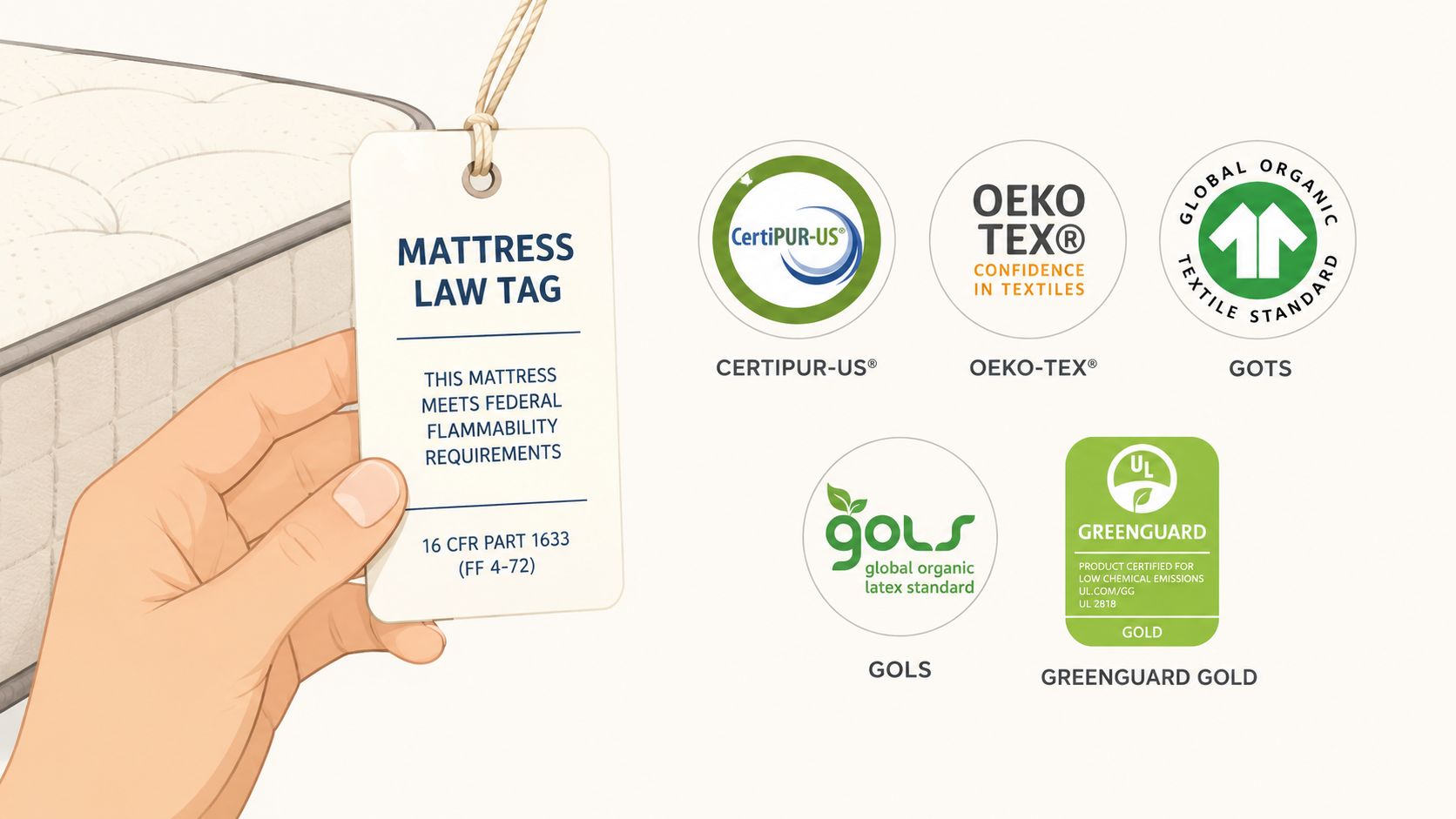
CertiPUR-US applies to foam. It is the one to check when you want reassurance about the comfort layer, especially if you are trying to limit concerns about foam content and emissions. GREENGUARD Gold speaks to low-emitting products and indoor air, which can matter in a bedroom where stale air or strong new-material odors would be a problem.
OEKO-TEX is about textile chemical safety. That makes it relevant for covers, quilting, and fabric surfaces that sit closest to the skin. GOTS is useful for organic textiles, and GOLS is the certification to look for when latex or a latex layer is part of the mattress.
The National Mattress Canada guide on hypoallergenic features points out that shoppers should pay attention to the certification type and the layer it covers. That matters because the cover, comfort layers, and latex are the parts most likely to touch skin and influence bedroom air.
What these tags do and do not tell you
A certification does not promise that a mattress will erase every allergy concern. It does not replace cleaning, encasements, or sensible humidity control in the bedroom. It also does not mean every sleeper will react the same way to the same bed.
Use certifications as a filter rather than a final verdict. If the foam is certified, the textiles are verified, and the latex or cover is clearly labeled, a shopper has much more to work with than a loose hypoallergenic claim.
Best shortcut: choose the certification that matches the problem, not the one that sounds the most impressive.
A quick showroom checklist
Before buying, ask:
- What layer is certified?
- Does the cover create a real barrier?
- Is the mattress meant to reduce emissions, dust mites, or both?
- Can the tag or spec sheet prove it?
For a broader buying framework, this mattress buying guide helps shoppers separate comfort, support, and material safety without getting buried in jargon.
Keeping Your Mattress Allergy-Free for Years
The best mattress in the store can lose its edge fast if the bedroom routine is sloppy. In Ruidoso, the dry climate helps in some ways, but active outdoor living, seasonal guests, and cabin use make maintenance just as important as the original purchase. A protected mattress keeps doing its job longer, which matters when the sleep system is a serious investment.
A four-part routine that holds up
Use a zippered allergen encasement.
A true encasement creates a physical boundary around the mattress, which is the most direct way to limit dust-mite movement and debris inside the bed.Wash sheets in hot water on a regular schedule.
Cleveland Clinic recommends hot-water laundering and hot drying because heat helps reduce the mites and moisture they like. It also notes that letting sheets dry out before making the bed helps lower the damp conditions dust mites and bacteria prefer, as explained in its guidance on hypoallergenic pillow and mattress covers.Vacuum the bed and the room on a seasonal basis.
Mattress surfaces, seams, and nearby flooring collect dust faster than you might realize, especially in homes with pets or heavy weekend use.Control humidity in a practical way.
Even in dry mountain air, moisture can build in a cabin bedroom after guests, storms, or long closures. A stable bedroom is easier on sensitive sleepers than one that swings between too damp and too dry.
Why the protector matters to long-term value
A protector does more than keep the mattress clean. It helps preserve the comfort layers that shape pressure relief and support. That matters because the sleep surface is what the body feels every night, and keeping it protected helps the whole system last longer.
For maintenance details that fit a mountain household, these mattress care tips are a useful reference.
Small habits that make a real difference
- Rotate when appropriate: this helps the comfort layers wear more evenly.
- Keep pets off the bed when allergies flare: fewer dander deposits make cleanup easier.
- Air out the room after a bedding change: fresh air can help the bed reset after laundering or cleaning.
A clean mattress routine doesn't need to be complicated. It just needs to be consistent enough that the bed stays a barrier, not a collector.
How Mattress Pro by Miller Waldrop Helps You Choose
A good local consult cuts through the confusion fast. At 2801 Sudderth Drive, the right question isn't only which mattress feels softest, it's which one fits body type, sleep position, sensitivity level, and room conditions in Ruidoso or Alto. That's where a one-on-one fitting turns product labels into a clear decision.
Matching the bed to the sleeper
A side sleeper with pressure-point pain may need a very different feel than a back sleeper worried about allergies. Tempur-Pedic, Sealy, Stearns & Foster, and Sherwood each bring different construction styles to the table, so the job is matching the mattress to the sleeper instead of guessing from a description online. The sleep consultation process gives shoppers a chance to test that fit in person.
The Comfort Promise lowers the fear of picking the wrong bed, which is often the biggest reason people stall out. The Low Price Promise helps keep the decision grounded, and flexible financing can make a better sleep system more reachable without compromising the features that matter.
Why local service changes the outcome
Full-service delivery with professional setup matters more than many shoppers expect. A mattress that arrives correctly, gets placed in the right room, and is set up without hassle is easier to protect and maintain from day one. That's especially useful for cabins, vacation homes, and busy households spread across Lincoln County.
Local knowledge counts too. A team that lives in the same mountain climate understands dry air, cooler nights, and the way cabin bedrooms can feel different from city bedrooms. That kind of guidance is hard to get from a box shipped to the porch.
Ready to transform your sleep? Visit our Sleep Pros at the Mattress Pro showroom located at 2801 Sudderth Drive, Suite F, in Ruidoso. From luxury brands to budget-friendly solutions, we're here to help you wake up loving your mornings. Browse our collection online or stop by Monday through Saturday.
If you're ready to narrow down a hypoallergenic mattress with real certifications, local guidance, and a comfort fit you can feel in person, visit Mattress Pro by Miller Waldrop. Their Sleep Pros can help you compare materials, protect your investment, and choose a bed that makes sense for Ruidoso living.