


Outdoor Furniture Santa Fe NM: A Local Buyer’s Guide

You're standing on a Santa Fe patio that looked perfect in May, and by late summer the cushions are chalky, the finish is dull, and the frame feels like it's been through a hard season. That's not bad luck, that's 6,996 feet of elevation doing what it does best, beating up anything that isn't built for the high desert. If the goal is outdoor furniture Santa Fe NM buyers can live with, the smart move is to start with climate and work backward to style.
Santa Fe is a different buying market because the city's outdoor life is tied to history, tourism, and regional demand, not just backyard use. The city's long-running plaza-and-courtyard culture, plus a broader regional trade area, keeps patio furniture relevant for homeowners, hosts, and second-home owners alike. Nationally, patio furniture and related retail has been a multi-billion-dollar category for years, with sales rising from $3.7 billion in 2010 to $4.39 billion in 2015, and one industry report projected 4% growth over the following four years; in that same snapshot, department stores and home improvement stores accounted for about 50% of sales, while specialty stores represented 13% (Santa Fe travel and market facts).
Why Outdoor Furniture in Santa Fe Is a Different Decision
A homeowner drags a sun-bleached patio set to the curb in August and says the same thing I hear from locals all the time, “It looked great in the catalog.” That's the trap. Santa Fe chews through outdoor pieces fast, because high-altitude sun, dry wind, and temperature swings work on frames, fabrics, and finishes at the same time.
The city's outdoor identity raises the stakes too. Santa Fe was founded in 1610, became New Mexico's capital in 1912, and sits at 6,996 feet, the highest state capital in the country (Santa Fe facts). That kind of setting shapes daily life. Patios, portals, and courtyards are part of how people use their homes, so the furniture has to do more than look Southwestern, it has to survive the climate.
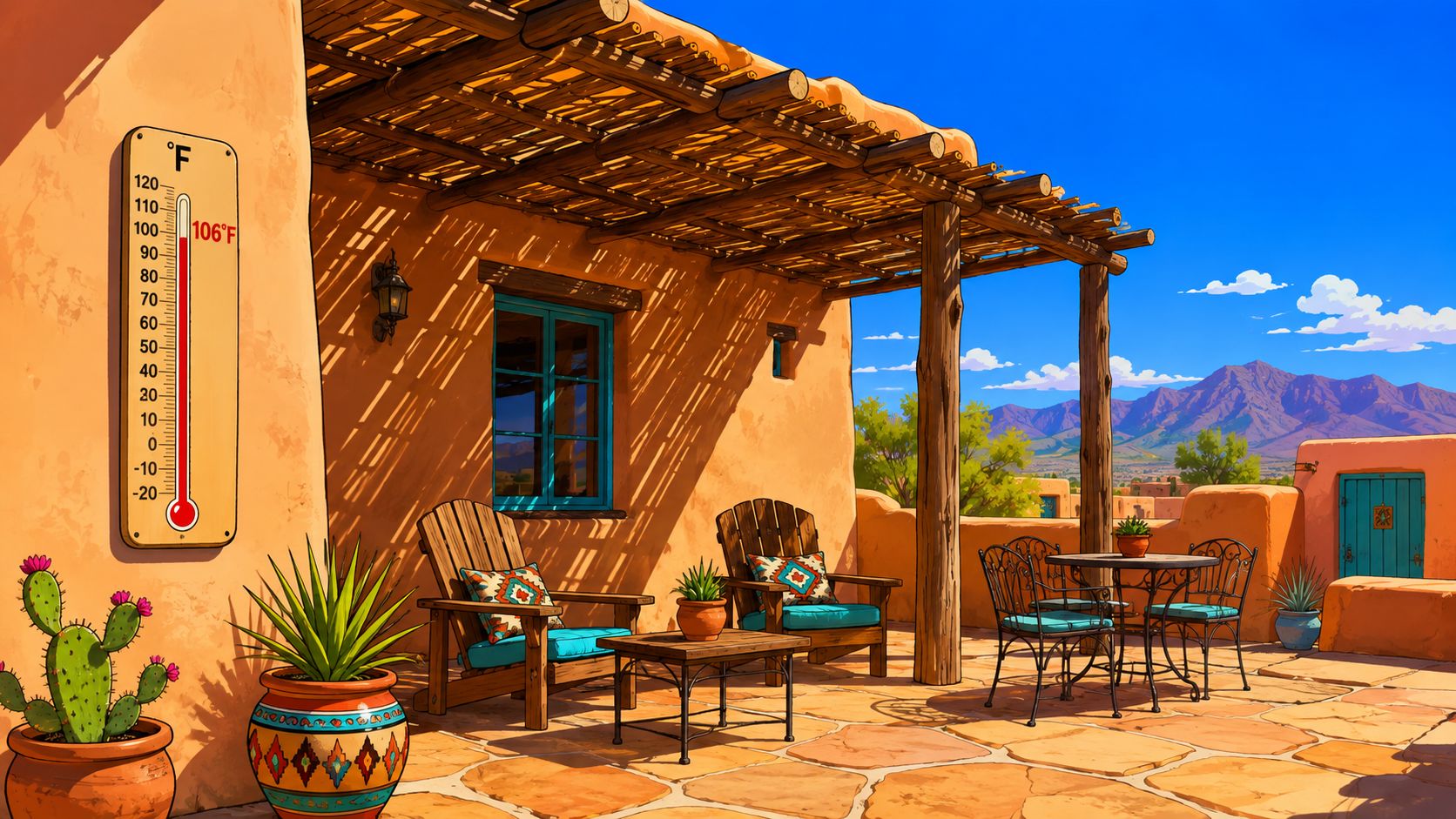
Practical rule: In Santa Fe, buy for durability first. If a set cannot handle UV, dust, and seasonal swings, the style is irrelevant by next season.
The plaza and patio tradition matters for another reason. Santa Fe's plaza was founded in 1609 and later grew with the city, which matches the long habit of outdoor social spaces that shaped the modern patio category. That heritage is why so many homeowners want outdoor rooms that feel built in, not staged. A good set should look at home in adobe architecture and still hold up when the weather turns harsh.
For the design side of that equation, this home-decor approach shows how to make the furniture fit the room without softening the durability standards.
How High-Desert Conditions Shape Your Material Choices
Santa Fe's high-desert climate does more than fade color. It exposes weak construction fast. UV light breaks down textiles and coatings, wind drives grit into joints, and freeze-thaw cycles punish anything that holds moisture. Dry air helps reduce mildew, but it also makes brittle materials crack sooner if they are not built for this kind of use.
A set that looks fine in a showroom can fail outside in a hurry. If the frame flexes, the coating chips, or the fabric traps water, Santa Fe weather will find it.
What to favor in full sun
Powder-coated aluminum is the safest default for exposed patios because it stays light, resists corrosion, and is easy to move for cleaning or seasonal rearranging. Local guidance on what works best in Santa Fe points buyers toward lightweight, durable pieces that do not feel flimsy, including aluminum sling seating and commercial-grade chairs with 300 lb max weight capacity (local Santa Fe furniture guidance, Santa Fe chair specs). That is the balance to want here, easy handling without a weak frame.
The heat also matters. Materials that stay comfortable in shade can become unpleasant under direct sun, and the same kind of temperature stress that affects sleep surfaces indoors also changes how outdoor materials feel and hold up outside, as explained in this temperature and material behavior guide. Santa Fe buyers should assume sun exposure is part of the furniture's daily job, not an occasional stress test.
What to avoid in exposed spots
Foam-heavy cushions and glossy finishes may look good in the showroom, but they are usually the first things to look tired in the high desert. Breathable sling and quick-dry systems make more sense because they do not hold water, dry faster, and cut down on mildew risk. A commercial aluminum and outdoor-rated sling line from a major home-improvement retailer listed pieces as low as 11.9 to 25.8 lb, which shows how much local shoppers value portability in this market (Santa Fe patio material guidance).
Bottom line: If a set needs to live outdoors for long stretches, look for UV inhibitors, rust resistance, and breathable seating surfaces. Anything else turns into a maintenance project fast.
Comparing Frame and Fabric Materials Side by Side
The best Santa Fe purchases are usually boring in the right way. They're light enough to move, tough enough to leave out, and simple enough to clean without a weekend project. That's why the material choice matters more than the styling language on the tag.
Outdoor Furniture Material Comparison for Santa Fe
| Material | Weight | UV Resistance | Maintenance | Best For |
|---|---|---|---|---|
| Aluminum | Light | Strong when powder-coated | Low | Full-sun patios, frequent moving |
| HDPE lumber | Moderate to heavy | Strong, with UV inhibitors | Very low | Year-round exposure, low upkeep |
| Teak | Heavy | Good, but ages naturally | Moderate, sealing depends on finish | Covered portals, premium looks |
| Powder-coated steel | Moderate | Good until coating is damaged | Moderate | Sheltered spaces, heavier feel |
| Resin wicker | Light to moderate | Varies by build quality | Moderate | Shaded lounges, decorative settings |
| Sling fabric | Very light as seating material | Good when outdoor-rated | Low | Hot, dry, high-use seating |
HDPE lumber stands out for local buyers who hate maintenance. It doesn't need sealing, painting, or staining, and it won't rot or splinter; UV inhibitors help it resist fading (Santa Fe durability guidance). That makes it a smart choice for people who want a leave-it-alone patio. It's especially useful when the furniture sits in direct sun and gets little seasonal protection.
Teak belongs in a more selective use case. It has the weight and visual presence that many Santa Fe homes want, but it's better suited to covered areas and buyers who accept occasional care. Powder-coated steel can work too, but only when the finish stays intact, because once the coating is compromised, corrosion becomes the problem.
How to narrow the field
For most local buyers, the shortlist is simple:
- Choose aluminum if you want the easiest day-to-day handling and solid sun performance.
- Choose HDPE lumber if you want the lowest maintenance and the most forgiving long-term ownership.
- Choose teak if the space is covered and the design needs a warmer, heavier visual anchor.
Use-case rule: A material that looks premium but demands frequent upkeep is a poor fit for exposed Santa Fe patios.
Review the mattress-material logic that mirrors this maintenance-versus-comfort tradeoff
Matching Santa Fe Style to Your Outdoor Zones
Santa Fe style works best when the furniture looks settled into the space, not pasted on top of it. Start with beige, taupe, cream, and stone, then add rattan, wicker, and wood finishes with solid frames and cushions that can handle strong sun. That is the right direction for local patios, because the style has to support the climate instead of fighting it.
Build the space in layers
Start with the main anchor piece in the dining or lounge area. A heavier table or sectional settles the patio visually, especially in open courtyards or on a portal where wind can make light furniture feel temporary. After that, add chairs or side seats that can move easily for guests, cleaning, or shifts in shade.
Seat comfort should not be an afterthought. Thicker cushions and ergonomic backrests matter because Santa Fe dinners run long, and a chair that looks right but presses into the lower back gets old fast. Fade-resistant fabric matters just as much in bright exposure, because the sun here punishes weak upholstery quickly. For people who want the rustic look without making the space feel cluttered, rustic decor cues that pair cleanly with adobe and courtyard settings give the right visual direction.
Match zone to function
Dining zones need easy-clean surfaces, stable frames, and chairs that stack or move without a fight.
Lounge zones should go deeper, with thicker cushions and natural textures that soften hard architecture. That combination suits a portal, a courtyard, or any patio that needs a warmer feel without losing durability.
Fireplace or conversation zones work best with compact, durable pieces that can shift with the season. Keep those setups low-fuss and grounded, because flexibility matters more than oversized furniture.
Every zone should still feel like part of the same property. Use the same color family across the set, repeat one or two material cues, and keep the overall look calm instead of busy.
Seasonal Care That Extends the Life of Every Set
The people who get the most life out of outdoor furniture in Santa Fe usually aren't the ones with the fanciest set. They're the ones who inspect, rinse, tighten, and cover on schedule. Small maintenance habits matter here because dust, sun, and cold all work on the same furniture in different ways.
Spring and summer routines
Spring is for inspection. Check hardware after winter storage or snow exposure, look for finish wear, and clean off anything that settled into joints. Summer is for UV care, so rinse dust before it gets baked onto surfaces and rotate cushions so one side doesn't fade faster than the other.
Fall and winter habits
Fall is the reset. Tighten frames after months of thermal expansion, clean cushions thoroughly, and decide what needs covering before colder weather arrives. Winter is when you protect the pieces that can be damaged by snow, ice, or moisture trapped in seams.
A simple checklist keeps the work short:
- Rinse weekly in dusty stretches to keep grit from wearing down finishes.
- Rotate cushions monthly so fading stays even.
- Tighten bolts each season to catch loosening before it turns into wobble.
- Cover or store vulnerable pieces when freezing weather and moisture are both expected.
Maintenance truth: Twenty minutes per season beats replacing a worn set early.
Use these cleaning and upkeep habits as a model for long-life ownership
Where to Actually Shop and How to Evaluate a Local Retailer
Santa Fe buyers should start with the floor, not the website. Patio furniture looks one way on a screen and another way under harsh sun, dry wind, and the kind of temperature swing that exposes weak frames fast. Local showrooms let you sit in the piece, check the welds, feel the cushion density, and see whether the finish looks right in bright light. That is the only way to judge whether a set belongs in a Santa Fe yard.
Local access matters because outdoor furniture is part product, part service. A store should be able to explain delivery range, setup, replacement cushions, and whether it can help with repairs or re-slinging later. If a seller cannot answer those questions clearly, the price is the wrong thing to focus on. A good chair that arrives damaged, wobbles after one season, or has no support after the sale is a bad buy.
Use local showrooms on major commercial corridors as your first stop, then compare them with broader retail options only if you want a wider price range. Santa Fe shopping patterns are shaped by a market that is heavily built around in-person comparison, with big-box and department channels still carrying a large share of outdoor furniture sales, while specialty stores hold a smaller slice (Santa Fe market facts). The point is simple. In this city, the local advantage is seeing the build quality up close, testing seat comfort, and asking direct questions about what happens after the sale.
What to ask before buying
- Delivery and setup: Is full assembly included, or does the retailer stop at curbside drop-off?
- Replacement parts: Can the store source cushions, sling fabric, or a matching frame later?
- Warranty handling: Who processes claims if something fails?
- Lead time: Can the retailer deliver before peak patio season or after a weather window closes?
A retailer that answers plainly is worth more than a slightly cheaper cart total. Straight answers usually mean fewer surprises once the furniture is on your patio.
Budgeting, Delivery, and Smart Timing for Your Purchase
Santa Fe buyers don't need fantasy budgets, they need useful ones. A value aluminum sling set usually buys you lightweight frames, basic comfort, and easier upkeep. Step up from there and you're paying for better cushion builds, thicker frame stock, stronger joinery, or materials like HDPE lumber and teak that are built for a longer ownership cycle. Premium pieces should justify themselves with better structural reserve, better fabric, and stronger warranty confidence.
Delivery matters more here than people think. Curbed delivery is fine for buyers who can assemble, lift, and position pieces themselves. White-glove setup is the safer choice for heavier materials, tight access points, or homes where the patio sits behind stairs, gates, or narrow entries. For rental properties and remote lots, the cost of one bad delivery day can outweigh the savings of a cheap drop-off.
Timing is a strategic choice, too. If selection matters most, buy when the floor is full and the range is broad. If price matters more than color options, off-season markdowns can help, but only if the buyer is willing to accept fewer choices and potentially longer waits. That tradeoff is normal in a climate where durable pieces sell steadily.
The right sequence is simple. First decide whether the patio needs all-sun durability, covered-portal elegance, or low-maintenance practicality. Then match the material, then the budget, then the delivery method. That order keeps buyers from paying for looks they can't keep.
Ready to transform your sleep? Visit our Sleep Pros at Mattress Pro by Miller Waldrop for the same kind of local, practical guidance that helps Santa Fe buyers choose wisely, whether they're comparing comfort, durability, or value. From luxury brands to budget-friendly solutions, the team is here to help you make a confident choice and wake up loving your mornings. Browse online or stop by Monday through Saturday.