

Latex Mattress vs Memory Foam: Your 2026 Ruidoso Guide


A lot of mattress shoppers in Ruidoso end up in the same spot. One tab says latex is better. Another says memory foam is better. Then a friend says, “just get whatever feels soft,” and that only makes the choice harder.
Usually, the problem isn't a lack of options. It's that latex and memory foam can both be excellent, but they feel very different in everyday use. A person in Alto who sleeps hot, shifts positions often, and wants a lifted feel may land in a very different place than a side sleeper in Lincoln County who wants pressure relief around the shoulders and hips.
That's why the latex mattress vs memory foam conversation needs plain language, not marketing slogans. The right pick depends on how the bed responds under the body, how warm it sleeps in New Mexico's dry mountain air, and how confident a shopper feels after testing it in person rather than guessing from a screen.
Table of Contents
- The Search for Your Perfect Sleep Surface
- Understanding the Materials What Are Latex and Memory Foam
- The Feel Factor A Side-by-Side Comparison
- Long-Term Considerations Durability Price and Health
- Who Is Each Mattress Best For?
- The Miller Waldrop Difference Why Shopping Local Matters
- Your Final Decision Checklist and FAQ
The Search for Your Perfect Sleep Surface
Standing in a mattress store can feel strange when every bed seems comfortable for thirty seconds. Scrolling online can feel worse. Photos look the same, descriptions blur together, and words like “responsive,” “contouring,” and “supportive” start sounding interchangeable.
In real life, they aren't interchangeable at all.
A couple shopping on Sudderth Drive may both say they want a “comfortable” mattress, yet mean completely different things. One person may want a deep, cushioned cradle that softens pressure points after a long day. The other may want a surface that feels springy, cool, and easy to move on without that sunk-in sensation.
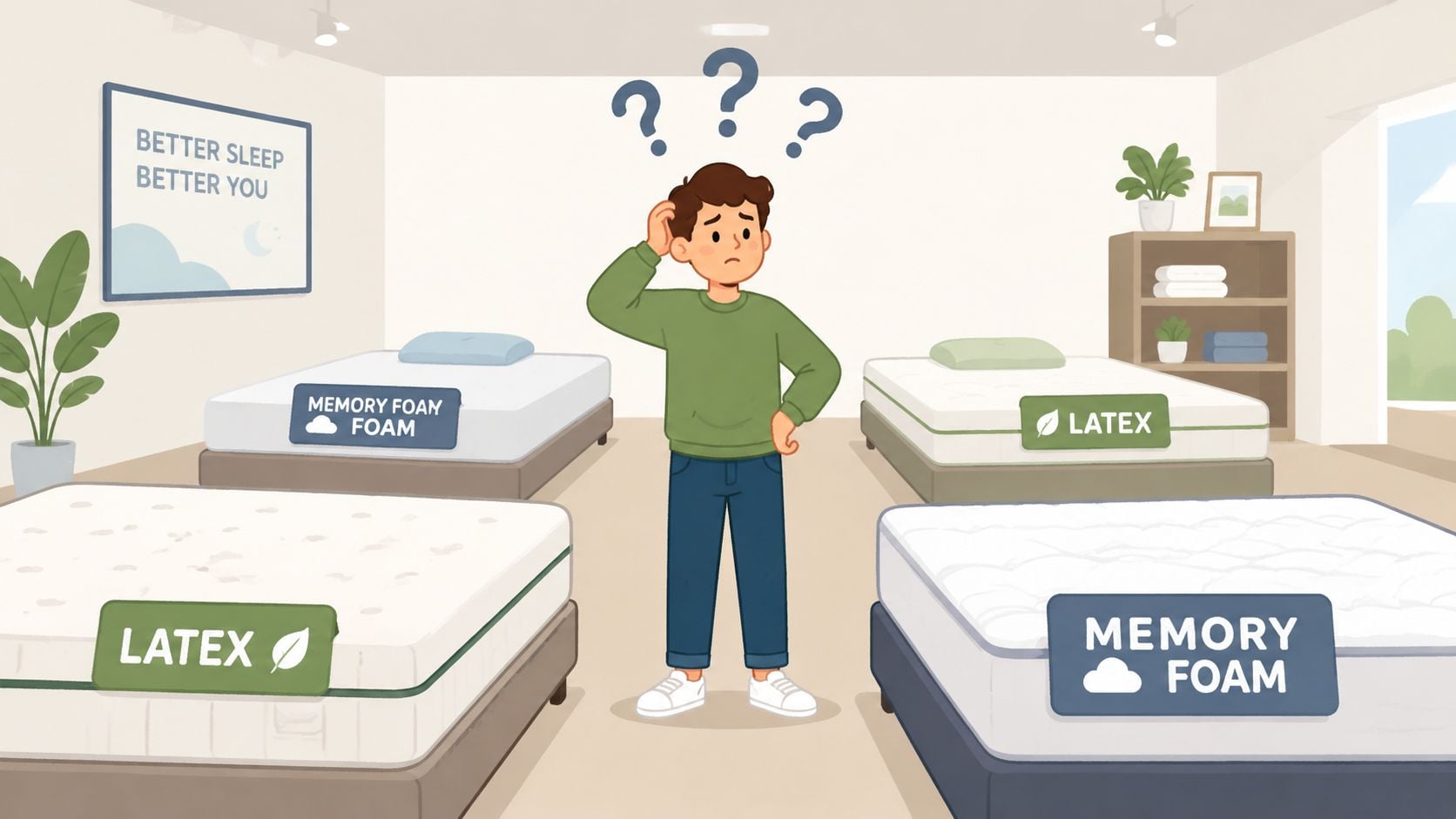
That's where the confusion around latex mattress vs memory foam usually begins. The names sound technical, but shoppers are really asking a much simpler question. What will this bed feel like at 2 a.m., six months from now, and years from now?
Practical rule: If a mattress description doesn't help a shopper predict how it will feel while turning, warming up, or settling pressure points, it's not useful enough.
For people in Ruidoso and across Lincoln County, local lifestyle matters too. Dry mountain air, cool nights, active days, and homes that range from full-time residences to vacation cabins all shape what “good sleep” means. A mattress that feels fine in a short online video may not feel right after a week of cold mornings, warm afternoons, and everyday movement.
This guide keeps the focus where it belongs. Not on hype. On feel, fit, and confidence. By the end, a reader should know which material deserves a first test and which questions matter most before making a final decision.
Understanding the Materials What Are Latex and Memory Foam
Latex and memory foam can both feel soft at first touch, but they get there in different ways. That difference matters more than the label on the tag, especially if you are trying to choose a bed that still feels right after full nights of real sleep in Ruidoso, not just a quick showroom test.
Memory foam in simple terms
Memory foam is made to respond slowly to pressure. Press your hand into it, and the surface usually holds the shape for a moment before it rises back. The result is a closer, more body-tracing contour.
For many sleepers, that feels like the mattress is wrapping around the body a bit. Hips and shoulders tend to sink in more, which is why memory foam often appeals to people who want pressure relief and a quieter, less bouncy surface. If you want a simple primer on the category, this guide explains what a memory foam mattress is.
Heat also plays a role. Memory foam softens as it warms, so the feel can change slightly after you have been lying in one spot for a while. That is one reason a mattress can seem firmer on first contact, then feel more contouring a few minutes later.
Latex in simple terms
Latex responds faster and feels more elastic. Press into it, and it pushes back right away instead of slowly forming around your shape.
A simple way to picture the difference is bread dough compared with a fresh sponge. Memory foam molds more. Latex rebounds more. That quick spring-back is why many sleepers say latex feels buoyant, lifted, and easier to move on.
In everyday terms, latex usually gives support with less of that "stuck" feeling. If you roll from your back to your side on a cold mountain night or get up early after a long day outdoors, that quicker response can feel more natural.
Why the materials often land in different price ranges
These materials are also built with different long-term expectations. Latex is commonly sold as the more premium option because it is known for strong resilience over time. Memory foam is often the more accessible starting point and is available in a wider range of price levels.
That does not automatically make one better for every shopper.
It means you are choosing a feel, a response pattern, and an ownership experience. Some Ruidoso shoppers try both and realize the key question is not which material sounds better on paper. It is which one matches the way their body wants to settle, turn, and recover night after night.
The Feel Factor A Side-by-Side Comparison
A mattress can look great on paper and still feel wrong the moment you lie down. That is why this part matters so much. In our Ruidoso showroom, shoppers often decide between these materials by paying attention to one simple question. Do you want to feel gently cradled, or do you want to feel more lifted and free to move?
Latex vs. Memory Foam At a Glance
| Feature | Latex Mattress | Memory Foam Mattress |
|---|---|---|
| Feel | Bouncier, more elastic, more lifted | Slower response, closer contour, deeper hug |
| Pressure relief | Good, with gentler contouring | Stronger pressure relief |
| Movement on surface | Easy to turn and reposition | Slower to move on |
| Temperature tendency | Cooler and more breathable | More likely to retain heat |
| Motion isolation | Good | Better for reducing partner disturbance |
| Typical positioning | Premium, longer-life purchase | More budget-accessible option |
A shopper exploring temperature-regulating mattress options usually notices the differences after lying still for a few minutes, not after a quick sit on the edge.
Pressure relief and body contouring
Memory foam usually creates the deeper hug. It responds slowly to pressure and body warmth, so it tends to mold more closely around the shoulders, hips, and lower back. That close contour can feel especially comforting for side sleepers who deal with sore pressure points.
Latex relieves pressure too, but it does it in a different way. Instead of letting you sink in as much, it cushions while keeping more pushback underneath you. The result is a steadier, floating kind of comfort.
A simple way to picture it is this. Memory foam feels more like settling into a mold. Latex feels more like resting on a springy surface that still cushions your shape.
A mattress can feel soft at first touch and still miss the places your body needs support most.
Support and ease of movement
This is often the turning point for combination sleepers.
Latex responds fast. If you roll from your side to your back, it adjusts right away and gives a gentle lift back. That can make the bed feel less restrictive, which many active sleepers appreciate.
Memory foam has a slower handshake with your body. It absorbs the shift, then reforms around your new position. Some people love that settled, secure sensation. Others notice it takes a little more effort to turn, especially during the night or first thing in the morning.
That difference is hard to judge from a website. It becomes obvious when you try both in person and notice how your body moves, not just how the surface feels in the first ten seconds.
Temperature regulation in a mountain climate
Temperature adds another layer to the choice because a mattress can feel cool when you first lie down and still hold warmth later in the night. In general, latex has the airier feel. Its structure allows more airflow, so many sleepers describe it as less heat-trapping than traditional memory foam.
That matters in Ruidoso. Cool evenings, dry air, and layered bedding can change how a mattress feels from bedtime to early morning. If you tend to sleep warm under heavier blankets on a mountain night, the fresher feel of latex often stands out. If you love a cozy, close-to-the-bed feel, memory foam may still feel just right, especially in models built with added cooling materials.
Motion isolation for couples
Couples usually ask about this in plain language. If one person gets up, will the other feel it?
Memory foam is often the calmer surface. Because it absorbs motion instead of sending it across the bed, it can reduce the ripple effect from a partner changing positions or climbing out of bed early.
Latex usually shares a little more of that movement because it has more bounce. For some couples, that is a minor tradeoff. For others, especially light sleepers, it becomes a deciding factor.
The best choice comes down to real-life feel. Memory foam often suits sleepers who want stillness, a deeper hug, and stronger pressure relief. Latex often suits sleepers who want easier movement, a lighter floating feel, and a cooler sleep surface.
Long-Term Considerations Durability Price and Health
The first ten minutes on a mattress matter. The next several years matter more. A bed can feel wonderful in a showroom and still be the wrong choice if its long-term fit doesn't match the sleeper's habits, budget, or comfort priorities.
How durability changes the buying decision
A mattress isn't just a comfort purchase. It's a product used night after night, season after season. That's why durability deserves as much attention as softness or firmness.
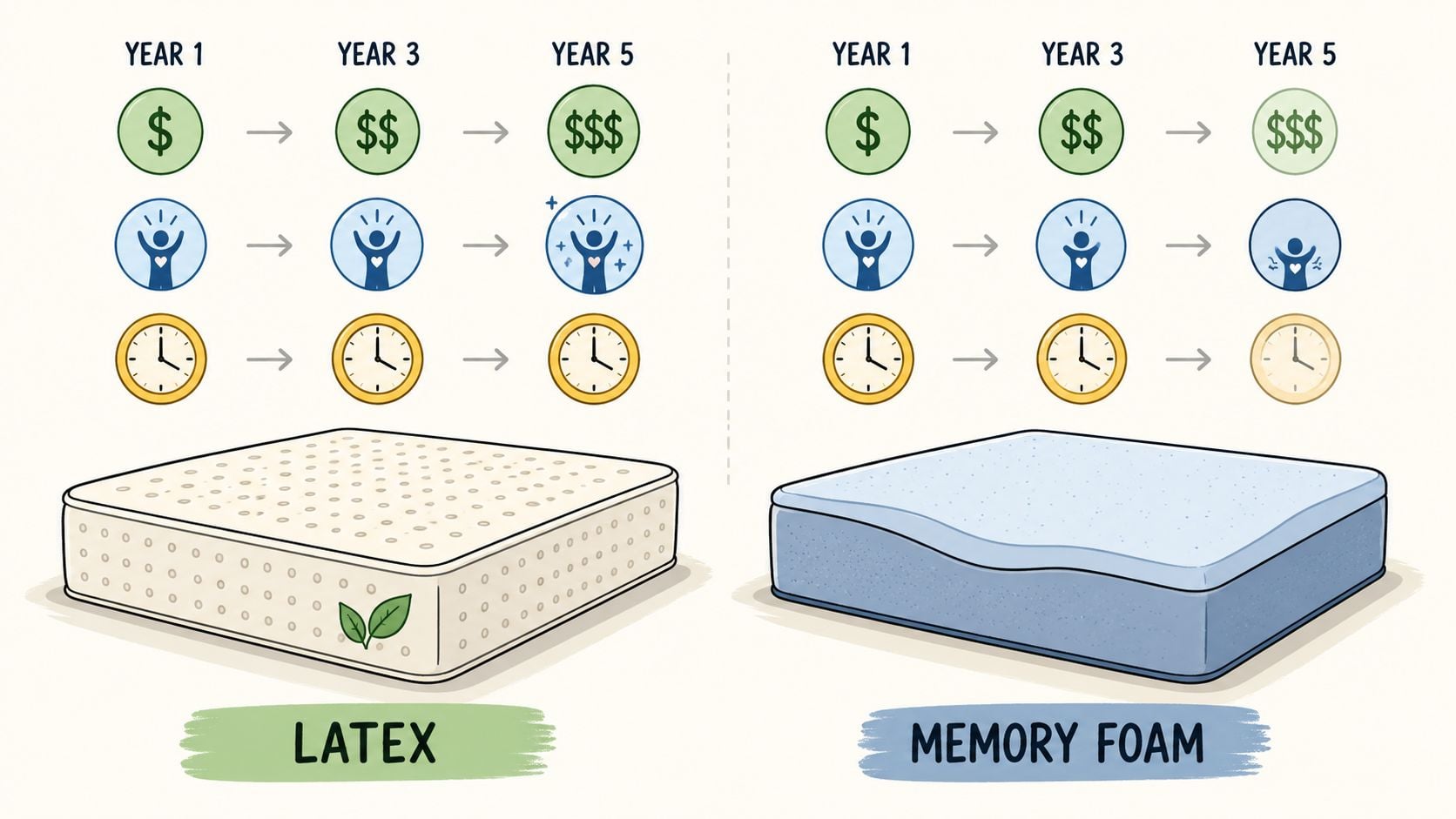
Latex usually earns its reputation as the longer-lasting material because it's more resilient and springy over time. Memory foam can feel excellent, especially early on, but shoppers often compare it against a shorter expected ownership window.
This doesn't mean latex is automatically “better.” It means the shopper has to decide whether a higher upfront spend matches long-term goals.
Price now versus value over time
Memory foam often wins the first-round price comparison. Latex often wins the “how long is this likely to serve well?” conversation.
That's why some shoppers treat the decision like this:
- Choose memory foam first if immediate pressure relief and a more budget-accessible entry point matter most.
- Choose latex first if the goal is a premium feel with a longer runway.
- Pause and compare hybrids if neither pure feel seems exactly right, especially among lines from Sealy or Stearns & Foster that blend cushioning and support in different ways.
Readers who want a closer look at the category can review latex mattress benefits.
Health comfort and bedroom environment
Health concerns show up in mattress shopping more often than people expect. Some shoppers notice smell sensitivity. Others focus on how clean, breathable, or fresh a bed feels over time.
In practical terms, latex is often associated with a cleaner, breezier surface feel. Memory foam buyers often pay closer attention to certifications, construction quality, and how the mattress is packaged and aired out after setup.
For a household in Alto or Ruidoso, the bedroom environment matters too. Dry air, layered bedding, and seasonal temperature swings can change how a material feels long after the showroom test.
The best mattress on paper can still be the wrong mattress if it doesn't match the room, the sleeper, and the habits around it.
Who Is Each Mattress Best For?
A mattress choice gets clearer once you picture your actual nights in Ruidoso. Maybe you fall asleep on your side after a long day, roll onto your back before morning, or wake up because your shoulder, hip, or lower back feels annoyed instead of rested. Latex and memory foam can both be good materials, but they do not serve the same kind of sleeper in the same way.
The easiest way to sort them out is to focus on how your body meets the bed.
Best match for side sleepers
Side sleepers usually need more cushion at the shoulder and hip. Those are the spots that press into the mattress first, almost like the corners of a heavy box pressing into carpet. If the surface does not give enough, pressure builds fast.
That is why many side sleepers like memory foam. It tends to hug those curves more closely and spread pressure across a wider area. For someone who spends most of the night on one side, that can feel calming right away.
Latex can still work for side sleeping, but the feel is different. It has more pushback, so some side sleepers describe it as buoyant rather than cradling. If you like feeling more on the mattress than in it, latex may feel better than foam.
Best match for back and stomach sleepers
Back and stomach sleepers often need the body to stay level through the night. Picture a hammock versus a sturdy porch swing. Too much sag in the middle can leave the lower back working harder than it should.
Latex often appeals to these sleepers because it keeps a lifted, supported feel and responds quickly when weight shifts. Memory foam can also work here, especially in a firmer build, but sleepers in these positions usually need to watch for too much sink through the hips.
Anyone comparing beds for spinal support should pay close attention to how to choose a mattress for back pain, especially whether the mattress keeps the midsection aligned instead of dipping.
Best match for combination sleepers
Combination sleepers need a mattress that keeps up. If you move from your back to your side to your stomach, the bed should feel easy to turn on, not sticky or slow.
Latex usually has the edge here because it rebounds faster. The surface responds more like a springy trail under your boots than soft sand that holds your footprint. That matters on cold mountain nights too, when heavier blankets can already make movement feel a little slower.
Memory foam can still suit combination sleepers who want stronger pressure relief, but they should test whether changing positions feels smooth or effortful.
Best match for heavier sleepers
Body weight changes how both materials feel. A mattress that feels gently contouring to one person can feel too shallow or too deep to another.
In general, heavier sleepers often need a bed that keeps them from settling too far while still cushioning joints. Latex is often a strong candidate because it tends to stay more lifted and stable in feel. Some memory foam beds can feel excellent at first, then allow more sink than the sleeper wants as the night goes on. As noted earlier in the body-weight comparison from AirPedic, latex's pushback can feel too firm for some side sleepers, while memory foam may let some heavier sleepers sink too much.
That is why showroom testing matters so much. Lie down in your real sleep position. Stay there long enough to notice whether your shoulders relax, whether your hips stay supported, and whether turning feels easy. Beyond the specs, that real-world feel is what gives you confidence in the right choice, especially when a local Ruidoso sleep expert can help you notice the difference.
The Miller Waldrop Difference Why Shopping Local Matters
Even well-informed shoppers usually carry one last fear. What if the mattress sounds right on paper, feels decent in the first minute, and still turns out to be wrong after a week?
That concern is exactly why local shopping still matters.
Why trying beds in person reduces mistakes
A website can describe contour, cooling, and support. It can't tell a shopper from Ruidoso how a Tempur-Pedic feels compared with Sealy, Stearns & Foster, or Sherwood under that shopper's own shoulders, hips, and lower back.
In-person testing makes the differences obvious. The slower melt of memory foam. The quicker rebound of latex. The subtle difference between “soft” and “pressure relieving.” Those distinctions are hard to judge from a bed-in-a-box product page.
Shoppers who want hands-on guidance can start with a local sleep consultation near Ruidoso.
What local service changes after the sale
Shopping local also changes what happens after the decision. A mattress doesn't arrive as a simple object. It arrives as part of a sleep setup that includes delivery, placement, foundation fit, and confidence that the choice will work in the actual home.
For households in Alto, along Sudderth Drive, or elsewhere in Lincoln County, that matters. Mountain homes can have their own delivery quirks, room sizes, and setup needs. Full-Service Delivery with Professional Setup removes a lot of that hassle.
The emotional side matters too. The Comfort Promise helps reduce the fear of making the wrong call. The Low Price Promise adds another layer of confidence for shoppers trying to balance quality with budget.
A good mattress decision isn't only about material science. It's about whether the buyer feels supported before, during, and after the purchase.
Your Final Decision Checklist and FAQ
A final decision usually gets easier when the question changes from “Which material is best?” to “Which feel fits this sleeper best?”
Decision checklist
- Choose memory foam first if deep contouring and stronger pressure relief matter most.
- Start with latex if cooler sleep, quicker movement, and a buoyant feel sound more comfortable.
- Think about sleep position before thinking about brand names. Side sleepers often prefer more contour. Back, stomach, and combination sleepers often prefer more responsiveness.
- Consider the bedroom climate in Ruidoso and nearby areas. Dry mountain air and layered bedding can make heat management more noticeable.
- Pay attention to body size and firmness together. A material category alone won't guarantee the right fit.
- Test hybrids too if pure latex feels too springy or pure memory foam feels too slow.
FAQ
Do latex and memory foam mattresses work with adjustable bases
Many do. The key is the specific model's construction and flexibility. Shoppers should confirm compatibility before purchase, especially with thicker or more layered designs.
Does one type need a special foundation
Both mattress types usually perform best on a stable, properly matched support system. A weak or mismatched base can change how the mattress feels and wears.
Are hybrids a good middle-ground option
Yes. Hybrid designs can blend contouring comfort with a more supportive, easier-to-move-on surface. This is one reason many shoppers also test Sealy and Stearns & Foster hybrids before making a final choice.
Which one should a couple test first
If partner disturbance is the biggest issue, start with memory foam. If sleeping warm or changing positions often causes the bigger complaint, start with latex.
Ready to transform sleep? Visit the Sleep Pros at Mattress Pro by Miller Waldrop at 2801 Sudderth Drive, Suite F, in Ruidoso. From Tempur-Pedic, Sealy, Stearns & Foster, and Sherwood to budget-friendly solutions, the team is there to help neighbors wake up loving their mornings. Browse the collection online or stop by Monday through Saturday.