

Best Mattress for Joint Pain: Find Relief Today

A lot of people in Ruidoso go to bed tired and wake up feeling worse. The hip feels locked up. The shoulder burns when rolling over. The knees complain before the coffee is even ready. Many assume that's just age, arthritis, or a bad night of sleep.
Often, the mattress is part of the problem.
A mattress touches the body for hours every night. If it presses too hard on sore joints or lets the spine drift out of line, the body doesn't get a real chance to recover. For shoppers trying to find the best mattress for joint pain, that matters more than trendy features or clever marketing.
This guide takes a practical approach. It looks at how joint pain and sleep surfaces work together, which materials tend to help, what firmness usually fits best, and why local, in-person testing in Lincoln County can remove a lot of guesswork.
Table of Contents
- That Morning Ache Is a Message from Your Mattress
- How Your Mattress Can Cause or Relieve Joint Pain
- Mattress Materials That Soothe Aching Joints
- Finding Your Ideal Firmness for Joint Pain
- Beyond the Mattress Surface Temperature and Adjustability
- How to Test a Mattress The Miller Waldrop Way
- Your Path to Pain-Free Mornings Starts Here
That Morning Ache Is a Message from Your Mattress
Morning pain has a pattern. Someone in Alto may wake up and feel stiff through the hips after sleeping on one side all night. Another sleeper in Lincoln County may notice a sore shoulder that eases up only after moving around for half an hour. A couple sharing a bed may feel every toss and turn, then start the day already worn down.
Those signs aren't random.
A mattress has one job while the body sleeps. It should cushion the spots that bear the most weight and hold the rest of the body in a healthy position. When it fails, the body spends the night bracing instead of resting. That can leave joints irritated and muscles tight by sunrise.
A mattress problem often looks like a body problem
People often describe mattress-related joint pain in simple ways:
- Hip pain on one side: the bed feels hard where the body presses deepest
- Shoulder soreness: the upper body can't settle in without pressure building up
- Knee discomfort: the legs twist or sink awkwardly during the night
- Lower back stiffness: the pelvis drops too far or stays too high
Many sleepers blame themselves first. In reality, the sleep surface may be asking the body to work all night.
That's why finding the best mattress for joint pain isn't about chasing the softest bed in the showroom. It's about finding a surface that helps the body relax fully, especially in the joints that already feel tender.
For families around Ruidoso and along Sudderth Drive, that decision is part comfort and part health choice. A well-matched mattress doesn't just feel better at bedtime. It can help mornings feel manageable again.
How Your Mattress Can Cause or Relieve Joint Pain
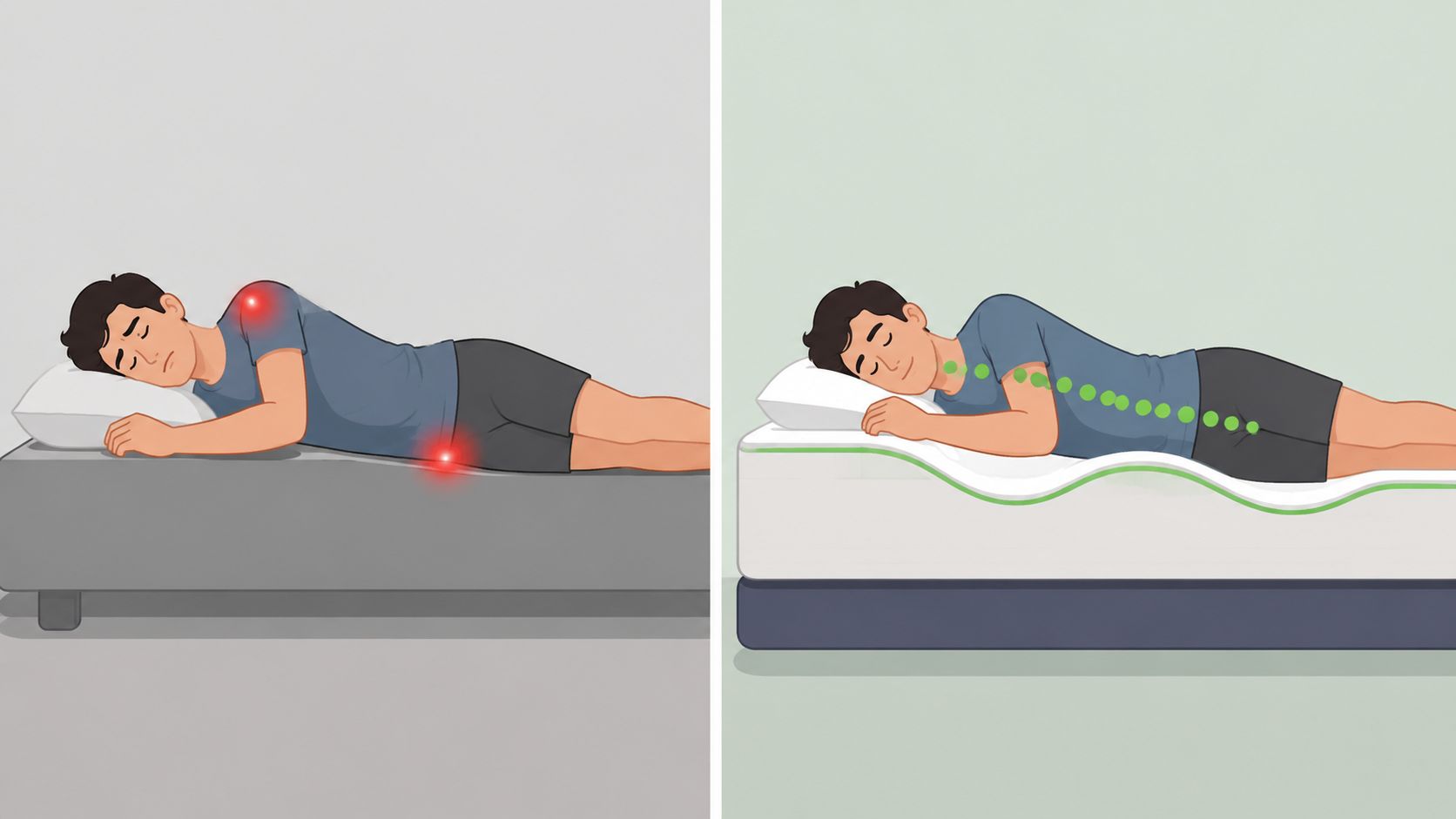
Joint pain usually gets worse for one of two reasons. The mattress creates too much pressure, or it doesn't provide enough support. The hard part is that many beds get one part right and the other part wrong.
Support and pressure have to work together
Think of support as the part of the mattress that keeps the body level. Think of pressure relief as the part that lets heavier or sharper areas, like hips and shoulders, settle in without being shoved back upward.
A hard floor gives strong support, but almost no pressure relief. A sagging old mattress may feel soft at first, but it can let the spine bow out of position. Neither one helps painful joints.
Research points to that balance clearly. A systematic review that screened 39 qualified articles found that medium-firm mattresses, usually 5 to 7 on a 10-point scale, improved comfort, sleep quality, and spinal alignment, with benefits often increasing over the first 1 to 4 weeks after switching surfaces, according to the systematic review on mattress firmness and pain.
Why joints hurt more on the wrong bed
When the body doesn't stay in a neutral position, muscles keep working during sleep. That tension can pull on already sensitive joints. At the same time, pressure builds where bone sits closer to the surface, especially at the shoulders, hips, and knees.
Common mattress mistakes include:
- Too firm: the hips and shoulders don't sink enough, so pressure piles up
- Too soft: the pelvis drops too low and the spine curves
- Worn out comfort layers: the mattress no longer spreads weight evenly
- Poor motion control: partner movement keeps waking the sleeper before the body can settle
A side sleeper often feels this first in the shoulder and hip. A back sleeper may notice it more in the lower back and pelvis. The body position changes, but the principle stays the same. The right bed should gently cradle the curves without letting the middle collapse.
For readers who want a deeper explanation of sleep support basics, the sleep knowledge library breaks down mattress performance factors in a shopper-friendly way.
Practical rule: A mattress should feel like it's holding the body up and letting the pressure points settle in at the same time.
Mattress Materials That Soothe Aching Joints
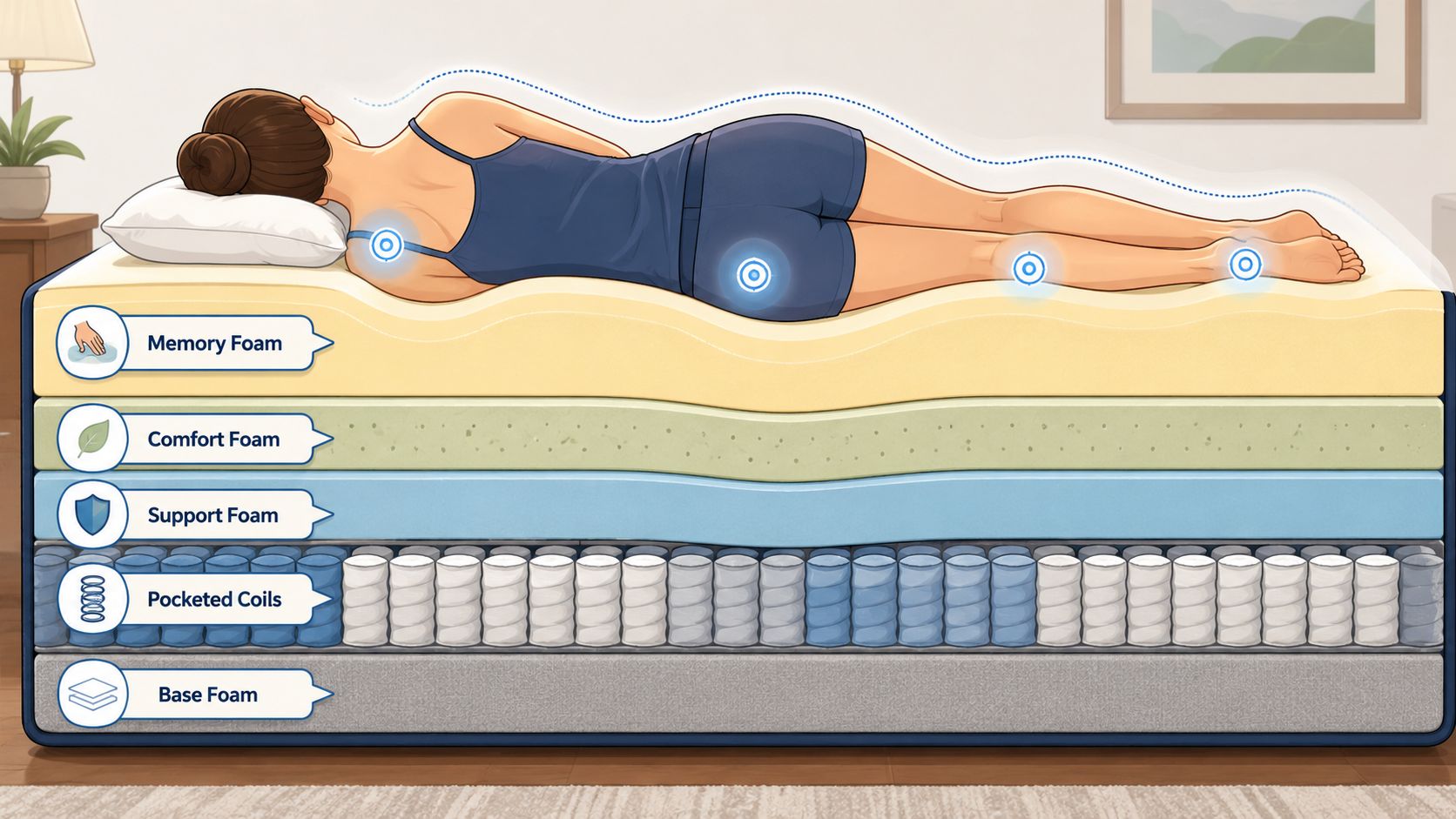
The materials inside a mattress decide how it responds when the body settles in. Some materials hug closely and spread weight. Others add lift, airflow, and easier movement. For joint pain, those differences matter every single night.
Memory foam and close contouring
Memory foam is known for contouring around the body instead of pushing back all at once. That can help reduce pressure at the joints because weight gets distributed over a wider area. A sore shoulder doesn't have to carry as much concentrated force. The same goes for the outside of the hip.
This is one reason many shoppers with tender joints look closely at Tempur-Pedic. These beds are designed to adapt closely to body shape and sleeping position, which can help the body feel less “jammed” against the mattress surface. Readers exploring that category can review the Tempur-Pedic collection.
Memory foam often suits sleepers who:
- Need strong pressure relief: especially at hips and shoulders
- Prefer a quieter sleep surface: less bounce can mean less disturbance
- Want a close, body-hugging feel: the bed tends to conform rather than float
Hybrid beds and easier movement
A hybrid combines comfort materials on top with a coil support system underneath. That mix often works well when joint pain and mobility concerns show up together. The comfort layers cushion sensitive areas, while the coils add support, airflow, and a bit more responsiveness.
That responsiveness matters more than people expect. A sleeper with knee or hip pain may struggle on a surface that feels too slow or sticky when changing positions. A hybrid can make rolling over easier without giving up pressure relief.
Clinical guidance for joint pain often points toward localized pressure relief plus zoned support, especially for hip, shoulder, or knee pain. Side sleepers usually do better with softer comfort at the shoulders and hips, while back sleepers usually need more support to keep the pelvis aligned. Hybrid designs that combine foam or latex with coils are often preferred for balancing contouring and ease of movement, according to the joint pain mattress guidance.
How shoppers can think about materials
A simple way to compare mattress materials is this:
| Material style | What it tends to do well | Who often likes it |
|---|---|---|
| Memory foam | Deep contouring and pressure relief | Sleepers with sharp pressure at shoulders or hips |
| Hybrid | Balance of cushioning, lift, and movement | Sleepers who want relief without feeling stuck |
In Ruidoso's dry mountain air, some shoppers also pay close attention to breathability and surface feel. That's where hybrids, cooling covers, and advanced foam designs can become part of the conversation. The right material isn't just about what feels pleasant for five minutes. It's about what helps the body stay calm through the whole night.
Finding Your Ideal Firmness for Joint Pain
Firmness confuses a lot of mattress shoppers because “firm” doesn't always mean “supportive,” and “soft” doesn't always mean “good for pain.” A bed can feel plush on top and still hold the body well. Another can feel hard and still create major strain at the joints.
Why medium-firm is often the sweet spot
The strongest guidance in mattress research tends to point toward medium-firm comfort. In the review cited earlier, researchers concluded that medium-firm mattresses, usually rated 5 to 7 on a 10-point scale, improved comfort, sleep quality, and spinal alignment for people with chronic non-specific pain. That same review noted that benefits often increased over the first 1 to 4 weeks after the switch.
That doesn't mean every sleeper should buy the exact same feel. It means a moderate firmness level is often preferred. The mattress should allow enough sink at pressure points, but not so much that the spine loses shape.
For shoppers comparing options by feel, the mattress buying guide can help translate showroom language into practical choices.
A mattress that feels “supportive” in the store can still be too hard for an arthritic hip. A mattress that feels “cozy” can still let the low back sag.
Firmness guide for joint pain by sleep position
The body's main sleep position usually points shoppers in the right direction faster than any sales label.
| Sleep Position | Primary Pain Area | Recommended Firmness (1-10) | Why It Works |
|---|---|---|---|
| Side sleeper | Hip pain | 5 to 6 | Allows the hips to settle in more gently and lowers pressure buildup |
| Side sleeper | Shoulder pain | 5 to 6 | Gives the shoulder room to sink without forcing the neck and upper back out of line |
| Back sleeper | Hip or knee pain | 6 to 7 | Supports the pelvis and helps keep the spine more neutral |
| Combination sleeper | Mixed joint discomfort | 5 to 7 | Balances contouring with easier repositioning |
A few simple checks help narrow the choice:
- If the shoulder goes numb, the surface may be too firm.
- If the lower back feels dipped, the surface may be too soft.
- If turning over feels difficult, the comfort layers may be too deep for that body type.
- If the hips ache first, pressure relief probably needs more attention.
The goal isn't softness
The best mattress for joint pain usually isn't the softest one on the floor. It's the one that matches the sleeper's body shape, position, and pain pattern. Side sleepers tend to need more cushioning at the shoulder and hip. Back sleepers often need a steadier push-up under the pelvis.
That's why firmness should always be tested with actual sleeping posture, not just a hand press or a quick sit on the edge.
Beyond the Mattress Surface Temperature and Adjustability
Some people choose a mattress that seems to relieve pressure, then still wake up exhausted. That often happens because the problem isn't pressure alone. Sleep keeps getting interrupted by heat, partner movement, or the effort it takes to get comfortable and get out of bed.

When cooling and motion control matter
A sleeper can have the right firmness and still struggle if body heat builds up through the night. In Ruidoso, the mountain air may feel crisp, but mattresses can still hold warmth around the body. When that happens, people toss, turn, and wake more often. Pain tends to feel sharper after broken sleep.
Motion isolation matters in the same way. If one person changes position and the whole bed responds, the other sleeper may wake before the body reaches deeper, steadier rest.
Arthritis-focused guidance notes that, for some joint-pain sufferers, the right mattress is the one that improves ease of movement, isolates motion, or regulates temperature. The same guidance notes that temperature-manipulating mattresses can improve deep sleep, and adjustable beds can help some people with arthritis get in and out of bed more easily, according to this arthritis-friendly mattress guidance.
Why adjustable support can change the night
An adjustable base changes the angle of the upper body, lower body, or both. For someone with stiff joints, that can reduce strain during both sleep and wake-up. Slight elevation under the legs may ease pressure in some positions. Raising the upper body can help a sleeper settle more comfortably for reading, relaxing, or easing into sleep.
Useful reasons people explore adjustable support include:
- Less effort getting in and out of bed
- More comfortable resting positions
- Better support while recovering from a flare-up
- A way to fine-tune comfort beyond mattress firmness alone
Shoppers interested in that setup can review an example in the Tempur-Ergo adjustable base collection.
For some bodies, better sleep doesn't come from a softer surface. It comes from fewer interruptions and easier movement.
A full sleep system matters. The mattress handles pressure and support. Cooling, motion control, and adjustability help protect sleep once the body finally settles down.
How to Test a Mattress The Miller Waldrop Way
A mattress can feel good in a showroom and still be wrong at home. That's one of the biggest reasons shoppers get frustrated. The body doesn't fully reveal its opinion in ten minutes under bright lights.
A showroom test is only the first step
Adaptation takes time. One mattress summary cited in the mattress literature reported that 67% of arthritis patients experienced measurable pain reduction within 2 to 4 weeks, and the same source reported an average 34% reduction in morning pain after several weeks on an appropriate medium-firm mattress, according to the joint pain firmness summary.
That doesn't mean every sleeper should wait in discomfort forever. It means the body often needs more than one night to stop reacting to the old mattress pattern and settle into a healthier one.
A better testing process usually looks like this:
Start with sleeping position
Side sleepers should spend time on the shoulder and hip. Back sleepers should pay attention to whether the pelvis feels supported.Notice pressure first
If sharp contact builds quickly at one joint, that warning sign matters.Check movement
Rolling over should feel manageable, not like climbing out of a hole.Judge the morning, not just bedtime
The scorecard is how the body feels after sleeping on it.
What to check during an at-home trial
A local process can help reduce anxiety. A store visit helps narrow down the feel and construction. Home testing reveals whether that choice supports the body over time. In practical terms, that's where the Comfort Promise becomes part of the decision, because it gives shoppers room to judge the mattress by real sleep instead of first impressions alone.
Mattress Pro by Miller Waldrop uses that type of consultative process to help shoppers match comfort, support, and sleep position before delivery, then continue judging the fit in real conditions at home.
A useful at-home checklist includes:
- Morning stiffness: Is it easing, staying the same, or getting worse?
- Nighttime wake-ups: Are fewer position changes needed?
- Partner disturbance: Is motion still interrupting sleep?
- Getting out of bed: Does the body feel less guarded in the morning?
Local insight: The right mattress should earn its place over several weeks, not win on a quick first impression.
For many people in Ruidoso, Alto, and across Lincoln County, that's the difference between guessing and choosing with confidence.
Your Path to Pain-Free Mornings Starts Here
The best mattress for joint pain usually comes down to three things. It needs to reduce pressure at sensitive areas, keep the body in healthy alignment, and support uninterrupted sleep. If one of those is missing, the body often notices by morning.
That's why mattress shopping for joint pain shouldn't be rushed. Materials matter. Firmness matters. Cooling, motion isolation, and adjustability can matter just as much for some sleepers. A bed isn't just furniture when sore hips, shoulders, or knees are involved. It becomes part of daily recovery.
For shoppers in Ruidoso, Alto, and the rest of Lincoln County, a local consultative approach can make this process much easier. It helps translate confusing terms into body-based decisions. It also lowers the fear of choosing wrong, especially when the purchase is backed by a Comfort Promise, a Low Price Promise, and Full-Service Delivery with Professional Setup.
After years of helping families with home comfort needs, the Miller Waldrop legacy still fits this category in a simple way. People want honest guidance, not pressure. They want to wake up with less pain and more energy for the day ahead.
Ready to transform sleep? Visit the Sleep Pros at Mattress Pro by Miller Waldrop, located at 2801 Sudderth Drive, Suite F, in Ruidoso. From Tempur-Pedic, Sealy, Stearns & Foster, and Sherwood to budget-friendly options, the team helps shoppers find sleep solutions built around real comfort needs. Browse online or stop by Monday through Saturday.