

Best Mattress for Lower Back and Hip Pain: Ruidoso Sleep

The alarm goes off, and the first thing noticed isn't the day ahead. It's the pull in the lower back, or the sharp catch in one hip when the legs swing over the side of the bed. A few steps later, it may loosen up. Or it may linger long enough to shape the entire morning.
That pattern is common for shoppers across Ruidoso, Alto, and the rest of Lincoln County. It's also one of the clearest signs that the mattress may be working against the body instead of helping it recover overnight. The right bed won't fix every cause of pain, but it should support rest, alignment, and pressure relief instead of adding strain.
A lot of mattress advice online stops at “buy medium-firm” and leaves it there. That's not enough for someone dealing with both lower back pain and hip pain. Sleep position, body weight, mattress materials, and how the bed holds up under the hips all matter. Helpful guidance starts with understanding those trade-offs, then testing the right feel in person. For more practical sleep education, the Sleep knowledge center is a good place to keep learning.
Table of Contents
- That Morning Ache Is Not Your New Normal
- Why Your Mattress Causes Back and Hip Pain
- Decoding Mattress Materials for Pain Relief
- The Truth About Mattress Firmness and Support
- Finding Your Perfect Match for Your Sleep Style
- The Miller Waldrop Difference How to Choose with Confidence
- Your Local Path to Waking Up Pain-Free
That Morning Ache Is Not Your New Normal
A mattress should be a recovery surface. If it's leaving the lower back tight and the hips tender, something is off.
For many people, the problem builds slowly. The bed that once felt comfortable starts to feel a little less steady under the pelvis. Side sleeping becomes harder because the top hip aches. Back sleeping feels flat and unsupported. Then one morning turns into many.
That's why the search for the best mattress for lower back and hip pain has to go beyond softness labels and showroom first impressions. Lower back pain and hip pain often happen together, but they don't always need the exact same surface feel. The lower back usually needs steadiness and neutral alignment. The hip usually needs cushioning where body weight presses into the bed.
A mattress shouldn't ask the body to brace all night just to stay comfortable.
In a mountain community like Ruidoso, shoppers also tend to keep mattresses longer than they should, especially in guest rooms, cabins, and vacation homes. A bed can still look fine on top while losing the deeper support that keeps the hips from dipping too far. That's where morning pain often starts.
The good news is that this is a solvable problem. With the right fit, many sleepers stop chasing “firm” and start focusing on what matters. Alignment, pressure relief, and how the mattress performs in the position they use most.
Why Your Mattress Causes Back and Hip Pain
Two mattress problems drive most nighttime discomfort. Poor support lets the body sag out of line. Poor pressure relief concentrates force at the hips and shoulders.
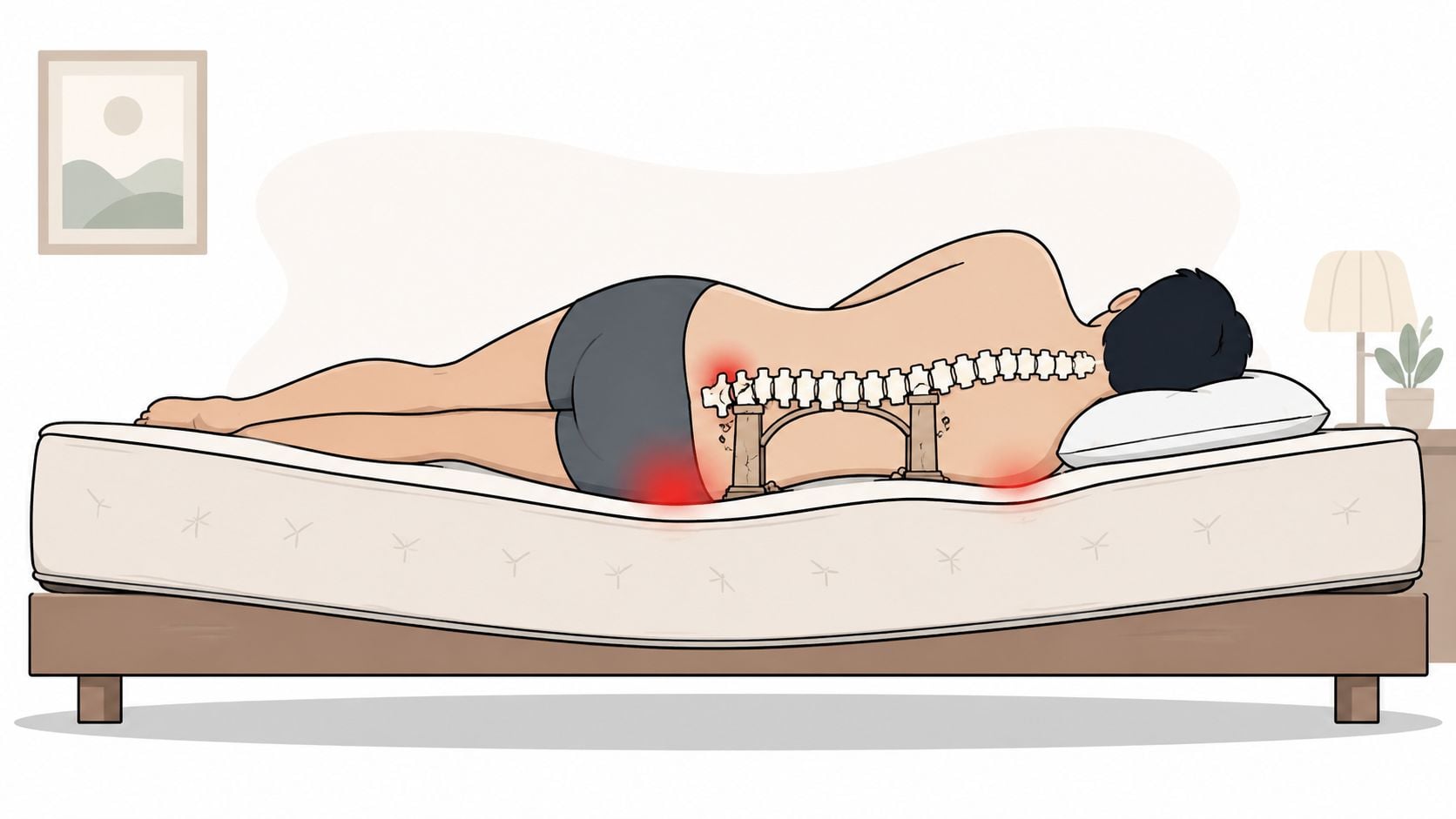
Support failure and pressure buildup
Think of the spine like a bridge that needs steady support under its natural curves. If the mattress is too soft through the middle, the hips drop lower than the chest and legs. That twists the lumbar area and can leave the lower back irritated by morning.
If the mattress is too firm on top, the opposite problem shows up. The surface doesn't let the hips and shoulders settle in enough, so the body presses against the bed instead of being distributed across it. That often shows up as sore hips, tossing, and frequent position changes.
A practical walkthrough in this mattress guide for shoppers helps explain what that balance should feel like.
What the body is doing all night
The heaviest area of the body is usually the pelvis and hips. That matters because support breakdown tends to start there first. When the mattress can't resist that load, alignment changes even if the bed still feels comfortable at first touch.
For lower back pain, the strongest evidence points toward a medium-firm mattress. A systematic review of controlled studies found that medium-firm mattresses improved comfort, sleep quality, and spinal alignment more consistently than very firm or very soft surfaces, with benefits seen regardless of age, weight, height, and BMI, and improvement tending to increase between the first and fourth week after adoption, according to this systematic review on mattress selection and lower back pain.
That doesn't mean every medium-firm mattress will work the same way. Construction matters. A supportive core with pressure-relieving comfort layers usually works better than a flat, hard surface.
Common mattress pain patterns
- Hips sink too low: The lower back often wakes up stiff because the spine spent hours out of neutral.
- Surface feels hard at the shoulder and hip: Side sleepers often shift all night because the mattress doesn't cushion pressure points.
- Comfort fades after a short time in bed: The top may feel nice, but the deeper support isn't holding the body level.
- Pain is worse in one main sleep position: That usually points to a mismatch between body mechanics and mattress feel, not just a “bad mattress” in general.
Decoding Mattress Materials for Pain Relief
Materials don't solve pain by themselves, but they strongly influence how a mattress handles contouring, support, bounce, and temperature. That's why material choice matters so much when shopping for the best mattress for lower back and hip pain.
Memory foam for contouring relief
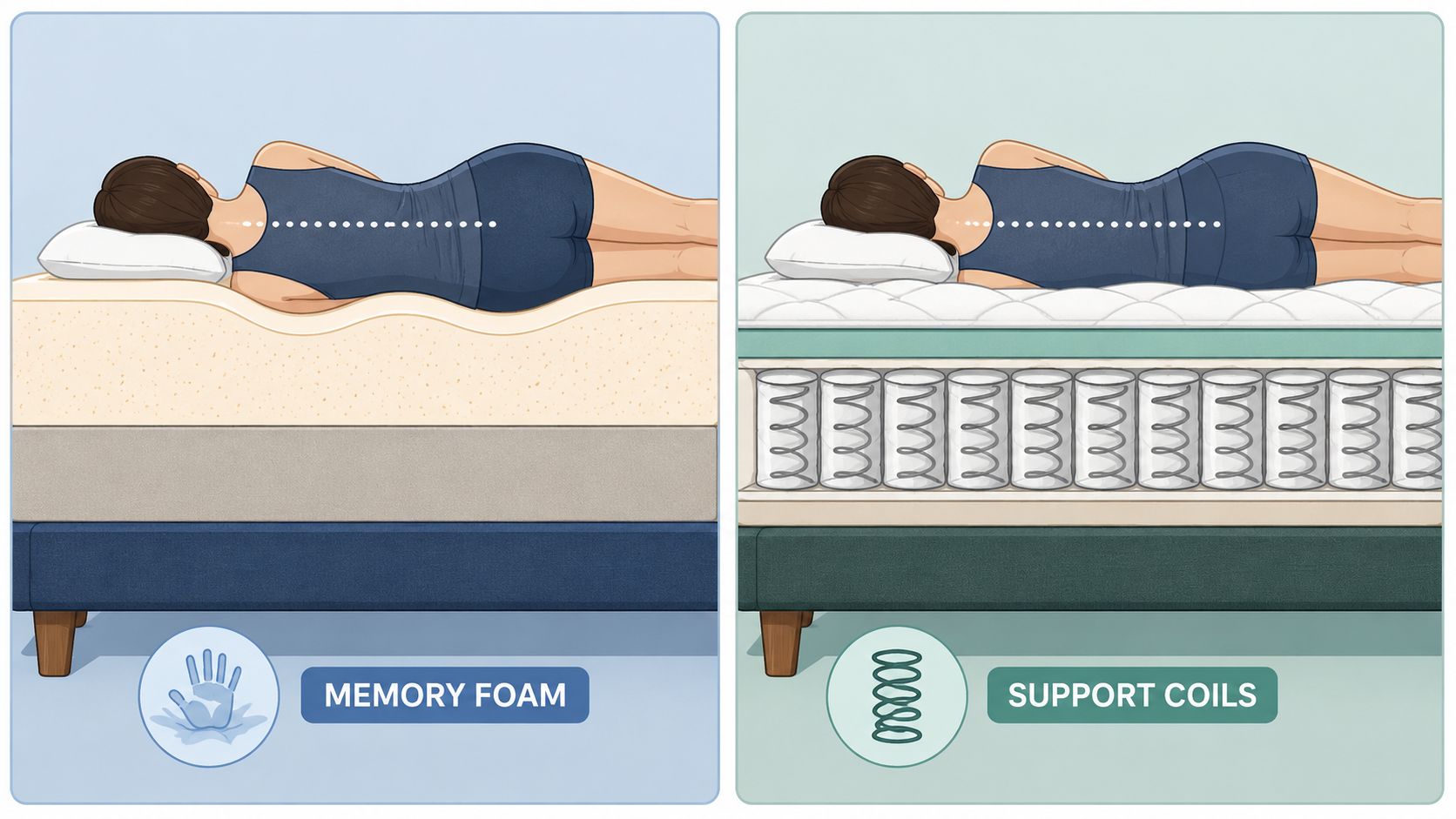
Memory foam is usually the first material discussed for hip pain because it molds more closely around the body. That contouring can reduce the sharp, concentrated pressure many side sleepers feel at the outer hip.
For shoppers dealing with both hip pain and lumbar tension, this can be a strong option when the foam isn't overly soft. The goal is a surface that lets the hip settle slightly while still holding the pelvis in a controlled position. Tempur-Pedic is one of the best-known examples of this category, and shoppers can review the feel and features of Tempur-Pedic mattresses before testing them in person.
Practical rule: If a foam mattress feels soothing at the hip but leaves the midsection drifting downward, it's too soft for the job.
Memory foam also tends to suit sleepers who don't want a lot of bounce. That can be helpful for people whose pain flares when they keep rolling and adjusting through the night.
Hybrid designs for balance
Hybrid mattresses pair a coil support core with comfort layers on top. For many shoppers with both lower back and hip pain, this is the most balanced category.
The coils provide underlying lift and help limit sag under the hips. The upper comfort layers add cushioning at the contact points. That's often a good answer for sleepers who like some contouring but don't want the deeper sink of an all-foam bed.
For hip pain, a 2026 AARP mattress roundup focused on hip pain favored mattresses with great pressure relief and spinal support, identified medium-firm construction as a comfort sweet spot, and pointed toward memory foam, hybrid, or latex designs that reduce pressure at the hip without sacrificing lumbar support.
Responsive innerspring and latex options
A modern innerspring can work well when it uses a more adaptive support system and enough cushioning on top. This category often appeals to sleepers who want easier movement and a more lifted feel. For some people with back pain, that easier repositioning matters because they don't feel stuck in the bed.
Latex usually feels more buoyant than memory foam. It contours, but in a quicker, springier way. That can help sleepers who want pressure relief without the slow-melting feel of foam.
How the main materials compare
| Material | Usually works best for | Main caution |
|---|---|---|
| Memory foam | Side sleepers, pressure-point relief, close contouring | Can feel too enveloping if the support layers are weak |
| Hybrid | Mixed pain patterns, combination sleepers, couples | Feel varies widely depending on coil strength and comfort layers |
| Innerspring | Sleepers who want lift and easier movement | Needs enough top cushioning for hip comfort |
| Latex | Shoppers who want responsive pressure relief and a cooler feel | Some sleepers find it less contouring than foam |
In Ruidoso's dry mountain air, cooling features also deserve attention. A mattress that traps heat can turn discomfort into fragmented sleep, especially for sleepers already waking from pain.
The Truth About Mattress Firmness and Support
A mattress can feel firm and still fail the back. It can also feel plush on top and provide excellent support underneath. Those are different things.
Firm isn't the same as supportive
Firmness is the first sensation. It's how hard or soft the surface feels when the body lies down.
Support is what the mattress keeps doing after several minutes, and then all night. It's the deeper job of holding the spine in a neutral position instead of letting the hips drop or the waist collapse.
That distinction matters because many shoppers with back pain overcorrect. They buy something extra firm because they assume hard equals healthy. Often, that creates pressure at the hips and shoulders and leads to even more shifting at night.
A helpful starting point for back sleepers is this guide for just-right back sleeper support, which shows why feel and alignment have to be judged together.
Why body type changes the feel
The same mattress won't behave the same way for every body. Weight distribution changes how much the hips sink and whether the support core can keep the spine level over time.
One of the most overlooked realities is durability under load. If the hips, which are usually the heaviest part of the body, sink too far, the mattress is unlikely to maintain spinal alignment over time. Clinicians also recommend checking for a straight back during a test lie-down rather than relying on comfort labels alone, as noted in this clinical guidance on back-pain mattress support.
That point matters even more for couples. One partner may feel perfectly supported, while the other sinks too far through the middle. That isn't a minor preference issue. It's a fit issue.
A quick way to judge support in the showroom
- Lie in your real sleep position: Don't test only on your back if you spend most of the night on your side.
- Stay there long enough to settle: Early comfort can hide deeper sag.
- Watch the hip line: If the pelvis dips noticeably, support is likely too weak.
- Check for pressure buildup: If the hip starts talking back quickly, the surface may be too firm on top.
Finding Your Perfect Match for Your Sleep Style
Sleep position changes what the body needs from the bed. That's where generic advice usually falls short.
Side sleepers with hip pain
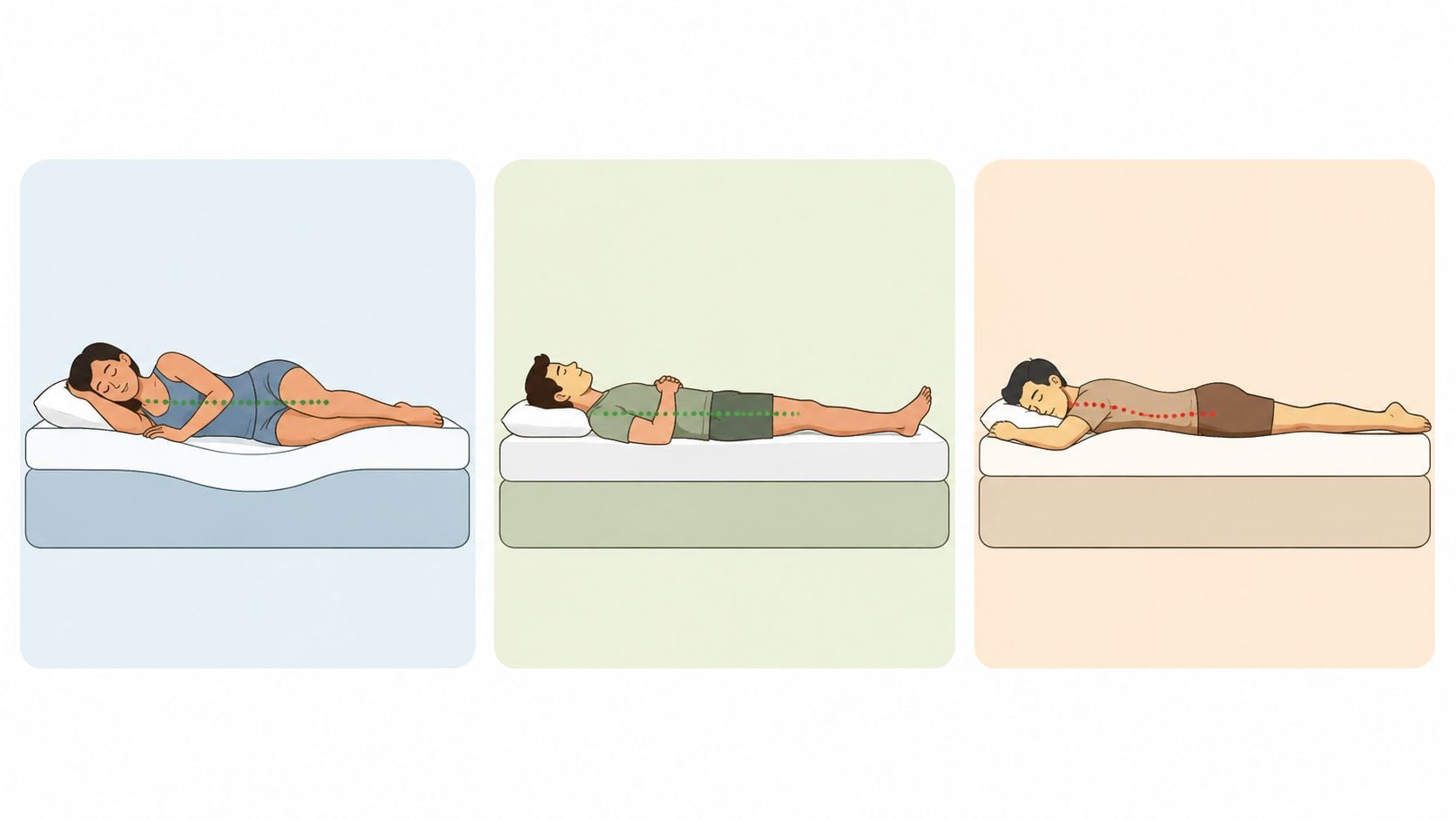
Side sleepers usually need more give at the surface. The hips and shoulders press more directly into the mattress, so a bed that feels fine to a back sleeper can feel punishing on the side.
For this group, a medium to slightly cushioned feel often works better than a rigid one. Memory foam, hybrid, and latex designs are all worth testing if they combine contouring at the hip with enough support underneath to keep the spine level.
A pillow between the knees can also help reduce hip rotation and improve alignment. That's a small change, but for some sleepers it makes a mattress feel more stable and less stressful on the joints.
Back sleepers with lower back pain
Back sleepers usually do best when the mattress fills the lumbar area without bowing the body upward or letting the pelvis sink down. In such cases, medium-firm often earns its reputation.
Clinical reviews show that a medium-firm mattress significantly improves sleep quality and reduces pain for those with chronic low back pain. Because firmness ratings vary by manufacturer, a home trial period of 2 to 3 weeks is necessary to validate that the mattress maintains proper spinal alignment for the individual sleeper. That makes in-person selection and careful follow-through especially important.
For shoppers sorting through these choices, this mattress buying guide is useful for narrowing by sleep style and comfort preference.
If the mattress feels comfortable for five minutes but the low back starts to flatten or strain after settling in, it's not the right support profile.
Stomach sleepers and combination sleepers
Stomach sleeping is the toughest position for lower back comfort because the hips tend to sink forward and increase arching through the lumbar area. These sleepers usually need a flatter, more supportive feel than side sleepers do.
Combination sleepers need something different again. The mattress has to cushion the hip on the side, but it also has to stay supportive when the sleeper rolls onto the back. That often points toward a balanced hybrid or a responsive foam design rather than an extreme on either end.
Matching pain pattern to mattress feel
- Mostly lower back pain on your back: Look for a true medium-firm feel with steady lumbar support.
- Mostly hip pain on your side: Look for more contouring on top, but not so much that the pelvis drifts.
- Pain when switching positions: A responsive surface can help the body move without fighting the bed.
- Mixed pain and mixed positions: Balanced support usually beats chasing the softest or firmest option.
In Ruidoso, there's one more practical detail. The dry mountain climate can make hot, restless sleep feel even more draining. Cooling covers, breathable coil systems, and less heat-retentive comfort layers can help preserve deeper sleep once pressure relief is dialed in.
The Miller Waldrop Difference How to Choose with Confidence
Online mattress shopping asks people to make a body-specific decision from a screen. For lower back and hip pain, that's a risky way to buy.
What in-store testing reveals
A showroom test is valuable when it's done the right way. The shopper lies in the position that causes trouble. The body settles. The hip line, shoulder pressure, and lower back posture get checked instead of guessed.
That's where established models from Tempur-Pedic, Sealy, Stearns & Foster, and Sherwood become easier to compare. The question stops being “Which bed sounds best online?” and becomes “Which support pattern fits this body?”
Mattress Pro by Miller Waldrop offers that kind of in-person mattress fitting in Ruidoso, along with the ability to compare different material types and comfort levels in one place.
Why local follow-through matters
The harder part of mattress shopping isn't only choosing. It's what happens after delivery if the feel isn't quite right once the body has slept on it.
That's where local service makes a real difference for shoppers in Ruidoso, Alto, and throughout Lincoln County. The Comfort Promise reduces the fear of choosing wrong. The Low Price Promise helps shoppers stay practical about budget. Full-Service Delivery with Professional Setup also matters more than many people expect, especially for anyone already dealing with back pain who shouldn't be wrestling a mattress into place.
The safest mattress purchase isn't the one with the loudest marketing. It's the one backed by real testing, clear guidance, and local accountability.
A family-owned store on Sudderth Drive also understands the local rhythm of mountain homes, guest spaces, and primary residences in a way a distant checkout page can't.
Your Local Path to Waking Up Pain-Free
The right mattress choice usually gets clearer when the decision is simplified. Don't start with brand hype. Start with body mechanics.
A simple way to narrow your choice
Use this checklist:
- Identify the main pain point. Is the problem more about lumbar stiffness, side-hip pressure, or both?
- Match the position. Side sleepers usually need more cushioning. Back and stomach sleepers usually need stronger control through the middle.
- Judge alignment, not label. A mattress can say medium-firm and still feel wrong for the body.
- Test for long enough to settle. Quick bounce tests don't reveal much.
- Give the mattress time at home. Clinical reviews show that a medium-firm mattress significantly improves sleep quality and reduces pain for chronic low back pain, but because firmness ratings vary by manufacturer, a home trial period of 2 to 3 weeks is necessary to confirm that it maintains proper spinal alignment for you.
What to do next in Ruidoso
The best mattress for lower back and hip pain is usually the one that balances support and pressure relief for the way the body sleeps. Not the hardest bed. Not the softest bed. The right one.
That's why in-person testing matters so much. It helps separate short-term comfort from true overnight support. It also makes it easier to compare how a hybrid, memory foam, or more responsive surface behaves under the hips and lower back.
For shoppers in Ruidoso and nearby communities, that process doesn't need to feel overwhelming. A careful fitting, a clear explanation of trade-offs, and a Comfort Promise-backed purchase can turn a frustrating search into a confident one.
Ready to transform your sleep? Visit our Sleep Pros at Mattress Pro by Miller Waldrop located at 2801 Sudderth Drive, Suite F, in Ruidoso. From luxury brands to budget-friendly solutions, we're here to help you wake up loving your mornings. Browse our collection online or stop by Monday through Saturday.