

Ruidoso Memory Foam Mattress Topper Guide

A lot of people in Ruidoso sleep on a mattress that's close, but not quite right. It may still look good, still feel supportive in spots, and still seem too expensive to replace. Yet the shoulders ache a little in the morning, the hips feel pressure after a few hours, or a partner's movement keeps pulling light sleepers awake.
That's where a memory foam mattress topper often makes sense. For many households in Ruidoso, Alto, and across Lincoln County, a topper is the practical middle ground between living with poor sleep and rushing into a full mattress purchase. Families with guest rooms, cabin owners, and longtime homeowners on the mountain often want a comfort upgrade that feels immediate, simple, and lower risk.
This topic matters even more here because mountain weather changes how sleep surfaces feel. A topper that seems comfortable in a warm showroom or after a sunny afternoon can feel very different on a cold night. That's one reason local guidance matters so much more than a random online pick.
Table of Contents
- Is Your Mattress Almost Perfect But Not Quite
- How a Memory Foam Topper Transforms Your Bed
- Choosing the Right Thickness and Density for You
- Solving for Temperature in Our Mountain Climate
- Care Maintenance and Protecting Your Investment
- The Miller Waldrop Difference Why You Should Shop Local
- Frequently Asked Questions About Toppers
Is Your Mattress Almost Perfect But Not Quite
A common story around Ruidoso goes like this. The mattress isn't old enough to feel like a clear replacement. It still supports the body fairly well. But sleep has become lighter, pressure builds at the hips or shoulders, and mornings start with stiffness instead of rest.
That's often the moment when people assume they need a whole new bed. Sometimes they do. But plenty of sleepers are dealing with a comfort problem, not a total mattress failure.
A memory foam mattress topper can bridge that gap. It adds contouring, softens a surface that feels too firm, and helps take the edge off pressure without changing everything underneath. For households trying to stretch the life of a guest mattress, improve a main bedroom, or make a vacation property sleep better, that's a smart place to start.
A topper makes sense when the mattress still has support, but the comfort layer isn't giving the body what it needs.
That distinction matters. If the mattress is sagging significantly, leaning, or broken down through the middle, a topper won't solve the core issue. If the support is still there and the surface is the problem, a topper can make a dramatic difference.
Some shoppers also need help figuring out whether they're looking at a topper issue or a replace-the-bed issue. This guide on when to replace your mattress can help sort that out before money goes in the wrong direction.
For families who've lived in Lincoln County a long time, that practical approach matters. The goal isn't to buy more than needed. The goal is to sleep better, wake up with less pain, and make a confident decision.
How a Memory Foam Topper Transforms Your Bed
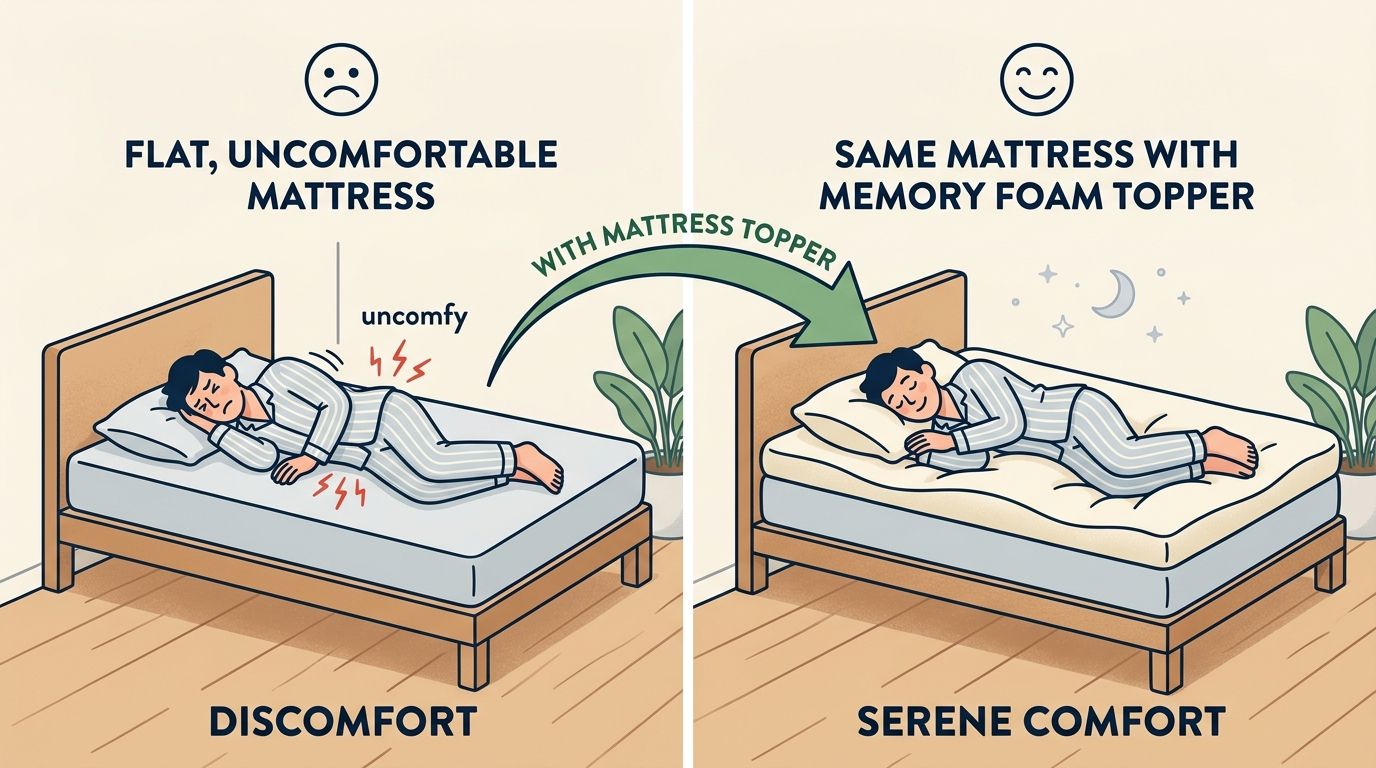
A memory foam topper changes the feel of a bed from the top down. It doesn't rebuild the support core of the mattress underneath, but it can reshape the way the body meets the sleep surface.
What Memory Foam Actually Does
Memory foam is also called viscoelastic foam. It responds to pressure and temperature, then slowly returns to shape when weight lifts away. That's why many sleepers describe it as a slow-motion hug rather than a quick spring-back surface.
According to Foam by Mail's explanation of memory foam performance, memory foam distributes weight evenly to reduce pressure points and promote spinal alignment. The same source notes that its cocooning effect minimizes motion transfer, which helps couples when one person shifts, turns, or gets up during the night. It also states that high-quality toppers can last 3 to 5 years.
The Benefits Most Sleepers Notice First
Users feel three changes right away.
- Pressure relief at the shoulders and hips. This matters most for side sleepers and anyone who feels sharp contact points on a firm bed.
- A calmer sleep surface for couples. Instead of every movement rippling across the mattress, the topper absorbs more of that motion.
- Better body contouring. The body settles into the surface more evenly, which can help the spine stay in a more natural position.
For sleepers with back or joint discomfort, that contouring can be the difference between waking up often and sleeping through the night.
Practical rule: A topper should improve comfort without making the body feel stuck or unsupported.
What Can Frustrate People
Memory foam isn't perfect, and honest guidance matters here.
Some toppers sleep warmer than people expect. Some have an initial odor when first opened. Others feel softer or firmer than the buyer pictured, especially if the product description was vague.
That's why material quality matters so much. Better-designed models use more refined foam construction, better covers, and comfort layers that feel more consistent night after night. That's especially important for premium mattresses from brands like Tempur-Pedic, Sealy, Stearns & Foster, and Sherwood, where the topper should complement the bed rather than fight against it.
Choosing the Right Thickness and Density for You
Most confusion around a memory foam mattress topper comes down to two things. Thickness affects how much cushioning a sleeper feels. Density affects support feel, pressure relief quality, and how substantial the topper feels over time.
The broad benchmark is clear. Consumer Reports' mattress topper buying guidance notes that looking for a memory foam topper at least 1.5 to 2 inches thick is important for meaningful contouring, and verified guidance also supports 2 to 3 inches as the best range for balancing pressure relief with spinal alignment. Expert benchmarks further show that 2.5-lb density gel memory foam toppers can reduce peak pressure on the sacrum by 35% compared with 1.8-lb alternatives.
A thinner topper may take the edge off a too-firm surface. A thicker, better-built topper usually changes the experience more noticeably.
Topper Thickness Guide by Sleeper Type and Weight
| Sleeper Profile | Recommended Thickness | Why It Works |
|---|---|---|
| Lighter side sleeper | 2 to 3 inches | Adds cushioning at shoulders and hips without overwhelming the mattress feel |
| Average-weight side sleeper | 2 to 3 inches | Balances contouring and alignment for common pressure points |
| Heavier side sleeper | 3 inches | Gives deeper pressure relief before the body presses through to the mattress |
| Lighter back sleeper | 2 inches | Softens the surface while preserving support under the lower back |
| Average-weight back sleeper | 2 to 3 inches | Helps the body settle evenly without too much sink |
| Heavier back sleeper | 3 inches | Adds comfort while maintaining more consistent contact through the torso |
| Stomach sleeper of most body types | 2 inches, sometimes firmer feel | Limits excessive sink around the midsection |
| Combination sleeper | 2 to 3 inches | Offers enough cushioning for side turns without sacrificing easier movement |
Side Sleepers
Side sleepers usually need the most pressure relief. Shoulders and hips carry more direct load in this position, so a topper that's too thin often feels disappointing.
A 2 to 3 inch topper is usually the safest starting point. That gives enough depth for the foam to contour before the sleeper presses into the firmer mattress below.
If a side sleeper lives with recurring hip or shoulder soreness, denser foam often feels more controlled and substantial than lower-density foam. This is one reason many shoppers look into a deeper explanation of what memory foam mattress means in real-world comfort terms.
Back Sleepers
Back sleepers need a more balanced feel. Too little cushioning can create pressure around the lower back and tailbone. Too much sink can flatten support and leave the body feeling slack.
That's why many back sleepers do well in the middle of the range. A topper that cushions evenly but doesn't swallow the hips tends to feel best.
A useful way to judge it is simple. If the bed feels firm and flat, the topper should add contour. If the bed already has some give, the topper should refine the feel, not dramatically soften it.
Stomach Sleepers
Stomach sleepers have the smallest margin for error. If the torso sinks too much, the lower back often takes the hit.
For that reason, a thinner or firmer-feeling topper is usually the better fit. Many stomach sleepers should be cautious with anything that feels overly plush or very deep.
A topper should support the body's line, not create a hammock effect. In a showroom, that's easy to test in a few minutes. Online, that's mostly guesswork.
Solving for Temperature in Our Mountain Climate
Heat is the most common complaint people bring up with memory foam. In mountain communities like Ruidoso and Alto, there's a second issue that gets less attention. Cold can change the feel too.

Cooling Features That Matter
Traditional memory foam can retain heat, which is why newer designs focus on moving warmth away from the body instead of trapping it. Verified product guidance notes that newer toppers may use gel, copper, or graphite infusions, or rely on open-cell foam structures so hot air can escape. Verified technical data also states that graphite-infused or gel-layered toppers can increase thermal conductivity by up to 40%, helping reduce the trapped-heat feeling found in standard polyurethane foam.
These are the cooling features worth paying attention to:
- Gel infusion helps pull heat away from the sleeper and can make the initial surface feel less stuffy.
- Copper or graphite infusion aims to improve heat movement through the foam.
- Open-cell design creates a more breathable internal structure than older, closed-feel foams.
- Breathable cover fabrics help the topper release warmth instead of sealing it in.
A useful companion read for this topic is what to look for to sleep cooler at night, especially for hot sleepers in dry mountain air.
Why Ruidoso Shoppers Need to Think About Cold Too
This is where local sleep advice matters. In Ruidoso and across Lincoln County, daytime and nighttime conditions can shift fast. A topper that feels fine during setup may firm up during a cold night if the foam isn't well made.
Verified data tied to Sleepopolis' memory foam topper review roundup notes that 68% of users in cold regions reported reduced topper performance as the foam stiffened. That matters for cabins, guest spaces, and homes where room temperatures dip overnight.
Cold-sensitive foam can feel less contouring at bedtime, then change again as body heat warms the surface.
That doesn't mean memory foam is a bad match for mountain living. It means shoppers should look for better thermal stability, better materials, and a topper that won't become overly rigid when the bedroom cools down.
For many households, that points toward better-engineered sleep products and away from bargain options with vague specs. Tempur-Pedic and other premium sleep systems often appeal to local shoppers for that reason. The goal isn't just softness. It's a more consistent feel through changing temperatures.
Care Maintenance and Protecting Your Investment
A topper works best when it stays clean, dry, and properly supported. That sounds simple, but foam breaks down faster when people soak it, fold it tightly, or leave spills sitting too long.
Good care matters even more in cabins and second homes. In those spaces, bedding may sit unused for stretches, then get heavy use all at once by guests or family.
Simple Care Habits
A few habits go a long way.
- Keep it covered with a fitted sheet or suitable protector so skin oils and spills don't settle directly into the foam.
- Let it breathe after setup or cleaning so moisture doesn't stay trapped.
- Handle it gently when moving it. Foam can tear if it's yanked sharply from one corner.
- Check the mattress underneath from time to time. A topper can't compensate for a support surface that has already failed.
How to Clean a Spill the Right Way
When a spill happens, speed matters more than force. Scrubbing aggressively or soaking the foam can do more harm than the stain itself.
Verified care guidance states that the correct method is to dab stains, spray a 1:1 vinegar solution, sprinkle baking soda, wait 8 hours, and then vacuum to help maintain the foam's integrity. A more detailed version of that process appears in this guide on how to clean a memory foam mattress topper.
Never treat memory foam like a regular washable blanket or fiber pad. It needs spot care, not saturation.
How Long a Topper Should Last
A well-made topper isn't disposable. Verified guidance indicates that a 3-inch memory foam topper can extend a mattress's lifespan by up to 40% by reducing wear on core support layers. That can be useful for a good mattress that needs a comfort refresh rather than a replacement.
Quality also affects longevity. As noted earlier, better toppers can last for years, while low-grade foam usually loses comfort and consistency sooner. On premium mattresses from Sealy or Stearns & Foster, a well-matched topper often acts like a buffer layer that absorbs some day-to-day wear.
The Miller Waldrop Difference Why You Should Shop Local
It's easy to read product descriptions online. The hard part is knowing how a topper will feel at bedtime, in a real bedroom, on a real mattress.
That uncertainty is why local shopping still matters. A memory foam mattress topper isn't just a size choice. It's a feel choice, a temperature choice, and for many households in Ruidoso, a climate choice too.
Why In Person Testing Still Wins
A topper can sound perfect on a screen and still be wrong in person. One sleeper may love a close, contouring feel. Another may immediately feel restricted. One couple may want more cushioning. Another needs better movement isolation without extra warmth.
That's hard to judge from packaging language alone.
Local shoppers in Ruidoso and Alto also have a practical advantage. They can compare sleep surfaces side by side, ask questions about pairing a topper with a Tempur-Pedic, Sealy, Stearns & Foster, or Sherwood mattress, and avoid the usual trial-and-error cycle that comes with boxed sleep products.
What Local Service Changes
The strongest reason to shop local is confidence. People worry about choosing wrong, wasting money, and ending up with one more sleep product that doesn't solve the underlying problem.
That's where the Miller Waldrop legacy stands out after 70 years of family service in the community. The value isn't just selection. It's guidance rooted in local conditions, plus the peace of mind that comes from the Comfort Promise, the Low Price Promise, and Full-Service Delivery with Professional Setup.
For shoppers who want to understand the broader local approach behind that service, this overview of the Southwest Mattress Company connection gives useful context.
A website can ship foam. It can't read body language, notice alignment issues in the showroom, or help a family in Lincoln County match comfort to the way they sleep.
Frequently Asked Questions About Toppers
Can a topper fix any bad mattress
No. A topper can improve comfort on a mattress that still has good support, but it can't repair deep sagging, broken support, or a mattress that has already failed structurally.
Do toppers work with adjustable bases
Usually, yes. Most memory foam toppers are flexible enough to move with an adjustable base. The key is making sure the topper sits flat, doesn't bunch, and pairs well with the mattress below.
How can someone tell if the problem is the topper or the mattress
If the mattress still feels level and supportive, but the surface feels too firm or creates pressure, a topper may help. If the body rolls into dips, the edge collapses, or support feels uneven, the mattress itself is more likely the issue.
Are memory foam toppers good for guest rooms and cabins
They often are. They can make a guest bed feel more welcoming without replacing the entire mattress, and they're useful for vacation properties that need a comfort upgrade. In mountain homes, it's smart to choose better-quality foam that handles temperature changes more consistently.
Ready to transform your sleep? Visit Mattress Pro by Miller Waldrop at the Sleep Pros showroom located at 2801 Sudderth Drive, Suite F, in Ruidoso. From luxury brands to budget-friendly solutions, the team is there to help shoppers wake up loving their mornings. Browse the collection online or stop by Monday through Saturday.