

Memory Foam Mattress Roll Up: Pros, Cons, & Unboxing Guide


A rolled mattress on a front porch still stops people in their tracks around Ruidoso. It looks too small to be a real bed, too convenient to be serious, and too modern to trust without questions. For a lot of neighbors in Lincoln County, that curiosity turns into the same practical concerns. Will it sleep well, will it hold up, and what happens after the box is opened?
Those are fair questions. A memory foam mattress roll up can be a smart fit in the right room and for the right sleeper, especially when someone needs easier transport to Alto, a guest room setup, or a mattress that can make it through a tight hallway. But the online listing usually leaves out the trade-offs, and that's where local sleep guidance still matters.
For families who've shopped mattresses in Ruidoso for generations, the value has never been just the product. It's the support before and after the sale, the kind of care built through the Miller Waldrop legacy over 70 years of serving this community. That's also why services like full-service delivery with professional setup still make a difference. Convenience matters, but so does getting the bed right the first time.
Table of Contents
- The Mystery of the Mattress in a Box
- The Science Behind a Rolled Mattress
- Convenience vs Compromise Pros and Cons
- Your Step by Step Unboxing and Expansion Guide
- Long Term Care Warranty and Storage Rules
- Why Buying Local on Sudderth Drive Beats the Box
The Mystery of the Mattress in a Box
A boxed mattress feels a little like a magic trick. It arrives folded, wrapped, and compressed so tightly that it seems impossible for it to become a proper sleep surface. For first-time buyers, that first reaction is usually skepticism, not excitement.
That skepticism is healthy. A mattress isn't a throw pillow or a small furniture order. It's the surface that has to support your shoulders, hips, lower back, and movement night after night. A compact package can be convenient, but it doesn't automatically mean the construction inside is right for your body.
Why the trend took off
The appeal is obvious in mountain communities. A roll-up mattress can be easier to move into a cabin, upstairs bedroom, or vacation property where corners are tight and help is limited. It also removes some of the strain of getting a traditional mattress through the door.
A compressed mattress solves a delivery problem first. Sleep comfort still has to be judged separately.
That's where many shoppers need a calmer, more experienced voice. Families in Ruidoso, Alto, and across Lincoln County don't just need a mattress that fits in a box. They need one that fits the sleeper.
What a neighbor should know before buying
A boxed memory foam bed can be perfectly legitimate. It can also be the wrong match if the foam is too soft, too heat-retentive, or too limiting for someone who needs easier movement in and out of bed.
That's why long-standing local mattress businesses still matter. The Miller Waldrop tradition has always centered on sleep, not just inventory. The essential question isn't whether a mattress rolled up. The essential question is whether it will still feel right after the novelty of the box is gone.
The Science Behind a Rolled Mattress
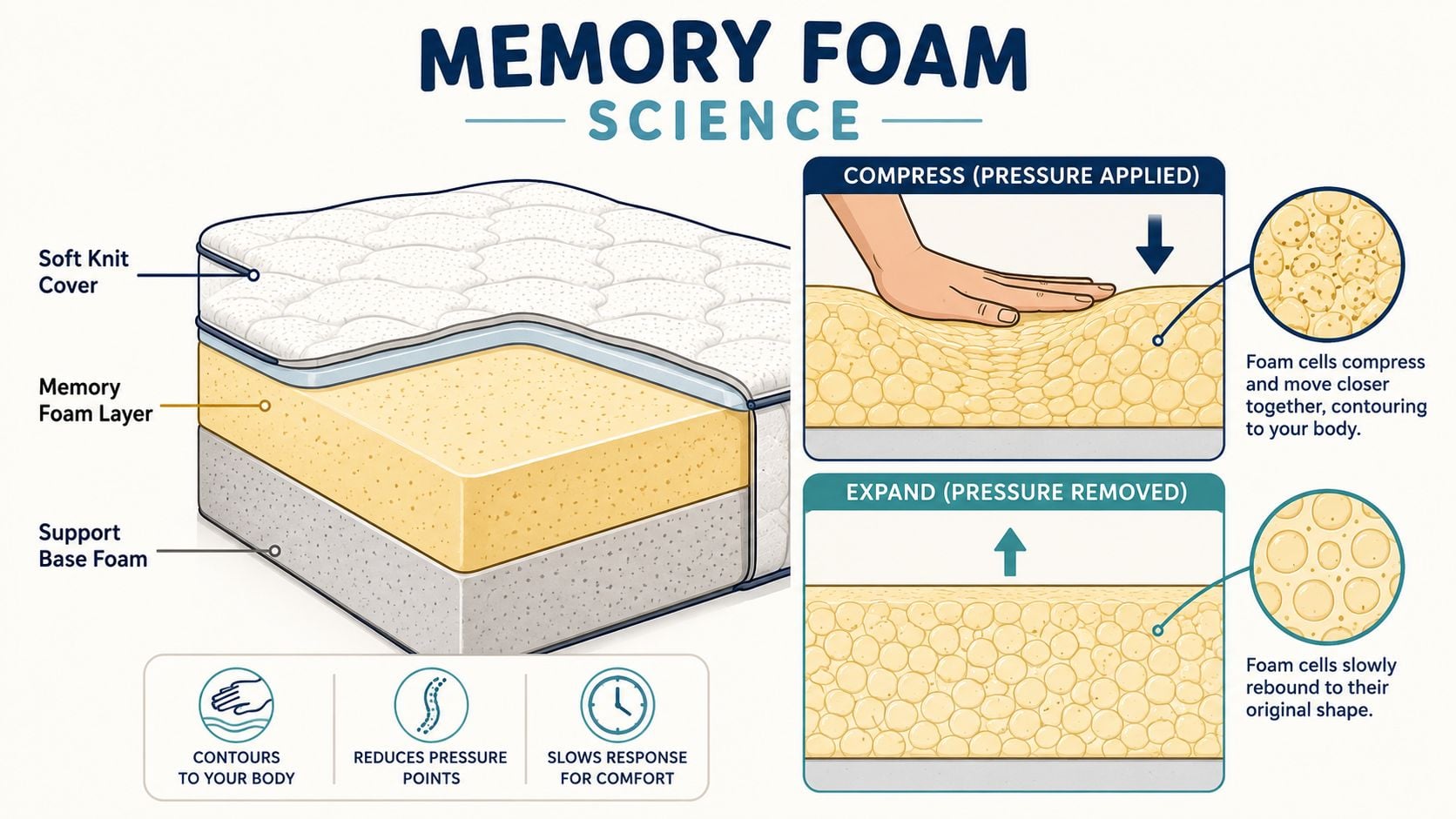
A rolled mattress works because certain foams can handle short-term compression and still recover their shape. The key is the material itself, how dense it is, how the foam cells are formed, and how long it stays compressed before it reaches your bedroom.
Why memory foam can be compressed
Memory foam is viscoelastic. It reacts to pressure, body heat, and time. When a manufacturer removes air and compresses the mattress under controlled conditions, the foam cells collapse down for shipping, then gradually reopen after the plastic comes off.
That recovery is the whole point. A boxed mattress only succeeds if the foam can return close to its intended feel and support once it has fully expanded.
According to guidance on rolling a memory foam mattress, the process relies on vacuum compression and tight sealing, which reduces the profile enough to roll and ship. The foam is not meant to live that way forever. It is meant to tolerate that step, then recover.
What the foam is really doing inside the plastic
Good foam does more than squash flat. It resists tearing, holds its cell structure, and re-expands with reasonable consistency across the surface. Poorer foam can recover unevenly, feel lumpy, or lose some of its original support faster.
This is one of the parts online product pages often gloss over. Two mattresses can both arrive rolled up and still perform very differently after a week, a month, or a year.
Density, layer design, and curing all matter here. So does time in the box. In a local store, that conversation is usually more honest because the goal is to match the sleeper to the build, not just get a compressed bed onto a truck.
Why softness and support are different
Memory foam is expected to do two jobs at once. It needs to cushion pressure points at the shoulders and hips, and it needs to keep the body from dipping out of alignment.
Those are related, but they are not the same. A mattress can feel comfortable for five minutes and still let the midsection sink too far overnight. It can also feel firmer at first touch and end up supporting the back better over the long run.
That trade-off matters in real homes around Ruidoso, where sleepers range from side sleepers with shoulder pain to older customers who need easier movement and steadier support getting in and out of bed. Roll-packed construction does not answer those needs by itself. Foam design does.
For shoppers who want a clearer foundation before visiting the showroom, this sleep education guide from Mattress Pro covers the basics in plain language.
Convenience vs Compromise Pros and Cons
A boxed memory foam mattress solves one problem very well. It gets a bed through a tight stairwell, into a mountain cabin, or across town without much fuss.

That convenience is real. So is the compromise.
Where a roll-up mattress makes sense
In Ruidoso, I see a few situations where roll-packed beds fit the job well. A guest room with narrow access. A second home in Alto that needs to be furnished without hauling a full-size mattress up the hill. A short-term rental where the owner wants a cleaner upgrade than an old innerspring or a thin sleeper sofa mattress.
They also work well for shoppers who need a faster setup and are willing to accept a little uncertainty on feel.
Many people do sleep better on quality memory foam than they do on basic air beds, thin pads, or worn-out spare-room mattresses. That part is not hard to understand. More cushioning usually feels better than almost no cushioning at all.
What websites usually downplay
The hard part is fit.
A product page can describe plush, medium, or firm, but it cannot tell you how a mattress will feel under your shoulders at 2 a.m. or whether your lower back will still feel supported after a full week. That guesswork gets more expensive for couples, especially if one sleeper wants pressure relief and the other needs stronger support. This guide to shopping for a mattress as a couple when you have different sleep needs can help narrow that down before a boxed return turns into a chore.
Movement is another trade-off that online listings often soften. Memory foam can reduce pressure points, but it can also make turning, repositioning, and getting out of bed harder for some sleepers. That matters for older adults, anyone with joint pain, and anyone who does not like the slow, sinking feel. As discussed in an aging care community conversation about difficulty turning in bed on memory foam, that contouring feel is not always helpful if mobility is already a concern.
Practical rule: Pressure relief helps only if the sleeper can still move comfortably.
The other compromise is support over time. Some mattresses handle compression well and recover as they should. Others look fine on delivery day, then show their weaknesses after regular use. Online brands sell convenience first. A local store has to deal with what happens six months later, which usually leads to a more honest conversation.
That is the part bed-in-a-box sites rarely emphasize. Delivery is only one day. Living with the mattress offers the true measure.
Your Step by Step Unboxing and Expansion Guide
Direct answer: A rolled memory foam mattress usually needs patience more than troubleshooting. Most problems reported on day one are expansion issues, not permanent defects.
Set the room before opening the plastic
Start with the base ready. Put the bed frame, platform, or foundation in place first so the mattress doesn't need to be dragged around after it opens.
Room conditions matter too. In Ruidoso's dry mountain air, foam sometimes needs a little help settling in. A warmer room tends to make expansion easier, so avoid opening a foam mattress in a cold space if possible.
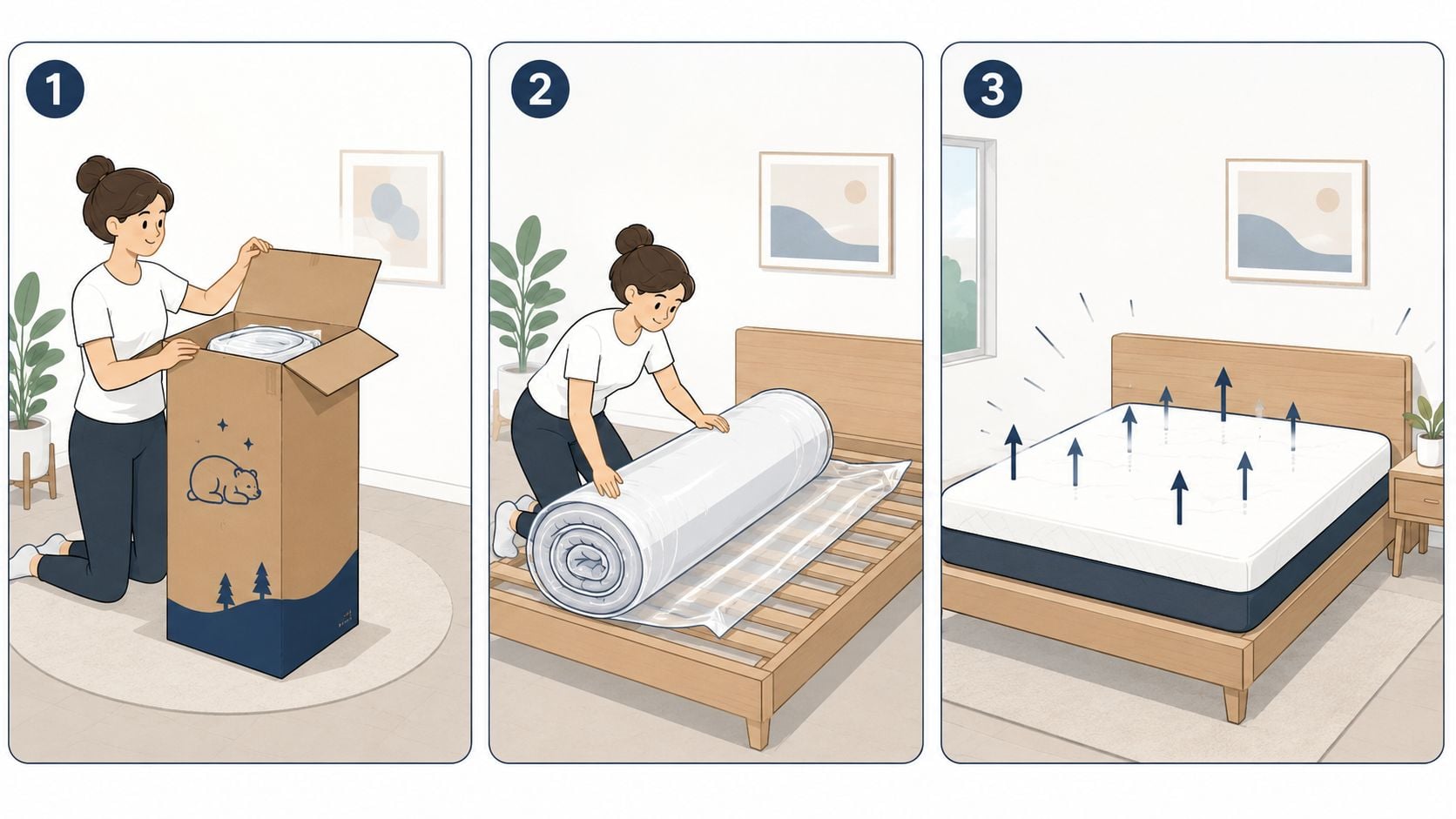
A practical unboxing sequence
- Clear the area first. Remove sharp tools, bedframe hardware, and anything that could snag the cover.
- Set the rolled mattress on the foundation. It's easier to position while it's still compact.
- Cut the outer packaging carefully. Avoid slicing deep into the plastic. The cover underneath can be damaged quickly.
- Let the mattress unroll flat. Once the tight wrap is off, the foam will begin to take shape on its own.
- Give it time. It can take up to 48 hours for a memory foam mattress to reach its true size after unrolling, and during decompression it expands in thickness, not length, according to this explanation of the 24 to 48 hour expansion window.
Many owners think the mattress is too short when it first opens. In most cases, what they're seeing is incomplete decompression, not the final size.
Don't judge a new foam mattress in the first few hours. Judge it after it has fully opened.
What to watch for during the first two days
A little unevenness at first isn't unusual. Corners, edges, or the center can open at slightly different rates. That usually improves as the foam relaxes.
If the room is cool, give it more time before making a final call. If the base underneath is uneven or unsupported, fix that before blaming the mattress. For more setup basics and practical bedroom advice, these helpful mattress tips are worth reviewing.
Long Term Care Warranty and Storage Rules
Direct answer: Once a memory foam mattress has fully expanded, it should be treated like a finished sleep product, not like temporary camping gear. The biggest long-term mistake is trying to compress it again for storage.
Support surfaces still matter
A roll-up mattress still needs a stable, supportive surface. If the base sags, flexes too much, or lacks proper ventilation, the sleeper will feel those problems through the foam.
That matters for comfort and for protection. A mattress used on the wrong foundation can develop wear patterns that look like foam failure even when the actual issue is underneath. Owners of guest properties and vacation homes in Lincoln County often overlook that part because the room looks fine, but the support system may not be doing its job.
Storage is where many owners make a costly mistake
According to guidance on re-compressing memory foam after expansion, trying to re-roll and vacuum-compress a memory foam mattress at home can permanently damage the foam's cellular structure, causing irreversible loss of support and contouring ability. Factory compression is a controlled process. A garage or spare room setup isn't the same thing.
That matters for seasonal properties. A homeowner may think rolling the bed back up will save space between bookings, but it can shorten the useful life of the mattress and leave the next guest sleeping on compromised foam.
A safer long-term approach includes:
- Store it flat when possible. Keep the mattress on a clean, dry, supported surface.
- Protect the cover. Tears, punctures, and moisture problems can turn a manageable issue into a major one.
- Watch for replacement signs. Permanent compression, visible cover damage, or a clear drop in comfort are signs the mattress may be ready for replacement.
For care details that affect long-term protection, reviewing mattress warranty guidance can help owners avoid preventable mistakes.
Why Buying Local on Sudderth Drive Beats the Box
A couple walks into the store after two bad nights on a mattress they bought online. On the website, it sounded perfect. In the bedroom, it sleeps hot, feels softer than expected, and leaves one partner fighting to get comfortable by 3 a.m.
A showroom solves problems a product page can't
That happens more than online brands admit. A rolled mattress is convenient to ship, but convenience does not answer the harder questions. Does the bed keep your spine level? Is the foam too slow for an older sleeper who needs to change positions easily? Will it feel comfortable in Ruidoso after a dry, cool night turns into a warmer afternoon?
A showroom lets shoppers test those trade-offs in real time. One person may love the close contour of memory foam. Another may need a more lifted, easier-moving feel from a different construction. Those differences are hard to judge from star ratings and marketing copy.
The risk is not just buying the wrong mattress. It is getting stuck with the wrong mattress after the box is gone.
The fear of choosing the wrong bed is real. That's why a Comfort Promise matters more than flashy packaging.
The local difference is confidence
A local Sleep Pro can explain what is inside the mattress, what kind of foundation it needs, and how the comfort materials will likely feel after the break-in period. That guidance matters because every mattress involves trade-offs. Softer foams can relieve pressure well but may feel less supportive to some sleepers. Firmer surfaces can improve ease of movement but may create pressure points if the fit is off.
Local service also helps after the sale, which is the part many bed-in-a-box sites barely talk about. If the comfort is not right, shoppers want a real conversation with someone in town, not a return portal and a string of emails.
That is why buying on Sudderth Drive gives people more peace of mind:
- Comfort Promise helps reduce the stress of choosing the wrong feel.
- Low Price Promise gives shoppers confidence without chasing rotating online discounts.
- Full-Service Delivery with Professional Setup saves you from dragging a heavy box through tight corners, cutting layers of plastic, and hoping the bed works once it opens.
A mattress is a long-term purchase. Local support makes that purchase safer. Visit Mattress Pro by Miller Waldrop at 2801 Sudderth Drive, Suite F, in Ruidoso to try the options in person and get help from a team that knows how people here sleep.