

Your Sleep Health App Guide: Get Better Sleep in 2026

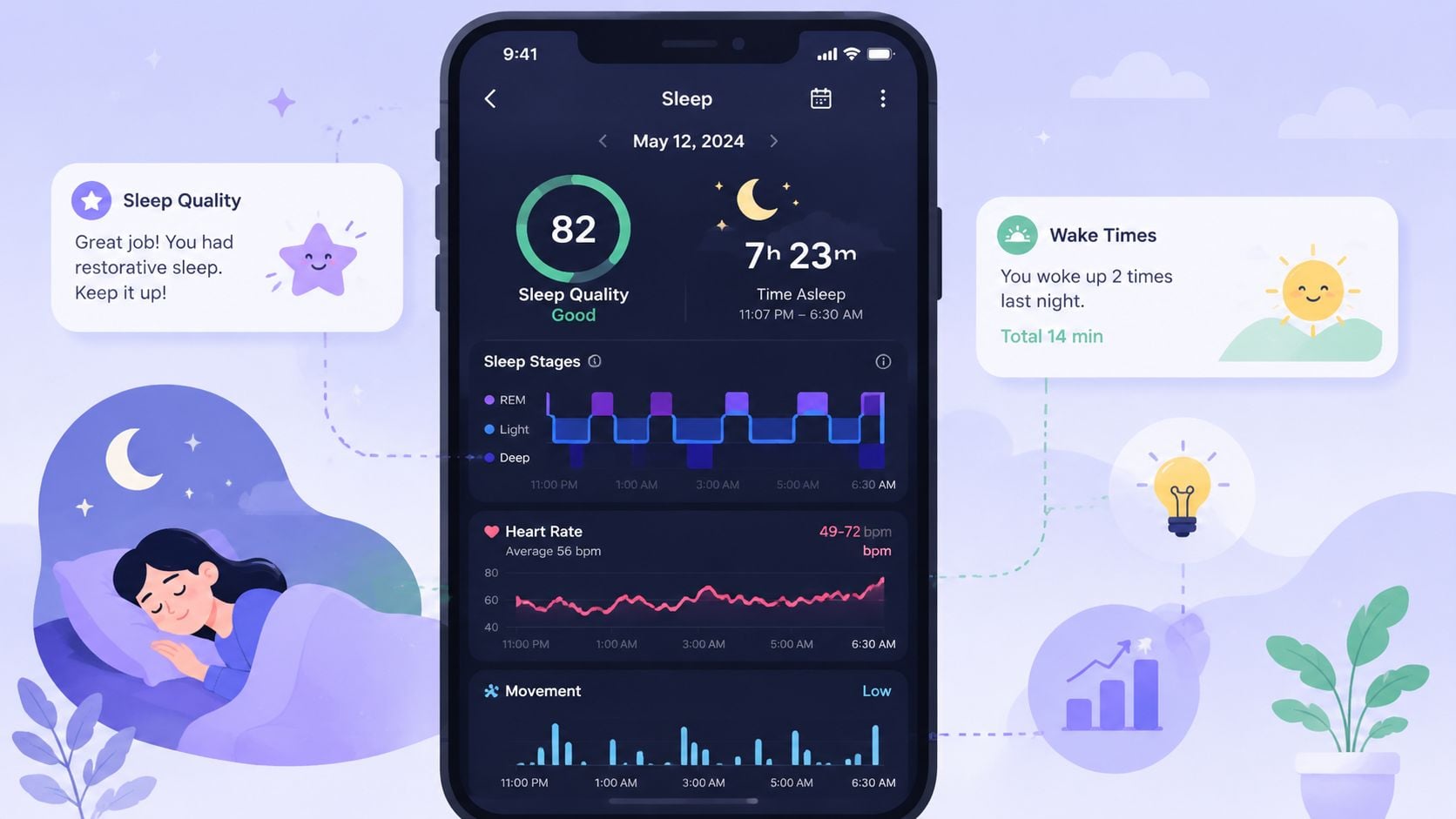
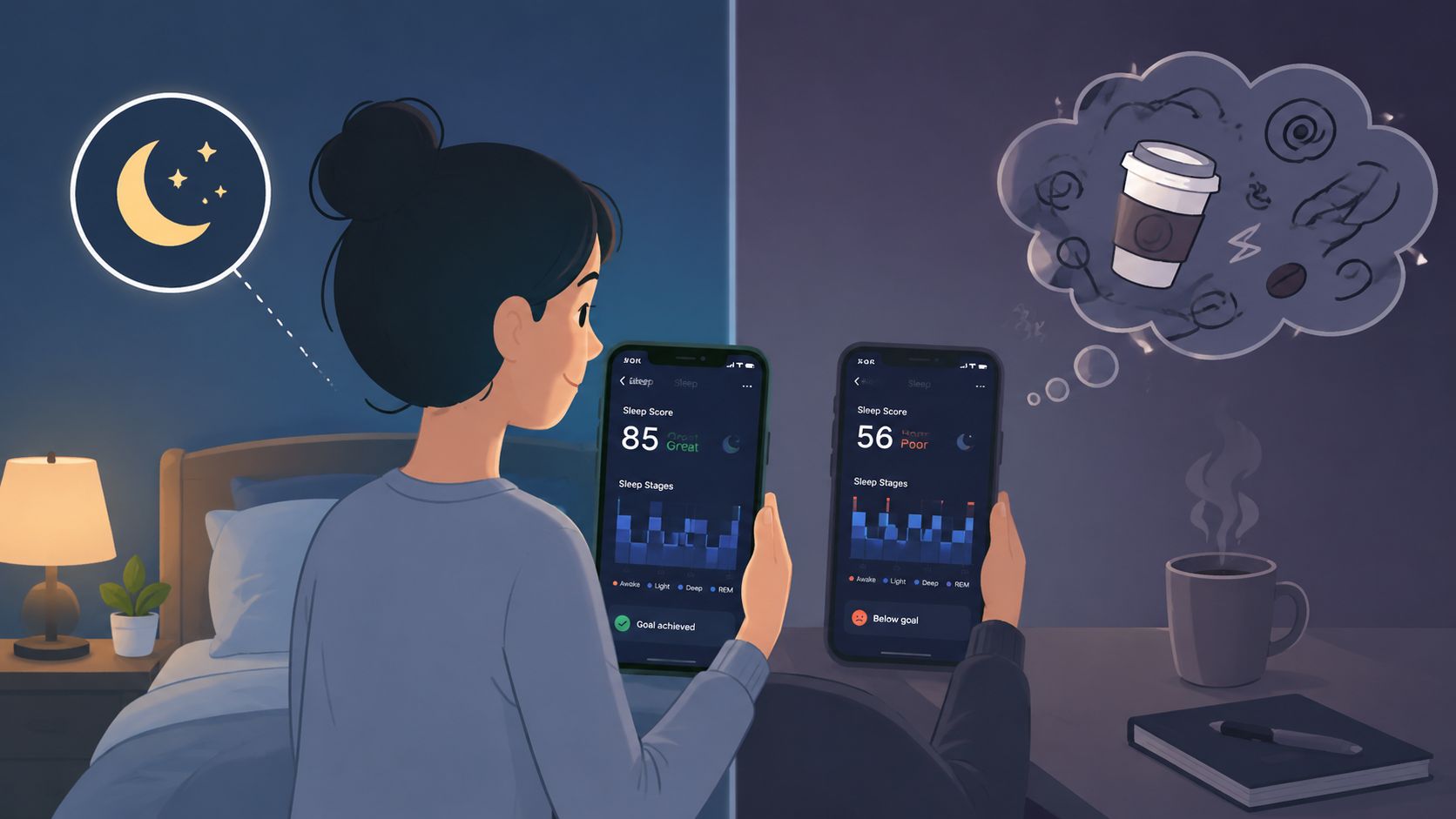
A lot of people in Ruidoso start the day the same way now. The phone comes off the nightstand, the sleep app opens, and a score appears before breakfast does. A fair score can feel reassuring. A low one can leave a person wondering whether the problem is stress, altitude, late coffee, or the mattress itself.
That morning ritual became common because sleep tracking moved from novelty to everyday life as smartphone use surged. A peer-reviewed review noted sleep app ownership was increasing “exponentially,” estimated 6 billion smartphones would be in use by the end of 2020, and found that less than 16% of apps were developed with clinician input, which shows growth happened faster than scientific validation did (peer-reviewed review of sleep app growth and validation). For shoppers trying to sleep better, that matters. A sleep health app can be useful, but it can't replace the basics of comfort, support, and a bedroom setup that works in Ruidoso's dry mountain air.
Table of Contents
- The Rise of the Sleep Health App
- What Sleep Health Apps Actually Do
- The Real Benefits and Scientific Limits
- Privacy Concerns and Reading the Fine Print
- How to Choose the Right App for You
- Beyond the App The Miller Waldrop Difference
The Rise of the Sleep Health App
At 6:30 in the morning, a lot of folks in Ruidoso do the same thing. They reach for the phone, squint at a sleep score, and try to make sense of how they feel. The number can be reassuring. It can also be confusing when the app says the night looked fine, but your shoulders are tight and you still woke up tired.
That gap helps explain why sleep health apps caught on so quickly. They gave people a simple way to check on sleep without keeping notes by hand or guessing from memory. A phone on the nightstand or a wearable on the wrist made sleep feel measurable, almost like checking the weather before heading out.
There is real appeal in that. Sleep is hard to judge from one groggy morning. An app turns a vague complaint into something you can follow over time, which makes the problem feel less slippery and more workable.
Why people keep using them
People stick with sleep apps because feedback arrives fast. If dinner ran late, the bedroom felt warm, or stress stayed high into the evening, the app offers a record to compare against the next night. That kind of routine can help someone notice patterns they would have missed.
It also gives shape to a problem that often feels personal and frustrating. Poor sleep can make neighbors wonder, "Is it stress? Is it age? Is it my schedule?" A graph cannot answer every one of those questions, but it can give you a starting point.
A sleep app works like a dashboard light in your truck. It tells you to pay attention. It does not always tell you which part needs work.
That matters in the bedroom. If an app keeps showing restless nights, the issue may have less to do with the phone and more to do with the surface under your body. Pressure buildup, trapped heat, sagging support, and motion from a partner can all break up sleep in ways a score cannot fix. In our dry mountain climate, that comfort piece matters more than many people expect. A sleeper who runs hot may need cooling materials and steadier support, not just better tracking.
That is why the best use of a sleep health app is practical. Use it to notice patterns, then connect those patterns to your real sleep environment, including your mattress, pillow, room temperature, and bedtime habits. Readers who want a broader foundation can explore the Sleep Health Wellness Lab.
What Sleep Health Apps Actually Do
Most sleep apps do a handful of jobs. They collect signals, turn those signals into an estimate, and present the result in a way that feels simple enough to use every morning.
Tracking turns a night into a pattern
The first job is sleep tracking. An app usually uses movement, timing, and sometimes wearable data to estimate when a person fell asleep, when they woke, and how steady the night looked.
That's why the display often includes sleep stages, wake-ups, and total sleep time. The app is taking lots of small signals and building a story from them. It isn't reading the brain directly. It is estimating from indirect clues.
A second job is trend spotting. One rough night may not mean much. Ten nights with similar interruptions may point to a real issue with schedule, comfort, or sleep environment.
Some people find this most helpful when they're testing one change at a time, such as:
- Earlier bedtime: The app may show whether a small schedule shift leads to more consistent rest.
- Cooler room setup: This can help hot sleepers see whether fewer wake-ups follow.
- New mattress or pillow: The pattern may reveal less tossing and turning over time.
Scores, alarms, and coaching
Many apps turn complicated data into a Sleep Score. Google Health says most users see an average score between 72 and 83, with 90 to 100 labeled “Excellent,” 80 to 89 “Good,” 60 to 79 “Fair,” and below 60 “Poor” (Google Health explanation of Sleep Score ranges). That scoring model helps people track trends without needing to decode raw sleep logs.
Think of the score like a school grade. It simplifies many pieces into one number. That helps with habit tracking, but it can also hide the details that matter.
Apps also often include:
- Smart alarms: These try to wake a person during a lighter phase of sleep within a chosen window.
- Sleep coaching: The app may suggest routines like a steadier bedtime or less screen use late at night.
- Wearable integration: Some systems combine app software with body data for a fuller nightly estimate.
- Long-term history: The most useful view is often weekly or monthly, not just one dramatic night.
A single night can be noisy. A trend is usually more useful than a one-morning reaction.
That's especially important for mattress shoppers. If a person sees repeated restlessness around the hips, shoulders, or lower back, the app may not name those pressure points directly. But the pattern can still point toward a support issue. Readers wanting more sleep basics can browse sleep knowledge resources.
The Real Benefits and Scientific Limits
The best thing a sleep health app does is build awareness. The biggest mistake people make is assuming awareness equals diagnosis.
Where apps help most
An app can help a person notice patterns that would otherwise blur together. That's valuable when sleep problems feel random.
For example, a person may notice lower scores after falling asleep on the couch, sleeping in a guest room, or spending the night on an older mattress with poor support. Another person may learn that bedtime consistency matters more than they thought. The app becomes a mirror for habits.
That can be motivating because it turns sleep from a vague frustration into something trackable. For many people, that alone encourages better routines.
Here's where an app is often most practical:
- Habit tracking: It helps connect routines with next-day rest.
- Consistency checks: It makes bedtime drift easier to spot.
- Mattress evaluation: It can reveal whether sleep seems steadier after a change in the sleep surface.
- Shared sleep conversations: Couples can use trends to talk about motion, snoring, or room temperature without guessing.
Where the science draws a line
Consumer trackers are generally better at detecting sleep versus wake than they are at classifying detailed sleep stages. Even the best-performing consumer wearables only reach about 79% agreement with clinical polysomnography for four-stage staging, and they often overestimate total sleep time because brief awakenings may be mislabeled as light sleep.
That's why a person can feel tired while the app insists the night looked decent. The app may miss short awakenings or smooth over restless periods.
Practical rule: Use app data to guide questions, not to end them.
Clinical sleep studies remain the gold standard for exact staging. That doesn't make apps useless. It places them in their appropriate role. They're everyday tools for habit awareness, not precise medical instruments.
For mattress shopping, this is a healthy way to read the numbers. If an app shows repeated restlessness, that's enough to investigate support, pressure relief, and cooling. It isn't enough to conclude exactly how much deep or REM sleep a person got. Readers who want a plain-language refresher on sleep stages can visit what REM sleep is and why it matters.
Privacy Concerns and Reading the Fine Print
Sleep data feels personal because it is personal. Bedtime, wake time, restlessness, and overnight patterns can reveal a lot about health, stress, and daily life.
That's why the privacy policy matters almost as much as the feature list. A polished app screen can make people forget they're sharing sensitive information.
What to check before sharing sleep data
A good first step is reading the fine print with a shopper's mindset. Not every app handles data the same way.
Before downloading, look for:
- Data use details: Does the company explain how sleep data is stored, shared, or used?
- Account controls: Can the user delete data or export it easily?
- Device permissions: Does the app ask for access that seems unrelated to sleep tracking?
- Clear language: If the policy is hard to understand, that's not a great sign.
A practical reference point for consumers who care about policy language is this privacy policy page, which shows the kind of transparency people should expect when sharing personal information online.
Wellness tool, not a diagnosis tool
Many readers often get tripped up on this point. A sleep health app may suggest that something looks off, but it can't diagnose a disorder.
A systematic review found a sleep app overestimated sleep latency by 15.6 minutes on average and found no evidence supporting app-based claims for diagnosing sleep disorders (systematic review on app-based sleep screening limits). That's a serious limit for anyone worried about insomnia, sleep apnea, or fragmented sleep.
If a person in Ruidoso or Alto wakes choking, snores heavily, feels exhausted despite long nights, or notices worsening symptoms, an app should be treated like a prompt to seek care, not a green light to ignore the problem.
A reassuring score can still coexist with poor sleep, an unhealthy mattress setup, or a condition that needs medical attention.
How to Choose the Right App for You
The right sleep health app depends less on marketing and more on the sleeper's real life. A shift worker in Lincoln County needs something different from a retired couple furnishing a guest room or a hiker trying to recover after long mountain days.
That matters because the market is growing fast, but growth doesn't guarantee inclusion. The sleep monitoring app market is projected to expand at a 17.9% CAGR, while equity-focused sleep research points to the need for tools that better fit diverse populations, including shift workers and people affected by different living environments (research on growth and inclusion gaps in sleep apps).
Start with your real sleep problem
A lot of people choose an app by browsing screenshots. A better approach is to start with the question that keeps them up at night.
Someone who wakes hot may care most about overnight trend tracking and room-condition notes. Someone with back pain may care more about whether the app helps identify tossing, turning, and interrupted nights that suggest pressure or alignment problems. Couples may need a less intrusive setup if one partner doesn't want to wear anything.
These local examples make the point:
- The Active Mountain Sleeper: Wants recovery patterns, consistent bedtime prompts, and easy trend views after strenuous days.
- The Light-Sleeping Couple: Needs simple tracking that doesn't create extra bedroom disruption.
- The Back-Pain Shopper: Benefits from data that highlights repeated wake-ups, especially when comparing one mattress feel to another.
- The Shift Worker: Needs flexible scheduling support because a standard nighttime routine may not fit.
The best app isn't the one with the longest feature list. It's the one a person will actually use and understand.
Choosing a Sleep App Feature Checklist
| Your Persona | Key App Feature to Prioritize | Why It Matters |
|---|---|---|
| Active Mountain Sleeper | Trend tracking over multiple nights | Recovery often shows up as patterns, not one-night snapshots |
| Hot Sleeper in Ruidoso | Notes for temperature and wake-ups | Repeated heat-related disruption may point toward cooling needs in the mattress |
| Couple Sharing a Bed | Low-disruption tracking method | Extra devices or noisy alerts can make shared sleep worse |
| Shopper with Back or Shoulder Pain | Clear logs of nighttime restlessness | Frequent movement may suggest pressure-point discomfort or poor alignment |
| Shift Worker | Flexible sleep window tracking | Sleep doesn't always happen on a standard schedule |
| Guest Room or Cabin Owner | Simple interface | A straightforward app is easier for occasional users to understand |
A smart choice is also one that leaves room for context. If an app keeps suggesting “poor sleep,” but the mattress sags, sleeps hot, or doesn't support the spine well, the digital tool isn't the whole answer. It may be a messenger.
Beyond the App The Miller Waldrop Difference
A sleep app can show that sleep is broken. It usually can't show whether the actual problem starts at the sleep surface.
When data points to the sleep surface
A person might notice frequent wake-ups around the same time each night. Another might see steady restlessness without understanding why. Those patterns can connect to physical comfort more often than people expect.
For mattress shoppers, a few examples are especially common:
- Overheating: If nights look restless and the sleeper wakes warm, cooling materials may matter more than another app setting.
- Pressure points: Repeated movement can reflect discomfort at the shoulders or hips, especially for side sleepers.
- Poor alignment: Lower back tightness in the morning may signal that the mattress isn't holding the body in a neutral position.
- Motion transfer: If one partner's movements disturb the other, the problem may be the bed's response, not the person's habits.
Mattress design manifests as practical sleep science. Memory foam can help with pressure relief by spreading body weight more evenly. Hybrids can balance contouring with stronger support and airflow. Adjustable bases can help some sleepers fine-tune comfort, especially when position changes affect pressure and tension.
Why local guidance still matters
Shoppers in Ruidoso, Alto, and across Lincoln County aren't dealing with sleep in a vacuum. Dry mountain air, changing nighttime temperatures, and individual comfort preferences all shape what works.
That's why in-person mattress guidance still matters. A score on a screen can't feel shoulder pressure, test edge support, or notice whether a sleeper needs a firmer feel for spinal alignment. It also can't reduce the fear of choosing wrong.
The value of a local showroom is simple:
- Real fit testing: A sleeper can compare feel, support, and temperature response in person.
- Brand-specific comfort choices: Options from Tempur-Pedic, Sealy, Stearns & Foster, and Sherwood cover a wide range of support and pressure-relief needs.
- Better problem solving: If a person's app suggests restless sleep, a trained sleep specialist can connect that pattern to likely mattress causes.
- Less purchase risk: The Comfort Promise helps reduce the anxiety that comes with a major sleep purchase.
People looking for one-on-one local guidance can schedule a sleep consultation near Ruidoso.
A sleep health app is helpful when it starts a smarter conversation. It becomes far more useful when that conversation leads to a mattress that supports the body, controls heat better, and fits the way a person sleeps.
Ready to transform your sleep? Visit Mattress Pro by Miller Waldrop at 2801 Sudderth Drive, Suite F, in Ruidoso. The Sleep Pros help neighbors compare Tempur-Pedic, Sealy, Stearns & Foster, and Sherwood sleep systems with personal guidance, the Comfort Promise, the Low Price Promise, and Full-Service Delivery with Professional Setup. From luxury comfort to budget-friendly options, the showroom is built to help people in Ruidoso, Alto, and across Lincoln County wake up loving their mornings. Browse the collection online or stop by Monday through Saturday.