

Temperature Regulating Mattress: Your Comfort Guide

A lot of sleepers in Ruidoso know this pattern too well. The evening starts chilly, the comforter feels perfect, and then sometime after midnight the bed feels stuffy, the blankets get kicked off, and the room suddenly feels cold again by morning.
That kind of restless sleep isn't just annoying. It can leave a person waking up tired, stiff, and frustrated, especially in a mountain climate where dry air, elevation, and four-season weather all affect comfort from one night to the next. A temperature regulating mattress is designed to smooth out those swings, so the bed feels more stable instead of trapping heat or turning overly cold.
For shoppers in Lincoln County, that matters because mattress technology has changed. What used to sound like a niche comfort feature has become a mainstream category, with one projection showing the global cooling mattress market rising from $4.25 billion in 2024 to nearly $7 billion by 2030 by 2030, according to this cooling mattress market projection. That growth reflects a simple reality. More people are looking for beds that help them sleep, not just lie down.
Table of Contents
- Tired of Tossing and Turning in the Mountain Air
- Why Temperature Is the Key to Deeper Sleep
- Decoding the Technology Inside Your Mattress
- Sleeping Soundly in Ruidoso's Four-Season Climate
- How to Choose Your Perfect Temperature Regulating Mattress
- The Miller Waldrop Difference Why Buying Local Matters
- Your Questions Answered
Tired of Tossing and Turning in the Mountain Air
A common Ruidoso sleep complaint doesn't sound dramatic at first. The bed feels fine at bedtime, then too warm in the middle of the night, then too cool near dawn. In Alto and across Lincoln County, that rhythm can show up in every season.
The issue usually isn't just the room. It's the whole sleep system. A mattress that holds heat, sheets that don't breathe, and heavy bedding that can't adapt can turn normal mountain weather shifts into repeated wake-ups.
A familiar local sleep story
A sleeper heads to bed after a cool evening in the mountains. The heater has run a bit, the windows are shut, and the comforter feels cozy. A few hours later, body heat has built up in the mattress surface, the sleeper gets warm, and one leg comes out from under the covers. Before long, the room feels cold again and the covers get pulled back up.
That cycle creates broken sleep even when the mattress still seems comfortable in the showroom.
In a climate like Ruidoso's, the real problem often isn't “too hot” or “too cold.” It's repeated switching between the two.
What a temperature regulating mattress is meant to do
A temperature regulating mattress tries to keep the bed more consistent across the night. Some models do this with breathable construction. Others use materials that spread heat, release moisture, or actively adjust surface temperature.
For many shoppers, that distinction is where confusion starts. They hear words like cooling, gel, hybrid, ventilated, and moisture wicking, and they all sound similar. They aren't.
A simple way to think about it helps:
- Cooling feel at first touch means the mattress surface feels cool when a person lies down.
- Temperature regulation means the bed keeps comfort steadier as the hours pass.
- Breathability means heat and moisture have a better path to escape.
A good mattress can combine all three, but not every model does.
Why mountain living changes the conversation
Shoppers in Ruidoso usually don't need a bed that feels icy year-round. They need one that doesn't trap heat in summer and doesn't become uncomfortable when nights turn cold. That's why modern sleep systems from brands such as Tempur-Pedic, Sealy, Stearns & Foster, and Sherwood deserve a closer look. Their designs often focus less on gimmicks and more on airflow, layering, pressure relief, and support working together.
Why Temperature Is the Key to Deeper Sleep
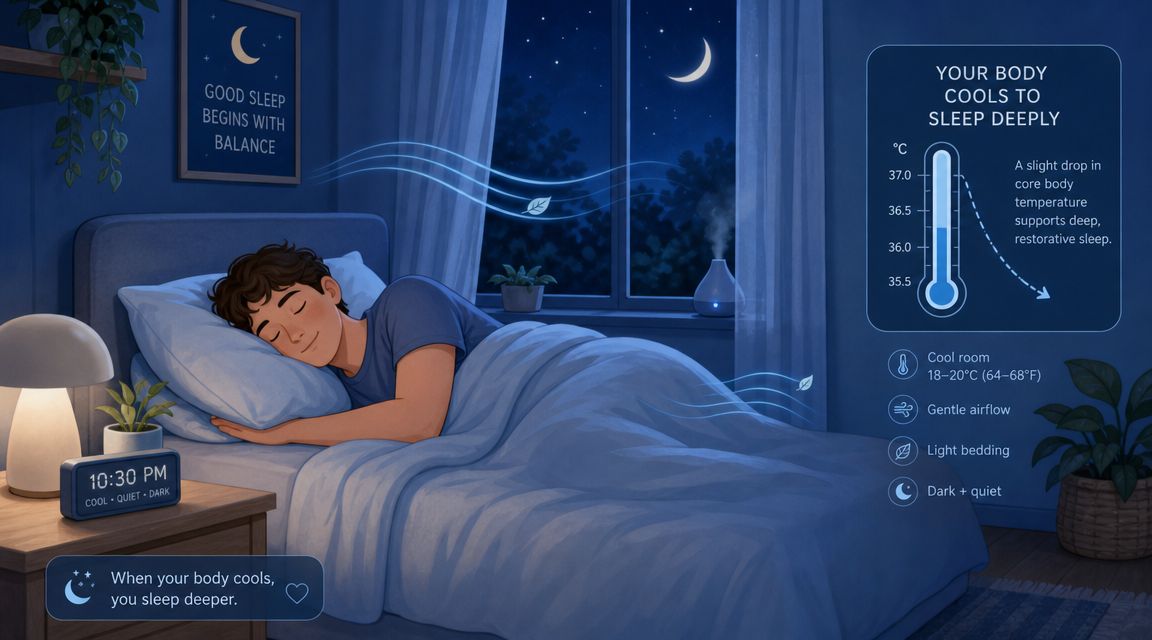
A Ruidoso night can start cool, turn cold before dawn, and still leave you waking up warm under the covers. That swing is one reason sleep gets choppy in the mountains. Your body is trying to settle into a steady rhythm, and a mattress that holds too much heat or loses warmth too quickly can interrupt it.
What the body is trying to do at night
As you drift off, your body temperature naturally drops. Sleep works a bit like a house thermostat at night. It does better when conditions stay steady. If the mattress traps heat around your back and shoulders, or if the surface turns chilly enough to make you pull covers on and off, your body has to keep adjusting instead of staying asleep.
That can show up as small disruptions you barely remember in the morning. You roll to the cool side of the bed. You stick a foot out. You wake just enough to flip the blanket. In a four-season place like Ruidoso, those interruptions are often tied to inconsistency, not just heat alone.
Room temperature still matters. So do sheets, blankets, pajamas, and airflow in the bedroom. Sleep experts often recommend a bedroom around 60 to 65°F for many adults. The mattress has to work with that setup, not fight it.
If you want to improve the full sleep environment, this guide on what to look for to sleep cooler at night can help you sort through the biggest factors.
What controlled sleep research found
Temperature regulation matters for more than comfort. A 2024 clinical study published in Sleep Health found that a continuously regulated mattress surface changed sleep architecture and recovery measures. Men gained 14 minutes of deep sleep, a 22% increase, women gained 9 minutes of REM sleep, a 25% increase, sleeping heart rate was down 2%, and heart-rate variability rose 7%, according to this Sleep Health clinical study on temperature-regulated mattress surfaces.
That helps explain why a mattress can influence how rested you feel the next day. The goal is not a bed that feels cold for five minutes when you first lie down. The goal is a sleep surface that stays comfortable long enough for your body to move through deeper stages of sleep without as many interruptions.
Practical rule: A cooler-feeling bed is not automatically a better sleep bed. A better sleep bed helps your body stay in a comfortable range for hours, especially when Ruidoso nights shift from one temperature extreme to another.
Decoding the Technology Inside Your Mattress
A mattress can say "cooling" on the tag and still feel very different once the lights are out and the room temperature drops. That is where many Ruidoso shoppers get stuck. The label sounds promising, but the key question is simpler. How does the bed handle your body heat over a full night in a mountain climate that can shift fast?
Passive cooling and active control
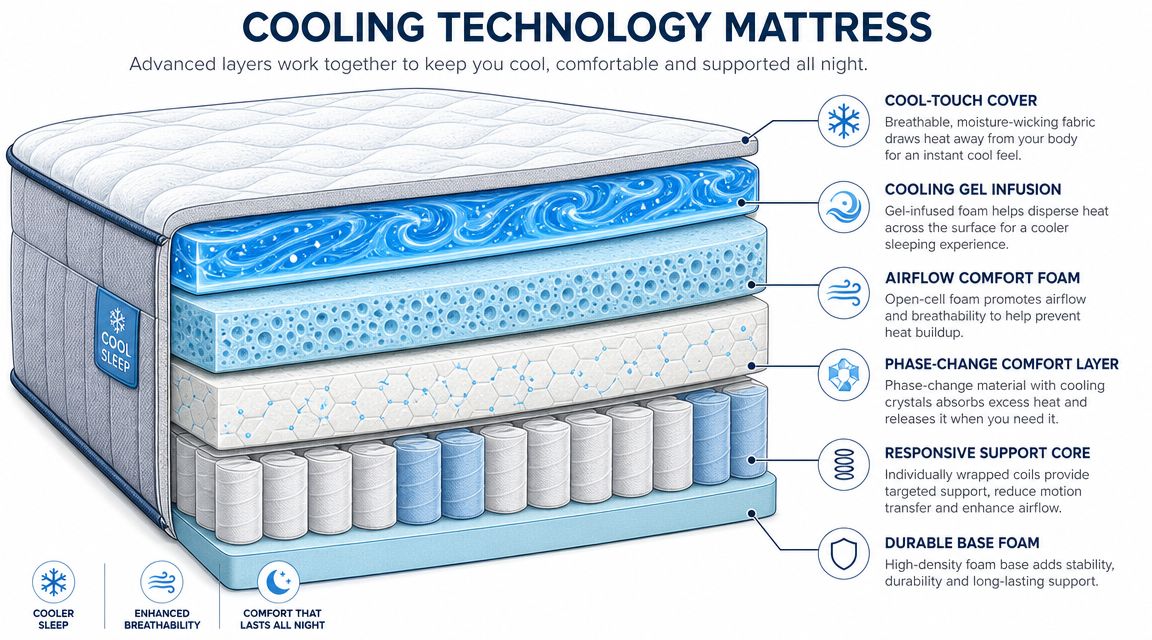
Most temperature regulating mattresses use passive heat management. In plain terms, the mattress is built to let heat escape, reduce hot spots, and avoid that trapped, stuffy feeling around your shoulders, back, and hips.
A smaller group uses active control. Those systems can add warmth or pull heat away more aggressively, often through powered components. They can help sleepers with strong temperature swings, but many people in Ruidoso do well with a breathable mattress that stays more balanced on its own.
That difference matters because mountain living is rarely one-note. A bed that only feels cool for the first few minutes is less useful than one that keeps a steady, comfortable surface as the night air changes.
If you are sorting through options built for warmer sleepers, this guide to the best mattress for hot sleepers can help you narrow the field.
Gel foams and breathable foams
Gel foam often causes confusion. Gel usually does not mean the mattress stays cold all night. It usually means the foam is designed to spread heat more evenly so it does not collect in one spot under your body.
Breathable foams address the same problem from another angle. They use a more open structure, small channels, or ventilation features so the foam hugs the body without feeling like it is wrapping you in insulation.
A simple way to read these materials:
- Dense traditional foam tends to hold more warmth close to the sleeper.
- Gel-infused or open-cell foam helps reduce concentrated heat buildup.
- Breathable covers help release heat and moisture from the top surface, where you feel it first.
Foam is not the problem by itself. The issue is poor airflow. Well-designed foam can feel pressure relieving without turning into a warm pocket halfway through the night.
Phase change materials and hybrid coils
Phase change materials work like a thermal battery. They absorb some heat when your body starts to warm the surface, then release that heat gradually as conditions change. The benefit is steadiness, not an icy sensation.
That is an important distinction in a four-season place like Ruidoso. A surface that feels dramatically cold at bedtime can be less appealing by the early morning hours, especially in winter. A surface that smooths out temperature swings often feels more natural.
Hybrid coil systems solve the problem through airflow. Coils create open space inside the mattress, and that space gives heat more room to move instead of getting trapped in thick layers of foam. Many sleepers notice that hybrids feel fresher and easier to move on, which can be especially helpful if you change positions often.
Here is a quick comparison:
| Technology | What it mainly does | Best for |
|---|---|---|
| Gel foam | Spreads heat more evenly | Sleepers who like foam feel but want less heat retention |
| Breathable foam | Reduces trapped heat through structure | People who want contouring without a stuffy feel |
| Phase change material | Absorbs and releases heat over time | Sleepers who want steadier surface comfort |
| Hybrid coil system | Improves airflow through the mattress | Hot sleepers and combination sleepers |
The mattress name matters less than the way the layers work together. One model may focus on pressure relief with modest cooling help. Another may use coils, covers, and specialty materials to keep the surface more stable across both warm summer nights and chilly mountain mornings.
Sleeping Soundly in Ruidoso's Four-Season Climate
A bed that works in one climate doesn't always feel right in another. That's especially true in Ruidoso, where dry mountain air and changing seasons can make the same sleeper want different things in July and January.

Why truly cold isn't always the goal
A lot of shoppers ask for the coldest mattress available. That request makes sense if the current bed sleeps hot. But in a high-altitude, four-season area, the better target is often temperature neutral.
Independent sleep guidance points out that many products are better at making sleepers feel temperature neutral than achieving a distinctly cold sensation, which is especially relevant in markets where heat and cold retention both matter through the year, as discussed in this sleep guidance on temperature-neutral mattress performance.
That idea fits mountain living well. In Ruidoso and Alto, a mattress that avoids overheating in summer but still feels balanced in winter can be more useful than one with a strong cold-touch effect that fades quickly.
How to build a balanced sleep setup
A mattress doesn't work alone. The bed has layers, and each layer changes the result.
A sleeper in Lincoln County might choose a breathable hybrid mattress, then accidentally block much of that benefit with a dense protector, heavy flannel sheets, or bedding that traps moisture. That doesn't mean the mattress failed. It means the system got bottlenecked.
A more balanced setup usually includes:
- Breathable sheets that don't smother the mattress surface
- Layered bedding that can be added or removed as nighttime temperatures shift
- Air movement in the room, especially in warmer months
- A mattress feel that matches the season and the sleeper's body type
For help creating that full environment, this article on creating a sleep sanctuary with lighting, temperature, mattress, and bedding working together gives a practical framework.
A mountain-home mattress should help a sleeper adapt, not force the sleeper to keep fighting the blankets all night.
What local shoppers often need most
For cabin owners, full-time residents, and guest-room shoppers on Sudderth Drive or elsewhere in the area, the sweet spot is often a mattress that handles swings well. It shouldn't feel swampy on a warm evening. It also shouldn't leave the sleeper feeling exposed when outdoor temperatures drop.
That year-round balance is why “cooling” is only part of the buying conversation. Support, pressure relief, moisture handling, and airflow all matter more when the climate changes around the sleeper.
How to Choose Your Perfect Temperature Regulating Mattress
Choosing well starts with a simple shift. Instead of chasing the mattress that feels coldest for thirty seconds in a showroom, look for one that helps your body hold a steady, comfortable sleep temperature through a full Ruidoso night.
That matters more in the mountains than many shoppers expect. A bed that feels pleasant on a warm afternoon can feel too firm or too cool after the temperature drops overnight. The right pick has to match sleep position, body weight, comfort preference, and the way local bedrooms change from season to season.
For side sleepers and pressure relief seekers
Side sleepers usually put more pressure on the shoulders and hips. Those areas need enough cushioning to avoid numbness or soreness, but not so much sink that the body gets wrapped in dense material and starts holding heat.
Foam and hybrid mattresses can both work. The difference is in how much the sleeper sinks and how quickly the surface recovers when they move. A side sleeper who loves a close, contouring feel may do well with a pressure-relieving comfort layer. A side sleeper who warms up easily may prefer a design with more lift and airflow near the surface.
A good side-sleeper checklist includes:
- Cushioning at the shoulder and hip so pressure does not build through the night
- A comfort layer that adjusts without swallowing the body
- A surface feel that stays comfortable after fifteen or twenty minutes, not just the first impression
- Enough support underneath the comfort layers to keep the spine from dipping out of line
For back and stomach sleepers who need support
Back and stomach sleepers usually need a flatter sleep posture. If the middle of the body sinks too far, the lower back can take the strain. Temperature plays into that too, because a sleeper who stays more on top of the mattress often gets better airflow around the body.
Support does not mean rock hard. It means the mattress holds the heavier parts of the body up while still giving enough at the surface to avoid pressure points.
Shoppers in this group often do well with:
- A firmer comfort feel that keeps the torso from sinking too far
- A support system with room for airflow, often found in hybrid builds
- A breathable cover and top panel that do not trap warmth close to the skin
This is also the group that benefits from slowing down during a test lie-down. A mattress can feel supportive for two minutes and still let the hips drift lower after ten.
For couples and changing sleep needs
Couples usually need balance more than perfection. One person may run warm while the other pulls the comforter up to the chin. One may want close contouring. The other may want easy movement and a steadier surface.
In a four-season climate, that balancing act gets even trickier. A guest room, second home, or primary bedroom in Ruidoso may have different heating habits, different insulation, and different overnight temperature swings. The mattress has to work in real conditions, not just in a product description.
Questions worth asking before buying:
- Does one partner sleep noticeably warmer or cooler than the other
- Does either sleeper deal with night sweats, hot flashes, or cold-sensitive joints
- Will either body type create deeper sink and more heat retention
- Does the mattress stay stable near the edge for two sleepers
- Can each sleeper move easily without feeling stuck
- Will the mattress still feel balanced when blankets are added in winter
For local shoppers, Mattress Pro by Miller Waldrop helps narrow those choices around sleep position, body type, and budget. Their guide on how to choose a mattress for your body and sleep style can help you sort out what matters before you step into the showroom.
One final tip. Give any mattress a fair test in the position you use most at home. A temperature-regulating mattress should feel less like a gimmick and more like a good mountain jacket. Comfortable when the room is warm, comfortable when the air cools off, and steady enough that you stop thinking about it and go to sleep.
The Miller Waldrop Difference Why Buying Local Matters
A temperature regulating mattress can sound excellent on a product page and still be the wrong fit in real life. That's where local buying has an advantage.

What online shopping can't tell a sleeper
A website can list “cooling cover,” “gel layer,” or “hybrid airflow.” It can't show how a mattress feels when a side sleeper lies on it for several minutes. It also can't easily answer whether the sleeper is feeling pressure relief, trapped heat, poor alignment, or simple unfamiliarity.
That gap matters with temperature concerns because surface feel and overnight regulation aren't always the same thing. A mattress may feel cool to the hand and still not suit the sleeper's body or sleep style.
A local showroom gives shoppers a chance to compare that difference directly. It also helps them sort out whether the problem is the mattress itself or the broader bed setup.
Why local service lowers the risk
The Miller Waldrop family has served the area for decades, and that kind of long local presence changes the buying experience. Shoppers in Ruidoso aren't just picking a mattress off a chart. They're working with people who understand mountain living, local homes, guest cabins, and the way dry air and seasonal changes affect sleep.
The practical advantages are easy to see:
- Comfort Promise helps reduce the fear of choosing the wrong bed
- Low Price Promise gives shoppers confidence that value stays part of the decision
- Full-Service Delivery with Professional Setup removes the hassle of hauling, lifting, and guesswork
That support matters even more with premium brands like Tempur-Pedic, Sealy, Stearns & Foster, and Sherwood, where subtle differences in feel can make a big difference over time.
For readers who want to learn more about the local sleep-focused approach behind the store, this page about Southwest Mattress Company provides more background.
Buying local doesn't just change where the mattress comes from. It changes how confidently the sleeper makes the decision.
Your Questions Answered
Do special sheets matter
Yes, they can. A temperature regulating mattress performs better when the sheets and protector are breathable. If the top layers of the bed trap heat and moisture, they can reduce the benefit of the mattress underneath.
How should a temperature regulating mattress be cared for
Keep the surface clean, use breathable bedding, and avoid covering the mattress with overly heavy layers unless the season calls for it. A mattress protector is smart, but it should support airflow rather than smother it.
Will the cooling feel last forever
That depends on the kind of technology involved. Some mattresses rely on surface feel, while others rely more on the structure of the layers and airflow through the bed. In general, shoppers should think less about a permanent cold sensation and more about whether the mattress stays comfortable and balanced through regular nightly use.
Is a hybrid always better for hot sleepers
Not always, but hybrids often help because their coil systems allow more air movement. Some foam mattresses also do a good job when the materials and cover are designed for better heat management.
What should a shopper test in the showroom
Lie down in a normal sleep position for long enough to notice pressure, support, and surface comfort. A quick sit on the edge won't reveal much. The right mattress should feel supportive, easy to settle into, and less likely to create that trapped-heat feeling later in the night.
Ready to transform sleep? Visit the Sleep Pros at Mattress Pro by Miller Waldrop at 2801 Sudderth Drive, Suite F, in Ruidoso. From luxury brands to budget-friendly solutions, the team helps shoppers across Ruidoso, Alto, and Lincoln County find a mattress that fits the way they sleep. Browse the collection online or stop by Monday through Saturday.