

Pressure Relief Mattress Guide for Better Sleep in Ruidoso


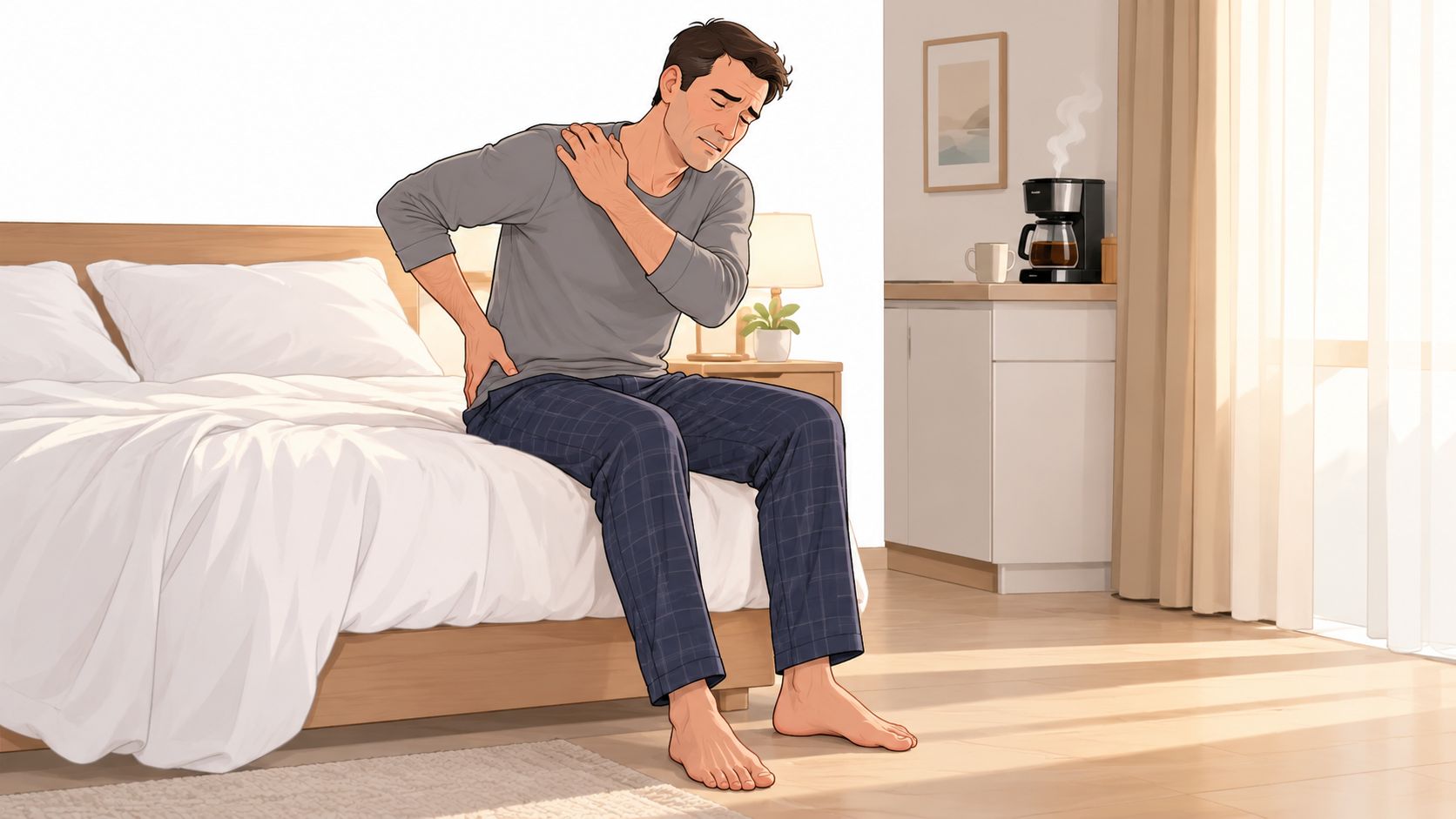
The alarm sounds, but getting out of bed takes a little negotiation. A sore shoulder needs a stretch, an aching hip needs a moment, and the walk to the coffee maker starts with a stiff shuffle. For a Ruidoso sleeper wondering whether the mattress is part of the problem, the useful question isn't whether the next bed should feel softer. It's whether that bed fits the body resting on it.
Why Mornings Feel Harder Than They Should
Morning discomfort can make mattress shopping feel urgent. Yet choosing the plushest bed on the showroom floor may exchange one uncomfortable fit for another. A pressure relief mattress needs to cushion sensitive areas while still providing dependable support.
A familiar example is a side sleeper whose shoulder feels squeezed against the bed. Adding cushioning might help, but if the hips then settle too far, the overall position may still feel uncomfortable. The task is to evaluate the whole body, not just the first impression of the surface.
Softness Isn't the Same as Pressure Relief
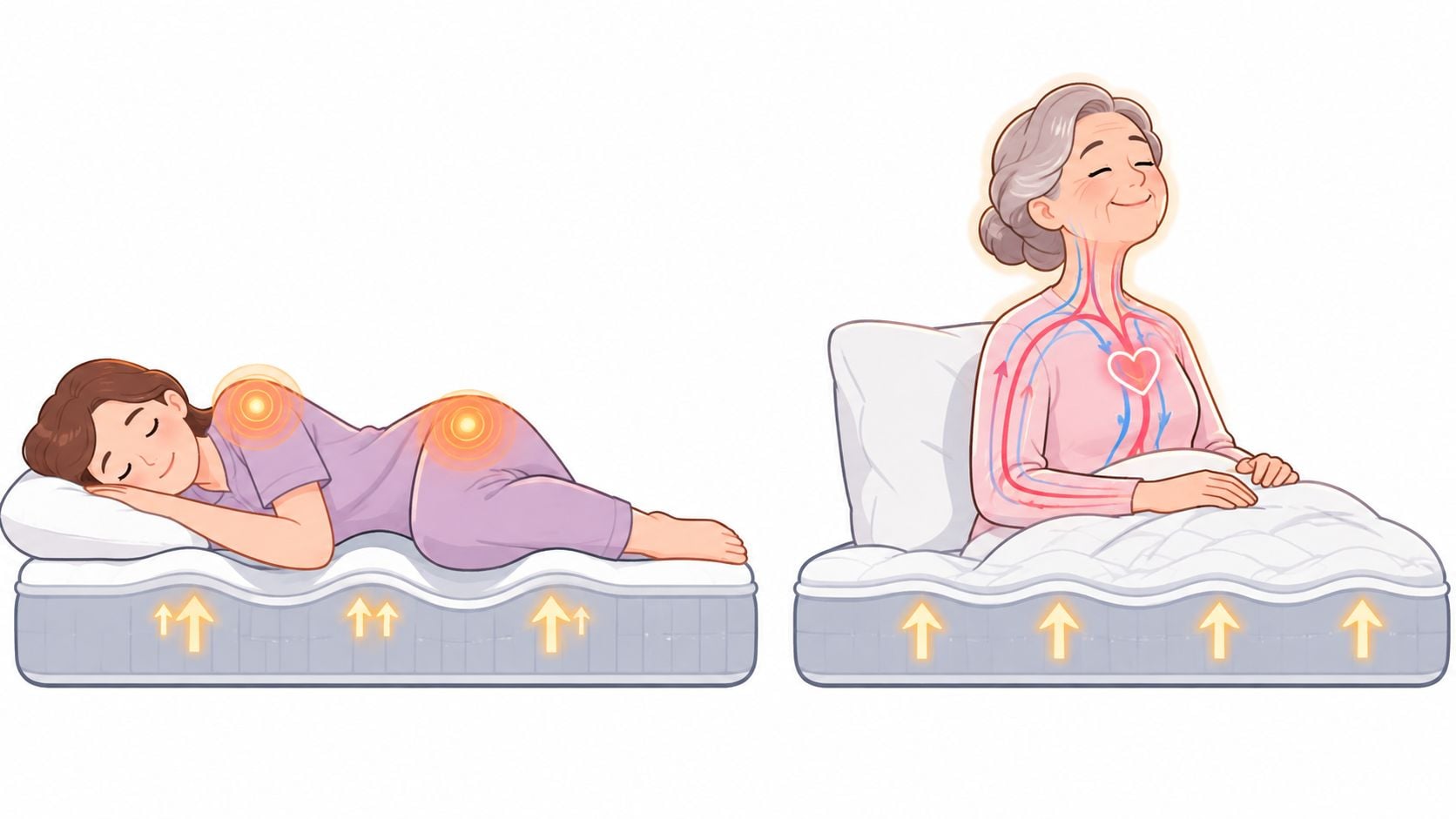
Pressure redistribution means spreading body loading rather than concentrating it in small areas. Compared with standard hospital foam, higher-specification foam alternatives were associated with roughly a 60% relative reduction in pressure-ulcer incidence in Cochrane-reviewed trials of support surfaces. Those findings concern healthcare populations, not a promise that a household mattress prevents injuries.
The practical lesson is narrower and more useful: construction matters. A soft cover doesn't establish what the underlying support system can do.
Showroom perspective: A comfortable first impression is a starting point, not a complete fit assessment.
A Neighborly Starting Point
The Miller Waldrop team on Sudderth Drive approaches the conversation through sleep position, pressure concerns, and everyday comfort. Its family-owned roots inform a patient approach, while the mattress showroom keeps the discussion focused entirely on sleep.
For residents sorting out possible mattress-related discomfort, the guide to waking up with back pain every morning offers a useful starting point. Persistent or unexplained pain deserves medical attention rather than an assumption that a new mattress will solve it.
How Pressure Relief Actually Works
Shoulders, hips, and heels can carry concentrated loading when a person lies down. A pressure-relieving surface allows more of the body to share that load, without letting the sleeper lose stable support.
Researchers assessing hospital bed surfaces identified lower average interface pressure, lower peak pressure, and greater skin-contact area as practical indicators of redistribution. Their hospital-surface pressure-mapping assessment cited approximately 32 mmHg or less as a useful guideline, not a universal clinical guarantee.
Contouring and Support Work Together
Viscoelastic memory foam conforms gradually around the body. The useful sensation is cushioning around prominent areas with enough underlying support to keep the sleeper comfortably positioned.
A hybrid combines contouring layers with a coil support system. Gel-infused layers are another construction feature shoppers may encounter, but gel isn't proof of cooling or pressure relief by itself. The complete mattress design matters more than a single ingredient.
Tempur-Pedic, Sealy, Stearns & Foster, and Sherwood provide options for comparing these different feels. Individual model specifications should guide the explanation, rather than assuming every mattress within a brand behaves alike.
Pressure Relief by Construction
| Construction | How It Relieves Pressure | Best Fit | Climate Note |
|---|---|---|---|
| Viscoelastic memory foam | Conforms around body contours to spread loading | A starting point for sleepers seeking a close, cradling feel | Compare its feel with the bedroom's usual temperature in mind |
| Gel-infused comfort layers | Contribute cushioning within the overall layer system | Sleepers interested in comparing temperature-focused designs | Ask what supports the cooling claim beyond the gel label |
| Hybrid | Pairs contouring comfort layers with coil support | Sleepers seeking cushioning with a different underlying response | Consider the cover, bedding, and entire construction |
Mountain Bedrooms Add Another Variable
Ruidoso's dry mountain air doesn't mean every bedroom sleeps cool. A sleeper beneath heavy bedding may have different needs from someone who keeps a window cracked.
The helpful showroom conversation includes those details:
- Bedroom conditions: Is the room usually cool, chilly, or heated overnight?
- Bedding habits: Are thick blankets part of the usual setup?
- Personal preference: Does the sleeper want close contouring or easier movement?
A showroom test can compare designs, but it can't reproduce every overnight condition. That's why temperature questions belong alongside pressure-point questions.
What the Research Actually Says
Clinical evidence supports taking pressure redistribution seriously. It doesn't establish a universal winner among the mattresses found in a retail showroom.
A 2021 Cochrane network meta-analysis of pressure-redistributing surfaces covered 40 studies and 12,517 participants. Compared with foam, reactive air surfaces had a risk ratio of 0.46, with a 95% confidence interval of 0.29–0.75, while alternating-pressure surfaces had a risk ratio of 0.63, with a 95% confidence interval of 0.42–0.93; evidence certainty was limited.
Understanding the Comparison
A risk ratio compares how often an outcome occurred between groups. A value below the comparison level suggests fewer pressure ulcers in the group using the studied surface, but it doesn't describe how comfortable a healthy shopper will find a particular bed.
These findings largely concern people receiving care. Their mobility, skin condition, care routines, and support surfaces differ from those of many household sleepers.
Clinical research can inform the questions asked in a showroom without turning an ordinary mattress into a medical treatment.
Reactive and Alternating Systems Are Different
Reactive air systems spread loading across a compliant surface continuously. Alternating-pressure systems periodically change which areas bear the person's weight.
Those mechanisms shouldn't be confused with a consumer hybrid mattress, which combines comfort layers and coils. An air-based medical support surface and a retail pressure-relieving mattress may address related loading concerns, but their intended uses aren't interchangeable.
Better Questions Than “Is It Pressure Relieving?”
A useful evaluation asks:
- Testing conditions: Was the surface assessed in realistic body positions and under relevant loads?
- Intended use: Is the evidence about everyday comfort or clinical pressure-injury prevention?
- Model specificity: Does the information describe this mattress, or merely a broad material category?
- Limitations: What remains uncertain?
The reassuring takeaway is that shoppers don't need to understand every clinical detail. They need a clear explanation of the design, an honest account of its evidence, and a fit assessment that doesn't rely on marketing language alone.
Who Benefits Most From a Pressure Relief Mattress
Pressure-relief needs vary between a side sleeper seeking shoulder comfort and a caregiver selecting a surface for someone with limited mobility. Those situations shouldn't receive the same recommendation.
In a study of 59 healthy adults testing visually identical mattresses, body characteristics affected spinal alignment: higher body weight tended to align better on firmer support, lower body weight on softer support, and shorter participants on softer surfaces. That finding supports individual fit, not rigid rules based on appearance.
Side Sleepers and Couples
For side sleepers, the showroom comparison should focus on shoulder cushioning, hip comfort, and the position of the trunk. Tempur-Pedic is a starting point for comparing deep contouring; Sealy offers another route for exploring balanced support.
The guide to the best sleep position for shoulder pain can help frame that conversation. A mattress recommendation still needs to reflect the sleeper's actual resting position.
Couples should test together as well as separately. Each partner may describe the same bed differently, and neither person's comfort should be treated as the default.
Older Adults and Home Recovery
For an older resident or someone recovering after surgery in Lincoln County, comfort is only part of the decision. Mobility limitations or pressure-injury concerns call for clinical input before selecting a medical-grade surface.
- Independent sleepers: Compare comfortable support and the ability to change position.
- Caregiver-assisted sleepers: Discuss care needs with a clinician before shopping.
- People with existing skin concerns: Avoid substituting retail comfort advice for wound-care assessment.
Cabins and Guest Bedrooms
Cabin and vacation-rental owners in Alto face a different challenge: guests bring varied body types and preferences. A broadly accommodating feel is a reasonable shopping goal, but no mattress fits every guest equally.
Stearns & Foster can be explored for a raised hybrid feel, while Sherwood offers a value-focused comparison. These are browsing starting points, not medical rankings or guarantees that a particular brand suits a particular person.
Buying Considerations Before You Test a Mattress
A useful shopping checklist begins with the sleeper, not the price tag. Usual sleep position, current discomfort, bedroom conditions, and budget give a Sleep Pro something concrete to work with.
The purpose isn't to arrive with a diagnosis. It's to avoid choosing a mattress based only on its name, appearance, or plushness.
Firmness Is a Starting Point
A systematic review of mattress selection and back pain found support for medium-firm mattresses in relation to comfort, sleep quality, and spinal alignment. That makes medium-firm a sensible comparison point, not a prescription for every sleeper.
The local guide to mattress comfort levels helps separate feel descriptions from individual fit. A firmness label can narrow the browsing process, but it can't replace lying down.
A Practical Pre-Visit Checklist
- Describe the discomfort: Identify where pressure is noticed and whether it changes with position.
- Note temperature preferences: Include heavy bedding, bedroom heating, and cool-night habits.
- Set a workable budget: Consider the mattress and any required foundation or setup.
- Bring a partner: Shared-bed decisions benefit from both sleepers testing the same options.
- List access concerns: Stairs and narrow cabin hallways matter when arranging delivery.
Read the Promises Before Committing
The Comfort Promise addresses the fear of choosing the wrong bed. Before purchase, shoppers should ask how it applies, what steps are required, and what options exist if the mattress doesn't feel right at home.
The Low Price Promise belongs in that same conversation. Comparing the same model and understanding the applicable terms is more useful than comparing unrelated sale prices.
Trial arrangements and warranties also deserve separate attention. Shoppers should ask what the warranty covers, how long coverage lasts, and whether comfort concerns are handled differently from product defects.
Flexible financing can help budget-minded neighbors consider available options, subject to its terms. Clear answers about payments, comfort support, and Full-Service Delivery with Professional Setup make the decision easier to evaluate without relying on a return-shipping box as the entire backup plan.
How We Match You to the Right Bed in Ruidoso
A local fit test begins with a conversation rather than a sales pitch. The Sleep Pro asks about body type, usual position, pressure concerns, health considerations, and budget, then narrows the mattresses worth trying.
Miller Waldrop's 70-year family legacy provides the background for that approach. On Sudderth Drive, the focus stays on mattresses and sleep systems, with local neighbors helping residents make a decision they can understand.
What the Fit Test Looks Like
The shopper lies in the position normally used at home. The Sleep Pro helps compare shoulder and hip comfort, underlying support, and the ease of rolling or getting up.
Tempur-Pedic, Sealy, Stearns & Foster, and Sherwood options give the shopper contrasting feels to evaluate. The useful result is a shortlist supported by specific observations, not a declaration that one brand wins for everyone.
- Position check: Test the usual sleep posture instead of only sitting on the edge.
- Movement check: Roll, settle again, and notice whether changing position feels manageable.
- Comparison check: Describe what improves or worsens between mattresses.
- Home-context check: Discuss cooler bedroom temperatures and normal bedding.
A local sleep consultation provides an opportunity to work through those details with guidance.
From the Showroom to the Bedroom
Online bed-in-a-box browsing can show specifications, but it can't reproduce a guided, side-by-side physical comparison. The local advantage is the chance to ask a question while experiencing the difference.
Delivery planning deserves the same attention. With Full-Service Delivery with Professional Setup, residents can discuss stairs, tight cabin hallways, and second-story guest rooms in Ruidoso or Alto before arrangements are finalized.
The Comfort Promise remains the safeguard against fit uncertainty, while the Low Price Promise addresses price concerns. Neither replaces careful testing; both help make the purchase process feel less like a gamble.
What a Pressure Relief Mattress Will Not Do for You
A pressure relief mattress doesn't replace repositioning, skin inspection, moisture management, mobility, or medical care. It also doesn't establish that pain has a mattress-related cause.
The 2025 International Guideline recommendations summarized in clinical guidance treat pressure redistribution as an adjunct to care and recommend reactive pressure-redistribution foam for people at risk, while rating the supporting evidence as low certainty. Appropriate selection matters, but the mattress is only part of prevention.
More Complex Doesn't Automatically Mean Better
Powered alternating-pressure systems aren't automatically superior to other suitable surfaces. A systematic review of alternating-pressure mattresses found insufficient evidence that they prevented pressure injuries better than other support surfaces.
For a household considering a powered medical system, practical questions include pump noise, power-loss arrangements, safe transfers, adjustable-bed compatibility, and who checks the settings. Those questions belong with the clinical selection process.
Care boundary: A retail comfort consultation should never substitute for an assessment of suspected pressure injury.
Know When to Seek Help
Ordinary shoulder or hip discomfort during sleep is different from a suspected skin injury. Professional evaluation is appropriate for:
- Persistent redness: A skin change that doesn't resolve should not be treated merely as a mattress preference.
- Skin breakdown: An open or damaged area requires medical attention.
- Numbness or persistent pain: Ongoing symptoms deserve assessment rather than repeated mattress exchanges.
- Limited mobility: A caregiver needs an individualized routine for repositioning and skin checks.
Mountain households and vacation cabins may have limited clinical supervision nearby, making a workable care plan especially important. The discussion of whether a bad mattress can cause back pain can inform shopping, but it can't determine the cause of a person's symptoms.
Your Next Step Toward Better Mornings
The next decision doesn't need to be the final mattress choice. It can be a well-prepared showroom visit, with enough information to compare comfort.
The central lessons are straightforward: engineering matters more than surface softness, personal fit matters more than brand loyalty, and a guided test provides information that a product description cannot. None of those lessons requires buying the most expensive bed.
Turn Observations Into a Shortlist
A resident preparing to browse can bring a few notes about the current mattress. Where does discomfort occur? Which position feels easiest? Does the bedroom feel warm under blankets despite the cool mountain night?
Those observations help keep the conversation specific:
- Choose meaningful comparisons: Try contrasting constructions rather than beds that all feel nearly identical.
- Explain the response: Describe shoulder pressure, hip settling, or movement instead of saying a bed feels good.
- Confirm the backup plan: Understand the Comfort Promise before making the decision.
- Plan the arrival: Review delivery access and professional setup arrangements.
Local Help Beyond the First Impression
The family-owned Mattress Pro team lives in the same mountain community its customers call home. That shared context helps make conversations about cabins, cooler bedrooms, and Lincoln County households practical rather than generic.
The Comfort Promise, Low Price Promise, and Full-Service Delivery with Professional Setup support the purchase from selection through arrival. Their terms should be clear before checkout, so expectations match the service being arranged.
Better mornings remain the standard behind the conversation, not a guaranteed medical outcome. The most useful mattress choice is one made with patient testing, understandable information, and dependable local help.
Mattress Pro by Miller Waldrop offers guided pressure-relief mattress comparisons, the Comfort Promise, the Low Price Promise, and Full-Service Delivery with Professional Setup. Visit the Sleep Pros at 2801 Sudderth Drive, Suite F, in Ruidoso, browse the collection online, or stop by Monday through Saturday to explore luxury brands and budget-friendly solutions for more comfortable mornings.