

What Is an Innerspring Mattress and Is It Right for You


An innerspring mattress is a bed built around a steel coil support core, topped with comfort layers and upholstery. Innerspring mattresses account for about 33% of global mattress shipments, or roughly 48 million of 145 million units shipped worldwide in 2024, so this trusted construction remains firmly mainstream today.
A couple may return to an Alto cabin after a full day at Ski Apache, ready for crisp mountain air and deep rest, only to wake tired because an old mattress sags beneath the hips. The problem may not be the altitude, the weather, or the long day. It may be that the mattress no longer supports the body evenly.
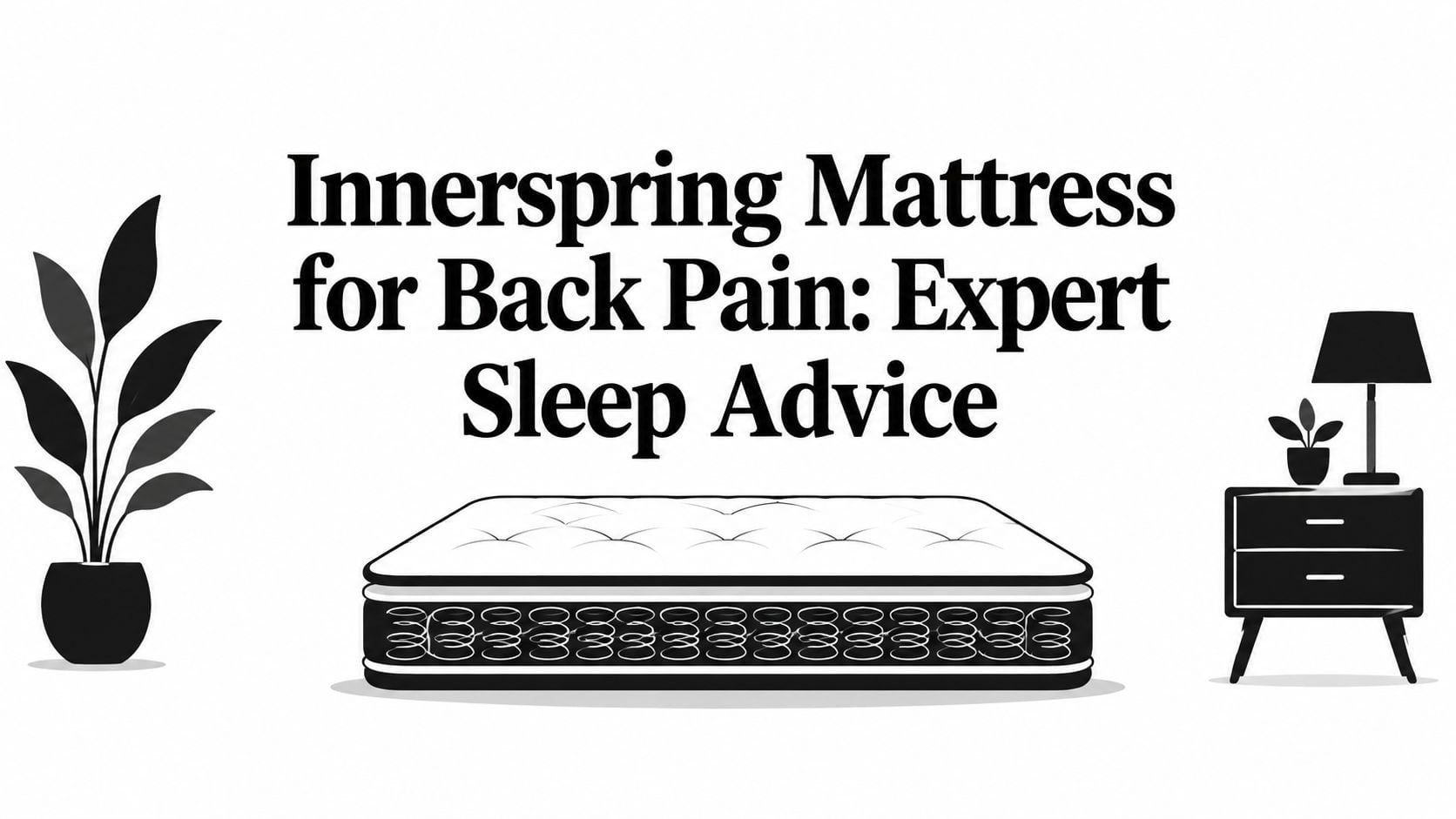
For shoppers asking what is an innerspring mattress, the plain answer is simple. Steel springs create the main support system, while foam, fiber, latex, or other cushioning materials soften the surface. Upholstery and a border finish the structure, but the coil unit largely determines how the mattress responds to movement and weight.
Innerspring construction has been around for generations. Heinrich Westphal is widely credited with creating the first innerspring mattress in 1871, while an earlier U.S. patent for a spring-based bedding concept dates to 1853. Commercial success came later, after mass production expanded in the early twentieth century. This history of innerspring bedding shows why the category is better understood as an evolving design than as one isolated invention.
A Cozy Night in Ruidoso Starts with the Right Mattress
Why the coil core matters
A traditional innerspring mattress keeps the sleeper more on top of the bed than deep inside it. That lifted feel makes turning, rising, and getting comfortable familiar for many back and stomach sleepers. It also leaves open space around the springs, which generally allows more airflow than a solid foam core.
The construction has changed over time. Historical production milestones include about 16,000 units made in 1925 by one major manufacturer, with annual production later reaching roughly 8,000,000 units. Those figures illustrate how industrial manufacturing, not just the original invention, made innerspring beds broadly available.
Innerspring mattresses remain a major format globally. One recent market summary places them at about 33% of worldwide mattress shipments in 2024, equal to approximately 48 million units from 145 million total shipments, while other market definitions produce different shares by region. The global mattress market summary supports the practical conclusion that an innerspring mattress isn't a relic reserved for an old guest room.
What sits above the springs
The steel core is only the beginning. A mattress with minimal cushioning feels firmer and more responsive, while a thicker pillow top or foam layer adds pressure relief around the shoulders and hips. That upper section can make two mattresses with similar spring systems feel completely different.
A local, family-owned mattress business in Ruidoso has spent 70 years helping neighbors think through those differences. That long view matters in a mountain community, where a bed may serve a full-time household, a vacation cabin, or guests visiting Lincoln County.

The important question isn't whether springs are old-fashioned. It's whether the coil architecture, comfort layers, and firmness match the sleeper. Bonnell, offset, continuous-wire, and pocketed coils each create a different experience, especially for couples and side sleepers.
The Four Coil Types and How They Feel
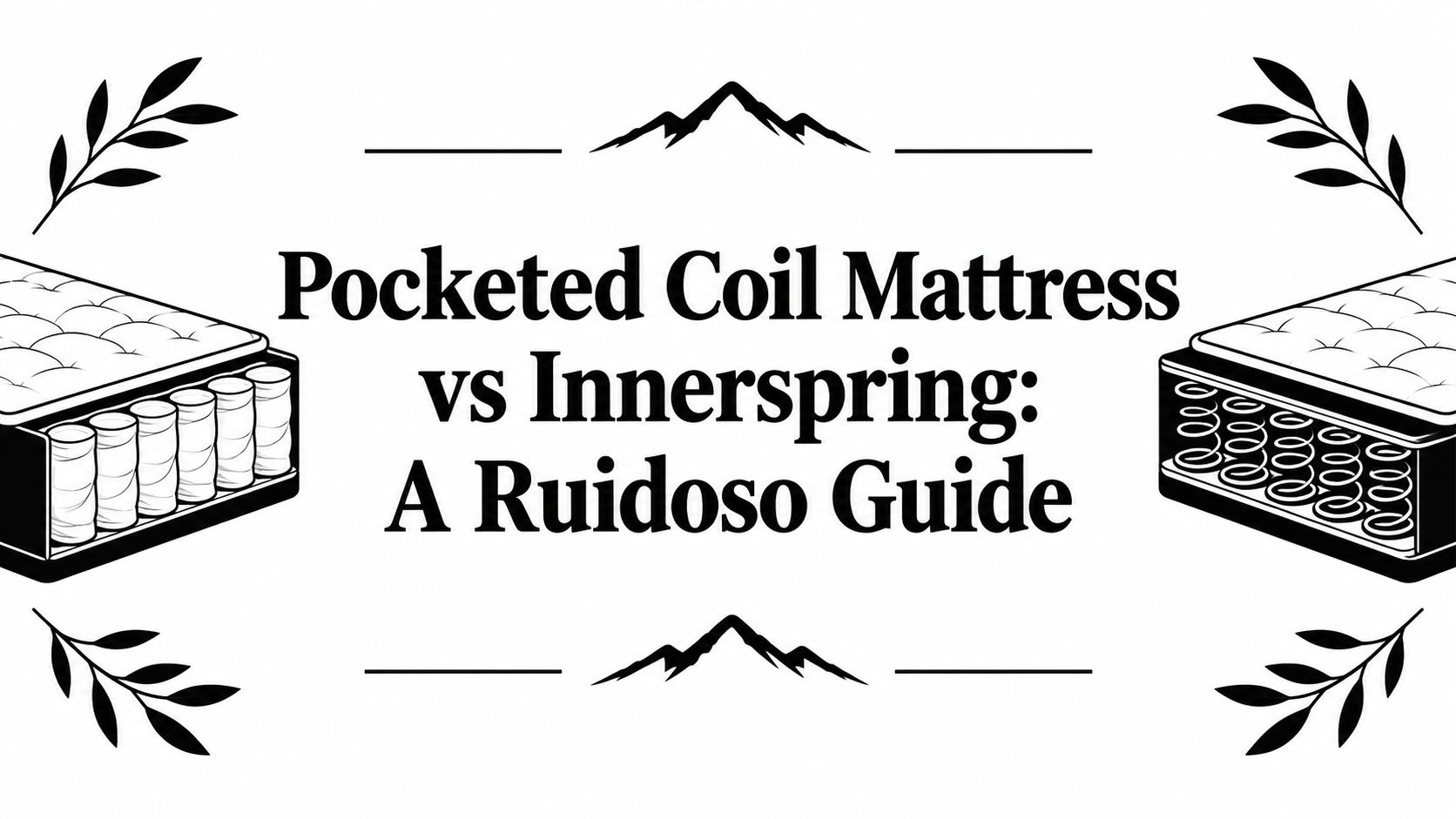
The coil shape and connection method affect bounce, contouring, noise, and motion transfer. Traditional connected coils usually move more as a unit, while individually wrapped coils respond more independently.
Bonnell coils
Bonnell coils have an hourglass shape and connect across the support unit. They create a familiar, lively bounce and a relatively firm surface. Because movement can travel through connected springs, they're often more suitable for a guest room, a budget-conscious bedroom, or a sleeper who doesn't mind a traditional feel.
Offset coils
Offset coils resemble Bonnell coils but use hinged connections that allow the tops of the springs to flex more readily. That added give can improve contouring without losing the stable feel associated with connected coils. Back sleepers seeking moderate cushioning often appreciate this middle ground.
Continuous-wire coils
Continuous-wire systems form rows of interconnected springs from long lengths of wire. Their broad, firm support can suit stomach sleepers who need to avoid excessive hip sink. The trade-off is greater motion transfer, particularly when one partner changes position.
Pocketed coils
Pocketed coils place individual springs inside fabric pockets. Each spring can react more independently, which usually improves contouring and limits the spread of movement. Couples and side sleepers often prefer this design, although the comfort layers still determine whether the surface feels firm or plush.
| Coil Type | Feel | Motion Isolation | Best For |
|---|---|---|---|
| Bonnell | Bouncy and firm | Lower | Guest rooms and traditional-feel sleepers |
| Offset | Stable with more contour | Moderate | Back sleepers wanting balanced support |
| Continuous-wire | Firm and consistent | Lower | Stomach sleepers and value-focused shoppers |
| Pocketed | Responsive with targeted give | Higher | Couples, side sleepers, and combination sleepers |
A shopper comparing wrapped construction can review this guide to a pocket coil mattress before testing models in person. The label alone isn't enough. A pocketed coil bed with thin padding may feel firmer than a connected-coil bed with a generous top layer.
Practical rule: Choose the coil connection for the desired movement response, then choose the comfort layer for pressure relief.
Coil Gauge, Coil Count, and Comfort Layers Explained
Gauge is the spring's resistance
Coil gauge describes the thickness of the steel wire. Lower gauge numbers indicate thicker, generally firmer wire, while higher gauge numbers indicate thinner, more flexible wire. Industry guidance commonly places usable innerspring gauges in roughly the 12 to 17 range, though the final feel also depends on coil shape, zoning, and upholstery. This explanation of innerspring construction describes how wire thickness changes firmness and support.
A guitar-string comparison helps. A thick string resists movement more strongly, while a thin string gives more easily. A lower-gauge coil can help support heavier loads and resist compression beneath the hips, while a higher-gauge coil may provide more shoulder give.
Coil count needs context
Coil count refers to the number of springs in the mattress. Queen-size traditional innerspring mattresses commonly contain about 400 to 1,200 coils, according to this overview of innerspring mattresses. More coils can improve conformity, but only when the gauge, coil design, and zoning work together.
A high count doesn't automatically mean superior support. A thoughtfully designed unit with fewer, stronger coils may feel more stable than one filled with many thin springs.
Zoning and comfort layers finish the feel
Zoned construction changes support by placing firmer or more supportive coils beneath areas such as the hips and torso, with more flexible sections near the shoulders. That arrangement can help keep the spine level without making the entire surface equally hard.
Above the coils, foam, fiber, latex, or gel-infused materials shape the first impression. Thinner comfort layers preserve the classic spring response. Thicker layers create more cushioning and move the feel closer to a pillow-top or hybrid. Shoppers comparing firmness levels can use this mattress comfort level guide to describe the surface feel more precisely.
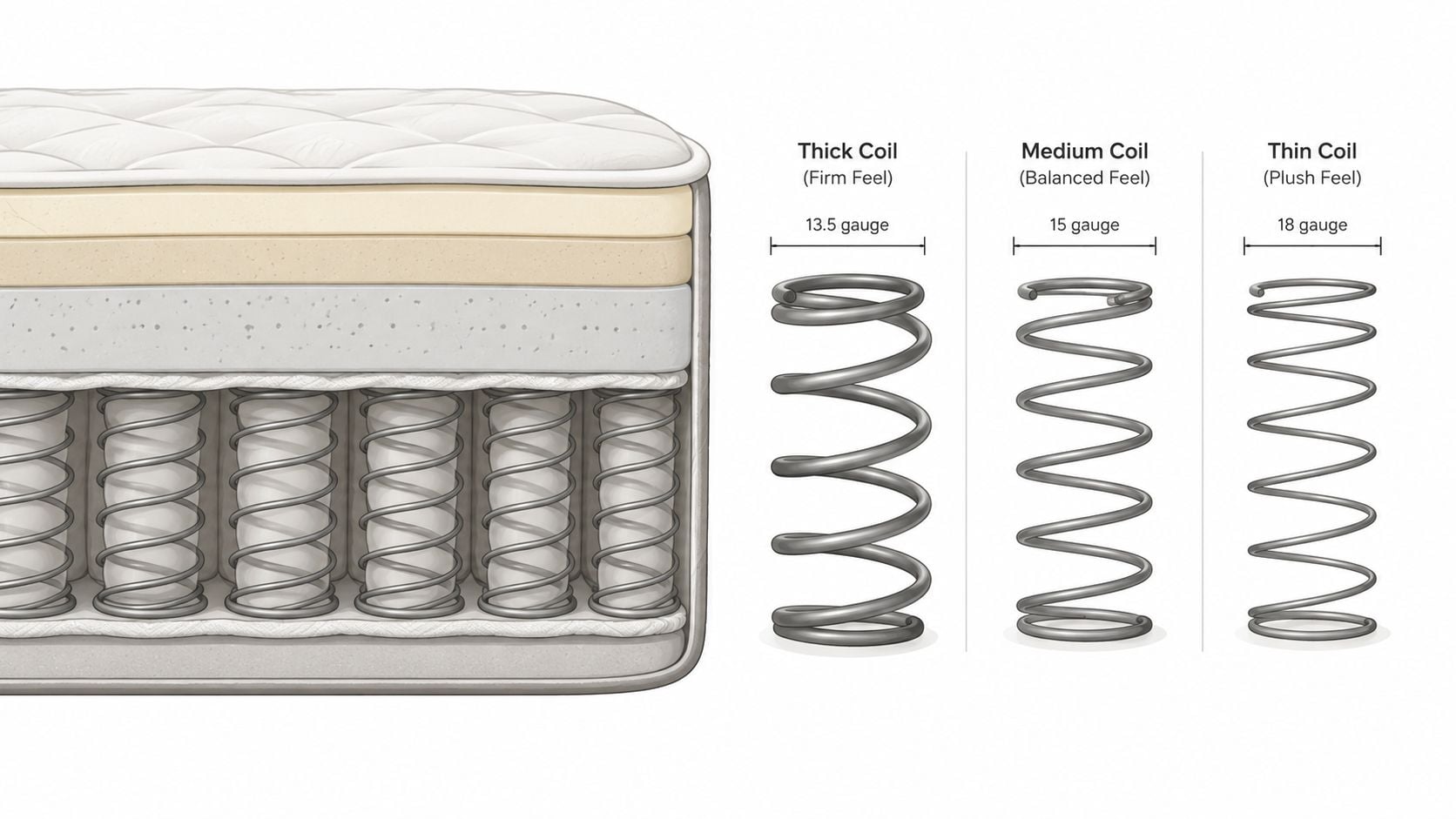
The practical test is simple: a sleeper should ask whether the body feels supported by the springs, cushioned by the upper layers, or pushed too firmly at pressure points.
Innerspring Compared to Memory Foam and Hybrid Beds
The best construction depends on the priority. An innerspring mattress usually emphasizes bounce, airflow, and a familiar lifted feel. Memory foam focuses on close contouring and motion absorption, while a hybrid combines a coil core with substantial foam or latex comfort layers.
| Factor | Innerspring | Memory Foam | Hybrid |
|---|---|---|---|
| Bounce | High | Low | Moderate to high |
| Cooling | Generally strong | Can retain more heat | Usually strong, depending on the top layers |
| Motion isolation | Lower with connected coils | Strong | Stronger with pocketed coils and cushioning |
| Pressure relief | Depends on the comfort layer | Usually deep | Usually more substantial than traditional innerspring |
| Price position | Often more affordable | Varies by materials | Often higher because of layered construction |
Choose an innerspring for movement and airflow
The open coil structure can feel cooler, an important consideration for sleepers who dislike heat buildup. The responsive surface also helps combination sleepers change positions without feeling stuck. The compromise is that connected springs can send movement across the bed, and a thinner comfort layer may not soften shoulders and hips enough for some side sleepers.
Choose memory foam for contour and quiet
Memory foam responds gradually to body weight and can spread pressure across a broader area. Its dense structure absorbs movement effectively, which may suit partners with different schedules. The same close-fitting feel can make turning more difficult for some sleepers, and heat-sensitive shoppers should examine cooling materials such as ventilated or gel-infused foam.
Choose a hybrid for a middle path
A hybrid uses coils below and thicker comfort materials above. That combination can preserve responsive support while adding more pressure relief than a basic innerspring. The final result depends heavily on whether the upper layers are soft, firm, slow-moving, or buoyant.
A useful comparison for shoppers weighing all three constructions appears in this guide to memory foam, hybrid, and innerspring mattresses.
A mattress doesn't need to be the most advanced construction. It needs to solve the sleeper's actual problem, whether that problem is heat, pressure, movement, or lack of support.
Matching Innerspring to Your Sleep Style and Mountain Climate
Side sleepers
Side sleepers generally need enough surface give for the shoulders and hips to settle without forcing the spine sideways. A pocketed coil unit paired with a plusher comfort layer often makes a better starting point than a firm Bonnell or continuous-wire bed.
A sleeper seeking more detail can review this guide to the best innerspring mattress for side sleepers. The important test is whether the shoulder feels cushioned while the waist remains supported.
Back sleepers
Back sleepers often prefer balanced support beneath the lumbar area. An offset or pocketed unit with moderate cushioning can keep the body lifted while allowing enough give for the lower back. Excessively soft padding may let the hips settle too far, while an overly rigid surface can create pressure.
Stomach sleepers
Stomach sleepers typically need a firmer surface that resists hip sink. A firm Bonnell design or a lower-gauge continuous-wire unit may provide the needed pushback, especially when the comfort layers aren't excessively thick.
Combination sleepers
Combination sleepers change position during the night and usually benefit from a responsive surface. Pocketed coils with light zoning can provide movement freedom while offering more targeted support than a single connected unit.
Couples and heavier sleepers
Couples should pay close attention to motion isolation. Individually wrapped coils usually contain movement better than connected springs, but the upholstery and perimeter construction still matter.
Heavier sleepers should look beyond marketing language and ask about wire thickness, perimeter reinforcement, and how the support unit distributes load. Lower-gauge wire can feel more substantial, while a reinforced edge can make sitting and sleeping near the side feel steadier.
Ruidoso's dry mountain air
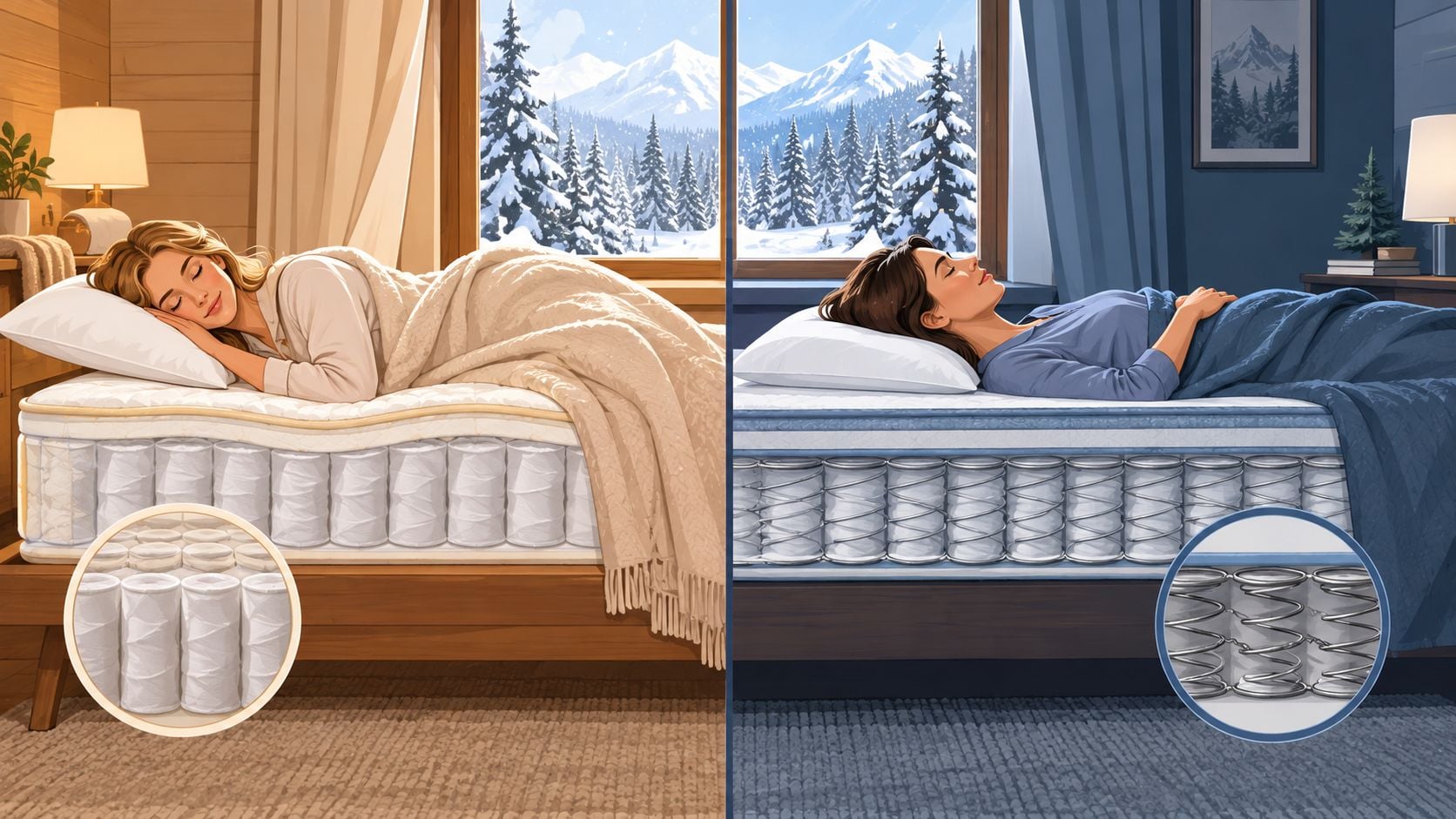
Ruidoso's cool, dry mountain climate can make breathable construction appealing, particularly for active sleepers returning from a day outdoors. Open coils encourage airflow, while cotton, wool, latex, or breathable foam layers can complement that quality. A shopper who tends to feel cold may prefer more cushioning, whereas a warm sleeper may favor a thinner, more ventilated top.
The match in brief: side sleepers should begin with pocketed coils and cushioning, back sleepers with balanced offset or pocketed support, stomach sleepers with firmer lower-gauge construction, combination sleepers with responsive zoning, and couples with independently moving coils.
Care, Lifespan, and Trying One in Ruidoso
How long does an innerspring mattress last?
A typical innerspring mattress lasts about 5 to 8 years, although construction quality, body weight, use, and maintenance all affect its working life. Connected-coil models may grow noisier, while the cushioning above the steel support unit can wear before the springs fail. This innerspring care and replacement guide explains common lifespan expectations and rotation guidance. For more detail, read this guide to how long a mattress should last.
A mattress needs closer inspection when it develops a lasting sag, visible body impressions, uneven support, or repeated squeaking. Sleep quality and structural condition matter more than age alone when you decide whether replacement makes sense.
Small maintenance habits help
Rotation can spread wear across the surface. Some retail guidance recommends rotating a mattress every 3 to 6 months, as long as the manufacturer permits it.
- Check the care label: Follow the instructions before rotating the mattress or changing its foundation.
- Protect the surface: A suitable protector helps limit stains and moisture.
- Inspect the base: A weak or incompatible foundation can change the way the mattress feels.
- Watch the edges: Worn perimeter support may make sitting down or getting up less secure.
How to test an innerspring in a showroom
A short edge test tells you very little. Lie on the mattress as you would at home, especially if you sleep in Ruidoso's cool, dry mountain climate and want a breathable bed for warmer nights.
- Lie in your usual sleep position for several minutes.
- Notice whether your shoulders, hips, and lower back feel supported.
- Roll from side to side and judge how easily the mattress responds.
- Sit near the edge and check whether it compresses too much.
- If shopping as a couple, let one person move while the other stays still.
- Ask which materials form the comfort layer and how the foundation should support the mattress.
A local consultation can make the choice less uncertain. The Comfort Promise gives shoppers a way to address that concern, while the Low Price Promise helps households compare options within a budget. Full-Service Delivery with Professional Setup can also matter for Ruidoso homes, Alto cabins, and residences throughout Lincoln County.
The Sleep Pros at Mattress Pro by Miller Waldrop can discuss several mattress constructions according to body type, sleep position, comfort preference, and budget. Readers can visit Mattress Pro by Miller Waldrop at 2801 Sudderth Drive, Suite F, in Ruidoso. The showroom is open Monday through Saturday, and online browsing is available for homes and mountain cabins.