

How Long Should a Mattress Last: 2026 Expert Guide


You roll out of bed, put your feet on the floor, and your back already feels behind on the day. Maybe your shoulders are tight. Maybe your hips ache. Maybe you sleep better in a guest room, at a hotel, or even on the couch than you do in your own bedroom.
That usually isn’t “just getting older.” More often, it’s a mattress that has stopped doing its job.
Around Ruidoso, Alto, and across Lincoln County, we see this all the time. People live with a bed far longer than they should because it still looks passable, or because buying a new one feels like a hassle. The underlying problem is that a worn mattress can keep stealing comfort a little at a time, until bad sleep starts to feel normal.
Table of Contents
- Your Mattress and Your Morning Aches
- The 7-10 Year Rule and What It Really Means
- Local Factors That Affect Your Mattress's Lifespan
- Clear Signs It Is Time for a New Mattress
- How to Maximize Your Mattress Investment
- Warranties and Our Miller Waldrop Comfort Promise
Your Mattress and Your Morning Aches
A lot of people don’t notice mattress wear all at once. It starts with a stiff lower back. Then a sore shoulder. Then that habit of stretching beside the bed before you’ve even had coffee.

When your body starts keeping score
Your mattress is supposed to do two jobs at the same time. It should cushion pressure points like shoulders and hips, and it should keep your spine in a more neutral position while you sleep. Once the comfort layers soften unevenly or the support core starts giving way, those jobs start fighting each other.
That’s when you wake up feeling like you slept in a crooked position all night.
If you’re already dealing with back or joint discomfort, an aging mattress can make that worse. A bed that’s too broken down lets heavier parts of the body sink too far. A bed that has hardened or compacted can create the opposite problem and press into your shoulders and hips. If that sounds familiar, this guide on choosing a mattress for back pain relief can help you think through the support side more clearly.
Your morning is often the clearest review your mattress will ever get.
Why local guidance matters more than a box on the porch
In Ruidoso, sleep needs aren’t one-size-fits-all. Some households are furnishing a full-time home. Others are setting up a cabin, a guest space, or a vacation rental that sees different sleepers week after week. Some people are active year-round and need pressure relief after long days on the mountain, trails, or jobsite.
That’s why broad online advice only gets you so far. A mattress isn’t just a product category. It’s a long-term support system for how you live.
Families in Lincoln County have trusted the Miller Waldrop name for 70 years, and that local history matters because sleep problems are personal. You’re not trying to win a spec sheet comparison. You’re trying to stop waking up sore and start feeling restored.
The 7-10 Year Rule and What It Really Means
The short answer
Generally, the practical baseline is simple. Most mattresses should last between 7 and 10 years, according to the National Sleep Foundation’s mattress lifespan guidance.
That’s the general rule. It is not a guarantee.
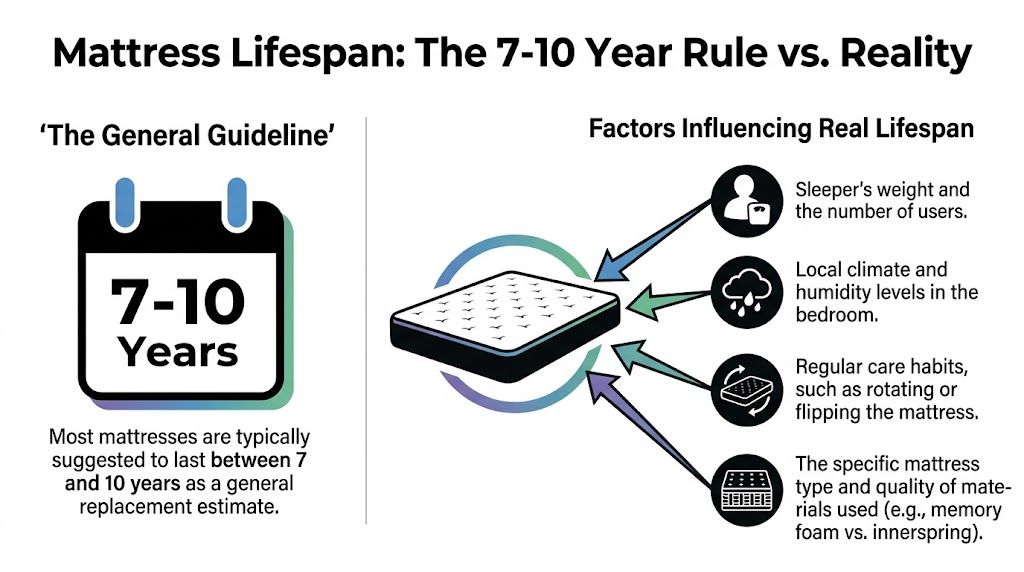
Mattress lifespan by type
The same Sleep Foundation guidance breaks lifespan down by mattress type. That matters because “how long should a mattress last” depends heavily on what’s inside it.
| Mattress Type | Average Lifespan | Best For |
|---|---|---|
| Innerspring | 5.5 to 6.5 years | Shoppers who want a traditional feel and lower upfront cost |
| Memory foam | 6 to 10 years | Pressure relief and body contouring |
| Hybrid | 6 to 10 years | Sleepers who want both cushioning and coil support |
| Latex | 10+ years | Long-term durability and resilient support |
If you’re not sure how old your current bed is, this quick read on how to tell whether your mattress is too old is a useful reality check.
Why the material changes everything
An innerspring often wears out sooner because the coil system can fatigue and the upper comfort layers can compress. You may still see a mattress that looks acceptable at a glance, but the support underneath has changed enough to affect how your body rests.
Memory foam and hybrids cover a wider range. The feel can stay comfortable for years, but quality makes a huge difference. Better foams tend to hold shape and support longer. Lower-grade foams often feel good at first and then lose consistency.
Latex usually sits in a different category for longevity. It has a more buoyant, resilient feel, and it tends to resist the kind of lasting body impressions that make a bed feel worn before its time.
Practical rule: Don’t treat the 7 to 10 year range like an expiration stamp. Treat it like the point when you start evaluating support, comfort, and wear much more seriously.
This is also where brand construction matters. A Sealy or Stearns & Foster hybrid won’t feel or wear exactly like a basic online hybrid, even though both carry the same category label. The category tells you part of the story. The build quality tells you the rest.
Local Factors That Affect Your Mattress's Lifespan
A mattress doesn’t wear out by calendar alone. It wears out through pressure, use pattern, and material quality. That’s why two households can buy the same model and have very different experiences.
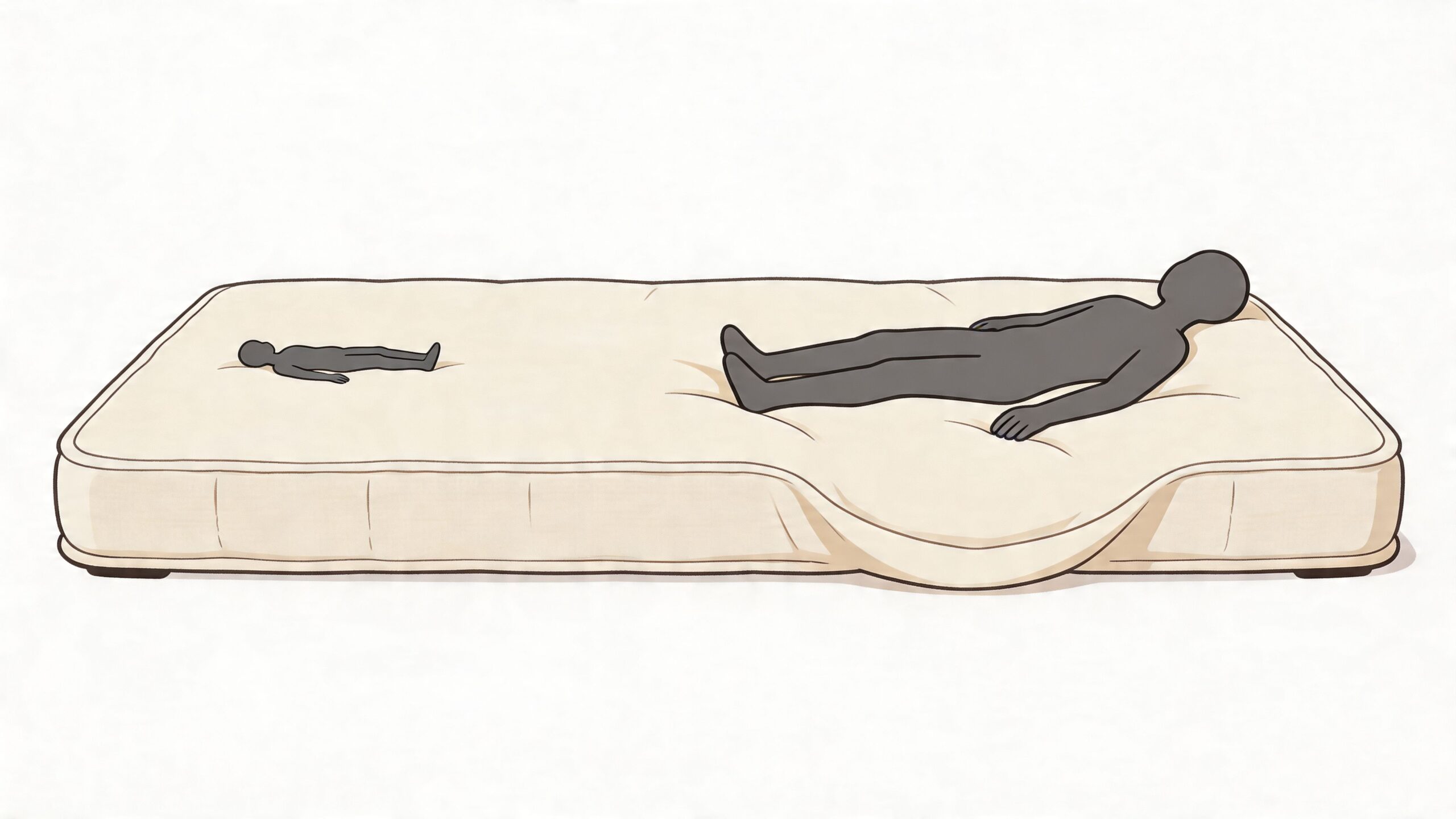
Who is sleeping on it matters
Weight and sleeper count change mattress lifespan in a very practical way. More load means more compression. More nights with two people in the same spots means more concentrated wear.
If you share a bed, or if the mattress supports a heavier sleeper, the support layers and comfort layers have to work harder. Over time, that can show up as dipping, edge fatigue, or a “roll-toward-the-middle” feel that people often blame on the bed frame when the mattress is really the issue.
Material quality shows up later
Premium construction proves its worth. According to this mattress durability overview, high-density foams (3-10+ lbs/ft³) in premium mattresses such as natural latex or gel-infused memory foam can last 15-20+ years, while budget options may sag in 2-5 years. The same source notes that many bed-in-a-box models use low-density foams associated with early sagging complaints.
That difference usually doesn’t scream at you on day one in a showroom. It shows up years later.
Tempur-Pedic, Sherwood, Sealy, and Stearns & Foster all offer constructions where the support materials are a major part of the value. Denser foams, stronger coil systems, and better edge support don’t just change comfort. They change how long comfort stays consistent.
Cheap mattresses often fail slowly enough that people adapt to them before they replace them.
Ruidoso use patterns are different
Life in the mountains creates its own mattress reality. The dry air in Ruidoso can be helpful compared with more humid climates, especially for keeping a bedroom fresher with proper care. At the same time, many local households deal with temperature swings, guest traffic, second homes, or cabins that are used heavily for stretches and then sit quiet for a while.
Vacation rental owners in Alto and across Lincoln County should think about durability first, not last. A guest mattress may serve many different body types and sleeping positions. That’s rougher use than a single owner sleeping in the same spot every night.
If allergens are part of your sleep picture, good room care matters too. This guide on keeping a bedroom lower in dust and allergens pairs well with mattress protection habits.
Clear Signs It Is Time for a New Mattress
A simple self-check
If you answer yes to several of these, your mattress is probably past its useful comfort life.
- You wake up sore most mornings. Back, shoulder, neck, or hip discomfort that improves as the day goes on often points to overnight support loss.
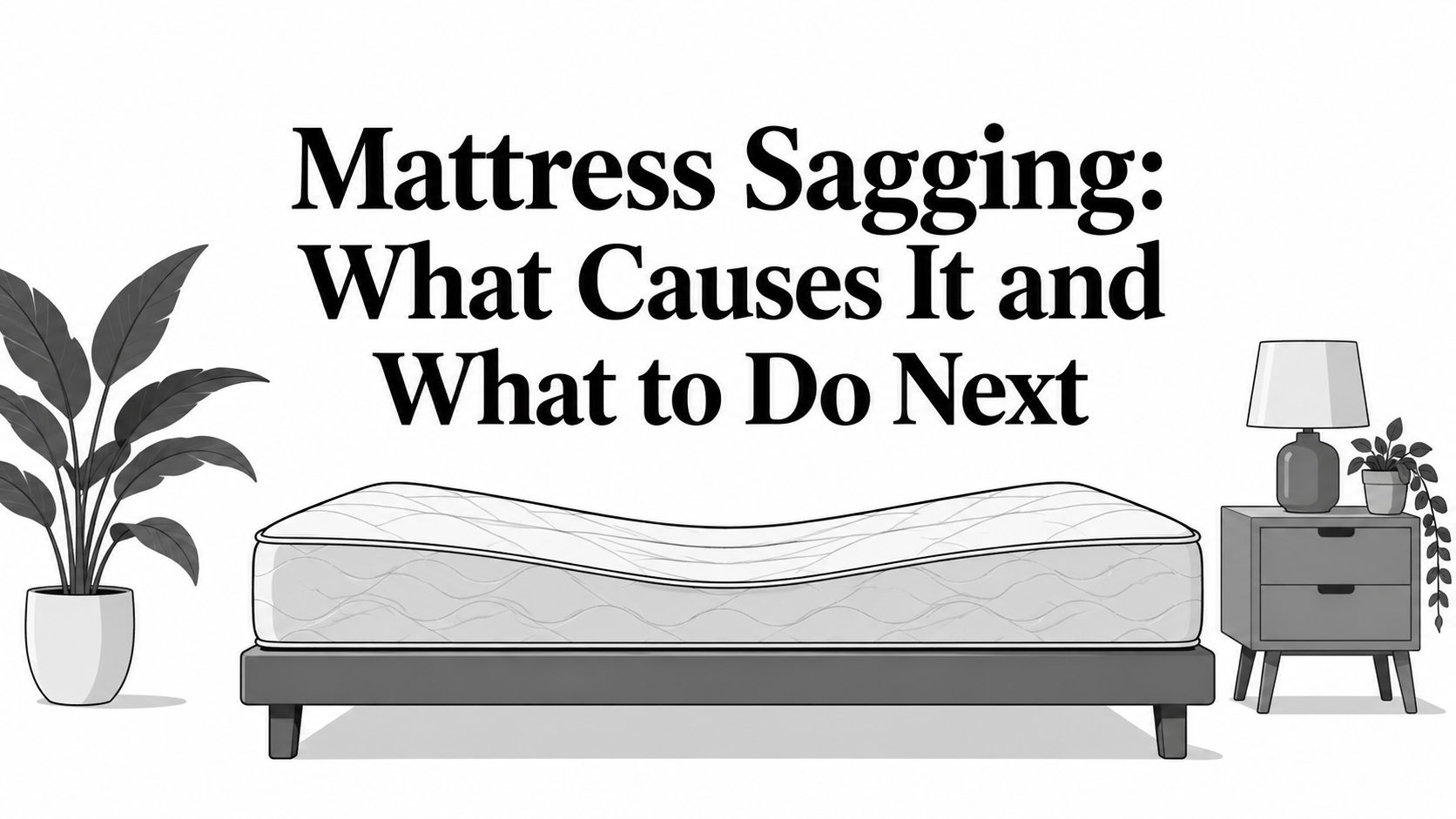
- You notice sagging or body impressions. Even if the surface springs back a little, the support underneath may no longer be even.
- You sleep better somewhere else. If a hotel, guest room, or even the couch feels better, pay attention.
- You feel your partner’s movement more than before. That can mean the comfort layers and support core are wearing unevenly.
- You edge toward the middle. This usually means the center has softened or the edges have weakened.
- You’ve started “fixing” the bed with pillows or toppers. Sometimes that buys time. Often it’s a sign the mattress itself is the problem.
What these warning signs usually mean
The most important sign isn’t cosmetic. It’s functional.
When a mattress stops supporting you evenly, your muscles spend the night trying to stabilize your body instead of letting it rest. That’s why people often wake up tired and achy even after getting enough hours in bed.
A new mattress isn’t about replacing something old just because the calendar says so. It’s about replacing a sleep surface that no longer matches your body’s needs.
How to Maximize Your Mattress Investment
A quality mattress can serve you well for years, but only if you treat it like a piece of equipment you rely on every night. Good care protects comfort, cleanliness, and value.
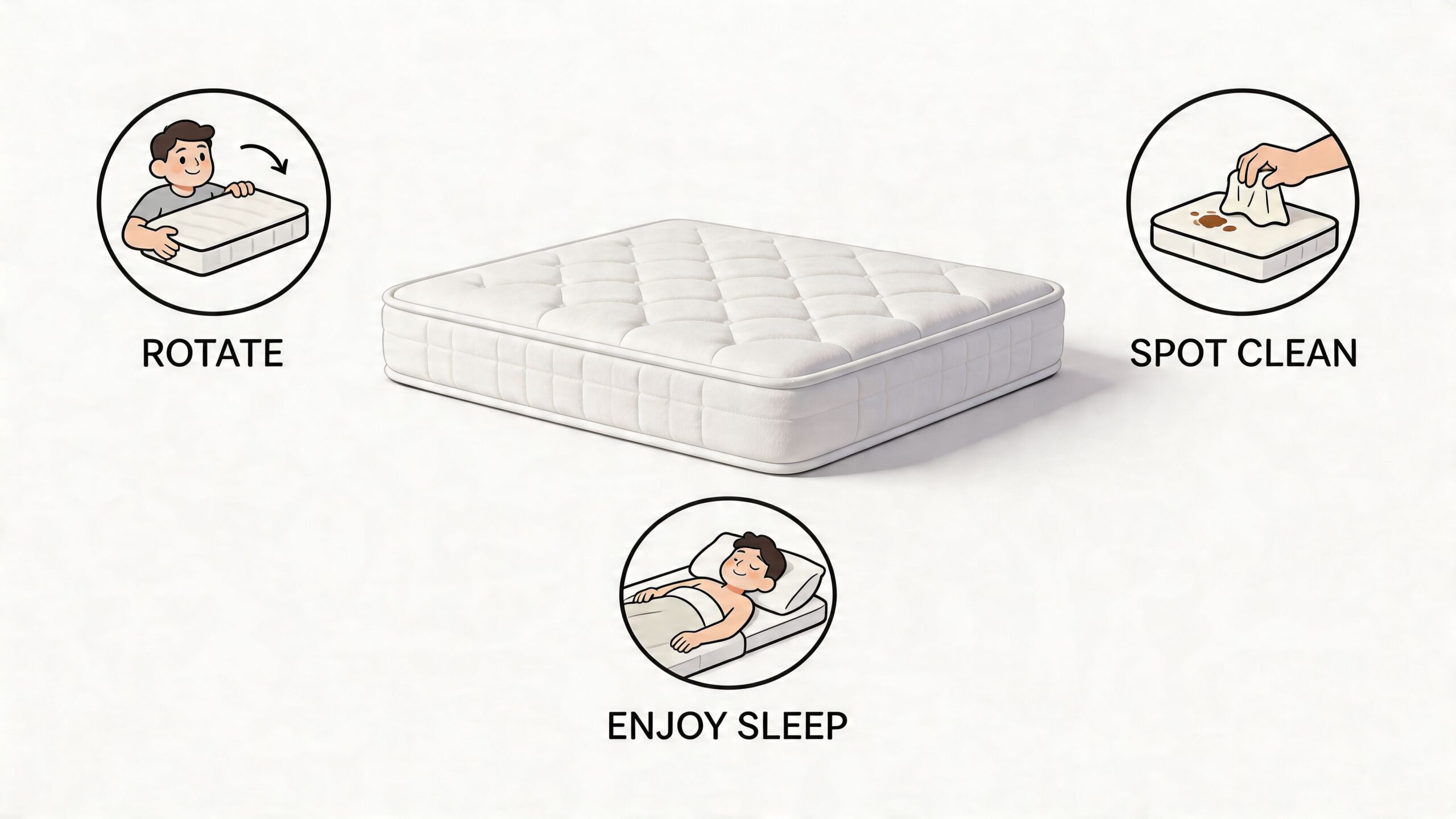
Protect the surface first
Start with a quality waterproof protector. Spills, sweat, and everyday moisture don’t just affect the cover. They can work their way into comfort layers and shorten the useful life of the mattress.
Spot clean when needed, but don’t soak the bed. Too much moisture is hard on foam and upholstery materials, and it can leave you with odors or breakdown that no sheet set can hide.
Support and rotation are not optional
Your mattress needs the right foundation. If you put a new bed on a worn-out base, the mattress has to compensate for support problems it wasn’t built to solve.
Rotate the mattress on the schedule the manufacturer recommends. Rotation helps distribute wear more evenly, especially if you tend to sleep in the same position night after night. For practical upkeep, this guide to cleaning and maintaining a mattress for longer life is worth bookmarking.
Good care protects comfort
Maintenance is easy to dismiss because it doesn’t feel urgent. Then years pass, and the mattress you paid for starts feeling older than it should.
If you’re investing in a Sealy or Tempur-Pedic, protect that investment. The right base, regular rotation, and a protector are simple habits, but they help preserve the support and pressure relief you bought.
Warranties and Our Miller Waldrop Comfort Promise
A warranty is not the same as satisfaction
People often assume a long warranty means they’re covered in every way that matters. That’s usually not how mattress ownership feels in real life.
A warranty typically addresses manufacturing defects under specific conditions. It may not solve the more common problem, which is that the mattress doesn’t feel right for your body after you’ve lived with it. That gap matters, especially when buying online, where a generous headline can hide a lot of fine print.
Think beyond sticker price
The better question isn’t just “What does it cost today?” It’s “What will this decision cost me over time?”
As noted in Leesa’s discussion of when to replace a mattress, many shoppers overlook total cost of ownership. Buying a $1,200 mattress every 8 years can cost over $4,500 in 30 years, while a $3,000 premium mattress lasting 15 years can be cheaper long-term and avoids the hassle of repeated replacements.
That math is why construction quality matters. So does service. A mattress that’s cheaper upfront but wrong for your body can become expensive fast if you’re replacing it too soon or sleeping poorly the whole time.
One local option people compare when they want in-person guidance is Mattress Pro by Miller Waldrop and its Comfort Promise, especially if they want help matching feel, support, and budget before the mattress ever reaches the bedroom.
The real risk in mattress shopping isn’t only overpaying. It’s living for years with the wrong bed because returning or replacing it feels like too much trouble.
Why the Comfort Promise matters
The biggest fear for many isn’t the warranty document. It’s choosing wrong.
That’s where the Miller Waldrop Difference is practical, not just reassuring. The Comfort Promise addresses the part of mattress shopping that specs can’t solve. You can compare memory foam against hybrid, Tempur-Pedic against Sealy, or Sherwood against Stearns & Foster all day. But until you’ve slept on a mattress, confidence matters.
That’s also where local service changes the experience. Full-Service Delivery with Professional Setup means the bed is installed correctly. The Low Price Promise helps you shop with less second-guessing. And because this is a family business with 70 years of roots in the community, there’s accountability that an impersonal website can’t offer.
Ready to transform your sleep? Visit our Sleep Pros at Mattress Pro by Miller Waldrop located at 2801 Sudderth Drive, Suite F, in Ruidoso. From luxury brands to budget-friendly solutions, we’re here to help you wake up loving your mornings. Browse our collection online or stop by Monday through Saturday.