

How to Choose a Mattress Firmness for Ideal Support

You wake up in Ruidoso, swing your feet to the floor, and your back is already talking to you. Maybe your shoulders feel jammed up. Maybe you slept a full night and still feel wrung out. A lot of people assume that’s just age, stress, or one too many hours on the trail, in the truck, or at a desk.
Often, it’s your mattress firmness.
That’s also why mattress shopping gets frustrating fast. “Plush,” “firm,” and “luxury firm” sound helpful until you lie down and realize those labels don’t tell you how the bed will feel with your body, your sleep position, and your pain points. Around Lincoln County, I hear the same thing all the time: you don’t want a fancy pitch. You want a bed that helps you wake up better.
Table of Contents
- Why Your Mattress Firmness Is the Key to Better Mornings
- Decoding the Mattress Firmness Scale from 1 to 10
- Matching Firmness to Your Body and Sleep Style
- Addressing Pain Relief and Partner Needs
- The Ruidoso Advantage Testing In-Store and Local Factors
- Your Final Decision with Total Peace of Mind
Why Your Mattress Firmness Is the Key to Better Mornings
The wrong firmness can make a good mattress feel bad. If it’s too soft, your hips can sink and pull your spine out of line. If it’s too firm, your shoulders and hips can take too much pressure. In both cases, you wake up feeling like you never fully settled in.
That problem is common. Overall mattress satisfaction averages 6.9 out of 10, which tells you a lot of people are only moderately happy with what they’re sleeping on, according to consumer sleep satisfaction research published in Frontiers in Sleep.
For active sleepers in Ruidoso, Alto, and across Lincoln County, that matters even more. If you’re hiking, working on your feet, driving long stretches, or just managing normal wear and tear, your bed isn’t just furniture. It’s part of recovery.
Practical rule: If you wake up sore but feel better as the day goes on, your mattress firmness is one of the first things to check.
People also confuse comfort with support. Comfort is what you feel first. Support is what your body feels after several hours. A mattress can feel soft and cozy for five minutes, then leave your lower back aggravated by morning.
That’s why how to choose a mattress firmness matters more than most shoppers realize. It’s the decision that shapes pressure relief, spinal alignment, and how stable you feel through the night.
At a family business with the Miller Waldrop legacy behind it, the job isn’t to steer you toward the loudest label in the showroom. It’s to help you sort out what your body is asking for.
Decoding the Mattress Firmness Scale from 1 to 10
What firmness actually means
Firmness is your surface feel. Support is the deeper structure that keeps your spine aligned. Those are connected, but they are not the same thing.
A mattress can feel plush on top and still support you well underneath. A mattress can also feel firm immediately and still be wrong for your body if it creates pressure at the shoulders or hips.
Mattress Firmness Scale Explained
| Firmness Rating (1-10) | Feel | Best For |
|---|---|---|
| 1-2 | Ultra-plush, deep sink | Very light sleepers who want maximum softness |
| 3-4 | Soft, cushioning | Many side sleepers who need more contouring |
| 5-6 | Medium, balanced feel | Combination sleepers, many couples, many back sleepers |
| 7-8 | Firm, supportive, flatter feel | Stomach sleepers, many heavier sleepers, some back pain shoppers |
| 9-10 | Extra-firm, very little give | Sleepers who need a very hard surface feel |
These numbers are a guide, not a promise. One brand’s 6 can feel different from another brand’s 6 because materials change the experience. Tempur-Pedic, Sealy, Stearns & Foster, and Sherwood all build feel differently even when the firmness label sounds similar.
If you want a quick overview of mattress types and comfort categories before you shop, this mattress guide from Miller Waldrop is a useful starting point.
Where most people should start
For most adults, the safest starting point is the middle. Research shows that medium-to-firm mattresses, rated 5 to 8, are most effective for comfort, sleep quality, and spinal alignment for the majority of adults, especially people with back pain, according to the National Council on Aging overview of mattress firmness research.
That doesn’t mean everyone should buy a 7. It means many individuals shouldn’t begin at the extremes.
Start with the middle of the scale. Then move softer or firmer based on weight, sleep position, and pressure points.
That approach saves people from two common mistakes. First, buying too soft because it feels cozy for a minute. Second, buying too firm because they think “firm” automatically means “better support.”
Matching Firmness to Your Body and Sleep Style
A mattress can feel perfect for five minutes and wrong by morning. I see that a lot here in Ruidoso, especially with shoppers who moved up to the mountains and noticed their sleep changed. Cooler nights, drier air, and big temperature swings can make a mattress feel firmer at bedtime and less forgiving on pressure points by dawn. That is why firmness needs to match both your body and the way you sleep.
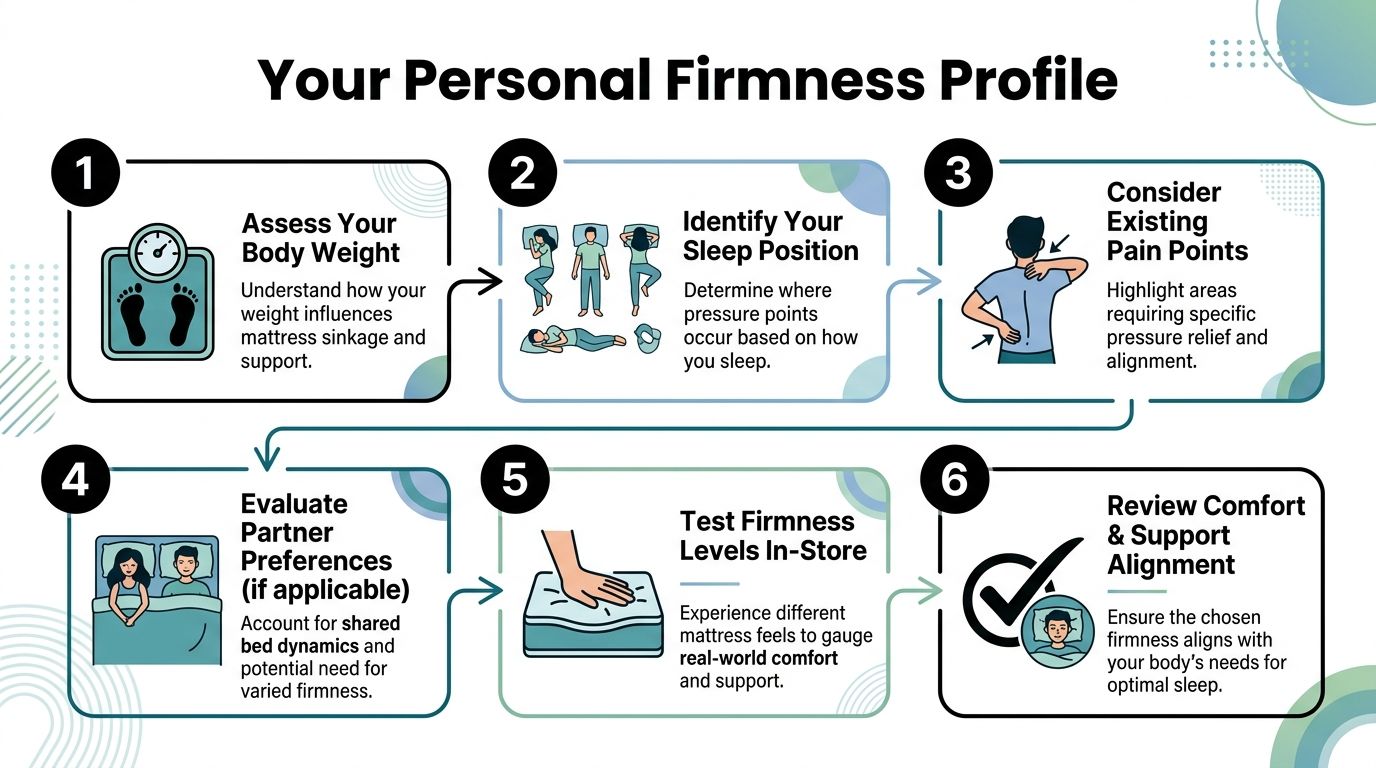
If you want a second reference before you visit the store, this guide on choosing the right mattress for your sleeping style lays out the basic position differences clearly.
Start with your body weight
Body weight changes how much you engage the comfort layers and support core. The same mattress can feel soft to one sleeper and firm to another.
- Under 130 lbs often feels better on softer to medium surfaces, usually around 3-5, because lighter bodies do not press as far into the bed.
- 130-230 lbs often lands in the 4-7 range, where there is enough cushioning for pressure relief and enough support to keep the spine steady.
- Over 230 lbs often does better on medium-firm to firm options, usually around 6-8, because extra support helps limit sagging through the hips and midsection.
Sleep Foundation’s guide to how to choose a mattress based on sleeping position and body weight is a useful outside reference for those starting ranges.
Those are starting points, not fixed rules. Material matters. A responsive hybrid at a 6 will not feel the same as a slow-moving memory foam at a 6. Up here in Lincoln County, that difference can stand out more during colder months because some foams feel firmer until they warm up under your body.
Side sleepers
Side sleeping puts the most pressure on the shoulders and hips. That usually calls for more surface give and better contouring.
A practical starting range is 3-5 for lighter side sleepers and 4-6 for average to heavier side sleepers. The goal is simple. Cushion the sharper joints without letting the waist collapse too far. If you wake up with a numb arm, a sore hip, or shoulder tension, the mattress is often too firm or not conforming in the right places.
Back sleepers
Back sleepers need a flatter, more balanced feel. Too much softness under the hips can pull the lower back out of a neutral position. Too much firmness can leave a gap at the lumbar area and create tension instead of support.
A good starting range for many back sleepers is 5-7. In our showroom, the warning sign is easy to spot. If your pelvis sinks lower than your chest, the bed is too soft for your frame. If your lower back feels unsupported while the surface feels hard, it is too firm or the comfort layers are too thin.
Stomach sleepers
Stomach sleepers usually need the firmest setup of the three main sleep positions. The hips carry a lot of weight, and when they dip, the low back arches.
A starting range of 6-8 is often the safest place to begin. Judge the bed by hip support first. Shoulder comfort matters, but a mattress that lets the torso bow downward tends to create back trouble over time.
Combination sleepers and couples
Combination sleepers need a bed that does not fight every position change. A middle feel, often around 5-6, gives enough cushion for side sleeping and enough support for back sleeping without making movement harder.
Couples add another layer. One partner may want pressure relief. The other may want a steadier, flatter surface. In the store, I usually narrow that down to three workable paths:
- A medium feel if both preferences are close.
- A responsive hybrid if easy movement matters and one person dislikes the slow sink of foam.
- Split comfort options if the firmness gap is too wide for one surface to satisfy both sleepers.
Brand feel matters here, too. Tempur-Pedic often fits shoppers who want close contouring and strong pressure relief. Sealy and Stearns & Foster usually suit people who want a more traditional supported feel, especially in hybrid models. Sherwood can be a sensible choice for shoppers who want comfort and value without adding too much complexity.
The right firmness is personal, but it is not guesswork. Match your weight, sleep position, and pressure points first. Then test how that feel holds up in a real mattress, not just on a label.
Addressing Pain Relief and Partner Needs
Pain changes the mattress conversation. So does sharing a bed.

If you’re shopping with a spouse or partner, this article on the couples conundrum of finding a mattress that works for both of you is worth a read before you narrow the field.
If pain is part of the problem
Pressure relief matters when your shoulders, hips, or lower back already hurt. Advanced pressure mapping shows that an optimal mattress can cut hip and shoulder pressure by 35-40%, and a firm mattress rated 7+ can reduce lumbar disc pressure by 22% for people with back pain, according to Casper’s mattress firmness scale resource.
What does that mean in plain English?
- Shoulder and hip pain usually call for more contouring on top.
- Lower back pain often improves when the mattress keeps the midsection from sagging.
- Neck tension often gets worse when the mattress firmness and pillow height don’t match.
Tempur-Pedic is a common fit when pressure points are the main issue because the material conforms closely to the body. A firmer Sealy or Stearns & Foster hybrid can make more sense when the shopper wants stronger pushback and easier movement.
If two people need different things
Couples run into three trouble spots over and over:
- Different firmness preferences
- Motion transfer
- Different body sizes or sleep positions
A mattress that works for one person can disturb the other if every turn or exit from bed travels across the surface. Better materials and construction are key. Memory foam and well-built hybrids usually isolate motion better than old-school spring feels.
One practical option is a middle firmness with strong motion isolation. Another is split comfort if one person needs significantly more pressure relief or more support than the other. Mattress Pro by Miller Waldrop can walk shoppers through those trade-offs using a consultative fitting process rather than guessing from a label.
A couple doesn’t need the same preference. They need the same outcome, which is stable sleep for both people.
The Ruidoso Advantage Testing In-Store and Local Factors
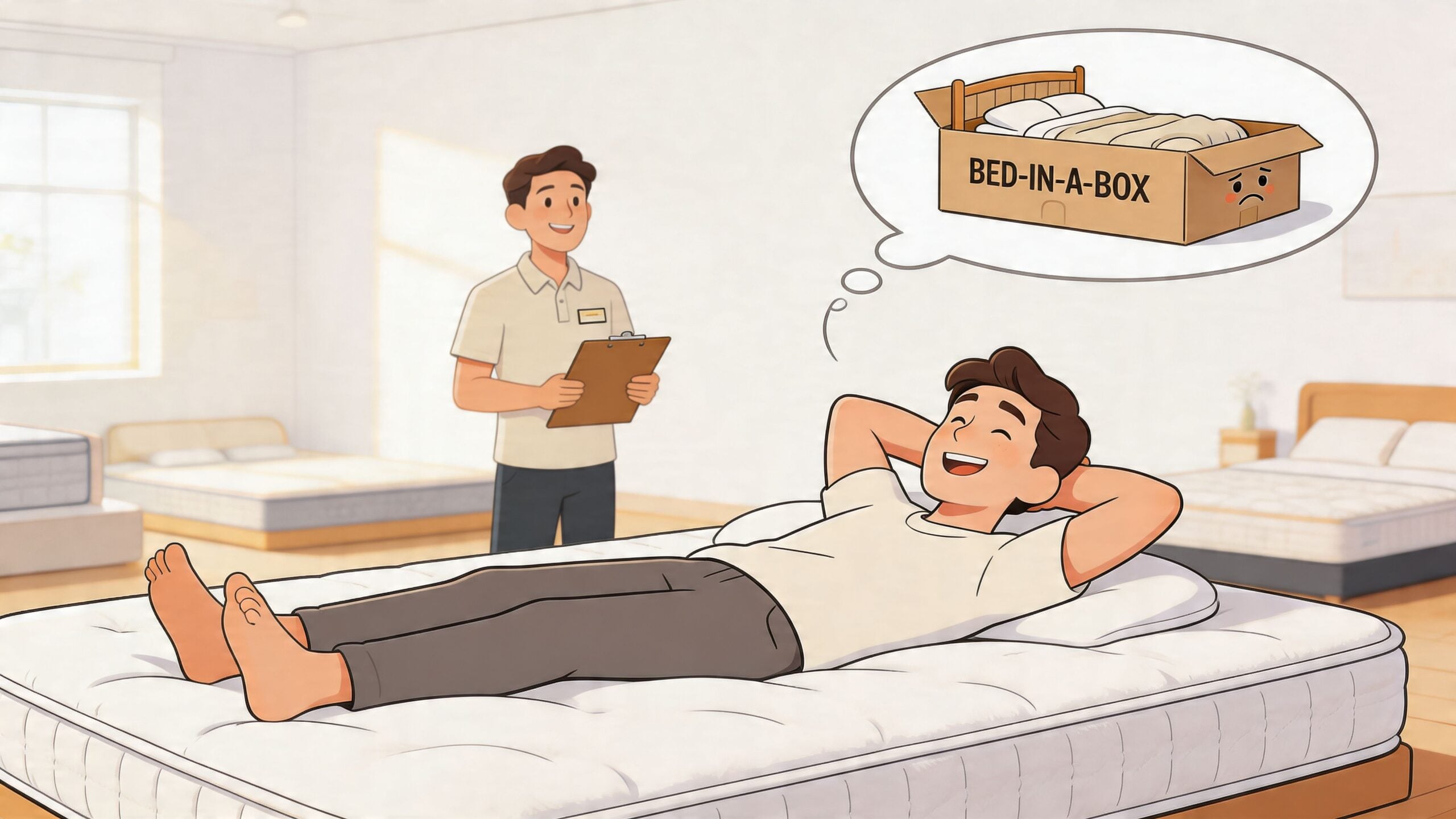
Buying a mattress online can work. Guessing at firmness online usually doesn’t.
If you’re also wondering whether age is part of your sleep problem, this guide on how long a mattress should last helps you weigh firmness issues against simple wear and tear.
What online guessing gets wrong
A bed-in-a-box site can tell you a mattress is medium-firm. It can’t tell you how that feel changes when you lie on it with your actual shoulder width, body weight, and sleep habits.
That’s the gap. Shoppers read reviews, order what sounds right, and only learn the truth after a few rough nights. By then, they’re frustrated, tired, and trying to decide whether the bed needs more time or was wrong from day one.
How to test a mattress the right way
A proper firmness test takes time.
- Lie down in your real sleep position instead of just sitting on the edge.
- Stay there for 10 to 15 minutes so your body can settle.
- Notice pressure points at the shoulders, hips, and lower back.
- Check alignment by paying attention to whether your body feels level and supported.
Short tests cause bad decisions. The right mattress usually feels calm, not dramatic. You don’t fight it, brace against it, or feel one part of your body taking all the load.
Why Ruidoso sleepers need local guidance
Local experience matters. Sleepers at high altitudes like Ruidoso, around 6,900 feet, may experience more frequent awakenings, and research suggests a firmer mattress in the 7-8 range can enhance circulation and reduce tossing and turning, according to this high-altitude firmness discussion.
That’s important in our mountain climate. Dry air, cooler nights, and altitude can all change how you sleep and how your body responds to a mattress. A firmness that sounds right in generic online advice may not feel right in a Ruidoso home or cabin in Alto.
Sherwood, Sealy, Tempur-Pedic, and Stearns & Foster all offer models with different temperature and support profiles, which is useful when shoppers need to balance firmness with breathability and recovery.
Your Final Decision with Total Peace of Mind
Once you’ve narrowed the right firmness, the last question is simple. Can you make the decision without worrying that one mistake will cost you months of bad sleep?
That’s where the Comfort Promise matters. It gives shoppers a clear safety net if the bed they chose in the showroom doesn’t feel right once it’s in their actual home.
What works when you are ready to choose
The buyers who feel best about their purchase usually do a few things well:
- They choose by fit, not by label. “Firm” is not a goal by itself.
- They compare a few real options. A Tempur-Pedic feels different from a Stearns & Foster, even at a similar firmness.
- They think about mornings, not just first impressions. The right bed supports sleep over hours, not minutes.
What makes the last step easier
A local store should reduce risk, not add pressure. That’s why the Miller Waldrop approach matters in practical ways.
- Comfort Promise helps remove the fear of getting stuck with the wrong feel.
- Low Price Promise addresses the concern that buying local means paying more.
- Full-Service Delivery with Professional Setup means you’re not wrestling a heavy mattress through the house or trying to guess whether the base and setup are right.
After helping neighbors across Ruidoso, Sudderth Drive, Alto, and wider Lincoln County, one thing stays true. The right firmness usually feels like relief. Your body settles. Your shoulders drop. You stop searching for a better position.
Ready to transform your sleep? Visit our Sleep Pros at Mattress Pro by Miller Waldrop located at 2801 Sudderth Drive, Suite F, in Ruidoso. From luxury brands to budget-friendly solutions, we’re here to help you wake up loving your mornings. Browse our collection online or stop by Monday through Saturday.