

Best Mattress for Couples with Different Preferences


You’re probably dealing with a familiar split. One of you wants a soft mattress that cushions shoulders and hips. The other wants firmer support so the lower back doesn’t collapse by morning.
That isn’t a minor preference issue. It’s usually the reason couples keep waking up sore, shifting around at night, or blaming each other when the actual problem is the bed itself. In Ruidoso and across Lincoln County, I see the same pattern often. Couples try to “meet in the middle,” buy a one-feel mattress online, and then learn the hard way that average comfort rarely feels good to either person.
Mountain living adds another layer. Dry air, cooler nights, and the way sleep can feel lighter at elevation all make mattress performance matter more, not less. If you’re shopping for the best mattress for couples with different preferences, the right answer usually isn’t compromise. It’s a smarter setup.
Table of Contents
- Why "Just Compromising" on a Mattress Never Works
- Identifying Your Unique Sleep Needs as a Couple
- Exploring Your Mattress Solutions in Ruidoso
- Key Features to Test for as a Couple
- Your In-Store Mattress Buying Checklist
- Find Your Perfect Match with Our Comfort Promise
Why "Just Compromising" on a Mattress Never Works
A compromise mattress sounds reasonable until you sleep on it for a month. Then the side sleeper starts waking up with shoulder pressure, and the back or stomach sleeper starts noticing strain through the hips or lower back. Nobody wins for long.
This happens because comfort isn’t just about taste. Your body type, sleep position, and pressure points all change what proper support should feel like. A mattress that lets one person’s shoulders sink comfortably may let the other person’s spine drift out of alignment.
The disagreement itself is common. A Better Sleep Council survey found mattress firmness preferences are nearly evenly split between firm and soft, which creates a roughly 50/50 chance that couples will want different feels. The same summary notes that 35% of couples specifically argue about mattress firmness, according to this breakdown of couples' mattress preference data.
Support and pressure relief aren’t the same thing
Support keeps your spine in a healthier line. Pressure relief reduces the force building at the shoulders, hips, and other heavier contact points.
A soft bed can feel great for a few minutes in a showroom and still be wrong for the partner who needs stronger pushback under the midsection. A firm bed can feel stable and durable, yet create numbness or soreness for the partner who sleeps on their side.
Practical rule: If one mattress feel leaves one partner comfortable and the other partner “tolerating it,” that’s not a solution. It’s a countdown to replacement.
Why the middle usually feels wrong
Many couples think medium comfort solves everything. Sometimes it does, but only when both people are already close in body type, sleep position, and comfort preference.
If you’re far apart on those factors, a middle-feel mattress often creates two different problems at once. One side of the bed feels too hard. The other feels too soft. Add normal partner movement, and small annoyances turn into broken sleep.
That’s why the better path is personalized matching, not forced compromise. If you want more guidance on how body type and sleep position affect what works, the educational resources in this sleep knowledge library are a useful place to start.
Identifying Your Unique Sleep Needs as a Couple
Before you test brands or compare models, get specific about what each of you needs. Most couples shop too broadly. They say they want “something comfortable,” but that phrase won’t help you separate a good fit from an expensive mistake.
Start by treating this like two sleep profiles that need to work in one bed.
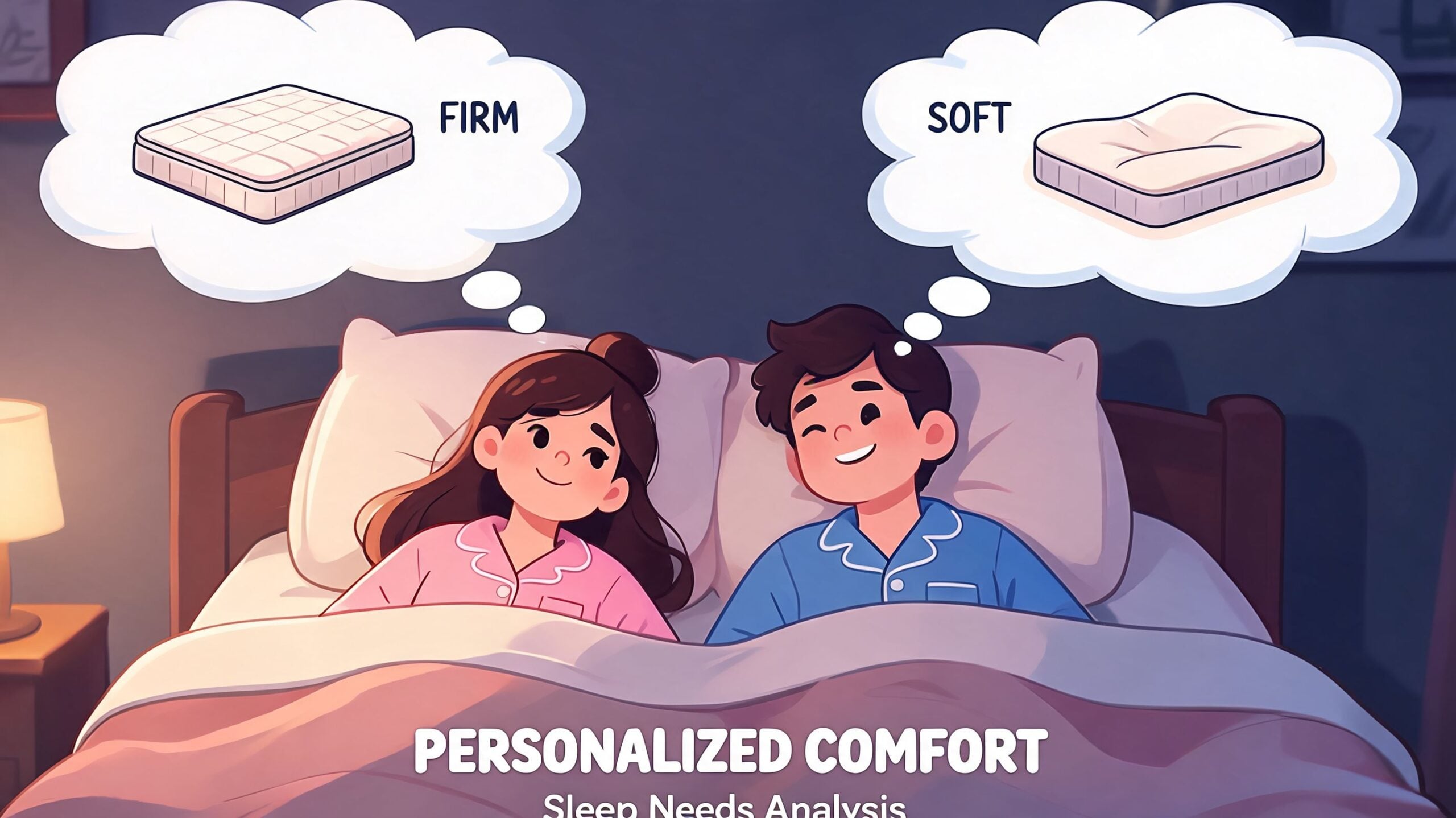
Start with the feel each of you actually likes
Don’t answer based on what you think you’re supposed to buy. Answer based on how your body feels after a full night.
Ask each other:
- Soft or firm: Do you want more contouring, or do you want to feel lifted and held up?
- Sleep position: Are you mostly on your side, back, stomach, or moving between positions?
- Pressure points: Do shoulders, hips, or the lower back complain by morning?
- Temperature: Do you kick covers off, or are you usually cold?
- Movement sensitivity: Do you wake when your partner rolls over or gets out of bed?
Those answers create a much clearer path than shopping by brand name alone.
Build your sleep harmony checklist
Use this simple checklist before you visit a showroom or browse any mattress guide.
- Identify your essentials: One partner may need pressure relief at the shoulder. The other may need stronger lumbar support.
- List your deal-breakers: Trapped heat, too much bounce, weak edges, or a mattress that feels hard to move on.
- Note any pain pattern: Morning stiffness, numb arms, or back fatigue usually point to the wrong comfort or support profile.
- Think about bed use: If you read, watch TV, or adjust positions often, responsiveness and base compatibility matter.
- Account for future changes: Preferences can shift with age, injury, or weight change.
The best couple purchase usually starts with two honest individual answers, not one joint guess.
If you’d like a more detailed framework for comparing mattress constructions, comfort levels, and materials, this mattress guide for shoppers can help you walk in better prepared.
Exploring Your Mattress Solutions in Ruidoso
Not every couple needs the same kind of fix. Some need better motion control. Others need two distinct firmness levels. Some are less divided on feel and more frustrated by heat buildup or edge collapse.
In a mountain market like Ruidoso, where homes range from primary residences to cabins and vacation properties, I’d focus on practical durability and fit, not trend-driven marketing. Tempur-Pedic, Sealy, Stearns & Foster, and Sherwood all offer constructions worth considering, but the right category matters first.
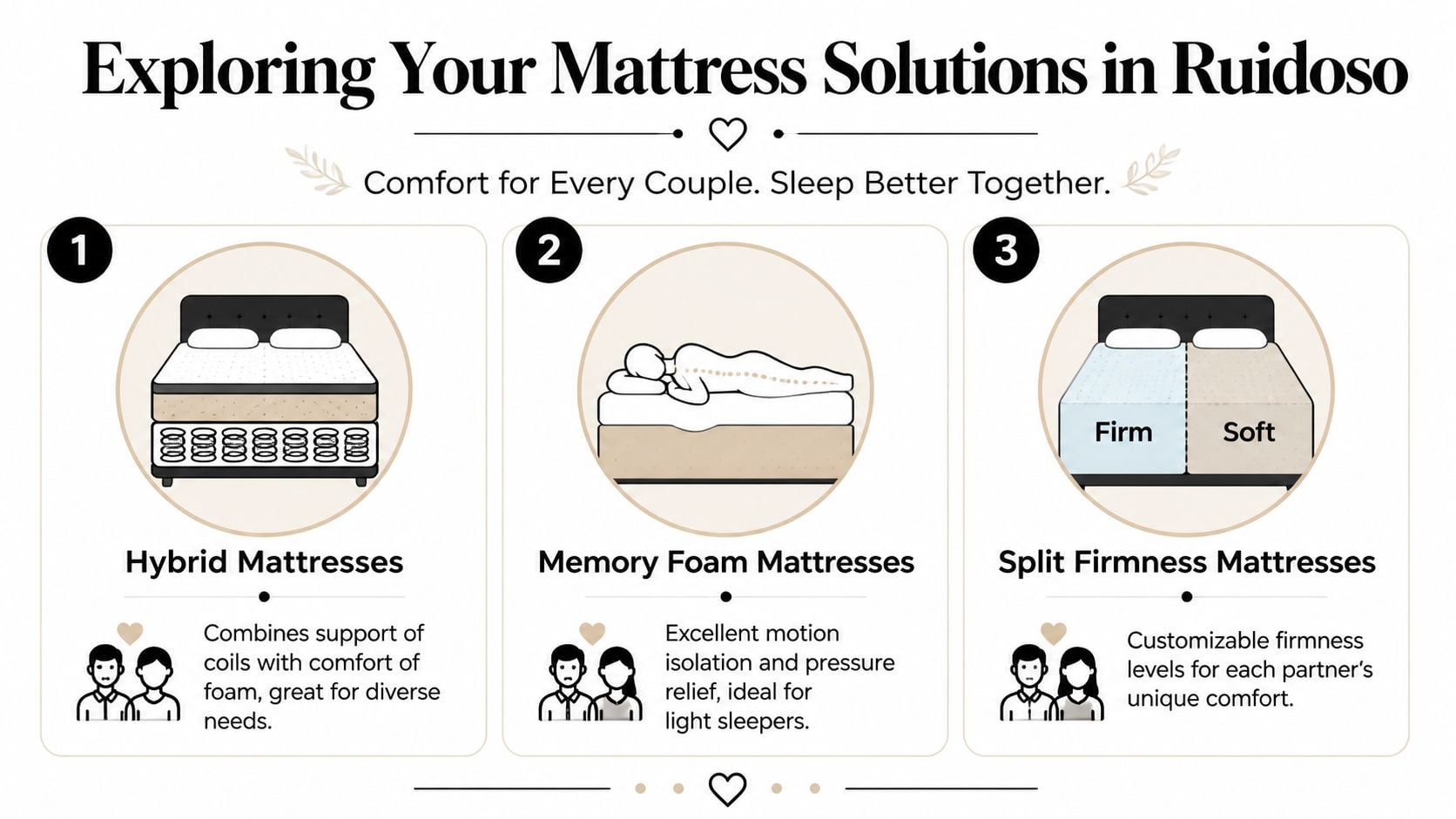
Hybrid mattresses for balanced support and comfort
For many couples, a hybrid is the best starting point. It blends foam comfort layers with a coil support system, which usually creates a more balanced feel than all-foam or old-fashioned innerspring builds.
The strongest hybrids for couples use individually wrapped coils. Some split tension pocket spring systems can calibrate support by side and body weight, reducing motion transfer by over 85% and helping eliminate the roll-together effect common in standard mattresses, as explained in this analysis of split tension pocket spring systems.
That matters if one partner is lighter and one is heavier. On the wrong mattress, the heavier sleeper can create a slope that slowly pulls both people inward.
A quality hybrid often works well for:
- Mixed-position couples: One side sleeper and one back sleeper is a common pairing.
- People who want bounce without chaos: Easier to move on than slow-response foam.
- Couples who sleep warm: Coil airflow generally helps the bed feel less stuffy.
Sealy and Stearns & Foster hybrids often appeal to couples who want a traditional mattress feel with more refined support than a basic innerspring.
Memory foam for motion control and pressure relief
If one partner is a very light sleeper, memory foam deserves serious consideration. It absorbs motion well and can do an excellent job of relieving pressure at shoulders and hips.
Tempur-Pedic is the obvious example in this category. The material contours closely, and many sleepers love how it quiets down partner movement. The trade-off is feel. Some people enjoy the deeper body-hug. Others feel it’s harder to reposition or that the bed sleeps warmer than they prefer.
That doesn’t make memory foam better or worse than hybrid. It makes it more specific.
A memory foam option usually fits best when:
| Sleep need | Why memory foam helps |
|---|---|
| Light sleeper | It dulls a partner’s tossing and turning |
| Pronounced pressure points | It contours around shoulders and hips |
| Preference for a quieter feel | It reduces the springier response some couples dislike |
Split firmness and dual comfort builds
If your preferences are far apart, an immediate consideration is a split firmness setup. This arrangement lets each side of the bed feel different without forcing one partner into the wrong surface.
This can take several forms. Some beds use different internal builds on each side. Some use modular layers. Some smart systems actively adjust support.
For couples who are tired of debating soft versus firm, split comfort is often the cleanest answer because it solves the actual problem instead of disguising it.
If one of you says, “I need plush,” and the other says, “I need support,” believe both statements. Don’t shop as if one of them has to lose.
Sherwood can be a strong option when you want straightforward comfort choices without unnecessary complexity. The key is testing whether each side maintains good alignment in your natural sleep position.
Adjustable bases when comfort means more than firmness
Firmness isn’t always the whole issue. Some couples need head elevation for snoring, reading, reflux, or simple comfort after a long day on the mountain.
An adjustable base can change the experience of a mattress dramatically. It won’t fix poor support, but it can make the right mattress work even better by improving position and pressure distribution.
This is especially useful when one partner needs a flatter sleep surface and the other likes some elevation before falling asleep. In that situation, pairing the right mattress with an adjustable base can solve a comfort problem that firmness alone won’t touch.
If you want to compare these categories with someone who can translate specs into real-world feel, it helps to contact a local sleep specialist before narrowing your list too aggressively.
Key Features to Test for as a Couple
Once you’ve narrowed the mattress type, stop looking at labels and start testing performance. The best mattress for couples with different preferences has to work under real conditions, with two bodies, two sleep styles, and very often two very different ideas of comfort.
Motion isolation
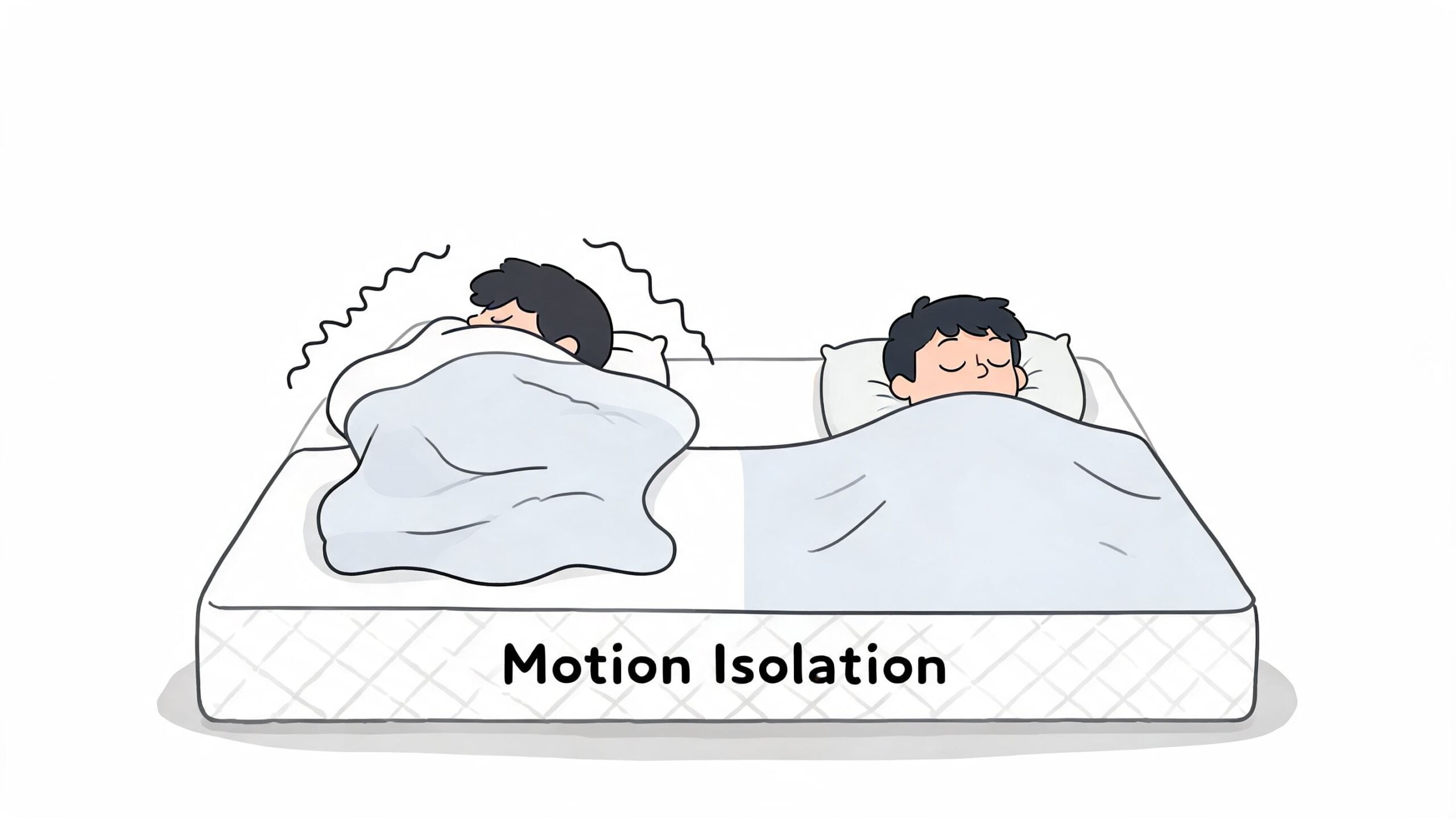
Motion isolation is simple. When one partner moves, the other partner shouldn’t feel the whole bed react.
Expert testing of over 370 mattresses found that top couples’ mattresses excel in motion isolation scoring 9/10 or higher and in strong edge support. Hybrids such as the Helix Midnight Luxe were highlighted for zoned coils that absorb most partner movement in this couples mattress testing roundup from Sleepopolis.
In practical terms, test this by having one person change positions, sit down abruptly, and get in and out of bed while the other stays still. If the resting partner feels a wave travel across the mattress, keep looking.
Edge support
Couples use more of the mattress surface than solo sleepers. Weak edges shrink the usable sleep area because both people start drifting inward.
Strong edge support matters if:
- You share a queen and need every inch
- One or both of you sit on the edge to dress
- You’ve ever felt like you’re sliding off the perimeter
- A heavier sleeper needs a more stable side
A well-built edge also makes the whole bed feel more dependable. That’s especially important in guest rooms, cabin homes, and any bedroom where a mattress needs to serve different sleepers well over time.
Temperature regulation in mountain conditions
Ruidoso sits at about 6,900 feet, and that environment changes how some people sleep. Lower oxygen and drier air can make nights feel more restless. A 2025 Sleep Medicine Reviews study, summarized here in a guide to dual-firmness mattresses in high-altitude settings, reported increased restlessness in 40% of high-altitude sleepers.
That’s one reason cooling and airflow matter so much in Lincoln County and Alto. If a bed traps heat or amplifies movement, altitude-related light sleep can feel worse.
Look for:
- Breathable coil systems: Hybrids generally allow more airflow than dense foam blocks.
- Cooling foams or covers: Useful for couples who generate more heat together.
- Responsive comfort layers: Easier to move on when sleep already feels lighter.
- Pressure relief without deep sag: Important when your body is already working harder to settle.
A mattress doesn’t need gimmicks. It needs to stay stable, sleep clean, and stop small disturbances from becoming full wake-ups.
Your In-Store Mattress Buying Checklist
Buying in person works better for couples because mattress fit is physical. You can’t judge shoulder pressure, lumbar support, or partner disturbance from a product page.
That’s especially true when your needs are narrow or highly individual. Some dual-zone smart mattresses allow each partner to set personalized firmness on a 0-100 scale, using real-time sensing to make micro-adjustments that prevent pressure buildup and help maintain spinal alignment as sleepers move, as described in this overview of dual-zone smart mattress features.
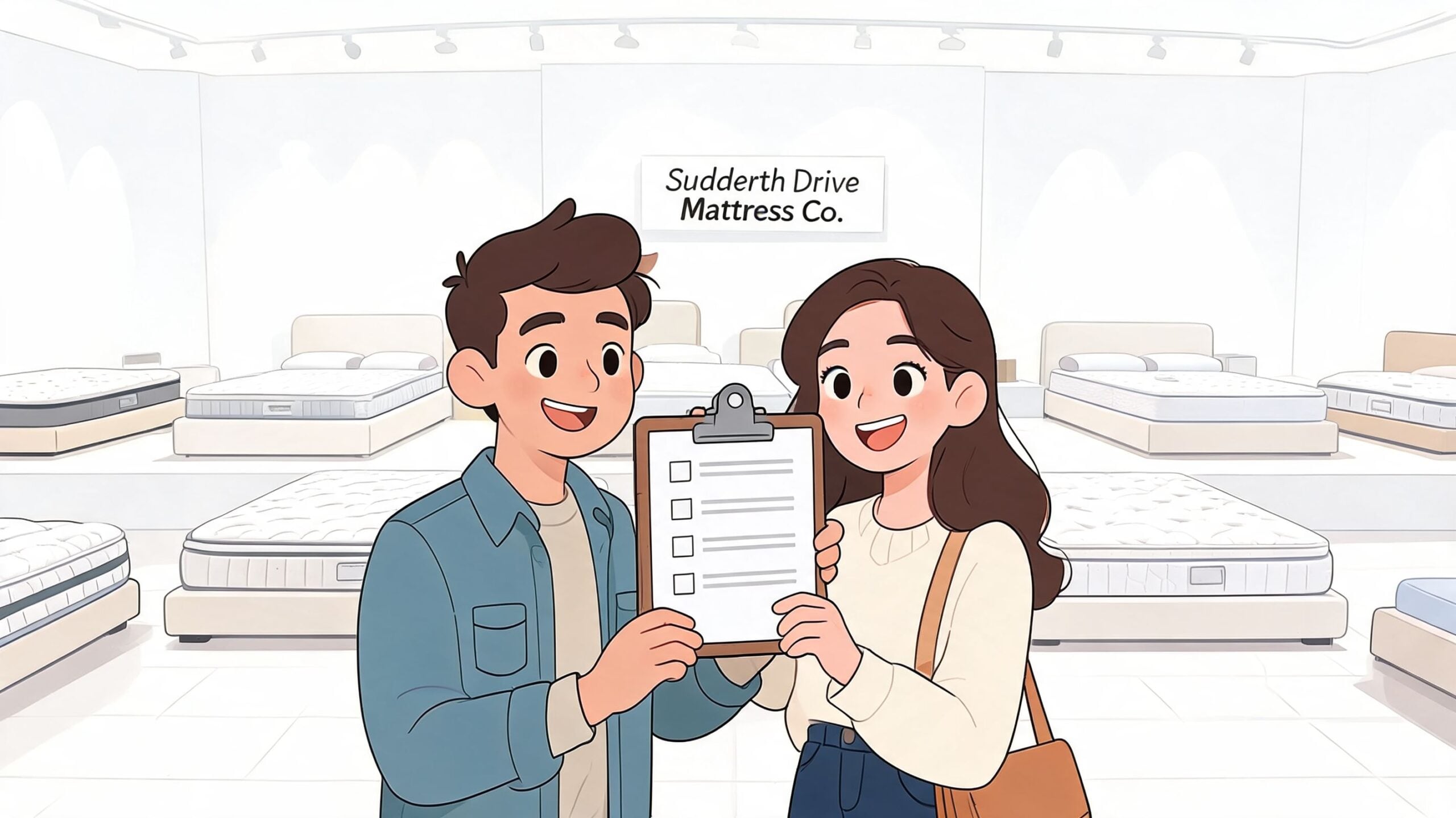
What to do before you walk in
Write down each person’s needs
Don’t rely on memory. List sleep position, firmness preference, heat concerns, and any pain points.Wear comfortable clothes
If you can’t lie naturally on a bed, you won’t get a useful read.Bring your questions
Ask about comfort materials, support systems, base compatibility, delivery, and the trial or exchange process.Shop together
One person shouldn’t “approve” a mattress alone when both people have to sleep on it.
A detailed mattress buying guide for in-store shoppers can help you organize those questions before you arrive.
How to test a mattress together
Don’t perch on the corner for two minutes and call it done. Lie down in your actual sleep positions and stay there long enough to notice what your body is telling you.
Use this in-store testing routine:
- Start in your normal position: Side, back, stomach, or combination.
- Stay put for several minutes: Pressure issues often show up after the first minute.
- Switch roles: Have your partner move while you stay still.
- Test the edge: Sit and lie near the perimeter.
- Try your full bedtime habits: Roll, reach, turn, and settle.
Online shopping asks you to guess first and evaluate later. A good showroom lets you evaluate first.
That difference matters. Hands-on testing saves couples from buying a mattress that only sounded right in a review.
Find Your Perfect Match with Our Comfort Promise
Even after careful testing, most couples still carry one big worry. What if this mattress feels great in the store and different at home?
That concern is reasonable. Mattress shopping is one of the few purchases where your body is the final judge, and it may need time to adapt. The best local retailers understand that and build real protection around the purchase.
Why peace of mind matters with couple shopping
Couple shopping has more variables than solo shopping. You’re balancing firmness preference, motion response, support, edge stability, and how the bed feels after a full night instead of a short test.
That’s why the exchange policy matters almost as much as the mattress itself. A Comfort Promise removes the fear of getting trapped in the wrong choice, especially when two sleepers are involved.
And the stronger the mattress category, the more confident you can feel in the process. As noted earlier, expert testing of over 370 mattresses identified high motion isolation and strong edge support as key performance markers for couples, with zoned-coil hybrids standing out as top recommendations. What matters at the store level is having the chance to test those qualities properly, ask informed questions, and know you have backup if the fit isn’t quite right.
For shoppers who want to understand that protection before buying, it’s worth reviewing the details of the Comfort Promise offered by a local sleep specialist.
A good mattress should help both of you wake up feeling more human. A good buying experience should let you choose with confidence.
Ready to transform your sleep? Visit our Sleep Pros at Mattress Pro by Miller Waldrop, or stop by the showroom at 2801 Sudderth Drive, Suite F, in Ruidoso. From Tempur-Pedic, Sealy, Stearns & Foster, and Sherwood to budget-friendly solutions backed by our Low Price Promise, Full-Service Delivery with Professional Setup, and Comfort Promise, we’re here to help you wake up loving your mornings. Browse our collection online or visit Monday through Saturday.