

What to Look for to Sleep Cooler at Night: A Local’s Guide


The pattern is familiar across Ruidoso and Lincoln County. A sleeper kicks one leg out from under the covers, flips the pillow to the cool side, turns the thermostat down a little more, then still wakes up feeling sticky, restless, and not fully recovered.
That kind of night is frustrating because it feels like the room should be comfortable. In the mountains, the air can be dry, evenings can cool off, and yet the bed itself can still hold onto warmth. For many people, the actual issue isn't just the room. It's the whole sleep setup, from the mattress core to the protector to the sheets.
That's why what to look for to sleep cooler at night isn't one magic feature. It's a combination of airflow, moisture management, and materials that stop heat from building up around the body. Shoppers who want real answers often start with a local sleep consultation near Ruidoso so they can sort out whether the problem is the mattress, the bedding, the room, or all three.
Table of Contents
- Tired of Tossing and Turning from the Heat
- The Science of Why You Sleep Hot
- Cooling Mattress Technologies Explained
- Building Your Complete Cooling Sleep System
- How to Shop for a Cooling Mattress in Ruidoso
- Your Checklist for Cooler Nights and Better Mornings
Tired of Tossing and Turning from the Heat
Sleeping hot wears people down in a sneaky way. It's not always one dramatic wake-up. More often, it's a night full of little disruptions. Covers come off, then back on. The sleeper shifts to a cooler spot. Morning arrives, but the body feels like it never settled in.
That's common in homes around Alto, Ruidoso, and the rest of Lincoln County. Dry mountain air can feel comfortable at bedtime, yet a heat-trapping mattress can still create a warm pocket around the shoulders, hips, and back. When that happens, the bed becomes its own climate zone.
A lot of shoppers assume they need “a cooling mattress” and stop there. The better way to think about it is a cooling sleep system. The mattress matters, but so do the pillow, protector, sheets, foundation, and the airflow in the room.
A cooler night usually comes from removing layers of trapped heat, not from chasing one flashy feature label.
That's also where local guidance helps. A cabin, rental, or year-round home off Sudderth Drive can each behave differently at night. Some bedrooms hold afternoon heat. Others have limited air movement. Some sleepers run warm because they sink too far into dense comfort layers, while others overheat because their bedding stack is too heavy.
The good news is that hot sleep is usually a solvable problem. The right setup can reduce the warm, humid feel at the surface of the bed and help the sleeper stay more stable through the night. The key is learning what moves heat away and what only sounds cooling in a showroom tag.
The Science of Why You Sleep Hot
The body doesn't sleep best at the same temperature it functions at during the day. To drift off and stay asleep, it needs to shed some heat. That's one reason warmth at the bed surface can become such a problem.
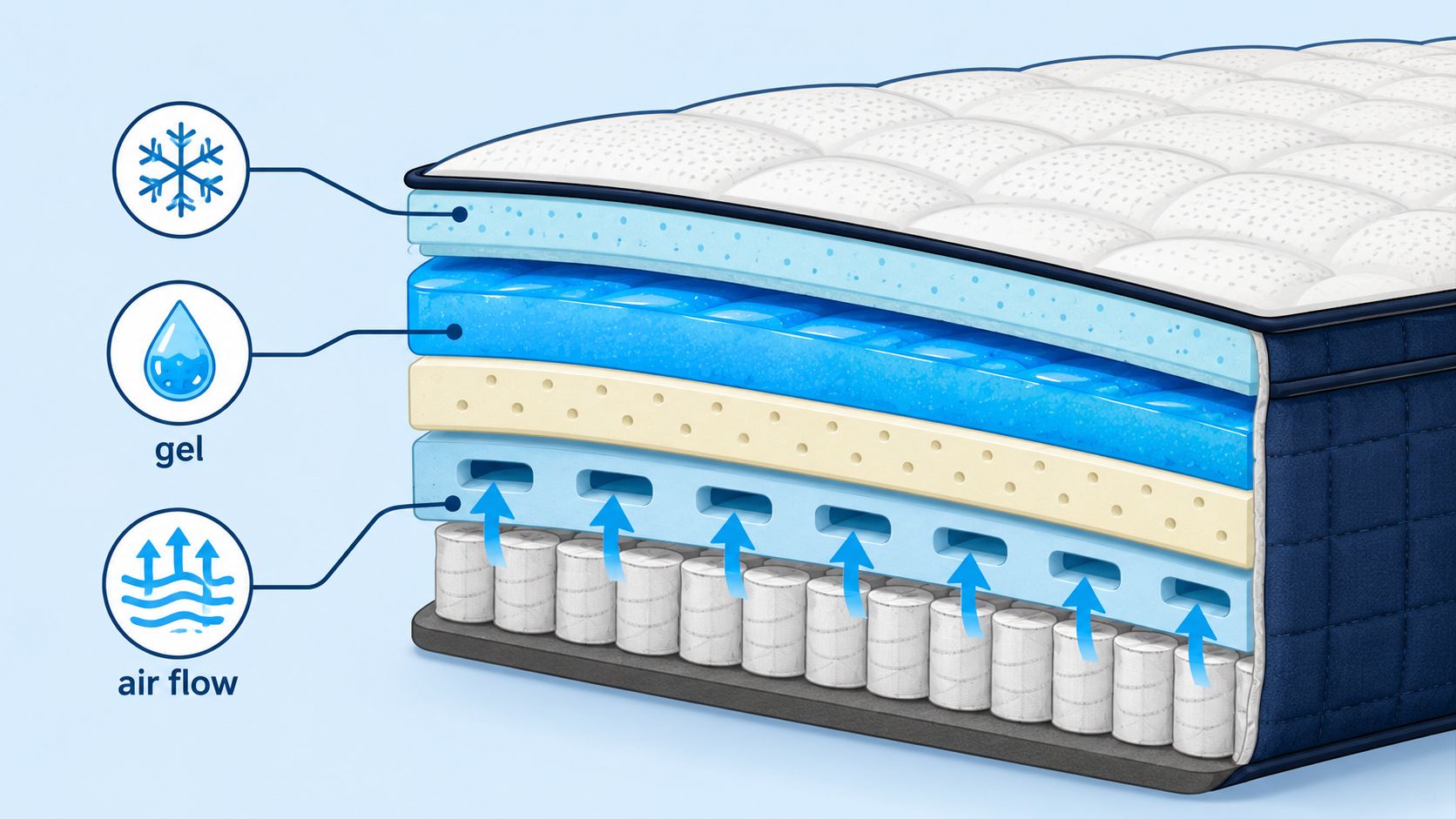
The body needs to cool down to sleep well
A simple way to picture it is to think of the body like a home thermostat that's trying to lower the temperature for the night. If the room is too warm, or the mattress traps too much body heat, that cooling process gets interrupted.
A foundational benchmark for sleeping cooler is a bedroom temperature of about 60 to 67°F (15.6 to 19.4°C), which sleep guidance describes as an ideal starting point for most adults, as noted in this review of cooler sleep temperature guidance. That range matters because cooler conditions help the body lower core temperature and support the natural signals that prepare it for sleep.
When the bedroom stays above that comfort zone, a mattress has to work harder to avoid heat buildup. If the bed uses dense materials with poor ventilation, the sleeper can feel warm even if the house itself seems comfortable.
Why the bed microclimate matters
Most “hot sleeper” complaints start in the small space between skin, sleepwear, sheets, and mattress. That narrow zone can trap warmth and moisture fast. Once it does, the body has a harder time releasing heat.
Ruidoso's high-altitude, dry climate creates a mixed picture. Dry air can help sweat evaporate, but it doesn't automatically fix a mattress that stores warmth. If the bed hugs closely and doesn't breathe well, the sleeper still feels heat concentration under pressure points.
A practical way to think about thermoregulation is this:
- Ambient temperature matters first. A hot room raises the starting point.
- Surface airflow matters next. Breathable materials let warmth escape.
- Moisture management matters too. Damp bedding makes the sleep surface feel warmer.
Practical rule: The sleeper doesn't need a mattress that feels cold for five minutes. The sleeper needs a mattress that avoids building heat across the whole night.
That difference is why many cooling claims disappoint. A surface can feel cool at first touch and still sleep warm once body heat has nowhere to go.
Cooling Mattress Technologies Explained
Cooling features vary a lot in how they perform. Some improve comfort at the surface. Others help the whole mattress release heat more effectively. The strongest designs usually combine several approaches instead of relying on one buzzword.
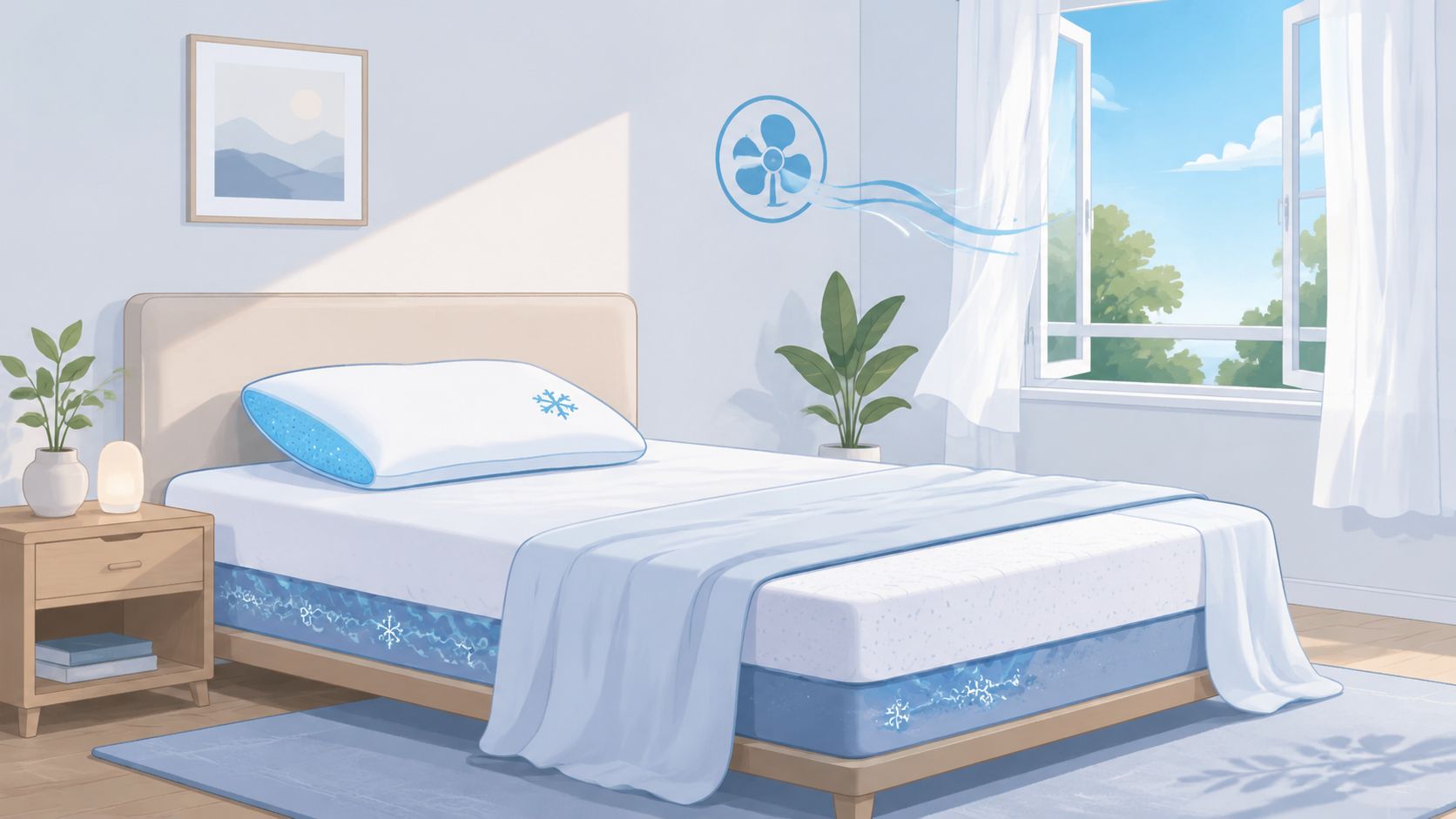
Open-cell and gel-infused foams
Traditional dense foam can hold warmth close to the body. That doesn't mean every foam mattress sleeps hot, but it does mean the foam's structure matters.
Open-cell and perforated foams are designed to improve airflow through the comfort layers. Gel-infused foams aim to help dissipate heat rather than letting it sit in one area. For shoppers who like pressure relief and motion control, those features can make a noticeable difference.
Tempur-Pedic models with advanced cooling materials tend to appeal to sleepers who want a more body-conforming feel without giving up temperature management. They can be a good fit for side sleepers and couples who value pressure relief, though shoppers should still pay attention to how much they sink into the bed.
Hybrid and coil designs
For many hot sleepers, hybrids are the most reliable place to start. Coil systems naturally create air channels through the core, which helps warm air move out instead of collecting under the sleeper.
Independent guidance notes that what matters most is heat dissipation and moisture management, with emphasis on breathable textiles, ventilated comfort layers, perforated foams, and especially coil systems that create air channels through the core, as explained in this overview of cooling mattress materials. That's why hybrid constructions often outperform thick all-foam builds for people who consistently overheat.
Sealy and Stearns & Foster hybrids usually make sense for shoppers who want a balance of cushioning and airflow. Sherwood can also be worth a look for value-focused buyers who still want a more breathable support system.
A few shoppers searching for mattresses for hot sleepers benefit from starting with hybrids first, then deciding whether they need more contouring foam or a flatter, springier feel.
Cooling covers and surface fabrics
Covers matter, but they're often misunderstood. A cool-touch cover can feel refreshing when someone first lies down, yet that alone won't fix a mattress with a heat-retentive interior.
What these covers do well is improve the first contact point. They can help the bed feel less stuffy near the skin and can support moisture handling when paired with breathable sheets. They work best as part of a layered design, not as the only cooling feature.
What works and what disappoints
The trade-offs are straightforward.
| Feature | Often works well for | Limitation to watch |
|---|---|---|
| Open-cell or ventilated foam | Sleepers who want contouring comfort | Can still feel warm if the bed is very dense overall |
| Coil or hybrid core | Hot sleepers needing airflow and support | Surface feel varies a lot by comfort layer thickness |
| Cool-touch cover | People bothered by surface warmth | May only solve the first few minutes of heat |
| Thick topper on top of a warm mattress | Quick comfort changes | Often blocks airflow and adds more heat retention |
The most dependable cooling beds don't just feel cool on contact. They keep heat from getting trapped underneath the body.
That's the difference shoppers should test for in person.
Building Your Complete Cooling Sleep System
A cooler mattress helps, but it can't do the whole job by itself. A hot pillow, a waterproof protector that doesn't breathe, or heavy sheets can undo the gains from a better mattress.
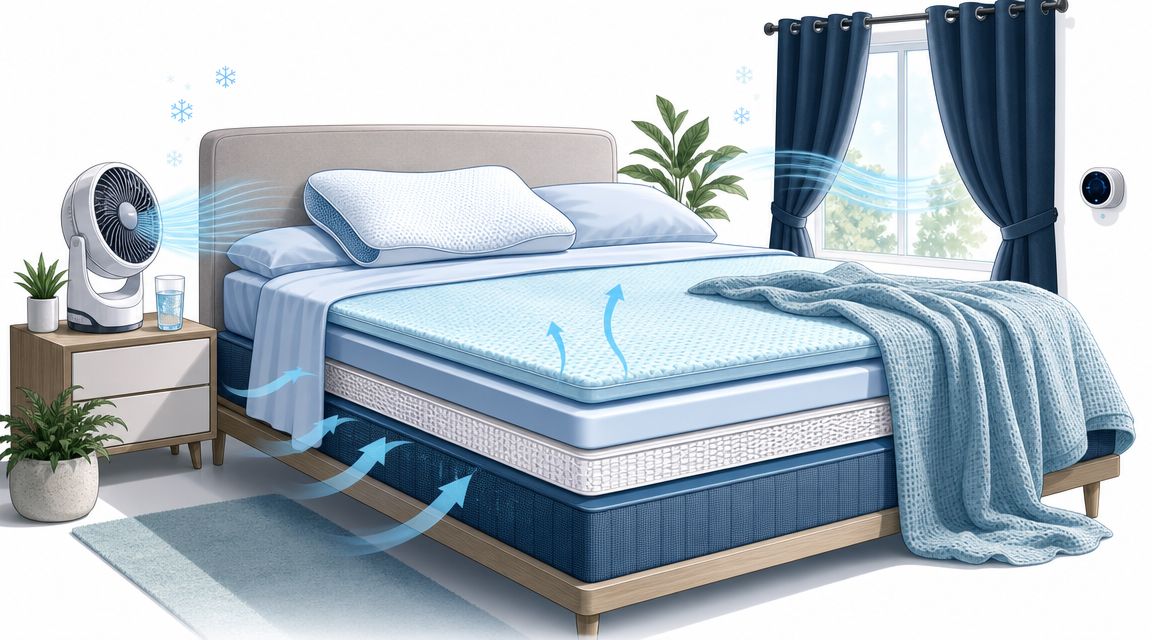
Start with the mattress, then fix the layers above it
The bedding closest to the skin should help heat leave, not hold it in place. Breathable fabrics such as cotton, linen, bamboo, or silk are commonly recommended because they support airflow and moisture movement instead of creating a clammy surface.
Pillows matter more than many shoppers expect. A sleeper can have a breathable mattress and still wake hot if the pillow traps warmth around the head and neck. The same goes for protectors. Some are useful for keeping a mattress clean, but the wrong one can act like a barrier that blocks airflow.
A strong cooling setup usually includes:
- Breathable sheets that don't cling or trap moisture
- A lower-heat pillow with a more ventilated build
- A protector chosen for airflow, not only spill resistance
- A support system underneath that doesn't smother the mattress base
A helpful next step is reading about building a sleep sanctuary with lighting, temperature, mattress, and bedding working together.
Control the room around the bed
Temperature control affects more than comfort. In a 2024 study of a temperature-controlled mattress system, cooler sleep conditions increased deep sleep by 14.3 minutes on average, a 22% increase, and REM sleep by 9.2 minutes, a 25% increase, as reported in this published sleep study on cooler mattress conditions. That's a reminder that thermal management can change actual sleep quality, not just how the bed feels at bedtime.
For Ruidoso-area homes, practical room strategies often help more than shoppers expect:
- Use moving air from a ceiling fan or cross-ventilation when outdoor conditions allow
- Strip away excess layers before blaming the mattress alone
- Watch afternoon heat gain in rooms that bake in the sun
- Set up the whole room for cooling, especially in cabins with uneven temperature control
A cooling mattress works best when the room gives it a fighting chance.
That's why the most successful shoppers don't buy one “cooling” product and hope for the best. They tune the system around the bed.
How to Shop for a Cooling Mattress in Ruidoso
Buying a cooling mattress online can be risky because heat retention is hard to judge from product names alone. Two beds can both sound breathable on a product page and feel very different after twenty minutes of actual body contact.
Test for heat retention, not just softness
When shoppers try beds in person, they should stay on each one long enough to notice how the comfort layers respond. A mattress that feels plush for the first minute may start to feel warmer as the body settles in.
Questions worth asking in the showroom include:
- Does the mattress rely on passive cooling only, or does the design include airflow through the core?
- How deep does the sleeper sink in, especially at the shoulders and hips?
- Will the protector or sheets change the feel of the cooling features?
- Is the support core breathable, or mostly enclosed foam?
Tempur-Pedic, Sealy, Stearns & Foster, and Sherwood each bring different trade-offs. Some emphasize contouring and pressure relief. Others lean harder into airflow and responsiveness. That's why a side-by-side test matters more than labels.
Match the bed to the home
The most evidence-backed target for cooler sleep is a bedroom temperature of about 60 to 67°F (15.6 to 19.4°C), and a cooling mattress can't fully compensate for an overheated room, as explained in this sleep-cooling guidance on room temperature and mattress matching. In a place like Ruidoso, that matters because one home may cool down quickly after sunset while another holds daytime heat well into the night.
That local context is one reason many shoppers prefer in-person guidance over guesswork from a box at the front door. Mattress Pro by Miller Waldrop gives shoppers a place to compare constructions in person, ask how a bed may behave in a mountain cabin or full-time residence, and reduce risk through the Comfort Promise, the Low Price Promise, and Full-Service Delivery with Professional Setup. Anyone still narrowing options can also review this guide on how to choose a mattress.
For homes in Alto and across Lincoln County, delivery and setup also matter. A cooling mattress only helps if it's paired with the right base, the right bedding, and a room setup that supports it.
Your Checklist for Cooler Nights and Better Mornings
A shopper trying to decide what to look for to sleep cooler at night can keep the process simple. The goal is to remove trapped heat from the sleep surface and avoid products that block airflow.
Use this checklist when shopping:
- Check the core first. Hybrid and coil-based designs usually offer stronger airflow than dense all-foam builds.
- Look past the word “cooling”. Ask what materials move heat or reduce moisture buildup.
- Pay attention to sink. A bed that hugs too much can feel warmer because more of the body is surrounded.
- Review the cover and protector together. A breathable mattress cover won't do much if the protector seals heat in.
- Choose lighter bedding layers. Breathable sheets and a less heat-retentive pillow can improve the whole setup.
- Think about the room itself. Fans, ventilation, and sun exposure affect how well any mattress performs.
- Try before buying when possible. Temperature comfort is easier to judge in person than from a product page.
- Protect the investment. Good care helps cooling materials perform the way they're meant to over time. This guide on keeping a mattress cool and clean through summer is a useful reference.
Cooler sleep usually comes from better airflow, smarter layers, and fewer heat traps, not from one label on a tag.
The right bed should help the sleeper relax into the night instead of fighting the surface for a cooler spot. For neighbors in Ruidoso and throughout Lincoln County, that often means choosing with the local climate in mind and building a setup that works in the actual bedroom, not just in a product description.
Ready to transform your sleep? Visit our Sleep Pros at Mattress Pro by Miller Waldrop showroom located at 2801 Sudderth Drive, Suite F, in Ruidoso. From luxury brands to budget-friendly solutions, we're here to help you wake up loving your mornings. Browse our collection online or stop by Monday through Saturday.