

Adding a Adjustable Base: Ruidoso Buyer’s Guide

A lot of sleepers in Ruidoso reach the same point. The mattress still feels good, but the body doesn't. By the end of the evening, pillows are stacked behind the shoulders for reading, knees need support, or sleep gets interrupted by a stiff back, snoring, or reflux.
That's often the moment when adding an adjustable base starts to make sense. The mattress gets most of the attention, but the foundation under it changes how that mattress supports the body every night. In mountain homes, that matters even more. Cabin layouts, older frames, narrow stair turns, and dry air all affect how a sleep setup performs in real life.
For families across Lincoln County, the smartest adjustable-base purchase usually isn't about chasing features. It's about getting the fit, function, and setup right the first time, with advice that matches how people live in Ruidoso and Alto.
Table of Contents
- Your Next Step to a Perfect Night's Sleep in the Mountains
- What Is an Adjustable Base and Why Is It a Sleep Game-Changer
- Is an Adjustable Base Right for Your Ruidoso Lifestyle
- Matching a Base to Your Mattress A Compatibility Guide
- Measuring for Success Will It Fit in Your Bedroom
- Styling Your Base for a Mountain Cabin Aesthetic
- Your Simple Path to Better Sleep with Mattress Pro
- Transform Your Sleep Tonight
Your Next Step to a Perfect Night's Sleep in the Mountains
A common Ruidoso scenario looks like this. A couple settles in after a long day, maybe after time on the trails or an afternoon hosting family at the cabin. One person wants to sit up and read. The other needs a flatter position. By morning, both wake up feeling like the bed almost worked, but not quite.
That gap between a good mattress and great sleep is often the base underneath. Adding an adjustable base can turn one fixed surface into a more personal sleep system. Head elevation can make winding down easier. Gentle leg lift can take pressure off the lower back. For some sleepers, that simple change becomes the difference between tossing and resting.

In mountain living, bedroom comfort isn't only about softness. It's about support that works in a real home, with real routines. Older houses in Lincoln County may have tighter hallways. Vacation cabins may have compact guest rooms. Primary homes in Alto often need furniture that feels cozy and practical at the same time.
That's why a showroom conversation is usually more useful than guessing online. A sleeper can start with a local sleep consultation in Ruidoso and talk through symptoms, room layout, mattress type, and delivery access before making a decision.
A mattress can feel right in the store and still underperform at home if the base, frame, and room measurements weren't part of the decision.
Adding an adjustable base isn't just a luxury move for high-end bedrooms. For many households, it's the missing piece that helps the body relax, breathe easier, and stay comfortable through the night.
What Is an Adjustable Base and Why Is It a Sleep Game-Changer
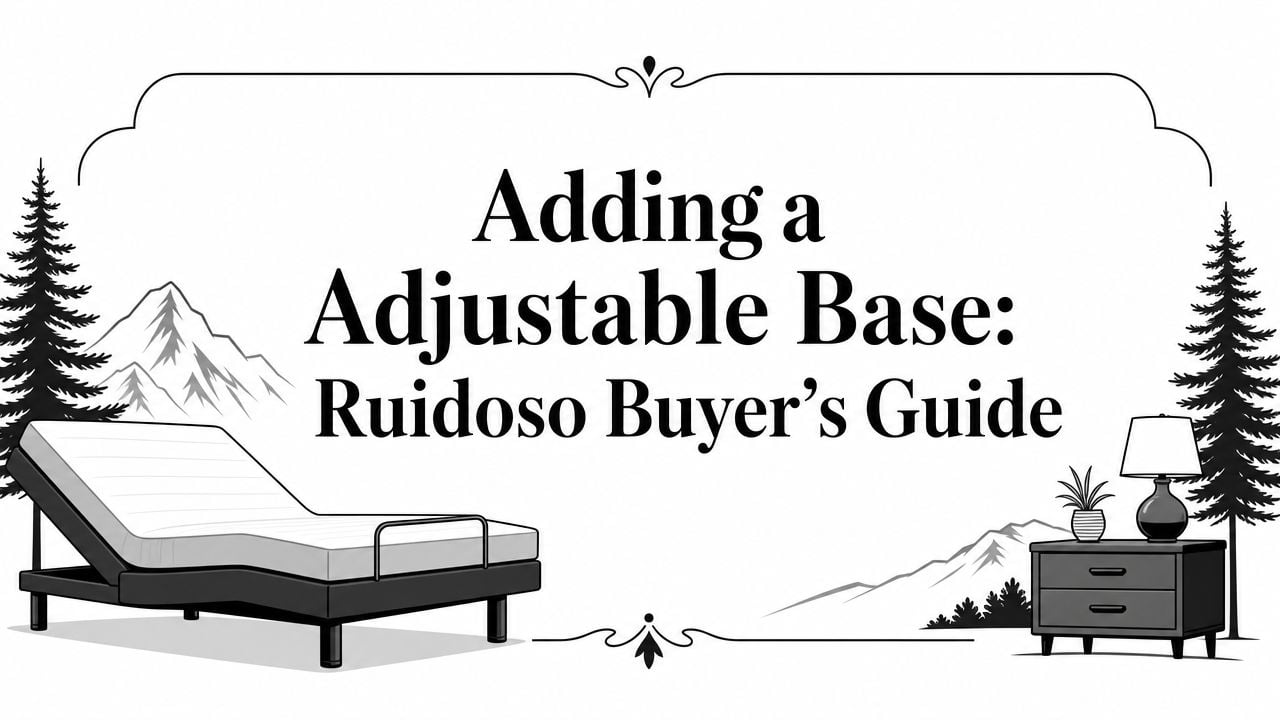
An adjustable base is a powered foundation that raises the head, the feet, or both. It replaces the old idea that a bed has to stay flat all night. Instead of propping up pillows and shifting around for support, the bed itself changes position to match what the body needs.
How the base changes the feel of your bed
The biggest benefit is targeted positioning. A slight lift at the head can help sleepers who struggle when lying completely flat. A raised foot section can ease pressure after a long day on the legs and lower back. Some sleepers also use preset lounge positions for reading or watching a show before sleep.
For pressure relief, one of the most useful positions is the balanced reclined posture often called zero gravity. The point isn't the name. The point is that the body can rest with less concentrated pressure on the hips, shoulders, and lumbar area than it often feels on a flat surface.
A well-matched base can help with:
- Head adjustment for easier rest: This can make it easier to settle in without stacking pillows that slide around.
- Foot lift for lower-body relief: Many active sleepers like having the legs slightly raised after daily activity.
- Better supported lounging: Reading, relaxing, or watching television becomes more comfortable when the torso is supported evenly.
- Less pillow engineering: The bed does the lifting, so the neck and upper back don't depend on a pile of cushions.
Why more sleepers are considering one
Adjustable bases are no longer a niche category. The global adjustable bed base and bed market is projected to grow from USD 9.58 billion in 2025 to USD 19.09 billion by 2033, reflecting a 9.0% CAGR. That kind of growth shows how many shoppers now see adjustability as a practical sleep upgrade, not a specialty product.
In daily life, the appeal is simple. People want a bed that adapts to how they sleep, read, recover, and relax. That's especially true for anyone dealing with back discomfort, snoring, reflux, or pressure-point sensitivity.
Practical rule: If a sleeper regularly uses extra pillows to raise the head, knees, or shoulders, an adjustable base may solve the problem more cleanly than changing pillows again.
For shoppers who want a deeper look at features and use cases, this guide on the benefits of an adjustable base is a good next step.
In Ruidoso, where many households want a bedroom that works for both sleep and quiet evening downtime, that flexibility is what makes the category so valuable.
Is an Adjustable Base Right for Your Ruidoso Lifestyle
For many local households, the short answer is yes, if the bed needs to do more than one job. It needs to support sleep, recovery, reading, and plain old comfort on cold mornings and long evenings.
When it makes daily life easier
Adjustable bases fit the rhythm of mountain living surprisingly well. After a day on the feet, elevating the legs can feel better than lying flat. On winter mornings in Alto or upper Ruidoso, sitting upright with stable back support is a lot more comfortable than folding pillows into a makeshift chair.
They also make sense for sleepers who aren't looking for “luxury” at all. Many buyers primarily want less strain on the neck and lower back, or a way to reduce discomfort tied to sleeping flat.
The U.S. mattress bases market is projected to reach USD 3.01 billion by 2031, with growth linked to demand for solutions associated with back pain, sleep apnea, and acid reflux. That growth lines up with what many local shoppers ask for. Better sleep, easier breathing, and more support without rebuilding the whole bedroom from scratch.
What buyers usually worry about
The hesitation usually falls into three buckets.
- Cost concerns: Buyers worry the full setup will climb once bedding, frame needs, and accessories enter the picture.
- Complexity fears: Some assume an adjustable base is complicated to use or maintain.
- Wrong-fit anxiety: Many people worry they'll choose a model that doesn't suit the mattress, frame, or room.
Those are real concerns. They're also manageable when the process starts with the sleeper's actual needs instead of a feature list.
The wrong adjustable base usually isn't “bad.” It's just mismatched to the room, the mattress, or the way the sleeper uses the bed every night.
A comfort policy holds importance. The Comfort Promise reduces the stress of making the wrong choice, which is important when a sleep purchase affects both health and household routine. For many families in Lincoln County, that peace of mind is what makes trying an adjustable setup feel realistic instead of risky.
Matching a Base to Your Mattress A Compatibility Guide
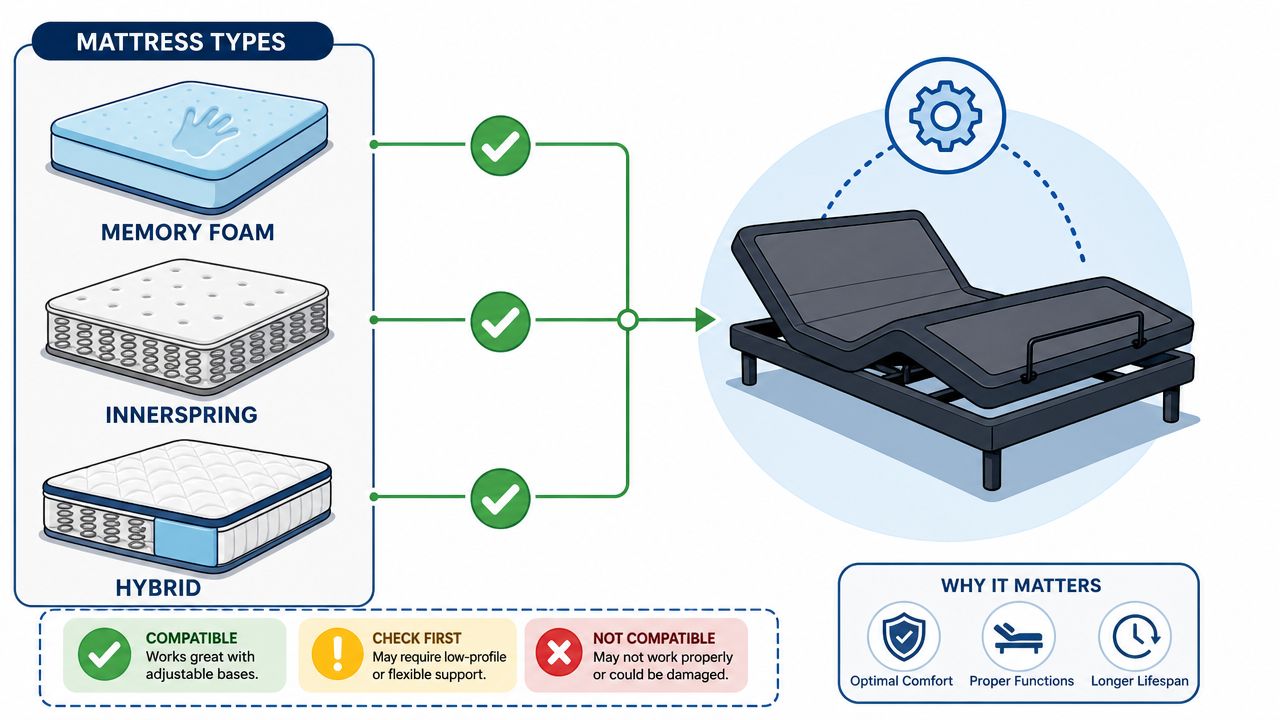
Compatibility is where a lot of online advice goes sideways. People hear that “most mattresses work,” and stop there. In practice, adding an adjustable base comes down to flexibility, total system weight, and exact dimensions.
Which mattresses usually pair well
Most modern foam and hybrid designs are good candidates because they can bend without fighting the motion of the base. That includes many models shoppers look at from Tempur-Pedic, Sealy, Stearns & Foster, and Sherwood. The mattress should flex smoothly as the head and foot sections move, then return to shape without bunching or resistance.
Traditional rigid-feel constructions can be trickier. If a mattress doesn't articulate well, the base can't do its job properly. That can also create uneven pressure and reduce comfort, even if the bed technically “fits.”
A smart compatibility check includes:
- Material behavior: Memory foam and many hybrids usually flex more naturally than older rigid constructions.
- Profile and feel: Very thick, dense builds may need closer review, especially if the sleeper wants frequent position changes.
- Warranty compatibility: Mattress and base should be approved for use together.
- Edge response: Some mattresses hold shape better than others when raised, which matters for sitting and getting in and out of bed.
For shoppers comparing mattress types before pairing one with a base, this guide on how to choose a mattress helps narrow the field.
Why weight rating matters more than most people think
Load capacity is not a fine-print detail. It's one of the most important specs in the whole decision.
The adjustable-base load range commonly runs from about 400 lb to over 850 lb, and one high-performance model is rated to 850 lb total maximum weight including the mattress. That total has to cover the mattress, the sleepers, and accessories.
A heavy hybrid mattress plus two adults can put real demand on the system. If the base is underrated for that combined load, the motors and moving parts may be under more strain than they were designed for.
A durable setup starts with total system weight, not just body weight. The mattress counts. Bedding and add-ons count too.
Size is only the starting point
Queen, King, and California King sound standardized, but actual base dimensions can vary by maker. That matters when the frame is snug, the room is tight, or a cabin bedroom has limited clearance around the bed.
A few examples show why exact measuring matters. One widely referenced sizing guide notes a Queen adjustable base example at 79.8" x 59.8", a King at 79.8" x 75.5", and a split California King example at 36" W x 84" L. The same guide also notes that some adjustable bases can work on slats spaced 2" to 3" apart, depending on the base and frame setup, which affects support and motion stability in existing furniture.
That's why a base should never be chosen by label alone. Exact footprint, frame interior space, and support method all need to match.
Measuring for Success Will It Fit in Your Bedroom
A base can be perfect on paper and still fail on delivery day. In Ruidoso, that usually happens in older homes, cabins with narrow turns, or upstairs bedrooms with tight stair landings.

The delivery path matters as much as the bedroom
Shoppers often measure the mattress area and stop there. The better approach is to measure the full path from the entry point to the final room. Doorways, hall width, stair turns, ceiling slope, and railing clearance all matter.
That's especially important in mountain properties where bedroom layouts can be charming but awkward. A decorative log frame, angled wall, or tight loft staircase may change which base style makes sense.
A quick measuring checklist
Before scheduling delivery, check these points:
- Front entry and interior doors: Measure width and note any tight swing space.
- Hallways and corners: Watch the narrowest turn, not just the longest wall.
- Stair sections: Measure both width and headroom if the bedroom is upstairs.
- Bedroom footprint: Leave room for walking space, nightstands, and base articulation.
- Existing bed frame interior: If the base will sit inside a decorative frame, measure inside rail to inside rail.
A helpful planning step is reviewing how to choose the best bed mattress size for your home, especially when a room serves as both a primary bedroom and guest space.
If a home has a tight staircase or an older cabin layout, measuring first usually saves more frustration than any feature upgrade ever will.
Professional setup matters here because delivery isn't just about dropping boxes. It's about placing the system correctly, checking movement clearance, and making sure the room still functions once the bed is in position.
Styling Your Base for a Mountain Cabin Aesthetic
One of the biggest myths around adjustable bases is that they make a bedroom feel clinical. They don't have to. A well-planned setup can still feel warm, grounded, and right at home in a Ruidoso cabin or a more polished primary suite off Sudderth Drive.
How to keep the room warm and inviting
Most modern adjustable bases can work inside an existing bed frame if the dimensions and support setup are right. That lets sleepers keep the wood, upholstered, or rustic-look frame that gives the room its character. In many bedrooms, the base stays visually quiet once the mattress and bedding are in place.
For a cleaner look, some sleepers prefer a standalone base with furniture-style legs. That approach works well in simpler spaces and guest rooms where function matters most.
A few style moves help the room stay cohesive:
- Keep the headboard if possible: It preserves the familiar look of the room.
- Choose bedding with structure: Layers help the bed look finished even when the base is adjustable.
- Plan around access: Leave enough side clearance so the bed can move and still be easy to make.
- Use the frame as trim, not pressure: The decorative frame should house the base, not squeeze it.
For ideas that keep comfort upgrades from disrupting the room's look, this article on improving the design of your bedroom is useful.
What helps with split king drift
Split king setups solve one problem and can create another. Mattress drift. Over time, the two sides can separate slightly, which leaves a seam that some couples notice right away.
The common issue of split king mattress drift often gets DIY fixes like pads, straps, bridges, or connectors, but the best option depends on mattress type and frame setup. That's why the single-base versus split-base decision matters from the start.
Some practical rules help:
- Single base works well when both sleepers want the same position and want to avoid a center split.
- Split base makes sense when each sleeper needs different head or foot positions.
- Accessory choice should match the setup because some gap solutions improve stability but can affect sheet fit or seam comfort.
The best-looking bedroom is usually the one that also works cleanly every night. Good styling starts with good planning.
Your Simple Path to Better Sleep with Mattress Pro
Users often don't need more product pages. They need a clear decision.
What the buying process should feel like
A useful showroom visit starts with how the sleeper lives. Side sleeper or back sleeper. Reads in bed or doesn't. Needs easier head elevation or wants leg support after long days. Lives in a newer home, an older place in town, or a cabin with a tight hallway.
From there, the process gets simpler. Try a few base-and-mattress combinations. Notice how the body feels with head lift, foot lift, and a neutral reclined position. Compare support under the shoulders, hips, and low back.
One local option for that process is Mattress Pro by Miller Waldrop, where shoppers can test adjustable bases with premium mattresses and discuss delivery, setup, and budget in person.
Why local setup support matters
This category rewards hands-on guidance. A sleep system has to fit the body, the mattress, the frame, and the house. That's a different purchase than clicking on a product and hoping the measurements work out later.
Local support also matters after the sale. The Low Price Promise helps buyers shop with confidence. Flexible financing can make the upgrade more manageable. The Comfort Promise helps remove the fear of choosing wrong.
The strongest reason to buy locally isn't convenience. It's accountability. If the setup needs attention, there's a real team nearby who understands the home, the room, and the product.
For many families in Ruidoso and across Lincoln County, that's the difference between buying a moving base and building a sleep system that improves the night.
Transform Your Sleep Tonight
Adding an adjustable base can change far more than bedtime comfort. It can improve how the body settles, how a sleeper reads or relaxes before bed, and how well the full sleep setup fits a real Ruidoso home.
The key is making good decisions in the right order. Confirm mattress compatibility. Check weight capacity. Measure the delivery path. Think through single versus split setup before buying accessories. Keep the room's style in mind so the finished result still feels like home.
That's where local guidance matters. Sleepers in Ruidoso, Alto, and throughout Lincoln County don't have to guess through cabin dimensions, older-home layouts, or mattress-and-base matching on their own. A careful in-person fit process can prevent expensive frustration and lead to better sleep from the first night forward.
Ready to transform your sleep? Visit our Sleep Pros at the Mattress Pro by Miller Waldrop showroom located at 2801 Sudderth Drive, Suite F, in Ruidoso. From luxury brands to budget-friendly solutions, we're here to help you wake up loving your mornings. Browse our collection online or stop by Monday through Saturday.