

When to Replace Your Mattress: A Ruidoso Sleep Guide


Most mattresses should be replaced every 6 to 8 years under normal conditions, but age isn't the whole story. The key question is whether the bed still supports restful sleep, because a mattress that's sagging, noisy, or causing stiffness may need to go sooner.
A lot of people in Ruidoso don't realize their mattress has become the problem until the mornings start feeling harder. They wake up tired, shift around trying to get comfortable, or notice that their back loosens up only after they've been moving for a while. That can feel confusing, especially when the mattress still looks “good enough” from across the room.
For mountain-town households in Alto, Ruidoso, and across Lincoln County, sleep can already be affected by busy days, changing temperatures, dry air, and the physical wear that comes with an active lifestyle. A bed that's lost support doesn't just feel old. It can turn small discomfort into an every-morning routine.
That's why when to replace your mattress shouldn't be treated like a random calendar reminder. It's a practical sleep decision. The right time usually becomes clear when the mattress stops helping the body recover overnight.
Table of Contents
- Your Guide to Better Mornings Starts Tonight
- How Often Should You Really Replace a Mattress
- The Top 5 Signs Your Mattress Is Failing You
- How Different Mattresses Show Their Age
- The Hidden Costs of Just One More Year
- Find Your Next Mattress with Confidence in Ruidoso
Your Guide to Better Mornings Starts Tonight
Waking up sore doesn't always mean a person slept “wrong.” Often, it means the mattress no longer keeps the body in a neutral, supported position through the night. Hips sink too far, shoulders take too much pressure, or the midsection drops just enough to throw off alignment.
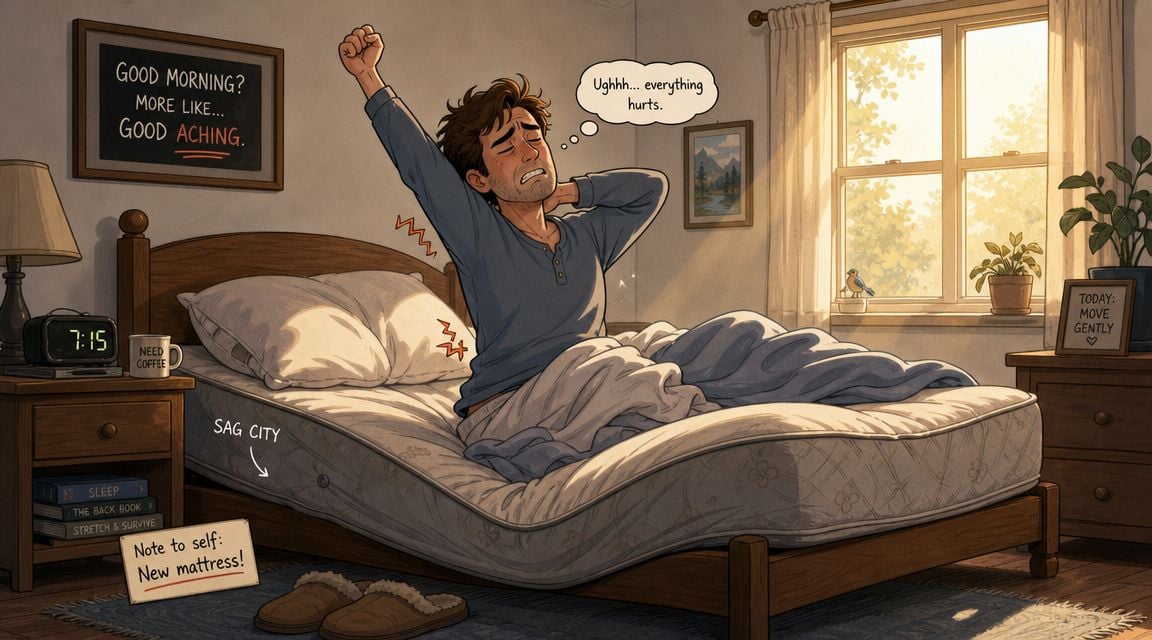
That's a common story in a place like Ruidoso, where many residents spend long days on their feet, outdoors, commuting around Lincoln County, or managing busy family schedules. A worn-out bed doesn't give the body much chance to recover. Instead of helping, it adds another layer of strain.
The helpful part is this. Mattress problems usually leave clues before they become impossible to ignore.
Small morning clues that matter
A mattress may be nearing replacement if mornings often include:
- A stiff lower back: Discomfort that eases after moving around can point to fading support.
- Sore shoulders or hips: Pressure points build up when comfort layers stop cushioning evenly.
- Restless sleep: Frequent shifting can mean the surface no longer relieves pressure well.
- A tired start to the day: Sleep time and sleep quality aren't the same thing.
Practical rule: If a person wakes up tired or achy more often than refreshed, the mattress deserves a closer look.
Families who shop locally often want straight answers, not sales language. They want to know whether they really need a new bed, what signs matter most, and how to avoid paying for the wrong comfort level. That's where a sleep-focused approach helps.
Ruidoso residents don't need generic mattress advice written for nowhere in particular. They need guidance that respects real mountain living, real budgets, and real sleep problems.
How Often Should You Really Replace a Mattress
A direct answer helps. Sleep guidance commonly puts mattress replacement at 6 to 8 years under normal conditions, while also stressing that age alone isn't the only factor. The same guidance says replacement is especially warranted when a mattress is 6 to 8+ years old, visibly sagging or damaged, making more noise than usual, or causing poorer sleep quality, more allergies, or regular morning stiffness, according to the Sleep Foundation's mattress replacement guidance.
That means the calendar is a checkpoint, not a verdict. A mattress bought years ago might still feel supportive. Another one can start failing earlier because nightly use has worn down the materials.
Why the calendar alone can mislead
A mattress works a lot like a pair of hiking shoes. Two pairs bought on the same day won't age the same way if one sees daily trail use and the other spends most of its time in the closet. Sleep surfaces work the same way. Nightly load, body shape, sleep position, and material quality all affect how quickly support fades.
That's why the better question isn't just “How old is it?” It's “How does it feel at the point of contact between body and bed?”
For shoppers who want more detail on durability and lifespan, this guide on how long a mattress should last can help connect age with actual wear.
The better decision test
A practical way to think about when to replace your mattress is to check three things together:
Its age
If it's in or beyond the usual replacement window, that matters.Its condition
Sagging, damage, uneven spots, and noise are physical warning signs.Your sleep response
If sleep quality has slipped, the mattress may no longer be doing its job.
A mattress earns its place by supporting sleep. Once it stops doing that, keeping it longer doesn't save much.
That perspective gives people permission to trust what their body is already telling them.
The Top 5 Signs Your Mattress Is Failing You
The easiest way to decide when to replace your mattress is to stop thinking in abstract terms and look for visible or repeatable clues. Most failing mattresses don't suddenly collapse. They wear down slowly, then start changing the way a person sleeps and feels in the morning.
Here's a simple checklist.
| Warning Sign | What to Look For | What It Means for Your Sleep |
|---|---|---|
| Sagging or impressions | Dips, valleys, uneven spots | Poor alignment and uneven support |
| Morning pain | Stiffness in back, shoulders, hips | Pressure relief or support is breaking down |
| Poor sleep quality | More tossing, turning, waking | Surface comfort is no longer working well |
| Allergy irritation | More congestion or irritation at night | Old materials and buildup may be affecting comfort |
| Noise | Squeaks, creaks, shifting sounds | Internal support components may be wearing out |
Sagging and body impressions
Visible sagging isn't just cosmetic. It usually means the materials inside the mattress aren't holding the body evenly anymore. When one part of the body sinks lower than the rest, the spine can spend hours out of its natural position.
This matters for side sleepers especially, because the shoulder and hip already carry more load. In a mountain town where many people stay active, that extra overnight strain can feel a lot bigger in the morning.
Morning pain that wasn't there before
Aches on waking are one of the clearest signs of mattress failure. The bed may still feel familiar, but familiar and supportive aren't the same thing. If discomfort shows up most mornings and eases as the day starts, the mattress is worth questioning.
Back, neck, shoulder, and hip discomfort can all point to a support problem. The body spent the night trying to compensate instead of recover.
Poor sleep quality and constant repositioning
Some mattresses don't look worn out, but they still stop performing. A person may notice more tossing, more wake-ups, or a sense that sleep just doesn't feel deep anymore.
That often happens when pressure relief weakens. The body shifts to find a better position, then shifts again because it never quite gets there.
Sleep quality often declines before mattress damage becomes obvious to the eye.
More allergies and irritation overnight
Older mattresses can become less comfortable for people who wake up congested, itchy, or irritated. Even if the room seems clean, the bed itself may no longer feel fresh.
This doesn't automatically mean every mattress issue is an allergy issue. It does mean nighttime irritation belongs on the checklist, especially if symptoms seem stronger in bed than elsewhere.
Helpful upkeep can extend usable life, and this article on mattress maintenance and cleaning tips to extend its lifespan gives practical care steps.
Creaking, squeaking, and noticeable noise
Noise is easy to dismiss because it feels minor. It isn't. If a mattress or support system starts making more sound during normal movement, internal wear may be catching up.
The sound itself can disrupt sleep, and it often shows up alongside deeper issues like weakening support or less stability across the surface.
How Different Mattresses Show Their Age
Not every mattress wears out the same way. Material matters. Construction matters. Even the way a sleeper uses one side of the bed more than another matters.
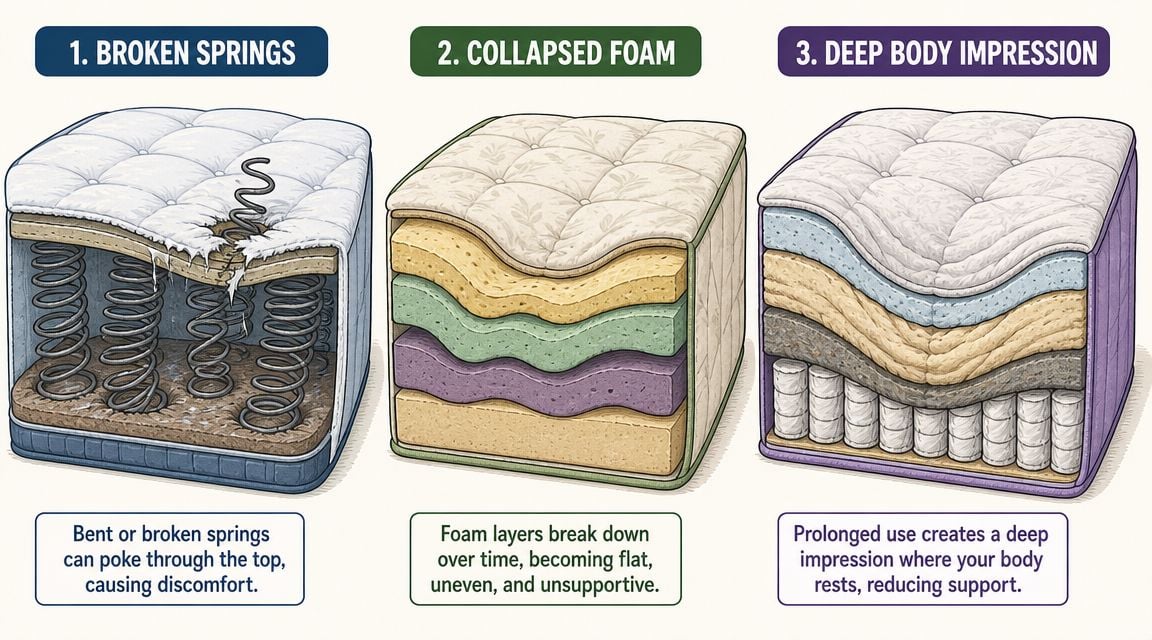
A practical replacement threshold for many conventional mattresses is 7 to 10 years, but the bigger trigger is performance loss. Once a mattress loses support and pressure-relief capacity, it can no longer maintain spinal alignment and may contribute to waking back pain or stiffness, as explained in this guide to signs it's time to replace a mattress.
Memory foam and pressure relief loss
Memory foam beds, including many Tempur-Pedic-style designs, are chosen for contouring and pressure-point relief. Over time, the main issue is often not dramatic collapse. It's a slower loss of responsiveness. The foam may stop bouncing back as well, and body impressions can begin to linger.
For sleepers in Ruidoso's dry mountain climate, comfort preferences can be especially personal. Some want a surface that cushions pressure without trapping heat. Cooling-focused foam designs can help with that, but only while the materials are still performing as intended.
Hybrid beds and changing coil response
Hybrid mattresses combine foam comfort layers with an innerspring support core. That's why many shoppers looking at Sealy or Stearns & Foster are drawn to them. They want pressure relief near the surface with stronger pushback underneath.
When hybrids age, the warning signs can show up in more than one layer. The foam can compress, the coil system can feel less responsive, and motion can become more noticeable. A helpful primer on what a hybrid mattress is makes it easier to understand where those changes come from.
Innerspring support breakdown
Traditional innerspring models, including many Sherwood-style builds, usually show wear through reduced support, more motion transfer, and a less even feel across the sleep surface. Sometimes the first clue is edge weakness. Sometimes it's squeaking. Sometimes the bed feels flatter and less stable.
Here's the key difference:
- Foam wear often feels like compression: The surface stops relieving pressure the way it used to.
- Hybrid wear often feels mixed: Less comfort above, less response below.
- Innerspring wear often feels structural: Pushback fades, movement is easier to feel, and support becomes less consistent.
For mountain-area households furnishing cabins or guest rooms in Alto or elsewhere in Lincoln County, this matters too. A mattress that sees occasional use may age differently than the primary bed in a full-time home, but the signs of performance loss still matter more than appearances.
The Hidden Costs of Just One More Year
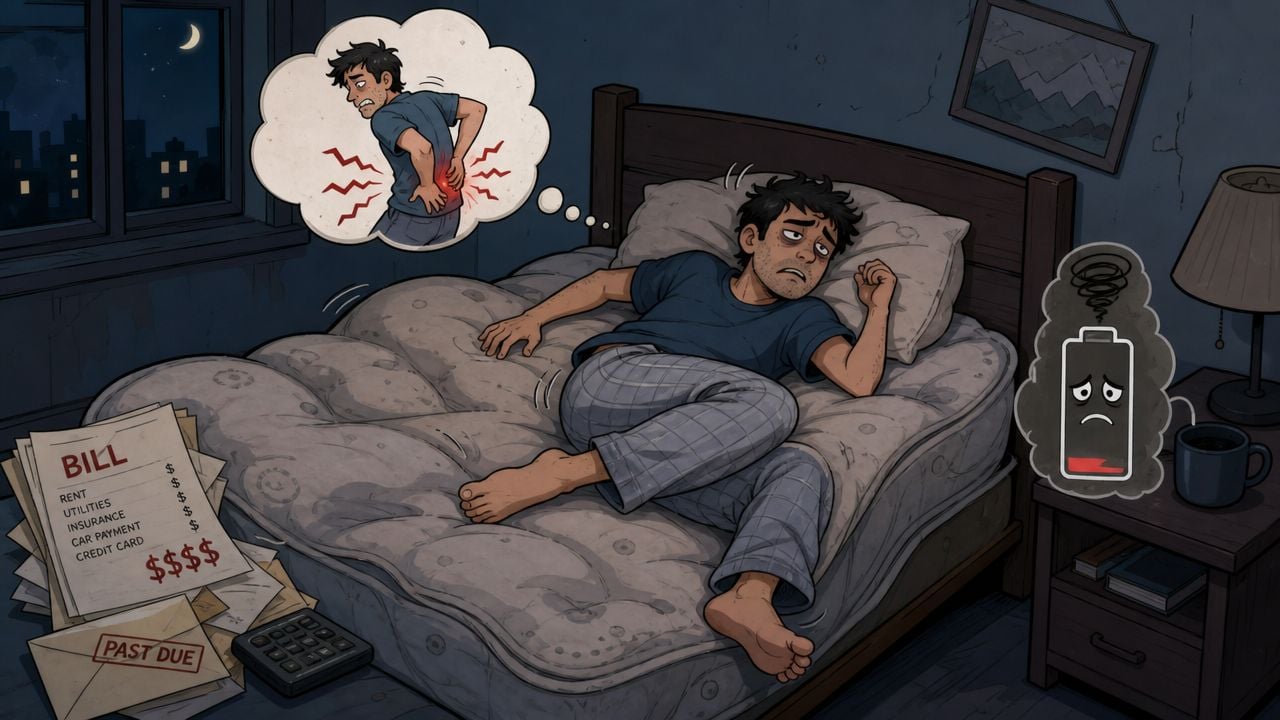
People often delay replacing a mattress for understandable reasons. The old one still looks decent. The budget has other priorities. The thought of choosing wrong feels stressful, so the decision gets pushed down the list.
That hesitation is common, but the body still pays for it nightly.
Why people wait
Consumer expectations show how this plays out. In 2023, the average expected mattress replacement interval was 9.6 years, yet nearly half of consumers reported replacing their last mattress within 7 years, according to Bedtimes Magazine's mattress replacement demographics report.
That gap says a lot. People may hope a mattress lasts close to a decade, but many replace sooner because comfort and support fade before the target date.
For shoppers comparing long-term value, mattress warranty information can help separate coverage terms from real-world comfort life. A warranty can address defects, but it doesn't guarantee that an aging mattress will still feel right for everyday sleep.
What waiting can cost
The biggest cost of “just one more year” usually isn't the mattress itself. It's the months of compromised sleep.
A worn-out mattress can lead to:
- More morning discomfort: The body starts each day trying to recover from the bed.
- More restless nights: Poor support often means more repositioning and lighter sleep.
- More frustration for couples: If motion or uneven comfort is increasing, both sleepers can feel it.
- More indecision: Waiting rarely makes the choice easier. It usually makes the need more urgent.
Replacing a failing mattress isn't only about comfort. It's about stopping a nightly problem from becoming a normal part of life.
Find Your Next Mattress with Confidence in Ruidoso
Once the signs are clear, the next concern is usually simple. How does a shopper choose the right replacement without making an expensive mistake?
That's where local, hands-on guidance matters. A person who sleeps on their side in Alto, runs warm in the summer, and wakes with shoulder pressure has different needs than a back sleeper in Ruidoso furnishing a guest room. A generic mattress quiz can't fully account for that.

What a confident decision looks like
A better mattress decision usually comes down to three things:
- Fit for the body: Sleep position, pressure points, and support needs all matter.
- Fit for the home: Main bedroom, cabin, or rental use can change what makes sense.
- Fit for peace of mind: Shoppers feel better when there's a clear plan if comfort needs adjusting.
Mattress Pro by Miller Waldrop can be part of the process through sleep consultations, brand selection, and local service support. Anyone who wants a more guided approach can start with a sleep consultation near Ruidoso.
Why local guidance matters
For many households in Lincoln County, the biggest relief isn't just finding a Tempur-Pedic, Sealy, Stearns & Foster, or Sherwood model that feels good in the moment. It's removing the fear of being stuck with the wrong one.
That's why the Miller Waldrop Difference resonates locally. The Comfort Promise helps reduce the stress of choosing. The Low Price Promise supports value-focused shopping. Full-Service Delivery with Professional Setup means the process doesn't end at checkout.
A mattress should help a person wake up ready for the day, not already behind. That's the standard worth shopping for on Sudderth Drive.
Ready to transform your sleep? Visit our Sleep Pros at the Mattress Pro showroom located at 2801 Sudderth Drive, Suite F, in Ruidoso. From luxury brands to budget-friendly solutions, we're here to help you wake up loving your mornings. Browse our collection online or stop by Monday through Saturday at Mattress Pro by Miller Waldrop.