

Mattress Thickness: A Ruidoso Sleeper’s Complete Guide

Shopping for a mattress often starts the same way in Ruidoso. A shopper walks in, sees one model labeled 10 inches, another labeled 14 inches, and a third called “luxury plush,” then wonders whether those extra inches matter or just raise the price.
They do matter, but not in the way most tags or online listings make it sound. Mattress thickness affects how much a bed can cushion shoulders and hips, how well it keeps the spine supported through the night, how easy it is to move on, and how long it can hold up under real use.
That matters even more in Lincoln County, where sleep needs aren't one-size-fits-all. Some households are furnishing a primary bedroom. Others are setting up a cabin in Alto, replacing a guest bed, or trying to help an active sleeper recover after long days on the mountain.
A good thickness choice isn't about buying the tallest bed in the room. It's about matching the build of the mattress to the body sleeping on it. For readers who want a stronger foundation in sleep basics, the broader sleep health education library is a helpful next stop.
More Than Just a Number An Introduction
A lot of mattress confusion comes from treating thickness like a status symbol. A taller mattress can look impressive, but height alone doesn't tell anyone whether the bed will relieve pressure, support the lower back, or stay comfortable over time.
That's where many shoppers get stuck. A couple may compare a slimmer guest-room mattress to a thicker Tempur-Pedic or Stearns & Foster model and assume thicker always wins. In practice, the right answer depends on who's sleeping there, how they sleep, and what that extra height is doing inside the mattress.
Why shoppers get overwhelmed
Most mattress labels reduce a complex product to a single number. That leaves out the part that really matters. A mattress is built from layers, and each layer has a job.
One layer cushions pressure points. Another keeps the body from sinking too far. If those parts are out of balance, the mattress can feel good for a few minutes in a showroom and wrong by the end of the night.
A mattress can be too thin for one sleeper and perfectly right for another. The issue isn't the number by itself. It's whether the build matches the body.
Why local context matters
Ruidoso shoppers also have needs that big national websites rarely address well. A mountain home may need a bed that works for guests with different body types. A cabin owner may want durability without creating a bed that sits too high on an existing frame. An active sleeper may need better pressure relief after hiking, skiing, or long days on their feet.
That's why mattress thickness should be looked at as a practical fit decision, not a marketing term. It's part comfort, part support, and part everyday usability.
What Mattress Thickness Really Means for Your Sleep
Mattress thickness is the total height of the mattress from top to bottom. The standard measurement runs from the highest point on the sleep surface, including quilted padding, to the matching point on the base, as explained in this guide to mattress measurement standards.
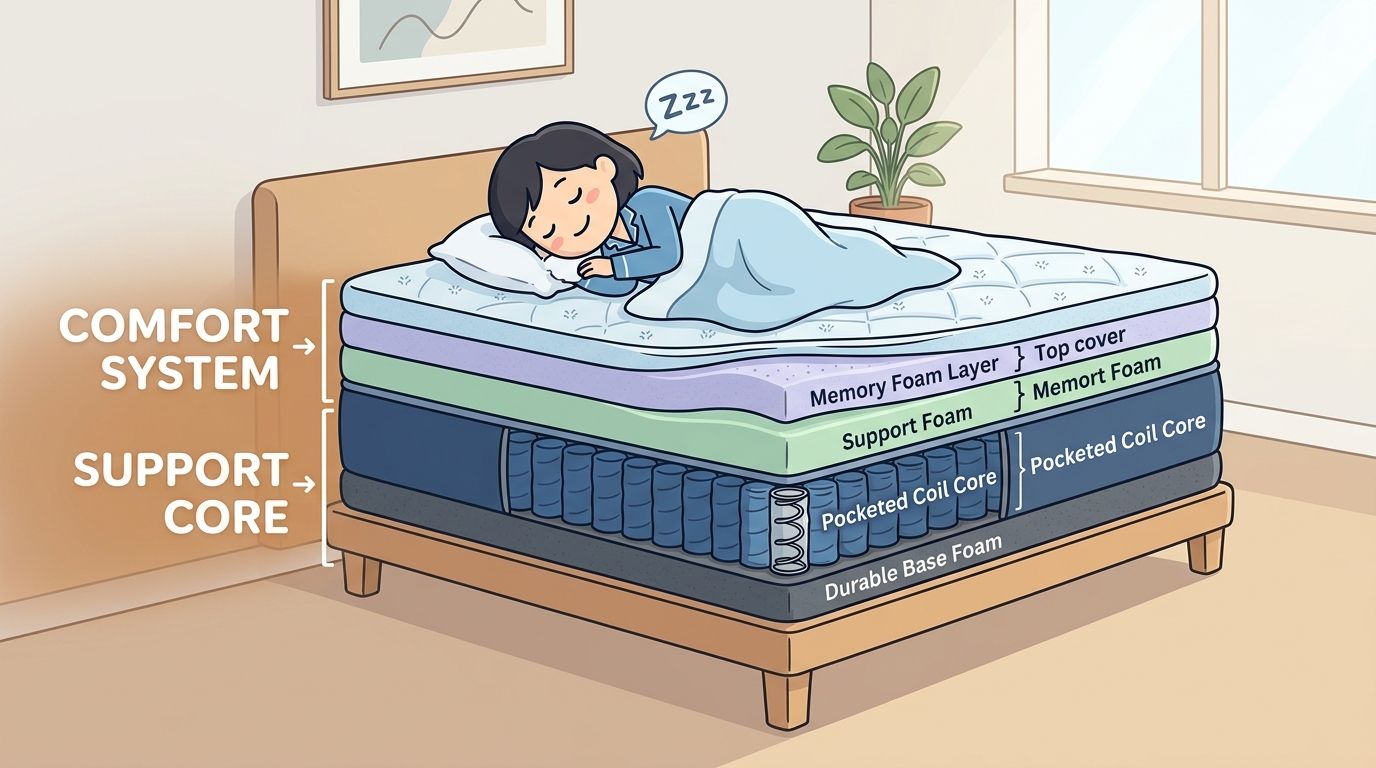
What matters to your body is not the number on the tag by itself. Thickness tells you how much room the manufacturer had to build in pressure relief near the top and support deeper down. In our store, that is often the difference between a bed that feels comfortable for ten minutes and one that still feels right at 3 a.m.
A thicker mattress is not automatically better. It provides more space for the layers to do their jobs well, if the build is sound.
The two layers that matter most
Most mattresses rely on two working sections:
- Comfort system. This is the upper portion that cushions shoulders, hips, and joints. Many quality mattresses use several inches here so the sleeper is cushioned before reaching the firmer layers below.
- Support core. This is the deeper section that holds the body up, helps keep the spine in a healthier position, and resists too much sag or sink over time.
If the comfort section is too shallow, side sleepers usually feel it first in the shoulder and hip. If the support section is underbuilt, the lower back often pays for it by morning. That trade-off matters in Ruidoso, where plenty of customers come in after long days hiking, working on their feet, or furnishing a cabin that needs to suit different guests through the year.
Readers who want more detail on foam construction can learn more in this guide on what a memory foam mattress is.
Common thickness ranges
In practical shopping terms, thickness usually falls into three groups:
- Low-profile beds. Often used for bunk rooms, trundles, some guest spaces, and setups where overall bed height needs to stay manageable.
- Standard profiles. Usually the best fit for everyday primary bedrooms because they balance comfort, support, and ease of getting in and out of bed.
- High-profile beds. Often chosen by sleepers who want deeper cushioning, a more substantial feel, or more complex multi-layer construction.
For everyday adult use, many shoppers land in the middle range. Lower-profile models can work well in the right setup, but they leave less room for materials that buffer pressure and maintain support. Taller models can feel more forgiving and substantial, though they can also create practical issues with sheet fit, bed height, and climbing into bed, especially in guest rooms or cabins with existing furniture.
Why thinner mattresses are so common
A lot of mattresses sold online and in packaged delivery formats are built to hit shipping and pricing targets first. That tends to favor slimmer designs with fewer or thinner layers. Those beds can work for lighter sleepers, kids, short-term guest use, or budget setups.
The problem shows up when shoppers assume all inches perform the same. They do not. Two 12-inch mattresses can feel completely different if one uses better support materials and a more thoughtful comfort build. Around Lincoln County, I usually tell people to pay attention to what is inside the mattress and how it matches the sleeper, the room, and the frame already in the home.
Practical rule: Thickness matters because it affects how well a mattress can combine cushioning, support, durability, and usable bed height in one setup.
Choosing Your Ideal Thickness by Sleeper Profile
A mattress that feels fine for one sleeper can feel flat, stiff, or unsupportive for another. Around Ruidoso and across Lincoln County, I see this a lot in homes where one bed has to do several jobs. Primary bedroom during ski season, guest room during the holidays, cabin setup for weekends the rest of the year. Thickness matters because different bodies use the same mattress very differently.
The two factors that usually shape the right thickness are body weight and sleep position. Weight affects how far the body compresses the surface. Sleep position affects where that pressure shows up first, usually at the shoulders, hips, or lower back.
Weight changes how much depth a sleeper uses
A lighter sleeper often stays closer to the surface, so a moderate-profile mattress can work well if the materials are supportive. A heavier sleeper pushes farther into the bed and usually needs more depth to keep from feeling the firmer layers too quickly.
Guidance from PlushBeds' mattress thickness article points in that same direction. Lighter adults can often do well on slimmer builds, while heavier sleepers usually need thicker construction to maintain support and hold up better over time.
In practical terms, thickness becomes more important as body weight goes up.
Sleep position often changes the recommendation
Side sleepers usually need more mattress depth than back or stomach sleepers. The reason is simple. Shoulders and hips sink more into the bed, so the comfort layers need enough room to cushion those areas before the sleeper reaches the firmer support below.
That is why many side sleepers end up happier in the mid to taller range, while many back sleepers can do well on a slightly slimmer profile if the support is steady and the surface is not too hard. Stomach sleepers are often the trickiest. Too much plush depth can let the midsection dip, which can leave the lower back irritated by morning.
For shoppers who spend most of the night on their side, our guide to the best mattress for side sleepers helps narrow down which builds usually give better pressure relief without sacrificing support.
Mattress Thickness Recommendations by Sleeper Profile
| Sleeper Weight | Side Sleeper | Back/Stomach Sleeper | Best For |
|---|---|---|---|
| Under 225 lbs | Often does well in a moderate profile with enough cushioning for shoulders and hips | Can often sleep comfortably on a slimmer supportive profile | Guest rooms, lighter adults, secondary bedrooms |
| 225 to 275 lbs | Usually benefits from more depth and stronger support | Often needs a sturdier mid-profile or thicker build | Everyday primary use with better long-term support |
| Over 275 lbs | Usually needs a thicker build with deeper comfort layers | Often does best with a thicker, more supportive mattress | Durability, pressure relief, reduced bottoming out |
A practical way to choose
Start with how the sleeper sleeps, not just the number on the spec sheet.
- Identify the main sleep position. Side sleepers usually need more cushioning depth than back or stomach sleepers.
- Factor in body weight. More compression usually means more need for support depth and stronger construction.
- Pay attention to morning symptoms. Shoulder numbness, hip pressure, and lower-back tightness often point to a mattress that is too thin, too firm on top, or mismatched to the sleeper.
- Match the bed to the room. In many Ruidoso cabins and guest spaces, one mattress may need to suit different visitors. A balanced mid-profile option often makes more sense than going too thin or too tall.
I usually tell shoppers to judge thickness by what the body feels at 2 a.m. and again at 7 a.m. If the bed feels comfortable at first but soreness shows up by morning, the sleeper may be pushing through the comfort layers before the night is over.
How Mattress Type Influences Thickness
A mattress's height only matters if the layers inside are suited to the job. Around Ruidoso, I see this in real homes all the time. Two beds can stand the same height next to each other in a showroom, then feel completely different after a cold night in Alto or a busy weekend in a cabin guest room.
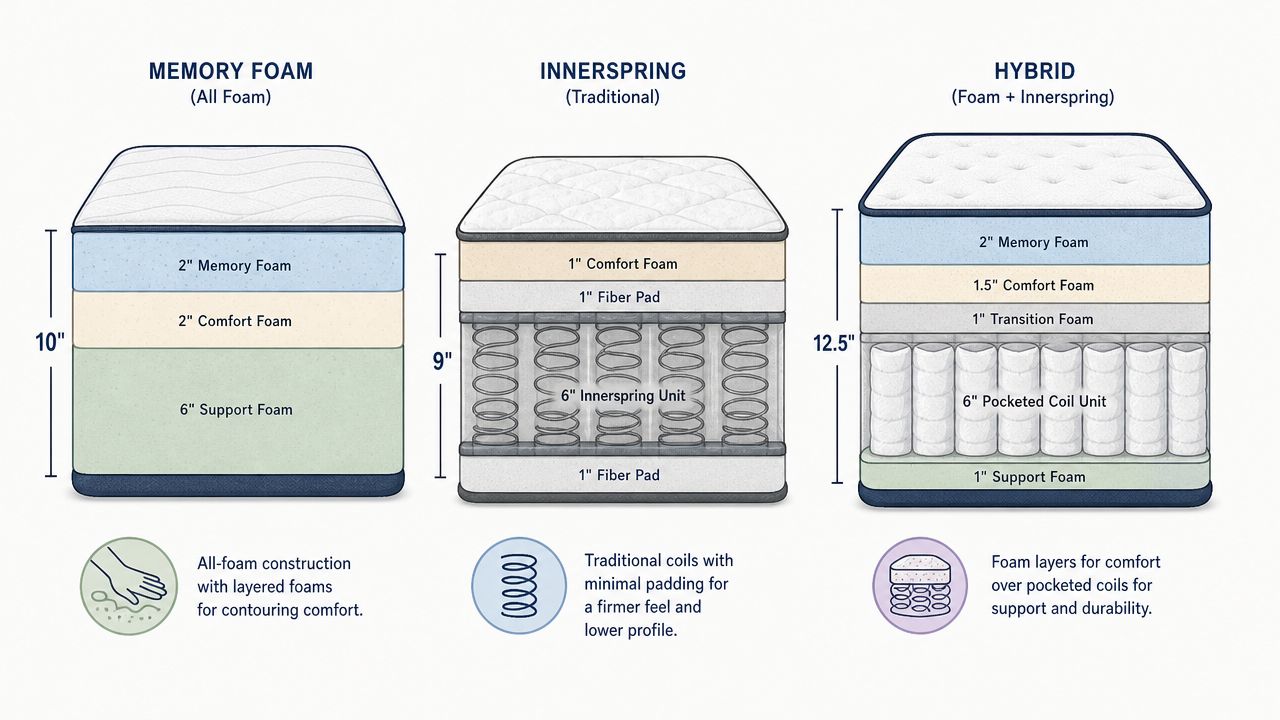
A memory foam bed, a hybrid, and a traditional innerspring can all measure 12 inches and still sleep nothing alike. The reason is simple. They use that depth in different ways.
Memory foam needs enough material to relieve pressure
Memory foam relies on layered cushioning to contour and spread out pressure. If the build is too thin, the comfort can feel shallow. Sleepers often notice that in the shoulders, hips, or lower back, especially if the mattress is used every night instead of once in a while in a guest room.
That does not mean every foam mattress needs to be extra tall. It means the comfort layers and support base need enough substance to keep the sleeper from pushing through the top too quickly. In our store, that usually matters most for side sleepers, people with joint sensitivity, and anyone furnishing a primary bedroom instead of a spare room.
Hybrids split their thickness between comfort and support
A hybrid uses its height differently. Part of the profile goes to the top layers that cushion the body, and part goes to the coil unit that keeps the sleeper supported and makes it easier to move around.
That balance is why hybrids are often a practical fit in Lincoln County homes. They tend to work well for couples, mixed sleep styles, and cabins where one bed may need to suit several kinds of guests across the year. If the mattress is too thin, there may not be enough room for both meaningful comfort up top and dependable support underneath.
Innerspring and latex usually feel more buoyant
Traditional innersprings and latex builds often feel more lifted and responsive than memory foam. They do not need the same deep, slow contour to feel comfortable, but they still need enough structure to avoid feeling flat or skimpy under the body.
For shoppers trying to sort out that difference in feel, this guide to latex mattress vs memory foam gives a useful side-by-side explanation.
What tends to work best by type
- Memory foam builds usually do best with enough depth to cushion pressure points without letting the sleeper bottom out.
- Hybrid mattresses often need a bit more height because they are combining two jobs in one mattress. Surface comfort and deeper support.
- Lower-profile innerspring or practical budget builds can work well in guest rooms, kids' rooms, bunk setups, and cabins where bed height or furniture fit matters.
- Latex-style mattresses can feel supportive without a very tall profile, but the quality of the latex and support core matters more than the number on the tape measure.
The short version is this. Mattress type changes how thickness works. The best choice is not the tallest bed on the floor. It is the one built well enough for how that room gets used in Ruidoso, whether that is a full-time bedroom, a weekend cabin, or a guest space that needs to welcome a little bit of everybody.
The Local Angle Your Ruidoso Mountain Lifestyle
Mattress thickness isn't just a body-type issue in Ruidoso. It's also a lifestyle issue. The right build for a full-time primary bedroom may not be the right one for a rental cabin, a seasonal home in Alto, or a compact guest setup.
That local difference matters because mountain living creates a wider mix of sleep situations. Some homes host visiting family. Some rooms need to work for weekend guests. Some sleepers spend their days hiking, skiing, riding, or working outdoors and need deeper recovery at night.
Cabins, guest rooms, and flexible spaces
Cabin owners and vacation rental hosts usually need a middle-ground choice. The mattress has to feel welcoming to different body types and still hold up under repeated use. In many cases, a balanced hybrid profile works better than an ultra-thick specialty bed or a very slim budget model.
For tighter spaces, a lower-profile Sherwood mattress can be practical. It's often easier to pair with existing furniture, especially in guest rooms where bed height can get awkward fast.
Active sleepers often need deeper relief
A mountain lifestyle puts more demand on shoulders, hips, and lower backs. Sleepers who spend long days outdoors often do better on a mattress with enough depth to reduce pressure buildup and support recovery. That usually points toward a thicker comfort system paired with a sturdy support layer.
In mountain communities, the wrong mattress often shows up first as recovery trouble. A sleeper doesn't just feel “a little uncomfortable.” They wake up stiff before the day even starts.
Dry air and temperature comfort still matter
Ruidoso's dry mountain air changes how some people experience sleep temperature. A mattress that traps too much heat can still feel stuffy, even when the room itself is cool. That's why breathable hybrids and advanced cooling materials matter here.
Shoppers who are trying to fine-tune surface comfort can also learn more from this guide to a cooling mattress pad. It's a useful add-on question, especially for homes in Lincoln County that run warmer in certain seasons or have guest rooms with less consistent airflow.
Beyond the Mattress Bed Frames Sheets and Setup
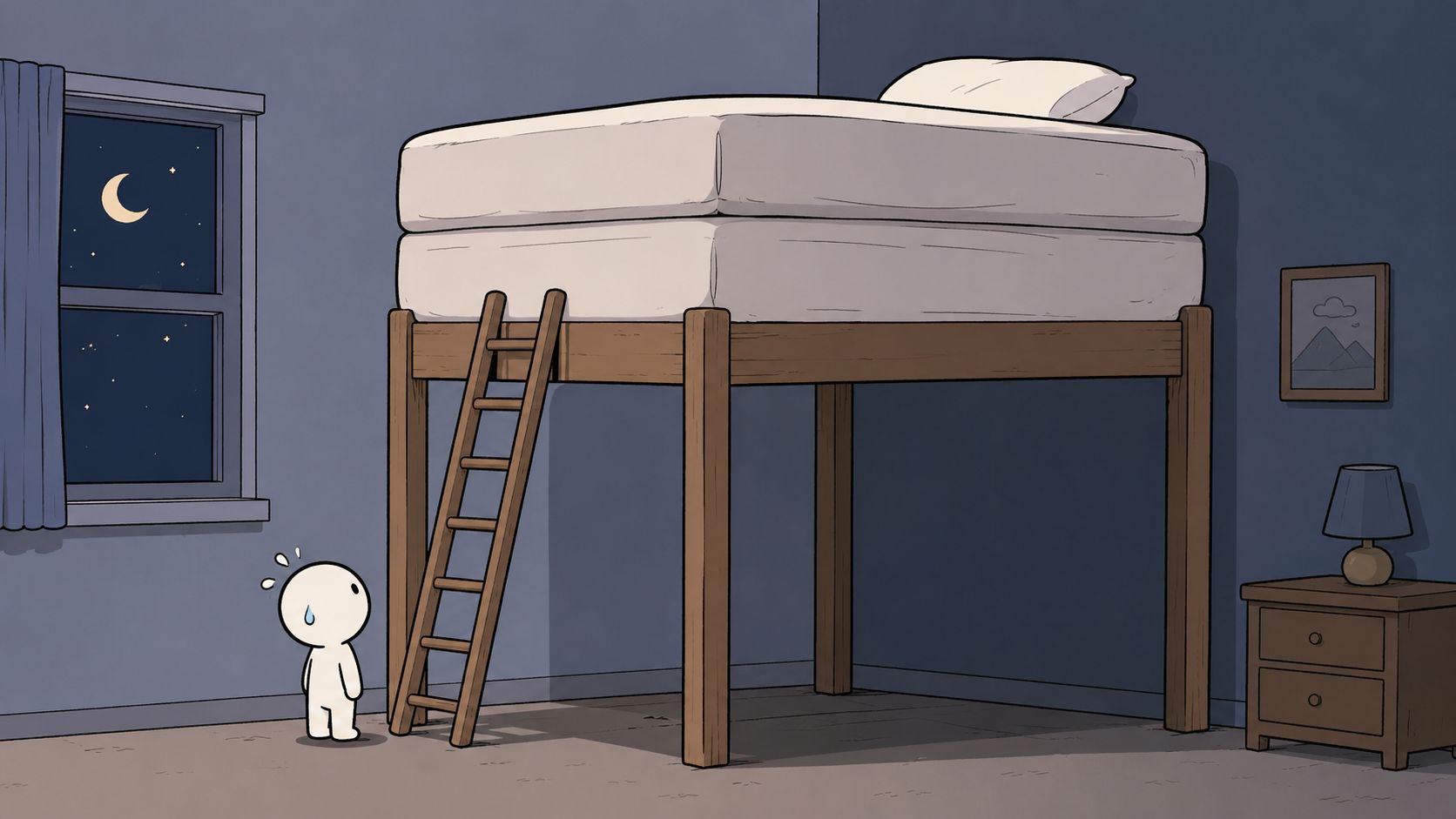
A mattress can be the right thickness on paper and still be wrong in the room. Bed height changes once the mattress sits on the frame, foundation, or adjustable base. That final setup affects comfort every single day.
Check the finished bed height
Before choosing a thicker profile, look at the full stack. A tall mattress on a tall frame can make getting in and out of bed harder, especially for older adults, shorter sleepers, or anyone with knee or hip concerns.
A lower-profile mattress can sometimes solve a mobility issue without giving up good support. That's particularly true when the existing bed frame already adds plenty of height.
Don't forget sheets and bedding
Sheets are one of the most overlooked parts of mattress thickness. Standard sheet sets may struggle on taller mattresses, especially when there's a plush quilted top. If the fitted sheet keeps slipping off, the bed becomes annoying fast.
A practical checklist helps:
- Measure the current frame height. Don't guess from memory.
- Check sheet pocket depth. A thick mattress needs bedding that can hold onto the corners.
- Think about who uses the bed. A guest room can tolerate a different setup than a primary bedroom.
- Factor in setup effort. Thicker mattresses can be heavier and harder to move.
Delivery and setup matter more than people expect
This is one of the biggest advantages of shopping locally instead of relying on a boxed mattress dropped at the door. Full-Service Delivery with Professional Setup removes the awkward part. The mattress gets placed correctly, the room setup gets considered, and the household doesn't have to wrestle a heavy sleep system alone.
Finding Your Perfect Fit Without the Fear
A couple walks into our Ruidoso showroom after outfitting a cabin. One wants a thick, plush bed that feels inviting after a long day on the mountain. The other worries about wasting money on height that does not improve sleep. That tension is normal, and it is usually where good guidance matters most.
The right mattress thickness comes down to build quality, sleeping position, body type, and how the bed will be used. In real homes across Lincoln County, I have seen thinner guest beds work well for occasional visitors and thicker models earn their keep in primary bedrooms where support has to hold up every night, season after season.
Shoppers usually feel stuck because thickness sounds technical when the question is practical. Will this bed cushion pressure points, keep the body supported, fit the room, and still feel right six months from now?
A simple way to make the decision clearer is to focus on these points:
- Who sleeps there most often
- How that person usually sleeps
- Whether the bed is for a primary home, guest room, or cabin
- How much durability the mattress needs from regular use
- Whether the overall feel matches comfort needs without adding unnecessary height
That last point matters more than many people expect. Extra inches only help if those inches are doing useful work. A well-built mattress with enough comfort material and a dependable support core will usually serve you better than a taller profile chosen for looks alone.
That is also why local shoppers ask better questions than online filters do. In Ruidoso, a bed may need to suit full-time living, weekend guests, vacation rentals, or a mountain cabin that sees heavy holiday use. Those are different jobs. The best choice for one room can be the wrong one for another.
A safety net helps, too. The Comfort Promise gives people room to make a smart decision without feeling trapped by it. The Low Price Promise protects the investment, and Full-Service Delivery with Professional Setup takes the strain out of bringing a new mattress home.
Ready to transform your sleep? Visit the Sleep Pros at Mattress Pro by Miller Waldrop showroom located at 2801 Sudderth Drive, Suite F, in Ruidoso. From luxury brands like Tempur-Pedic, Sealy, Stearns & Foster, and Sherwood to budget-friendly solutions, help is available for every sleep style and room in the house. The Comfort Promise helps remove the fear of picking the wrong bed, the Low Price Promise protects the investment, and Full-Service Delivery with Professional Setup makes the process easy. Browse the collection online or stop by Monday through Saturday.