


Adjustable Bed Frame for RV: Get Your Perfect Fit

The RV is packed. The tanks are checked. The coffee is ready for sunrise in Alto or a quiet stop somewhere beyond Lincoln County. Then morning comes, and the sleep just wasn't there. A stiff back, sore shoulders, and that familiar feeling that the bed in the rig is the one part of the trip nobody looks forward to.
That's a common problem with RV living. People gladly trade square footage for freedom, but they shouldn't have to trade away real rest. A well-chosen adjustable bed frame for RV use can change the way the whole trip feels, from reading at night to getting out of bed without that locked-up ache.
Families around Ruidoso often know this pattern well. They love the road, the mountain views, the cooler evenings, and the flexibility of taking home with them. What they don't love is sleeping on a setup that was built more for fitting the floorplan than supporting the body.
That's why sleep health matters just as much on the road as it does at home. A closer look at why sleep health shapes how the body recovers and functions helps explain why a better RV sleep system isn't just a comfort upgrade. For many travelers, it's the difference between waking up ready for the day and spending the morning trying to loosen up.
The Dream of RV Life Meets the Reality of RV Sleep
A lot of RV owners start with the same hope. They picture slow mornings, fresh air, quiet campsites, and the freedom to head out whenever the mountains call. That part is real. The harder part is what happens after a few nights on a thin or awkward bed setup.
The body notices every compromise in a small space. A mattress that feels passable for one weekend often feels much worse on longer trips. Hips sink, shoulders press, and getting comfortable becomes a nightly project instead of something that happens naturally.
Why RV sleepers feel the problem faster
In a house, people can often work around a less-than-perfect bed with space, bedding changes, or a larger room layout. In an RV, there's less room for error. The bed sits near walls, cabinets, slide components, and storage lids, so every inch matters.
That's why many RV owners don't need “more bed.” They need a bed system that works with the space instead of fighting it.
A restful RV bedroom should support the body and still respect the limits of the coach.
An adjustable base helps by changing position without adding a bulky, awkward setup. Raising the head slightly can make evening reading easier. Lifting the legs can help reduce that heavy, tired feeling after a long day outdoors.
The road feels different after better sleep
The change often shows up in ordinary moments. Getting up for coffee feels easier. Watching a show before bed feels more relaxed. A rainy afternoon inside the rig feels a lot more comfortable when the bed can shift with the body instead of forcing one flat position all night.
For people who spend time around Ruidoso, those small comforts matter. Dry mountain air, active days, and frequent travel can all make the wrong sleep setup feel worse. Better support doesn't remove the adventure. It makes the adventure easier to enjoy.
What Exactly Is an RV Adjustable Bed Frame
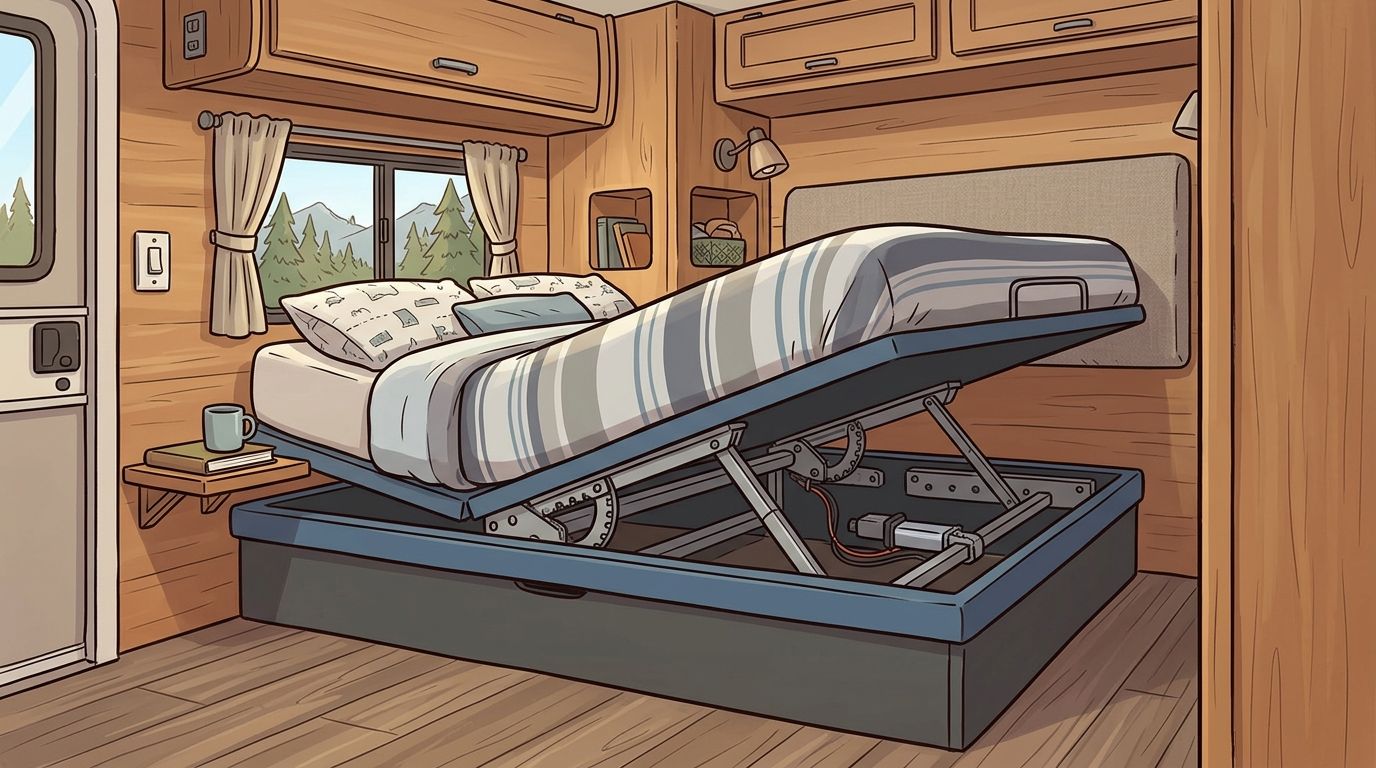
An adjustable bed frame for RV use is a motorized base designed to raise and lower sections of the bed so the sleeper can change head and foot position. The important part is the phrase “for RV use.” These aren't just regular home bases squeezed into a smaller room.
A true RV model is built for mobile living. That means compact construction, lower profile height, and better compatibility with the realities of coaches, fifth wheels, and motorhomes.
RV frames are built differently for a reason
Residential adjustable bases are designed for a stationary bedroom with more clearance and fewer space restrictions. RV frames have to think about weight, platform shape, wall clearance, and the fact that the bed may sit over storage or on a slide.
That shift toward purpose-built engineering marked an important point in the category. Industry reporting on Innovative Sleep Technologies and Road Star Beds noted a significant development when adjustable bed bases were designed and engineered specifically for vehicles rather than adapted from residential models.
That matters because adaptation usually creates compromise. Purpose-built design usually creates a better fit.
What makes an RV base different in practice
A shopper will usually notice the differences in a few areas:
- Lower profile design so the bed doesn't sit too high in a compact bedroom
- Tighter footprint so the frame works within the RV platform area
- Zero-clearance compatibility so the base can work on existing platforms in some layouts
- Travel-minded construction to better suit life on the road
Some owners expect an RV base to work exactly like a house base, just smaller. That's where confusion starts. The design goal isn't just motion. The design goal is motion that still works inside a restricted, moving interior.
A helpful overview of how adjustable bases improve comfort and support can make this easier to visualize, especially for shoppers who've only seen residential models.
It's more than a luxury feature
People often think of an adjustable base as a bonus item. In RVs, it can be much more practical than that. It can help create a usable sitting position, improve comfort for sleeping, and make the bedroom feel more functional without adding furniture the space can't handle.
That's a big reason the category has grown. It solves a real problem in a small footprint.
Unlocking Better Sleep for Your Mountain Adventures
An RV bed upgrade has to earn its space. In a coach or trailer, every feature should make daily life easier. An adjustable base often does that in several ways at once, which is why more sleepers are paying attention to the category.
The broader market reflects that interest. A market projection cited in the Forest River Forums discussion puts the global adjustable bed frame market at $13.34 billion, tied to growing consumer adoption of motorized articulation features that can help address issues like back pain and pressure points.
Comfort shows up before sleep even starts
A flat RV bed doesn't give many options. An adjustable base does. After a long day hiking, fishing, shopping, or driving through the mountains, many sleepers don't want to lie completely flat the minute they climb in.
A raised head position can make winding down more comfortable. A slightly lifted leg position can feel better on tired lower back muscles and sore knees. For couples, that can also make the bed more useful for reading or quiet evening TV time.
Practical rule: If a bed is only comfortable when a person is asleep, it's not doing enough in an RV.
Better support can help common pressure points
Pressure relief matters more than many people expect. When the upper body or legs can shift into a more comfortable angle, some sleepers feel less stress at the shoulders, lower back, and hips. That's especially helpful after active days around the Sacramento Mountains.
Mattress choice plays a big role too. Memory foam can contour around sharper pressure points. Hybrid designs can blend contouring with a more buoyant feel and steadier support. In either case, the goal is the same. Keep the spine in a more neutral position and reduce concentrated pressure.
Cooling matters in Ruidoso too
Even in the mountains, sleepers can still deal with heat buildup, especially in smaller RV bedrooms with less airflow. That's where cooling materials can help. Some models from Tempur-Pedic focus on advanced pressure relief, while options from Sealy, Stearns & Foster, and Sherwood give shoppers a wider range of feel and support choices depending on body type and sleep style.
For people who sleep warm in Ruidoso's dry mountain air, a cooling mattress pad designed to reduce heat buildup can also be a smart addition to the setup.
The primary benefit is simple. Better sleep makes the trip feel better. A beautiful campsite loses some charm when the body wakes up more tired than it went to bed.
Solving the RV Sizing and Mattress Compatibility Puzzle
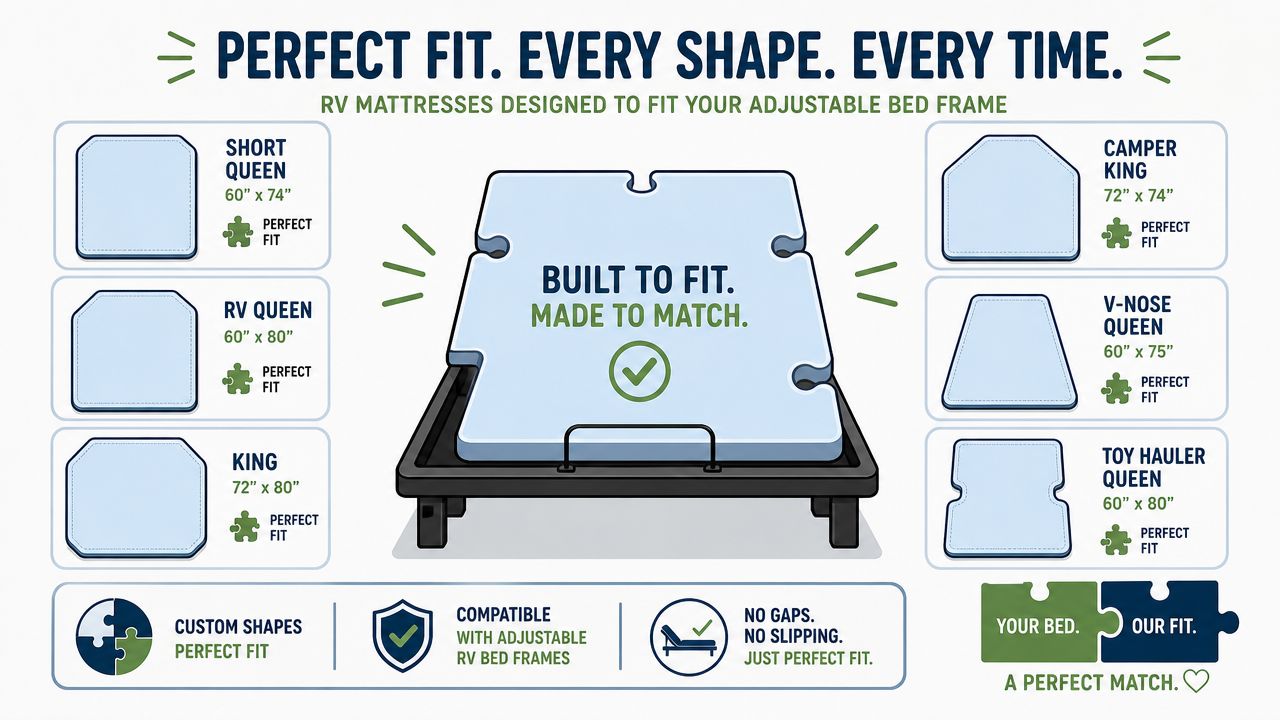
Sizing is where many RV shoppers get tripped up. They assume a standard home mattress or base will “probably fit,” then run into clearance issues, wall contact, or articulation problems. In an RV bedroom, “close enough” often isn't close enough.
The frame and the mattress have to work as a system. If one part is off, the whole setup can feel awkward.
True RV dimensions matter
One of the biggest technical differences is size. RV-specific adjustable bases described here are engineered with a 3-inch profile height to preserve headroom, and often use independently adjustable split-king configurations measuring 60" × 80" total to match true RV dimensions without compromise.
That low profile matters because RV bedrooms don't have much extra vertical space. A taller base can push the mattress up too far, making it harder to sit up comfortably or move around overhead cabinets and walls.
For RV owners shopping by size, this RV queen mattress guide can help clarify what should be measured before choosing a mattress or frame.
Why mattress flexibility matters
An adjustable base bends. That means the mattress has to bend well too. Consequently, many traditional or overly rigid mattresses struggle.
Two common good fits are:
- Memory foam, which contours well and usually flexes smoothly with the moving base
- Hybrid designs, which can offer stronger support and airflow while still allowing articulation if the build is compatible
Brand quality plays a significant role. A well-made mattress from Sealy or Sherwood can offer the flexibility and support many RV sleepers need. For shoppers who want a more premium feel, Stearns & Foster and Tempur-Pedic often enter the conversation because pressure relief and alignment become more noticeable on an adjustable base.
Thickness can help or hurt
Mattress height is another common point of confusion. This adjustable mattress setup guide notes that 10 to 12 inches is the optimal thickness range, while 8 to 14 inches generally works well.
That doesn't mean thicker is always better in an RV. In a smaller bedroom, a mattress that's too tall can reduce headroom and make fitted sheets harder to manage. Above all, if the mattress resists bending, the adjustable feature won't feel smooth or natural.
A simple way to think about it is this:
| Fit question | Why it matters |
|---|---|
| Does the mattress match true RV dimensions | Prevents overhang, gaps, and awkward movement |
| Is the base low profile | Preserves usable headroom |
| Can the mattress flex cleanly | Helps the base articulate without strain |
| Is the overall height manageable | Keeps the space comfortable and practical |
Getting these details right up front saves a lot of frustration later.
Installation Realities Weight Power and Storage
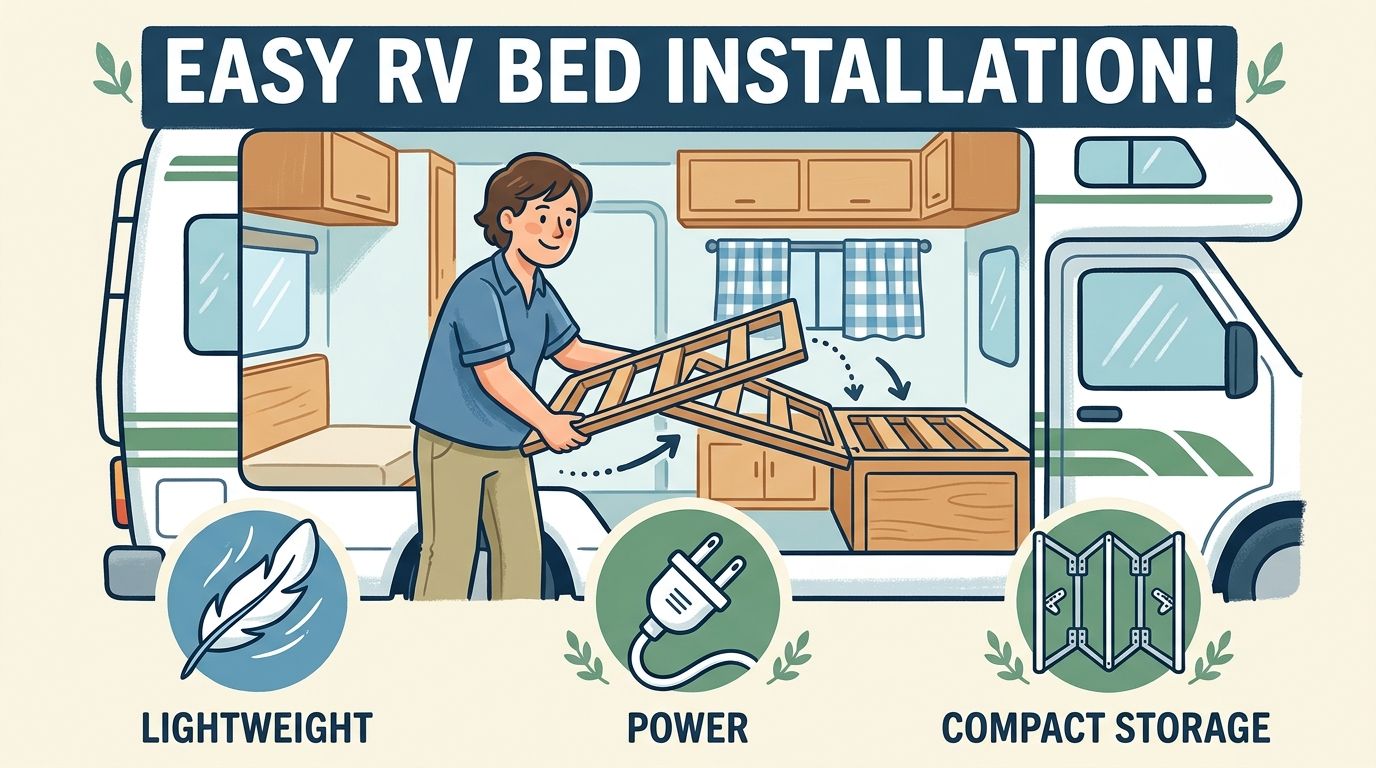
Installation is the part many RV owners worry about most, and that's understandable. The base has moving parts, the bedroom is tight, and nobody wants to create a new problem while trying to solve an old one.
The good news is that the core questions are fairly straightforward. How much weight will the frame handle, how will it be powered, and what happens to under-bed storage once everything is in place?
Weight limits aren't a minor detail
This product specification states that compact RV adjustable frames are typically recommended for a maximum of 600 pounds to prevent motor strain, and that they require a mattress depth under 12 inches to prevent binding when the frame articulates.
That matters for two reasons. First, the frame has to support the sleepers and the mattress together. Second, the motor has to move that load repeatedly without stress.
If a setup is too heavy, the issue isn't just wear over time. The articulation itself may feel less smooth, and long-term reliability can suffer.
Power needs should match the way the RV is used
Shoppers often ask whether the base will work when the RV isn't plugged in. The answer depends on the system and how the unit is configured. Some setups are better suited for regular campground power, while others offer more flexibility for off-grid use.
The practical question isn't “Does it move?” The better question is “How does it fit this RV's power habits?”
A few things should be checked before installation:
- Primary power source. Is the RV usually on shore power, generator power, or battery-supported power?
- Bedroom outlet access. Can the base connect cleanly without creating a cord-management headache?
- Remote operation. Wireless remotes are convenient, especially when the layout is tight.
- Travel readiness. The frame should sit securely and operate without interfering with walls or cabinetry.
Storage and power planning should happen before the frame goes in, not after the first problem shows up.
Storage access is the issue generic articles skip
This is the part most homeowners never think about, but RV owners care about immediately. Under-bed storage is valuable space. Blankets, tools, seasonal clothes, and camping gear often live there. A poorly chosen adjustable frame can block that storage completely.
That problem is bigger than many shoppers expect. The hinge points of the platform and the articulation pattern of the base have to coexist. If they don't, the bed may move but the storage lid may no longer open the way it should.
That's why a zero-clearance approach matters in many RV layouts. It gives the frame a better chance of working with an existing platform instead of forcing a complete redesign of the bedroom.
A simple installation checklist
Before any RV owner commits, these are the smart questions to answer:
- Measure the platform carefully. Wall-to-wall fit matters.
- Check total sleeping load. Don't ignore the weight of the mattress itself.
- Confirm mattress depth. A too-thick mattress can interfere with motion.
- Test storage movement. Hinged access needs to remain usable.
- Review power access. A clean setup is safer and easier to live with.
These details aren't glamorous, but they're what separate a satisfying upgrade from an expensive headache.
Your Decision Checklist for Choosing the Right Frame
Most RV shoppers don't need more marketing. They need a shorter list of smart questions. A good decision usually comes down to comfort, fit, storage access, and confidence that the final setup won't create a new problem.
The questions worth asking before buying
Does the sleeper need position changes for comfort?
If back tension, pressure points, or reflux-like discomfort show up at night, adjustability may be worth serious consideration.
Is the RV bedroom tight on clearance?
In compact rooms, profile height and exact fit matter more than brand buzzwords.
Will the bed still allow access to storage?
This question is easy to miss and expensive to ignore. A discussion of this RV-specific problem highlights that many commercial “RV” bases are standard home units forced into RVs, creating a mechanical lock that blocks storage bins.
What mattress feel works with the body?
Some sleepers want deeper contouring. Others want a steadier, more lifted feel. That's where trying options in person can reduce the guesswork.
A practical buyer's checklist
- Sleep position needs. Side sleepers often pay close attention to shoulder and hip pressure.
- Couple compatibility. One partner may want more contouring while the other wants firmer support.
- Climate comfort. Ruidoso sleepers who run warm may care more about cooling materials.
- Budget reality. A better sleep system should still feel manageable financially.
- Risk tolerance. Many people hesitate because they're afraid of choosing wrong.
That last point matters. The fear isn't usually about the idea of an adjustable base. It's about spending money on a setup that doesn't feel right once it's in the RV.
For local shoppers, that's where the Comfort Promise can take a lot of pressure out of the process. The Low Price Promise also matters, especially for families balancing RV upgrades with other household priorities. Flexible financing can help some shoppers move forward without feeling like they have to settle for a poor fit just to stay on budget.
Why local guidance still matters
A website can list dimensions. It can't watch how someone lies down, ask what hurts in the morning, or talk through whether a Tempur-Pedic, Sealy, Stearns & Foster, or Sherwood model makes more sense for that person's body and RV use.
That's where local sleep guidance still has real value, especially in a place like Ruidoso where climate, lifestyle, and home-away-from-home comfort all matter.
Your Local Partner for RV Sleep Solutions
A good RV sleep setup should keep working long after the first trip. That means a little care goes a long way. Keep the base clean and free of loose debris around moving parts, check that cords and remotes stay secure during travel, and make sure the mattress stays centered after driving rough roads.
It also helps to pay attention to moisture and airflow. RV bedrooms can trap heat and humidity differently than a house bedroom, even in Ruidoso's drier mountain climate. A breathable protector and regular airing-out can help the mattress and base stay in better condition.
A few habits that protect the investment
- Recheck alignment after travel. Road vibration can shift bedding and mattress position.
- Keep storage use gentle. Don't force hinges or lift points if the setup feels tight.
- Watch mattress thickness. If replacing the mattress later, don't assume any model will work with the base.
- Use the remote regularly. Smooth, regular operation can help reveal problems early.
The best adjustable setup is the one that still feels simple after months on the road.
Families in Ruidoso, Alto, and across Lincoln County often want something online shopping rarely provides. They want real answers, real fit guidance, and a real person to talk to if something feels off. That's where a long local track record matters.
For a business backed by the 70-year Miller Waldrop legacy, sleep isn't just another category on the floor. It's a daily quality-of-life issue. That kind of local perspective matters when a shopper is trying to match body needs, RV limitations, and budget without making an expensive mistake.
For anyone who wants one-on-one help, a local sleep consultation near home can make the entire process easier to understand before a purchase is made.
Ready to transform your sleep? Visit Mattress Pro by Miller Waldrop at the Sleep Pros showroom located at 2801 Sudderth Drive, Suite F, in Ruidoso. From luxury brands to budget-friendly solutions, they're here to help you wake up loving your mornings. Browse the collection online or stop by Monday through Saturday.