

Your Cooling Mattress Pad Guide for Mountain Sleepers

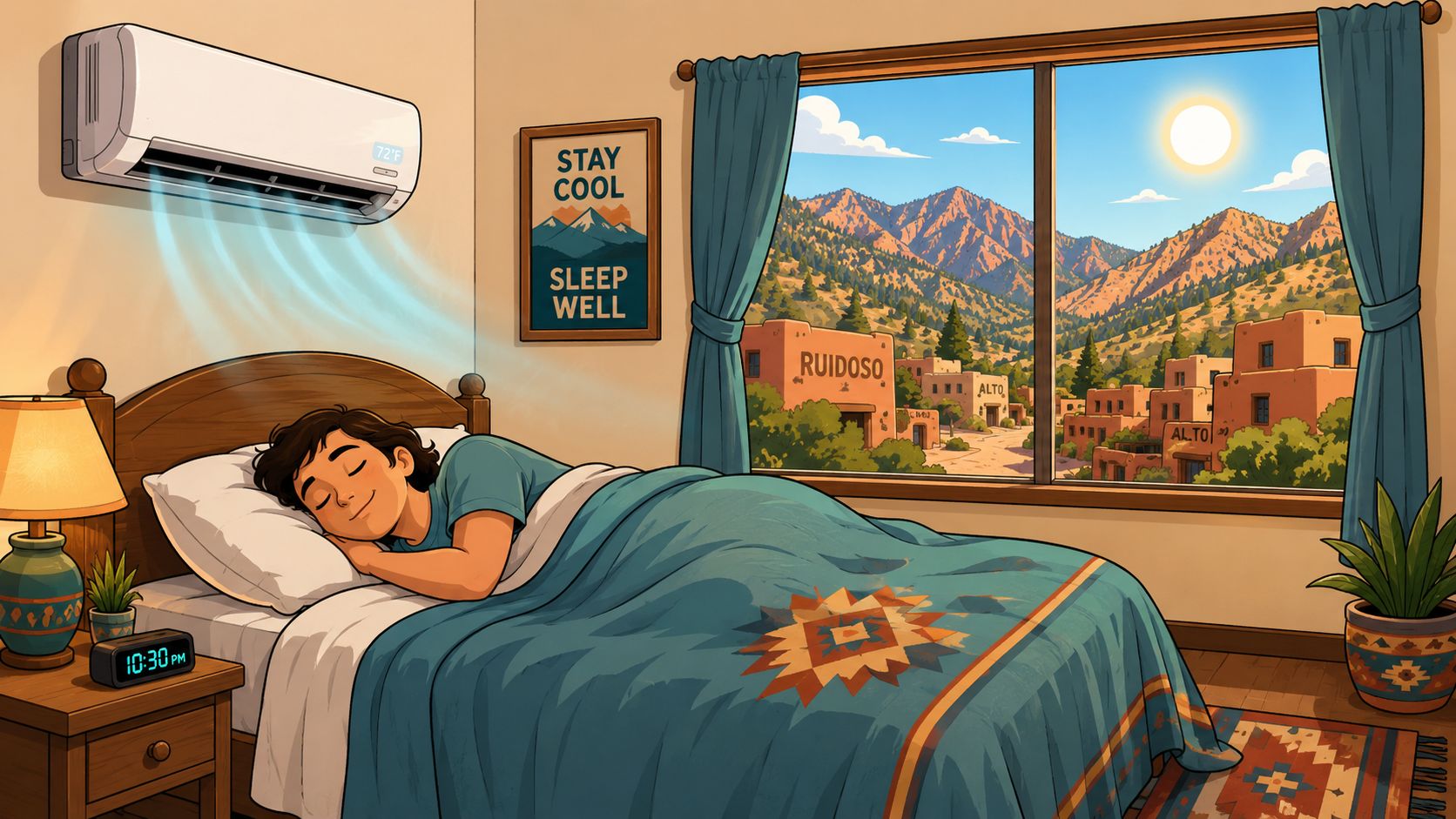
A lot of mountain sleepers know this feeling. The bedroom in Ruidoso cools off after sunset, the window air feels crisp, and yet the bed still sleeps hot. One person throws off the blanket. A few minutes later, the room feels chilly, so the blanket comes back on. Then the heat builds again.
That cycle is common in Lincoln County because the air and the bed often behave like two different climates. The room may be cool, but the sleep surface can still hold body heat. That's where a cooling mattress pad starts to make sense. It targets the place where heat collects, right under the sleeper.
Families around Ruidoso and Alto have dealt with mountain weather for generations. Dry air, sharp temperature swings, and active days outdoors can make steady sleep harder than people expect. A bed that feels fine at bedtime may feel stuffy by the middle of the night.
For shoppers trying to solve that problem without replacing a whole mattress right away, a cooling mattress pad is often the first category worth understanding.
Tired of Tossing and Turning in the Mountain Air
A common local bedtime story goes like this. The house cools down nicely after a warm afternoon in Ruidoso. The sleeper gets into bed expecting relief, then wakes up a few hours later warm across the back, shoulders, or legs, even though the room itself doesn't feel hot.
That mismatch confuses people. They assume the thermostat is the issue, when the problem is often trapped heat in the sleep surface.
Why mountain nights can still feel hot in bed
Ruidoso's climate has two traits that matter at night. First, the air can cool off quickly. Second, the body still produces heat steadily while sleeping. If the mattress and bedding don't release that heat well, the sleeper feels warmer and warmer even in a cooler room.
That's especially frustrating for:
- Hot sleepers: People who naturally run warm at night
- Couples: Two bodies create more heat in the same bed
- Active locals: Hikers, skiers, golfers, and workers on their feet all day often notice recovery feels worse after overheated sleep
- Cabin owners and guest hosts: Visitors may love the mountain air but still complain that the bed feels stuffy
The room temperature matters, but the sleep surface often decides whether someone stays asleep.
Why this category gets confusing
Many shoppers use the words pad, topper, and protector like they all mean the same thing. They don't. Some add softness. Some protect the mattress. Some are built mainly to manage heat.
That's why generic online advice often falls short for mountain households. The climate in Alto isn't the same as a humid lowland city, and a one-size-fits-all answer usually misses the mark. A cooling mattress pad can help, but only if the shopper understands what kind of cooling it provides.
Understanding Cooling Mattress Pads and Toppers
A cooling mattress pad is an added layer placed on top of the mattress to help regulate sleep temperature. Its main job isn't solely to make the bed softer. Its job is to reduce heat buildup where the body meets the bed.
A standard topper can change comfort. A protector can shield the mattress from spills and wear. A cooling pad focuses on temperature first.
Pad, topper, and protector are not the same thing
These categories overlap, which is why shoppers get mixed up. A simple way to think about them is this:
- Protector: Guards the mattress
- Topper: Changes the feel of the mattress
- Cooling pad: Helps with temperature control, and sometimes adds a little comfort too
Some products combine more than one role. But if the main complaint is sleeping hot, the shopper should look first at how the product handles heat, not just how plush it feels.
A simple way to picture it
A regular topper is like adding a cushion to a chair. A protector is like putting a cover over the chair. A cooling mattress pad is closer to changing how the chair handles warmth while someone sits in it.
That distinction matters on mattresses that already have a very specific feel, such as Tempur-Pedic, Sealy, Stearns & Foster, or Sherwood models. A sleeper may like the support and pressure relief of the mattress and only want to fix the temperature issue, not change the whole comfort profile. In that case, a memory foam mattress topper guide can help clarify which layer changes comfort and which layer is meant to manage heat.
What shoppers should expect
A cooling mattress pad won't turn every bed into a refrigerated surface. That expectation causes a lot of disappointment. What it can do is help the sleeper feel less heat trapped under the body, which may make it easier to fall asleep and stay settled.
Shoppers usually get the best results when they ask three clear questions:
- Is the bed too firm or just too warm?
- Does the sleeper need all-night cooling or only an initially cool feel?
- Will the added layer change the support of the mattress too much?
Those answers shape the right choice more than the word cooling on the package ever will.
The Science Behind Staying Cool Passive vs Active Systems
Not all cooling works the same way. This is the biggest point of confusion in the whole category. Some pads feel cool at first. Others actively move heat away from the body through the night.
Passive cooling materials
Passive systems use materials like gel, copper, or graphite. These materials can pull warmth away from the skin at first, much like a cool stone countertop feels refreshing when touched.
The benefit is real, but it usually has limits. Once the material warms up, the cool sensation fades because the material reaches thermal equilibrium with the body.
Active cooling systems
Active systems use moving air or circulating water to remove heat continuously. That makes them very different from a pad that only feels cool at first touch.
According to Sleep Foundation's cooling mattress pad overview, active water-cooling mattress pads can precisely control bed temperature between 50°F and 115°F, and at an 80°F room temperature, these active systems show 256% more cooling power than passive alternatives like gel, which often reach thermal equilibrium and stop feeling cool.
Practical rule: Passive cooling can reduce that first wave of warmth. Active cooling is the better fit when a sleeper overheats repeatedly through the night.
Cooling Technology at a Glance
| Feature | Passive Cooling (Gel, Copper, Graphite) | Active Cooling (Water/Air Circulation) |
|---|---|---|
| How it works | Absorbs and disperses heat for a limited time | Continuously moves heat away from the body |
| Feel at bedtime | Often cool to the touch | Adjustable and sustained |
| Overnight performance | Usually fades as material warms | Designed to keep regulating temperature |
| Best for | Mild warmth, surface comfort concerns | Stronger overheating, night sweats, temperature precision |
| Complexity | Simple, no powered system | More components and setup |
| Control | Little to no precise temperature control | Can offer exact temperature settings |
Why shoppers often misunderstand gel
People hear “gel cooling” and assume the bed will stay cool all night. That's not how passive material usually works. It can improve the initial feel and may help some sleepers, but it doesn't always keep removing heat hour after hour.
That doesn't make passive products useless. It just means the right expectation matters. For some households, especially those dealing with mild warmth rather than intense overheating, a passive option may be enough. For others, it won't solve the problem.
A more detailed guide on what to look for to sleep cooler at night can help shoppers match the technology to the actual problem instead of the marketing.
The physics in plain language
Passive cooling is like putting a chilled washcloth on the forehead. It feels good quickly, but it warms up.
Active cooling is closer to running a system that keeps replacing the warmth with cooler air or water. That's why the two categories shouldn't be discussed as if they perform the same way. They don't.
Why Ruidoso and Alto Sleepers Need a Cooling Solution
The mountain climate around Ruidoso and Alto creates a sleep challenge that outsiders often miss. The air may be cool and dry, but beds can still trap heat, especially after long active days and big temperature swings between afternoon and bedtime.
Recovery matters in an active mountain community
People in Lincoln County don't just sleep. They recover. Hiking, skiing, horseback riding, home projects, long commutes, and service work all put stress on the body. Better temperature control at night can support more stable rest.
Clinical research discussed in Forbes' review of research-based findings on cooling mattresses shows that active cooling mattress pads can increase slow-wave deep sleep by 16%. In athletes, that deeper rest is linked to lower resting heart rates, better heart rate variability, and stronger next-day readiness.
That matters locally because active mountain living asks a lot from the body. When sleep gets broken up by overheating, the next morning usually tells the story.
Dry air doesn't cancel out heat buildup
Some residents assume dry air should automatically make sleeping cooler. Sometimes it helps. Sometimes it doesn't. Dry air can make the room feel pleasant while the bed itself still holds warmth around pressure points like the shoulders, hips, and back.
That's why a cooling solution at the surface level can be so useful. It addresses the exact contact area where body heat collects.
- For warm afternoons: The pad can help offset a mattress that retains daytime heat
- For chilly evenings: The sleeper can keep comfortable bedding without feeling trapped underneath
- For couples: It can reduce that “shared heat pocket” effect
In mountain homes, the room and the mattress often tell two different temperature stories.
How to Choose the Right Cooling Pad for Your Bed
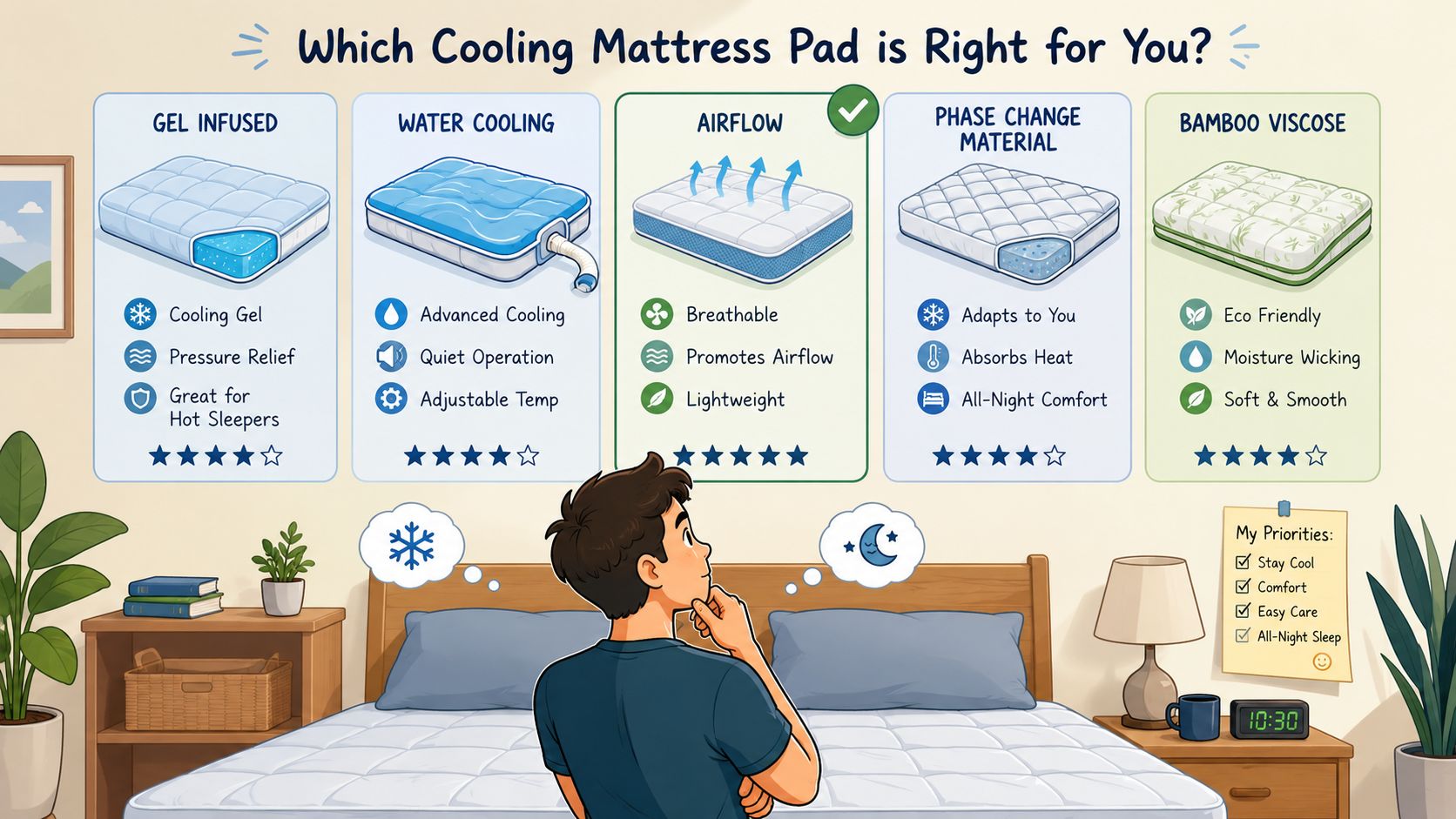
The best cooling mattress pad depends on the mattress underneath it, the sleeper's heat level, and how much change to comfort feels acceptable. A strong choice starts with the bed already in the home.
Start with the mattress, not the packaging
A cooling layer interacts with the mattress below it. That matters a lot on premium beds such as Tempur-Pedic, Sealy, Stearns & Foster, and Sherwood.
If the mattress already gives good support and pressure relief, the shopper should avoid adding something so thick that it changes spinal alignment or the original feel too much. That's especially important with memory foam and hybrid designs, where contouring and pressure point relief are part of what the sleeper already likes.
Match the solution to the problem
A mild heat issue and severe night overheating are different problems. They shouldn't be treated the same way.
- Mild warmth: A passive cooling pad may be enough
- Frequent overheating: A stronger temperature-regulating option is usually worth considering
- Pressure relief plus cooling: The sleeper should check whether the pad changes firmness
- Guest rooms or cabins: Simpler options are often easier to maintain and explain to visitors
Think about fit and bed setup
A shopper should check:
- Mattress size and depth
- Whether the bed uses an adjustable base
- How the fitted skirt or attachment system holds in place
- Whether extra layers interfere with sheet fit
A cooling product that bunches, slides, or fights the adjustable base won't feel comfortable for long, no matter how advanced the material sounds.
Don't ignore the comfort risk
Many people hesitate because they fear solving heat and creating a new problem with support or feel. That fear is reasonable. It's one reason local shoppers often value the Comfort Promise. It lowers the pressure of picking the wrong bed setup in the first place.
The same goes for comparing options across budgets. The Low Price Promise helps shoppers stay practical, while Full-Service Delivery with Professional Setup can make a bigger difference than people expect when the bed system includes multiple layers.
For sleepers exploring topper-style cooling options for larger beds, this Tempur-Adapt cooling topper page for California King shoppers shows the type of compatibility details worth checking before buying.
A quick decision framework
- Keep the current mattress feel? Choose thinner, temperature-focused designs.
- Need a bigger comfort change too? Look at topper-style options carefully.
- Sleep slightly warm? Start simple.
- Wake up sweaty often? Consider stronger regulation rather than surface-only cooling.
That step-by-step approach usually works better than chasing whichever product uses the coolest wording.
Maximizing Performance and Lifespan of Your Pad
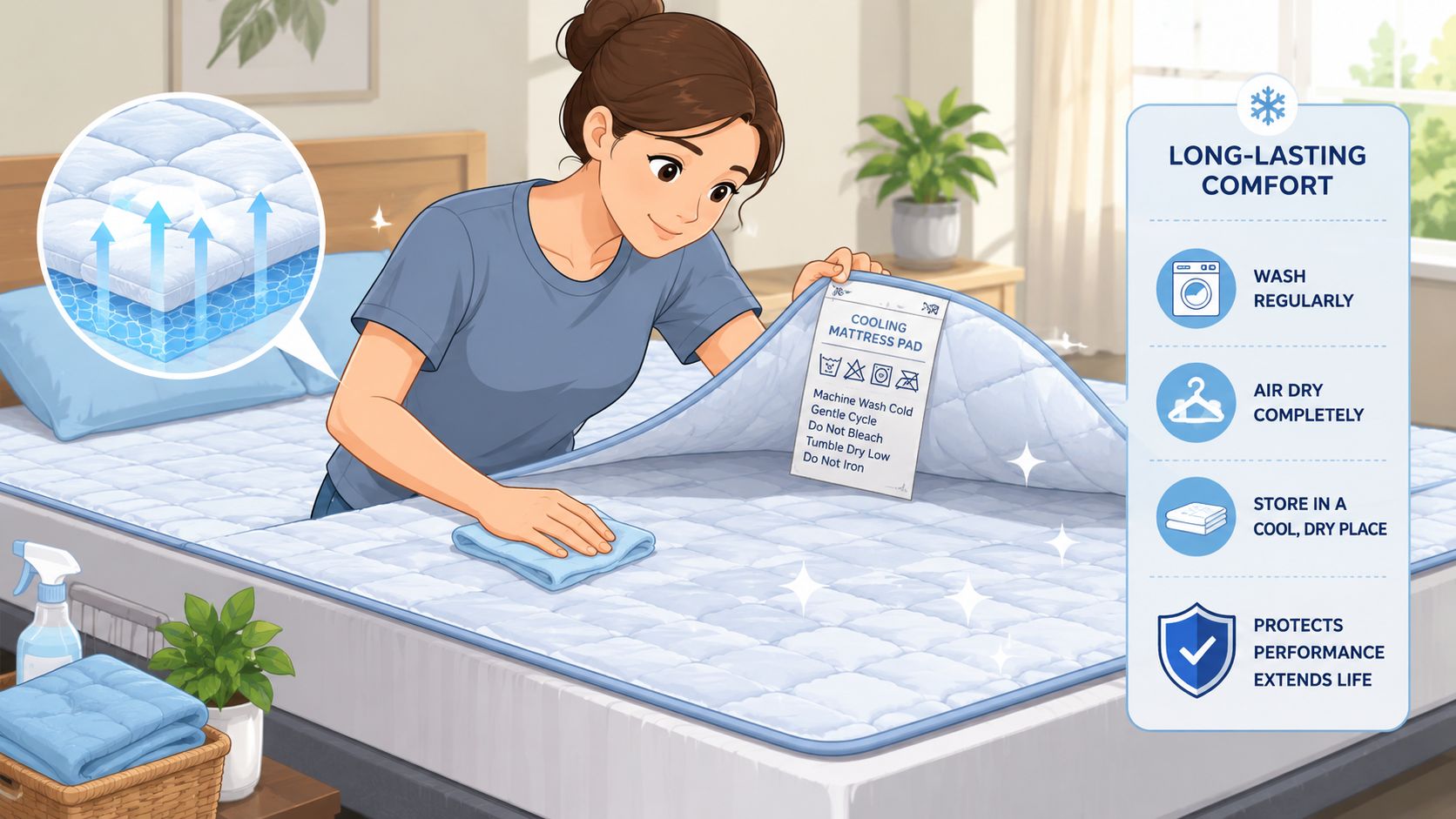
A cooling mattress pad is part comfort layer, part sleep tool. Like any sleep product, it works best when it's cared for properly and replaced when its performance drops.
Why maintenance matters more than people think
The category itself is no small niche. The Market Intelo cooling mattress topper market report says the global market was valued at $1.8 billion in 2025 and is projected to reach $3.4 billion by 2034, with 7.2% CAGR through the forecast period. The same report notes that consumers are making major investments in thermal regulation.
That makes upkeep worth taking seriously, especially since some materials can lose effectiveness within 3 to 5 years due to humidity and compression.
What causes cooling performance to fade
Cooling materials don't always fail all at once. More often, the change is gradual.
Common causes include:
- Compression: Repeated body weight can flatten materials over time
- Moisture exposure: Sweat and ambient conditions can affect performance
- Improper washing: Heat or harsh care can damage fabric or internal components
- Storage mistakes: Folding or packing incorrectly can stress the material
In mountain homes, seasonal shifts can make people think their body changed when the product may have aged.
Simple habits that help
A pad that's clean, dry, and properly fitted usually performs better than one that's been overheated in the dryer or left compressed in storage.
A few practical habits go a long way:
- Read the care label first: Don't guess on wash temperature or drying method
- Let it dry fully: Trapped moisture can hurt feel and freshness
- Rotate seasonal bedding thoughtfully: Heavy winter layers can mask the cooling benefit
- Reassess every so often: If the pad feels less effective, the issue may be wear rather than the room
This is also where a product-specific cleaning resource helps. A guide on how to clean a memory foam mattress topper can help shoppers avoid the common mistake of cleaning one layer like it's another.
When replacement makes sense
If a cooling pad no longer feels effective, the first step is to check bedding, room conditions, and recent lifestyle changes. If those are stable and the heat problem keeps returning, the material itself may be past its useful window.
That's not a failure. It's normal wear. Cooling performance is a function, and functions change with use.
Your Local Sleep Experts Are Here to Help
People usually reach the end of this topic with a few very practical questions. That's a good sign. Cooling products make more sense once the myths are stripped away and the shopper starts focusing on sleep behavior, mattress type, and local climate.
Are cooling pads just a gimmick
No. Some claims are oversold, but the entire category isn't fake.
A 2024 medical study referenced in this discussion of whether cooling mattresses work found that cooling mattress systems reduced menopausal hot flash frequency by 52%, which shows these products can be effective for specific populations. The same discussion also reflects why consumers get skeptical. People often lump passive and active systems together, even though they work very differently.
Will a cooling pad work with an adjustable base
Usually yes, if the product is designed to flex with the mattress and stay anchored. The shopper should check fit, attachment style, and whether the pad bunches when the base moves.
Is passive cooling useless
Not necessarily. Passive options can help some sleepers, especially those who just need a less stuffy sleep surface. The key is honest expectations. Surface cooling and all-night temperature regulation are not the same experience.
What if the real problem is the mattress itself
That's sometimes the answer. If the mattress is unsupportive, worn out, or retaining too much heat by design, adding a pad may only partly improve the situation. The shopper may need to think about the whole sleep system, including support, pressure relief, and airflow.
Why local guidance helps
This subject gets muddled online because broad advice rarely accounts for local living. A cabin in Alto, a full-time home in Ruidoso, and a guest room elsewhere in Lincoln County may all need different solutions. The mountain climate, the bed type, and the sleeper's habits all matter.
That's why many shoppers prefer a one-on-one conversation instead of guessing from product labels. A local sleep consultation can help connect the dots between overheating, mattress feel, and support needs. Anyone wanting that kind of personalized guidance can start with a sleep consultation near home.
The big takeaway is simple. A cooling mattress pad can be a smart tool, but only when the shopper understands what it does, what kind of cooling it offers, and how it fits the realities of mountain sleep.
Ready to transform your sleep? Visit Mattress Pro by Miller Waldrop at 2801 Sudderth Drive, Suite F, in Ruidoso. Sleep Pros serve neighbors across Ruidoso, Alto, and Lincoln County with a 70-year family legacy focused on better sleep, not pushy sales. From Tempur-Pedic, Sealy, Stearns & Foster, and Sherwood to budget-friendly solutions, the team offers the Comfort Promise, the Low Price Promise, and Full-Service Delivery with Professional Setup so shoppers can browse with confidence and wake up loving their mornings. Stop by Monday through Saturday or explore the collection online.