

Does Altitude Affect Sleep and What to Do About It


A couple arrives at a Ruidoso cabin after a long drive from the desert, expecting pine-scented quiet and a deep night of rest. Instead, one partner keeps waking with a dry mouth and a racing mind, while the other notices a morning headache, restless sleep, and occasional gasping. The mattress feels comfortable, yet neither sleeper feels restored.
The question, does altitude affect sleep, has a clear answer: yes. Thin mountain air can change oxygen availability and breathing rhythm, especially after a rapid elevation gain. A supportive mattress can reduce pressure and discomfort, but it can't correct an oxygen or breathing problem. That distinction matters for residents and visitors across Ruidoso, Alto, and Lincoln County.
Why the Mountains Can Steal Your Sleep
A familiar Ruidoso arrival
At Ruidoso's mountain elevation, every breath contains less available oxygen than it does near sea level. The body begins responding before sleep starts, and the effect can become more noticeable once breathing naturally slows during the night.
Sleep already involves quieter, shallower breathing. Add reduced oxygen availability, unfamiliar elevation, dry cabin air, travel fatigue, or a demanding day outdoors, and a sleeper may spend more time in lighter, interrupted sleep. A person may even feel reasonably normal at bedtime while objective sleep architecture has already changed.
A local sleep health resource can help separate ordinary comfort problems from symptoms that deserve medical attention.

Three pressures act together
Altitude-related sleep disruption usually involves more than one factor:
- Hypoxia: Reduced oxygen availability makes the body work harder to maintain normal oxygen levels.
- Unsteady breathing: The brain may alternate between stronger breathing and brief pauses.
- Dry mountain air: Low humidity can irritate the nose and throat, encourage mouth breathing, and create more thirst or discomfort.
Research involving healthy male athletes exposed to normobaric hypoxia equivalent to 2,000 meters, with oxygen concentration reduced to 16.4% compared with 20.9% near sea level, found reduced slow-wave sleep after one night (Journal of Applied Physiology study). Slow-wave sleep is the deepest non-REM stage associated with physical restoration.
Comfort still has a role
A mattress can't add oxygen to the room, stop periodic breathing, or treat altitude illness. It can reduce the secondary problems that make fragmented sleep feel even worse, including shoulder pressure, hip soreness, overheating, and repeated repositioning.
That's where local guidance matters. The Sleep Pros at Mattress Pro by Miller Waldrop have spent 70 years serving the Ruidoso community, with sleep-focused consultations rather than a one-size-fits-all online recommendation.
How Thin Air Changes the Way You Breathe at Night
The furnace analogy
A sleeper's body works a little like a furnace. Oxygen supports the fire, and at elevation the air supplies less of it with each breath. The pilot light still burns, but the system has to adjust to a leaner mixture.
At higher elevations, lower barometric pressure reduces the partial pressure of oxygen reaching the lungs. Sensors in the carotid bodies detect the change and signal the brain to increase breathing. During sleep, that response can become uneven because the normal drive to breathe is already changing.
A sleep education guide offers related background for households trying to understand why a familiar sleep routine can feel different in the mountains.

Why breathing can seesaw
The brain uses carbon dioxide as one signal for when the next breath should occur. If altitude-driven overbreathing removes too much carbon dioxide, the breathing signal can briefly fall below its trigger point. Breathing then slows or pauses until carbon dioxide rises again.
That creates a repeating pattern:
- Breathing becomes deeper or faster.
- Carbon dioxide falls.
- Breathing briefly becomes shallow or stops.
- Oxygen and carbon dioxide shift again.
- Stronger breathing resumes.
A high-altitude study of rapidly ascending mountaineers traveling from 490 to 4,559 meters found reduced total sleep time, lower sleep efficiency and deep sleep, more arousals, and pronounced periodic breathing during the first night (Journal of Applied Physiology research).
Interpreting a pulse oximeter
A home pulse oximeter can show a lower reading at altitude, particularly during sleep. A single number doesn't explain whether the change reflects normal acclimatization, brief events, sustained oxygen desaturation, device error, or an underlying condition.
A sleeper shouldn't diagnose altitude illness or sleep apnea from a consumer reading alone. Persistent morning headaches, witnessed pauses, gasping, confusion, blue lips, or strong daytime fatigue deserve clinical assessment.
What Periodic Breathing Feels Like and Why It Happens
The waxing and waning pattern
Periodic breathing often feels like a night-long cycle rather than one obvious event. Breaths may become deeper and quicker, then fade into shallow breathing or a pause before the sleeper suddenly inhales, shifts position, or wakes with a gasp.
The pattern can occur in healthy people above approximately 6,000 feet, according to a medical review of altitude and sleep (medical review of high-altitude sleep). It becomes especially common above approximately 3,000 meters, where reviews report that almost all healthy people develop it during non-REM sleep, particularly when arterial oxygen saturation falls below 90% (respiratory physiology research).
Central pauses are different
A central apnea happens when the brain temporarily reduces the signal to breathe. The airway isn't necessarily blocked. That differs from obstructive sleep apnea, where the upper airway narrows or closes despite continued effort to breathe.
This distinction helps explain why a sleeper may report gasping without the usual sensation of choking. It also explains why a mattress, pillow, or sleeping position can sometimes improve comfort without addressing the actual respiratory mechanism.
Why rest feels incomplete
Each breathing cycle can create a brief arousal. The sleeper may not remember waking, but repeated interruptions can reduce continuity across restorative sleep stages.
In healthy adults, periodic breathing often improves as acclimatization develops. It shouldn't automatically be treated as an emergency, but persistent symptoms, marked fatigue, or breathing pauses in someone with diagnosed sleep apnea require a healthcare professional's guidance.
Readers seeking a plain-language explanation of restorative sleep can explore what REM sleep does and why it matters.
Acclimatization Timeline and When to Be Concerned
The first nights
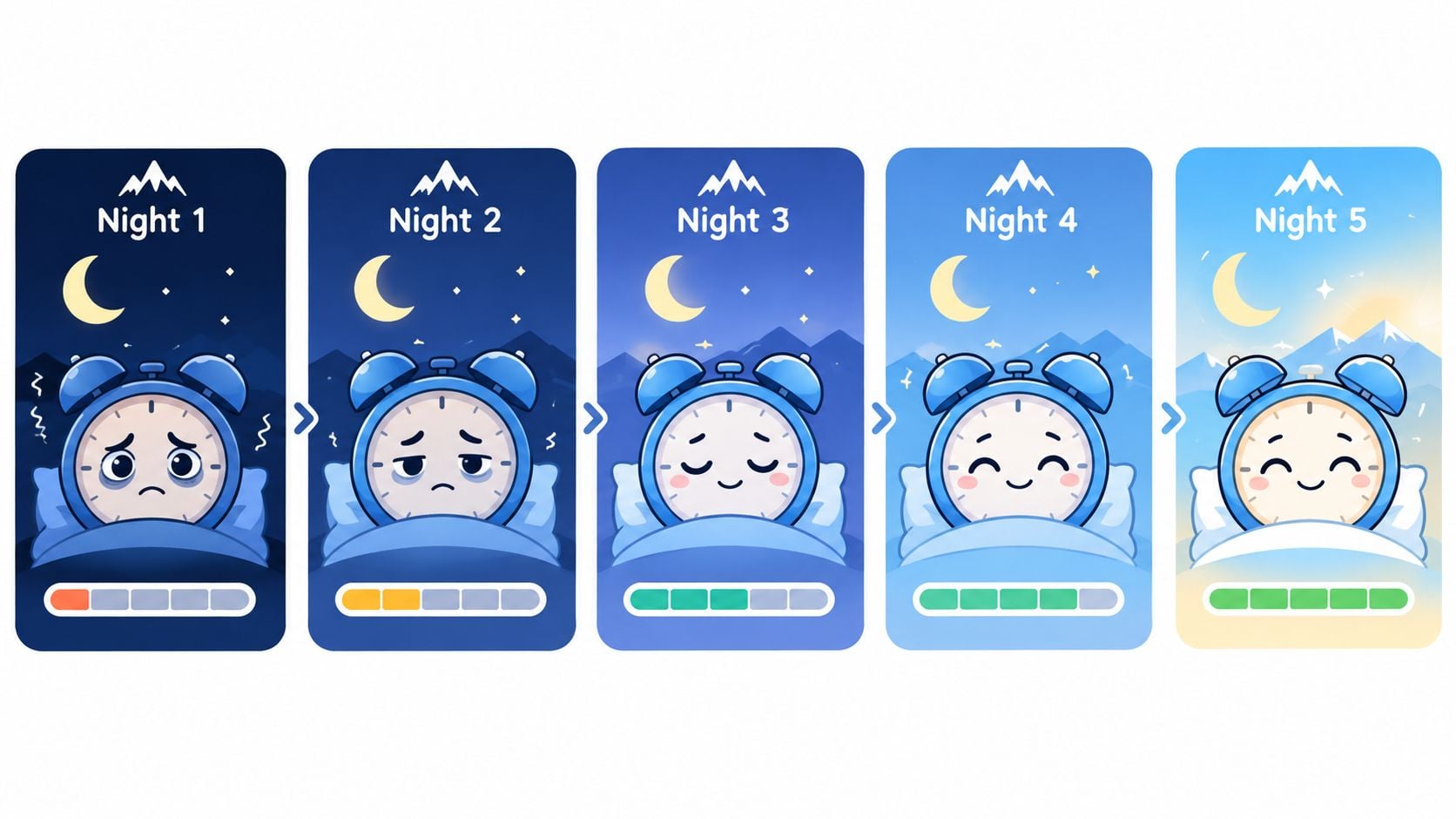
For many healthy visitors entering the Ruidoso area from lower elevations, the first night feels the least predictable. Frequent waking, a mild headache, light fatigue, dry mouth, and a sensation of needing a fuller breath can occur while the body begins adjusting.
The second night may still be unsettled. A visitor who arrives after exertion, illness, alcohol use, or a rapid drive from much lower terrain may feel the change more strongly than a long-term local.
Improvement isn't always immediate
Sleep often becomes steadier as acclimatization improves oxygenation. Some people notice meaningful improvement after several nights, while others need longer, particularly if they have a respiratory or cardiovascular condition.
A CDC travel guideline identifies sleeping at or above 8,000 feet, approximately 2,450 meters, as a point where an unacclimatized traveler may face altitude-illness risk. Above 9,000 feet, the CDC recommends increasing sleeping elevation by no more than 1,600 feet per day (CDC guidance for travel to high altitudes).
Warning signs need action
Expected adjustment shouldn't steadily worsen. Medical attention is appropriate for:
- Severe headache: Especially when hydration and rest don't relieve it.
- Confusion or unusual behavior: These symptoms shouldn't be blamed on a poor mattress.
- Vomiting or worsening weakness: Continued decline is a reason to contact a provider.
- Blue lips or severe breathlessness: Emergency evaluation is warranted.
- Symptoms after initial improvement: A setback can signal more than ordinary acclimatization.
Lincoln County Medical Center or another appropriate local healthcare service should be considered when red flags appear. A mattress consultation is useful for comfort, not for delaying care.
Practical Strategies for Sleeping Better at Altitude
Make the arrival gentler
A gradual ascent gives the body more time to adapt. Travelers coming from near sea level may benefit from spending a night at a lower elevation, such as Albuquerque or another intermediate location, before continuing toward Ruidoso.
Once in the mountains, the first day should stay moderate. Heavy exertion followed by a poor night can make ordinary acclimatization feel more severe.
Practical rule: A comfortable bedroom supports adaptation, but it can't replace gradual ascent or medical advice.
Reduce dryness and irritation
Ruidoso's dry mountain air can leave nasal passages and the throat uncomfortable overnight. Steady hydration during the day helps, while a bedroom humidifier can add moisture without requiring a sleeper to drink heavily right before bed.
Useful bedroom adjustments include:
- Slight elevation: A suitable wedge or adjustable base may feel easier for some sleepers than lying completely flat.
- Cool airflow: Breathable covers and appropriate room temperature can reduce heat-related tossing.
- Darkness: Blackout curtains help protect sleep when early summer light enters the bedroom.
- A calm routine: A predictable wind-down period reduces stimulation after travel or outdoor activity.
More general sleep hygiene tips for mountain households can help turn those adjustments into a repeatable routine.

Be cautious with substances and medication
Alcohol can worsen unstable high-altitude breathing, and sedatives or respiratory depressants shouldn't be used without clinician guidance. Heavy meals close to bedtime may also add physical discomfort during an already unsettled night.
Prescribed acetazolamide is used for some higher-elevation travel, but it requires a conversation with a physician before trips involving Ski Apache or Sierra Blanca ascents. People with lung disease, cardiovascular disease, suspected sleep apnea, or unusually low baseline oxygen saturation need individualized advice.
Where Your Mattress Helps and Where It Cannot
Comfort is real, but it has boundaries
A quality mattress can make a fragmented night less physically punishing. Pressure relief may reduce shoulder and hip pain, while stable support can help maintain spinal alignment when a sleeper changes position frequently.
The right construction depends on the person:
- Memory foam: Tempur-Pedic and selected foam designs can contour around pressure points and limit motion transfer between partners.
- Hybrid support: Sealy and Stearns & Foster options can combine responsive coils with cushioning for sleepers who need easier movement.
- Breathable materials: Cooling covers, ventilated foam, and breathable latex can help manage heat in a dry mountain bedroom.
- Traditional support: Sherwood models may suit sleepers who prefer a more buoyant, familiar surface.
A Sleep Pro evaluates body type, sleep position, firmness preference, temperature needs, and budget instead of assuming altitude creates one universal mattress requirement.
The fuel-and-air distinction
A mattress is the vehicle carrying the sleeper toward comfort. Altitude changes the air around the vehicle. Better cushioning can reduce pressure and awakenings caused by pain, but it can't correct hypoxia, periodic breathing, altitude illness, or untreated sleep apnea.
That boundary is especially important for a person whose partner notices witnessed pauses, new snoring, morning headaches, or gasping after elevation gain. Such symptoms call for a clinician or sleep specialist, not self-adjusted positive-airway-pressure settings, unsupervised oxygen, or a new mattress as the only response.
Removing the comfort bottleneck
The Comfort Promise gives Ruidoso residents and visitors a practical way to reduce uncertainty when choosing firmness, temperature control, and support. In-store or in-home consultation can help sleepers test whether the bed is contributing to discomfort while leaving breathing concerns with qualified healthcare professionals.
The Low Price Promise and Full-Service Delivery with Professional Setup add local assistance for households replacing a primary bed, furnishing a cabin, or improving a guest room on Sudderth Drive, in Alto, or elsewhere in Lincoln County.
Better Sleep Starts at the Sleep Pro Showroom
Three kinds of mountain sleepers
A long-term Ruidoso resident may need a comfort upgrade that handles dry air, cooler nights, changing body needs, or a partner's different sleep position. A cabin guest may want to test a mattress at elevation rather than order a compressed bed without trying it.
A person with diagnosed sleep apnea has a different priority. Bedding can improve pressure relief and temperature comfort, but treatment decisions, PAP settings, oxygen, acetazolamide, and travel precautions belong with a clinician or sleep specialist.
A clinical study found that patients whose obstructive sleep apnea was controlled with positive airway pressure at 1,320 meters experienced worse control at a simulated 2,750 meters. Their apnea-hypopnea index rose from 2 to 11 events per hour, average sleep oxygen saturation fell from 93% to 88%, and total sleep time declined from 393 to 349 minutes (clinical study of sleep apnea at altitude). The result is a clear reason not to treat new symptoms as a bedding problem.
What a fitting can uncover
A showroom consultation can focus on practical comfort questions:
- Pressure mapping: Which areas carry too much load in side, back, or combination sleeping?
- Material response: Does breathable latex, cooling foam, or a responsive hybrid feel better in a dry mountain room?
- Partner movement: Does one sleeper's repositioning disturb the other?
- Support balance: Does the surface keep the spine aligned without creating shoulder or hip pressure?
The local mattress store guide explains how a local visit differs from choosing a bed from a screen. A roughly half-hour fitting can give residents and visitors time to compare Tempur-Pedic, Sealy, Stearns & Foster, and Sherwood options while discussing budget and delivery needs.
A practical local decision
If symptoms improve as the body acclimatizes but soreness, overheating, or pressure remains, mattress comfort may be worth addressing. If gasping, confusion, blue lips, severe fatigue, or worsening breathing continues, medical assessment comes first.
The Sleep Pros at the Ruidoso showroom can help identify the comfort factors a mattress can change, apply the Comfort Promise to reduce the fear of choosing incorrectly, and arrange Full-Service Delivery with Professional Setup when a new sleep system is appropriate.
For mountain residents and cabin owners, Mattress Pro by Miller Waldrop offers personalized guidance across Tempur-Pedic, Sealy, Stearns & Foster, and Sherwood, supported by the Comfort Promise and local Full-Service Delivery with Professional Setup. Visit Mattress Pro by Miller Waldrop at 2801 Sudderth Drive, Suite F, in Ruidoso, or stop by Monday through Saturday to find a mattress that improves comfort while medical professionals address altitude-related breathing concerns.