

Best Local Mattress Store in Ruidoso


You know the feeling. You wake up sore, the mattress feels older than the house, and every online listing starts sounding the same after a while. In Ruidoso, that frustration gets sharper because sleep isn't just about softness, it's about dry mountain air, cooler nights, cabin stairs, and the practical question of how a mattress will fit your home.
A strong best local mattress store makes that decision simpler. You can lie down, compare beds side by side, and talk with someone who knows the difference between a quick sale and a real sleep solution. In a market where the U.S. mattress industry is crowded and fragmented, with about 16,000 mattress retailers and stores in the United States and an average mattress purchase clustering around the mid-market range, local curation matters more than flashy promises (industry overview).
Why Choosing a Local Mattress Store Matters in Ruidoso
A Ruidoso couple walks into a neighborhood showroom after months of waking up stiff. They're not there for a brand slogan, they're there because their bed has stopped doing its job, and they want a real conversation about comfort, support, and what fits their home. That's the point where a local store starts to feel different from an anonymous website.
Local shopping gives you something a warehouse checkout never can, human accountability. You can test several options in one trip, ask plain questions, and get a recommendation that considers your body, your sleep style, and the way your home works. That matters in mountain living, where a mattress has to fit more than a bedroom, it has to fit stairs, delivery access, and the pace of a household that may also host guests or manage a second property.

A family business also changes the tone of the purchase. A store with 70 years of legacy isn't trying to win a one-time click, it's trying to keep the same community sleeping well year after year. That long view is part of why local trust still matters on Sudderth Drive, in Alto, and across Lincoln County.
For readers who want to see how a local mattress business presents itself, the About Us page gives a clear look at the kind of neighborhood-facing service a real showroom can provide.
Practical rule: if a store can't explain why a mattress fits your sleep pattern and your home setup, it's not really helping you choose.
Define Your Sleep Problem Before You Shop
Start with the symptom, not the mattress name. If you wake up with a sore lower back, toss because your shoulder goes numb, or sleep hot enough to kick off the covers, those clues point toward very different feels and constructions. A good store visit works better when you already know what keeps going wrong at night.
Before heading out, write down a few basics:
- Sleep position: side, back, stomach, or a mix during the night.
- Body feel: whether you need more pressure relief, more lift, or both.
- Partner needs: movement, firmness, and temperature preferences.
- Budget comfort zone: the range that feels responsible, not stressful.
- Current pain points: heat, sagging, edge support, or motion transfer.
Bring one pillow if it helps show how you sleep, and tell the Sleep Pro where the old bed fails you. That keeps the conversation grounded. It also keeps you from being distracted by features you don't need.
A mattress purchase feels easier when it's treated like a comfort consultation instead of a browsing errand. You're not shopping for a brand first, you're shopping for a fix. That small shift usually leads to a better recommendation and far less second-guessing later.
Understand the Mattress Types Built for Mountain Living
Ruidoso's dry air and cooler nights make material choice feel personal. Some beds hold heat, some breathe better, and some balance both. Knowing the basic constructions helps you match the mattress to the way you sleep.
Memory Foam and Hybrid Feels
Memory foam is known for pressure-point relief and close contouring. It can be a good fit if your shoulder or hip needs cushioning, or if you sleep with a partner and want less motion transfer. Modern versions often use cooling gel technology to help offset heat retention, which matters when a bed needs to feel comfortable through changing mountain temperatures.
Hybrid mattresses blend foam comfort layers with a coil support core. That gives many sleepers a mix of contouring and bounce, along with better airflow than a solid foam build. Couples often like that balance because it can reduce partner disturbance without making the bed feel stuck or overly dense.
Innerspring and Latex
Innerspring beds feel more responsive and open. They can work well for shoppers who like a firmer, more traditional feel and want easy movement when getting in and out of bed. They're straightforward, which some households appreciate.
Latex has a buoyant feel and tends to appeal to people who want a resilient surface with natural responsiveness. It's also a sensible option for allergy-sensitive households that want a different kind of sleep surface. For mountain living, the key question is not just softness, it's whether the mattress helps with spinal alignment, temperature control, and long-term comfort.
A 2021 review of 39 scientific studies found medium-firm mattresses were the best option for people with non-specific low back pain (Statista mattress retail overview). That doesn't mean everyone needs the same feel, but it does show why the right support level matters more than a catchy label.
For shoppers comparing heat management in more detail, the temperature-regulating mattress guide is a useful reference point.
A mattress should solve a sleep problem, not add a new one.
Test Mattresses the Right Way in the Showroom
A showroom test works only when it looks like real sleep. That means lying down long enough for your body to react, not just sitting on the edge and guessing. It also means testing in the position you use at home.
What to Do During the Test
- Lie down fully. Give each mattress a few minutes so your shoulders, hips, and lower back can tell the truth.
- Use your normal pillow. Your neck position changes the whole feel.
- Wear comfortable clothing. Jeans and stiff fabric can hide pressure points.
- Bring your partner. Motion transfer is a real issue for couples.
- Ask simple questions. The right store staff will narrow choices, not flood you with jargon.
A good Sleep Pro should guide the process without pressure. They should ask about firmness, movement, temperature, and pain, then use that feedback to shorten the list. That's what consultative selling looks like in a real mattress store.
The sleep consultation page shows the kind of one-on-one approach that helps turn a quick visit into a better fit. That kind of process matters more than a long sales script.
Good in-store testing feels calm. If the visit feels rushed, the mattress choice probably will too.
Why Bed-in-a-Box Falls Short for Ruidoso Homes
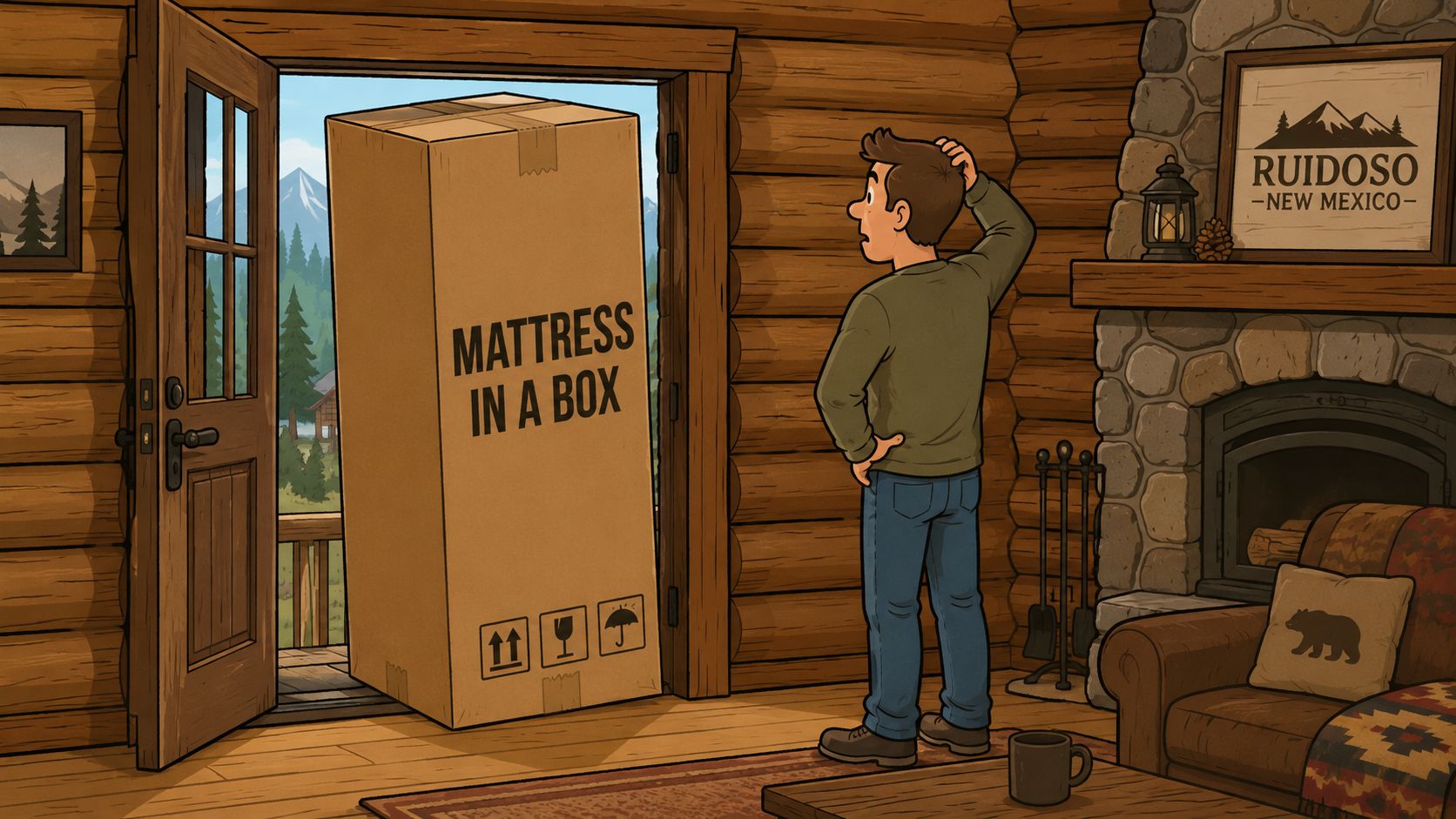
Online mattress buying sounds simple until the box reaches a cabin doorway or a second-floor bedroom with a tight turn. In mountain homes, the delivery problem isn't abstract, it's physical. Stair rails, narrow halls, and vacation-rental setup windows can turn convenience into a headache.
A compressed mattress also removes the most important part of the decision, the in-person feel. You can't know how a bed responds under your shoulders, hips, and lower back until you lie on it. That's a real tradeoff, especially for couples and pain-sensitive sleepers who need to compare options before they commit.
The memory foam roll-up explanation is a useful reminder that compressed shipping changes the buying experience. In a dry mountain climate, many shoppers also care about how a bed feels after it leaves the box and settles into the room, not just how it looked on a screen.
Service after the sale matters too. A local showroom can help with delivery timing, setup, and questions later on. That's a different kind of ownership experience than waiting on a returns process and hoping the next pickup goes smoothly.
Use the Comfort Promise to De-Risk the Decision
A mattress is too important to buy on hope alone. That's why a reputable local store should make the decision safer with clear policies, not vague reassurances. The whole point is to remove the fear of picking the wrong bed.
The Comfort Promise should be part of the conversation before anyone signs. So should the Low Price Promise, flexible financing, and Full-Service Delivery with Professional Setup. Those tools matter because they reduce the pressure that comes with a big purchase.
Before buying, ask these questions:
- Comfort Promise details: How does the exchange process work if the mattress doesn't feel right?
- Price protection: What does the Low Price Promise cover?
- Financing: What payment options are available without making the decision harder than it needs to be?
- Setup support: Does delivery include professional placement and old mattress removal?
- Protection items: Is a mattress protector recommended from day one?
Professional setup matters because it helps protect the mattress and the warranty from the beginning. It also saves time for households that don't want to wrestle a new bed up stairs or guess at foundation compatibility. For many shoppers, that kind of service is the difference between a stressful purchase and a clean handoff.
The Comfort Promise is worth understanding before the sale, because the safest purchase is the one with a real plan if comfort doesn't line up later.
Protect Your Investment After the Sale
Once the mattress is in the room, care starts right away. The warranty paperwork matters, and so does the way the bed is supported, rotated, and covered. If the setup is wrong, the mattress won't last as well as it should.
A few habits help protect the purchase:
- Read the warranty first. Know what's covered and what can void it.
- Use a breathable protector. It helps keep the surface clean without trapping unnecessary moisture.
- Rotate when appropriate. Rotation can help a bed wear more evenly.
- Check the foundation. The base should support the mattress type correctly.
- Keep the room aired out. Dry mountain air still benefits from periodic freshness and ventilation.
When questions come up months later, a local store has an advantage that online checkout can't match. The same Sleep Pro can answer care questions, delivery concerns, or follow-up fit issues without sending the shopper into a new support maze. That local continuity is part of what makes buying near home feel safer.
For shoppers in Ruidoso, Alto, and Lincoln County, the practical next step is simple. Visit the showroom, compare the major sleep systems, and ask the questions that fit the way the house works.
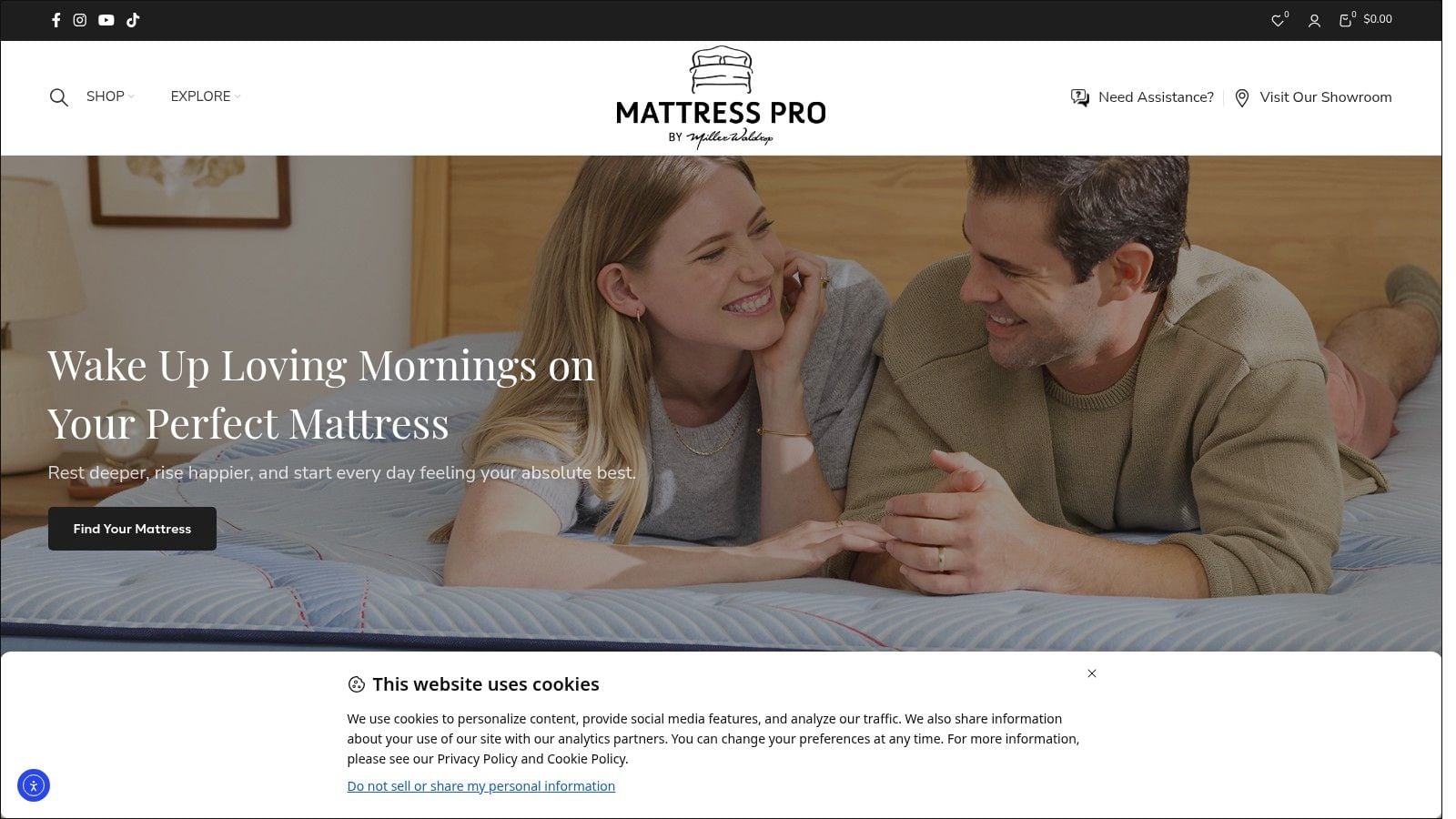
Ready to transform your sleep? Visit our Sleep Pros at the Mattress Pro showroom located at 2801 Sudderth Drive, Suite F, in Ruidoso. From luxury brands to budget-friendly solutions, we're here to help you wake up loving your mornings. Browse our collection online or stop by Monday through Saturday at Mattress Pro by Miller Waldrop.