

How Often Should You Rotate Your Mattress: A Local Guide


You climb out of bed in Ruidoso after a full night's sleep and still feel a stiff back, a sore hip, or a shoulder that didn't get the memo about resting. Then you notice the shallow dip where you sleep every night. Before replacing the mattress, there's one simple maintenance habit worth checking: rotating the mattress from head to foot.
For most modern mattresses, a practical rotation schedule is every 3–6 months. That means turning the mattress 180 degrees, not flipping it upside down. The right schedule depends on the mattress construction, its age, how many people use it, and whether the manufacturer permits rotation.
The Sleep Pros at Mattress Pro by Miller Waldrop have spent generations helping families in Ruidoso, Alto, and Lincoln County choose and care for better sleep systems. Rotation isn't a cure for an exhausted mattress, but it can help a good bed wear more evenly and stay comfortable longer.
Why Rotating Your Mattress Matters More Than You Think
A Ruidoso homeowner may notice the problem in small ways. The bed feels fine when getting in, but the lower back feels tight in the morning. A hip-shaped hollow appears in the comfort layer. One side feels softer than the other, especially when two people use the same sleeping positions every night.
That wear pattern has a straightforward cause. Sleepers repeatedly place pressure on the same areas, so foam compresses, comfort layers settle, and coils gradually carry load in the same zones. Turning the mattress head to foot moves those high-pressure areas to a different part of the bed.

What rotation can and cannot do
Rotation distributes repeated loading. It may delay permanent body impressions and localized sagging, especially when the mattress is still in good condition. It won't restore foam that has permanently softened or rebuild coils that have lost resilience.
For a closer look at when a dip signals a larger problem, see this guide to mattress sagging.
Ruidoso's dry mountain air adds another reason to take even wear seriously. Foam and natural materials still need sensible care, and a vacation cabin that sits unused for stretches can develop a different wear pattern from a primary bedroom used every night. Seasonal use doesn't eliminate the need to follow the care instructions.
Practical rule: A six-month rotation is a strong default for many households, while quarterly rotation makes sense for a heavily used bed or a mattress showing uneven wear.
A simple habit with a real payoff
Rotation is one of the least expensive maintenance steps a homeowner can take. It also helps reveal problems early, such as a foundation that isn't supporting the mattress evenly or a comfort layer that has stopped recovering.
A new mattress may need closer attention during its early break-in period. A shared bed, a heavier sleep load, or a frequently used guest or cabin mattress may also benefit from a more regular schedule.
The care tag comes first. Tempur-Pedic, Sealy, Stearns & Foster, and Sherwood each offer models with different constructions, and zoned or specialty mattresses may not be intended for rotation. The Sleep Pros at the Ruidoso showroom can explain the care notes for the exact model before it reaches the bedroom.
How to Rotate a Mattress Without Damaging It
Rotating a mattress is simple when the move is planned. It becomes risky when someone tries to drag a heavy king across a frame, pulls on side handles, or folds the mattress to force it around a headboard.
The safest approach uses one helper, a clear path, and a slow slide. Most households can complete the move in under ten minutes when the foundation and surrounding furniture are ready.
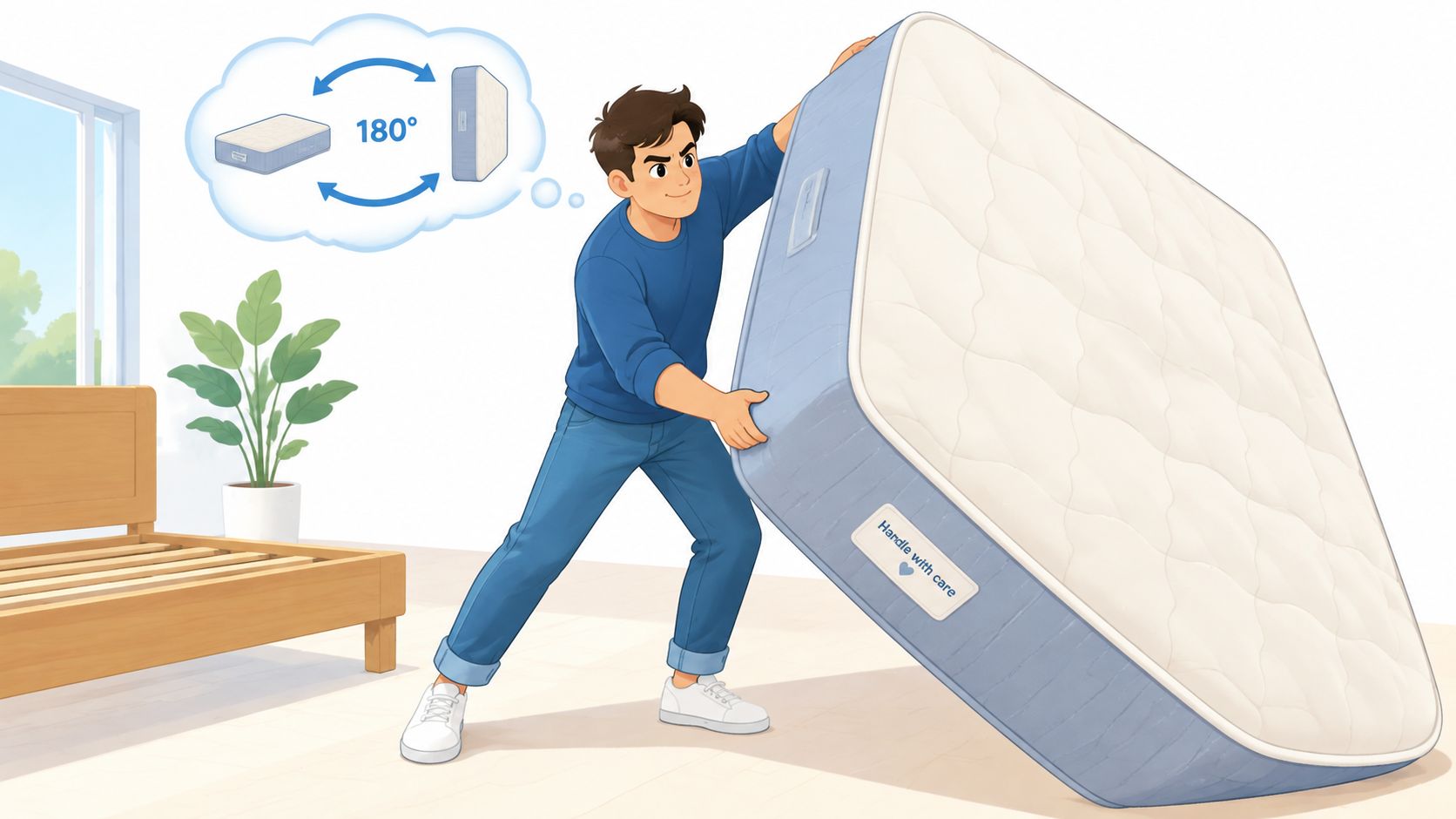
Follow these steps
Remove the bedding. Strip off sheets, blankets, pillows, and the mattress protector. This reduces drag and gives both people a clean grip.
Check the care tag first. Confirm that the mattress is designed to rotate. Zoned beds and some specialty models should stay in a specific orientation.
Clear the route. Move lamps, benches, nightstands, and anything that could catch a corner. On a platform bed or adjustable base, check whether the foot end can clear the headboard.
Use the corners. Stand on opposite sides and grip the mattress securely near its corners. Side handles usually help with positioning, but they aren't necessarily designed to support the full weight.
Slide toward the long edge. Move the mattress carefully until one long side reaches the edge of the foundation. Don't yank, twist, or lift more than necessary.
Turn it head to foot. Rotate the mattress 180 degrees so the former head end becomes the foot end. Keep the sleeping surface facing upward.
Center the mattress. Reposition it evenly on the box spring, platform, slats, or adjustable base. Uneven overhang can create unnecessary stress and an uncomfortable sleep surface.
Protect the mattress and the people moving it
A queen or king hybrid can be awkward even when two adults are handling it. Bend at the knees, keep the load close, and stop if the mattress begins to slide unexpectedly. Never fold a mattress to rotate it. Folding can damage internal layers, especially in thick foam and hybrid designs.
For platform beds, confirm that the slats or support system are properly spaced and stable before replacing the bedding. The guide to mattress slats and support explains why the foundation matters as much as the mattress itself.
Two delivery-crew habits make rotation easier:
- Pair the chores. Rotate the mattress on the same day the mattress protector is washed or replaced.
- Mark the date. Write the next rotation date on a household calendar so the task doesn't disappear into the routine.
Tempur-Pedic, Sealy, Stearns & Foster, and Sherwood mattresses ship with care information worth reading. The manufacturer's instructions override general advice, particularly when a model has zones, specialty foams, or an adjustable-base requirement.
Rotation Schedules by Mattress Type
The answer to how often should you rotate your mattress depends on what's inside it. A blanket schedule can be useful, but it isn't honest advice for every construction.
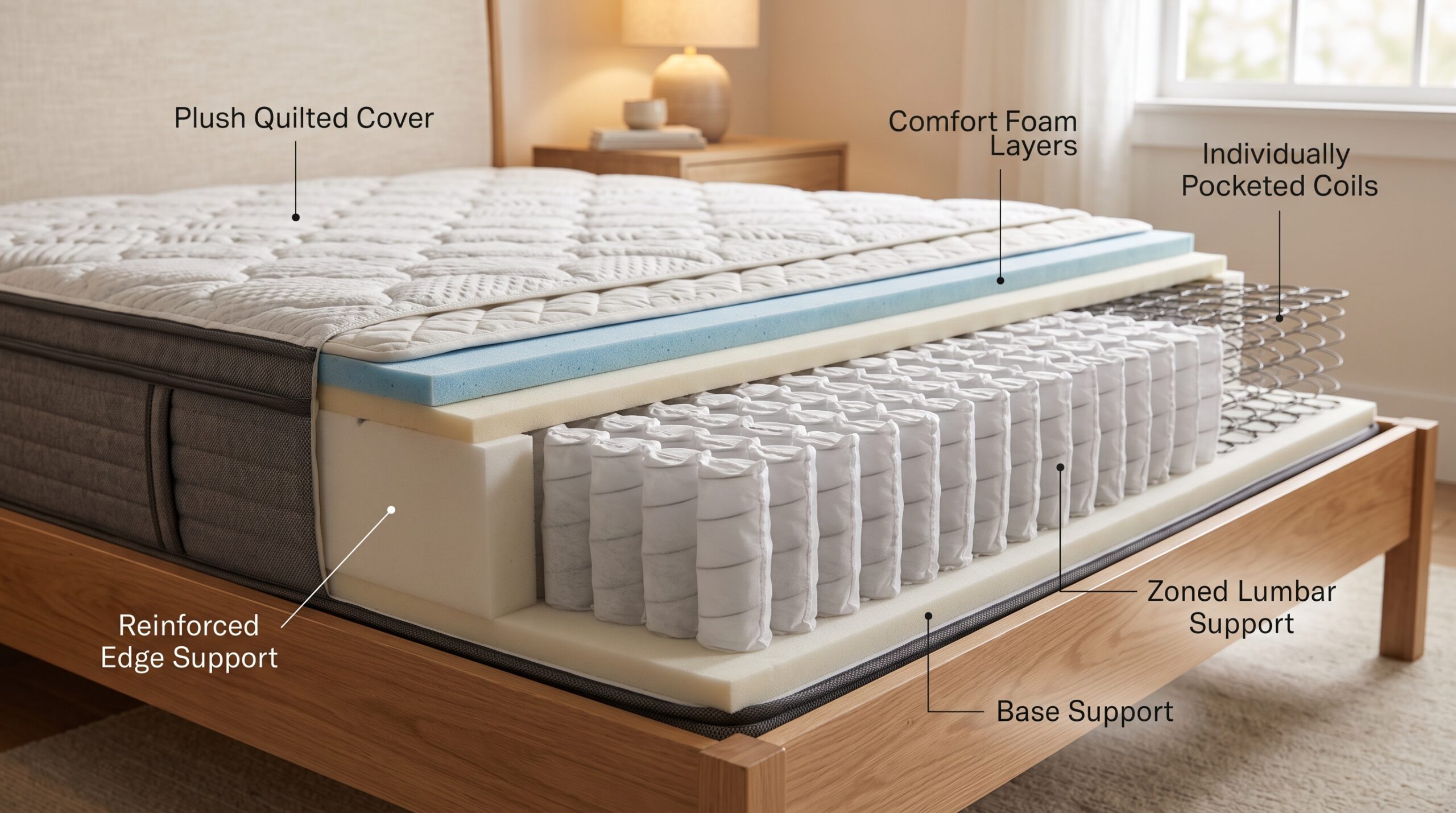
Memory foam and latex respond differently from traditional innerspring beds. Foam and latex contour around the body, so the areas under the shoulders, hips, and torso experience repeated compression. Hybrids combine foam comfort layers with pocketed coils, which means both the upper comfort material and the support system contribute to the wear pattern.
Recommended Mattress Rotation Frequency by Type
| Mattress Type | Rotation Frequency | Why |
|---|---|---|
| Memory foam | 1–2 times per year | Foam can soften and develop lasting impressions in repeatedly loaded areas. |
| Latex | 1–2 times per year | Latex is resilient, but regular rotation helps distribute pressure across the surface. |
| Hybrid | 1–2 times per year | Foam comfort layers and pocketed coils can benefit from a semiannual change in loading. |
| Newer innerspring | 1–2 times per year | Newer coil systems generally need less frequent rotation than older designs. |
| Older innerspring | 2–5 times per year | Older coils may lose shape sooner, so more frequent rotation can slow uneven wear. |
These ranges come from Sleep Foundation's mattress-care guidance, which also emphasizes checking the owner's manual. For many one-sided mattresses, rotating every three months is a practical starting point, but that doesn't make it the right permanent schedule for every bed.
Adjust the schedule to the bedroom
A brand-new mattress may benefit from more attentive rotation during its first six months as the comfort layers settle. After that, many foam, latex, hybrid, and newer innerspring models can move to a semiannual rhythm if the surface remains even.
A shared primary bed usually receives more repeated loading than a lightly used guest bed. A cabin mattress in Alto may also sit unused between visits, then receive concentrated use during holidays or seasonal stays. The schedule should reflect how the mattress is used, not just where it sits.
Manufacturer instructions outrank general mattress advice. If the care guide says not to rotate, keep the mattress in its designated orientation.
The Sleep Pros can review care instructions for a Sealy, Sherwood, Tempur-Pedic, or Stearns & Foster model at delivery. Shoppers comparing pressure-relieving mattress types should also ask how the comfort materials respond to body weight, sleeping position, and local cooling needs.
Warning Signs Rotation Won't Fix
Rotation helps distribute wear, but it can't reverse permanent material deterioration. If the mattress still feels uneven after rotation and time to recover, the issue may be replacement rather than maintenance.
A visible dip deeper than roughly 1.5 inches that doesn't rebound after rotation deserves attention. So do body impressions that remain through the night, edges that collapse when someone sits down, and mornings marked by recurring lower-back or shoulder stiffness regardless of sleeping position.
Four checks for a worn-out mattress
- Calendar age: Most mattresses last approximately seven to ten years under ordinary conditions, according to Sleep Foundation's mattress lifespan guidance. Age provides context, but it isn't the only test.
- Visible impressions: A lasting hollow or clear slope across the sleep surface points to material breakdown rather than temporary settling.
- Sleep quality: If sleep becomes less comfortable and morning soreness keeps returning, the mattress may no longer be supporting the body properly.
- Partner complaints: Repeated reports of rolling toward the center, feeling movement, or losing edge support can reveal wear that one sleeper hasn't noticed.
The same source estimates that foam mattresses commonly last about six to seven years, hybrids about six and a half to seven and a half years, latex about seven and a half to eight and a half years, and innerspring models about five and a half to six and a half years. Construction, sleeper weight, use patterns, foundation support, and care all influence the actual result.
Know when care has reached its limit
Foam can soften and retain body impressions. Hybrid comfort layers can break down even when the coils still feel supportive. Innerspring systems can show sagging as the coils and upper layers age.
Persistent discomfort and declining sleep quality matter more than a calendar date alone. A mattress that is younger than expected may still need replacement if it has a lasting defect or severe uneven wear. A well-maintained bed may remain comfortable beyond a general lifespan range if the surface and support still perform well.
Mattress Pro by Miller Waldrop's Comfort Promise is designed to reduce the fear of choosing the wrong bed. Customers don't have to keep guessing whether rotation, foundation changes, or replacement is the right next step. A Sleep Pro can evaluate the sleep concern and explain the available path forward.
Rotate Versus Flip and Other Common Myths
Rotating and flipping are different jobs. Rotation turns the mattress head to foot while keeping the designated sleeping surface on top. Flipping turns the mattress over, which is correct only when the manufacturer built both sides for sleeping.
Most contemporary mattresses are one-sided. They use a comfort layer on top, a support core underneath, and a bottom cover intended to rest on the foundation. That includes every Tempur-Pedic mattress and most models from Sealy and Stearns & Foster, along with the Sherwood lineup described for current shoppers.
Why flipping can damage the feel
Turning a one-sided mattress upside down places the support structure where the body should meet the comfort layers. The result can feel excessively firm, uneven, or unlike the mattress that was purchased. It can also put pressure on materials that weren't designed to serve as the sleep surface.
The old advice to flip a mattress every season belongs to a narrower category of beds. Some traditional two-sided innerspring mattresses, clearly labeled flippable hybrids, and certain latex models may be designed for use on both sides. The label and owner's manual decide the matter.
For shoppers seeking a deliberately reversible design, the guide to a mattress you can flip can help clarify what to look for.
Don't use handles as lifting straps
Side handles often help position a mattress on its foundation. They usually aren't intended to carry the full weight of a queen or king mattress, and pulling hard on them can damage the cover or stitching.
The safer method is to grip the mattress near its corners and move it with a helper. If the mattress is too heavy, the foundation is awkward, or the room layout leaves no safe path, professional setup is the sensible choice.
The owner's manual remains the source of truth. The Ruidoso showroom keeps brand-specific care information available for current models, so customers can get the rotation and flipping guidance that matches the exact bed rather than relying on old household rules.
When to Skip the DIY and Call Your Local Sleep Pros
A mattress shouldn't be moved alone when its weight, size, foundation, or room layout creates a real injury risk. It's also worth calling for help when a dip, uneven base, or unfamiliar specialty construction makes the correct care routine unclear.
Mattress Pro by Miller Waldrop offers full-service delivery with professional setup. During an in-home delivery visit, the crew can position the sleep system correctly, inspect the existing setup, and point out support or wear issues that are easy to miss from the side of the bed.
A sleep consultation near you can also connect comfort concerns with sleeping position, body type, budget, and the dry mountain climate around Ruidoso. That matters for both primary bedrooms and seasonal cabins across Alto and Lincoln County.
The Comfort Promise helps remove the fear of picking the wrong bed. The Low Price Promise, flexible financing, and Full-Service Delivery with Professional Setup give local shoppers practical ways to move forward without treating mattress care as a guessing game. The Miller Waldrop family has served the area for 70 years, so the advice comes from neighbors who understand mountain winters, dry air, and seasonal cabin turnover.
Mattress Pro by Miller Waldrop helps Ruidoso and Lincoln County sleepers choose, rotate, and set up mattresses from Tempur-Pedic, Sealy, Stearns & Foster, and Sherwood with local guidance. Visit Mattress Pro by Miller Waldrop at 2801 Sudderth Drive, Suite F, in Ruidoso, or stop by Monday through Saturday to discuss the right care schedule and find a bed backed by the Comfort Promise.