

Best Mattress for Back Sleepers with Lower Back Pain

A back sleeper can do everything “right” and still wake with a stiff lower back. The position may look ideal, yet a mattress that lets the pelvis drop too far can pull the lumbar spine out of its natural curve. A surface that's too hard can create pressure at the hips and shoulders, leaving the sleeper sore before the day begins.
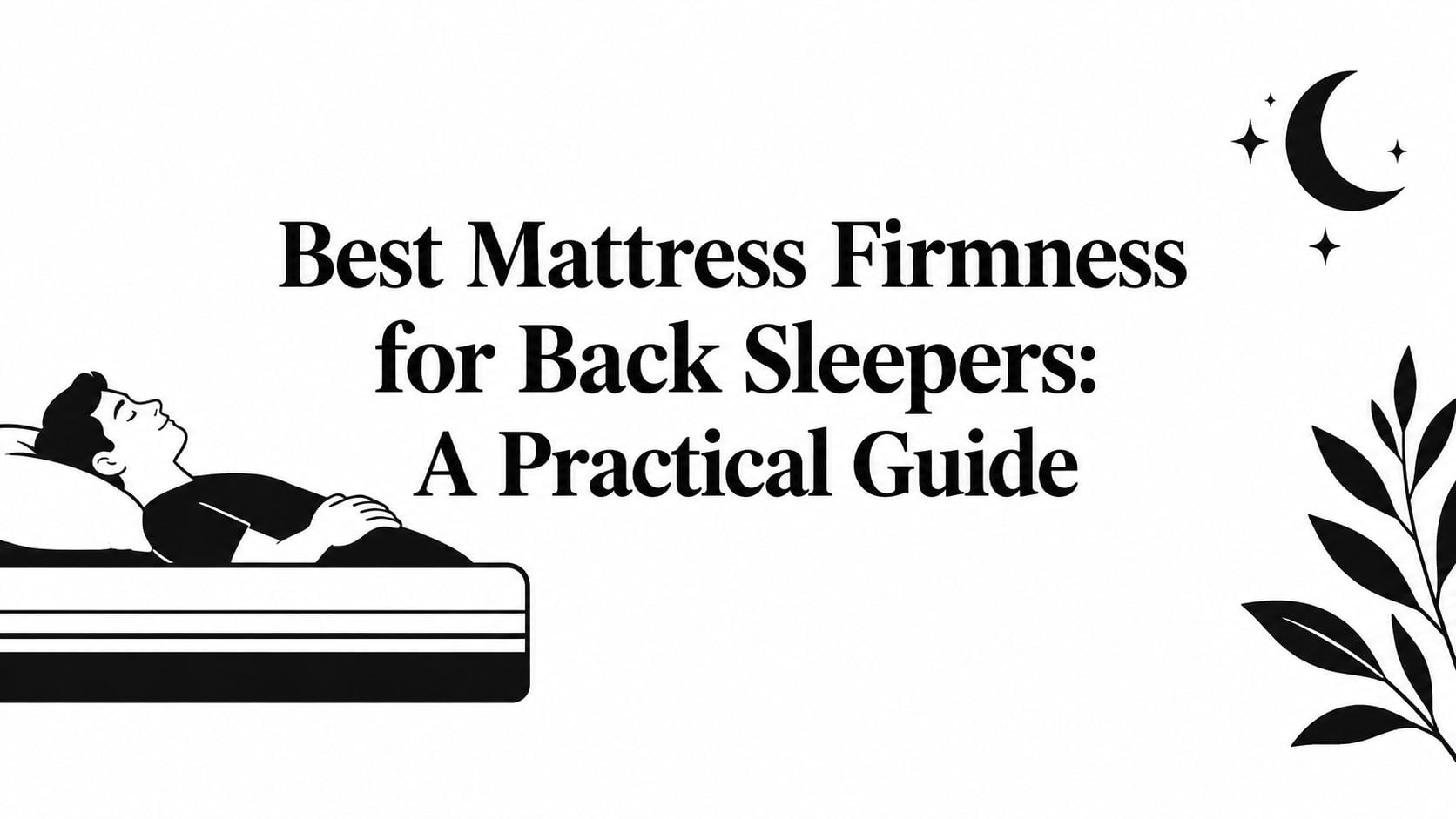
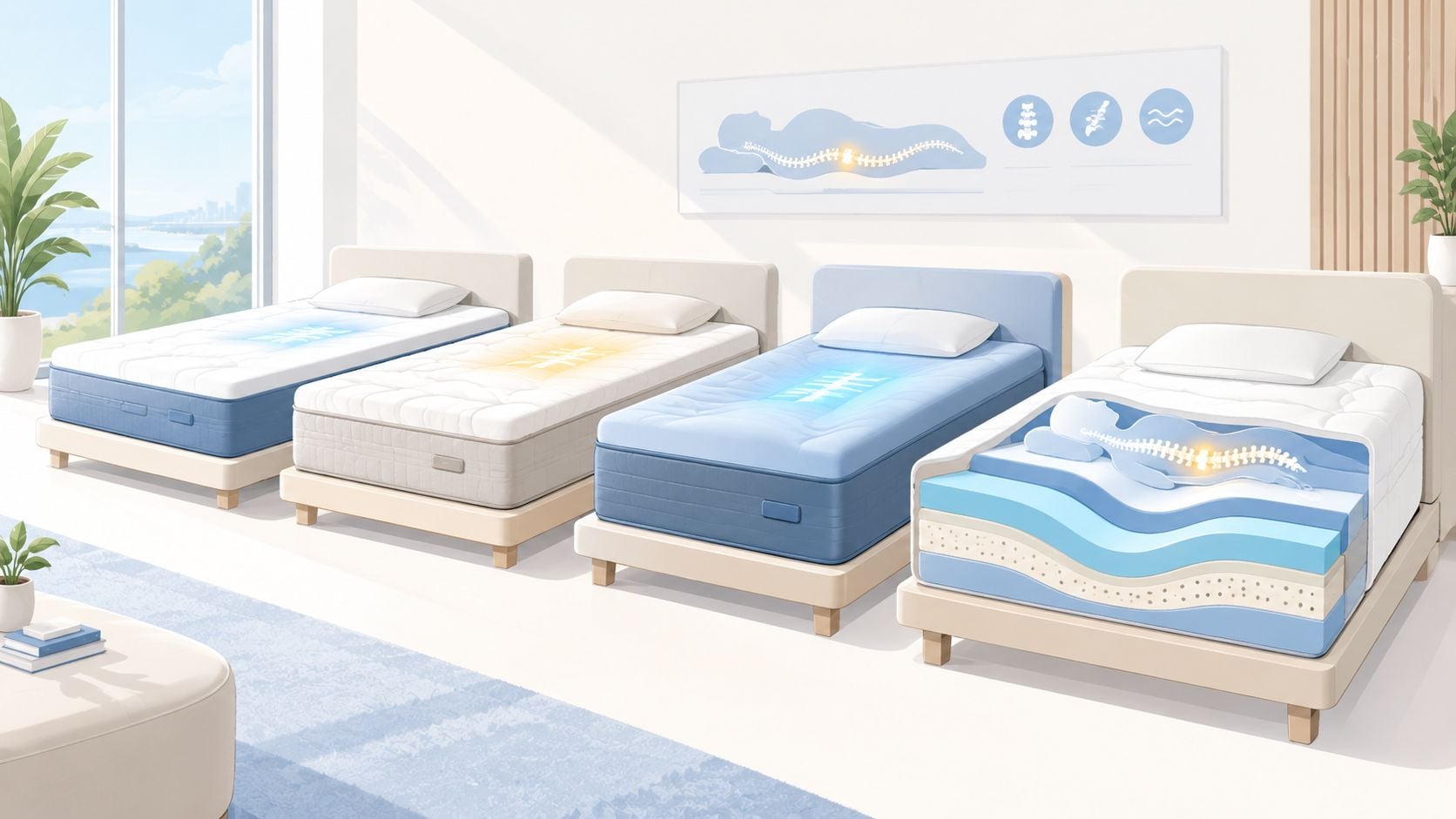
The best mattress for back sleepers with lower back pain isn't automatically the firmest mattress in the showroom. For most adults, the strongest starting point is a medium-firm mattress with stable support beneath the pelvis, enough cushioning for pressure points, and a feel matched to body shape, sleep temperature, and personal comfort.
| Mattress construction | Lumbar support | Pressure relief | Best fit |
|---|---|---|---|
| Memory foam | Strong when the support core prevents excessive sinkage | Excellent contouring around the hips and lower back | Back sleepers who like a close, cradling feel |
| Hybrid | Very strong, combining coil push-back with foam cushioning | Strong without feeling deeply engulfed | Sleepers wanting balance, airflow, and support |
| Latex | Strong and buoyant, with less sinking | Moderate to strong, depending on the comfort layer | Sleepers who prefer active support and easier movement |
| Traditional innerspring | Strong when paired with adequate cushioning | Moderate, depending on the top layers | Sleepers who prefer bounce, airflow, and a lifted feel |
Waking Up Without Lower Back Pain
A typical morning can follow the same frustrating pattern. The sleeper goes to bed hoping for relief, settles flat on the back, and wakes with stiffness across the belt line. After standing, walking, and loosening up, the pain may fade, only to return after another night on the same mattress.
That pattern doesn't necessarily mean back sleeping is the problem. Back sleeping can support a neutral posture, but only when the mattress fills the space beneath the lumbar curve without allowing the pelvis to sink below the rest of the body. The surface should feel supportive, not rigid, and cushioning, not hammock-like.
A useful starting point is to test whether the body feels evenly supported from the shoulders through the hips. If the lower back feels unsupported, the mattress may be too firm or too flat. If the hips feel lower than the chest, the comfort layers may be too soft for the sleeper's body.
Why online quizzes miss important details
A generic mattress quiz usually asks about sleep position and a broad firmness preference. It rarely captures how body shape changes pressure distribution, whether a sleeper runs hot in Ruidoso's dry mountain air, or whether morning stiffness comes from a worn support core rather than the original firmness.
A local consultation adds practical information. A Sleep Pro can watch how the lumbar area settles, ask where pressure develops, compare a foam feel with a coil-supported feel, and account for the seasonal cooling needs of a mountain home.
Practical rule: A mattress should be judged by the position of the hips and lower back, not by the label printed on the showroom tag.
The local family-owned mattress business serving Ruidoso, Alto, Sudderth Drive, and Lincoln County has built its reputation around in-person sleep guidance across a 70-year family legacy. That kind of conversation is more useful than choosing a bed from a screen when the primary concern is waking with pain. Readers seeking more guidance on morning stiffness can review why lower back pain may appear every morning.
The first recommendation
For most back sleepers with nonspecific lower back pain, the practical starting point is a medium-firm feel, then a careful adjustment based on body type and pressure response. The mattress should support the lumbar curve while preventing the hips from dropping too far.
Persistent, severe, or worsening pain deserves evaluation by a qualified healthcare professional. A mattress can improve sleep posture and comfort, but it isn't a substitute for medical care.
The Science of Spinal Alignment and Firmness
A back sleeper can wake with a sore lower back even when the mattress feels comfortable at bedtime. The issue is often the position of the pelvis and lumbar curve through the night, not just whether the surface feels soft or firm.
The old advice to choose the hardest possible mattress does not hold up well. A systematic review in the Journal of Orthopaedics and Traumatology found that medium-firm mattresses most consistently supported comfort, sleep quality, and spinal alignment, while also reporting a lower risk of developing low back pain in the reviewed studies. Patients with chronic low back pain generally improved more on medium-firm mattresses than on firmer surfaces. See the clinical mattress evidence review.
Why medium-firm support works
A back sleeper needs both core support and surface cushioning. The support core must resist excessive pelvic sinkage, while the comfort layers should accommodate the hips and shoulders without creating pressure.
A very firm bed can hold the pelvis up while leaving the hips and shoulders under too much load. A very soft bed may feel pleasant at first, then allow the lower abdomen and pelvis to settle too far into the surface. That changes the relationship between the pelvis and rib cage and can strain the lumbar area during a long night.
A randomized clinical study published in 2003 found that after 90 days, sleepers with chronic nonspecific low back pain had better outcomes on medium-firm mattresses than on firm mattresses for pain in bed, pain on rising, and disability. The reported odds ratios were 2.36 for pain in bed, 1.93 for pain on rising, and 2.10 for disability, as detailed in the randomized mattress study indexed by PubMed.
Medium-firm is the strongest starting point, not a universal prescription. Body habitus changes how significantly the pelvis loads the mattress. A lighter sleeper may need more surface cushioning to avoid pressure, while a heavier sleeper usually needs stronger resistance beneath the hips. Your preferred feel and sleeping posture still matter.
Understanding firmness beyond a label
Firmness labels are not standardized across brands. One company's “firm” may feel like another company's medium, so showroom testing matters more than the word on a specification sheet.
A useful consumer target is typically 5 to 7 out of 10 firmness, with the exact feel adjusted for body shape and pressure response. Guidance for back pain emphasizes stable support under the pelvis, cushioning at pressure points, and a neutral spinal position rather than maximum firmness. See the back-pain mattress guidance for back sleepers.
A more technical measure is normalized stiffness. RTINGS identifies 42 to 58 Pa/mm as the best-performing band for many people with back pain. Lower values trend softer and may permit more pelvic drop. Higher values can improve resistance but may create pressure at the hips and shoulders. The normalized stiffness guidance from RTINGS explains why measured support and personal comfort must be assessed together.
Mountain homes also make temperature part of the decision. A surface that feels supportive in a cool showroom may feel different across seasonal indoor conditions, so an in-person Sleep Pro consultation can help compare firmness, pressure, and comfort in context. Miller Waldrop's 70-year family legacy of local sleep consultations adds practical guidance beyond a label.
A simple alignment check
Lie flat and check whether your body feels level rather than folded around a dip. The lumbar area should not feel suspended, and the hips should not feel buried beneath the chest. To learn how to align your spine while sleeping on your back, use a side-view check with a companion. The shoulders, hips, and knees should appear reasonably aligned.
A small pillow under the knees may reduce strain by helping preserve the natural spinal curve, a recommendation discussed in Hospital for Special Surgery's guidance on sleep and low back pain.
Comparing Mattress Constructions for Lumbar Support
The materials inside a mattress determine how support reaches the lower back. Two mattresses with the same firmness label can feel completely different because one may use slow-moving foam, another may use buoyant latex, and a third may combine comfort foam with a coil support system.
For a back sleeper, the right construction depends on the preferred balance between pressure relief and push-back. The best choice should make position changes manageable, keep the pelvis supported, and avoid a sensation of being trapped in the surface.
Memory foam
Memory foam can contour closely around the hips and lumbar area. That close contact may distribute pressure well, especially for a sleeper who dislikes gaps beneath the lower back.
The risk is excessive sinkage. A foam mattress needs a supportive base and a comfort profile that cushions without letting the pelvis settle too low. Cooling gel, open-cell designs, and breathable covers may help manage heat, but the effect depends on the complete mattress and the sleeper's environment.
Memory foam suits a back sleeper who wants a quiet, stable surface and strong pressure relief. It may frustrate a sleeper who changes position often or prefers to feel lifted rather than enveloped.
Hybrid
A hybrid pairs a coil support system with foam or latex comfort layers. The coils provide active resistance beneath the pelvis, while the upper layers cushion the hips, shoulders, and lower back.
This construction is often a strong choice for lumbar sensitivity because it can provide both push-back and pressure relief. It also tends to feel easier to move across than foam that contours closely. For Ruidoso sleepers who need better airflow during warmer seasons, the space around coils and a breathable comfort design may be useful.
A hybrid still needs testing. A thick, soft top can undermine the benefit of a supportive coil core if the sleeper sinks too far before reaching that support.
Latex
Latex has a buoyant feel. Instead of slowly wrapping around the body like memory foam, it tends to respond quickly and keep the sleeper closer to the surface.
That responsiveness can help back sleepers who want lumbar support without a stuck sensation. Latex can also provide pressure distribution, but it usually feels less conforming than memory foam. A softer latex comfort layer may suit a lighter sleeper, while a more supportive design can provide firmer resistance for someone who needs greater stability.
Traditional innerspring
An innerspring mattress relies primarily on coils for support, with padding or foam above them. It can offer strong lift, easy movement, and good airflow, but the comfort layers matter greatly for a back sleeper with pain.
A thin, rigid top may create pressure at the hips. A thick, soft pillow top may develop impressions and allow the lumbar area to dip. The most suitable innerspring profile usually combines resilient coils with enough surface cushioning to prevent pressure buildup.
Readers comparing coil-focused options can review the guidance on an innerspring mattress for back pain.
The practical verdict
For most back sleepers with lower back pain, a medium-firm hybrid is the strongest all-around construction because it combines stable coil support with pressure-relieving comfort layers. Memory foam is the better fit for close contouring, latex for buoyant responsiveness, and an innerspring for airflow and traditional lift.
Matching Mattress Support to Your Body Type and Lifestyle
Firmness isn't experienced the same way by every sleeper. A mattress that feels medium-firm to a lighter person may feel softer to a heavier person because the body compresses the comfort layers more. Body shape, age, preferred sleep position, and thermal comfort all influence the final choice.
The latest clinical discussion emphasizes that mattress selection should be matched to the sleeper rather than treated as a one-size-fits-all decision. The updated review of mattress firmness and personal factors supports a conditional approach.
Step one, assess pelvic support
A heavier sleeper generally needs a more substantial support core to reduce the risk of hammock-like sagging. A lighter sleeper may need more responsive contouring because a rigid mattress can prevent the comfort layers from engaging.
The correct test is simple. Lie on the back long enough for the comfort layers to settle, then notice whether the pelvis feels held level with the rib cage. If the hips sink noticeably, the surface or support core is too yielding. If the lumbar area feels exposed and the hips or shoulders carry sharp pressure, the bed may be too rigid.
Step two, identify the pain pattern
Lower back pain isn't the only useful signal. A sleeper should also note:
- Hip pressure: Sharp pressure often calls for more surface cushioning.
- Lumbar gap: A pronounced unsupported space may indicate excessive firmness.
- Pelvic sinkage: A dipped midsection suggests insufficient support.
- Morning stiffness: Repeated stiffness can point to poor alignment or a worn mattress.
- Movement difficulty: A stuck sensation may favor latex or a coil-supported hybrid.
A mattress should feel stable without feeling hard. Readers can use the mattress firmness selection guidance as a starting framework, then validate the choice through in-person testing.
Step three, account for Ruidoso's climate
Ruidoso's dry mountain air brings changing seasonal comfort needs. A sleeper who feels warm under dense foam may prefer a hybrid, latex, breathable cover, or cooling gel technology. A sleeper who runs cold may appreciate a more enveloping comfort layer.
Cooling features should support, not replace, proper alignment. A bed that sleeps cool but allows the pelvis to collapse won't solve the central problem. Likewise, a highly contouring mattress may feel comfortable during a brief test but become too warm or restrictive through a full night.
Step four, test with the actual pillow
A pillow can change the angle of the neck and upper spine, which affects how the rest of the body rests. Back sleepers generally need enough support to keep the head level without forcing the chin toward the chest.
The showroom test should include the sleeper's usual pillow whenever possible. A mattress that feels perfect with a different pillow may not produce the same alignment at home.
Top Mattress Brands for Back Sleepers at Mattress Pro
The most useful brand comparison starts with support requirements, not logos. A back sleeper with lower back pain should test how each model supports the pelvis, cushions the lumbar area, controls heat, and allows easy movement.
The showroom's primary brand selection includes Tempur-Pedic, Sealy, Stearns & Foster, and Sherwood. Each can serve a different preference, but the correct model still depends on the individual sleeper's body and comfort response.
Tempur-Pedic for close contouring
Tempur-Pedic is a natural candidate for sleepers who want pressure-relieving memory foam. Its adaptive foam feel can contour around the hips and lower back, reducing the sensation of unsupported space beneath the lumbar curve.
The key test is whether the body feels cradled or buried. A back sleeper should be able to settle into the mattress without feeling that the pelvis has dropped too far. The Tempur-Pedic mattress collection can be compared in person to determine whether the contouring feel provides relief without excess heat or movement restriction.
Sealy for targeted support
Sealy models are worth testing when a sleeper wants a structured support profile with cushioning above it. Posture-focused designs are intended to provide support where the body places the greatest load, but the actual result depends on the model and the sleeper's shape.
The showroom test should focus on the lower back and pelvis. If the hips settle evenly and pressure stays comfortable, the construction may suit a back sleeper who wants a balanced feel.
Stearns & Foster for premium push-back
Stearns & Foster models can appeal to sleepers who want a more substantial, lifted sensation. Coil-based support paired with cushioning may deliver stronger push-back than an all-foam bed while still reducing pressure at the hips.
The right model shouldn't feel board-like. Luxury materials don't make a mattress automatically suitable for lower back pain, so the sleeper should spend enough time testing the lumbar area rather than judging by appearance.
Sherwood for a local showroom comparison
Sherwood adds another construction and comfort profile to the in-person comparison. A sleeper can use it to evaluate differences in surface softness, core resistance, edge stability, and movement.
A useful showroom sequence is to test a contouring foam model, a hybrid, and a coil-forward mattress in the same back-sleeping position. That side-by-side comparison makes it easier to identify whether the body needs deeper cushioning or more active support.
The Miller Waldrop Difference and Local Sleep Solutions
Choosing a mattress for chronic back discomfort carries a real fear of making the wrong decision. A bed can feel comfortable for a few minutes and still fail to support the lumbar area through a full night. That risk is harder to manage through a faceless bed-in-a-box transaction, especially when the sleeper can't compare several constructions in the same room.
A local, family-owned mattress store offers a more accountable process. The sleep consultation can address body shape, sleep position, preferred feel, temperature, budget, and the condition of the current mattress in one conversation.
Testing changes the buying decision
A back sleeper should lie on each candidate in the normal sleep position, not merely sit on the edge. The sleeper should notice whether the hips sink, whether the lower back feels supported, whether the shoulders remain relaxed, and whether changing position takes effort.
That process matters in Lincoln County, where a mattress may serve a primary residence, mountain cabin, or vacation rental. Different rooms can also have different temperatures, foundations, and usage patterns, so an in-person recommendation is more practical than a generic online result.
The Comfort Promise reduces the fear
The Comfort Promise exists to reduce the fear of choosing the wrong bed. If the sleep surface doesn't agree with the sleeper, a local adjustment path provides more reassurance than just hoping an online purchase works out.
The Low Price Promise adds another layer of confidence for budget-conscious shoppers. Full-Service Delivery with Professional Setup removes the physical burden of moving and positioning a large mattress, while helping ensure the sleep system is installed correctly at home.
Why local care matters
A 70-year family legacy means the business has served the same broader community across changing mattress technologies and shopping habits. The value isn't only in carrying recognized brands. It's in having a nearby team that can discuss comfort after the sale, rather than treating the transaction as complete when a box reaches the doorstep.
The local showroom on Sudderth Drive gives residents of Ruidoso, Alto, and surrounding Lincoln County communities a place to test support before committing. That is especially important when the purchase is intended to address morning aches.
When to Replace Your Mattress and Next Steps
The right answer may be a new mattress if the current bed no longer supports the lumbar curve. Visible sagging, increasing morning stiffness, and better sleep on another surface are strong reasons to reassess the sleep system.
Signs the mattress has worn out
Check the mattress for these practical warning signs:
- Visible depressions: A lasting dip beneath the hips can place the pelvis below the rib cage.
- Uneven support: One side may feel softer or lower than the other.
- New pressure points: Aching hips or shoulders can indicate that comfort materials have compressed.
- Repeated morning stiffness: Pain that appears after sleep but eases after movement deserves attention.
- Better comfort elsewhere: Feeling better in a guest bed or hotel bed can expose a support problem at home.
- Foundation concerns: A weak or unsuitable base can affect how the mattress supports the body.
A simple showroom plan
Bring the usual pillow, wear comfortable clothing, and test several medium-firm surfaces on the back. Spend enough time on each bed to notice the hips, lumbar area, shoulders, temperature, and ease of movement.
The best mattress for back sleepers with lower back pain should feel balanced rather than extreme. It should keep the pelvis supported, cushion pressure points, and leave the sleeper feeling stable without excessive sinkage.
A mattress can improve the sleep environment, but ongoing or serious pain should be discussed with a healthcare professional. The showroom consultation can then focus on comfort and support without making promises a mattress can't keep.
Mattress Pro by Miller Waldrop offers in-person mattress fitting, trusted brands, the Comfort Promise, the Low Price Promise, and Full-Service Delivery with Professional Setup for sleepers seeking better lumbar support. Visit Mattress Pro by Miller Waldrop at 2801 Sudderth Drive, Suite F, in Ruidoso, and test medium-firm, contouring, and hybrid options with a local Sleep Pro.