

Pocket Coil Mattress Guide: How It Works and Who It Helps


On a clear Ruidoso night, the deck lights fade, the mountain air turns crisp, and a tired body finally slips under the comforter. The next morning may bring a trail run, a ski day, a long workweek, or a full day caring for guests at a Lincoln County cabin. The mattress underneath decides whether that body wakes ready to move or stiff from spending the night fighting pressure and partner movement.
A pocket coil mattress can offer a useful middle ground. Its springs move independently, its open support core allows airflow, and its comfort layers can be adjusted for pressure relief. The guide below explains how pocket coils are engineered, which specifications deserve attention, how they compare with foam and hybrid builds, who benefits most, and how to care for the mattress over time. It also considers the realities of mountain living, including dry air, cool nights, active bodies, and vacation-rental bedrooms.
A Better Night on Sudderth Drive Starts with the Right Coil
On Sudderth Drive, a bed may serve a trail runner after a long day, a couple sharing a cabin, or guests arriving for a cool mountain night. Dry air can make bedding feel crisp, while warmer summer evenings may leave you wanting more airflow. Your hips, shoulders, and sleep partner each place different demands on the mattress.
A pocket coil mattress addresses those needs with springs that respond independently. James Marshall developed an individual pocketed-spring design around 1899 to 1900 and received a Canadian patent in 1900. Later patents followed in the United States and United Kingdom. The approach moved mattresses away from fully interconnected springs, allowing each coil to react more locally and supporting the motion control and pressure relief associated with modern pocket-coil designs. The first nationally distributed commercial version reached the market in 1925 after licensing Marshall's technology. The history is documented in the original pocketed-spring patent.

Five useful takeaways for shoppers
- Construction: Each spring sits in its own fabric pocket, so one sleeper's movement does not pull an entire spring network along with it.
- Specifications: Coil count helps, but gauge, height, zoning, and edge reinforcement also shape support and durability.
- Comparisons: Pocket coils generally limit motion better than traditional connected springs. Foam and hybrid designs change the balance of contouring, airflow, and bounce.
- Best matches: Couples, combination sleepers, hot sleepers, active bodies, and many guest-room setups may benefit from the design.
- Care: A supportive foundation, regular rotation, a protector, and attention to body impressions can help preserve the mattress.
A bed-in-a-box site cannot feel how your shoulder meets the surface, observe how your spine settles, or inspect a cabin's stairs and foundation. A local Sleep Pro can assess those details with you in person. Mattress Pro's Comfort Promise also gives you a practical way to reduce the risk of choosing a mattress that does not suit your body or room.
How a Pocket Coil Mattress Is Actually Built
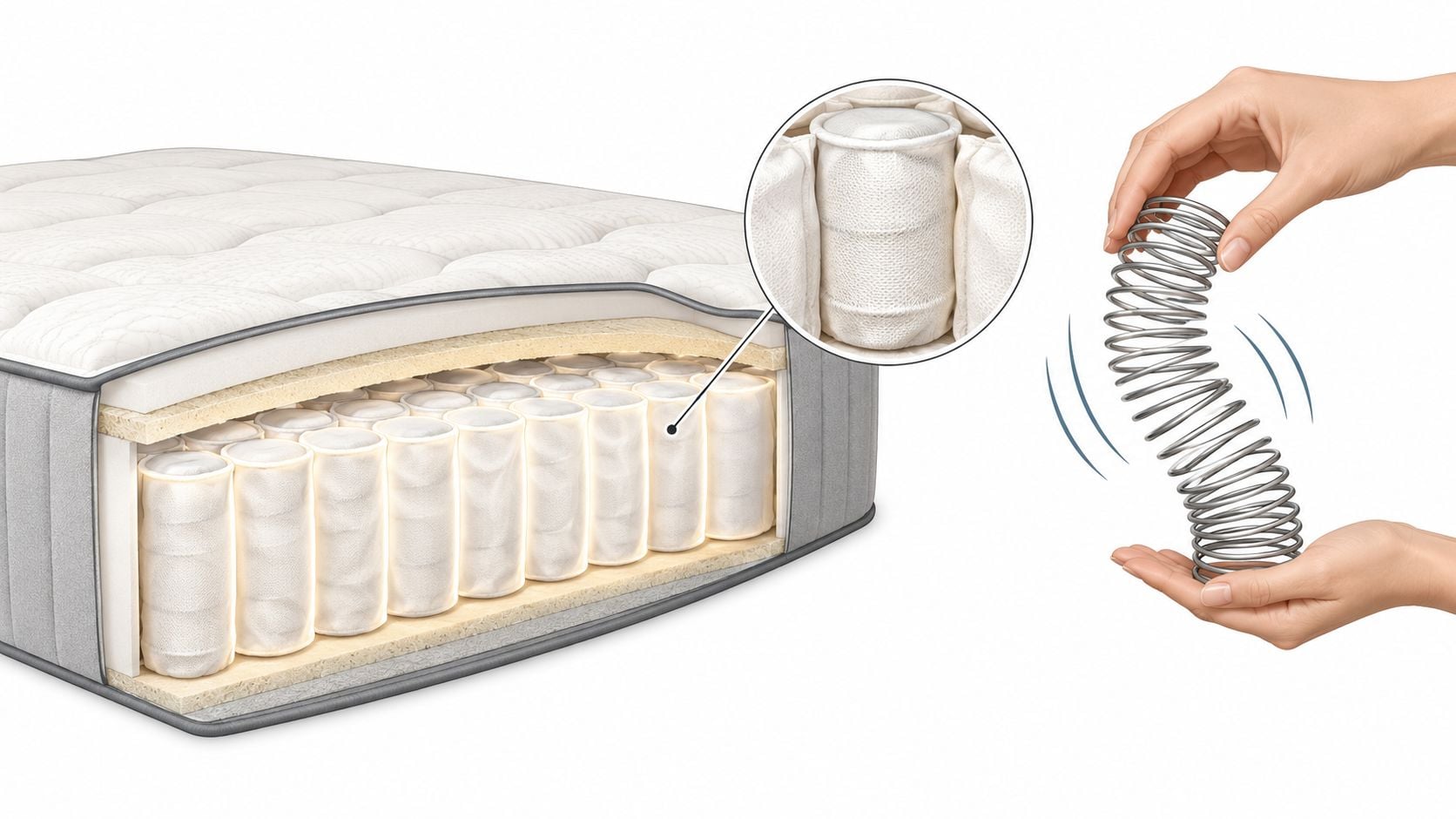
The easiest analogy is a row of miniature slinkies, each placed inside its own fabric sock. When a shoulder presses down, the nearby coils compress. The coils under the waist and legs don't have to collapse with them, so the mattress can follow the body's shape instead of behaving like one large metal sheet.
The support core, step by step
- Individual springs: Steel coils form the main support unit. Mattress makers can vary the number of coils, wire thickness, height, and arrangement to change the response.
- Fabric pockets: Each spring sits inside a non-woven fabric or fabric blend pocket. The material holds the coil in position and limits direct metal-to-metal contact.
- Pocket connections: Manufacturers attach neighboring pockets near the top and bottom, often with adhesive or stitching. The pockets stay organized, but the springs retain individual movement.
- Comfort layers: Foam, latex, or microcoils sit above the support unit. These upper materials create the first-contact feel, cushion the shoulders, and shape how quickly the sleeper feels the support core.
The pockets don't make every mattress feel soft. Firmness still depends on the coil wire, the arrangement, the comfort layers, and the foundation underneath. A helpful pocketed coil mattress comparison can clarify how construction changes the experience.
Why connected coils feel different
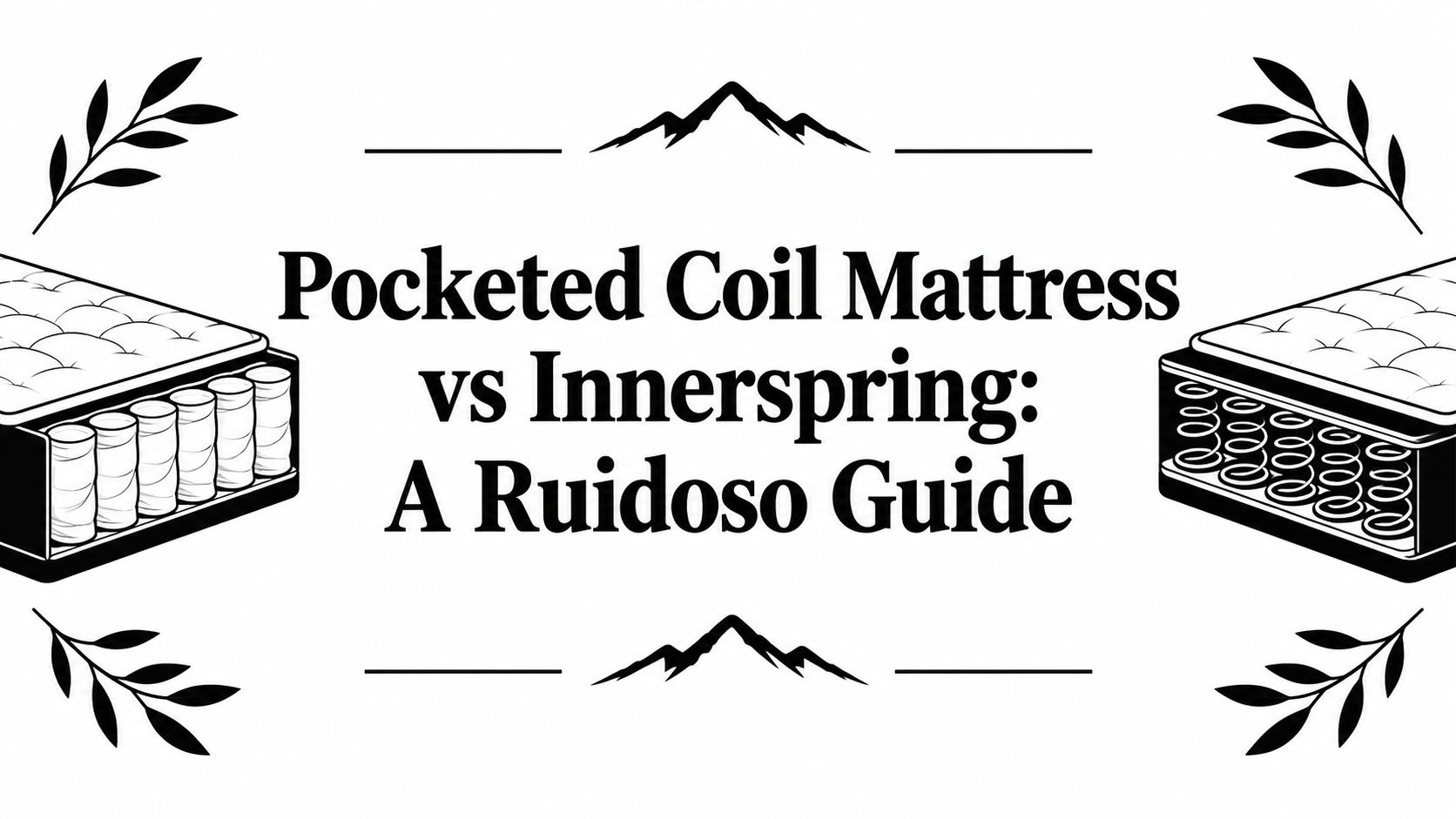
Traditional Bonnell coils use hourglass-shaped springs wired together. When one section compresses, neighboring sections receive more of that movement. Continuous-coil systems use a single length of wire shaped into rows, creating another connected structure.
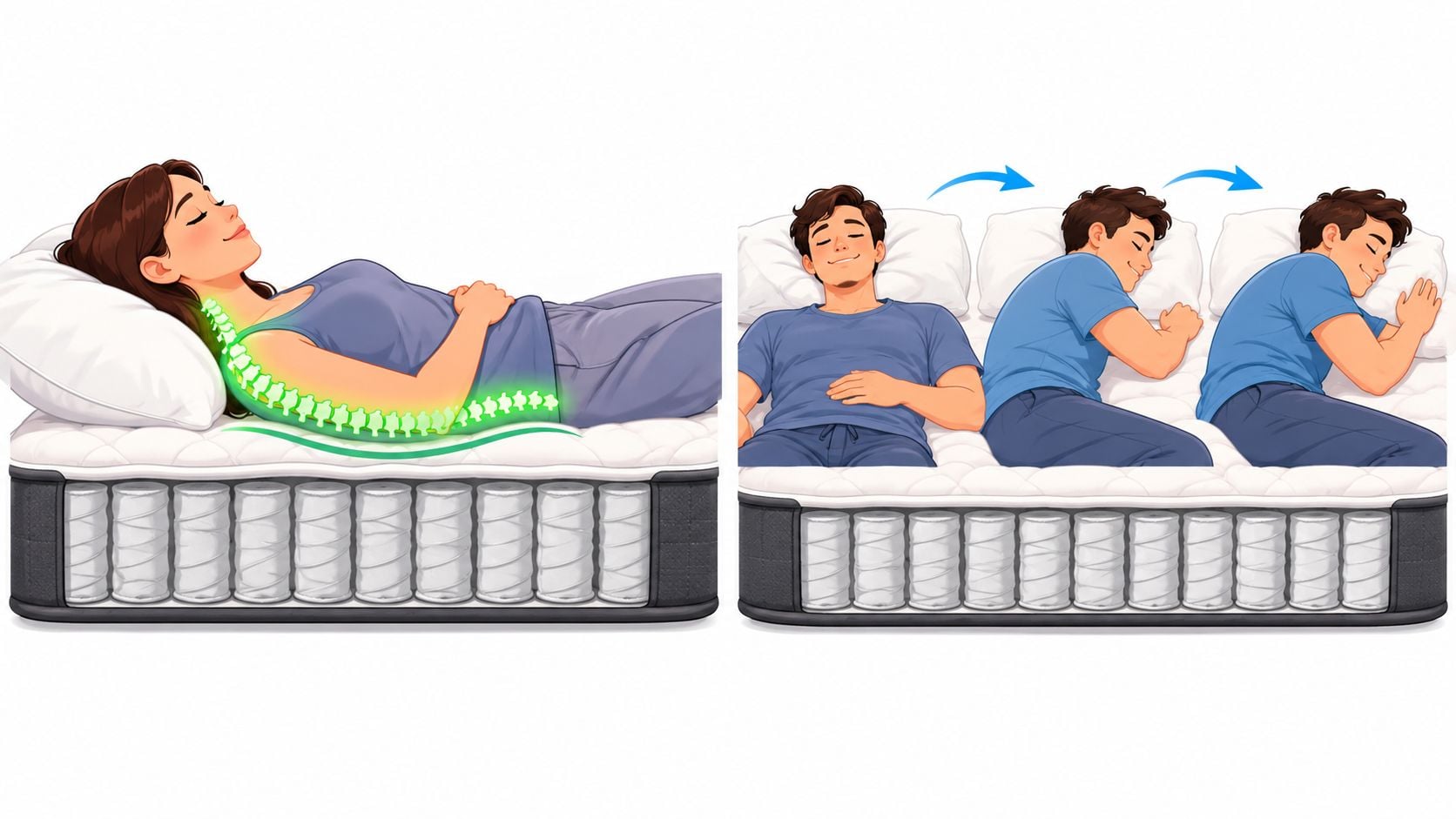
A pocket coil mattress separates those reactions. A shoulder can sink farther than a lower leg, and a hip can receive stronger support without forcing the opposite side of the bed to move. That independent response supports more targeted pressure relief and can help a sleeper maintain a more neutral spinal position.
Practical rule: The coil unit provides the responsive foundation, but the comfort layers determine how gently the body meets it.
For couples, this distinction matters at two in the morning. A partner's turn still creates some movement, but the motion has less opportunity to ripple across the entire surface than it does with a fully linked spring system.
The Specs That Actually Matter When You Shop
A coil count printed on a tag can sound impressive, but it shouldn't make the entire buying decision. Industry specifications describe pocket-coil systems across a broad range of roughly 400 to 2,000 or more coils, with steel commonly spanning 12 to 18 gauge and designs using single or multiple zones. The mattress material specification guide explains why those variables work together.
Reading the important numbers
Coil count indicates how many independent load-bearing points the unit contains. A higher count can create a more finely distributed response, but the number only means something alongside coil size, wire thickness, and construction quality. A queen-size or hybrid mattress can contain 400 to 1,200 total coils, while pocket-sprung designs are often described as having around 1,000 or more, according to this mattress coil construction guide.
Gauge works in reverse. A lower gauge number means thicker, firmer wire. A higher gauge number means thinner wire with more flex. A firm lumbar area may use stronger wire, while a plush comfort zone may use a more flexible specification.
Zoning changes support by body region. Firmer coils under the hips and lower back can help maintain alignment, while softer sections under the shoulders and legs allow more cushioning. Three-zone and five-zone arrangements can feel different even when their total coil counts look similar.
Quick reference for shoppers
| Spec | Typical Range | What It Means for You |
|---|---|---|
| Coil count | Roughly 400 to 2,000 or more, depending on build | More independent points can refine response, but count alone doesn't establish quality |
| Steel gauge | 12 to 18 gauge | Lower numbers generally indicate thicker, firmer wire |
| Coil layout | Single-zone or multi-zone | Zoning can add support beneath the lumbar area and cushioning beneath the shoulders |
| Coil height | Varies by design | Taller units can provide more room to flex, depending on the comfort stack |
| Edge support | Reinforced coils or foam rails | Helps stabilize the perimeter and reduce roll-off |
| Comfort layers | Foam, latex, or microcoils | Determines surface pressure relief, contour, and initial firmness |
A real catalog example listed a queen unit with 800 density and 660 actual coils, while a king unit reached 1,029 density and 870 actual coils. The same example specified 24 springs per square foot, 91 feet of steel per square foot, an 8-inch coil height, and wire gauges from 15.5 for plush coils to 13.75 for firm coils and 13.5 for edge support. Those figures appear in this mattress construction guide.
Shoppers should also inspect the foam above the coils. A mattress thickness guide, such as this mattress thickness resource, can help explain how the overall stack affects support. Certification such as CertiPUR-US may also matter to buyers evaluating the comfort materials.
For a back or side sleeper weighing 130 to 230 pounds, a practical starting point is a medium to medium-firm feel, a supportive lumbar zone, and enough shoulder cushioning to prevent pressure buildup. Those are starting criteria, not a guarantee, because body shape and sleep position influence the result.
Pocket Coil vs Memory Foam vs Hybrid and Traditional Innerspring
No mattress construction wins every category. A shopper choosing between a pocket coil mattress, memory foam, a hybrid, and a traditional innerspring is really deciding which trade-offs matter most during the night.
Comparison at a glance
| Build Type | Motion Isolation | Cooling | Contouring | Bounce | Price Tier |
|---|---|---|---|---|---|
| Pocket coil | Better than connected coils, though not absolute | Good airflow through the spring core | Moderate to strong, depending on layers and zoning | Responsive | Mid to premium |
| Memory foam | Usually strongest | Can feel warmer, though cooling materials may change the experience | Deep and close-fitting | Low | Budget to premium |
| Hybrid | Strong, depending on foam and coil design | Often balanced through coils and breathable layers | Moderate to deep | Moderate | Mid to premium |
| Traditional innerspring | More motion transfer | Good airflow | Limited to moderate | High | Budget to mid |
Memory foam excels at close contouring and pressure-point relief. It can cradle the hips and shoulders, helping reduce concentrated pressure, but some sleepers dislike the slower response or warmer feel. Cooling gel technology and breathable covers may change the surface experience, yet the dense foam structure can still feel less airy than an open coil core.
Traditional innerspring designs, including Bonnell and continuous-coil systems, offer familiar bounce and easy movement. They can suit budget-focused shoppers who prefer a firmer, more buoyant surface, but connected springs generally transmit more movement and don't adapt to separate body zones as precisely.
Hybrids place pocketed coils beneath foam, latex, or another comfort material. This arrangement combines the responsive airflow of a spring core with the pressure relief of an upper layer. The exact balance depends on the thickness and feel of the comfort materials, not merely the word “hybrid.” A clear innerspring versus memory foam comparison can help shoppers sort through those differences.
Pocket coils sit between the other categories. They provide more targeted support and better motion control than linked springs, more airflow than a dense all-foam mattress, and a livelier feel than a tightly contouring foam build. The sacrifice is equally important: a plain pocket coil mattress may not isolate motion as completely as all-foam, and it may not cushion pressure as thoroughly unless the upper layers are well matched.
Who Really Benefits from a Pocket Coil Mattress
A pocket coil mattress makes the most sense when a sleeper wants support that reacts to the body without creating the fully enveloping feeling of thick foam. The construction is especially useful for people whose sleep needs change across the night.
Couples with different sleep habits
If one partner turns at two in the morning, independent coils can limit how far that movement travels. The design won't eliminate all disturbance, but it usually creates less bed-wide reaction than connected springs. A suitable comfort layer can further soften the feel at the surface.
Back and combination sleepers
Back sleepers often need steady support beneath the lumbar area without a hard, flat sensation. Combination sleepers need enough responsiveness to move from back to side without feeling trapped. Zoned coils and a balanced comfort layer can support both needs, although a personal test remains important.
Hot sleepers in mountain seasons
Ruidoso's dry climate and cool nights don't remove the need for summer airflow. Coils leave open space inside the support core, so heat can move more freely than it does through a dense foam structure. The cover and comfort layers still influence temperature, but the spring core gives the mattress a useful ventilation advantage.
Active bodies and guest bedrooms
After hiking, biking, skiing, or a long day on the mountain, sore shoulders and hips need cushioning while the spine still needs a level support path. Zoned pocket coils can let lighter areas sink while reinforcing heavier regions. A mattress guide for side sleepers can help identify whether the shoulder zone and surface comfort are adequate.
For a vacation rental in Alto or elsewhere in Lincoln County, a pocket coil design may offer a forgiving balance for guests with different sizes and sleep positions. A medium comfort feel, stable edges, and a supportive foundation can make the room more broadly usable than a highly specialized mattress.
Who may prefer another build
A sleeper seeking maximum motion isolation may prefer all-foam. Someone who wants pronounced bounce may prefer a traditional innerspring. A person with significant pressure sensitivity may need a thicker contouring layer or a more customised feel than a basic pocket coil unit provides.
The useful question isn't whether pocket coils are universally superior. It's whether their combination of independence, airflow, response, and zoning matches the way a particular person sleeps.
Care Rotation and When to Replace Your Mattress
A well-built support core still needs a suitable foundation and ordinary care. A practical routine can help a pocket coil mattress remain comfortable, but warranty coverage depends on the manufacturer's exact terms.
A simple care routine
- Rotate the mattress: Turn it head-to-foot every three to six months when the manufacturer permits rotation. This spreads repeated pressure instead of concentrating it in one sleeping area.
- Use the right base: A slatted foundation should keep gaps within the maker's stated limit. One current guide notes that gaps commonly need to stay around 7 centimeters or less, while another practical target is gaps under three inches, so the product instructions should control. See the mattress rotation guide before moving the bed.
- Protect the surface: A breathable protector helps block dust and moisture without adding a heavy barrier that changes the feel.
- Refresh the bed: Vacuum the surface seasonally and air the mattress when the sheets come off. Ruidoso's dry mountain air can carry dust into a cabin bedroom, even when the room looks clean.
Reading warranty language
Warranty thresholds often distinguish normal softening from a covered defect. Some guidance identifies body impressions around 1.5 inches as a common claim threshold, while other coverage discusses thresholds between three-quarters of an inch and 1.5 inches. The written warranty for the exact mattress should be checked before a claim is filed.
A foundation that allows excessive flex can cause sagging and may limit coverage. Coil breakage outside normal use may also receive different treatment from ordinary comfort changes. Keeping the receipt, warranty, foundation details, and photographs of a visible impression can make a future conversation clearer.
Signs the mattress is finished
There isn't one replacement date that fits every sleeper. Many shoppers use a practical range of seven to ten years, while heavier bodies or people managing chronic pain may need to reassess sooner. Those figures should be treated as a planning guide, not a promise of service life.
Replace the mattress when it produces new morning stiffness, visible sagging, repeated partner-roll disturbance, or pressure that wasn't present when the bed was new. If the foundation is sound and the comfort layers have clearly softened, the mattress may have reached the end of its useful support even if the coils haven't visibly broken.
Shopping in Ruidoso with the Sleep Pros at Mattress Pro
A local mattress test should answer practical questions, not just produce a quick first impression. Before visiting a showroom on Sudderth Drive, shoppers can measure the bed frame, bedroom entrance, hallway, and any tight staircase. This matters even more for a cabin near Alto or another mountain property where delivery access may be narrow.
A useful showroom checklist
- Measure the route: Confirm that the mattress size fits the frame and can pass through the doorway.
- Test several feels: Lie down on three comfort levels for at least ten minutes each. A short sit on the edge doesn't reveal how the shoulders, hips, and lumbar area settle.
- Read the specification tag: Ask about coil count, wire gauge, zoning, edge support, and comfort-layer materials.
- Match the zones: A side sleeper should check shoulder cushioning, while a back sleeper should pay attention to lumbar support and whether the hips sink too far.
- Confirm the foundation: Ask whether the current frame meets the mattress maker's support requirements before arranging delivery.
Mattress Pro by Miller Waldrop uses a one-on-one consultation to connect body type, sleep position, comfort preference, and budget with an appropriate mattress. The Comfort Promise addresses the fear of choosing the wrong feel, while the Low Price Promise helps protect the purchase from unnecessary overspending. Flexible financing through Synchrony may also make the payment plan more manageable for qualifying shoppers.
The store's Full-Service Delivery with Professional Setup serves Ruidoso, Alto, Capitan, and Cloudcroft. That service can remove the strain of hauling a heavy mattress up mountain stairs, positioning it on the correct foundation, and managing the old setup. The showroom carries sleep systems from Tempur-Pedic, Sealy, Stearns & Foster, and Sherwood, giving shoppers several construction and comfort approaches to test.
A quieter weekday visit often gives a Sleep Pro more time to assess a shopper's position, explain the coil unit, and compare options without rushing. That personal attention is one practical difference between local guidance and ordering a sealed mattress from a website that can't observe the fit in person.
Mattress Pro by Miller Waldrop can help Ruidoso and Lincoln County sleepers compare pocket coil, foam, and hybrid designs with the right foundation and comfort level in mind. Visit Mattress Pro by Miller Waldrop at 2801 Sudderth Drive, Suite F, Ruidoso, and use the Comfort Promise, Low Price Promise, and Full-Service Delivery with Professional Setup to make the move toward better sleep easier.