

Best Innerspring Mattress for Side Sleepers

You wake up in Ruidoso after another night on your side, and the pattern is familiar: a numb shoulder, a tender hip, or a low back that feels as though it spent the night twisting around a ridge. The mattress may still look fine, but its surface is telling a different story. If the coils push too hard against the shoulder and hip, or if the comfort layers let the midsection sink too far, sleep becomes a nightly compromise.
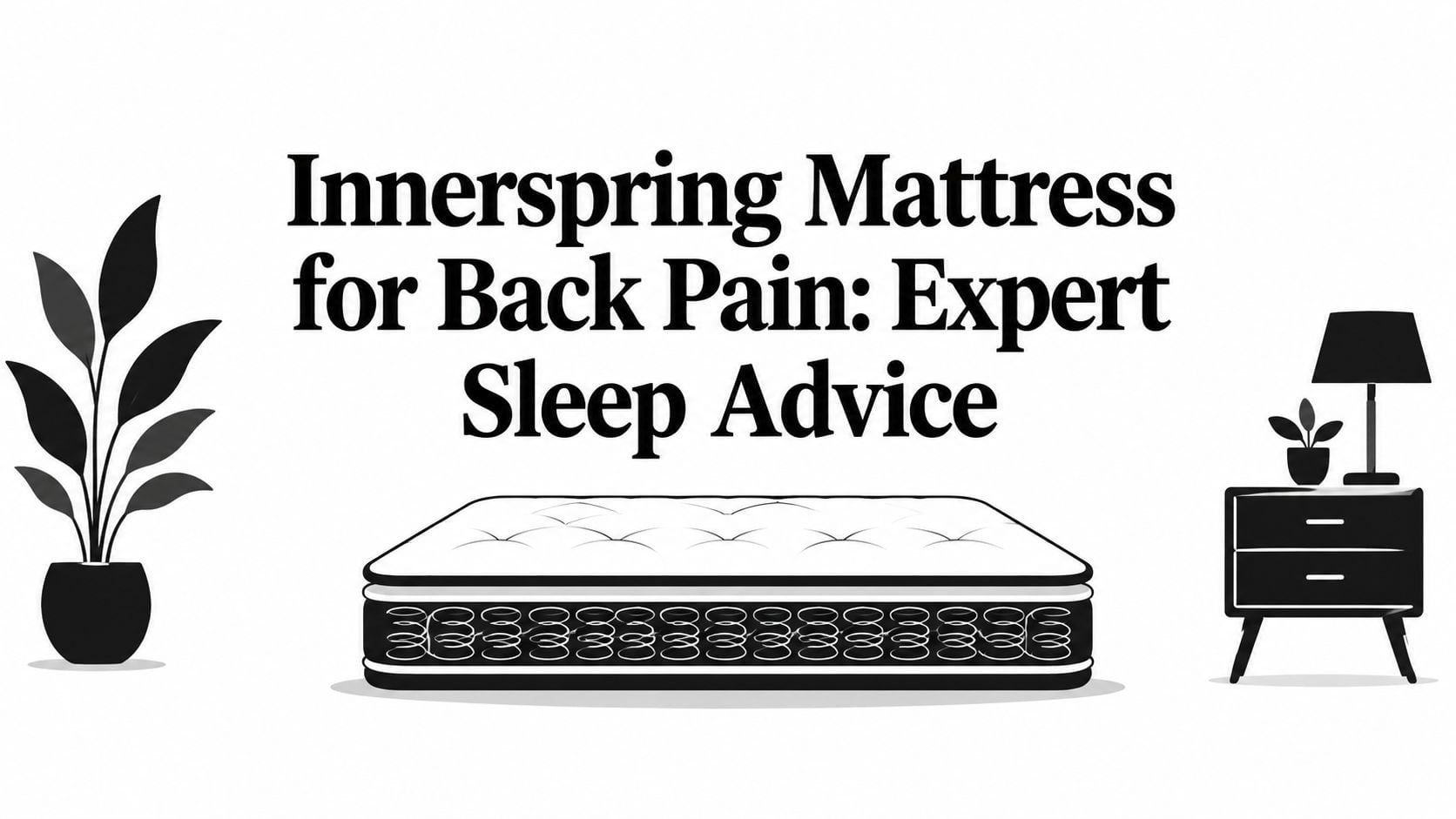
The best innerspring mattress for side sleepers isn't just the firmest model or the one with the most springs. It needs the right combination of individually responsive coils, targeted support, and substantial cushioning. That distinction matters in Ruidoso and throughout Lincoln County, where a mattress must also feel comfortable through cool mountain nights and dry indoor air.
| What to evaluate | Best direction for a side sleeper | Why it matters |
|---|---|---|
| Coil architecture | Pocketed coils, preferably with zoning | Independent movement can better follow the shoulder and hip |
| Comfort layer | Pillow top, foam, latex, or mini-coils | Cushions pressure points before the body reaches the springs |
| Firmness | Medium-firm or softer, matched to body weight | Balances contouring with spinal support |
| Coil gauge | Thicker wire where stronger support is needed | Lower gauge numbers indicate thicker, firmer wire |
| Testing method | Lie on the side in a showroom | Pressure relief can't be judged reliably from a label alone |
Why Side Sleepers Struggle on Traditional Innersprings
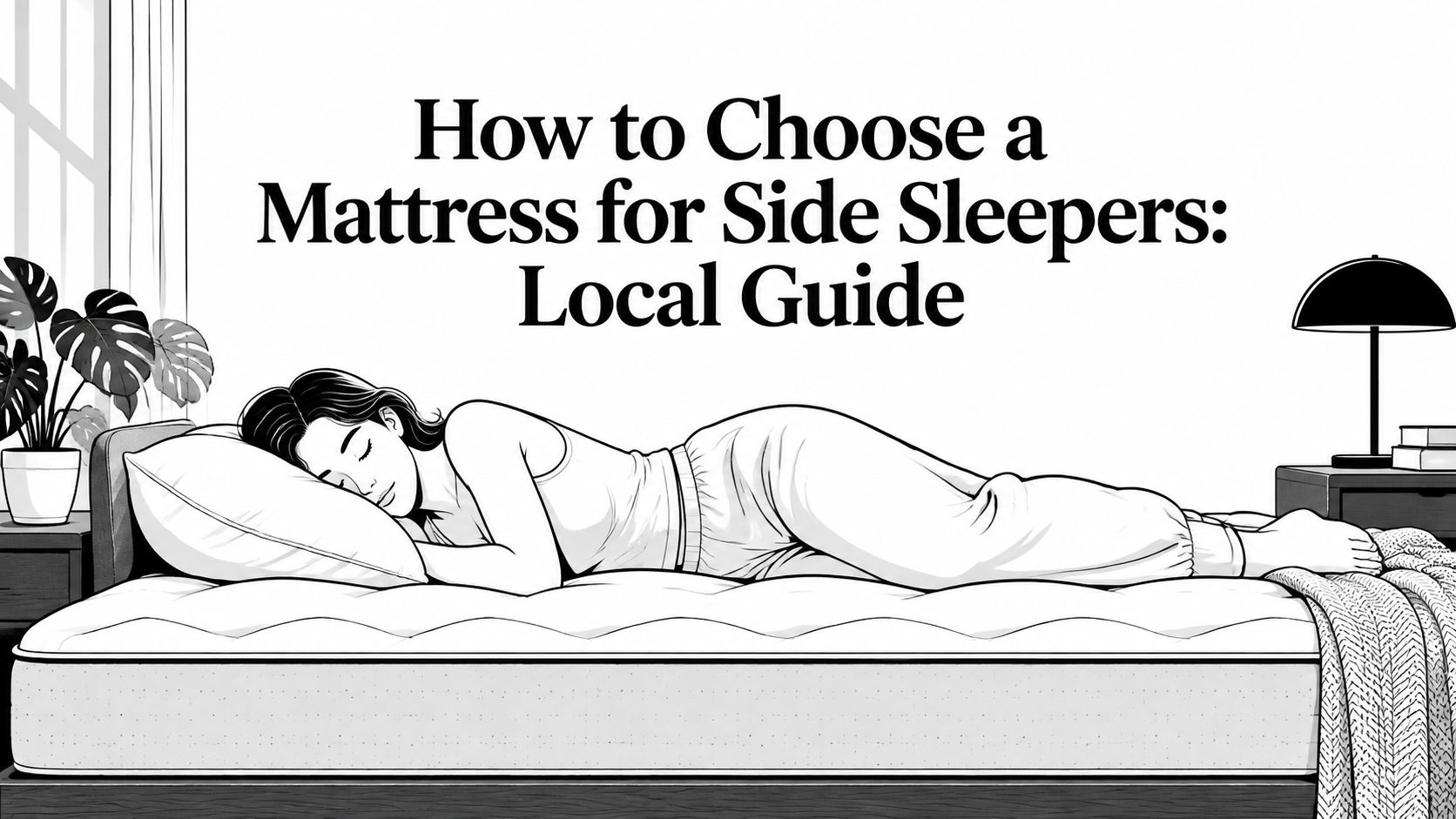
A side sleeper often knows within minutes whether a mattress is wrong. The shoulder feels compressed, the hip carries too much load, and the neck or waist may angle away from a neutral line. By morning, the sleeper may blame the pillow, soreness, or a restless night, when the actual issue is the mattress surface resisting the body's natural curves.
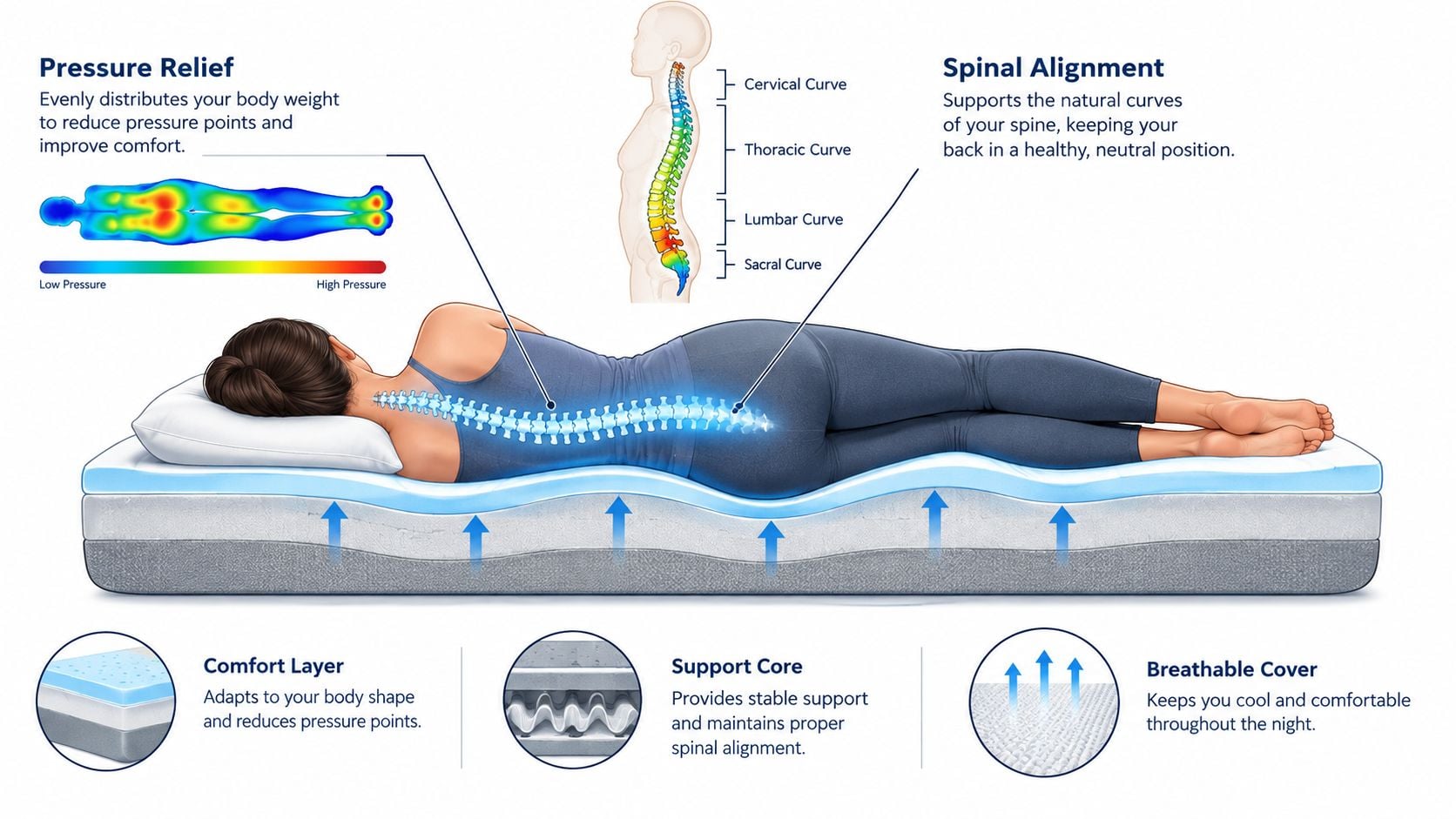
Side sleeping concentrates pressure at the shoulder and hip, the body's wider contact points. A traditional interconnected coil unit can respond like a single stiff platform. Instead of yielding beneath the shoulder while supporting the waist, it may push back uniformly. That creates a harsh pressure point at one joint and insufficient support somewhere else.
The firm-support mistake
Firm support isn't automatically healthy support. A bed can feel sturdy underneath and still be too unyielding at the surface. Side sleepers need the mattress to provide targeted give above dependable support, not a flat, rigid feel from top to bottom.
Traditional Bonnell coils remain an older, more interconnected construction commonly associated with lower-priced mattresses. That design can offer a familiar springy feel, but it doesn't isolate movement or adapt to each curve as precisely as individually wrapped coils. The result is often a mattress that feels acceptable when sitting down, yet uncomfortable after several hours on one side.
Practical rule: A side sleeper should feel the shoulder and hip settle into the comfort layer, not press directly into the support unit.
A useful comparison of constructions appears in this guide to innerspring versus memory foam mattresses. Memory foam can contour closely, while a well-designed innerspring or hybrid can add easier movement and airflow. Neither category wins by name alone. The construction has to keep the spine supported while reducing pressure where the body meets the bed.
The Engineering Behind Pressure Relief and Spinal Alignment
The modern innerspring mattress developed through a meaningful change in coil design. Heinrich Westphal patented a coil-spring mattress construction in Germany in 1871, while James Marshall's individually wrapped pocketed coils emerged around 1899 to 1900, shifting mattress design toward more independent movement and contouring. The historical record of mattress construction helps explain why current side-sleeper recommendations usually favor pocketed coils over traditional Bonnell systems.
Why pocketed coils respond differently
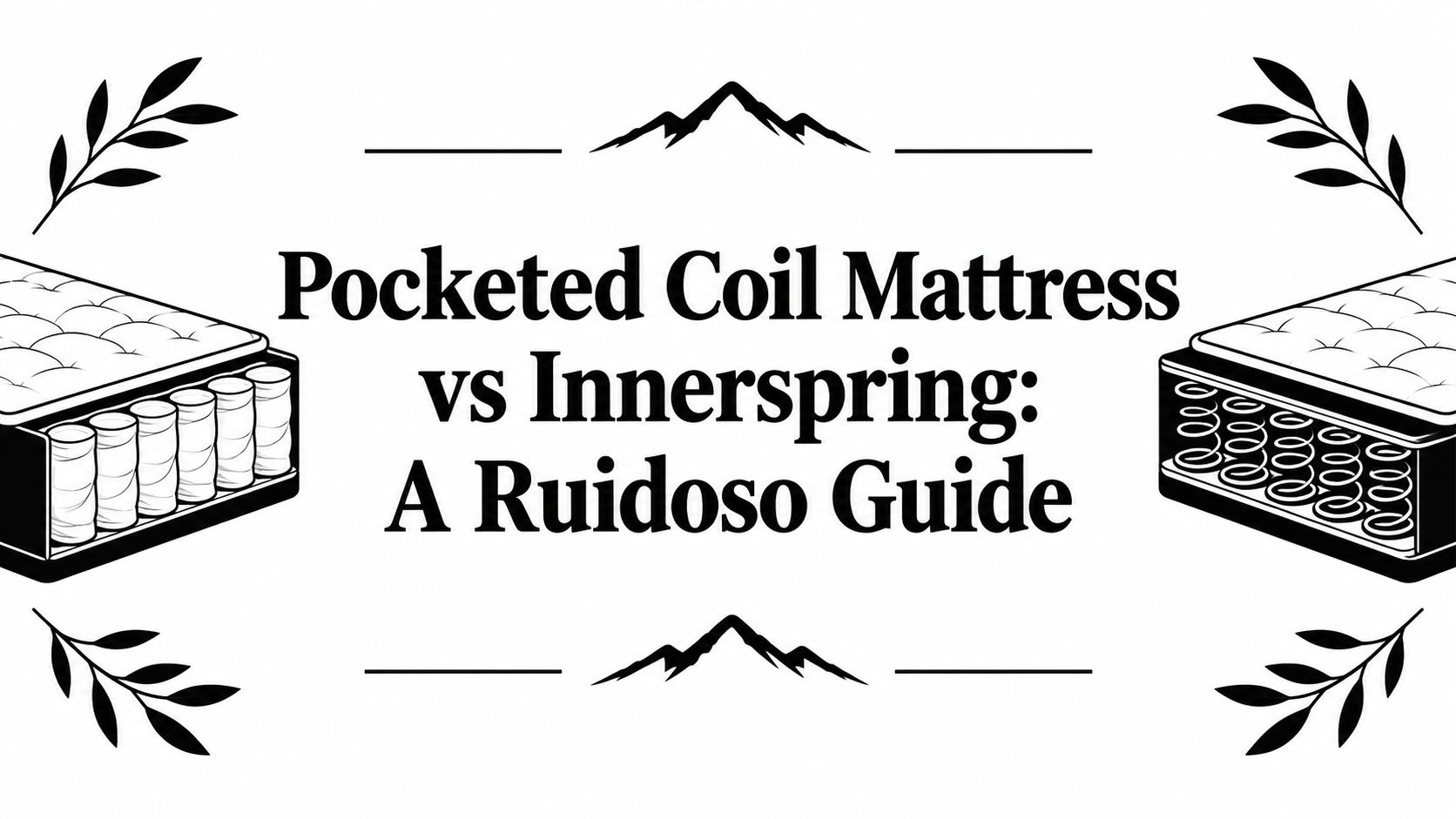
Each pocketed coil can compress with less direct interference from the coils around it. Under a side sleeper's shoulder, that means the spring unit can yield locally. Under the lumbar region, neighboring coils can provide firmer resistance and reduce the risk of the waist dropping into an unsupported position.
That independent response also helps reduce motion transfer between partners. For shoulder and hip discomfort, it gives the upper comfort layers a stable but adaptable foundation. A shopper comparing designs can use this pocket-coil mattress guide to understand why spring count alone doesn't tell the full story.
Historical market data also shows how important innerspring construction has been. Innerspring beds remained the dominant mattress type in the United States into the 2010s, with the U.S. International Trade Commission cited as reporting 84% of unit shipments in 2012. That history doesn't make every traditional model suitable for a side sleeper, but it does show why coil engineering remains central to mattress design.
Reading coil count and gauge
Industry testing notes that better-quality models often use around 800 or more pocketed coils, while less expensive builds may use around 500 or fewer. Wirecutter's innerspring testing guidance also explains that higher coil counts can improve curve-conforming pressure relief, although the comfort layers and coil arrangement still matter.
Coil gauge describes wire thickness. A lower gauge number means thicker wire and firmer support. Most innerspring coils fall between 12.5 and 17 gauge, so a shopper should interpret gauge alongside zoning and cushioning rather than treating one number as a complete quality rating.
Zoning creates a more deliberate response:
- Center support: Firmer 14-gauge coils can reinforce the hip and lumbar zone.
- Shoulder accommodation: Softer 15-gauge or 16-gauge coils can allow more surface give.
- Perimeter stability: The edge can use a supportive arrangement that makes the usable sleep area feel steadier.
For a side sleeper, this is the mechanical target: softer where the shoulder needs room, stronger where the center of the body needs restraint.
The Comfort Layer Gap That Ruins Side Sleeper Support
The coil unit doesn't do all the work. A mattress can contain well-designed pocketed springs and still cause shoulder pain if a thin quilted cover leaves the body too close to the coils. Traditional innersprings are often firmer and use thinner cushioning, so the comfort-layer design determines whether the spring system feels supportive or punishing.
A pillow top, foam layer, latex layer, or mini-coil comfort system creates the transition between the body and the support core. It spreads pressure across a broader area, lets the shoulder settle, and prevents the hip from meeting a hard spring response too quickly. Without that buffer, the mattress may feel lively and supportive when first tested, then become uncomfortable after sustained side sleeping.
Soft at first doesn't mean pressure relieving
A surface can feel plush for the first few minutes and still lack meaningful support underneath. The better test is whether the comfort layer cushions the shoulder and hip while the waist remains supported. If the body feels suspended evenly rather than folded around a deep indentation, the mattress is doing more useful work.
Look for these construction clues:
- Substantial cushioning: A thicker comfort system should be present above the coils.
- Responsive foam: Memory foam can relieve pressure by conforming around the shoulder and hip.
- Cooling materials: Cooling gel technology and breathable construction can help manage warmth without abandoning contouring.
- Mini-coils: A minicoil layer can add a more responsive transition and reinforce pressure relief.
Ruidoso's dry mountain air can make temperature management especially noticeable. Breathable materials and airflow through a coil core may suit sleepers who like cushioning but don't want a dense, heat-retaining sensation.
Pillow top versus a thin quilt
A pillow top isn't merely decoration. It can provide the extra surface adaptation a side sleeper needs, particularly when the underlying innerspring system feels firm. The comparison in pillow-top versus regular mattresses can help shoppers distinguish visible softness from a properly engineered comfort layer.
Testing confirms the difference. The Saatva Classic's pocketed minicoils earned a 4.3 out of 5 pain-and-pressure score, with testing noting particular usefulness for side sleepers who need more relief at the hips and shoulders. Mattress Nerd's side-sleeper testing also reported an overall 8.2 pressure-relief score for the Serta Perfect Sleeper Innerspring, with conformity improving as load increased.
Comparing Premium Innerspring Brands for Side Sleepers
A premium brand still needs to match the sleeper's body and preferences. The most useful comparison looks at how each design combines spring response, zoning, edge stability, and surface cushioning. Tempur-Pedic, Sealy, Stearns & Foster, and Sherwood each give shoppers different ways to approach pressure relief and support.
| Brand | Coil technology | Comfort layer focus | Best for |
|---|---|---|---|
| Tempur-Pedic | Hybrid coil support paired with adaptive materials | Close contouring and pressure response | Side sleepers who want a more conforming feel |
| Sealy | Targeted support construction with responsive comfort materials | Pressure relief with practical support | Sleepers seeking balanced cushioning |
| Stearns & Foster | Premium spring support with substantial upper comfort | Deep contouring and refined surface feel | Side sleepers who prefer a luxury, cushioned finish |
| Sherwood | Traditional and hybrid-oriented spring options | Familiar spring response with added surface comfort | Shoppers who want responsive support and choice |
Tempur-Pedic and Sealy
Tempur-Pedic is a sensible direction for side sleepers who prioritize a close, adaptive feel. Its hybrid approach can combine pressure-relieving material with coil responsiveness, giving the shoulder and hip more contour while preserving easier movement than a tightly enveloping all-foam surface.
Sealy is often the more balanced path for shoppers who want cushioning without losing a stable, familiar mattress feel. The critical question isn't the logo. It's whether the specific model provides enough upper-layer give and whether the center support keeps the pelvis from sinking too much.
Stearns & Foster and Sherwood
Stearns & Foster suits the shopper who wants a more luxurious surface, substantial comfort, and a strong support foundation. A side sleeper should still check whether the upper layers soften the shoulder zone enough. More firmness underneath can work when the comfort system does its job.
Sherwood deserves attention from shoppers who prefer a responsive spring feel and want to compare traditional and updated constructions. The right choice depends on whether the selected model uses adequate cushioning and whether its coil arrangement feels supportive beneath the waist without creating pressure at the hip.
A closer look at the brand's construction approach is available in this Stearns & Foster mattress review. At a Ruidoso showroom, the useful comparison is physical: lie on each model in the normal sleep position and assess where the surface gives, where it pushes back, and whether the spine feels level.
Matching Firmness and Coil Feel to Your Body Weight
A side sleeper's body weight changes how far the comfort layers compress. A mattress that feels supportive to a lighter person can feel too firm at the shoulder, while the same model may feel more accommodating to a heavier sleeper. Independent testing guidance confirms the practical distinction: lighter sleepers often need softer, more conforming upper layers, while heavier sleepers may need medium or medium-firm support to avoid excessive sinkage. Body-weight guidance for side sleepers supports treating weight as a primary selection factor.
A practical decision matrix
| Body-weight range | Starting point | What to check |
|---|---|---|
| Under 130 pounds | Softer, more conforming upper layers | Shoulder pressure and whether the surface feels too rigid |
| 130 to 230 pounds | Medium-firm or balanced cushioning | Neutral alignment, hip comfort, and manageable movement |
| Above 230 pounds | Medium or medium-firm support with robust cushioning | Excessive sinkage, center support, and coil resilience |
These are starting points, not rigid prescriptions. The independent sleep guide rates innerspring mattresses 8.5 out of 10 for sleepers under 130 pounds, 9 out of 10 for sleepers between 130 and 230 pounds, and 8.5 out of 10 for sleepers above 230 pounds when support is properly tuned. The National Council on Aging also identifies innerspring, foam, and hybrid mattresses as suitable options for side sleepers.
How to test the match
A showroom test should answer practical questions, not just produce a quick first impression.
- Lie on the side: Use the position that creates the shoulder or hip pain.
- Check the shoulder: It should settle into the comfort layer without a sharp pressure point.
- Check the waist: The midsection shouldn't sag away from the support zone.
- Move naturally: Roll or change position to see whether the mattress feels trapped or unstable.
- Compare both sides: A partner's weight and shape may require a different compromise.
Thicker wire, indicated by a lower gauge number, can provide stronger resistance under heavier loads. That support still needs a cushioned surface, because a durable coil unit without pressure relief remains the wrong tool for a sensitive shoulder.
Why Local Showroom Testing Beats Online Guesswork
A spec sheet can identify coil architecture and gauge, but it can't reveal how a mattress feels beneath a particular shoulder or hip. Side-sleeper comfort depends on the interaction between body shape, weight, sleep position, comfort material, and support zoning. Online descriptions flatten those differences into labels such as soft, medium, or firm.

The value of a real pressure test
A side sleeper should lie down in the normal position, stay long enough to notice pressure building, and compare several constructions. A mattress that feels soft while sitting may feel firm at the shoulder once the body is aligned on its side. Another may feel supportive at first but allow the hip to sink too far.
A local Sleep Pro can observe alignment, ask where the current mattress causes pain, and adjust the search based on actual feedback. That conversation matters more than choosing a coil count in isolation. The local mattress showroom guide explains why in-person comparison can reduce the guesswork involved in a major sleep purchase.
Why local service changes the risk
Bed-in-a-box shopping offers convenience, but it limits the decision to descriptions, photographs, and a feel that hasn't been experienced. If the mattress creates shoulder or hip pain, arranging a return and replacing the entire setup can become a frustrating process.
Mattress Pro by Miller Waldrop provides in-person comparisons of innerspring, memory foam, and hybrid mattresses, with Sleep Pros helping shoppers test pressure relief before purchase. The family-owned business has served Ruidoso for 70 years, and its local approach includes the Low Price Promise, Comfort Promise, and Full-Service Delivery with Professional Setup.
That service reaches customers around Sudderth Drive, Alto, and Lincoln County. The Comfort Promise directly addresses the fear of picking the wrong bed, while professional setup removes the physical burden of getting a heavy mattress into place.
Your Next Steps to Pain-Free Mornings in Ruidoso
The best innerspring mattress for side sleepers should pass three tests. It should use a coil architecture that responds independently, provide enough comfort material to cushion the shoulder and hip, and match firmness to the sleeper's body weight. If any one of those elements fails, a promising mattress can still become a source of morning pain.
A showroom preparation checklist
Before visiting a Ruidoso mattress showroom, a shopper should write down:
- Pain locations: Note whether discomfort appears at the shoulder, hip, waist, or lower back.
- Current mattress feel: Identify whether the existing bed feels too firm, too soft, too warm, or uneven.
- Preferred response: Decide whether a buoyant spring feel or closer contouring feels more natural.
- Partner needs: Consider differences in body weight, movement, and preferred firmness.
- Budget boundaries: Share the budget openly so the Sleep Pro can focus the comparison.
The visit should include direct questions. Ask whether the model uses pocketed or interconnected coils, whether the comfort layer includes foam or mini-coils, how the mattress supports the center zone, and whether the surface remains comfortable after sustained side sleeping.
Protecting the decision
A mattress is a long-term sleep purchase, so the support system must remain comfortable as the materials respond night after night. Verified expert guidance commonly recommends replacing a mattress every 7 to 10 years, with earlier replacement when sagging or an unexplained decline in sleep quality appears. Replacement guidance is especially relevant to side sleepers because compressed comfort layers can stop distributing pressure evenly.
The Miller Waldrop Difference combines local advice with practical protection. The Comfort Promise reduces the fear of choosing incorrectly, the Low Price Promise supports budget-conscious shopping, and flexible financing can make a properly fitted sleep system easier to consider. Full-Service Delivery with Professional Setup completes the process for neighbors in Ruidoso, Alto, and across Lincoln County.
Mattress Pro by Miller Waldrop offers side sleepers in-person comparisons of pocketed-coil, memory foam, and hybrid mattresses, with Sleep Pros focused on pressure relief, alignment, and budget. Visit Mattress Pro by Miller Waldrop at 2801 Sudderth Drive, Suite F, in Ruidoso, and test the support before bringing a new mattress home.