

Pillow Top Mattress vs Regular: A Ruidoso Buyer’s Guide

You know the feeling. You lie down in a Ruidoso bedroom after a long day, the bed feels wonderful for a while, and then you start wondering whether that cloud-soft top is helping your sleep or just making the mattress wear out faster. In a cabin off Sudderth Drive, in a family home in Alto, or in a vacation rental you keep turning over for guests in Lincoln County, that question gets real fast because the wrong bed starts showing up in your back, your shoulders, and your wallet.
A pillow top mattress vs regular mattress decision is not just about softness. It's about whether you want a more immediate plush feel, or a simpler build that usually holds up better over time. If you want the honest version, this guide gives you that, without the showroom fluff, and it points you toward the kind of local testing that a big bed-in-a-box site can't replicate, the local mattress store in Ruidoso.
| Criterion | Pillow Top | Regular Mattress |
|---|---|---|
| Feel at first lie-down | Softer, more cushioned | Flatter, more integrated |
| Durability | Comfort layer usually wears sooner | Often holds shape longer |
| Edge support | Usually weaker at the perimeter | Typically steadier |
| Heat | Can sleep warmer | Usually easier to keep breathable |
| Cost | Often higher upfront | Usually easier on budget |
| Best use | Pressure relief and plush feel | Support, stability, and value |
Why the Pillow Top vs Regular Question Hits Home in Ruidoso
A couple in Alto can love their bed the first winter it's in the house, then notice a dip where they both sleep every night by the time another season turns. A vacation-rental owner can see the same thing faster, because guest use is harder on a mattress than one or two people sleeping on it every night. That's why this isn't a style question, it's a real-life durability question.
You're probably not asking, “Which one sounds nicer in a brochure?” You're asking, “Which one keeps feeling good after the honeymoon phase ends?” That's the right question in a mountain town where dry air, changing seasons, and guest turnover all punish a mattress differently.
A local sleep shop earns its keep by helping you test the trade-off in person. A pillow top can feel luxurious right away, but a regular build often makes more sense if you care about long-term structure, especially if you don't want to replace the bed sooner than you planned. That's the kind of honest fit-and-feel decision the local team can walk you through on the showroom floor, where the mattress meets your body.
Practical rule: if the mattress has to survive guests, kids, pets, or two people with different sleep habits, durability matters more than the first 30 seconds of comfort.
For shoppers in Ruidoso, that usually means choosing with the next few years in mind, not just the first night. If you want the softer side of the decision, fine, but you should know exactly what you're giving up to get it.
What a Pillow Top Mattress Is
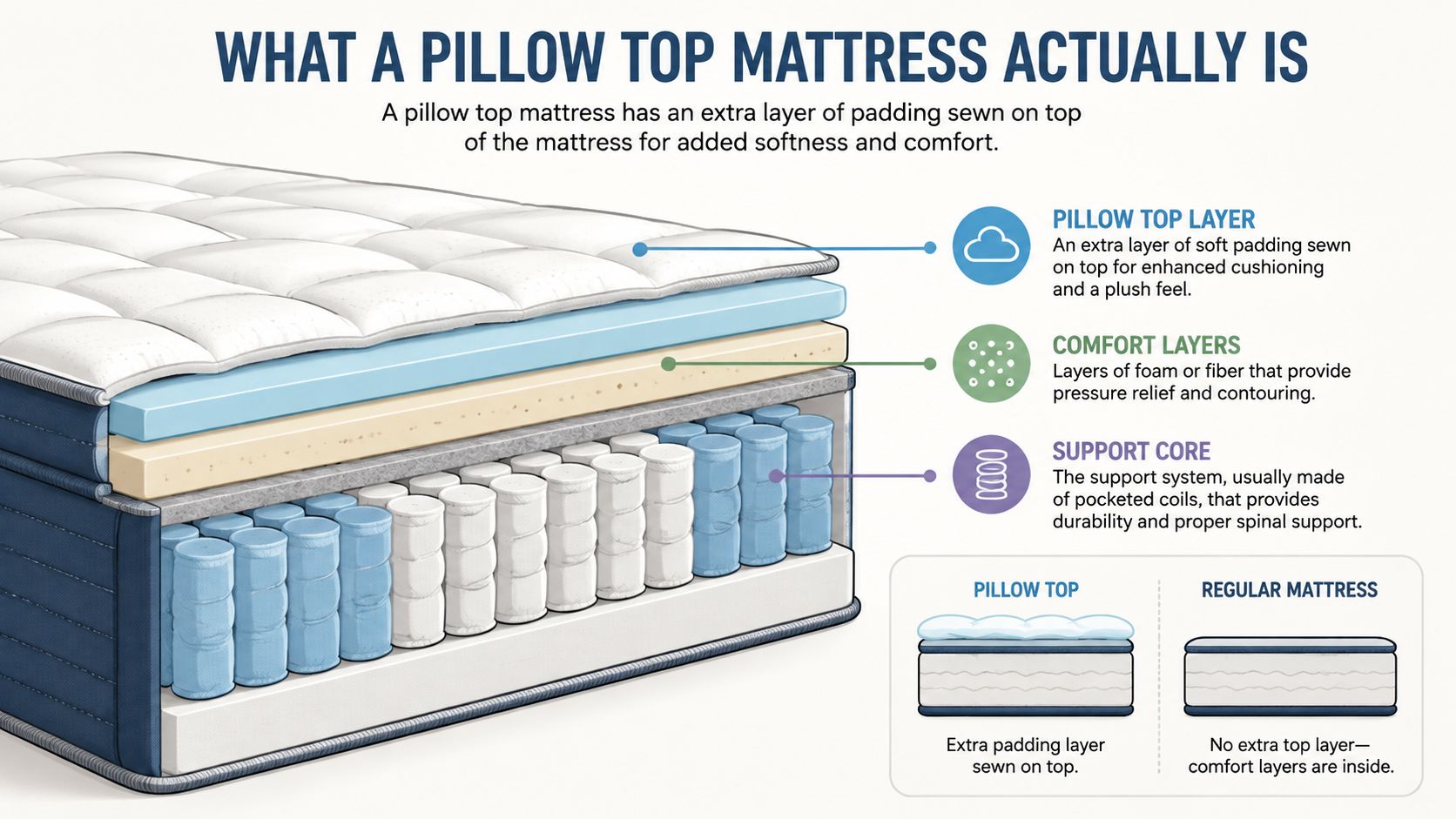
A pillow top is not a separate mattress category. It is usually an innerspring, hybrid, or foam mattress with an extra cushioning layer sewn onto the top. That added layer gives the bed its softer, hotel-style first feel, the kind that makes a new mattress seem broken in right away.
A regular mattress keeps its comfort layers inside the main build. The surface sits flush with the rest of the mattress, so the feel is usually more even and the structure is simpler. That matters in Ruidoso, where dry air and seasonal use can make a mattress show its weak spots sooner than you expect.
Why the sewn-on layer matters
The sewn-on layer changes how the mattress ages. It gives you a plush first impression, but it also places the comfort material in the part of the bed that takes the most compression night after night. That is why a pillow top can feel fantastic on the showroom floor and still start to lose its shape sooner than a regular build.
Pillow tops are often one-sided, so they are generally rotated, not flipped. That makes care more specific, and if the mattress is going into a guest room or a vacation rental, it matters even more because people rarely treat a bed with the same consistency you do at home.
If you want to see a real example of how the top layer changes the feel, look at the Kennett Euro Pillow Top Medium mattress. It shows how much of the comfort comes from the upper layer compared with the support core underneath.
The comfort layer is usually the first part to wear out, not the base. That is the part shoppers need to keep in mind.
Pillow Top vs Regular Across the Criteria That Matter
In a Ruidoso bedroom, the decision is how the mattress will feel after the honeymoon period ends. A pillow top gives you immediate plushness, while a regular mattress keeps its shape and support more predictably over time, and that difference shows up in daily sleep, maintenance, and the cost per year.
Comfort, support, and daily feel
A pillow top usually wins the first-night comfort test. It cushions shoulders and hips quickly, which is why side sleepers often gravitate to it right away. A regular mattress usually feels more planted under the body, and that steadier feel can keep the spine aligned better through the night.
If you sleep hot, shift positions a lot, or share the bed with someone who does, the more consistent surface of a regular build often feels easier to live with. If you want the softer first touch, a pillow top gives it to you fast, but that softness comes from the upper layer doing more of the work.
Durability and value
The regular build usually pulls ahead here. In consumer reviews compiled by Sleep Like the Dead, pillow tops are reported to cost more on average than non-pillow-top beds and to weigh more because of the extra material. That higher price does not automatically buy a longer life.
The same source notes that many pillow tops show noticeable compression within a few years, while other guidance places typical pillow-top lifespan in a range that is still shorter than many people expect. Better-anchored constructions tend to hold up longer, especially when the comfort layer is more integrated, as noted by NapLab's Euro-top versus pillow-top guide.
For shoppers in Ruidoso, cost per year matters more than sticker price. A bed used in a guest room or vacation rental takes uneven wear, and a pillow top can start looking tired long before the base is done. If you want the mattress thickness discussion that helps separate surface plushness from real support, the mattress thickness guide is worth reading.
Edge support, heat, and movement
Pillow tops tend to lose edge stability faster, so the usable sleep surface can shrink as the top softens. That matters if you sit on the side of the bed, sleep near the edge, or want the full width of the mattress to stay dependable for guests.
They can also sleep warmer because the extra cushioning holds heat. That is a real concern in a dry mountain climate, especially when a room already runs warm from sun exposure or when a bed sits in a rental that gets used inconsistently. Motion transfer is usually better than a basic open-coil feel, but a more integrated top often handles movement with less of that sunk-in, floating sensation.
| Criterion | Pillow Top | Regular Mattress |
|---|---|---|
| Initial comfort | Very plush | More balanced |
| Long-term durability | Weaker comfort-layer stability | Usually stronger structure |
| Edge support | Often softer at the perimeter | Typically steadier |
| Temperature | Can trap heat | Usually breathes better |
| Motion transfer | Good, but depends on build | Often more controlled in integrated designs |
| Price | Often higher | Usually lower for similar support |
If you want a mattress to feel cozy on day one and still make sense a few years down the road, the regular build is the safer buy. In a place like Ruidoso, where dry air and seasonal use expose weak construction quickly, that steadier choice usually pays off better.
Which Sleeper Wins With Each Construction
Side sleepers and pressure relief
Side sleepers often feel the pillow top first. The shoulders and hips sink in more easily, which can reduce that hard, pokey feeling many people hate at bedtime. That's the main reason pillow tops keep their appeal.
The catch is simple. If your body needs a soft landing but still needs support underneath, a pillow top can help. If the top layer starts to collapse too early, it stops helping and starts hiding the problem.
Verdict: Side sleepers who mainly want pressure relief can do well with a pillow top, as long as the support core is solid.
Back sleepers, stomach sleepers, and alignment
Back sleepers and stomach sleepers usually need more lift than cushion. A more integrated regular mattress, or a denser Euro-top style, tends to hold the spine in a cleaner line. That's why pillow tops can feel dreamy but still be the wrong call for a stomach sleeper.
For people dealing with back or neck discomfort, the question isn't “What feels soft?” It's “What keeps the body from sinking out of alignment?” That's where stronger support usually matters more than a fluffy surface.
If you want a deeper fit guide for those positions, the side and stomach sleeper mattress guide is worth using as a matching tool.
Verdict: Back and stomach sleepers usually do better with a regular mattress or a more integrated top.
Couples, hot sleepers, and rental owners
Couples need to think about edge support and motion. When one person uses more of the perimeter, a pillow top can lose usable surface sooner. Hot sleepers also need to think clearly, because extra cushioning can trap warmth in Ruidoso's drier climate, especially when nights are mild and windows stay open.
Vacation-rental owners need the hardest truth of all. A bed that feels great to one guest and starts sagging after repeated use creates replacement headaches fast. If the mattress is going to serve lots of different bodies, the more durable construction usually wins.
Neighbor-to-neighbor advice: if the mattress has to serve many sleepers, choose the build that ages gracefully, not the one that wins the first impression contest.
Verdict: Couples, hot sleepers, and rental owners usually get more value from a regular or integrated top.
How to Test the Difference in Our Showroom
Start by lying on each mattress in your real sleep position for at least 8 to 10 minutes. Quick test sits lie to people all the time, because the first minute mostly tells you whether the surface feels soft, not whether it supports you all night.
Then sit on the edge. That's where pillow tops often reveal weakness, especially if you use the side of the bed to get dressed, read, or swing your legs up and down. Have your partner lie down too, because motion transfer is a real-world issue, not a theoretical one.
What to ask the Sleep Pro
Ask how the bed is built, what the top layer is doing, and whether the model is one-sided. Ask what happens if the mattress feels wrong after a few nights at home, because that's where the Comfort Promise takes the fear out of choosing the wrong bed. A local showroom can talk through those details with you, instead of guessing from a product page.
That matters when you're balancing budget too. The Low Price Promise, flexible financing, and Full-Service Delivery with Professional Setup help keep the decision practical, not stressful. A good fit should feel confident, not risky.
If a bed feels too soft in the showroom, it usually won't feel firmer later. If it already feels right, that's the mattress worth taking seriously.
Cost Per Year of a Pillow Top
The sticker price only tells part of the story. A pillow top usually costs more up front, and the extra cash makes sense only if the comfort holds up long enough to justify it. In a dry mountain place like Ruidoso, where air can dry out comfort foams and vacation-rental beds take a harder beating from constant turnover, the question is simple, how much are you paying for each year the bed still feels good?
That is where pillow tops can get expensive fast. A regular mattress that still feels supportive in year seven often beats a pillow top that already feels tired in year four, even if the regular model looked plainer on day one. The support core may still be fine in a pillow top, but the part you feel every night is the top layer, and that is usually the first part to soften, flatten, or lose its clean cushiony feel.
If you want a clearer picture of lifespan, the mattress lifespan guide is the right place to start. The point is not to chase the cheapest tag. It is to buy the bed that stays comfortable long enough to earn its cost.
Care matters more than people think
Pillow tops are generally rotated, not flipped, so the wear goes into one side of the bed. That makes care less forgiving. You are asking one surface to carry every night of pressure, which is why a protector and regular rotation matter more here than they do on a simpler build.
That trade-off matters even more in a second home or vacation rental. Guests do not handle a mattress gently, and dry air does not help the top layers stay lively. If the bed is going to see frequent use, the cheaper option on paper can become the pricier one over time because it needs to be replaced sooner.
If the pillow top gives the sleeper the softness they want, it can still be the right purchase. If it does not, the regular build often leaves more room in the budget for better sheets, a stronger frame, or a sturdier foundation, all of which can improve the sleep setup without paying for plushness that fades.
Verdict: buy the plush top only if the feel matters enough to justify the shorter comfort window, because you are paying for softness that can wear out before the core does.
Your Matched Recommendation and Next Step
If you sleep on your side in Ruidoso and want a softer landing, a pillow top can make sense, but only if you are willing to stay on top of rotation and care. If you are choosing for a vacation rental in Alto or Lincoln County, the regular or more integrated build usually makes more financial sense because it tends to hold a more consistent feel from guest to guest and season to season.
If you have neck or back concerns, do not chase softness first. Start with support and alignment. A firmer, more supportive mattress from Tempur-Pedic, Stearns & Foster, or a solid Sealy or Sherwood build is usually the smarter call, because a good first impression does not help if the bed leaves you sore by morning. For couples who want that hotel feel and are ready to maintain the bed properly, a pillow top can still be a fair choice.
Quick answers to the lingering questions:
- How long do pillow tops really last? Long enough to feel great at first, but the comfort layer can start showing wear in the 3 to 5 year window, with typical lifespan estimates clustering around 5 to 7 years in expert guidance.
- Do pillow tops sleep hot? They can, because the extra cushioning can trap heat, especially compared with a simpler regular build or a more integrated top layer.
- Should couples choose one? Only if both people love the plush feel enough to accept the trade-offs in edge support, durability, and temperature.
Ready to transform your sleep? Visit our Sleep Pros at the Mattress Pro showroom located at 2801 Sudderth Drive, Suite F, in Ruidoso. From luxury brands to budget-friendly solutions, we're here to help you wake up loving your mornings. Browse our collection online or stop by Monday through Saturday.
Ready to make the pillow top mattress vs regular decision with confidence? Visit Mattress Pro by Miller Waldrop to compare plush comfort, support, and long-term value with a local Sleep Pro who understands Ruidoso nights. If you want real guidance, Comfort Promise peace of mind, and a mattress that fits the way you sleep, stop by the showroom on Sudderth Drive.