

Side and Stomach Sleeper Mattress Buying Guide

You know the feeling. One night, you wake up with a numb shoulder after sleeping on your side, and the next morning, your lower back complains after you've rolled onto your stomach sometime before dawn. That kind of sleep whiplash is frustrating, especially when mattress ads make it sound like you're supposed to pick one “perfect” position and never move again. For a lot of people in Ruidoso, that isn't real life. You shift, the air is dry, the room cools off fast, and your mattress has to work with all of it.
A side and stomach sleeper mattress has to solve a real design problem. Side sleeping needs cushioning at the shoulder and hip, while stomach sleeping needs enough pushback to keep the pelvis from dropping. That's why generic “soft, medium, firm” labels don't help much on their own. The better question is how a mattress manages pressure relief, support, and temperature in the same build.
Why Side and Stomach Sleepers Need a Different Approach
A combination sleeper can wake up with a sore shoulder one morning and a tight lower back the next, because the mattress is being asked to do two different jobs in the same night. Side sleeping needs more contour at the shoulder and hip. Stomach sleeping needs firmer pushback so the pelvis does not sink too far. A bed that only does one of those well can feel fine for part of the night and wrong for the rest.
Side sleeping is not a narrow problem. Industry surveys of over 100,000 sleepers show that side sleeping is the most common position, and a separate national survey found that many adults identify that way as well. That helps explain why so many mattress designs cluster around the middle of the firmness range, because side sleep is the default for a large share of shoppers, not a special case. NapLab's mattress guidance makes that general point, and Mattress Pro's side sleeper mattress guide is useful for seeing how that translates into real-world choices.
A practical rule helps cut through the noise. If the bed keeps your shoulders comfortable on your side but lets your hips drop when you roll onto your stomach, it is not really suited to combination sleeping.
The confusion usually comes from reviews that separate side and stomach sleepers as if they were two unrelated buyers. They are different positions, but the mattress question is shared: how do you keep pressure relief and support in balance when your body keeps changing shape and weight distribution? In Ruidoso, that question gets even more practical. Dry mountain air can make foam feel a little different from what people expect, so the best answer is often a one-on-one showroom conversation at Mattress Pro, where a Sleep Pro can look at body type, sleep pattern, and budget together instead of forcing you into a single label.
What Side Sleepers Need From a Mattress
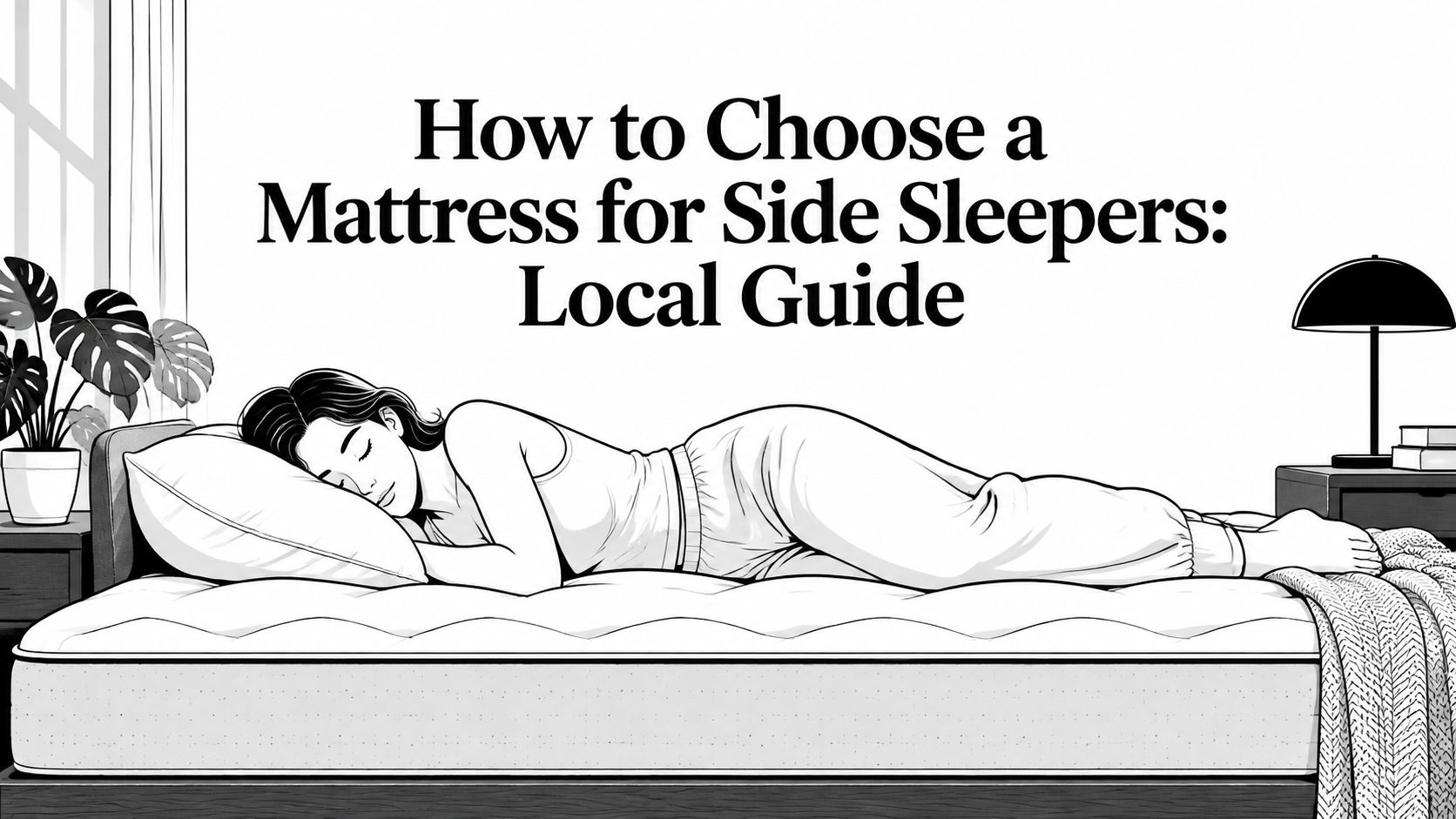
Side sleeping puts the shoulder and hip under the most pressure. Those are the widest parts of the body, so the mattress has to let them settle enough to reduce pressure while still holding the midsection in line. A bed that feels too firm leaves the body perched on top of it. A bed that feels too soft lets the spine bow like a hammock.
Think in terms of sinkage, not just softness
Independent mattress-testing guidance places side sleepers in the medium to medium-soft range, usually around 4 to 6 out of 10. Side sleepers also do better with deeper sinkage, more than 2.3 inches, because the shoulder and hip need room to settle without twisting the spine out of line. The same pressure-relief logic shows up in the side sleeper mattress advice resource, which fits the way many shoppers experience comfort in a showroom.
A simple way to understand it is this. A too-firm bed feels like your shoulder is pressed against a hard bench. A well-matched side-sleeper mattress feels more like a thick foam layer over a stable base, with the pressure easing while the body still stays supported.
Build depth matters more than most shoppers expect
Side sleepers usually do better with thicker builds, roughly 12 to 14 inches, and should avoid beds under 10 inches because thin constructions often do not leave enough comfort-layer depth for pressure relief. That depth gives the upper layers room to soften the shoulder and hip before the support core takes over.
Thicker does not automatically mean better. The question is whether the upper layers can absorb pressure while the core keeps the body level. For someone shopping in Ruidoso, that matters even more because dry mountain air can make some foams feel firmer than they do in a warmer, more humid home.
A local showroom visit helps make that difference clear. In a one-on-one fitting, a Sleep Pro can compare how your shoulders, hips, and lower back react across different builds instead of guessing from a product label.
What Stomach Sleepers Need From a Mattress
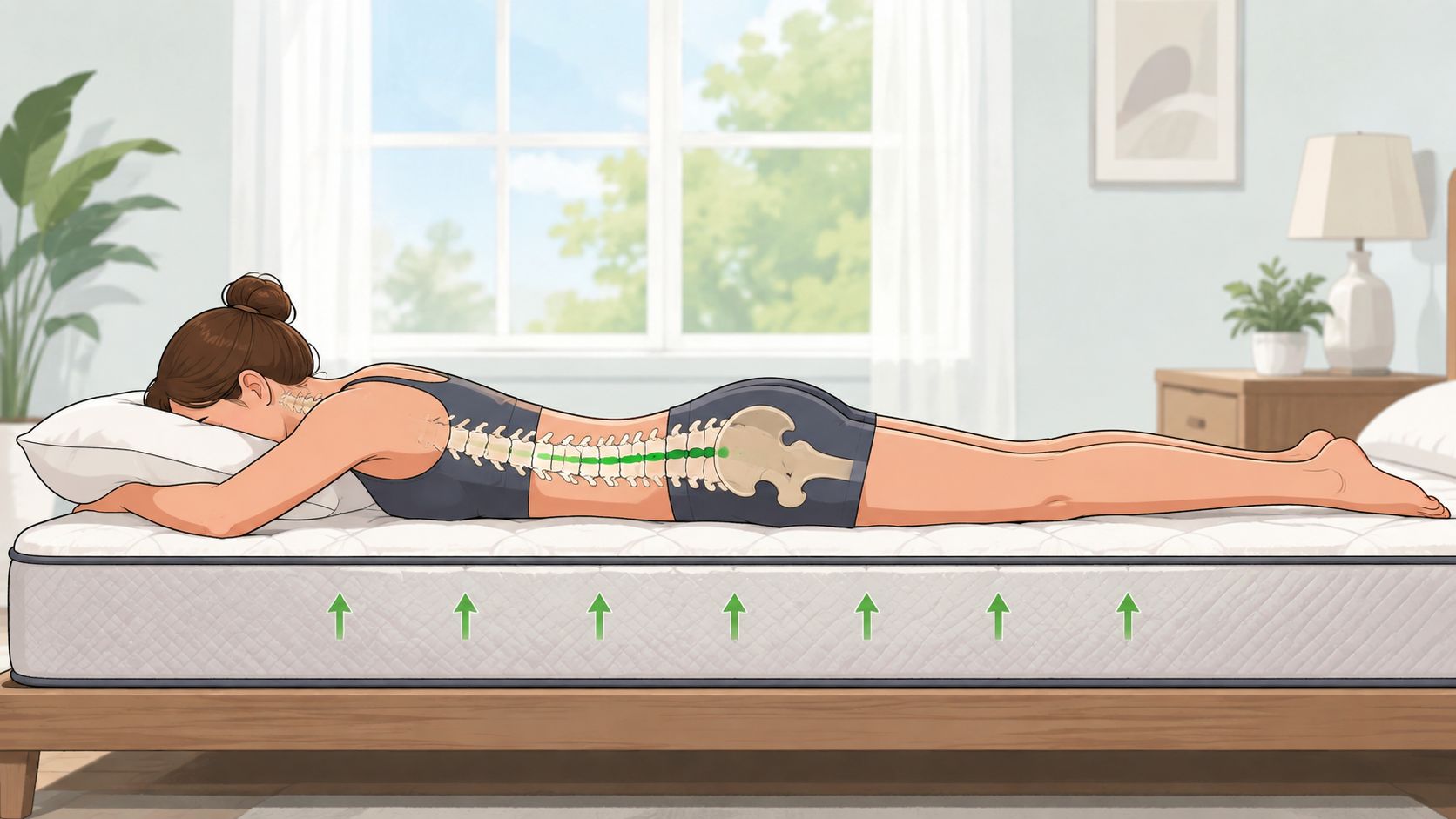
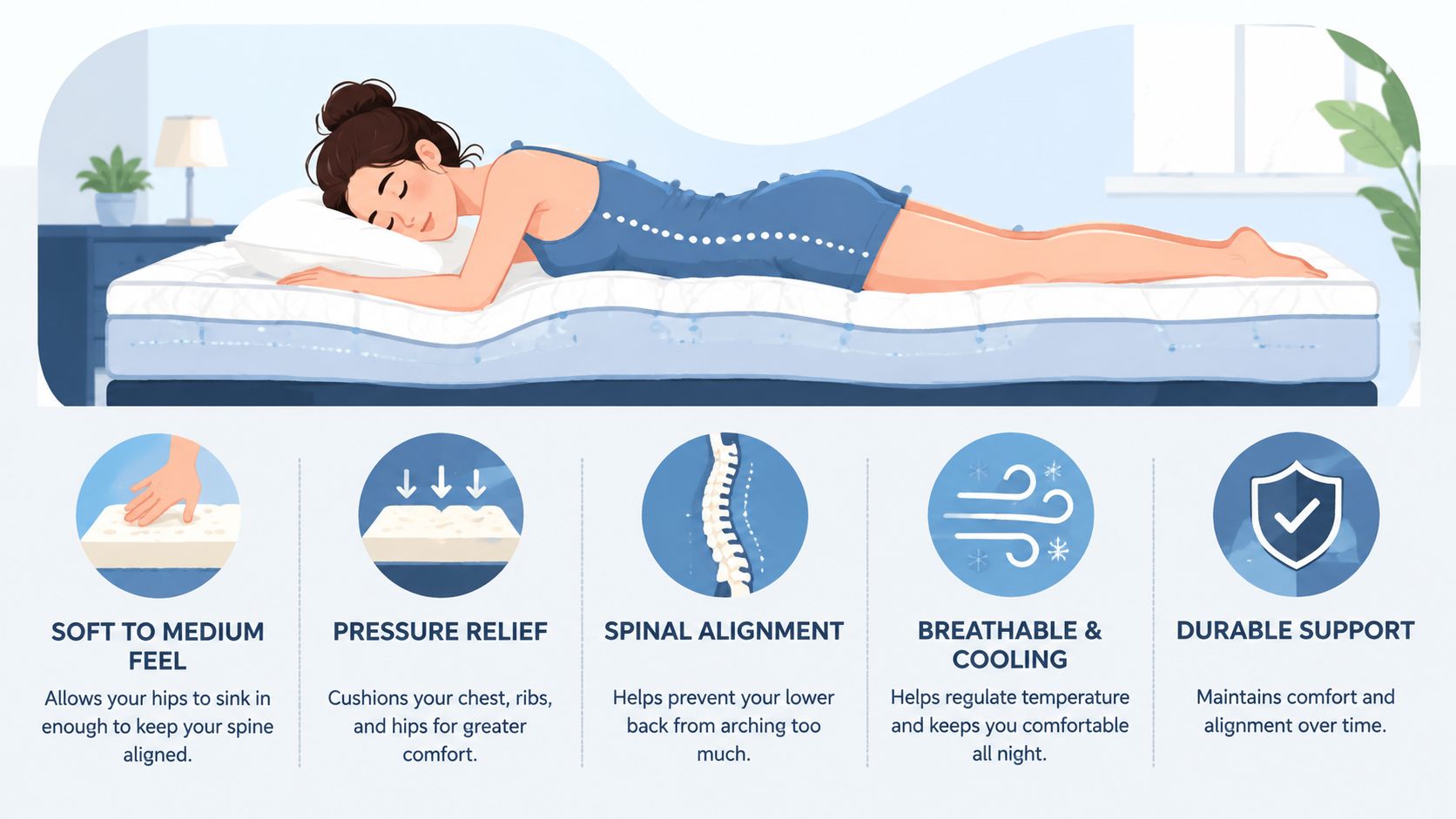
Stomach sleeping puts the heaviest part of the body, the midsection, directly into the mattress. If the surface gives too much, the hips drop, the lower back arches, and the spine moves out of neutral. A stomach sleeper usually needs a firmer feel than a side sleeper because the bed has to hold the pelvis up instead of letting it sink.
Why firmness changes in this position
Expert mattress testing guides usually place stomach sleepers in the 7 to 10 out of 10 firmness range, with a low-profile comfort layer under 2 inches so cushioning does not overwhelm support. The reasoning is straightforward. The mattress has to resist the downward pull of the pelvis and keep the torso from settling too far.
A soft bed can feel pleasant for the first minute and still work against the body over time. The stomach sleeper's problem is rarely the shoulders. It is the lumbar spine taking the strain after the hips sink too far. For that reason, a dedicated stomach sleeper often does better when the mattress feels more “on top of” than “in” the bed.
A stomach sleeper does not need a hard surface for the sake of hardness. The goal is a surface that keeps the pelvis from taking over the whole mattress.
A thin pillow matters too. A thick pillow can push the neck upward while the mattress is trying to hold the torso level, and that mismatch can add strain. In Lincoln County, that is one more reason to test the whole sleep setup, not just the mattress alone.
For a more detailed firmness breakdown, see the stomach sleeper mattress guidance.
Most stomach sleepers are not exclusive stomach sleepers
That matters because a mattress that works well for pure stomach sleeping can feel punishing the moment the sleeper rolls onto a side. Real homes do not hold one position all night. People shift, especially overnight, and the bed has to handle those changes without throwing the spine off balance.
So the better shopping question is not “What is the firmest bed?” It is “What construction keeps both positions usable?” For a combination sleeper, that answer usually comes from a mattress that has enough lift for the midsection, enough give for a side-lying shoulder, and enough structure to keep the whole body level.
The Combination Sleeper Tradeoff and How to Solve It
A combination sleeper is dealing with two different jobs in one night. Side sleeping needs cushioning at the shoulder and hip, while stomach sleeping needs enough lift to keep the pelvis from dropping too far. The mattress has to give in one place and hold firm in another, sometimes within the same hour.
That is why the shopping question is not “soft or firm?” It is “which construction can handle both positions without forcing a compromise that hurts either one?” In a dry mountain climate like Ruidoso, the answer also has to hold up in everyday use, where people often notice heat, dryness, and how materials feel after a full night on the bed.
Why hybrids solve the conflict more cleanly
A hybrid usually gives the cleanest balance because the coil core adds pushback while the comfort layers still soften pressure points. Pocketed coils matter here because they move independently, so the bed can support the midsection without making the shoulder zone feel rigid. That makes a real difference for sleepers who start on their side and roll to their stomach before morning.
The most workable combo-sleeper builds usually use a medium-firm feel, often around 6 to 7 out of 10. That range is not a rule carved in stone, it is a useful starting point. One body may need a little more cushion to keep the shoulder comfortable, while another needs more lift under the hips, and zoning changes the feel in ways a single firmness number cannot fully describe.
The details that change the result
A mattress handles both positions better when it includes a few specific construction cues.
- Zoned support, which firms up the middle third so the pelvis gets more lift.
- Transition foam, usually 2 to 3 inches in a workable hybrid stack, so the shoulder is not resting directly on the coil unit.
- At least 6 inches of pocketed coils, which helps the support core stay steady under the torso.
- Good edge stability, with a useful benchmark of less than 2 inches of edge sink when seated, so the perimeter does not collapse under normal use.
Those cues are the kind of details you see in mattress construction guides, and they matter more than a marketing label because they describe how the bed is built to behave. They also help explain why a mattress can feel fine for one position and still fail the other if the layers are not working together.
Useful shortcut: If a mattress feels soft enough for your shoulder but lets your hips sink when you roll over, the comfort layers are doing too much of the work and the support core is not carrying its share.
That is the design question for a side-and-stomach sleeper. A well-built hybrid can act like two different sleep surfaces in one, which is why people who change positions need to look at construction first and firmness second. For a closer look at that logic, the combination sleeper mattress guide is a useful place to compare how different builds handle both pressure relief and lift.
Matching Firmness to Body Weight and Build
A mattress does not feel the same to every sleeper. Lighter bodies compress the surface less, so a bed can feel firmer than the label suggests. Heavier bodies sink deeper, which can make the same mattress feel softer and wear down support faster.
How weight shifts the decision
Body weight changes how much help you need from the comfort layers and the support core. A lighter stomach sleeper often does better with the softer side of medium-firm, while a heavier side sleeper may need a firmer feel so the hips do not drop too far. That is the kind of weight-based nuance covered in Tom's Guide's mattress-firmness guidance, and the same idea applies here without turning it into a one-size-fits-all rule.
| Firmness and Build Guidance by Body Weight | ||
|---|---|---|
| Body Weight | Recommended Firmness | Build to Look For |
| 130 pounds or less | Softer side of medium or medium-firm, depending on position | Enough top-layer cushioning for pressure relief, without a weak support core |
| Middle range sleepers | Medium-firm is usually the starting point | Balanced comfort layers over a responsive core |
| Over 230 pounds | Medium-firm to firmer support | Thicker, sturdier construction that resists bottoming out |
That table gives a starting point, not a final answer. Two sleepers with the same weight can still need different feels, because one may spend more time on the side and the other may stay closer to the stomach. Build matters too. Broad shoulders, a heavier midsection, and a taller frame all change how quickly the mattress compresses and where it needs to hold the body up.
For shoppers who want a simple way to narrow the field, the firmness guide helps translate body type into a usable direction. In a dry mountain climate like Ruidoso's, that testing step matters because the same mattress can feel a little different at home than it does on a showroom floor. The air is drier, the room feels cooler, and small changes in surface feel can stand out more once you sleep on it night after night.
How to Test a Mattress Before You Commit
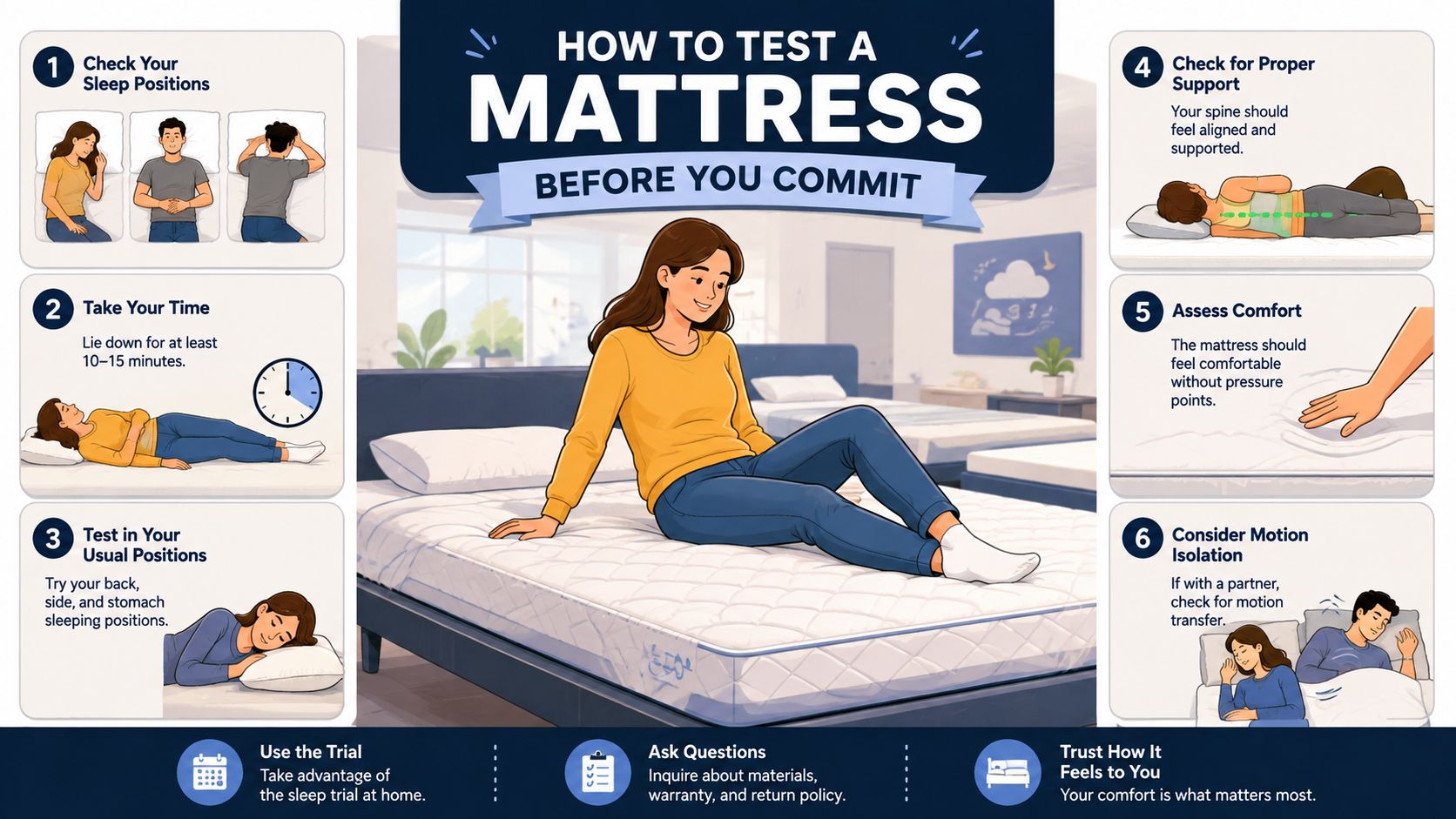
A five-minute sit test doesn't tell you much. A mattress needs time under a real sleeping posture before it reveals whether the shoulder feels pinched, the hips sink too far, or the lower back starts to arch. That's especially true for a side-and-stomach sleeper mattress, because the body needs to prove the bed works in more than one position.
A simple showroom test that actually means something
Use this sequence:
- Lie on your side first. Stay long enough for the shoulder and hip to settle.
- Roll to your stomach. Notice whether the pelvis drops or the low back arches.
- Check your head position. A pillow that is too thick can hide a bad mattress fit.
- Pay attention to numbness. Shoulder numbness usually means too much pressure.
- Notice your lower back. Tightness often points to too much sinkage.
- Ask how the bed feels after several minutes, not several seconds.
A 15-minute lie-down test is a much better filter than a quick press with the palm of the hand. The mattress should feel stable enough that the body doesn't fight it, but soft enough that the shoulder and hip are not taking all the load.
How to de-risk the choice at home
A Comfort Promise helps take the fear out of choosing the wrong bed, because it gives the shopper a built-in way to confirm the mattress at home. That matters more than a flashy showroom promise, since pressure points and alignment issues often show up after several nights, not several minutes.
For the first 30 nights, a simple routine helps:
- Track the first impression. Write down how the shoulders, hips, and lower back feel each morning.
- Use the same pillow setup. Changing multiple variables at once hides the cause.
- Ask a partner to watch for visible sag. A quick check can catch obvious hammock-like sinking.
- Keep the room as consistent as possible. In Ruidoso's dry air, temperature shifts can change how the bed feels night to night.
The sleep consultation page is a useful reminder that a good mattress choice usually starts with a conversation, not a guess.
Why Local Showroom Support Beats Bed-in-a-Box for Combination Sleepers
Combination sleepers need feedback, not just shipping. A box on the porch can't tell you how your shoulder will respond after a full side-sleep cycle, and it can't see whether your pelvis is dropping when you roll to your stomach. A local showroom can. That difference matters even more in Ruidoso, where the dry mountain air, elevation, and cabin-style homes all affect how mattresses feel, cool, and fit into the room.
Why local conditions change the answer
Dry mountain air can make some comfort materials feel a little firmer than expected. Cool nights also make temperature regulation more noticeable, so breathable materials and cooling gel technology can matter in a way they might not in a milder climate. Delivery logistics matter too, especially for homes in Alto and around Lincoln County where access, stairs, and room layout can complicate setup.
A one-on-one consult lets the shopper talk through body type, sleep position, and budget together instead of sorting through a pile of filtered search results. That's where the Comfort Promise earns its keep, because it reduces the fear of picking the wrong bed. The Low Price Promise also helps keep the decision grounded, so the shopper isn't stuck second-guessing the purchase after comparing prices online at midnight.
What full-service support changes
With Full-Service Delivery with Professional Setup, the mattress gets placed correctly and the old one leaves with the team. That matters for couples, vacation rentals, and anyone who doesn't want the hassle of wrestling a new bed through a narrow hallway.
Local advice is useful because it factors in the room, the sleeper, and the weather, not just a product label.
For shoppers weighing Memory Foam versus Hybrid, the material science matters. Memory foam gives deeper pressure-point relief, while a hybrid gives more responsiveness and easier movement, which combination sleepers often notice right away. In a dry climate, that distinction can become even more obvious after the first few nights.
Mattress Pro by Miller Waldrop is one option on the local floor for people who want that consultative process with a branded showroom experience, rather than a blind online checkout.
Your Next Steps and Where to Try It in Person
The decision path is simpler when it stays practical. Start with your dominant position, then check whether your body needs more cushioning or more lift, then adjust for weight and sleep temperature. For a side-and-stomach sleeper, the mattress should be a design decision first and a firmness label second.
A quick checklist helps:
- Side pressure relief needs enough contour at the shoulder and hip.
- Stomach support needs enough pushback to keep the pelvis level.
- Combination sleep usually points toward a medium-firm hybrid with zoning.
- Ruidoso climate makes cooling and breathable construction worth testing carefully.
- In-store testing should always include both positions, not just one.
The right showroom visit can answer the questions that a screen can't. At 2801 Sudderth Drive, Suite F, in Ruidoso, you can try Tempur-Pedic, Sealy, Stearns & Foster, and Sherwood with help from a Sleep Pro who knows the local homes, the local climate, and the local expectation for service. The showroom is open Monday through Saturday.
Ready to transform your sleep? Visit our Sleep Pros at the Mattress Pro showroom located at 2801 Sudderth Drive, Suite F, in Ruidoso. From luxury brands to budget-friendly solutions, we're here to help you wake up loving your mornings. Browse our collection online or stop by Monday through Saturday at Mattress Pro by Miller Waldrop.