

Mattress Firmness for Stomach Sleepers: A Ruidoso Guide

A lot of stomach sleepers in Ruidoso end up in the same cycle. They fall asleep fast enough, then wake up with a tight lower back, a sore ribcage, or that stiff feeling that makes the first few steps of the morning miserable.
The frustrating part is that the mattress may have felt fine at first. In real use, though, stomach sleeping asks more from a bed than is commonly understood. The wrong surface lets the middle of the body dip too far, and that changes everything from spinal alignment to pressure on the chest and hips.
For neighbors in Lincoln County, mattress firmness for stomach sleepers isn't just a comfort question. It's often the difference between waking up rested and waking up bracing for the day. A local, in-person fitting matters because firmness numbers only tell part of the story. The rest comes from how the bed responds under a real body, in a real sleeping position, with a real Sleep Pro guiding the process.
Table of Contents
- That Familiar Ache A Stomach Sleeper's Story
- Why Your Spine Needs Support When You Sleep on Your Stomach
- Finding Your Number on the Mattress Firmness Scale
- The Best Mattress Types for Stomach Sleepers
- How to Properly Test a Mattress in Our Ruidoso Showroom
- Beyond the Mattress Fine-Tuning Your Sleep Setup
- Your Stomach Sleeping Questions Answered
That Familiar Ache A Stomach Sleeper's Story
A common story goes like this. Someone in Ruidoso goes to bed tired after a long day, settles onto their stomach because that's the only position that feels natural, then wakes up with a nagging ache right above the hips. By breakfast, the back feels pinched, the shoulders feel heavy, and the bed suddenly seems like part of the problem.
That pattern usually isn't random. A stomach sleeper's body tends to push most weight into the middle of the mattress. If that area gives too much, the hips dip, the lower back arches, and sleep turns into hours of strain instead of recovery.
Many shoppers blame age, stress, or a rough night. Sometimes those things matter. But often the mattress is failing to hold the body level enough for stomach sleeping.
A mattress can feel soft and cozy for five minutes, then feel punishing after a full night if the middle of the bed doesn't stay supportive.
That's where local guidance matters. In a mountain town like Ruidoso, people often come in after trying to solve the issue alone. They've read firmness labels online, guessed at what “firm” means, and still aren't sleeping better.
A careful in-store fit changes that. A trained sleep consultation looks at body position, pressure areas, and how the mattress behaves under real weight. That's also where the Miller Waldrop legacy matters to Lincoln County families. The business has served local homes for decades, and the sleep-focused approach helps remove the guesswork that often comes with boxed mattresses and generic online charts.
Why Your Spine Needs Support When You Sleep on Your Stomach
Stomach sleeping puts the lower back in a vulnerable position. The body is face down, the abdomen carries a lot of weight, and the mattress has to hold that middle section up without feeling like a board.
What goes wrong on a soft mattress
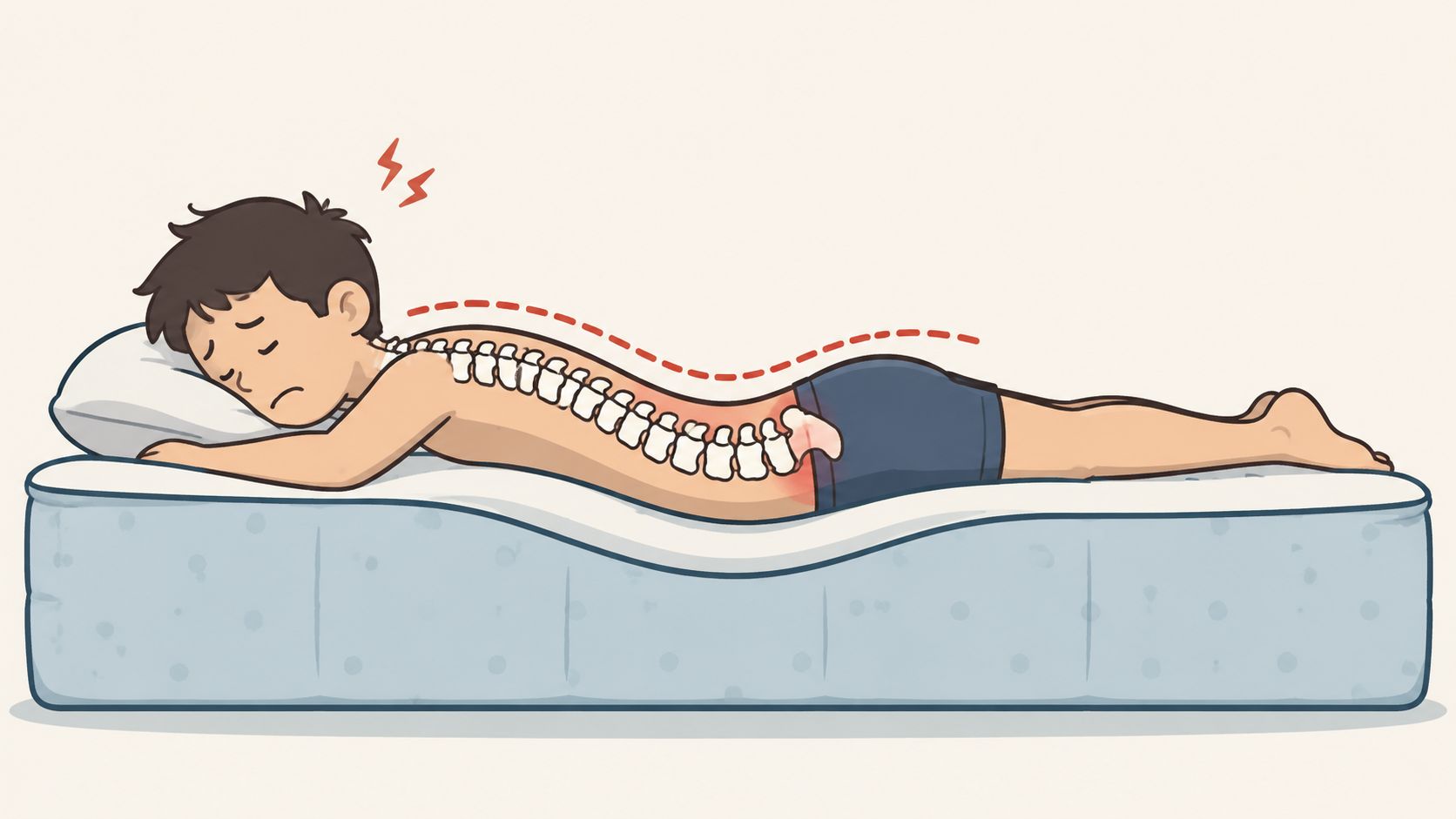
A simple way to think about it is a bridge. If the center of the bridge sags under weight, the whole structure bends out of shape. A mattress can do the same thing to the body.
When a stomach sleeper lies on a bed that's too soft, the pelvis drops lower than the chest. That forces the lower spine into an exaggerated curve. The result can be morning stiffness, low-back soreness, and the sense that the body never fully relaxed.
This is why support matters more than surface feel. Plenty of people focus on whether a bed feels plush in the showroom. A better question is whether the mattress keeps the torso level once the body settles in.
Why the midsection matters most
The technical issue is midsection load control. Because the abdomen is the heaviest region, the mattress needs to resist too much sinkage in that area so the pelvis doesn't fall below the chest and strain the lower back. Guidance from the Sleep Foundation on stomach sleeper support and weight range preferences notes that stomach sleepers weighing 130–230 lb most often preferred medium-firm (6/10), while sleepers over 230 lb tended to need firmer support.
That idea clears up a lot of confusion. “Firm” isn't about making the whole body feel hard. It's about giving the heaviest part of the body enough resistance.
For some people, that support comes from dense comfort layers. For others, it comes from a coil system that pushes back more actively. Either way, the target is the same. The spine should look more neutral and less bowed.
A deeper explanation of posture and support can help shoppers connect this feeling to what's happening physically during sleep. The guide on how to align the spine while sleeping breaks down that relationship in plain language.
Finding Your Number on the Mattress Firmness Scale
Most shoppers hear words like plush, medium, firm, and extra firm. The problem is that those words can feel slippery. One brand's “firm” may feel different from another's.
That's why mattress firmness for stomach sleepers is easier to understand on a number scale.
What the numbers actually mean
Current mattress guidance commonly uses a 1 to 10 firmness scale, and a broad consensus places stomach sleepers in the medium-firm to firm range. AARP's guidance says stomach sleepers generally do best around 6.5 to 9 out of 10, and related guidance cited there notes that some recommendations go to 7–10 to help prevent the pelvis from sinking too much while maintaining spinal alignment. That guidance appears in AARP's overview of the best mattress firmness range for stomach sleepers.
For shoppers, the practical takeaway is simple. 6.5/10 is often treated as a medium-firm benchmark. Once the number moves above that, the bed usually offers more pushback.
That still doesn't mean every stomach sleeper should buy the hardest mattress on the floor. Body weight, build, and sensitivity at the chest or hips all matter. A lighter sleeper may feel well supported on the lower end of the range, while a heavier sleeper often needs a firmer surface to stay level.
Practical rule: The right firmness number should keep the midsection from dropping without creating sharp pressure across the ribs or hip bones.
Stomach Sleeper Firmness Guide by Body Weight
| Body Weight | Recommended Firmness (1-10 Scale) | Why It Works |
|---|---|---|
| Lighter body weight | 6.5 to 7 | Often offers enough support without feeling overly rigid through the chest and hips. |
| Average body weight | 7 to 8 | Commonly gives stronger midsection support and helps reduce hip sinkage. |
| Heavier body weight | 8 to 9 | Usually provides more resistance so the pelvis stays from dropping too far into the mattress. |
This table gives a useful shopping target, not a rigid rule. Two people with similar body weight can still prefer different feels because shape, shoulder width, and pressure sensitivity vary.
That's why online charts should be treated as a starting point. A better next step is learning how firmness is judged in person and how support differs from comfort. The guide on how to choose a mattress firmness helps translate those numbers into a real shopping decision.
For many Ruidoso and Alto shoppers, things finally start making sense. Instead of asking, “Do I need soft or firm?” the better question becomes, “What firmness keeps my middle lifted while still feeling livable all night?”
The Best Mattress Types for Stomach Sleepers
Firmness is the starting point. Mattress type decides how that firmness feels and how the bed responds when a sleeper moves, settles in, or shifts during the night.
Hybrid and innerspring choices
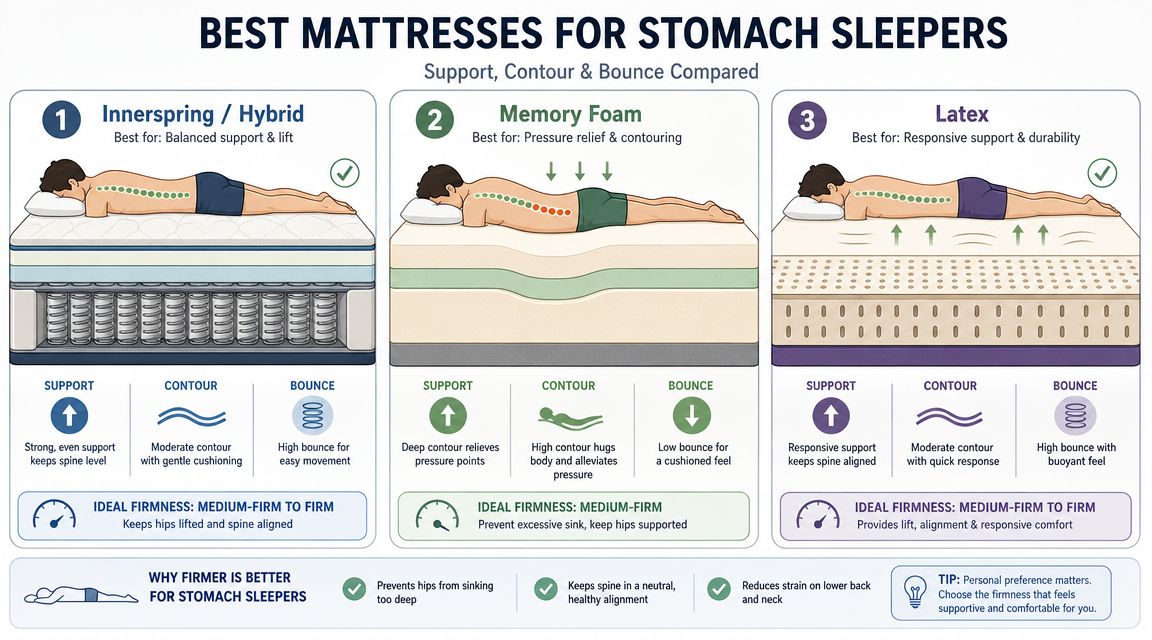
For many stomach sleepers, hybrids and innersprings make sense because they combine support with responsiveness. The surface doesn't just compress. It also pushes back, which can help keep the torso from sinking too far.
That matters for anyone who feels stuck in slow-moving foam. It also matters for couples, because a mattress has to balance support for one body without making the whole bed feel hard and unforgiving.
Guidance tied to public discussion of this issue notes that a mattress can be too firm for a stomach sleeper, especially if it creates excess pressure on the chest and hips. That same discussion points to hybrids and innersprings as a better match than very dense foam for some sleepers because they allow movement while still supporting the midsection. That idea appears in this discussion of whether a mattress can be too firm for stomach sleepers.
For local shoppers, brands matter in a practical way. A well-built hybrid from Sealy or Stearns & Foster can offer a firmer support core with enough comfort material on top to reduce pressure points.
Memory foam and latex choices
Memory foam can still work very well for stomach sleeping, but it has to be supportive enough. A firmer Tempur-Pedic feel can contour around the body while still resisting too much sinkage through the middle. The key is controlled contouring, not a deep hug that lets the hips disappear.
Latex-style feels are often chosen by shoppers who want a springier, easier-to-move-on surface. They tend to feel more buoyant than classic slow-response foam, which some stomach sleepers appreciate.
A few practical differences stand out:
- Hybrid feel: Usually easier to move on, often a strong match for people who want support with some pressure relief.
- Memory foam feel: Can offer closer contouring and motion control, but the model needs enough firmness under the midsection.
- Latex-style feel: Often feels buoyant and supportive, with less of that “sinking in” sensation.
In Ruidoso's dry mountain air, many shoppers also care about sleeping temperature. Beds with more airflow and breathable design details can feel more comfortable through warmer nights, especially for stomach sleepers who have more front-of-body contact with the mattress.
For anyone trying to sort out how foam changes the feel of support, this article on what a memory foam mattress does offers a clear breakdown.
How to Properly Test a Mattress in Our Ruidoso Showroom
A quick sit on the mattress edge won't tell a stomach sleeper much. The body needs time to settle into the bed so the true support pattern shows up.
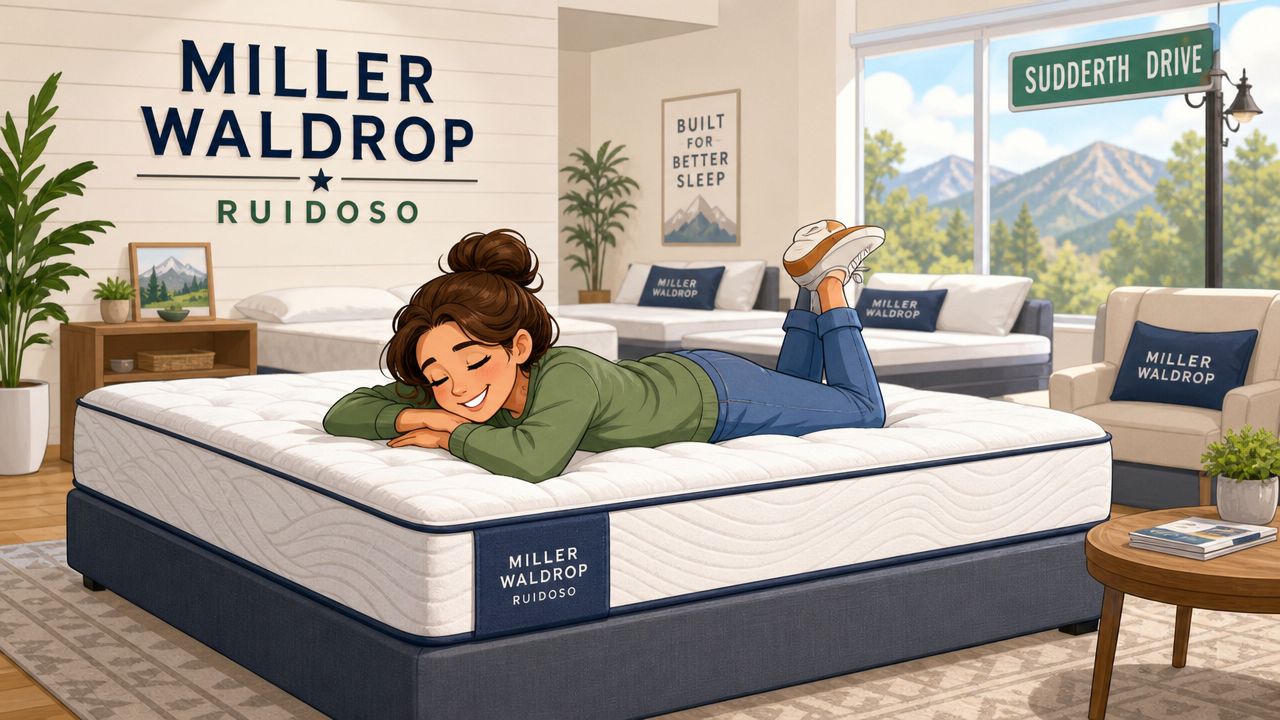
What to do in the showroom
A useful mattress test starts with the actual sleep position. Bedshed's guidance says shoppers should test a mattress for “a few minutes at least” and watch whether hips and shoulders sink significantly. That practical advice appears in its article on how stomach sleepers should test mattress support.
That small detail matters. The first few seconds often tell a shopper whether the bed feels pleasant. The next few minutes tell whether it's supportive.
A solid showroom routine looks like this:
- Lie fully on the stomach. Don't prop up on elbows or twist into a half-side position.
- Stay there for several minutes. Give the materials time to respond.
- Notice the hips first. If they sink sharply, the bed is probably too soft.
- Check the ribcage and chest. If those areas feel jammed or compressed, the bed may be too firm.
- Roll and reposition. A good mattress should still feel manageable when changing positions.
What the body should feel
The body should feel supported, not folded. The low back shouldn't feel pinched upward, and the chest shouldn't feel smashed downward. Ideally, the torso feels level enough that the sleeper can relax without bracing.
Good testing is less about the label and more about body feedback. If the hips dip or the ribs protest, the mattress is telling the truth.
In-person guidance offers real value to Lincoln County shoppers. A trained consultant can watch posture, ask better questions, and narrow choices more efficiently than online filters can. Mattress Pro by Miller Waldrop offers that type of local sleep consultation in Ruidoso, along with the Comfort Promise, the Low Price Promise, and Full-Service Delivery with Professional Setup that help reduce the fear of choosing wrong.
That de-risking matters. A stomach sleeper often needs a narrower comfort window than other sleepers do. Personal fitting helps find it.
Beyond the Mattress Fine-Tuning Your Sleep Setup
A supportive mattress is the foundation, but stomach sleepers often need a few smaller adjustments around it. These details can improve comfort without changing the main goal of keeping the body from bowing at the middle.
Pillow height matters more than most stomach sleepers think
Many stomach sleepers do better with a very thin pillow, and some prefer almost none at all. A tall pillow pushes the head upward while the body faces down, which can leave the neck turned and strained for hours.
That doesn't mean every stomach sleeper should sleep flat with no head support. It means the pillow should keep the neck from being cranked upward. If the head feels jammed back or rotated too sharply, the pillow is probably too thick.
A quick home check helps:
- Notice the chin angle. If the chin feels lifted, the pillow may be too high.
- Pay attention to morning neck stiffness. That's often a pillow clue, not just a mattress clue.
- Keep changes small. A little less loft can make a big difference.
What toppers and bases can and can't do
Toppers help most when a mattress is supportive enough but feels a little too hard at the surface. They can soften pressure points. What they usually can't do is rescue a mattress that's too soft throughout the middle.
An adjustable base can also change comfort for reading, relaxing, or other positions, though stomach sleepers still need to judge whether the flat sleeping setup supports them well. Shoppers who want to understand that option better can review how an adjustable base changes a sleep setup.
Sherwood and other supportive constructions can be useful for shoppers who want a firmer feel without making the surface feel harsh. The key is always the same. Fine-tuning should support alignment, not work around a bad mattress match.
Your Stomach Sleeping Questions Answered
What if one partner sleeps on their stomach and the other doesn't
A direct answer is this. The couple usually needs a mattress that balances support with enough comfort on top, or they need a design that allows each side to feel different.
This is one of the most common points of confusion for couples in Ruidoso and Alto. A stomach sleeper may need a firmer feel, while a side sleeper may want more pressure relief at the shoulders and hips. In practice, a supportive medium-firm hybrid often becomes a reasonable middle ground. For some couples, separate comfort choices work better than one compromise feel.
How long does a firmer mattress take to get used to
A direct answer is this. Some adjustment is normal, especially when moving from a sagging mattress to one that holds the body up better.
The body has gotten used to one posture, even if that posture wasn't healthy. Early on, a more supportive bed can feel unfamiliar because it isn't letting the spine collapse the old way. If discomfort feels like pressure rather than support, though, the mattress may be too firm rather than just new.
The goal isn't to buy the hardest bed. The goal is to buy the bed that keeps the body level enough to rest.
Can a plush pillow-top still work
A direct answer is this. Sometimes, but only if the support under that plush top is strong enough to stop the hips from sinking too far.
That's where many shoppers get tripped up. They feel the soft top first and assume the mattress is too soft overall. But the deeper support layers decide whether the bed can still work for a stomach sleeper. The only reliable way to know is to lie in position long enough to feel what happens after the comfort layers compress.
Ready to transform sleep? Visit the Sleep Pros at Mattress Pro by Miller Waldrop at 2801 Sudderth Drive, Suite F, in Ruidoso. Neighbors from Ruidoso, Alto, and across Lincoln County can explore Tempur-Pedic, Sealy, Stearns & Foster, and Sherwood with one-on-one guidance, the Comfort Promise, the Low Price Promise, and Full-Service Delivery with Professional Setup. Browse the collection online or stop by Monday through Saturday.