

What Is Memory Foam Mattress: Explained by Our Pros

A memory foam mattress is a bed made from viscoelastic foam that uses body heat and pressure to mold to the sleeper's unique shape, providing personalized support and pressure relief. That foam traces back to NASA research in 1966, and its move into bedrooms began when the first commercial memory foam mattress arrived in the early 1990s.
A lot of shoppers in Ruidoso start with the same question because they're waking up sore, shifting around at night, or trying to sort through a flood of confusing online advice. They've heard memory foam “hugs” the body, “sleeps hot,” or “helps with pressure points,” but those phrases don't always explain what the mattress does.
That's where clear guidance matters. A memory foam mattress isn't just another mattress label. It's a specific sleep technology with a specific feel, and understanding that difference helps shoppers decide whether it fits their body, sleep style, and the dry mountain climate around Ruidoso, Alto, and greater Lincoln County.
Table of Contents
- Your Introduction to the Memory Foam Mattress
- How Memory Foam Works Its Magic on Your Sleep
- The Key Benefits and Common Downsides
- Exploring Different Types of Memory Foam
- Is a Memory Foam Mattress Right for You
- Finding Your Perfect Memory Foam Mattress in Ruidoso
Your Introduction to the Memory Foam Mattress
A simple way to answer what is Memory Foam Mattress is this: it's a mattress that responds to the sleeper's weight and warmth, then contours around the body more closely than a traditional spring bed. That contouring feel is why many people describe it as a mattress that “learns” their shape.
Many shoppers first notice the difference in the morning. Shoulders feel less jammed up. Hips don't feel as pressed into the bed. A partner's movement may feel less disruptive. For someone who's been sleeping on an older mattress, that change can feel surprisingly noticeable.
Why it was invented matters
Memory foam didn't begin as a bedroom material. Its origin is tied to NASA cushioning research in 1966, where engineers developed an open-cell, viscoelastic material for impact absorption. The first commercial memory foam mattress showed up in the early 1990s, which marked the shift from aerospace cushioning to consumer sleep products, as explained in this look at the history of memory foam mattresses.
That background helps remove a common misunderstanding. Memory foam wasn't invented as a gimmick. It was engineered to absorb force, then later adapted for sleep because that same pressure response could cushion the body more evenly.
For readers who enjoy the bigger story behind how beds evolved, this guide on the story of mattresses from straw mats to memory foam adds useful context.
Memory foam makes more sense once shoppers stop thinking of it as “soft foam” and start thinking of it as a pressure-managing material.
Why shoppers get confused
The confusion usually comes from language. “Foam mattress” and “memory foam mattress” are often treated like they mean the same thing, but they don't. Memory foam is a specific type of foam with a slow-response contouring feel.
That distinction matters in real life. A basic foam bed may feel flat or springy. A true memory foam bed tends to feel more body-conforming, especially where the sleeper carries the most weight.
How Memory Foam Works Its Magic on Your Sleep
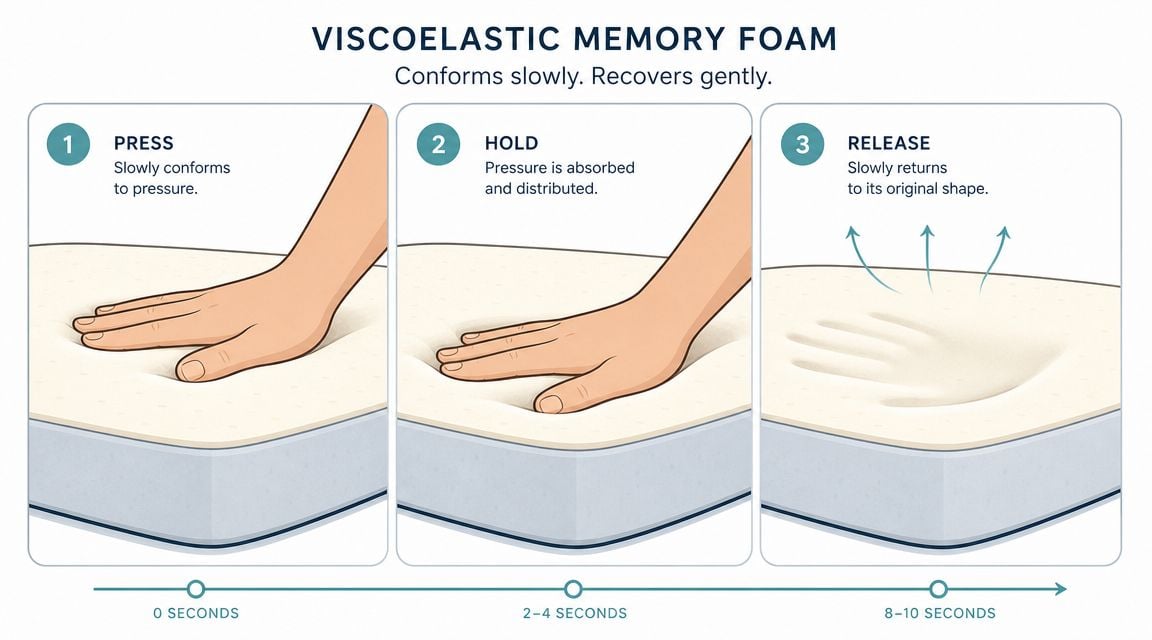
Memory foam works because it is viscoelastic polyurethane foam. In plain terms, that means it has two behaviors at once. It slowly changes shape under pressure, and it also returns to form after the pressure is removed.
What viscoelastic means in plain language
A helpful way to picture it is to think of pressing a hand into soft dough that slowly rises back instead of springing up right away. Memory foam behaves in a similar way. Under the body, it eases downward, shapes itself around pressure points, and then recovers more slowly than a conventional foam.
According to Sleep Foundation's explanation of memory foam, its recovery time is generally about 5 to 10 seconds after pressure is removed. That slower rebound is the signature feel people notice when they lie down, roll over, or get out of bed.
Why that changes the feel of the bed
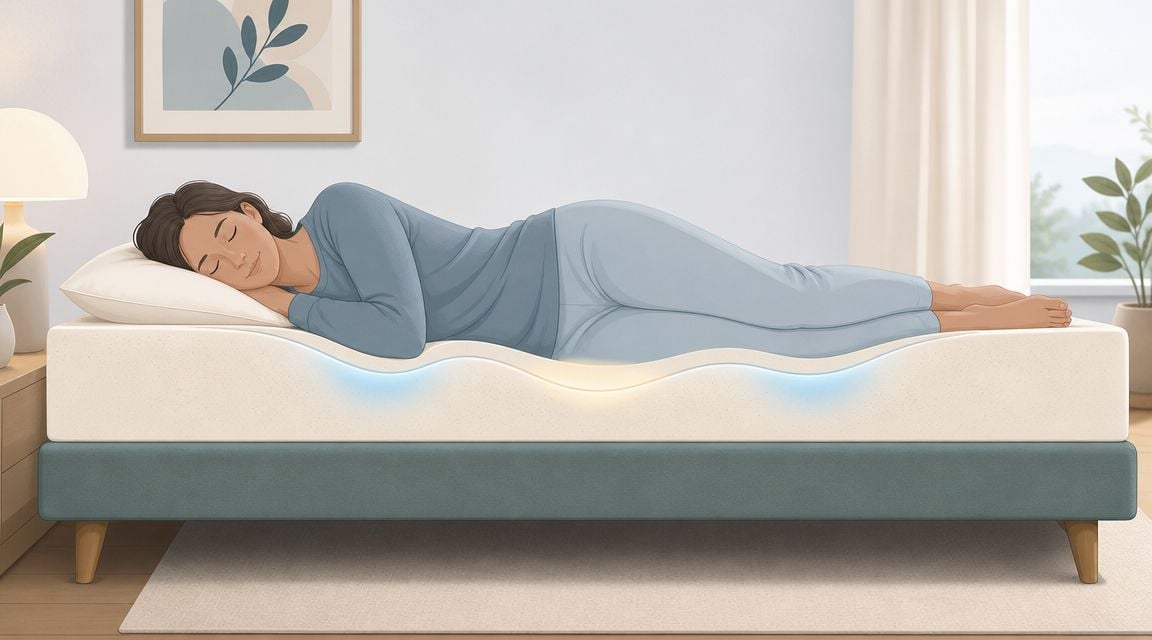
This slow response changes how support is delivered. Instead of pushing back quickly and all at once, memory foam spreads body weight across more of the surface. For many sleepers, that can create a more cradled feel at the shoulders, hips, and lower back.
That doesn't mean every memory foam mattress feels the same. Some feel deeper and more enveloping. Others feel more lifted and balanced. But the basic mechanism stays the same. The material reacts to pressure, contours, then returns gradually.
Practical rule: If a mattress bounces back immediately and feels highly springy, it probably won't feel like classic memory foam.
How that connects to comfort
The science matters because it explains the comfort. A side sleeper may need a mattress to give more around the shoulder. A back sleeper may need more even contact through the lower back. Memory foam's slow contouring can help the mattress meet those curves instead of forcing the body onto a flatter surface.
That's why some sleepers feel less “pressure buildup” on this kind of bed. The material isn't magic. It's just responding differently than a traditional surface.
The Key Benefits and Common Downsides
Memory foam has earned its place because it solves real comfort problems. It also has a few tradeoffs that shoppers should understand before bringing one home.
What many sleepers like about it
Pressure relief: Memory foam responds to body heat and pressure, which helps it mold more closely to the sleeper's contours and reduce pressure points. That pressure-relieving behavior is why many shoppers looking for joint and shoulder comfort explore mattresses designed for pressure point relief.
Close contouring: Some sleepers like feeling more “held” by the mattress instead of resting on top of a flatter surface. This can feel especially comfortable after a long day on the feet or after outdoor activity around Lincoln County.
Less partner disturbance: When one side of the bed absorbs movement more than a springier surface, the other sleeper may notice fewer interruptions. Couples often care about this even more than firmness.
Consistent feel: Memory foam tends to create a more uniform surface from edge to edge than older beds with obvious pressure zones or pushback points.
The most common concerns
The biggest concern is heat. Memory foam's body-heat sensitivity is part of what helps it contour, but traditional formulations can also retain heat. That's why cooling versions such as open-cell and gel-infused foams were developed, as described in this overview of memory foam temperature response and cooling design.
Another concern is feel. Some people love the slow, cushioned response. Others feel too “nested” in it, especially if they want a buoyant or easier-to-move-on surface.
A newly unwrapped foam mattress can also have an initial odor. Shoppers often worry this means something is wrong, but in most cases it's more of a first-impression issue than a comfort issue.
The honest bottom line
Memory foam has strong comfort advantages, but it isn't automatically right for every sleeper. The key question isn't whether memory foam is good or bad. The key question is which type of memory foam is being considered, and whether its feel matches the sleeper's body and temperature preferences.
Exploring Different Types of Memory Foam
Not all memory foam feels alike. That's one of the biggest surprises for shoppers who assume every foam mattress will feel hot or overly soft. Construction changes the experience.
A practical question comes up often in mountain communities like Ruidoso and Alto. Will memory foam feel too warm? Standard memory foam can retain heat, but newer open-cell and gel-infused foams are designed to improve breathability and thermal comfort, which makes construction especially important for warm sleepers and warmer rooms, as noted in this overview of memory foam types and cooling considerations.
Traditional memory foam
Traditional memory foam is the classic version that comes to mind. It gives the deepest contouring feel and the slowest, most recognizable response.
For sleepers who want that signature body-hug, this can feel excellent. For sleepers who already run warm, it may require more careful shopping because old-school formulations are the ones most associated with trapped heat.
Gel-infused memory foam
Gel-infused memory foam is built to tackle one of the biggest complaints about classic memory foam. The foam includes cooling-focused design elements intended to help with heat management.
This type can be a good fit for shoppers who like contouring but don't want the bed to feel overly warm through the night. In a place like Ruidoso, where dry air and sunny days can still leave bedrooms warm, that can matter more than people expect.
Open-cell memory foam
Open-cell memory foam is structured to allow better airflow through the material. That airflow focus is why many warm sleepers start here.
It can still provide the contouring feel memory foam is known for, but often with a less closed-in sensation. For shoppers comparing premium options, visiting a showroom with Tempur-Pedic models and related sleep systems helps clarify how different cooling constructions feel in person.
Memory Foam Types at a Glance
| Foam Type | Key Feature | Best For |
|---|---|---|
| Traditional memory foam | Deep contouring feel | Sleepers who want the classic body-hug sensation |
| Gel-infused memory foam | Cooling-focused design | People who like contouring but worry about warmth |
| Open-cell memory foam | Improved airflow | Warm sleepers and rooms that hold heat |
A shopper doesn't need to rule out memory foam because of heat concerns. The smarter move is to ask what kind of memory foam is inside the mattress.
Where brands and build quality matter
Premium construction makes a difference. Tempur-Pedic, Sealy, Stearns & Foster, and Sherwood don't all approach feel in the same way, and that's good news for shoppers. It means “memory foam” isn't one single sensation.
Some beds emphasize deeper pressure relief. Others balance contouring with a more lifted surface. Some put more effort into cooling materials and covers. That variety is exactly why lying down on several models in person is more useful than reading a dozen product descriptions online.
Is a Memory Foam Mattress Right for You
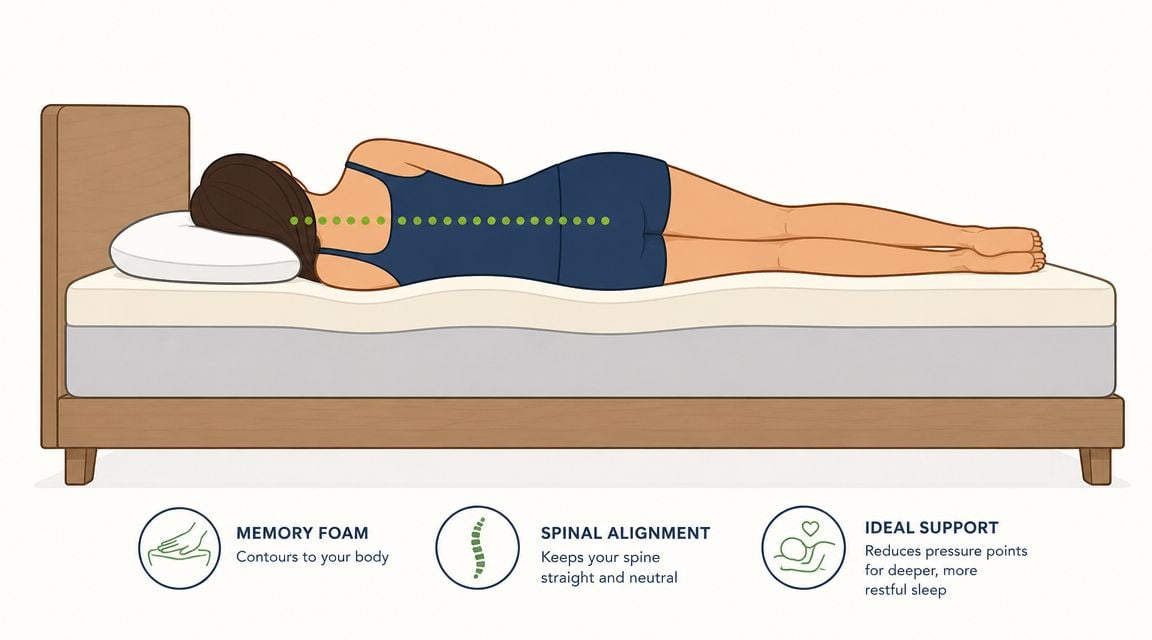
Yes, for many sleepers it can be. Memory foam is often a strong match for side sleepers, people dealing with pressure buildup, and couples who don't want to feel every movement across the bed. It may be less appealing for sleepers who want more bounce or a less cradled feel.
Sleepers who often do well with memory foam
Side sleepers often need more give at the shoulders and hips. A mattress that contours can help those areas settle in more comfortably instead of taking the full force of body weight on a flatter surface.
People with pressure sensitivity may also like memory foam because it tends to spread weight more evenly. For someone waking up with “hot spots” in the shoulder or hip, that feel can be a noticeable change.
Couples often appreciate the quieter surface response. When one sleeper changes position, the other may feel less movement than on a more reactive bed.
Sleepers who may prefer something else
Some stomach sleepers prefer a firmer, less conforming feel, especially if too much sink pulls the midsection downward. Some combination sleepers also want more ease of movement when changing positions.
Then there are sleepers who enjoy a bouncier surface. That preference is valid. Comfort isn't only about pressure relief. It's also about whether the bed's response feels natural to the person using it.
A mattress can be high quality and still feel wrong for a specific sleeper. Fit matters more than hype.
For shoppers sorting through those differences, this guide on how to choose a mattress can help narrow the options before visiting a showroom.
Finding Your Perfect Memory Foam Mattress in Ruidoso
A memory foam mattress is no longer a niche product. One market analysis valued the global category at USD 5,184.06 million in 2022 and projected growth to USD 7,372.26 million by 2030, a projected 4.5% CAGR from 2023 to 2030. The same industry summary notes that these mattresses are commonly 8 to 14 inches thick and often expected to last about 8 to 10 years with proper care, according to Data Bridge's memory foam mattress market overview.
That tells shoppers something important. Memory foam isn't an experiment. It's a mature mattress category with clear construction standards and a wide range of feel options.
What to test in person
Online descriptions usually aren't enough because the key questions are physical:
- Contour level: Does the sleeper feel gently cushioned or fully hugged?
- Ease of movement: Is changing positions comfortable or effortful?
- Temperature feel: Does the surface feel neutral, warm, or better ventilated?
- Support balance: Does the body feel aligned, especially through the midsection and lower back?
Those answers are easier to find on a showroom floor than on a product page. That matters in Ruidoso, where local sleepers may want comfort that works year-round, from cool mountain nights to warmer seasons.
Why local guidance reduces risk
A shopper in Lincoln County doesn't need more mattress jargon. A shopper needs a bed that fits a body, a sleep style, and a budget. That's where a one-on-one visit can remove guesswork.
Mattress Pro by Miller Waldrop offers in-person sleep consultation, access to Tempur-Pedic, Sealy, Stearns & Foster, and Sherwood models, plus the Comfort Promise, Low Price Promise, and Full-Service Delivery with Professional Setup. For shoppers who want help narrowing choices before coming in, a local sleep consultation near Ruidoso gives structure to the decision.
A website can list features. A local Sleep Pro on Sudderth Drive can watch how a sleeper lies down, ask the right questions, and help prevent the common mistake of choosing by label alone.
Ready to transform your sleep? Visit our Sleep Pros at the Mattress Pro showroom located at 2801 Sudderth Drive, Suite F, in Ruidoso. From luxury brands to budget-friendly solutions, we're here to help you wake up loving your mornings. Browse our collection online or stop by Monday through Saturday.