

Affordable Platform Beds: A Ruidoso Buyer’s Guide


You’re probably looking at a bedroom that needs to do more than one job. Maybe it’s your main room in Ruidoso. Maybe it’s a guest room in Alto. Maybe it’s a cabin you rent out in Lincoln County, and you need something that looks clean, supports sleep well, and doesn’t eat up the whole budget.
That’s where many shoppers get stuck. Traditional setups can feel bulky and expensive once you add a frame and a box spring. A lot of low-priced online frames look good in photos, then start squeaking, flexing, or sagging once real life hits.
Affordable platform beds sit right in the middle. They can give you a modern look, direct mattress support, and lower total setup cost, but only if the frame is built well. Around Ruidoso, that last part matters more than most websites admit because our dry mountain air and day-to-night swings can be hard on cheaper materials.
Table of Contents
- Your Search for Style and Savings Ends Here
- What Exactly Is a Platform Bed
- The Pros and Cons of Choosing a Platform Bed
- How to Spot a Quality Frame on a Budget
- Pairing Your Platform Bed with the Perfect Mattress
- Advice for Ruidoso's Active Sleepers and Cabin Owners
- Find Your Perfect Sleep Foundation at Miller Waldrop
Your Search for Style and Savings Ends Here
A lot of affordable bedroom decisions start the same way. You want the room to feel finished, not thrown together. You also don’t want to pay for parts you may not need, especially when you’re trying to furnish more than one bedroom or stretch a remodeling budget.
That’s one reason platform beds have moved from “trendy” to mainstream. The global bed frame market is projected to reach $34,777.9 million by 2033, with North America holding 39% of the market share, according to bed frame market projections from Cognitive Market Research. That same market view points to demand for cost-effective, space-saving options like platform beds, with queen sizes that can cost as little as $200, compared with a traditional setup that may also require a $100 to $500 box spring.
For a Ruidoso homeowner, that math is easy to understand. If you can buy one frame that supports the mattress directly, you cut out an extra purchase and often get a cleaner look at the same time.
The local reality
In mountain homes, bedrooms often aren't oversized. Lower-profile furniture can make the room feel less crowded, especially in cabins or guest spaces where every inch matters. Platform beds also fit the relaxed, modern style a lot of local shoppers want now.
A bed frame shouldn’t be the weak link in your sleep setup. It should quietly do its job for years.
The challenge is knowing where affordability ends and false economy begins. That’s why shoppers around here tend to do best when they compare construction, not just price tags. If you’re trying to stay budget-minded without settling, it helps to start with retailers that stand behind what they sell. A local Low Price Promise matters a lot more than a flashy online discount when the frame has to hold up in daily use.
What Exactly Is a Platform Bed
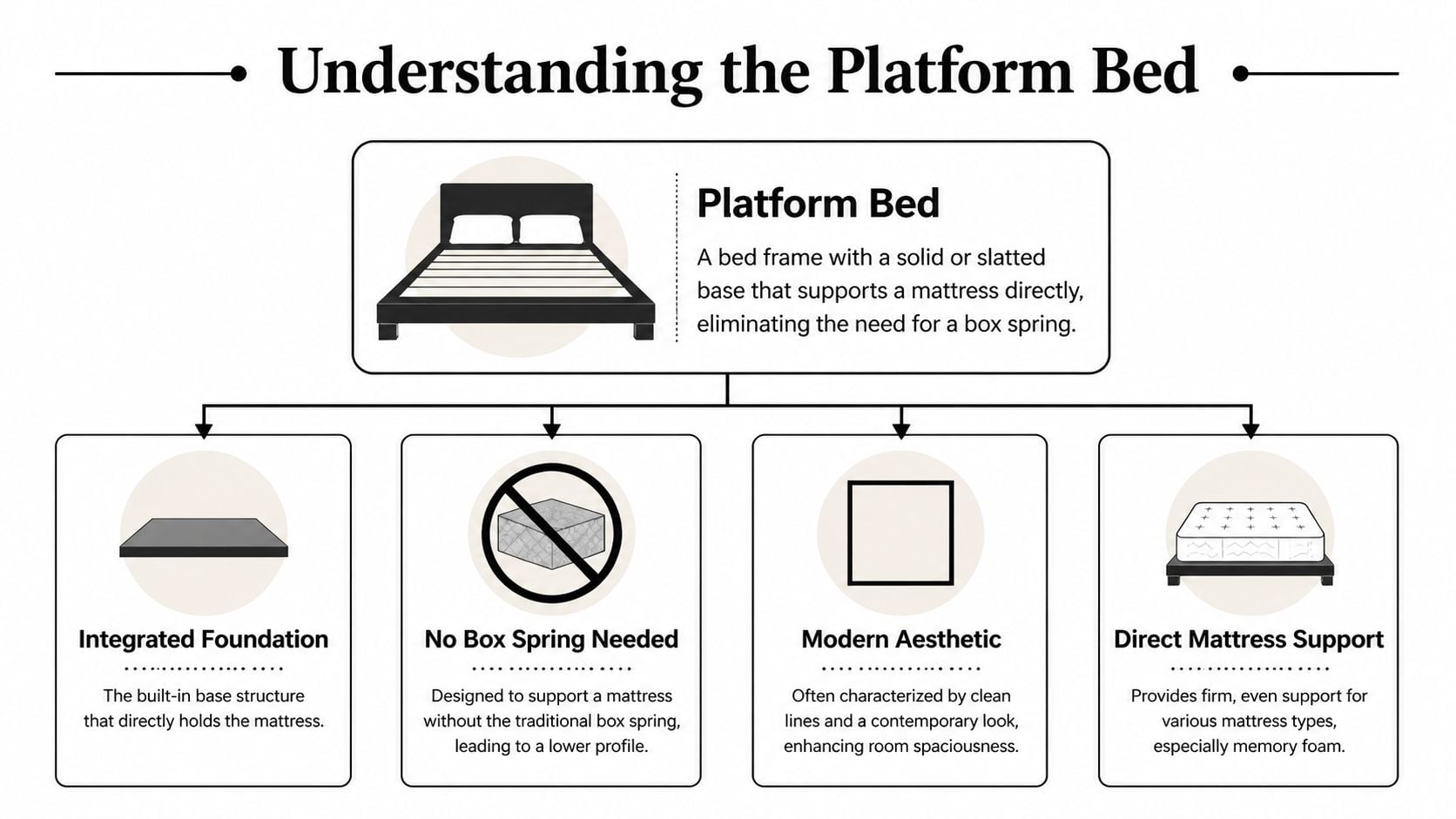
A platform bed is a bed frame with a built-in support surface. That surface can be solid or made of slats, and it’s designed to hold the mattress directly.
In plain terms, a platform bed combines the frame and the foundation into one piece. You don’t typically add a box spring on top of it.
The simple definition
Much like a well-built house floor, if the base is level, strong, and properly supported, everything above it performs better. If the base flexes, dips, or has weak spots, the material on top starts wearing unevenly.
That’s the core idea behind a platform bed. The frame itself provides the stable surface your mattress needs.
A traditional frame works differently. In that setup, the bed frame mainly holds a separate support layer, usually a box spring or foundation, and the mattress sits above that.
Why the design matters
This design changes a few practical things right away:
- Lower overall profile keeps the bed looking sleek.
- Fewer components means fewer things to buy and move.
- Direct support often works well with modern mattresses, especially memory foam and hybrids.
- Cleaner aesthetics fit contemporary bedrooms and many cabin interiors.
Platform beds aren’t automatically right for every sleeper or every mattress. Some setups still benefit from a foundation, and some manufacturer requirements matter more than shoppers realize. If you want a clearer picture of when that older-style support still makes sense, this guide on why you really do need a box spring for your bed is worth reading.
The term “platform bed” tells you the style of support, not the quality of the build. Two frames can look nearly identical and perform very differently.
The Pros and Cons of Choosing a Platform Bed
The appeal of affordable platform beds is real. So are the trade-offs. If you look at both sides clearly, you’ll make a better choice for your room and your body.
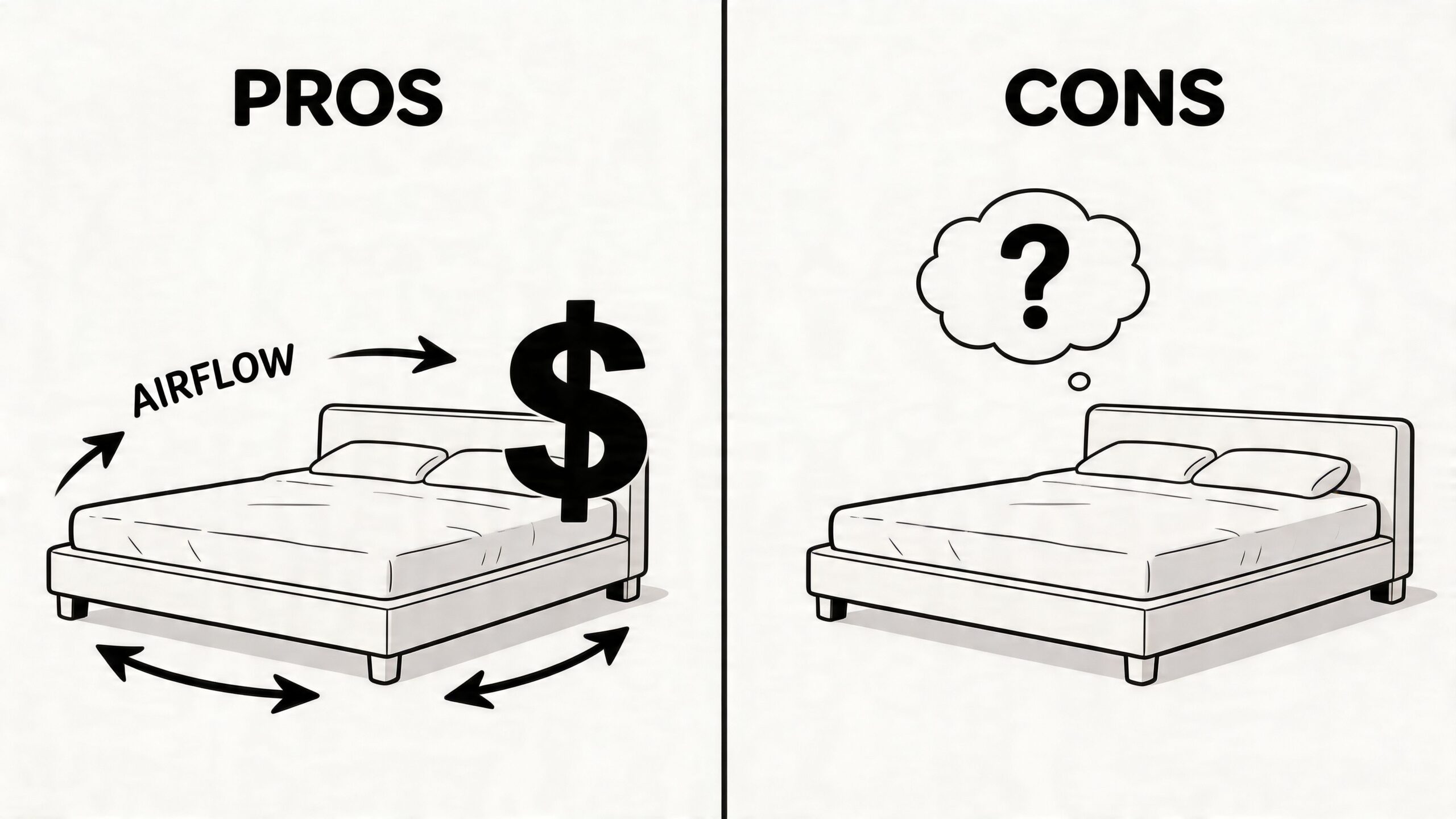
Where platform beds shine
- Lower total cost. You’re often buying one support system instead of a frame plus a separate box spring.
- Modern look. Clean lines and a lower profile work well in updated homes, condos, and mountain cabins.
- Useful storage. Many platform frames leave enough open space underneath for bins, blankets, or seasonal gear.
- Airflow under the mattress. Slatted designs can help the underside of the mattress breathe, which is helpful in homes where stale air tends to collect in closed guest rooms.
- Good compatibility with modern mattresses. Foam and hybrid beds usually pair well with a properly built platform base.
Where shoppers get surprised
The low profile isn’t ideal for everyone. If you have knee, hip, or mobility concerns, a bed that sits too low can be harder to get in and out of.
Some sleepers also notice a firmer overall feel. That doesn’t mean the mattress changed, but a solid, non-flexing base lets you feel more of the mattress’s actual support.
The biggest issue is build quality. Some budget options look sturdy until heavier use exposes the weak points. According to Apartment Therapy’s discussion of affordable platform bed shopping, consumer reports indicate a 25% to 30% higher incidence of issues like slat breakage or sagging with sub-par models.
That’s why a low price by itself doesn’t tell you much.
Practical rule: If a frame saves money by cutting corners on slats, center support, or hardware, you usually pay for it later with noise, sagging, or a mattress that wears unevenly.
How to Spot a Quality Frame on a Budget
A good budget frame doesn’t need fancy trim or a designer label. It needs solid materials, dependable support, and a weight rating that matches real life.
When I talk to shoppers about affordable platform beds, I usually steer them toward three checkpoints first. If the frame passes these, then style becomes worth discussing.
Start with the material
Material changes the whole personality of the frame.
Wood often gives the warmest look, especially in Ruidoso homes with natural finishes and cabin textures. Solid wood usually holds up better than particleboard in demanding environments. Plywood can work, but cheaper composite builds often show their weaknesses sooner.
Metal usually wins on raw strength and simpler maintenance. It can be a smart choice for heavier sleepers, guest rooms with lots of turnover, or rental properties where the frame needs to take abuse without complaint.
Upholstered frames can look soft and polished, but the beauty is mostly on the outside. What matters is what’s underneath the fabric. If the support structure is weak, the upholstery doesn’t save it.
Then inspect the support system
Weight capacity is where style stops and safety starts. A standard queen wood platform bed typically supports 400 to 600 lbs, while metal frames can handle 800 to 1,200 lbs, according to Chairish’s platform bed guide. That rating needs to cover the occupants plus the mattress itself, which often weighs 50 to 150 lbs.
Look underneath the frame, not just at the headboard.
Check for:
- Center support rail with strong attachment points
- Multiple support legs under the middle on queen and larger sizes
- Rigid slats that don’t bow easily by hand
- Hardware that tightens securely and doesn’t feel undersized
- Manufacturer-tested capacity, not vague wording
If you’re comparing frames and one seller can’t tell you the tested support rating, treat that as a warning.
A second smart check is the warranty language. It often tells you what the manufacturer expects the frame to handle and what they won’t cover. This overview of mattress and product warranties helps you spot the fine print before you buy.
Platform Bed Material Comparison
| Material | Pros | Cons | Best For |
|---|---|---|---|
| Wood | Warm look, fits rustic and modern rooms, often quiet | Quality varies a lot, cheaper engineered wood can wear faster | Primary bedrooms, style-focused rooms, cabin interiors |
| Metal | Strong support, easier to maintain, often better for heavier loads | Can feel more industrial, some cheap models get noisy | Couples, guest rooms, vacation rentals, heavier sleepers |
| Upholstered | Softer appearance, comfortable headboard feel | Fabric wear, hidden support quality, harder to inspect at a glance | Style-driven rooms, reading in bed, softer visual design |
Pairing Your Platform Bed with the Perfect Mattress
A frame and a mattress should never be treated as separate purchases. They work as a single sleep system.
You can buy an excellent mattress from Tempur-Pedic, Sealy, Stearns & Foster, or Sherwood, then undermine it with the wrong platform base. That happens more often than people think.
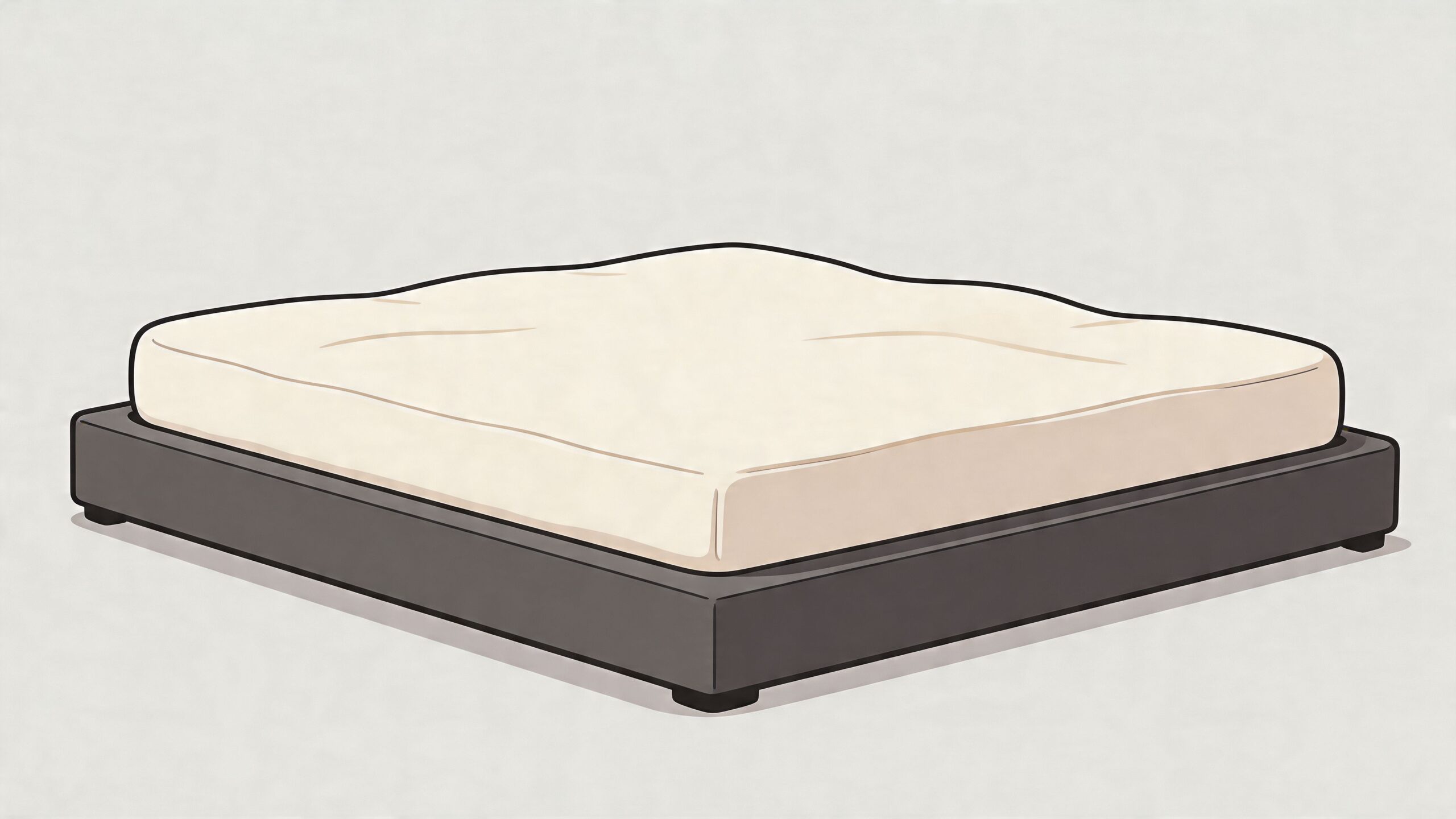
Your mattress and frame work as one system
Foam and hybrid mattresses are designed to distribute weight and relieve pressure evenly. When the support under them is uneven, the comfort layers can’t do their job correctly.
That’s why slat spacing matters so much. According to Sleepworks’ platform bed frame guide, most foam and hybrid mattress warranties, including from Sealy and Tempur-Pedic, require slats to be no more than 3 to 4 inches apart. Wider gaps can create a hammocking effect that causes sagging and damages the foam.
This isn’t a technicality. It changes how your body feels in bed.
If your shoulders or hips dip too far between slats, pressure relief gets less consistent. If your lower back isn’t held level, spinal alignment suffers. For side sleepers and people with back or neck issues, those details matter night after night.
Don’t judge a platform bed by the showroom look alone. Get down and look at the slats.
Best mattress fits for platform beds
Here’s the practical match-up:
- Memory foam mattresses do best on evenly spaced, sturdy slats because the foam needs flat support to contour correctly.
- Hybrid mattresses pair well with platform beds when the slat gaps are tight enough to support both foam layers and coils.
- Traditional innerspring models can work too, but support requirements still matter.
If you’re choosing between these mattress types, this guide for choosing a mattress can help you narrow the fit based on sleep position, pressure relief, and overall feel.
For mountain sleepers, I usually lean toward combinations that balance support and recovery. A solid platform base under a quality hybrid or pressure-relieving foam mattress tends to be a reliable setup for people who hike, work on their feet, or wake up with sore shoulders and low backs.
Advice for Ruidoso's Active Sleepers and Cabin Owners
Ruidoso sleepers don’t shop in a vacuum. The way you live here changes what works in a bed frame.
A room in a primary home near Sudderth Drive has different demands than a short-term rental in Alto, but both share one local reality. Materials behave differently in mountain conditions than they do in a climate-controlled warehouse photo shoot.

For active mountain sleepers
If you spend your days hiking, lifting, riding, or even staying busy, your bed has to recover you, not just hold you.
That usually means focusing on these points:
- Stable support so the mattress can keep your spine level
- Low motion transfer if you share the bed
- Stronger frame construction if you don’t want flex when getting in and out
- Reliable airflow under the mattress for a fresher sleep surface
Heavier-duty metal frames and better-built wood frames usually outperform flimsy upholstered budget models for active households. They feel steadier, and they’re less likely to develop movement over time.
For vacation rentals and second homes
Cabin owners need durability first. Guests won’t treat furniture the way you do, and one weak support system can lead to complaints fast.
In high-altitude, variable-humidity environments like Ruidoso, which sits over 6,900 ft, material choice matters. Consumer forums note that particleboard frames under $300 have a 15% higher rate of warping or expansion issues in dry climates, making solid wood or metal the safer low-maintenance choice for local homes, according to Living Spaces background cited in the verified local climate guidance.
That’s the kind of detail big-box pages rarely address. Around here, dry air can expose shortcuts in cheaper furniture.
A few practical habits help:
- Choose materials you can trust. Solid wood or metal usually ages better than cheap composites.
- Inspect joints seasonally. Mountain homes expand and contract more than many owners expect.
- Pair the frame with a mattress built for regular use. A weak frame shortens the useful life of the whole setup.
- Avoid “looks good online” decisions for guest rooms. Rental use finds weak spots quickly.
If you’re trying to judge whether your current mattress is still worth building around, this article on how long a mattress should last can help you decide whether to replace the frame, the mattress, or both.
In Ruidoso, “budget-friendly” and “climate-ready” are not always the same thing.
Find Your Perfect Sleep Foundation at Miller Waldrop
Affordable platform beds make sense for a lot of shoppers. They can lower setup cost, clean up the look of a room, and support modern mattresses well. But the right choice comes down to construction, compatibility, and how the frame will perform in your actual home.
That’s where local guidance matters. A frame that works fine in a generic online review may not be the best fit for a dry Ruidoso bedroom, an active sleeper, or a busy cabin with frequent guests. You want a setup that supports comfort, durability, and peace of mind.
For many shoppers, the hardest part isn’t finding options. It’s narrowing them down without worrying they’ll pick the wrong one. That’s why it helps to work with Sleep Pros who understand mattress support, local climate concerns, and the difference between a low price and real value.
At Mattress Pro by Miller Waldrop, that support goes beyond the showroom floor. You can compare trusted sleep brands like Tempur-Pedic, Sealy, Stearns & Foster, and Sherwood, ask real questions, and get help matching the right mattress and foundation to your sleep style. The Comfort Promise helps take the fear out of making the wrong choice. The Low Price Promise, flexible financing, and Full-Service Delivery with Professional Setup make the process easier from start to finish.
Ready to transform your sleep? Visit our Sleep Pros at Mattress Pro by Miller Waldrop showroom located at 2801 Sudderth Drive, Suite F, in Ruidoso. From luxury brands to budget-friendly solutions, we’re here to help you wake up loving your mornings. Browse our collection online or stop by Monday through Saturday.