

Back Pain on Bed: Causes, Relief and Mattress Fixes

What if the hardest bed in the store is not the best answer for a sore back at all? Many people treat back pain on bed as a shopping problem, then buy a firmer mattress and wake up just as stiff. The pattern of the pain matters first, because pressure, poor alignment, and a medical cause need very different responses.
Why Your Back Hurts Only in Bed
| Symptom | Likely Cause | First Check |
|---|---|---|
| Pain when getting up from bed | Sleep position or turning that loads the lower back | Which side you sleep on and how you rise |
| Neck and upper back ache on waking | Pillow too high, too low or unsupported | Whether your head tilts up or down |
| Sharp hip or shoulder pain on one side | Pressure from a bed that feels too firm | Whether pain appears only on the contact side |
| Pain all night that ignores position changes | Possible medical cause | Note whether it wakes you and any fever or weight loss |
Stiffness That Eases Once You Move
Stiffness that eases within 30 minutes of moving can point to a support or sagging problem. If a mattress dips beneath your hips, your spine may rest out of line for hours, leaving your muscles stiff when you get up. Check the purchase date and look for a visible hollow where you sleep.
How you turn and rise can also affect morning pain. For a week, note your sleeping side and whether twisting to sit up triggers the ache. That record can help distinguish a movement-related pattern from a dip in the mattress.
Pain That Ignores Every Position
Pain that stays the same on your back, side, and stomach deserves closer attention. Changing position shifts pressure, so pain that remains unchanged may have a cause beyond the bed. Note when it occurs, which positions you try, and what, if anything, eases it.
In a 2024 cross-sectional study of 375 patients with chronic low back pain, 77% (289 patients) experienced sleep disturbances because of back pain at night. A one-week log of timing, position, and relief gives you a clearer account of the pattern.
A cold night followed by a stiff morning can make your back feel less comfortable, particularly in older cabins around Alto. Before standing, gently bend and straighten your knees while still in bed. Check your pillow, too: if it tilts your head up or down, your neck may contribute to an upper-back ache.
Practical rule: Log the pattern for one week before buying anything.
When Back Pain in Bed Needs a Doctor
Does your pain ease when you change position or get up? That pattern can point to pressure or alignment. Pain that keeps worsening, has no clear connection to position, or comes with other symptoms deserves medical attention before you consider a mattress change.
The StatPearls low back pain chapter describes warning signs that may call for prompt assessment. Use the list below to decide when to contact a clinician:
Warning Signs Worth Acting On
- Fever or unexplained weight loss: Contact a doctor, especially if you feel ill along with the pain.
- Severe night pain that does not ease: Seek medical advice when rest and repositioning bring no relief.
- Pain after an injury: Ask a clinician about pain that begins after a fall, crash, or heavy lift.
- Progressive leg weakness or numbness: Arrange prompt medical assessment if strength or sensation keeps getting worse.
- Bowel or bladder changes: Seek urgent medical advice for a new change.
- Pain lasting more than four weeks: Make an appointment if the pain is not settling.
For example, if a mattress feels comfortable at first but pain remains severe through the night and is getting worse, replacing the bed may delay the right next step. Bring a symptom log to a primary care visit, noting when pain starts, your position, and what eases it. Mattress advice can support comfort and alignment, but it cannot diagnose or treat an underlying condition.
Quick Relief Tonight with Positions, Pillows and Stretches
Most bed-related back pain eases with position and pillow changes before any new mattress is needed. Try these low-risk steps tonight if no warning signs are present.
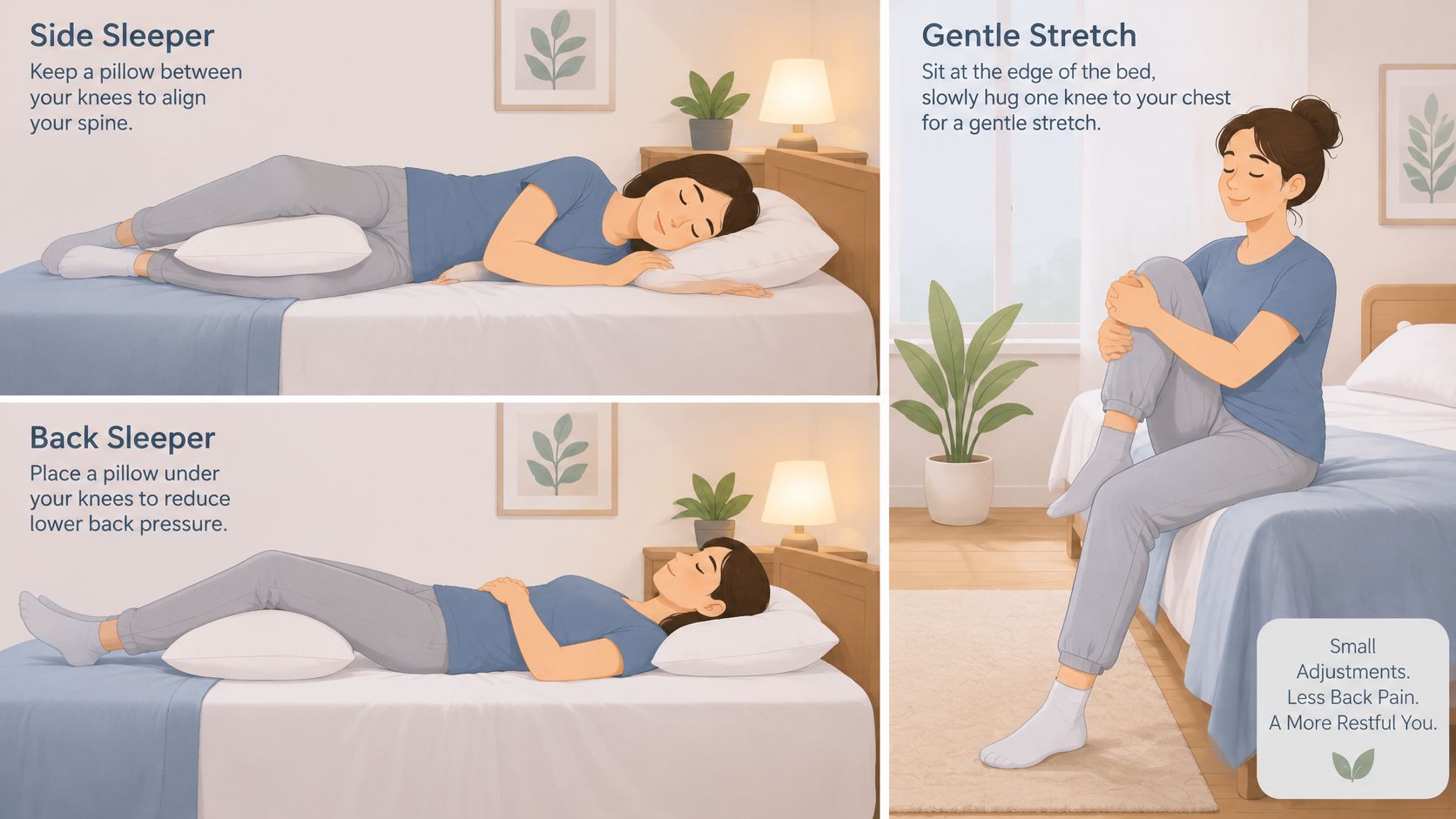
- Side sleepers: Place a pillow between the knees. The Royal Berkshire NHS back pain advice lists this arrangement because the pillow can reduce unsupported rotation between the legs and pelvis. A pillow that's too thin lets the top knee drop and drag the pelvis forward.
- Back sleepers: Slide a pillow under bent knees to support the legs and reduce an exaggerated lower back arch. A pillow that's too thick can push the knees up uncomfortably, so start low.
- Stomach sleepers: Tuck a small pillow under the stomach or hips, or move gradually toward your side. Front sleeping can move the body out of a neutral midline and strain the neck.
- Pillow height: Fill the gap between shoulder and ear so the head stays level. Too many or too few pillows tilt the neck and load the upper back.
- Rising: Roll onto your side, push up with your arms, and sit for a moment before standing. Sitting straight up with a twist is the common slip.
Gentle Stretches Before Bed
Hold knee-to-chest for 20 to 30 seconds per side, do cat-cow for 8 to 10 slow reps, then rest in child's pose for 30 seconds. Stop any movement that causes sharp pain. Stretching should feel like a release, not a test of toughness.
Progress usually looks like less stiffness on waking within a few nights. Readers who want a fuller walkthrough can follow the guide on how to align your spine while sleeping. Pain lasting beyond four weeks still needs a clinician, even if these steps help a little.
Mattress Firmness That Actually Helps Back Pain
Could a firmer mattress ease your back pain, or might it leave your hips and shoulders under pressure? The answer depends on how your body rests on the surface. Firmness describes how hard a mattress feels; support describes how well it keeps your body aligned.
A randomized, double-blind, multicenter trial published in 2003 enrolled 313 adults with chronic, nonspecific low-back pain lasting at least three months. After 90 days, participants assigned to a medium-firm mattress had better outcomes than those assigned to a firm mattress for pain in bed (odds ratio 2.36), pain on rising (1.93), and disability (2.10). These findings apply to the trial's participants, not to every person with back pain.
| Firmness Level | Research Finding | Best Fit | Watch For |
|---|---|---|---|
| Firm | Less improvement in pain in bed and disability than medium-firm in the 2003 trial | Sleepers who prefer a firmer feel | Hip and shoulder pressure for side sleepers |
| Medium-firm | Better pain, pain-on-rising and disability outcomes than firm in the 2003 trial | A starting point for people with chronic, nonspecific low-back pain | Too much sink for your frame |
| Soft or plush | Limited direct trial evidence | Sleepers seeking more cushioning | A sagging feel that may leave the spine unsupported |
| Extra-firm or very hard | Not established as a universal fix for back pain | Sleepers who prefer minimal give | Less cushioning where the body presses into the bed |
Why Hard Does Not Equal Supportive
A very firm surface can concentrate pressure at the hips and shoulders. A worn or overly soft surface can let the middle of the body sink. In either case, the mattress may not keep your body comfortably aligned.
Your build and preferred sleeping position affect how a mattress feels. A firmness that cushions one person's pressure points may feel too soft or too hard to someone else. Consider how your current bed feels after a full night, not only how it feels during a quick test. The guide to choosing a mattress firmness explains how to compare firmness with your sleeping position and comfort preferences.
Memory Foam, Hybrid and Latex for Pressure Relief
A mattress can ease pressure at the hips and shoulders while still letting your lower back sink too far. Its materials affect how it cushions your body, responds as you turn, and manages heat. The best fit depends on your pressure points, sleep position, and how much support keeps your spine comfortably aligned.
Memory foam conforms closely to the body and spreads weight across the hips and shoulders, which can ease pressure at those points. It may hold heat and respond slowly when you turn. Hybrid mattresses pair pocketed coils with foam comfort layers, offering lift and airflow with a more responsive feel.
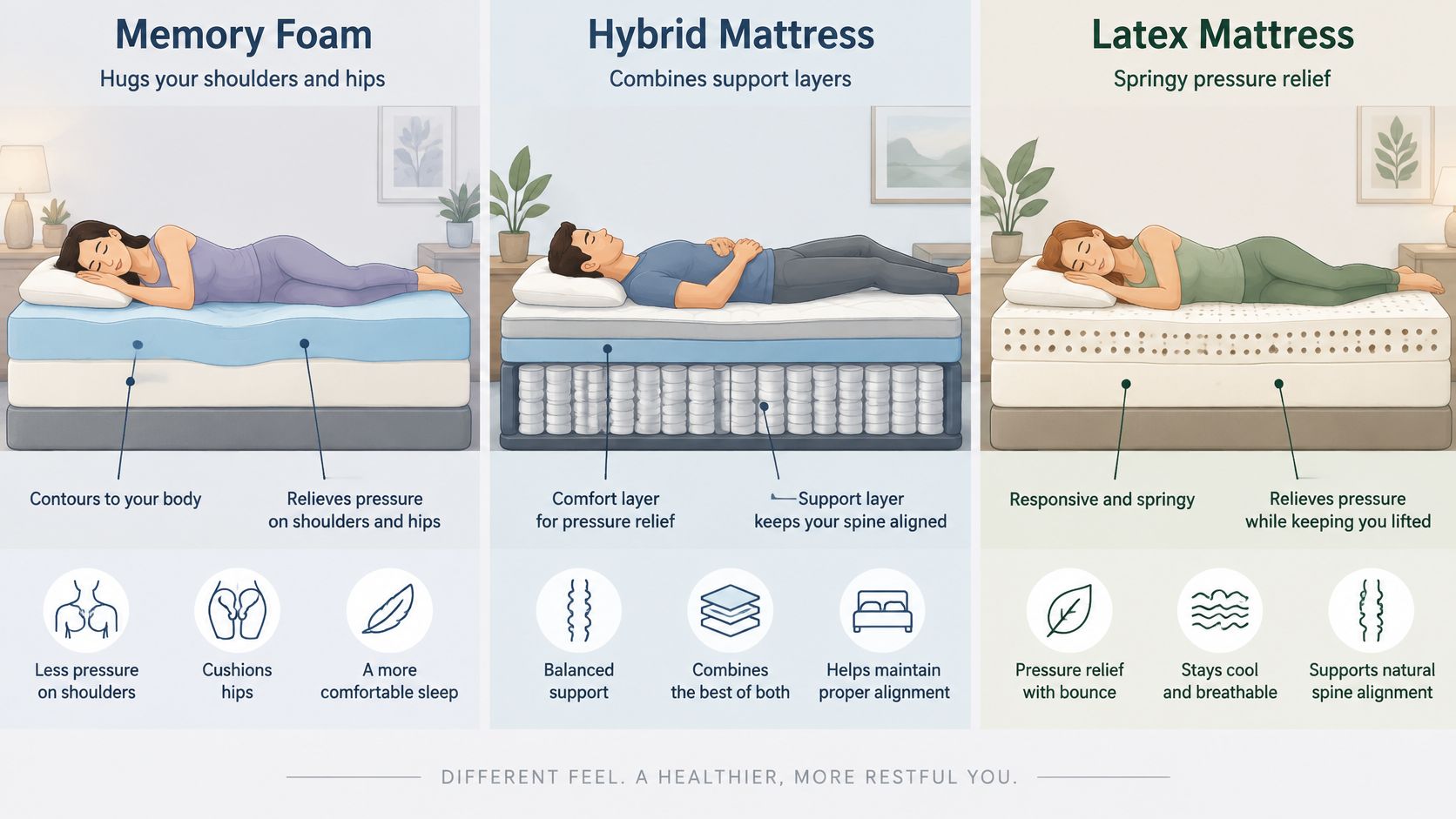
Latex has a responsive contour, natural bounce, and good airflow. Innerspring offers direct support with less contouring. A bouncy innerspring can still leave your lower back unsupported if your hips sink too far into the comfort layer, so judge how your body rests on the whole mattress.
| Type | Pressure Relief | Spinal Support | Temperature | Best Fit |
|---|---|---|---|---|
| Memory foam | High, contours to hips and shoulders | Good if the core is firm enough | Can trap heat; gel layers help | Side sleepers with pressure-point pain |
| Hybrid (coils and foam) | Moderate to high | Strong, with lift from coils | Better airflow than solid foam | Combination sleepers and heavier frames |
| Latex | Moderate, responsive contour | Strong, even support | Breathable and cool | Sleepers who want bounce and durability |
| Innerspring | Lower, less contouring | Firm, direct support | Good airflow | Back sleepers who need a stable base |
An experimental mattress study in Sleep Science and Practice found that a surface promoting spinal neutrality reduced pain while lying by 18% and increased comfort by 25%. It did not significantly improve pain or stiffness upon rising. A mattress can affect how your back feels in bed without resolving every cause of morning symptoms.
For Ruidoso sleepers, consider how the mattress feels under the bedding you use. A warmer comfort layer may feel different beneath heavy blankets on cold nights; if you tend to wake warm, compare the materials' heat and airflow characteristics. The guide to memory foam versus hybrid mattresses for back pain explains the tradeoffs.
How to Test a Mattress Before You Buy
How can you tell whether a mattress will support your back after the first few minutes? Lie in your usual sleep position for at least 20 minutes. Bring your regular pillow, too, so your neck sits as it does at home. North Bristol NHS guidance on back injuries recommends spending at least 20 minutes lying on a mattress before buying it.
A Six Step Showroom Test
- Lie in your normal position for 20 minutes. Give your body time to settle into the surface.
- On your back, slide a hand under your lower back. It should pass with slight effort, without a large gap or deep sinking.
- On your side, check your shoulder and hip. Pinching may mean too much pressure; a deep dip may signal insufficient support.
- Shift from side to back, then back again. Notice whether you can move freely or feel caught in a hollow.
- Sit on the edge and stand up. Check whether the edge feels stable and getting up feels comfortable.
- Ask a Sleep Pro about adjusting layers or the base. A small change may improve how the mattress feels.
A few minutes can reveal obvious discomfort, but a longer trial helps you judge how the surface feels once your body has settled. Notice pressure, ease of movement, and whether your lower back feels supported. The in-store mattress testing process offers guidance through these checks.
A mattress can feel supportive without being hard or orthopedic. Look for a balance: enough contour to ease pressure, with enough support to keep your body comfortable rather than sinking into a hollow.
Mattress Pro by Miller Waldrop offers a Rest Easy Guarantee. Its Comfort Promise is designed to help neighbors wake up loving their mornings.
Replace or Adjust Your Current Bed
Check the bedroom temperature at night before changing the mattress. If the room feels uncomfortable, adjust it and observe whether your sleep improves. Change one thing at a time and give each adjustment several nights so you can tell what helped.
Adjustments Worth Trying First
- Rotate the mattress head to foot: This can even out wear where your hips and shoulders rest. Follow the mattress maker's guidance.
- Add a medium-firm topper: Try one if the surface feels too soft but the mattress still supports you.
- Soften a hard surface with a thick duvet under the sheet: This adds cushioning without changing the support underneath.
- Check the base: Sagging slats or a worn foundation can let the mattress dip and affect spinal alignment.
- Replace a flattened pillow: A worn pillow can tilt your neck, just as a sagging mattress can affect your hips.
Focus on what your back is telling you. If pain eases after adjusting the base or adding cushioning, the bed may be part of the problem. If discomfort continues despite reasonable changes, or gets worse, don't assume a new mattress will fix it. Persistent pain may need medical attention.
If morning stiffness remains after a few weeks of adjustments, replacement may be worth considering, especially if the mattress is sagging or causing pressure points. Keep notes on what you tried and how your symptoms changed. That record can help a Sleep Pro understand whether the issue appears related to the bed's surface, support, or your sleep setup.
Book a Sleep Pro Consultation for Better Nights
Does your back need a different sleep surface, or does the pain call for medical care? A Sleep Pro consultation can help you assess whether pressure, support, or your sleep habits may be contributing, while persistent or concerning symptoms belong with a doctor.
At Mattress Pro by Miller Waldrop, consultations begin with your sleep habits and preferences. A Sleep Pro can discuss your body type, sleep position, and budget, then help you compare mattresses from Tempur-Pedic, Sealy, Stearns & Foster, and Sherwood. You can also connect with a sleep pro for a consultation or answer a few questions in the Mattress Guide to get sleep recommendations.
Bring your pain log and note your usual sleep position. These details help make the conversation specific: where discomfort starts, when it appears, and whether a position change affects it. Mattress Pro's Sleep Knowledge blog also shares sleep tips and mattress buying guides.
Mattress Pro by Miller Waldrop serves Ruidoso and Lincoln County, drawing on a 70-year family legacy. The store is at 2801 Sudderth Drive in Ruidoso, and you can call (575) 630-1234 with questions. Its consultations pair personalized guidance with carefully curated mattresses, so you can focus on finding a sleep solution suited to your needs.