

Memory Foam vs Hybrid Mattress for Back Pain

You wake up in Ruidoso, swing your legs over the side of the bed, and wait for your lower back to loosen before standing. By breakfast, the soreness may have faded, but the same stiffness returns the next morning. That pattern can make mattress shopping feel less like choosing comfort and more like gambling with your sleep.
The memory foam vs hybrid mattress for back pain decision shouldn't begin with a material label. It should begin with how the mattress supports the sleeper's body, sleep position, pressure points, and temperature preferences. The right bed helps keep the spine neutral without creating painful pressure at the shoulders and hips.
At Mattress Pro by Miller Waldrop, local Sleep Pros help Ruidoso neighbors compare those details in person. The 70-year Miller Waldrop legacy, the Comfort Promise, and full-service delivery with professional setup offer a level of personal care that a bed-in-a-box website can't provide.
Why Your Mattress Choice Matters When Your Back Hurts
A mattress doesn't treat chronic back pain, and it shouldn't replace medical care. It can, however, either support a more comfortable sleep position or reinforce the posture that leaves someone sore in the morning. That difference matters when the body spends hours in one position overnight.
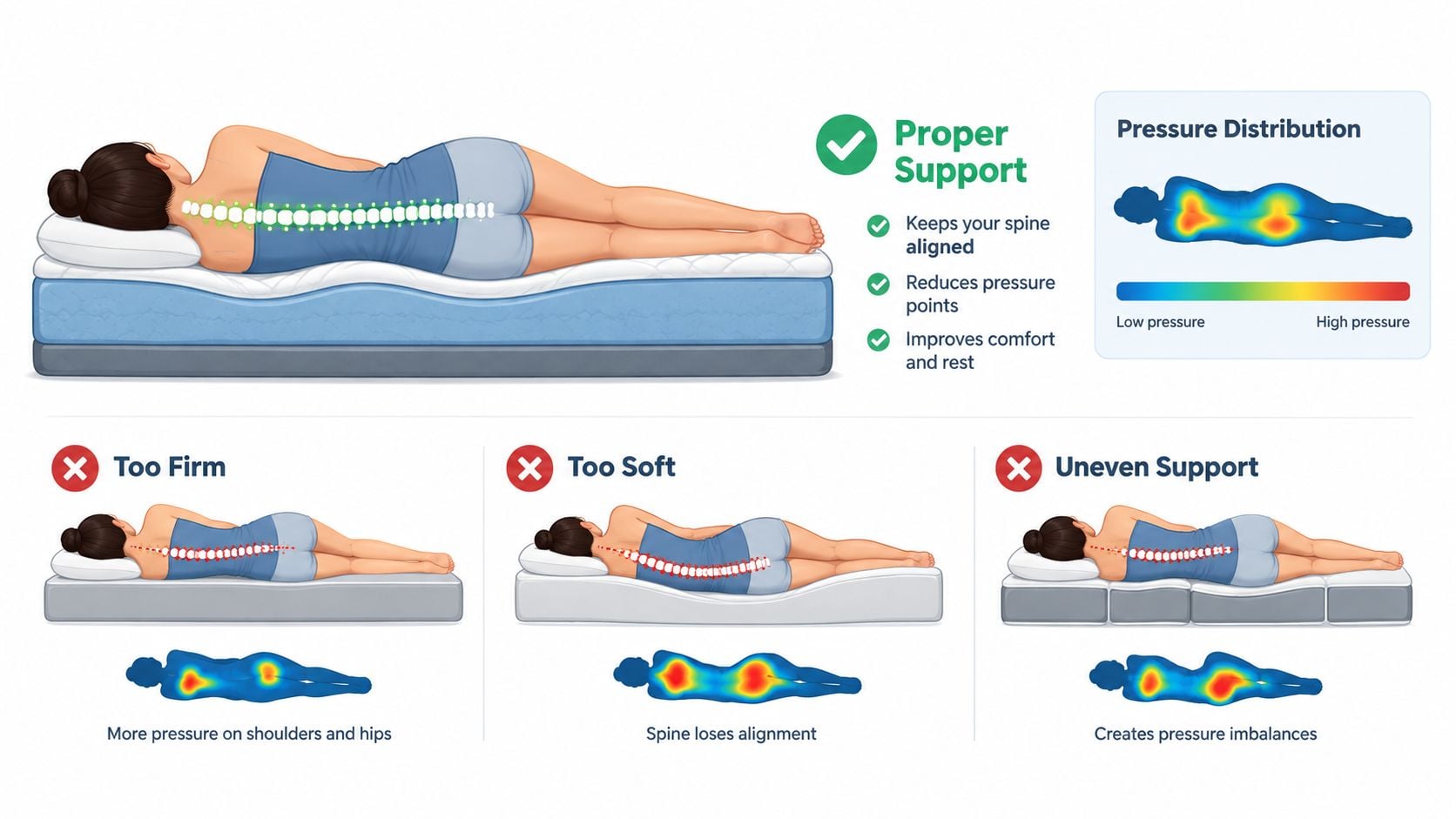
A soft surface may let the pelvis drop below the torso. A very firm surface may press sharply into the shoulders and hips. Neither problem comes from the word “foam” or “coils” alone. Firmness, construction, body weight, and sleep position work together.
The morning test matters
A useful question isn't, “Which material is better?” It's, “How does this mattress feel after the body has settled into its normal position?”
A back sleeper may notice that the hips sink too far, increasing the curve through the lower spine. A side sleeper may feel pressure concentrated at the shoulder or hip. A combination sleeper may wake because the surface makes turning feel difficult.
Practical rule: The best mattress is the one that keeps the torso and pelvis level while cushioning the body's prominent pressure points.
That principle is more useful than choosing the hardest bed in the showroom. A guide to whether a bad mattress can cause back pain can help readers identify whether their current mattress may be contributing to poor sleep, but the replacement decision still requires personal testing.
Ruidoso conditions change the comfort equation
Ruidoso's dry mountain air and cool nights can make a warm mattress feel pleasant at bedtime, then uncomfortable under heavy bedding later in the night. A sleeper who runs warm may need more airflow, while another may value the close contour of foam and prefer warmer insulation.
By the end of the shopping process, the sleeper should know what neutral alignment feels like, how much pressure relief is enough, and whether memory foam or a hybrid offers the more useful starting point.
How a Mattress Actually Affects Your Spine and Pressure
A mattress affects the spine through two basic jobs. It should cushion pressure, especially at the shoulders and hips, while providing enough resistance to keep the spine in a neutral position. Neutral alignment means the torso, pelvis, and neck stay reasonably level instead of bending sharply around a soft spot or pushing against a rigid surface.
Two common problems
When a mattress allows the pelvis to sink too far, the lumbar area can move into excessive flexion. This is especially relevant for back sleepers whose midsection carries more weight. A hybrid's coils may help provide pushback, but a poorly designed hybrid with thin comfort layers can still create pressure at the hips.
The opposite problem occurs when the surface doesn't yield enough. A side sleeper's shoulder and hip may absorb too much pressure, producing numbness, soreness, or repeated position changes. Contouring helps by spreading that load across a wider area, but too much contouring can make movement harder.
What medium-firm means in practice
Research generally supports a medium-firm feel for adults with nonspecific chronic low-back pain. A systematic review found that medium-firm mattresses generally improved comfort, sleep quality, and spinal alignment compared with soft or very firm surfaces. The review also emphasized that construction alone doesn't determine the result. Read the systematic review on mattress firmness and low-back pain.
In the showroom, the practical check is simple:
- Lie in the usual sleeping position.
- Stay there for several minutes instead of sitting briefly on the edge.
- Ask a partner or Sleep Pro to check whether the torso and pelvis remain level.
- Notice pressure at the shoulders, hips, and lower back.
- Turn as normally as possible and assess whether movement feels restricted.
A separate guide to aligning the spine while sleeping can help explain positioning, but the mattress still needs to respond correctly to the sleeper's body.
What Memory Foam Does for a Sore Back
Memory foam uses viscoelastic comfort layers that respond gradually to body weight and warmth. Instead of pushing back immediately, the foam conforms around the shoulders, hips, and lower back. That close contouring can spread pressure over a broader surface and reduce the sharp feeling created by a mattress that resists every curve.
Where memory foam earns its place
Memory foam is a strong starting point for a side sleeper who feels pressure at the shoulder and hip. It can also suit couples who want strong motion isolation, because the foam absorbs movement instead of carrying it widely across the surface.
The material isn't automatically supportive, though. A softer support core or an overly yielding comfort system may let the pelvis sink too far. Heavier sleepers need to pay close attention to whether the hips settle below the torso, especially when lying on the back.
The practical lesson is to evaluate density and construction, not just the phrase “memory foam.” The memory foam mattress density guide can help shoppers understand why two all-foam beds may feel very different.
The trade-offs are real
Dense foam can retain heat and may make repositioning harder. A sleeper who changes positions frequently may feel caught in the mattress rather than supported by it. Cooling gel technology, breathable covers, and lower-density foam can change the feel, but no cooling feature should override poor spinal alignment.
The clinical benchmark is improvement in pain and function over time, not the softness felt during the first minute in a showroom. An evidence review of nine studies reported that intermediate-firm mattresses improved disability more effectively than firm mattresses. Foam mattresses also performed better than firm mattresses in some comparisons, although the evidence base was limited and included only two randomized controlled trials. Review the evidence on mattresses and chronic low-back pain.
For a back-pain shopper, memory foam makes the most sense when pressure redistribution and motion isolation matter more than bounce and easy repositioning. The support layers still need to hold the pelvis in a stable position.
What a Hybrid Brings to Sleep and on the Mattress
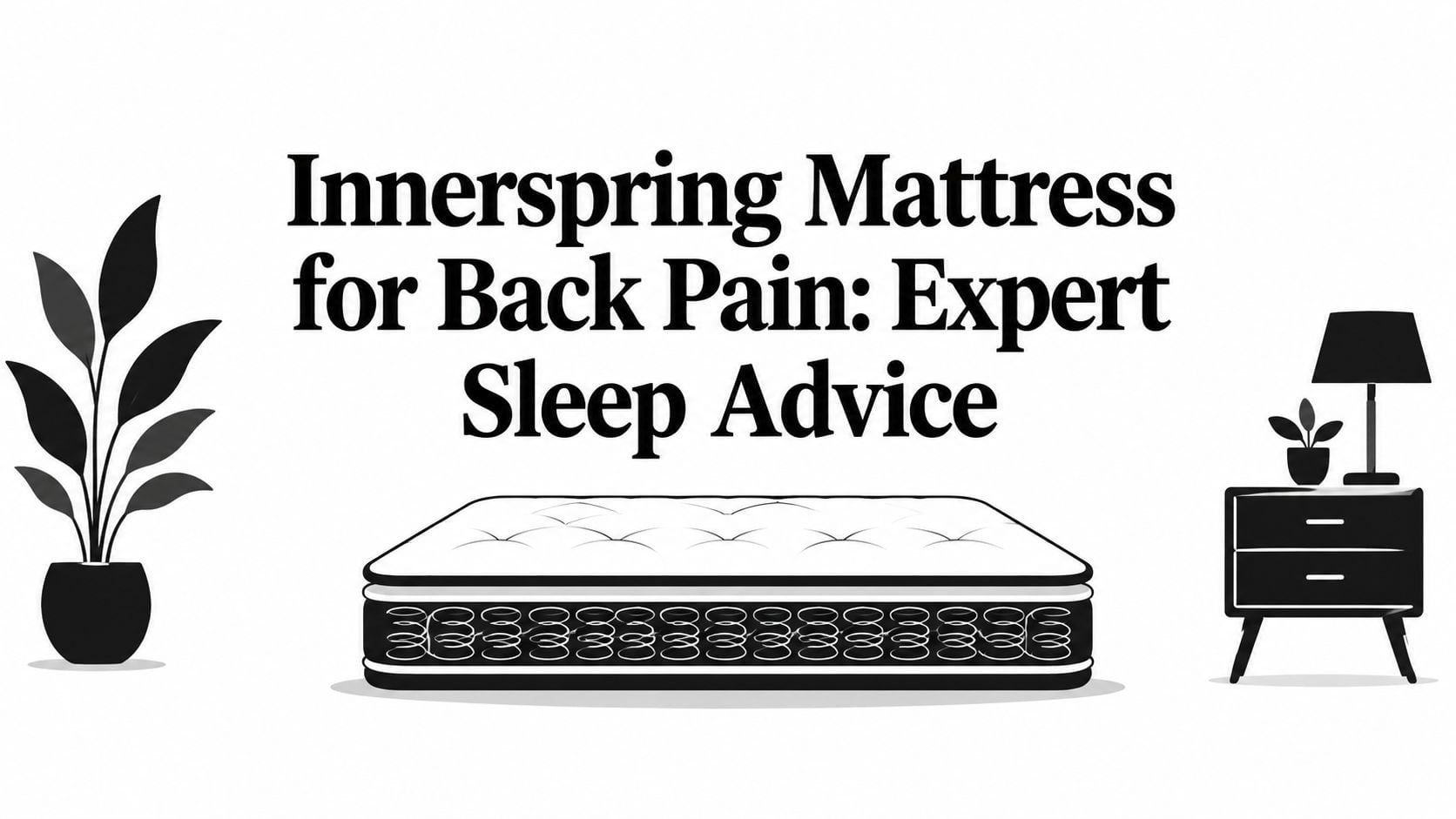
A hybrid combines foam comfort layers with a support core made from pocketed coils. The foam supplies contouring at the surface, while the coils provide a more resilient response underneath. Most sleepers notice the difference when changing positions, sitting near the edge, or shifting weight from one area to another.
Why the coil core changes the feel
Pocketed coils push back sooner than dense foam. That response can help a sleeper avoid the deep, stuck feeling associated with some all-foam designs. It may also reduce the risk of the hips or lumbar area bottoming out when the mattress has enough comfort material above the coils.
Hybrids usually provide stronger edge support because the support structure reaches closer to the perimeter. That's useful for someone who sits on the edge to dress, sleeps near the side, or shares a smaller sleep surface with a partner.
The limitation is equally important. If the comfort layers are too thin, the coil response can reach the shoulders and hips before pressure has been adequately softened. A hybrid may also transmit more motion than memory foam, even when the coils are individually wrapped.
Airflow matters in a mountain climate
The open space around the coil core generally allows more airflow than a solid foam support base. That can feel helpful in Ruidoso homes where cool nights encourage heavier blankets, but the sleeper still needs to test the surface with normal bedding. A cool room doesn't guarantee a cool mattress.
The most useful hybrid is not the one with the most coils or the firmest marketing language. It's the one that combines medium-firm resistance with enough foam cushioning for the sleeper's shoulders, hips, and lower back. Readers can review available construction options through the hybrid mattress brands guide.
Memory Foam vs Hybrid at a Glance
The table below gives a practical starting point for shoppers comparing the two constructions for back pain.
| Criterion | Memory Foam | Hybrid |
|---|---|---|
| Pressure relief | Winner for deeper contouring around shoulders and hips | Strong relief when comfort layers are sufficiently thick |
| Spinal support | Strong when the support core prevents pelvic sink | Winner for resilient pushback and stable weight distribution |
| Motion isolation | Winner for absorbing partner movement | Good, but more movement may travel through the coil system |
| Heat retention | More likely to retain body heat, depending on foam and cover | Winner for passive airflow through the coil core |
| Edge support | Can be adequate with reinforced foam edges | Winner for perimeter stability |
| Ease of movement | Slower response may make turning harder | Winner for repositioning and a lifted feel |
Neither construction is universally better for back pain. A medium-firm memory foam mattress can outperform a firm hybrid for a side sleeper who needs pressure relief, while a responsive hybrid can suit a back or combination sleeper who feels trapped by deep foam.
The deciding test is whether the mattress supports a neutral spine without creating painful pressure. Material is the starting category, not the final answer.
Which Sleeper Bed Matches Which Construction
Sleep position gives shoppers a useful first filter, but it can't replace lying on the actual mattress. Body weight changes how fully the sleeper engages the comfort layers, and firmness labels aren't perfectly consistent between collections.
Side sleepers
A side sleeper with sharp shoulder or hip pressure should start with memory foam or a hybrid with generous cushioning. Deep contouring can reduce localized pressure, but the surface still needs enough resistance to keep the waist and pelvis from twisting downward.
The test is direct. If the shoulder feels compressed, the surface is too resistant. If the hips disappear below the torso, the surface is too yielding.
Back sleepers
A back sleeper should prioritize a medium-firm feel with controlled sink beneath the pelvis. A hybrid is often the better first construction to test because the coil core provides resilient support, but memory foam can work when its support base keeps the hips from dropping too far.
The sleeper shouldn't choose a very firm mattress automatically. Evidence from a large randomized, double-blind trial involving 313 adults with chronic, nonspecific low-back pain found better outcomes with medium-firm spring mattresses than firm mattresses after 90 days. The trial reported an odds ratio of 2.36 for pain in bed, 1.93 for pain on rising, and 2.10 for disability, with the associated confidence intervals reported in the trial publication.
Combination sleepers
A sleeper who turns frequently should start with a hybrid. The coil system generally makes movement easier, while the foam surface still offers pressure relief. Memory foam remains possible, but only if the sleeper can roll and rise without fighting the contour.
Heavier sleepers
Heavier sleepers should focus on support-core resistance and the risk of bottoming out. A hybrid is the stronger first test when the sleeper needs noticeable pushback, but a well-constructed memory foam mattress can work if the pelvis remains level.
Hot sleepers and couples
A hot sleeper in a Lincoln County home may prefer a hybrid's passive airflow, especially when bedding adds warmth. A couple whose main concern is a restless partner may prefer memory foam's stronger motion isolation. Cooling preference should refine the decision, not overrule alignment.
How to Test Either Bed the Right Way in the Showroom
A showroom test works only when the shopper treats it like a sleep-position assessment rather than a quick sit-down. At the Mattress Pro showroom on Sudderth Drive, the Sleep Pros can help compare Tempur-Pedic, Sealy, Stearns & Foster, and Sherwood mattresses by feel, construction, and fit.
Use the same test on both constructions
- Start in the usual position. Lie down as the sleeper normally does at home, including side, back, or combination positions.
- Stay still for several minutes. Let the comfort layers respond instead of judging the first impression.
- Check the spine. Have a partner or Sleep Pro assess whether the torso and pelvis remain level.
- Test movement. Roll, sit up, and return to the preferred position. Notice whether the mattress helps or resists.
- Use the perimeter. Sit on the edge, then lie near it. Edge collapse can matter in daily use.
- Check pressure. Pay attention to the shoulder, hip, lumbar area, and heels.
A mattress that feels impressive for a few seconds may become uncomfortable once the body settles. The better choice is the bed that produces stable support without forcing a sleeper to tolerate pressure.
A sleep consultation near Ruidoso gives shoppers a structured way to compare these details. The Comfort Promise also addresses the main fear behind mattress shopping, choosing incorrectly. A home trial or comfort exchange gives the sleeper an opportunity to evaluate the bed in their own bedroom, with normal blankets, temperature, and partner movement.
Making the Call and Sleeping Better in Ruidoso
The clearest recommendation is to start with medium-firm alignment, then choose the construction that solves the sleeper's biggest problem.
- Choose memory foam first when deep contouring, shoulder and hip pressure relief, and motion isolation matter most.
- Choose a hybrid first when easier movement, coil pushback, edge stability, and passive airflow matter most.
- Test both constructions when the sleeper has chronic soreness, changes positions, or isn't sure whether sink or pressure is the larger problem.
- Reject either mattress if the pelvis sags, the shoulders feel compressed, or turning becomes difficult.
A controlled-trial review reported that medium-firm mattresses improved sleep quality by approximately 55% and reduced pain by approximately 48% among patients with low-back pain. Those figures describe pooled review findings, not a guarantee for every sleeper. The same review found that mattresses with actively adjustable properties improved spinal alignment. See the controlled-trial review of mattress firmness and low-back pain.
Cooling deserves a measured conclusion. A 2025 randomized crossover study of 34 healthy adults using a temperature-controlled mattress cover for 14 nights found a large improvement in perceived sleep quality, but no significant differences in objective sleep metrics or biometric measures. Another 2025 sleep study found that real-time mattress temperature adjustment improved several polysomnography measures during summer conditions, but that evidence concerns temperature control, not a direct memory-foam-versus-hybrid comparison. Review the temperature-controlled mattress-cover study.
For Ruidoso shoppers, airflow and bedding choices matter, but alignment remains the priority. Mattress Pro by Miller Waldrop connects that decision to local service, the Low Price Promise, flexible financing, the Comfort Promise, and full-service delivery with professional setup across Ruidoso, Alto, and Lincoln County.
Mattress Pro by Miller Waldrop helps Ruidoso sleepers compare Tempur-Pedic, Sealy, Stearns & Foster, and Sherwood mattresses for pressure relief, alignment, movement, and cooling preferences. Visit Mattress Pro by Miller Waldrop at 2801 Sudderth Drive, Suite F, in Ruidoso, or stop by Monday through Saturday to test memory foam and hybrid options with local Sleep Pros.