

Best Mattress for Hip Pain and Sciatica: 2026 Guide


A sore hip can turn a familiar Ruidoso bedroom into a nightly negotiation. One neighbor wakes after a long night shift with shooting pain down the leg. Another rolls away from a tender hip after a day on the mountain. The mattress may not be the cause of the problem, but the wrong surface can add pressure, twist the pelvis, or leave the lower back unsupported.
The right best mattress for hip pain and sciatica isn't chosen by a label alone. A Sleep Pro looks at where the pain occurs, how the sleeper lies, how the body settles into the comfort layers, and whether the support core keeps the spine neutral. That hands-on process matters more than a quick online firmness quiz.
Why Hip Pain and Sciatica Change How You Should Shop for a Mattress
A retiree living near Sudderth Drive may notice a sharp ache on the outside of the hip after sleeping on one side. A Lincoln County nurse may feel radiating leg pain after a night shift. A skier with an old injury may find that a familiar mattress becomes uncomfortable when a seasonal flare-up returns. Each person needs a different pressure and support balance.
Hip pain and sciatica overlap, but they aren't interchangeable. One may need more cushioning at a bony contact point. The other may need stronger pelvic control and better lumbar alignment. Buying a compressed mattress online without testing either quality can leave a shopper guessing until the return process begins.
Start with the pain pattern
Before shopping, note three things:
- Pain location: Is discomfort concentrated at the outside of the hip, or does it travel through the buttock and leg?
- Sleep position: Does the sleeper spend most of the night on the side, back, stomach, or changing between positions?
- Morning response: Does the body feel better after moving, or does the mattress seem to create stiffness and pressure?
A mattress should be judged by the sleeper's actual problem position, not by how attractive it looks in a showroom.
Follow a practical selection path
The most reliable process moves in order:
- Identify whether pressure relief, spinal alignment, or both matter most.
- Understand firmness as surface feel and support as deeper structural control.
- Compare memory foam, hybrid, innerspring, and latex construction.
- Match the feel to body geometry and sleeping position.
- Test the mattress for enough time to notice pressure and movement.
- Use the local Comfort Promise to reduce the fear of choosing incorrectly.
Research supports starting with medium-firm support, but that doesn't mean every sleeper should choose the same bed. The 2003 randomized trial on 313 adults with chronic non-specific low-back pain found better outcomes on medium-firm mattresses than firm mattresses over 90 days, including improved odds for pain in bed, pain on rising, and disability, as reported in the landmark mattress firmness trial. The evidence is useful, but it doesn't replace individual testing, especially when true radiating pain is involved.
Miller Waldrop has served Ruidoso families for 70 years, with a local process that a bed-in-a-box website can't reproduce. A Sleep Pro can observe how a sleeper's hips settle, ask about the pain pattern, and compare Tempur-Pedic, Sealy, Stearns & Foster, and Sherwood options in person.
Hip Pain vs Sciatica and Why That Distinction Matters
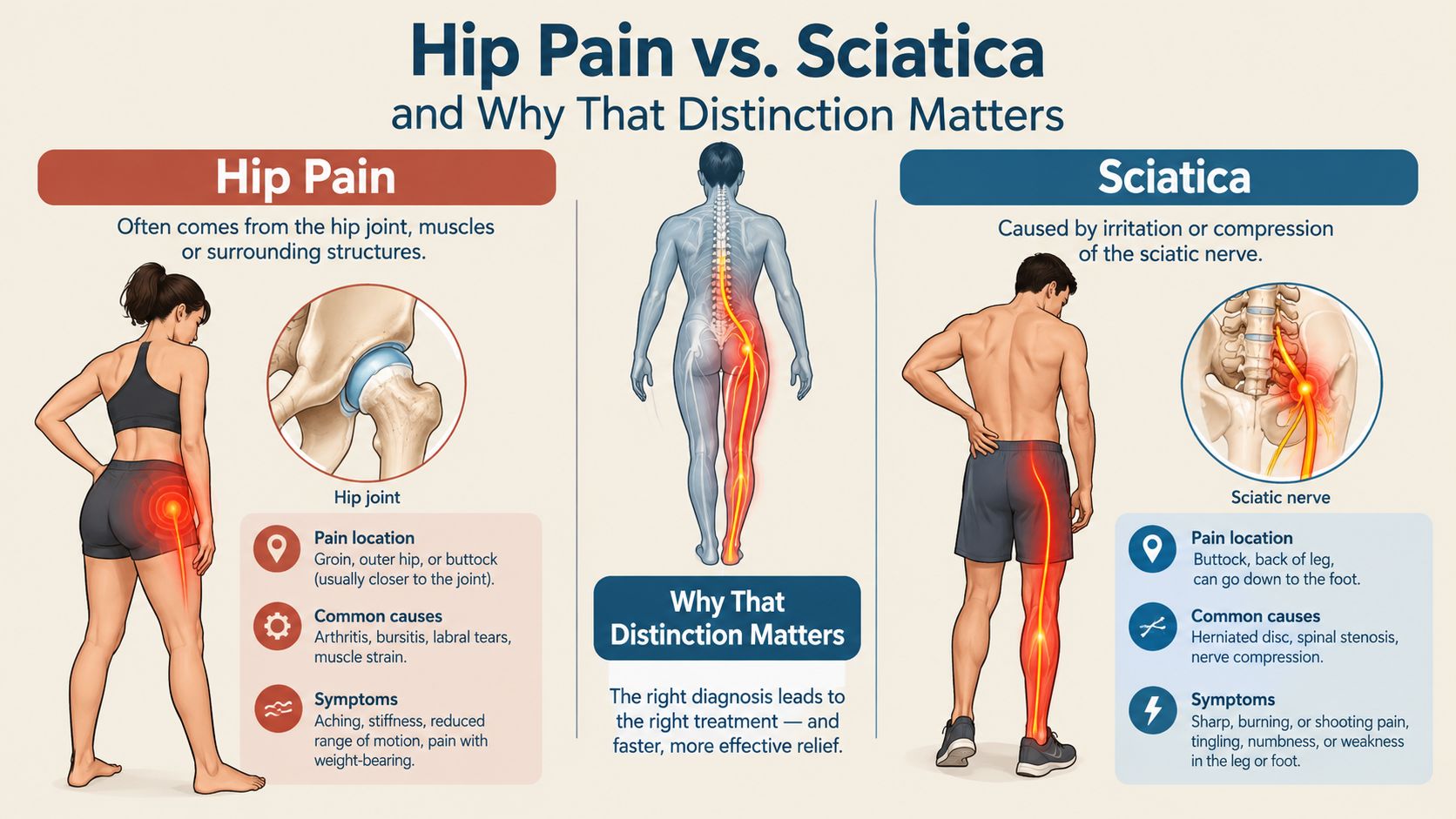
Localized hip pain often behaves like a pressure-point problem. Pain around the greater trochanter, the bony area on the outside of the hip, can become worse when a side sleeper rests directly on that spot. A conforming comfort layer may reduce the concentrated load without allowing the entire pelvis to collapse.
Sciatica behaves differently. It describes a radiating symptom that can travel from the lower back through the buttock and down the leg. The mattress decision then centers on keeping the pelvis and lower spine in a stable, neutral position, rather than making the top layer softer.
Match the surface to the symptom
A plush pillow-top can feel immediately soothing on a tender hip. If the pelvis sinks too much, however, the lower back may lose neutral alignment and the sleeper may wake with more nerve irritation. A firm mattress can restrain excessive sink, yet it may press directly into a sensitive hip joint during side sleeping.
That conflict explains why a single firmness rule falls short. The shopper needs enough contouring to protect the hip, with enough underlying support to prevent the pelvis from dropping out of line.
Know what the mattress can and can't do
The strongest commonly cited clinical evidence is indirect. The randomized trial described above addressed chronic non-specific low-back pain and excluded referred or radiating pain, so it doesn't prove that the same result applies directly to sciatica. The practical recommendation remains useful, but a sleeper with true nerve symptoms should treat medium-firm support as a starting point, not a medical treatment.
A mattress also can't diagnose the source of leg pain. Persistent numbness, weakness, or worsening symptoms require qualified medical attention. For mattress shopping, the important distinction is simple: localized hip pain asks for pressure relief, while sciatica asks for pressure relief plus alignment control.
How Firmness and Support Affect Your Hips and Nerves
Firmness is the first sensation you notice when you lie down. Support is what happens beneath it, especially whether the mattress keeps your pelvis and spine aligned under your weight. A comfortable surface can still fail if its support core lets your hips drop.
A surface that is too soft can create a hammock effect. The hips sink, the pelvis rotates, and the lower back arches or twists. Morning stiffness, feeling trapped in a dip, or discomfort traveling down the leg are signs that the bed is losing alignment.
A surface that is too firm creates pressure instead. Side sleepers may not have enough room for the hip and shoulder to settle, causing the waist to bend or the sleeper to keep shifting away from one painful point. A rigid lower-back sensation can develop when the mattress pushes against the body's curves rather than supporting them.
What the evidence supports
The 2003 trial found better outcomes with medium-firm mattresses than with firm mattresses for the adults studied. Reported odds ratios were 2.36 for improvement in pain while in bed, 1.93 for pain on rising, and 2.10 for disability, according to the published trial results. A later review also found that intermediate-firmness surfaces outperformed firm mattresses for chronic pain outcomes. Several mattress technologies improved low-back pain and sleep quality compared with standard firm bedding, as summarized in this therapeutic mattress evidence review.
That evidence makes medium-firm the sensible first test for the average-weight adult, though body type shifts the target. It does not support choosing an ultra-firm mattress because back or nerve discomfort is present.
Firmness versus support
| Feel | Best For | Watch Out For |
|---|---|---|
| Softer surface with controlled support | Side sleepers needing more hip cushioning | Excessive pelvic sink and twisting |
| Medium-firm surface with contouring | Mixed hip-pain and sciatica needs | A comfort layer too thin for the hip |
| Firmer surface with strong lumbar control | Sleepers whose pelvis sinks too far | Hip and shoulder pressure during side sleeping |
Use this mattress comfort level guide to translate showroom descriptions into a feel you can recognize. In Ruidoso's dry mountain air, sensitive skin and soft tissue may make pressure points more noticeable. Elevation can also make a supportive, breathable sleep setup feel more comfortable through changing conditions.
Choose cushioning at the surface and firm control underneath. That combination protects the hip without allowing the pelvis to sag and aggravate the nerves.
Memory Foam, Hybrid, Innerspring, and Latex Compared
Construction changes how a mattress handles pressure, motion, airflow, and alignment. The best choice depends on whether the dominant complaint is a tender hip, radiating leg discomfort, heat, or difficulty changing positions.
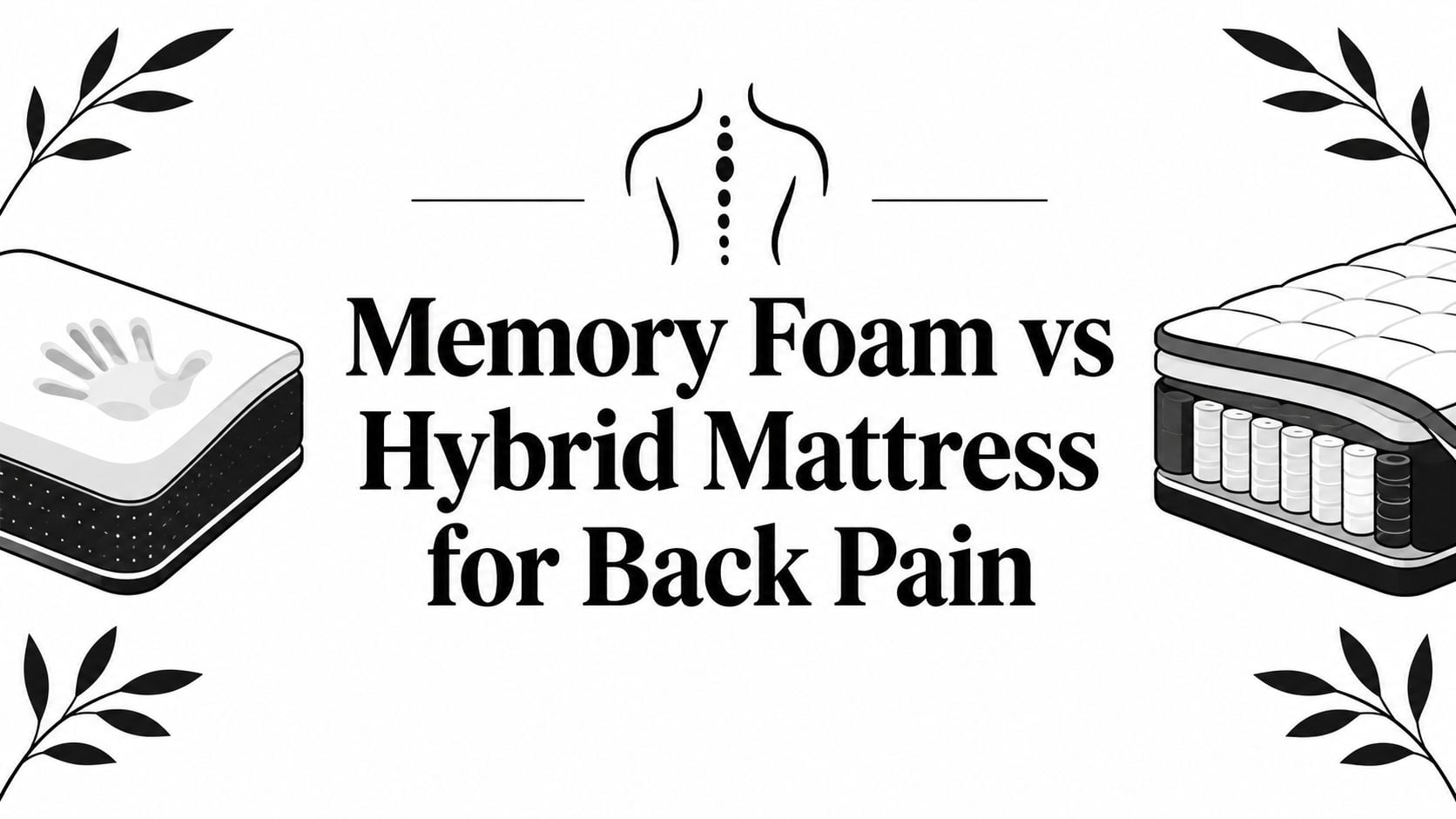
Memory foam offers close contouring. It spreads pressure across a wider area, limits motion transfer, and can cushion a side sleeper's hip effectively. Tempur-Pedic models are especially relevant for shoppers who want deep, slow-response cushioning, though the sleeper should still check whether the pelvis remains supported rather than sinking too far.
Hybrids combine a foam or latex comfort system with a coil support core. A Sherwood or Stearns & Foster hybrid can provide pressure relief near the hip while retaining airflow, edge stability, and easier movement. That combination often suits sleepers who have both hip sensitivity and a need for stronger lumbar or pelvic support.
Traditional innersprings can feel open, buoyant, and cool. Their weakness is uneven pressure relief when the comfort padding is limited. A sharp hip contact point may remain exposed, particularly for side sleepers.
Latex responds faster than memory foam and gives the body a lifted, springy feel. It can suit combination sleepers who shift away from a painful hip and don't want to feel held in place. Sealy options may also appeal to shoppers who want a familiar support feel with added cushioning, but each model should be tested for actual pressure distribution.
Construction comparison
| Material | Pressure Relief | Spinal Support | Cooling | Best For |
|---|---|---|---|---|
| Memory foam | Deep, even contouring | Good when the base controls sink | Can feel warmer, depending on design | Side sleepers with concentrated hip pain |
| Hybrid | Strong relief with structured support | Very good when coils reinforce the center | Usually more breathable than dense foam | Combined hip pain, sciatica, and mixed positions |
| Innerspring | Varies with padding | Responsive, but less adaptive | Open and airy | Sleepers who prefer bounce and limited sink |
| Latex | Moderate contouring with buoyant lift | Very good for position changes | Naturally responsive and breathable | Combination sleepers and people who dislike deep hug |
A comparison of innerspring and memory foam helps shoppers understand why the comfort layer and support core must be judged together. For deep hip pressure, start with Tempur-Pedic memory foam or a conforming hybrid. For radiating discomfort and easier movement, test Sherwood, Stearns & Foster, Sealy, and responsive latex builds with deliberate attention to lumbar support.
Choosing the Right Feel by Body Type and Sleep Position
Body shape matters more than a generic firmness label. Research cited in a World Sleep Society abstract found that people with higher body weight aligned more neutrally on firmer mattresses, while people with lower body weight aligned better on softer surfaces. The same abstract reported that people with larger hip circumference showed greater spinal deviation on softer mattresses, supporting a need for controlled pelvic support rather than uniformly plush cushioning, as described in this body geometry and mattress alignment abstract.
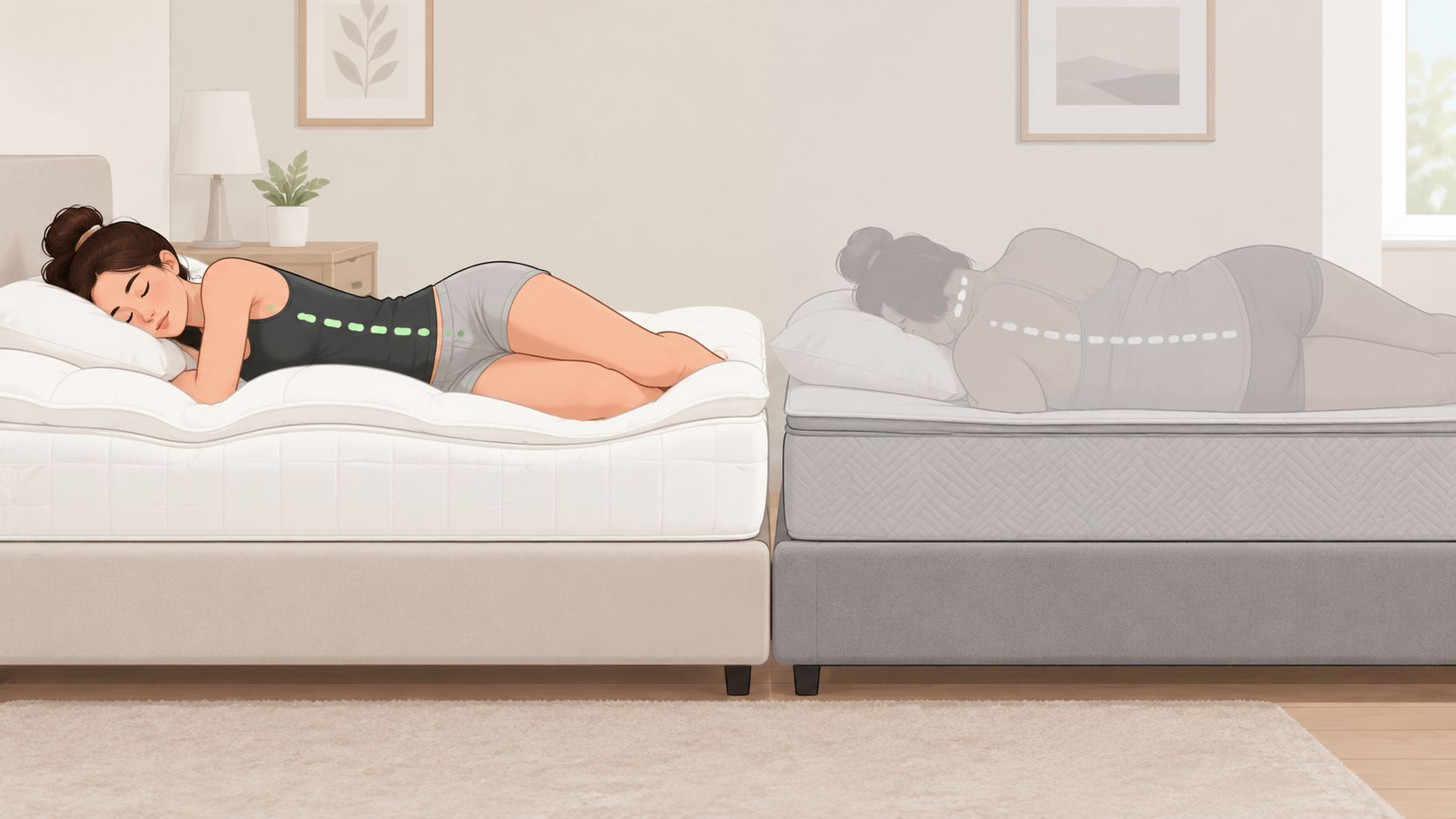
Side sleepers
Side sleepers place direct pressure on the greater trochanter and shoulder. A lighter sleeper may need a plush to medium-plush surface so the hip can settle into the comfort layer. A side sleeper in the middle weight range usually needs medium to medium-firm support with enough contouring to prevent pressure without allowing the waist to bow.
A pillow between the knees helps keep the upper leg from rotating the pelvis. The sleeper should test that position in the showroom, not merely lie flat on the back.
Back sleepers
Back sleepers generally need medium-firm support that fills the lower-back curve without lifting the pelvis. A small lumbar towel can reveal whether the mattress supports that curve or leaves a noticeable gap. A pillow under the knees may also reduce strain, but the mattress still needs to carry the body evenly.
Stomach and combination sleepers
Stomach sleepers typically need firmer control so the hips don't sag into the middle of the mattress. A sleeper who changes positions should prioritize responsive support and easy movement, often found in a hybrid or latex design.
The side-sleeper mattress selection guide offers a useful showroom framework. Independent guidance commonly places hip-pain shoppers in a 4 to 7 out of 10 firmness range, while side sleepers may prefer approximately 4 to 6 out of 10, as outlined by mid-range firmness guidance and side-sleeper firmness recommendations. Those ranges are starting points. The deciding test is whether the hip cushions while the spine stays straight.
What to Test in the Showroom and How to Support the Bed at Home
A showroom test should recreate normal sleep, not a quick sit on the edge. Bring the pillow normally used at home, wear flexible clothing, and use the same position that causes trouble at night.
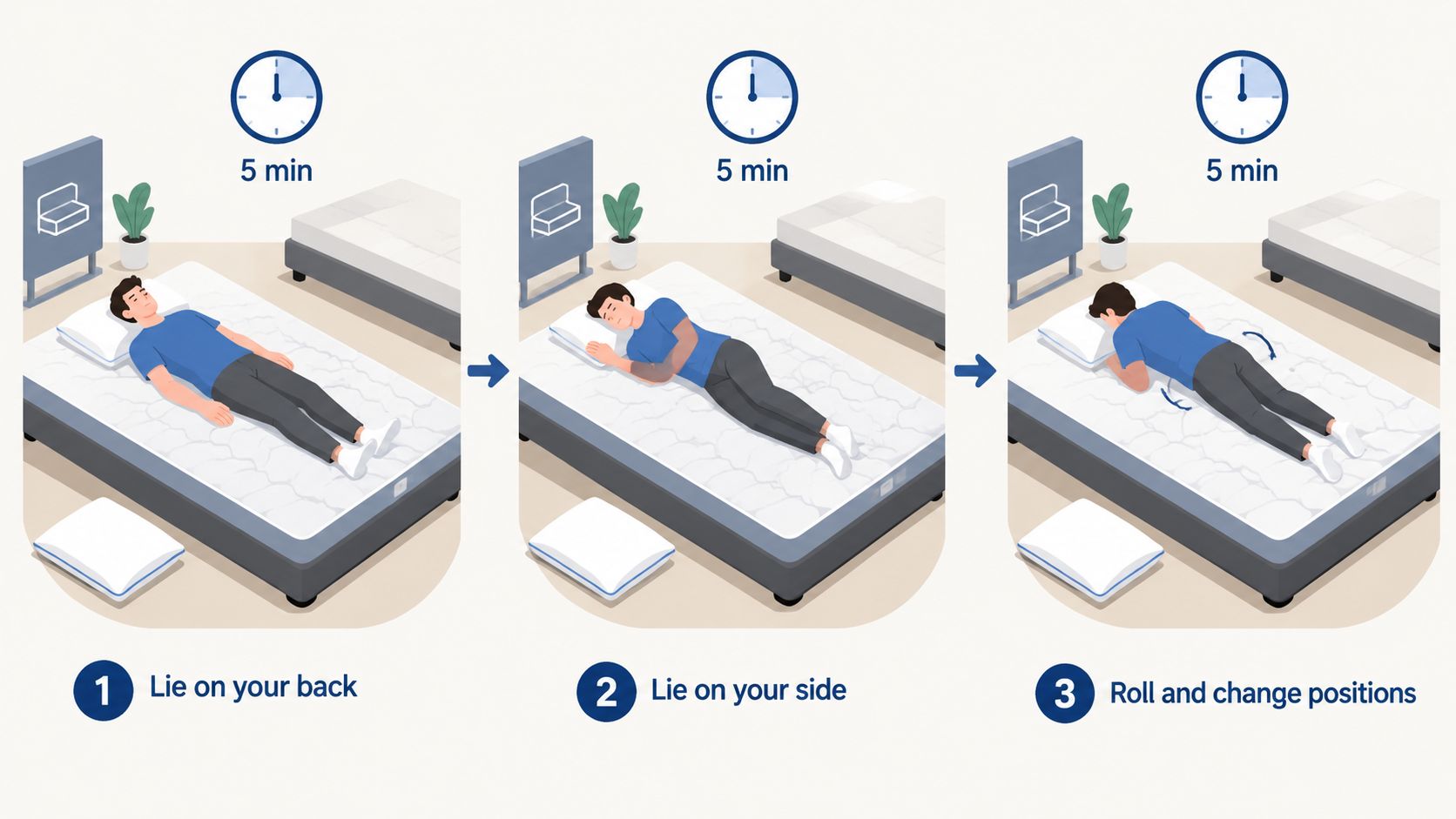
Use a focused 15-minute test
- First five minutes: Lie in the primary sleep position. Check whether the hip feels compressed, whether the waist is supported, and whether the neck stays level.
- Next five minutes: Move into the secondary position. Back sleepers can place a small towel beneath the lumbar area, while side sleepers can use a knee pillow.
- Final five minutes: Roll between positions slowly. Notice whether movement feels easy or whether the body feels trapped in deep foam.
A gentle pressure check can reveal how the mattress manages sink. A sleeper can place a fist beneath the hip zone before settling, then notice whether the mattress fills that space without creating a hard pressure point. The hand shouldn't replace professional assessment, but it can make the difference between surface softness and true support easier to understand.
Fine-tune the sleep system
A mattress is only one part of the setup.
- Side-sleeping pillow: A medium-loft cervical pillow can keep the head from dropping toward the mattress.
- Back-sleeping pillow: A slimmer profile may preserve the natural neck position.
- Nerve-sensitive legs: A knee pillow can reduce pelvic rotation during side sleeping.
- Nearly-right mattress: A 2 to 3 inch memory foam or latex topper can adjust surface feel, provided the underlying mattress already supplies adequate support.
The foundation also matters. A weak or poorly spaced base can allow premature sagging and may affect warranty requirements. Check the mattress slats and support guide before delivery, especially in cabins and second-floor rooms around Alto and the Sacramento Mountains.
How the Miller Waldrop Experience Protects Your Decision
Buying a mattress for hip pain or sciatica without lying on it is a gamble. A product page can't show whether the hip is pressing too hard, whether the pelvis is sinking, or whether changing position increases nerve discomfort.
Mattress Pro by Miller Waldrop uses an in-store consultation to compare body type, sleep position, budget, and comfort response. The showroom process can include pressure-mapping feedback and sleep-position coaching, giving the shopper information that a boxed delivery and online algorithm can't provide.

The Comfort Promise reduces the wrong-bed risk
The Comfort Promise gives shoppers a practical path if the first choice doesn't suit the sleeper. An exchange can help address a surface that aggravates the hip, a support level that fails to control pelvic sink, or a feel that makes nerve discomfort worse. The details should be reviewed before purchase through the Comfort Promise information.
Local service carries the heavy work
The Low Price Promise applies to comparable builds from Tempur-Pedic, Sealy, Stearns & Foster, and Sherwood, helping local shoppers compare value without giving up in-person support. Flexible financing through Synchrony and Progressive can spread the purchase into manageable payments, subject to program terms and approval.
Full-Service Delivery with Professional Setup serves homes throughout Ruidoso and Lincoln County. Delivery teams can handle stairs, tight cabin layouts, and second-floor rooms that may be difficult for a person with an irritated hip or lower back. That practical service is part of the purchase, not an afterthought.
Your Next Step Toward Pain-Free Sleep in Ruidoso
Start with the location of the discomfort. A sharp point at the outside of the hip suggests a need for contouring pressure relief. Tingling or pain that follows a path down the leg suggests a need to prioritize spinal alignment and stable pelvic support, while recognizing that a mattress can't diagnose nerve symptoms.
Next, match the feel to the sleeping position. Side sleepers should test cushioning around the hip with a pillow between the knees. Back sleepers should check lumbar contact and may use a small towel or pillow under the knees. Stomach sleepers should look for firm control through the midsection, while combination sleepers should prioritize responsive movement.
Bring useful notes to the showroom
A short record makes the consultation more productive:
- Pain pattern: Mark whether discomfort stays at the hip or travels down the leg.
- Usual position: Note the position used at sleep onset and the position used when waking.
- Current mattress behavior: Record sagging, pressure points, heat, and morning stiffness.
- Preferred feel: Decide whether the body needs deeper contouring, easier movement, or stronger lift.
Each candidate should be tested for at least 15 minutes in the usual sleeping posture, not only in the showroom-friendly flat-on-the-back position. A supportive pillow and, when appropriate, a latex topper can fine-tune a close match, but accessories shouldn't rescue a mattress with poor foundational support.
For Ruidoso residents, the next step is straightforward. Visit 2801 Sudderth Drive, Suite F, and let a Sleep Pro compare Tempur-Pedic, Sealy, Stearns & Foster, and Sherwood constructions against the actual symptoms, body shape, and sleep position. The Comfort Promise, Low Price Promise, and Full-Service Delivery with Professional Setup make the local process easier to manage from selection through setup.
Mattress Pro by Miller Waldrop offers hands-on mattress testing, personalized Sleep Pro guidance, and pressure-relieving options for hip pain and sciatica, backed by the Comfort Promise and Low Price Promise. Visit Mattress Pro by Miller Waldrop at 2801 Sudderth Drive, Suite F, in Ruidoso, Monday through Saturday, and find a sleep system that supports better mornings in the mountains.