

Innerspring vs Memory Foam Mattress Guide


A couple stands in a Ruidoso showroom, each person testing a different bed while wondering whether today's comfortable choice will still feel right years from now. One mattress feels lifted and lively. The other seems to cradle the shoulders and hips. The fear of choosing wrong is real, especially when a mattress affects every night at home, in a guest room, or in a vacation cabin near Alto.
The practical answer to innerspring vs memory foam isn't that one construction wins for everyone. The right choice depends on sleep position, pressure points, movement, temperature, edge support, and how easily a sleeper changes position. Local guidance matters because dry mountain air, active routines, couples, and changing cabin use create priorities that a generic online product page may overlook.
A useful starting point is the mattress selection guide, followed by honest testing on both constructions. The comparison below focuses on the trade-offs that matter in real Ruidoso bedrooms.
Choosing the Right Mattress for Your Sleep Style
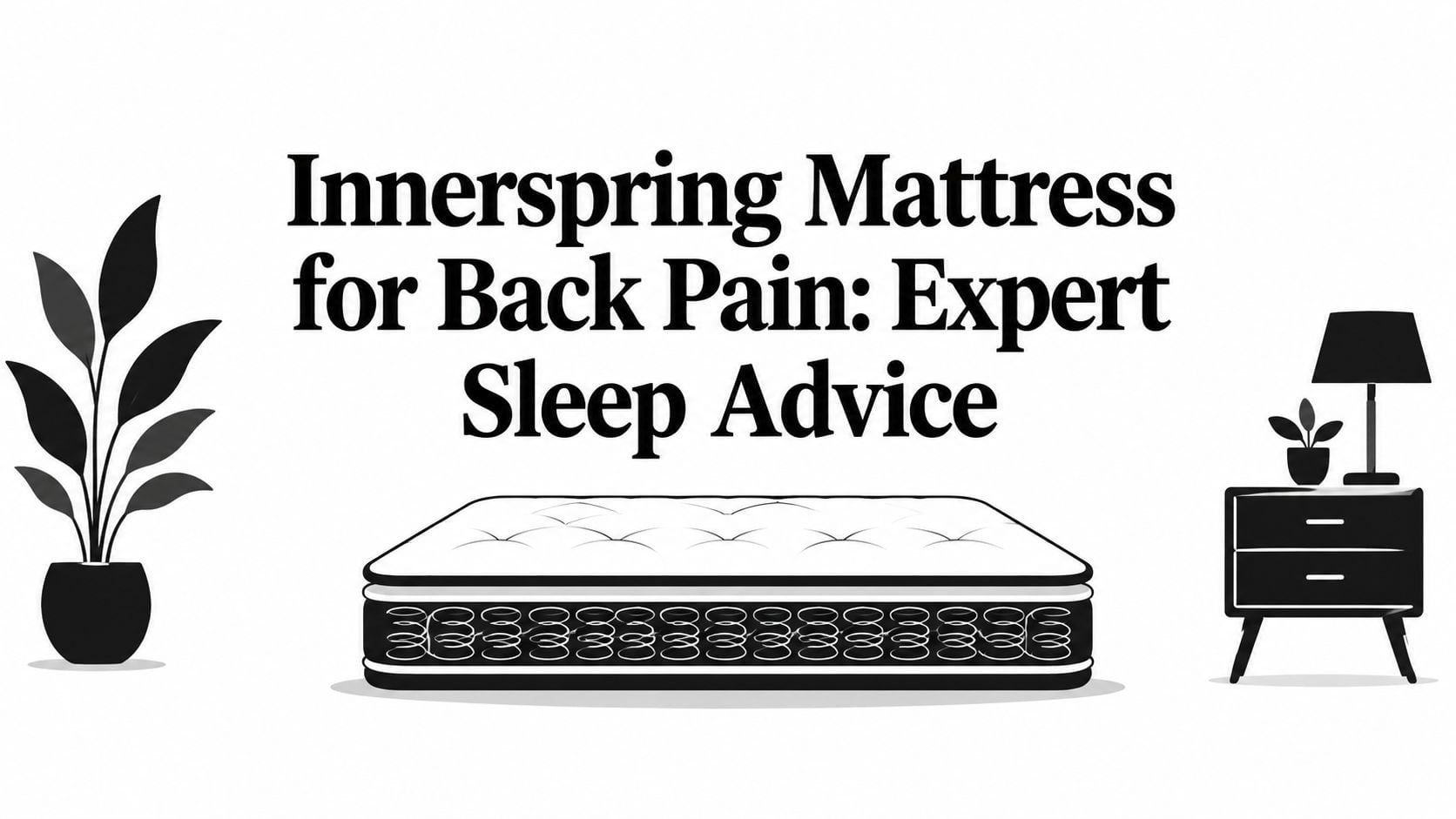
Innerspring and memory foam mattresses create distinct sleep experiences. A traditional innerspring uses interconnected steel coils with a relatively thin cushioning layer, so the sleeper stays more “on” the bed and feels quick push-back. Memory foam uses viscoelastic layers that soften with heat and pressure, allowing the surface to mold around the body.
That difference affects more than comfort. Coils generally encourage airflow, edge stability, and easy movement, while memory foam usually provides deeper contouring, pressure relief, and motion absorption. A couple with different sleep habits may value quiet movement more than bounce. An active sleeper may care more about repositioning and a cooler surface than a deep hug.
The history of innerspring also explains why its feel remains familiar. The first steel coil spring for chair support was patented in 1857, Heinrich Westphal built the first innerspring mattress in 1871, and innerspring designs remained the dominant mainstream mattress type for most of modern bedding history until newer materials gained traction in the early 1990s, as documented in this history of innerspring and memory foam mattresses. Later mass production accelerated after World War I, helping coil-based bedding become an industrial standard.
Practical rule: The best mattress is the one that supports the sleeper's body without creating a problem in another category, such as heat, partner disturbance, or difficult movement.
Neither material guarantees perfect sleep. Mattress quality and firmness can matter more than the label on the cover, and a controlled comparison cited in recent coverage found better sleep after people changed to a new mattress regardless of whether the new bed used foam or springs, with no statistically significant overall sleep difference between the two types, as discussed in this comparison of construction and sleep quality.
For Ruidoso shoppers, that means the decision should begin with a conversation about the sleeper, not a sales slogan. Mattress Pro by Miller Waldrop has served local families for 70 years, with Sleep Pros focused on sleep solutions rather than a one-size-fits-all answer. The Comfort Promise helps reduce the fear of picking the wrong bed, while the Low Price Promise and Full-Service Delivery with Professional Setup add practical protection after the purchase.
How Innerspring and Memory Foam Mattresses Feel
The simplest way to understand the difference is to notice where the body rests. On an innerspring mattress, the steel coil system carries much of the load. The cushioning above it softens the first contact, but the sleeper generally feels supported from underneath, with a familiar lift and a faster response when turning.
Traditional innerspring mattresses are built primarily from interconnected steel coils with only a thin cushioning layer beneath the cover. That construction creates a supportive, bouncy surface, but connected coils can also transmit movement across the bed, as explained in this guide to innerspring mattress construction.
Memory foam behaves differently. Viscoelastic foam responds to body heat and pressure, gradually contouring around the shoulders, hips, and other curves. The result is a slower, more enveloping sensation. A sleeper may feel less push-back and more of a cradling hug, particularly in softer or thicker comfort layers.

How position changes the first impression
Side sleepers often notice the shoulder and hip difference first. Memory foam can spread pressure over a wider area by conforming to those points, while a traditional innerspring with a thinner comfort layer may feel firmer beneath them. This makes memory foam a strong consideration for side sleepers and people with shoulder, hip, or lower-back sensitivity, according to Sleep Foundation's mattress comparison.
Back sleepers may prefer the lifted support of springs or the even contour of foam. Stomach sleepers usually need a surface that feels stable rather than overly yielding, because excessive sink can make the hips drop lower than the rest of the body. Combination sleepers tend to appreciate a responsive coil surface because it makes turning less effortful.
How to test the feel
A quick showroom bounce test isn't enough. Each sleeper should lie in the usual position, stay still long enough to notice pressure at the shoulders and hips, then turn as naturally as possible. The key question isn't whether a mattress feels pleasant for a moment. It's whether the surface makes movement, support, and relaxation feel easy.
Anyone researching what memory foam mattresses are should also test whether the contour feels comforting or restrictive. Feel is personal, so in-person comparison remains the most reliable way to understand the difference.
Comparing Support, Comfort, and Everyday Performance
Support and comfort aren't opposites. A mattress needs a stable core to hold the body, along with enough surface cushioning to avoid harsh pressure at contact points. Coil design, foam density, comfort-layer thickness, edge reinforcement, and cover materials can change the result within either category.
| Performance Factor | Innerspring | Memory Foam |
|---|---|---|
| Support and spinal alignment | Lifted, responsive support; firmness depends on the coil system and cushioning | Contouring support that can help keep the body evenly supported when the firmness is appropriate |
| Shoulder and hip pressure relief | Usually more localized, especially with thinner comfort layers | Generally stronger because the foam conforms to body contours |
| Motion isolation | Connected coils can transfer movement across the surface | Absorbs movement and usually disturbs a partner less |
| Temperature and breathability | Coil spaces promote airflow and generally feel cooler | Dense foam can retain more heat, although ventilated layers and cooling covers can change the experience |
| Edge support | Often more stable for sitting and sleeping near the perimeter | Can compress more at the edge unless reinforced |
| Responsiveness | Quick rebound makes turning and repositioning easier | Slower recovery can make movement feel more deliberate |
| Durability | Depends heavily on coil design, materials, and edge construction | Depends heavily on foam density and the quality of the support core |
The factors that decide real comfort
Pressure relief is where memory foam usually earns its strongest recommendation. Its viscoelastic structure conforms around the shoulders and hips instead of pressing back against those bony areas. A sleeper with sensitive joints may notice the difference quickly.
Motion isolation also favors foam. One benchmark-style expert summary cites about 40% less motion transfer for memory foam than spring beds, according to this independent motion-transfer comparison. Other comparison coverage reports that memory foam can reduce motion transfer by up to 90% versus traditional innerspring, although the exact result depends on construction and testing conditions, as described in the earlier sleep-quality comparison.
Cooling and movement favor innerspring. Open spaces around coils allow air to move more freely, and the quicker surface response helps a sleeper turn without fighting through a slow-sinking comfort layer. A memory foam model with cooling gel technology, ventilated foam, or a breathable cover can improve thermal comfort, but it may still feel less airy than a coil-based design.
Why hybrids deserve attention
A hybrid mattress combines a coil support system with foam comfort layers. It can provide more contouring than a traditional innerspring while retaining more airflow and responsiveness than an all-foam design. Pocketed coils, in particular, move more independently than older connected systems, which can improve both targeted support and motion control.
Durability also requires looking beneath the category name. Quality memory foam may last around 6 to 7 years, while innersprings may average around 5.5 to 6.5 years, according to this durability and thermal-comfort comparison. Another industry comparison places traditional innerspring lifespan at about 5 to 8 years and memory foam at about 8 to 12 years, with pocketed-coil systems generally outlasting older Bonnell-style designs, as outlined in this construction and lifespan guide.
The practical conclusion is simple. A couple who wakes at every movement should prioritize motion absorption. A hot sleeper who changes position often should prioritize airflow and response. Someone with pronounced shoulder or hip pressure should start with contouring, then confirm that the mattress still feels supportive.
For a more precise firmness discussion, the mattress comfort-level guide can help narrow the showroom test.
Which Mattress Works Best for Different Sleepers
Sleep position and body shape should guide the decision more than a product label. The same mattress can feel supportive to one person and too firm or too soft to another, especially when the sleeper's weight is concentrated at the shoulders, hips, or midsection.
| Sleeper Type | Better Fit | Why It Works |
|---|---|---|
| Side sleeper with pronounced shoulder or hip pressure | Quality memory foam | Deeper contouring can cushion bony contact points |
| Lightweight side sleeper | Softer innerspring or memory foam | A softer comfort layer may provide enough cushioning without excessive sink |
| Back sleeper | Innerspring, memory foam, or hybrid | The right firmness can support the lumbar area while keeping the body level |
| Back sleeper with lumbar sensitivity | Memory foam or pocketed-coil hybrid | Contouring can support the curve without relying on a rigid surface |
| Stomach sleeper | Firm innerspring or high-density foam | A flatter, firmer feel helps limit excessive hip sink |
| Combination sleeper | Responsive pocketed-coil mattress or hybrid | Faster recovery makes turning easier |
| Restless couple | Memory foam or motion-conscious hybrid | Movement absorption reduces partner disturbance |
| Couple who values bounce and shared movement | Innerspring or responsive hybrid | Spring response supports easier repositioning |
| Older adult or joint-sensitive sleeper | Memory foam | Pressure relief can make contact points feel less stressed |
| Hot, active sleeper | Innerspring or coil hybrid | Airflow and surface response support cooler, freer movement |
Side, back, and stomach sleepers
Side sleepers weighing over 180 pounds often need the deeper cradling of quality memory foam to protect the shoulders and hips. A lighter side sleeper may feel comfortable on a softer innerspring with a cushioned top, especially if the surface doesn't create sharp pressure.
Back sleepers have more flexibility. Memory foam can contour beneath the lumbar curve, while an innerspring or hybrid can provide a more lifted sensation. The deciding test is whether the spine feels level without the lower back hanging unsupported or the hips sinking too far.
Stomach sleepers should be direct about firmness. Plush memory foam can feel comfortable at first but may allow the pelvis to settle too much. A firmer innerspring or high-density foam surface is usually the safer starting point.
Couples and active sleepers
Couples need to identify the type of movement that causes trouble. A restless partner who gets up often usually points toward memory foam, while two sleepers who reposition together may prefer the bounce of springs. There isn't one “couples mattress” because motion isolation and responsiveness pull in different directions.
Active sleepers around Ruidoso often benefit from a surface that doesn't make movement feel laborious. Pocketed coils or a hybrid can provide lift while adding some cushioning around pressure points. Teens and other hot sleepers may also prefer the more breathable character of coils.
The most useful showroom question is, “Which problem causes more lost sleep, partner movement, pressure, or heat?”
Considering Ruidoso Climate and Mountain Lifestyles
Ruidoso, Alto, Capitan, and the wider Lincoln County area create a different shopping context from a generic catalog. Dry mountain air can leave bedding feeling less forgiving against the skin, while warm nights, wood-stove heat, layered blankets, and active days can make thermal comfort especially noticeable.
A sleeper who already runs hot should look first at airflow. Innerspring mattresses naturally leave more open space around the coil system. Pocketed-coil hybrids and ventilated foam designs can also move air through the construction while adding pressure relief.
Memory foam isn't automatically unsuitable for a mountain home. Cooling gel technology, breathable covers, and ventilated comfort layers can improve the surface experience. A moisture-wicking protector can also help keep the sleeping environment comfortable and dry. More guidance is available in this memory foam cooling guide.

Vacation cabins need a different filter
A vacation rental or family cabin in Alto may see guests with different body types, sleep positions, and temperature preferences. Ski groups, hunters, summer visitors, and weekend guests can place more varied demands on a mattress than a single household.
For those rooms, a durable innerspring or a high-density foam design may be more practical than a very plush surface that compresses under constant turnover. Edge support also matters when guests sit down to dress, climb into bed, or use the full width of the mattress.
Primary bedrooms and guest rooms
A year-round Ruidoso home may prioritize quiet partner sleep, pressure relief, or cooling depending on the household. An allergy-sensitive family may appreciate the easier access and airflow of an open coil structure, while a couple with different schedules may prefer foam's ability to absorb movement.
These local factors don't replace personal comfort. They sharpen the questions that should be asked before a purchase, particularly for a home with changing temperatures, a guest room, or a cabin that needs dependable everyday support.
Testing Mattresses Before You Buy
The safest showroom routine is consistent and unhurried. A quick sit or bounce tells very little about pressure relief, spinal support, or partner disturbance. Each candidate should be tested against the same checklist so first impressions don't control the decision.
Prepare a short sleep profile
Before visiting, each sleeper should write down:
- Usual sleep position: Note whether the body stays mostly on the side, back, stomach, or moves between positions.
- Pressure concerns: Identify shoulder, hip, neck, or lower-back sensitivity.
- Partner movement: Record whether getting up, rolling, or sitting disturbs the other sleeper.
- Room conditions: Consider whether the bedroom runs warm, cool, dry, or changes with the season.
- Purchase limits: Set a realistic budget and identify whether financing may help.
Spend real time on each bed
Each sleeper should lie in the normal sleep position for at least ten minutes before forming a conclusion. The body needs time to notice whether the shoulders and hips are being pressed, whether the lower back feels unsupported, and whether the surface begins to feel too warm or restrictive.
A partner should roll, sit up, and shift weight while the other person remains still. Connected innerspring coils can make that movement more noticeable, while memory foam generally absorbs more of it. Pocketed coils and hybrids may provide a middle ground.

Inspect the construction
Sitting on the edge reveals whether the perimeter feels secure. A sleeper should also lie near the edge to check whether the support remains stable across the usable surface.
Ask the Sleep Pro to explain the construction instead of guessing from the cover. Useful questions include:
- Foam density: Guidance for people under 200 pounds identifies at least 3 pounds per cubic foot for memory foam and 1.8 pounds per cubic foot for non-memory polyfoam as adequate support benchmarks, while higher-density foam generally lasts longer and sags less, according to independent foam mattress guidance.
- Coil design: Ask whether the mattress uses interconnected or individually wrapped coils.
- Edge reinforcement: Check whether the perimeter is strengthened for sitting and full-surface sleeping.
- Cover materials: Look for breathable or moisture-managing materials if the room runs warm.
- Protection after purchase: Confirm warranty terms, comfort exchanges, delivery timing, and setup for Ruidoso and Alto.
A bed that passes this routine has a stronger chance of fitting the home than one chosen from a brief first impression. A clear exchange policy adds protection when the showroom feel changes during the first nights.
Getting Local Help and Buying With Confidence
The most useful local mattress consultation starts with four questions: how the sleeper rests, where pressure appears, how warm the bedroom feels, and what budget must be respected. A Sleep Pro can then place innerspring, memory foam, and hybrid options side by side instead of asking a shopper to interpret construction details alone.
Mattress Pro by Miller Waldrop carries sleep systems from Tempur-Pedic, Sealy, Stearns & Foster, and Sherwood, with options spanning traditional innerspring, memory foam, and hybrid designs. A consultation can focus on contouring, coil response, cooling covers, edge support, and the practical needs of a primary bedroom, guest room, or mountain cabin.
The Comfort Promise addresses the central fear in this purchase, choosing a bed that feels wrong after delivery. Instead of treating that concern as a reason to delay, shoppers can ask exactly how comfort exchanges work and what support is available if the first choice needs adjustment.
What local service changes
Online ordering may simplify browsing, but local service gives a shopper the chance to test support and feel before committing. Miller Waldrop's process includes:
- Side-by-side testing: Sleepers can compare firmness, pressure relief, motion isolation, and response in person.
- Price protection: The Low Price Promise helps budget-minded shoppers compare value locally.
- Full-Service Delivery with Professional Setup: The delivery team handles placement and setup, removing much of the physical work from the purchase.
- Financing options: Larger mattress purchases can be spread through available financing arrangements.
- After-delivery assistance: Staff can provide adjustment guidance and help with an eligible comfort exchange when the first selection doesn't suit the sleeper.

A local sleep consultation is especially useful when two sleepers disagree, a back or shoulder feels sensitive, or a cabin needs a construction that can handle varied guests. The recommendation may be memory foam for pressure relief, innerspring for airflow and bounce, or a hybrid for a more balanced compromise.
The 70-year Miller Waldrop family legacy is built around serving neighbors in Ruidoso and Lincoln County. A local Sleep Pro understands that the right mattress must work in the actual bedroom, with the actual climate, schedule, partner, and budget.
Mattress Pro by Miller Waldrop offers in-person comparisons of innerspring, memory foam, and hybrid mattresses, with the Comfort Promise, Low Price Promise, and Full-Service Delivery with Professional Setup available to support the decision. Visit Mattress Pro by Miller Waldrop at 2801 Sudderth Drive, Suite F, in Ruidoso, or stop by Monday through Saturday for help choosing a mattress for a primary home, guest room, or vacation cabin.