

Hybrid Mattress Brands Worth Your Sleep


A couple in Ruidoso has likely reached the same frustrating point as many mountain sleepers. The old innerspring mattress has lost its welcome, online ads all promise “cooling” and “support,” and every model starts to look alike after the third showroom visit. The right hybrid mattress brands can narrow that confusion, but only when construction, sleep position, climate, foundation, and service are considered together.
Mattress Pro by Miller Waldrop brings that conversation to a local showroom on Sudderth Drive. Backed by a 70-year Miller Waldrop family legacy, the store focuses on sleep solutions for Ruidoso, Alto, and Lincoln County, not on pushing a bed that looks impressive in a photograph. A Sleep Pro can help a shopper compare Tempur-Pedic, Sealy, Stearns & Foster, and Sherwood by how each mattress feels after the body settles in.
Why Hybrid Mattresses Have Become the Talk of Ruidoso
A retired couple from the Ruidoso village recently walks into a mattress showroom after months of restless nights. Their traditional innerspring feels uneven, one partner wakes whenever the other turns, and glossy advertisements have left them with more questions than answers. They don't need another sales pitch. They need to understand what changes when foam and coils work together.
A hybrid mattress places a foam comfort system over an innerspring support core, combining foam's pressure relief with the responsive feel of coils, as explained in this plain-language guide to hybrid mattress construction. The foam may be memory foam, latex, or polyfoam. The support system commonly uses individually wrapped pocketed coils rather than the connected coil grids found in older beds.
Why the mountain climate matters
Ruidoso's mountain setting changes the practical conversation. The community sits at roughly 6,900 feet, and dry mountain air can make nights feel sharply different from daytime conditions. Dense foam may feel comfortable to one sleeper but too still or warm to another, while the open space around coils can encourage airflow beneath the comfort layers.
That doesn't mean every hybrid sleeps cold or every foam bed sleeps hot. Cover fabric, foam formulation, room ventilation, bedding, and personal temperature all matter. Still, a hybrid gives hot sleepers a useful starting point because it combines cushioning with a support core that isn't a solid block of foam.
The appeal for active households
Modern pocketed coils also isolate movement better than old connected spring systems. That matters in a cabin shared during a busy weekend, where one person may rise early for a trail or ski day while another sleeps later. Foam absorbs some movement, while individually wrapped coils respond more locally.
Hybrids also answer two familiar complaints. Foam-only beds can feel too enveloping, especially for sleepers who change positions often. Traditional spring beds can feel too bare or too firm across the shoulders. A hybrid places a cushioning layer between the sleeper and the coils, creating a middle ground with contouring, pushback, and easier movement.
The category has moved well beyond a niche product. One 2026 industry outlook valued the global hybrid mattress market at USD 3.23 billion in 2025 and projected USD 6.39 billion by 2031, implying a 12.05% CAGR, while another forecast estimated growth from USD 3.32 billion in 2025 to USD 6.04 billion by 2032 at an 8.85% CAGR. Those projections from Mordor Intelligence's hybrid mattress industry outlook and the independent hybrid mattress market analysis point to a mature category with broad retail and premium options.
How a Hybrid Mattress Is Actually Built
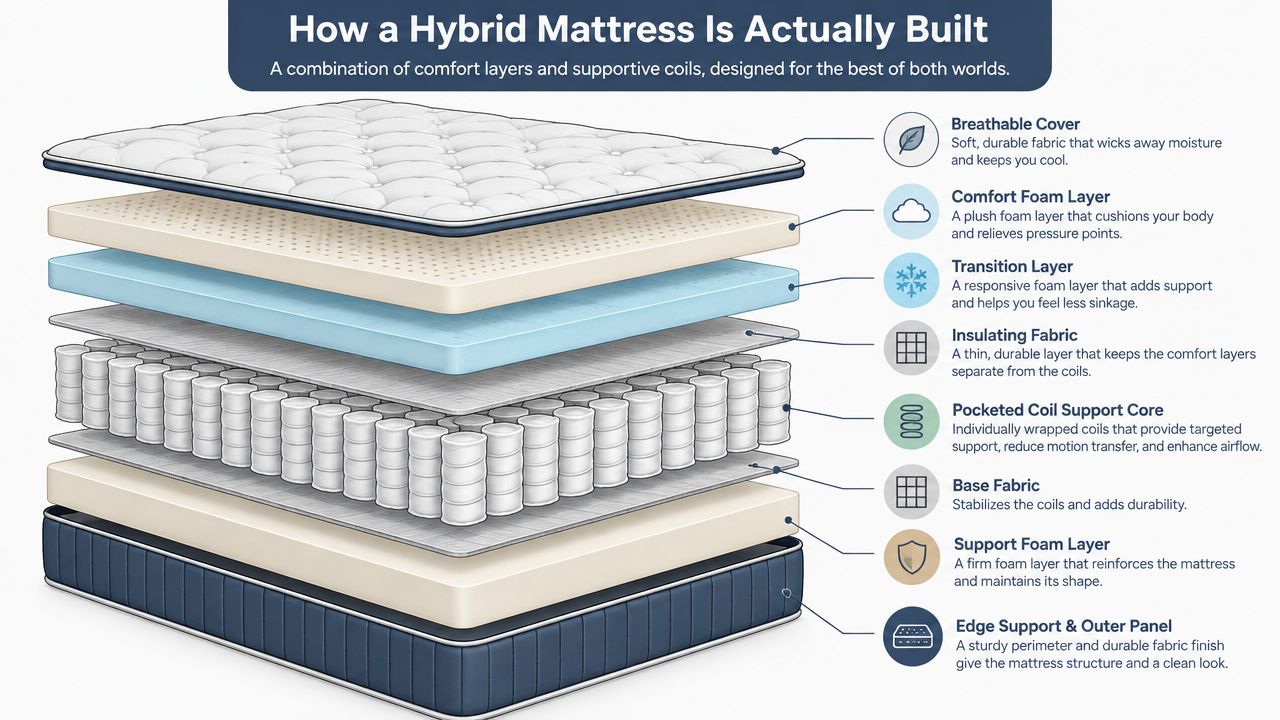
A shopper doesn't need an engineering degree to assess a hybrid. The useful approach is to start at the bottom and ask what each layer contributes to support, comfort, temperature, and durability.
The coil support core
At the base sits the support system. In a genuine hybrid, the coil unit forms a substantial part of the mattress, with industry guidance commonly describing a coil section around 6 to 8 inches and comfort materials totaling roughly 2 to 4 inches, according to this hybrid mattress construction guide.
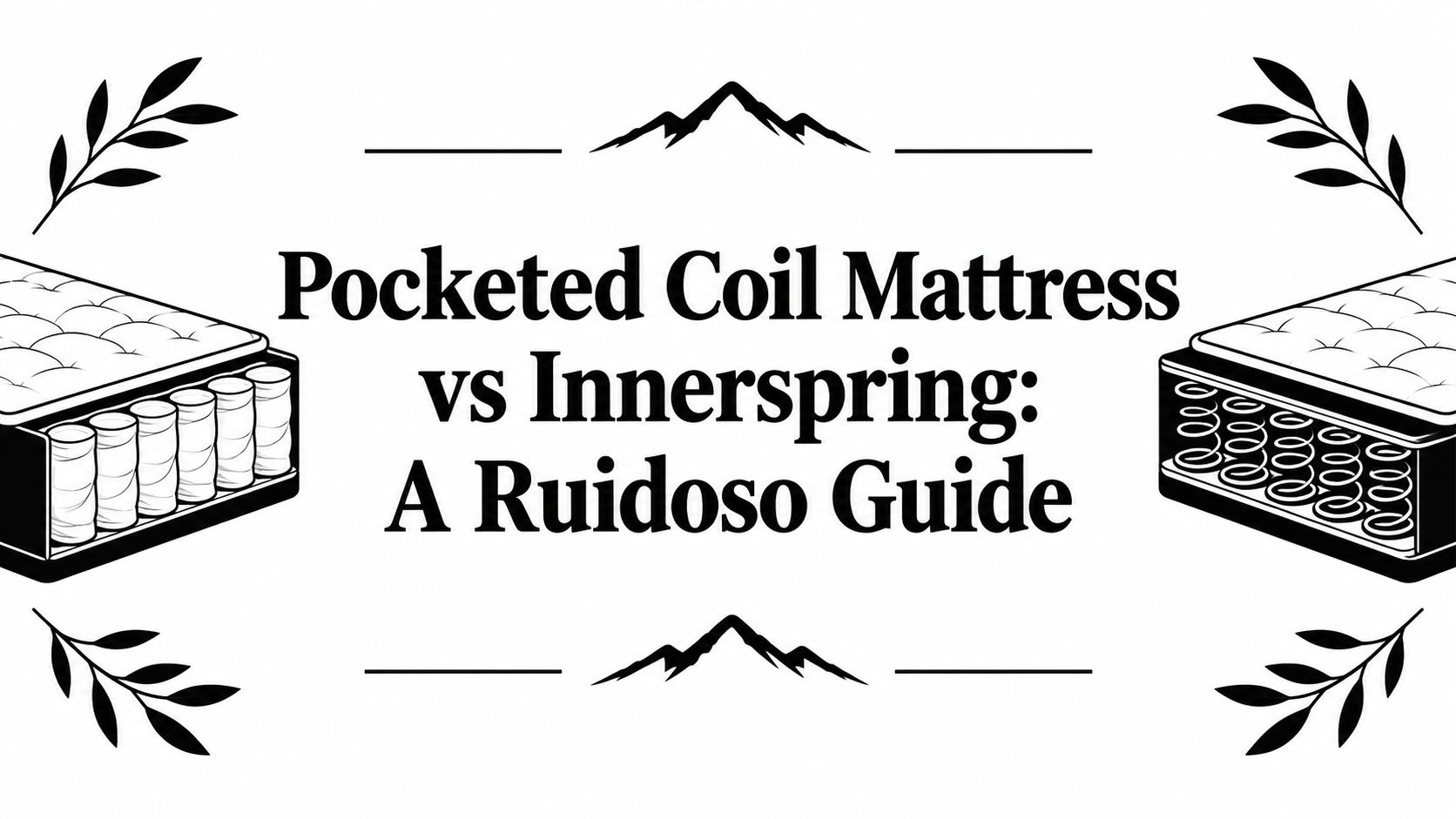
Each pocket coil is wrapped separately in fabric. When a sleeper moves, the surrounding springs don't all react as one connected grid. That design can limit movement across the bed and gives the mattress a more responsive, stable feel.
Coil gauge matters, but the number works backward from what many shoppers expect. A lower gauge means thicker, firmer wire, while a higher gauge generally means thinner, more flexible wire. A retailer's label may also describe perimeter reinforcement or zoned support, so shoppers should ask how the coil system is arranged rather than focusing on a single specification.
Transition and comfort layers
A transition layer sits between coils and the upper comfort system. It may use polyfoam or a firmer lumbar pad, helping prevent the sleeper from feeling the coil unit directly. This layer also controls how quickly the body settles into the mattress.
The upper comfort section determines much of the first impression:
- Memory foam contours around shoulders and hips, helping relieve pressure points and reduce the feeling of surface impact.
- Latex feels buoyant and springy, making position changes easier and generally encouraging a more breathable surface.
- Gel-infused foam uses cooling additives as part of a broader temperature-management design.
- Mini-coils can add surface responsiveness and airflow without removing the cushioning effect of foam.
Zoned support and the cover
Zoned coils place different levels of resistance beneath different body regions. Some designs use firmer coils beneath the pelvis and lumbar area, with softer coils beneath the shoulders. One published construction example uses 13.5 to 14.5 gauge coils around the pelvis and perimeter and 15 to 16 gauge coils beneath the shoulders, as shown in this zoned innerspring explanation.
That arrangement can help a side sleeper maintain a straighter spinal line while allowing the shoulder to sink enough for comfort. For someone who hikes, skis, or spends long days outdoors around Ruidoso, the difference may appear as less pressure at the shoulder or hip when the body is already stiff.
The cover finishes the system. Tencel-style fabrics and phase-change knits can help manage surface moisture and heat, but no cover can fix a poor support core. The safest test is still simple: lie down long enough for the body to settle, then notice whether the shoulders, hips, and lower back feel supported.
For a fuller foundation and comfort overview, shoppers can review this Mattress Pro guide to what a hybrid mattress is.
The Four Brands We Trust Most
Mattress Pro narrows the field to four primary hybrid mattress brands that fit different sleep preferences and budgets. The goal isn't to declare one universal winner. A side sleeper, a hot back sleeper, and a couple with different comfort preferences shouldn't receive the same recommendation.
Tempur-Pedic
Tempur-Pedic hybrids pair TEMPUR foam with pocketed coils. The TEMPUR-Adapt and TEMPUR-ProAdapt lines suit sleepers who want pronounced pressure relief without giving up the lift and movement of a spring core.
The feel generally lands around medium, making these models a sensible first test for combination sleepers and couples who value motion isolation. The foam absorbs movement, while the coils prevent the mattress from feeling completely motionless or difficult to escape.
This is a premium-tier choice with a 10-year warranty, according to the product information used by Mattress Pro. A shopper who likes a close, contouring feel should start here, then compare it directly with a more buoyant latex-over-coil design.
More information is available through the Tempur-Pedic brand collection at Mattress Pro.
Sealy
Sealy hybrids use gel memory foam over response coils, creating a livelier surface than contouring foam designs. The feel often appeals to back and stomach sleepers who want cushioning but still need stronger pushback through the midsection.
Edge reinforcement adds practical value in a cabin loft or guest room, where a sleeper may sit on the perimeter to put on boots. Sealy occupies a mid-to-premium tier and offers 10-year coverage on the referenced lines.
The strongest reason to test Sealy first is balance. It gives a shopper a recognizable foam cradle, but the coil system keeps the bed from feeling flat or trapped.
Stearns & Foster
Stearns & Foster hybrids occupy the luxury end of the showroom. The Lux Estate and Reserve lines emphasize hand-built craftsmanship, an IntelliCoil nested coil system, cashmere-blend covers, and a medium-plush feel.
That combination targets side sleepers who need more room at the shoulder and hip. The surface should feel cushioned, while the nested coils provide structured support beneath the torso. Sleepers who prefer a firm, immediately responsive bed may find this direction too plush, which is precisely why lying down matters.
Sherwood
Sherwood hybrids, from Bedding Industries, provide an accessible route into coil-and-foam construction. Latex-over-coil options offer more bounce and breathability, while breathable covers suit shoppers who want a less enclosed surface.
Sherwood is the value-oriented choice for a guest room, seasonal cabin, or rental property where construction still matters but the budget has a clear ceiling. The referenced coverage is 8 years, shorter than the 10-year coverage associated with the Tempur-Pedic and Sealy examples. That distinction belongs in the buying conversation, especially for a primary bedroom where the mattress will carry daily use.
Head-to-Head Comparison of the Four Brands
The table below is a showroom starting point, not a replacement for lying on the actual model. Feel changes with the exact comfort package, firmness option, sleeper's body, and foundation beneath the mattress.
| Brand | Firmness Range | Cooling Tech | Coil & Support | Price Tier | Warranty | Altitude Signal |
|---|---|---|---|---|---|---|
| Tempur-Pedic | Medium, contouring | TEMPUR foam, cooling-oriented cover options | Pocketed coils with foam pressure relief | Premium | 10 years | Strong motion control, test for heat preference |
| Sealy | Medium to firmer options | Gel memory foam and response coils | Responsive coils with reinforced edge support | Mid to premium | 10 years | Strong for active back and stomach sleepers |
| Stearns & Foster | Medium-plush to supportive luxury feels | Cashmere-blend cover and layered comfort system | IntelliCoil nested system | Luxury premium | Verify the exact model coverage | Strong for shoulder cushioning, assess warmth |
| Sherwood | Accessible medium and latex-over-coil feels | Breathable covers and latex options | Coil support with responsive latex or foam | Value | 8 years | Practical for guest rooms and seasonal use |
A hybrid's edge support can be a meaningful advantage. One expert testing set reported an average edge-support score of 8.9 for hybrids, compared with 8.7 across all mattress types, while average hybrid pressure relief reached 8.8 overall. Memory-foam hybrids scored 9.5 for pressure relief and latex hybrids 9.1, according to NapLab's hybrid mattress testing benchmarks.
The table also shows why “altitude-friendly” shouldn't mean one technical feature. A breathable coil core may help a hot sleeper, but a side sleeper may care more about pressure relief. A couple may prioritize motion isolation, while a cabin owner may care about edge strength and long-term value.
For shoppers comparing the spring feel directly, this innerspring versus hybrid mattress guide can clarify the construction difference before a showroom visit.
Matching a Hybrid to Your Ruidoso Lifestyle
A mattress has to work in the room, routine, and body that will use it. Five common Ruidoso situations point toward five different first tests.
The cabin owner with changing conditions
A cabin owner dealing with changing humidity and guest turnover should start with Sherwood. A latex-over-coil model offers responsive support and a breathable surface without moving into the highest price tier.
The first model to test should be the Sherwood latex-over-coil option that matches the room's budget and foundation. The shopper should sit on the edge, lie on the side, and check how quickly the surface recovers after movement.
The hot sleeper above 6,000 feet
A hot sleeper should begin with Sealy, particularly a Posturepedic Plus or Premium hybrid. Gel memory foam cushions pressure points, while response coils create space beneath the comfort layers for a more open feel.
The showroom first test should be a Sealy Posturepedic Plus hybrid. The sleeper should bring the bedding preference used at home into the conversation, because heavy blankets can change the experience even when the mattress itself manages heat well.
The side sleeper after a Sierra Blanca hike
A side sleeper with shoulder soreness should begin with Stearns & Foster Lux Estate. Its medium-plush direction, layered cushioning, and nested coil support are designed for the kind of pressure relief that side sleeping demands.
The correct test is not a quick sit. The sleeper should lie on the side long enough to check whether the shoulder settles without forcing the waist downward or leaving the hips unsupported.
The couple who wants isolation and bounce
A couple with different schedules should start with Tempur-Pedic TEMPUR-Adapt or TEMPUR-ProAdapt. TEMPUR foam limits the spread of movement, while pocketed coils preserve some lift for changing positions.
The pair can test this approach side by side, with one person turning and getting in and out of bed. A useful comparison is whether the moving partner feels contained without making the other partner feel every adjustment.
A focused hybrid mattress guide for couples can help partners identify which compromise is acceptable before the visit.
The budget buyer furnishing a guest room
A buyer furnishing a guest bedroom or short-term rental should start with Sherwood. The construction remains a true hybrid, but the accessible tier protects the budget for other mattress-related needs, including an appropriate foundation and professional setup.
The first showroom model should be a Sherwood medium hybrid. The buyer should assess edge stability and general comfort rather than selecting solely by the softest surface.
What Our Sleep Pros Ask You in the Showroom
A Sleep Pro consultation works best when the shopper answers plainly. The purpose is to reduce a large wall of choices to two or three mattresses that deserve a serious test.
Questions about the body
The first conversation covers body type and weight distribution. A person carrying more weight through the hips may need a different balance of contouring and pushback than someone with a straighter profile.
The Sleep Pro also asks about primary sleep position:
- Side sleepers need enough surface cushioning at the shoulders and hips.
- Back sleepers need support that keeps the lower back from dipping.
- Stomach sleepers usually need stronger resistance through the middle.
- Combination sleepers need a surface that allows easy movement without losing pressure relief.
Questions about the partner and room
Partner movement and temperature preferences matter just as much as individual comfort. One partner may sleep hot while the other wants a warmer surface, or one may rise early while the other sleeps through the morning.
The consultation also covers the home foundation. A hybrid needs a firm, even base. A 2026 foundation guide recommends slats no more than 3 inches apart, with 2 inches safer, plus center support for queen sizes and larger, as detailed in this hybrid foundation and slat-spacing guide.
Room climate matters in Ruidoso. The Sleep Pro asks whether the bedroom runs dry, whether the home is a full-time residence or seasonal cabin, and whether the sleeper uses heavy winter bedding.
Questions about money and expectations
Budget range should come up early, without embarrassment. A clear range helps the Sleep Pro compare comfort and construction instead of presenting beds that will never make sense financially.
Each answer removes unsuitable options. By the end, the shopper should have a short list based on body support, movement, temperature, foundation, climate, and budget, not a vague promise printed on a hangtag.
How the Miller Waldrop Difference Removes the Risk
The fear is understandable. A shopper may spend a substantial amount on a mattress, enjoy the first few nights, and then discover that the feel doesn't suit the body or the room. That fear becomes stronger when the purchase involves a remote website, complicated returns, or a foundation that wasn't checked first.
The Comfort Promise addresses the fear of picking the wrong bed through a structured adjustment process. Depending on the situation, Sleep Pros can discuss toppers, exchanges, or refunds rather than leaving the buyer stuck with an uncomfortable choice. The exact terms should be reviewed before purchase through the Miller Waldrop Comfort Promise.
Local price protection
The Low Price Promise adds another layer of confidence. Mattress Pro uses local pricing benchmarks and long-standing Ruidoso relationships to help shoppers compare the price of a hybrid against online and big-box offers. A buyer should ask the Sleep Pro to document the comparison instead of assuming that a flashy discount represents the best value.
That local conversation matters for a primary bedroom, a second home near Alto, or a seasonal rental in Lincoln County. The right value calculation includes construction, coverage, foundation compatibility, delivery, and what happens if the mattress doesn't work.
Service that fits mountain homes
Full-Service Delivery with Professional Setup is practical in mountain communities. A delivery team can bring the mattress up the mountain, position it correctly, and discuss removal of the old mattress where the service applies. Warranty questions can also begin in the showroom instead of through a distant phone tree.
Independent expert testing places hybrid durability commonly in the 8- to 12-year range, depending on material quality and care, while one reviewed hybrid earned 9/10 for motion isolation, 8/10 for edge support, and 9/10 for cooling, as reported in this expert hybrid mattress review. A broader replacement benchmark commonly places mattress replacement at 7 to 10 years, though the benchmark is an average rather than a promise, according to this mattress lifespan guidance. Sagging, lost support, and worsening sleep quality matter more than the calendar alone.

The best next step is physical testing. A shopper should lie on each finalist, change positions, sit at the edge, and ask how the mattress fits the existing frame. That process turns a confusing purchase into a decision grounded in comfort, support, and local service.
Mattress Pro by Miller Waldrop offers Sleep Pro consultations, hybrid mattresses from Tempur-Pedic, Sealy, Stearns & Foster, and Sherwood, plus the Comfort Promise, Low Price Promise, and Full-Service Delivery with Professional Setup. Visit Mattress Pro by Miller Waldrop at 2801 Sudderth Drive, Suite F, in Ruidoso, and test the hybrids that fit the mountain lifestyle before choosing the one that helps every morning feel better.